How to get better at push hands

Today’s Tai Chi tip is all about how to get better at push hands simply by adjusting your posture.

pushing-hands

Push hands should really be an exercise in which we get to test our ability to absorb Jin from an opponent and project it into an opponent as required, to uproot them.

It shouldn’t devolve into a pushing and shoving match to see who can ‘win’. Once it turns into that then I don’t think anybody is learning anything anymore. There are far superior methods of grappling and I think you’d be better off spending your time learning those if your goal is simply to win a grappling exchange.

But before we can focus on using Jin we have to get our body in a position where it conforms to the Tai Chi principles of posture, where we’re not fighting it all the time, and it’s working to our advantage instead.

It is said, “Jin does not flow through tense muscles

So, we need to get our body into a structural position where we can be as relaxed as possible, without collapsing, yet still maintain our connection to the ground. In Chinese terms you would call this a posture where your “qi is strong”, but you are not tensing muscles more than they need to be.

Of course, this optimum qi structure is one of the first things to go out of the window once we start push hands. In push hands we get to test our Tai Chi under a limited amount of pressure. Faults that lie dormant in the form rise to the surface like bubbles.

Here we’re going to go over a few.

1. Head position and leaning

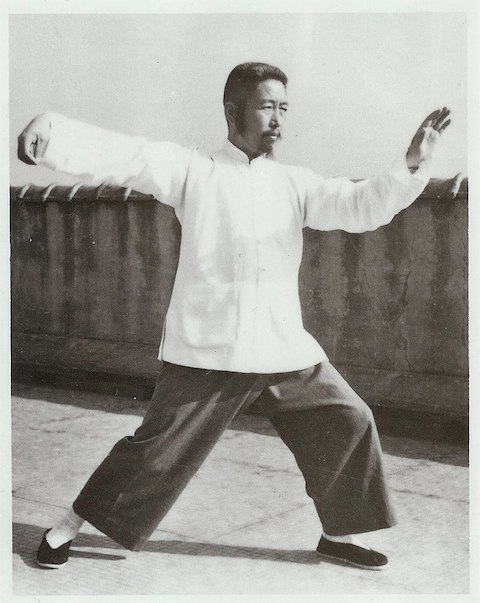
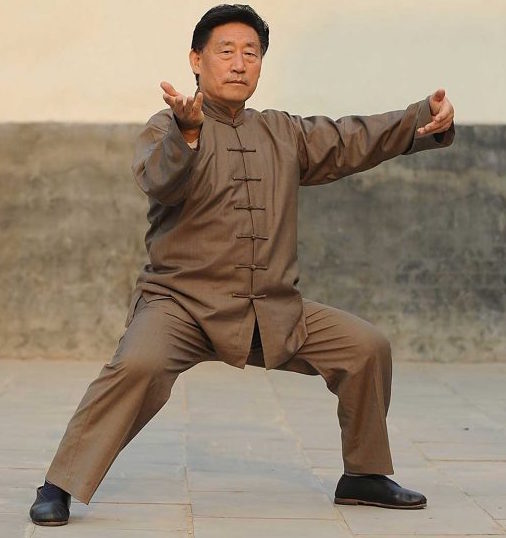
Head position in the form goes hand in hand with the issue of leaning. Some styles of Tai Chi, like Wu style and Yang Cheng-Fu’s Yang style, opt for a slight angling forward of the torso in forward-weighted bow stances. Other styles like Sun style, Chen style and Cheng Man-Ching style all keep an upright posture as often as they can, even in front-weighted stances. (See pictures below)

But the thing is, all styles are upright in their back stances (or should be). And even styles that maintain an upright stance, have to lean forward to do throwing techniques that take the person to the ground like Needle at Sea Bottom or Punch to the ground, for example.

Here are some examples of different Tai Chi practitioners:
chen-xiaowang-1-1000x563

Chen Xiaowang, upright and stable.


800px-Cheng_Man-ching

Cheng Man-Ching, very upright.


Sun Lu Tang 2014-12-11 15-54-12

Sun Lu Tang, no leaning.


A variety of postures from Wu Jian Quan, showing sometimes leaning, sometimes not.

Yang Cheng-Fu showing sometimes a slight leaning, sometimes not.


I think it’s time to get to the point of all this:

It’s not the lean itself that matters.
It’s maintaining an unbroken spinal alignment that is the key issue!

All these practitioners have one thing in common, they are not letting their heads droop, and they are not looking at the floor when they don’t need to.

For example, when even a practitioner who is famous for his upright posture does Needle at Sea Bottom, he or she bends forward, she just doesn’t break the alignment of the spine.

Needle at Bottom of the Sea

Needle at Sea Bottom


The Tai Chi classics talk a lot of carrying the head as if “suspended from above”. If you let your head droop you break the spinal alignment. You are easy to off-balance in push hands because your posture is broken. But if you hinge properly from the hips then you can still keep this spinal alignment even when you bend forward.

Think of the spine as including the neck (which anatomically, it does of course). If the neck goes offline in relation to the spine then the weight of the head has to be compensated by muscles elsewhere in the body. And this extra tensing of muscles results in a less efficient transfer of Jin from (or too) the ground.

Because we are quite used to this happening while standing or sitting, we don’t really feel our head being off centre so much. Switch to working on the ground, in a yoga posture for example, and you can instantly feel the difference your head position makes.

On a technical level, if you are using Jin you should be able to let the solidity of the ground be apparent at the point of contact with the opponent. If you have to use too much muscle then your pure Jin starts to turn into “Muscle Jin”. Muscle jin, isn’t as adaptable to change as pure jin. You can’t easily change direction, for instance. It also just doesn’t feel as it should. It might help you win a push hands competition, but you’ll find it lacking when it comes to martial technique.

And when it comes to the thorny issue of leaning, I’d recommend trying to stay upright in push hands. As I said before, the leans you tend to see in Tai Chi forms are to do with the application of a technique. Sure, you can lean to apply power according to a technique (just make sure you keep your spine aligned) but for the usual back and forth of push hands I’d recommend trying to keep as upright as possible. You’ll find it gives you more freedom of movement in the horizontal axis.

If you watch this clip of Wang Hai Jun doing some push hands with applications in it, you’ll notice that he’s staying upright during the push hands, but he’ll lean to apply a technique:


2. Shoulder usage

I posted before about learning how to sink in Tai Chi Chuan. One of the benefits of sinking is that you can be powerful yet relaxed at the same time. Again, this is a body requirement for the use of Jin. I don’t really care about relaxing the legs so much (although see point 3 later on) they key thing is making sure that all the tension of the upper body is dissolved down into the lower body.

You want to feel like your upper body is empty, while your lower body is full. “Hands like clouds, legs like mountains”, is a phrase that springs to mind.

The big stumbling block here is always the shoulder. Either we use our shoulder too much, and the movement becomes local and isolated from the rest of the body, or we don’t relax it sufficiently, and it becomes a blockage to the smooth flow of power from the ground that you’re looking for.

One really effective way of bypassing the shoulder in push hands, and relying more on sinking and the power of the ground, is to imagine a tube that runs from your hand, all the way up your arm, and down your back to the foot and the ground. Imagine another tube for the other side of the body. Now, when you want to move your arm, you have to move the whole tube. Start your power at the foot.

Over time, once you get the hang of it, it will become intuitive to start to direct your ‘tube movement’ from the waist area, and ‘moving from the dantien’ starts to become your preferred method of movement.


3. Using the back leg as a brace

Another trap people fall into is using the back leg like a brace, held stiff against the ground. Again, this leads to muscle Jin, not the relaxed release of power we are looking for. If you engage in the push and shove type of push hands you typically see at push hands tournaments then this is a great way to win. Unfortunately, ‘winning’ makes no difference if your goal is to get better at Tai Chi Chuan.

Don’t get me wrong, a little physical scrap like this is good for you now and again, and it’s good fun to push yourself physically! But these days I tend to let BJJ rolling get that all out of my system, so I can focus more on developing push hands skill in the right way when I’m engaged in push hands practice. .

So that’s a bunch of stuff you shouldn’t be doing. But what should you be doing?

I’d put forward the following 3 suggestions. This is just my personal opinion, of course.

1. Posture, posture, posture.

As you push hands keep your focus on your posture. Mentally note when you lean forward, note when you feel unbalanced sideways. Stop looking at the floor. Look at the horizon, through your opponent. Note when your feet aren’t flat on the ground. Where is your breathing? Low down or up in the chest? I count breathing as a posture consideration since it will affect your posture.

2. Sink.

I’ve said it before and I’ll say it again. Sinking is the key to changing from using Li to learning to use Jin. Learn to relax the upper body completely and drop your weight into your lower body, then use that to power your movements.

3. Listen.

Once you are relaxed and able to sink your weight (Sung in Chinese) you should start to ‘listen’ – Ting Jin in Chinese. This enables you to detect where your partner is weak in their structure. How just a little push here or there will send them off balance. That’s where you need to start experimenting in your attacks.


Yang Lu Chan’s old house and Tai Chi in Yongnian

The Wu Yu Xiang style Tai Chi

I found this video recently of an old gentleman called Mr Han practicing his Tai Chi form in the courtyard in front of the old house of Yang Lu Chan (the founder of the Yang style, pictured top left) in Yongnian County, Hebei province.

The video says he’s practicing Wu Yu Xiang’s (1818-1880, pictured top right) varient of Tai Chi, but I don’t find his performance particularly typical of that style as it is usually presented with much smaller stances than he’s using. It’s possible of course that this is what an ‘older’ version of the style looked like. It’s more similar to what we know as Yang style today.

The Wikipedia take on Wu Yu Xiang was that he was a “scholar from a wealthy and influential family who became a senior student (along with his two older brothers Wu Chengqing 武澄清 and Wu Ruqing 武汝清) of Yang Luchan. Wu also studied for a brief time with a teacher from the Chen family, Chen Qingping, to whom he was introduced by Yang.”, which I think is accurate.

It’s interesting that he learned from Yang LuChan, but also went back to try and find the teacher that Yang learned from, presumably, to find out details he was missing, or simply out of curiosity. It turned out that Chen Changxing (Yang’s teacher) said he was too sick to teach and instead referred Wu to Chen Qingping who was living in Zhaobao (赵堡) village, just down the road. He studied with him for a few months. The whole thing does sound a bit like a brush off to me.

Also, I think we can assume that Wu financially supported the teachers he learned from, since he was wealthy. Here we can see the birth of the Ching Dynasty idea that a martial artist could earn a living purely from teaching these arts.

Wu, and his brothers, allegedly found the documents we now call the Tai Chi Classics in a salt cellar, however, I’d say it’s much more likely that they are the authors of these documents (which are really just a collection of old martial arts sayings), given that they were wealthy scholars. Especially since they definitely did author some other writings on Tai Chi themselves.

Wu taught his nephew Li Yi-Yu, who in turn taught Hao Weizhen (郝為真; 1842–1920) who was the person who made the style popular, so it is often called Hao Style.

The video above is the sort of Tai Chi form I associate with Wu Yu Xiang’s style today, but if we go back to the video taken outside Yang’s house in Yongnian, the Tai Chi starts at 54 seconds. If you notice Mr Han’s performance looks a lot more like Yang style.

If anything I think this just shows that the further you go away from the source of something, the more it inevitably changes. Tiny little changes, amplified by time, end up with big differences in the end results.


Sinking in Taijiquan

black and white waves close up view circle

Photo by Skitterphoto on Pexels.com

I generally try to avoid telling people to “sink” in Tai Chi for the simple reason that they usually try to physically lower themselves in the postures, inevitably resulting in using too much force and sticking out their butt, or putting their knees at an odd angle.

Sure, you do need to have a lower-than-normal-standing posture, so you can relax the lower back and centre the coccyx, but when people start to get uncomfortably low (usually combined with too much tucking of the hips) that’s when things break down.

I was doing some push hands recently, and I was trying to work on the idea of reacting to being pressured with a push with the action of sinking as your initial response rather than by trying to do something with their push.

Taoist non-action

By sinking I mean internally sinking – letting go of tension and letting it all drop, rather than by physically lowering yourself. In a way – it’s a kind of non-action. You’re taking something away rather than adding it to the situation. If you can do that then the tension that is created between you and your partner – the pressure – when they start to get too close with their push just dissipates, and the right action arises spontaneously by itself. It’s easy to redirect them because you have ‘got underneath them’.

screen-shot-2017-02-21-at-22-54-10

Sun Lu Tang

It’s a difficult concept to grasp. It reminds me a lot of reading the Tao Te Ching, the Taoist classic of the way and its power. The Tao Te Ching constantly advises us to take the path of no resistance, which initially seems like a passive response to a situation, but when done skillfully, is anything but.

By taking ‘you’ out of the conflict, it can often resolve itself, and usually in your favour.

“Therefore the Master
Acts without doing anything
And teaches without saying anything.
Things arise and she lets them come;
Things disappear and she lets them go.
She has but doesn’t possess,
Acts but doesn’t expect.
When her work is done, she forgets it.
That is why it lasts forever.”


Related stories on this blog:

Is Taijiquan Taoist?

Wu Wei – the art of doing without doing

Don’t push the river, listen to it instead

Chen Ziming’s “The inherited Chen family Taiji Boxing art”.

e3808ae999b3e6b08fe4b896e582b3e5a4aae6a5b5e68bb3e8a193e3808b-e999b3e5ad90e6988e-1932-portrait-1


Paul Brennan has added a new selection of translations to the martial arts manuals contained on his website. This one is Chen Ziming’s “The inherited Chen family Taiji boxing art”.

Sample quote:

My colleague Chen Ziming is a native of the Chen Family Village in Henan and an expert of the Taiji boxing art. After many years of painstaking effort, he has written The Inherited Chen Family Taiji Boxing Art. A month ago, he begged me to proofread it and also to produce a preface. I read it carefully over the course of two weeks and could not help but slap the table in amazement. The Taiji boxing art is truly a means of connecting to the Way, which cannot be said about most other boxing arts. But unless you achieve a high level, you will not be capable of discussing its essentials.
This art as it is taught in modern times can be divided into about three styles: [1 – Chen] Chen Style Taiji is in a direct line of descent from the Chen family in Henan. [2 – Hao] Hao Weizhen taught Sun Lutang what is called “Open & Close Taiji”, but Hao Style was obtained from Wu Yuxiang, who had learned Chen Style. [3 – Yang] The Taiji that Yang Luchan studied was likewise taught to him by a member of the Chen family, Chen Changxing, and then Luchan taught it to his own sons, Banhou and Jianhou, and to this day his version is in fashion everywhere. All three of these versions actually originated from Chen Style. They have each evolved and been improved, and so they each have their differences.

Link.

One stroke of the brush

niketh-vellanki-202943-unsplash.jpg

Photo by Niketh Vellanki on Unsplash

It says in the Tai Chi classics that the movements of Tai Chi should be continuous, like a rolling river:

Chang Ch’uan [Long Boxing] is like a great river rolling on unceasingly.”

There are a few interesting things to unpack about this quote, taken from the Tai Chi Classic attributed to Chang San Feng. Firstly, it doesn’t call the martial art “Tai Chi Chuan”, instead it calls it “Long Boxing”, which is yet another indicator that what is known as the “Tai Chi Classics” are in fact, just a collection of common sayings about martial arts of the time that have been bundled together.¹ I tend to regard what we know as “Tai Chi Chuan” today, in all its various forms, as the modern expression and amalgamation of older Chinese martial arts; it is an evolution of ideas and techniques, rather than a ‘new’ martial art which was invented in a moment of divine inspiration by somebody having a dream about a Crane fighting a Snake, which is one of its apocryphal origins myths.

Secondly, the image of water harks back to ideas of Taoism, which uses water imagery frequently in its depictions of worldly affairs. The imagery of a river is a good one. And the implication is clear: no stopping. Continual movement.

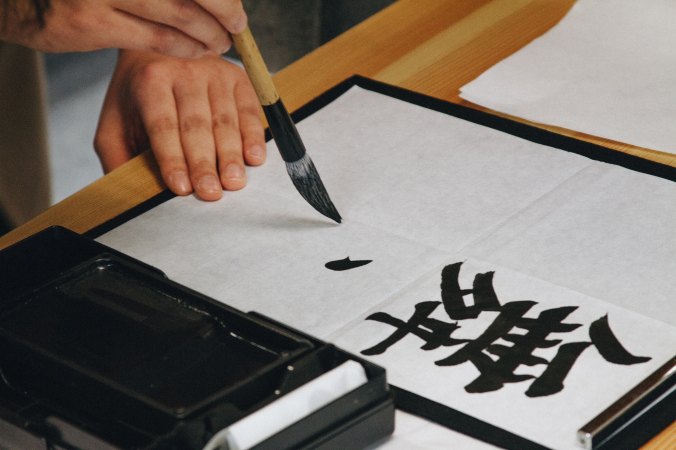
Quite often people who think they are doing a Tai Chi form continuously are not. They’re putting in little stops at the end of movements. My teacher called this “posturing”. A good performance of a Tai Chi form will smooth out all these end points so that the form becomes like a single stroke of a calligrapher’s brush on a canvas.

When approached this way, the Tai Chi form stops being composed of numbered moves which are separate elements. As human beings we’re so ingrained in this type of thinking that we even classify Tai Chi forms with numbers on the end. E.g. the “The Tai Chi 24-step form, the Chen style 48 form, the Yang style 108-posture form, etc..” with the number indicating how many different postures there are in the form. When you do the form as ‘one stroke of the brush’ then the whole form becomes one move from beginning to end. Sure, you move from close to open to close to open, and so on, continuously within the movement, but there is still only one movement.

But why? Well, in terms of aesthetic value, it’s definitely more pleasing to the eye to see somebody who moves like this, but that’s not the only reason. In terms of martial technique, the ability to flow smoothly between techniques is key to being able to respond adaptively to whatever the opponent is doing. If you’ve never put the time into practicing movements smoothly you can’t expect to just pull that skill out of the bag when required.

Another reason is that it’s much easier to learn to coordinate your arms and legs if you can move at a constant rate. It gives you the mental space you need to slow down (which is a whole principle in itself) and become more aware of the movements you’re doing, rather than rushing through them, which creates mental blank spots you may miss.

You need to approach continuity as a task that is going to take you a while to complete. As you do the form become aware of where you’re losing awareness and continuity. Has a hand stopped moving here? An arm become immobile there? Did you pause for a fraction after completing Brush Knee Twist Step? (Here’s a hint, you probably did).

If you make continuity the focus of a complete run through of the form then over weeks and months you can get to the stage where your movement becomes very smooth and even. Now you’re ready to look for a deeper meaning. Consider the aforementioned river – it moves continuously, in that it never stops, but different parts of it move at different rates. Where the river narrows rapids form, where it flattens out the pace is more genteel. The form is like this too. There are faster bits and slower bits – quite obviously in Chen style, but also in the even-paced Yang styles. Let the movements guide you – they’ll tell you where you should naturally ‘go with the flow’. Now your techniques will start to become more realistic and you’ll be able to appreciate the type of movement required to make them work.

As Bruce Lee said. “Be like water, my friend”.

¹. See Douglass Wile’s Lost Tai Chi Classics from the late Ching Dynasty


Q&A with Michael Babin

michael

I’ve known Michael Babin (online) for a number of years, and always enjoyed his insights into online discussion forum arguments and martial arts in general. Michael lives in Canada and may, or may not, be a retired Tai Chi teacher. Do we ever retire? Now David Roth-Lindberg, another online friend, has done a Q&A with him and published it on his blog, Thoughts on Tai Chi.

It’s worth a read as Michael has quite a few insights into the world of being a Tai Chi teacher and his dry sense of humour always amuses me.

Q&A with Michael Babin

Michael’s blog

Thoughts on Tai Chi

Tai Chi beneath the surface

As we approach the holiday season, stress starts to enter the body and mind, family dramas intensify and it’s easy to forget the simple things in life. That’s where Tai Chi can help.

The question of what use Tai Chi or martial arts are to modern life comes up frequently. Unless you’re in a job that requires frequent encounters with violence most of us will live our whole life with minimal exposure to violence.

So what else can martial arts offer? This short film by Pamela Hiley shows some of the meditative sides to life that Tai Chi can reveal, where questions resolve to silence and are answered by nature.

“True to Life’ is a cinematic essay portraying the spiritual ideas of Pamela Hiley, a Welsh born Taiji master living in Norway. This is an exploration of Taoist philosophy, seen through her eyes, with very little factual information apart from ideas on the transcendent mind: breathing, balance, defence, neutralisation of conflict and moving beyond polarity. We follow Pamela on a trip to China where she meets with masters and students of these ancient arts – they love and share a deep respect for the mysteries of their common practice. But this film is not about a journey in the physical world, but rather trip into the the inner landscape of the mind.”


A new take on an old challenge video…

For a while now (10 years in fact!) there’s been a video on YouTube purporting to show a push hands challenge match that went down between Chen Xiao Wang, the recognised head of Chen style Taijiquan, and a XingYi practitioner from Taiwan called Liao Bai.

The challenge is often cited as a rare example of an uncoperative push hands exchange featuring Chen Xiao Wang, and one in which he doesn’t come off looking as proficient as he normally does. While nothing of substance happens at all in the clip, the fact that Liao Bai is able to launch a couple of strong attacks through Chen Xiao Wang’s defences, and occasionally make Chen move a foot is seen as some sort of a victory for him.

Firstly, I find the idea that this is some sort of victory slightly bizarre to begin with – I mean, he made him move his foot? Really? Is that it?

Secondly, the explanation that accompanies the YouTube video is written by only one side of the two parties involved, and heavily partisan. The clip is described as a “freestyle push hands”. However, it may turn out that what we’re seeing is nothing of the sort.

Mike Sigman posted recently:

Liao came to a workshop of CXW’s and bragged that no one can take his Tiger Fist releases. The video pretty much starts where CXW calls him on it and says, “OK, you do it”. Liao attempts a number of times to release his Tiger Fist (you can see it is the same release every time) and CXW attempts to absorb and instantaneously release back into Liao Bai, by CXW’s use of Receiving Jin. A lot of people embarrassed themselves and their reputations by publicly posting this video and saying it was “push hands”: it wasn’t even close … it was an example of CXW trying to use Receiving Jin in an open, unrehearsed setting, thus making it a good video to study.

OK, Mike is clearly a paid-up member of Team Chen Style :), but even so, I find his explanation persuasive. What they’re doing in the clip is clearly not push hands in any way, shape or form.  There’s just some awkward feeling out – a touching of the arms, then Liao Bai tries to launch attacks, while CXW tries to absorb them, without attacking back. Chen is clearly not even trying to attack back. If his only aim was to show he could absorb the attacks (using Receiving Jin), then this makes sense. And for the most part he succeeds.

Either way, it’s rare to find a clip of Chen Xiao Wang that’s not cooperative, so it’s instructive. Most of the time Chen succeeds, but not always. That’s what ‘real’ looks like. It’s not going to sell seminars or generate income, and it comes with risks to both health and reputation so I can see why he does so little of it, but you know it when you see it.

I created this blog post to counteract the popular narrative that surrounds this video. If we’re going to get to the bottom of it then it’s important to hear from both sides, and so far the idea that it’s a push hands challenge has gone pretty much uncontested.

It might be time to view it again, with fresh eyes.


Bad news people – Qi is not mystical


woman holding eye and concentrating

Magic? Or something else…

I read this in a blog post today:

“I remember one time when a student was showing a qigong posture she was taught from another teacher and spoke about how qi circulated through it. He adjusted her posture slightly and said “now you have qi circulation”. “

From here. 

When you read something like this I think it reinforces the incorrect idea that Qi is some type of etheric, mystical energy that rises in our bodies like steam and can be directed by the mind… (in fact, that’s what the article goes on to talk about)

Well, frankly, it isn’t. At least in the context of martial arts, it isn’t. Acupuncturists probably have a different opinion on that, but I’m not talking about acupuncture.

But at the same time, if you know what is meant by “Qi” (through your practical understanding) then that original sentence I quoted above does make sense. Let me explain.

You’ve got to remember that when a Chinese teacher talks about Qi in terms of martial arts, what they are talking about is related to your physical structure. The stuff that makes you up. Skin, bones, tissue, muscles, etc…

If you have “strong Qi” then it means you are physically strong. So, for example, a strong athletic young guy or gal would be described as somebody with “strong chi”. Usually, the posture is good, the eyes bright, the hair shiny, etc… These are all aspects of “strong Qi”.

A weak slumped, tired, or sick-looking person would be described as having “weak Qi”.

man old depressed headache

You, my friend, have “weak Qi”.

So, an old person could have either “strong chi” or “weak chi” depending on how they presented themselves. If you’re bright-eyed and bushy-tailed, you’re doing well. Your Qi is strong.

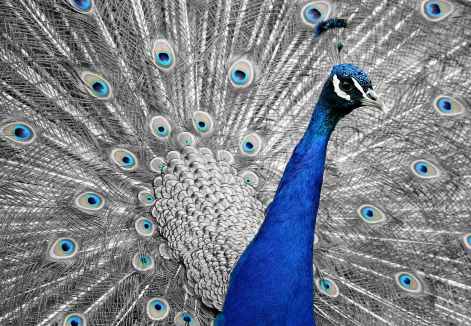
close up photo of blue peacock

Strong Qi, or BDE as the Yooth say today…

In Tai Chi your Qi refers to your physical structure in a movement, as well as a special type of conditioning of the body’s structures that takes place through exercises like Standing Post and Silk Reeling. Through these exercises, you can strengthen the felt connection from your fingers to your toes – a kind of all-over body suit. It’s the strengthening of this ‘body suit’ that explains the circus-style feats of strength you see martial arts groups demonstrating. Things like throwing a needle through glass, bending a spear on your neck, being resistant to blades and breaking rocks with your hands.


I would not suggest trying these things at home! Sure, there are often ways to fake feats like the ones above, but there are also ways to do it correctly, utilising the conditioning of the body’s Qi.

Martial arts techniques in Tai Chi require two things – Qi and Jin. Here we’re only talking about Qi. I’ve talked about Jin before.

Qi (Chi) relates to structure. So, if you adopt a Tai Chi posture that’s relaxed, sunk, stable and strong (i.e. your structure is good), then you are “using your Qi well”. And it could be said the “Qi is circulating well”. (Actually, nothing is circulating in the sense of water in a pipe). If your structure is off in some way then it could be said that your “chi is not circulating well”.

So, if we read that quote again, with the new knowledge that it is to do with posture and structure:

“He adjusted her posture slightly and said, “now you have qi circulation”. 

Could equally be written:

“He adjusted her posture slightly and said, “now you have better structure”.

So, to me that means, he corrected some defect in her posture (say an overly tense lower back, or tense shoulders, for example), so that her “Qi” started to circulate – i.e. the posture regained its natural strength.

Sorry guys, but none of this has anything to do with steam or heat or a mystical energy in the body. But it’s so easy to assume that this is what is meant when you read quotes like the one above.

Especially once you add to that the fact that people can feel pretty much anything they can imagine. 


Trust me, I’m a Doctor

Screen Shot 2018-10-16 at 12.52.31 PM.png

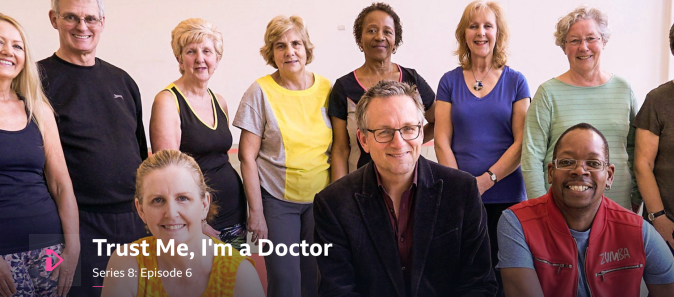
The most recent episode of Trust Me, I’m a Doctor featured Tai Chi!

“Michael Mosley finds out whether t’ai chi can offer the same health benefits as vigorous exercise – without all the huffing and puffing. ”

They compare the same time spent doing Tai Chi to the time spent doing Zumba, which is far more vigorous. Is he really “doing Tai Chi”? Well, that’s up for debate, but the results are surprising.

If you get iPlayer then you can watch it at the link below:

https://www.bbc.co.uk/iplayer/episode/b0bnbjlc/trust-me-im-a-doctor-series-8-episode-6