More thoughts on elbows and the classics of Tai Chi and Xing Yi

From  http://chentaijiquanworld.blogspot.com/ we find this nice quote about Chen Taijiquan:

“The, at first sight, seemingly humorous Chenjiagou saying to “always keep an egg under your armpit” reflects the importance of not allowing the upper arms to become stuck to the side of the body.

This idea of always keeping a space under the armpit is something I’ve heard said in other styles of Tai Chi as well, and it fits in very well with the idea of “Peng all over the body” that you’re aiming for in Taijiquan, that kind of “inflated like a balloon, but also soft, springy and heavy” feeling. 

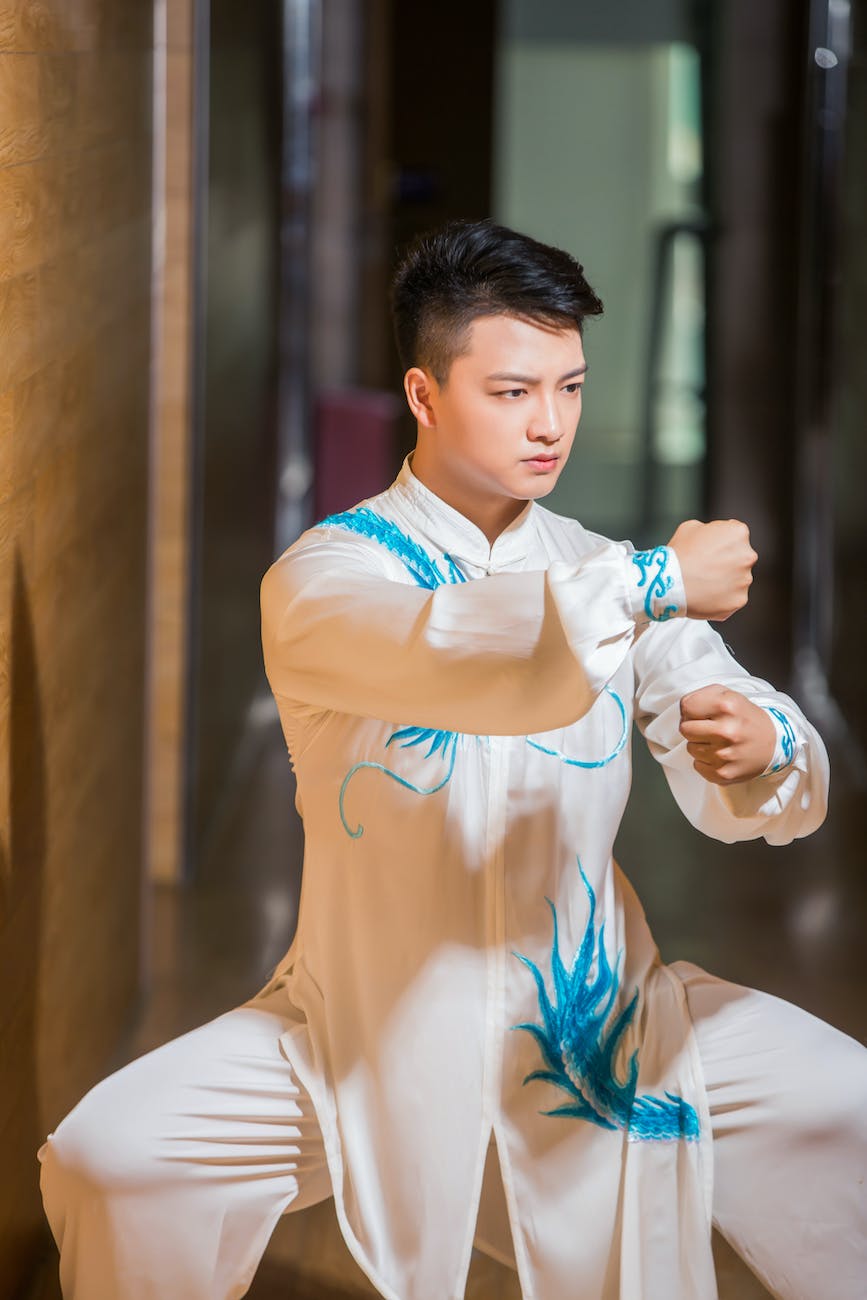
Taijiquan, with armpit gaps. Photo by Stephen on Pexels.com

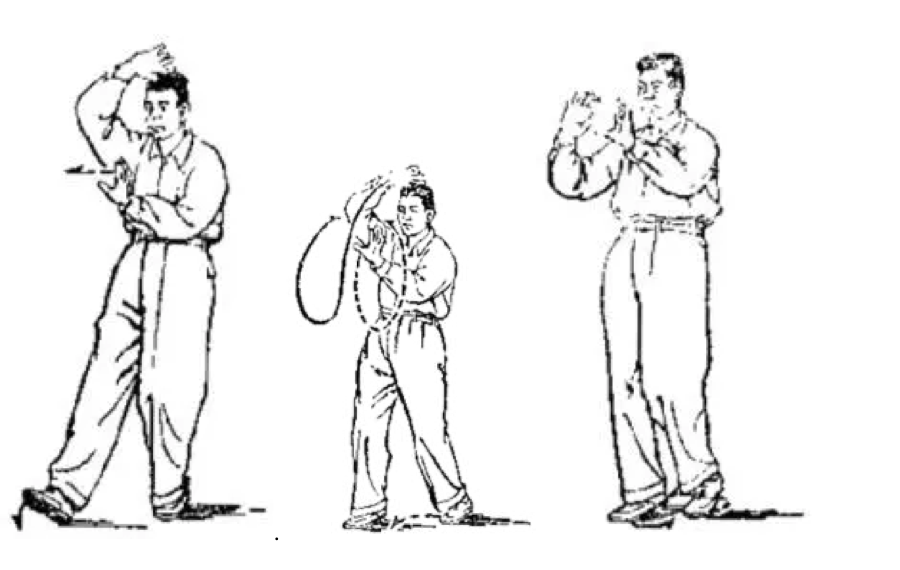
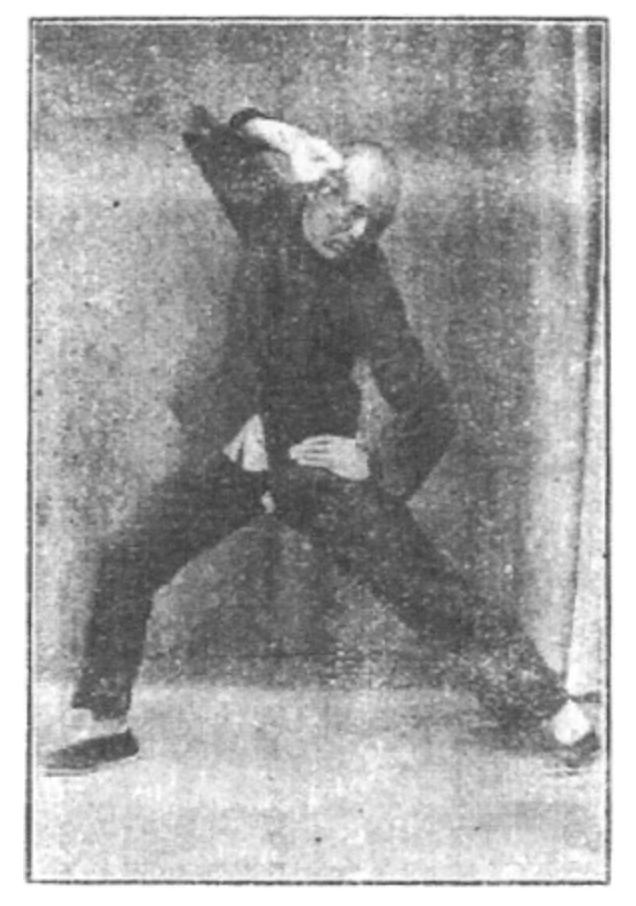
But how does that relate to the question I was looking at recently about the issue of where the elbows should be in Xing Yi? “The elbows never leave the ribs” is a line from the Xing Yi classics* (more of that later) that has caused a lot of arguments between practitioners on its interpretation and meaning. 

And when you compare it to the previous saying about the armpit from Chen Village, it’s basically the complete opposite advice! And yet, both Taijiquan and Xingyiquan are said to be internal arts, and part of the same family. So, is the advice about the elbow a crucial element, as fundamental as, say, aligning the Bai Hui point (the crown) with the spine? Or is this more of a piece of strategic advice to do with the fighting style of Xingyiquan, and not anything to do with its fundamental body method?

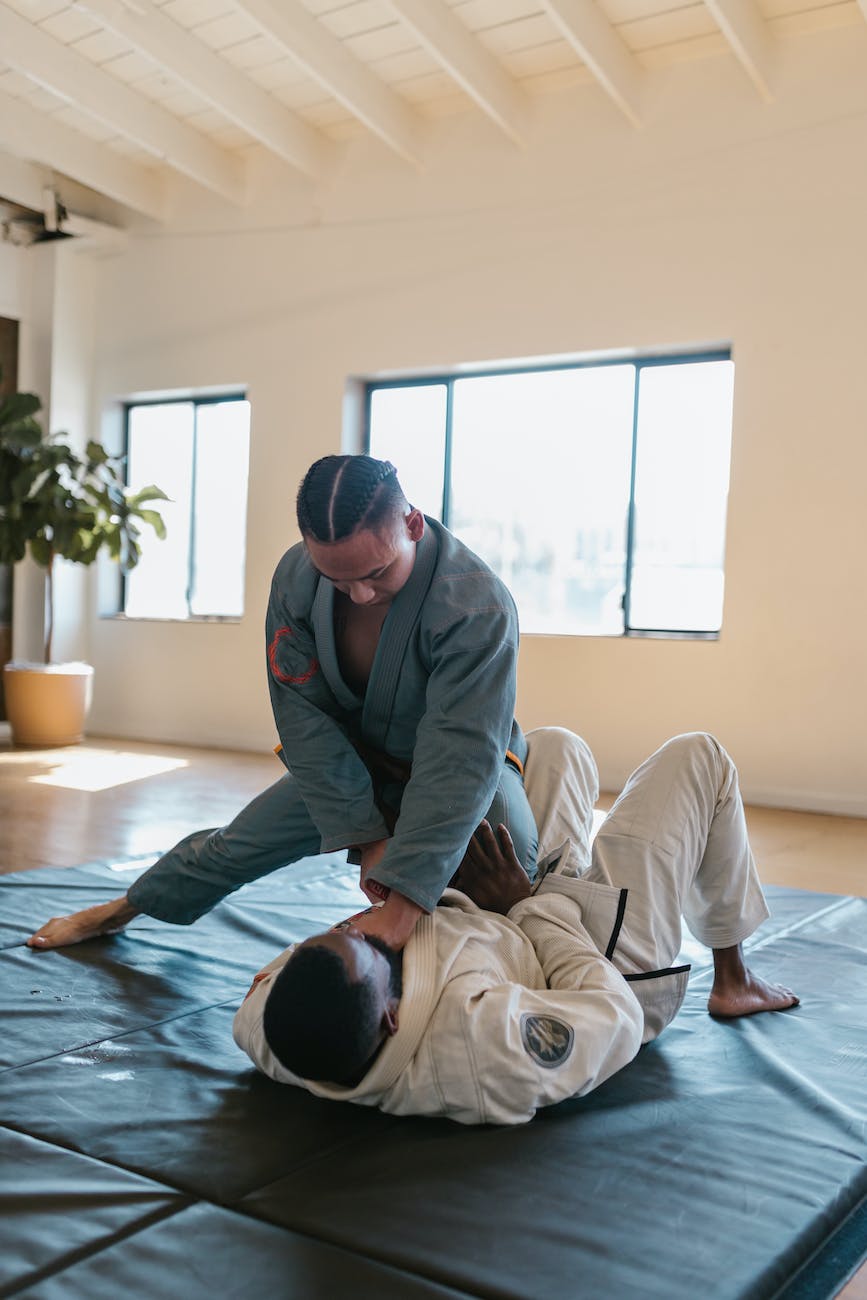
Let me throw in a curve ball here and switch arts to BJJ. “Glue your elbows to your ribs” is something I say to my students in BJJ all the time when they are on the bottom defending a position like side control, knee on belly or mount.

Knee on Belly in BJJ. Photo by RDNE Stock project on Pexels.com

If you let your opponent separate your elbows from your ribs in that position then only bad things can happen, so it’s great advice. Normally after I submit somebody new in BJJ I stop to explain to them how I did it, so we can turn it into a learning moment. 9 times out of 10 my explanation starts with “it started when you let me into the space under your armpit”. However, it would be ludicrous to make it into a hard and fast rule, to suggest that you should never let the ribs leave the armpit at any moment in BJJ. There are plenty of other times in BJJ where you need to pull with your arm, and you can’t do that fully without separating your elbow from your ribs.

* And let’s also decide on what constitutes a “classic” in Xing Yi. My own teacher only considered the 10 Thesis of Yue Fei  to be the classic writings in Xing Yi. Most of what people call the Xing Yi classics today are, in fact, writings created in the early 20th century when there was a publishing boom in martial arts manuals (See Chinese Martial Arts Training Manuals: A Historical Survey by Kennedy and Gau), and are based on the original Yue Fei writings anyway. For Xing Yi it started with Sun Lu Tang’s 1915 A Study of Xing Yi Boxing.

In the preface to his manual Sun says (Translation by Brennan), “While once at Bai Xiyuan’s home in Beijing, I got to see one of the Yue Fei manuals, not an original copy of course, but a handwritten copy made by someone in a later generation. It was not very detailed and unfortunately contained no explanations of its terminology, only the barest of text from beginning to end. I was suddenly inspired by this, immediately wishing to provide more complete information, even though I was fully aware that my level of learning and skill was superficial, and without being tempted to make anything up [in order to fill information gaps]. I secretly made my own copy and then deeply studied it, going through it posture by posture until bit by bit I had built up the material to make this book. There is no decorative language in it at all, for in my studies I have not dared to hold on to even the slightest exaggerations. Wherever flaws are found within my work, I hope my comrades will correct me, for which I would be very appreciative.

  – sincerely written by Sun Fuquan [Lutang] of Wan County, Baoding, 1915, 1st month, 15th day”

In his manual Sun has a chapter called “The Essentials of Practice” in which we find the advice about elbows and ribs. (Translation by Brennan)

“ESSENTIALS OF PRACTICE
The essentials of practice in Xingyi Boxing: 1. Sink your waist. 2. Shrink your shoulders. 3. Hollow your chest. 4. Press. 5. Lift. 6. Horizontal and vertical should be clearly understood. 7. Lifting, drilling, dropping, and overturning should be clearly distinguished.
  …
  Your head presses up during drilling, then shrinks back during overturning. Your hands lift during drilling, then drop during overturning. Your foot lifts during drilling, then drops during overturning. Your waist lifts during drilling, then drops during overturning. [from the Xingyi Boxing Classics:] “In lifting there is a horizontal aspect, but it is invisible [because it appears to be only upward]. In dropping there is a vertical aspect, but it is invisible [because it appears to be only forward].”
  Lifting is going out and dropping is striking, but when lifting is also striking, dropping is still striking. Strike with lifting and dropping, like the overturning waves of water, which are lifting and dropping. Regardless of lifting and dropping, drilling and overturning, going and coming, it should always be that your elbow does not leave your ribs and your hand does not veer off from your centerline.
  These are considered to be the essentials in Xingyi Boxing. Knowing these, the right path in the art will be obtained.“

But you can see that even in this passage, Sun is quoting the older “Xing Yi Boxing Classics”. So, you have to start to wonder, how old is the advice that the elbows do not leave the ribs, really? I know some styles maintain that their “quan pu”, ancient collection of classic handwritten writings their family possesses has this advice in. At least with Sun’s work we have a published date we can be sure of. 

Photo by George Sharvashidze on Pexels.com

But this also brings up the question of how much we dedicate ourselves to following the literal words of “the classics” to the letter. How much freedom are we allowed in our martial art? Were the classics intended to be a kind of set in stone, unwavering, set of rules to be followed on pain of death? The ancient writings of the founders always tend to take on this weight that gets heavier over time. If they’d been written a year ago, would we treat them with the same reverence? There are hard line Christians who treat every word of the Bible as the word of God, never to be questioned, and there are more modern progressive Christians who interpret the words in the Bible into a modern context, or see them as simply stories designed to teach an idea, and not to be taken literally.

So, the question still lingers, like a bad smell. 

Where do you put your elbows in Xing Yi? 

I think the best answer I’ve found so far is…..

“in between your shoulders and your wrists”.

The power of connection, with Henry Akins

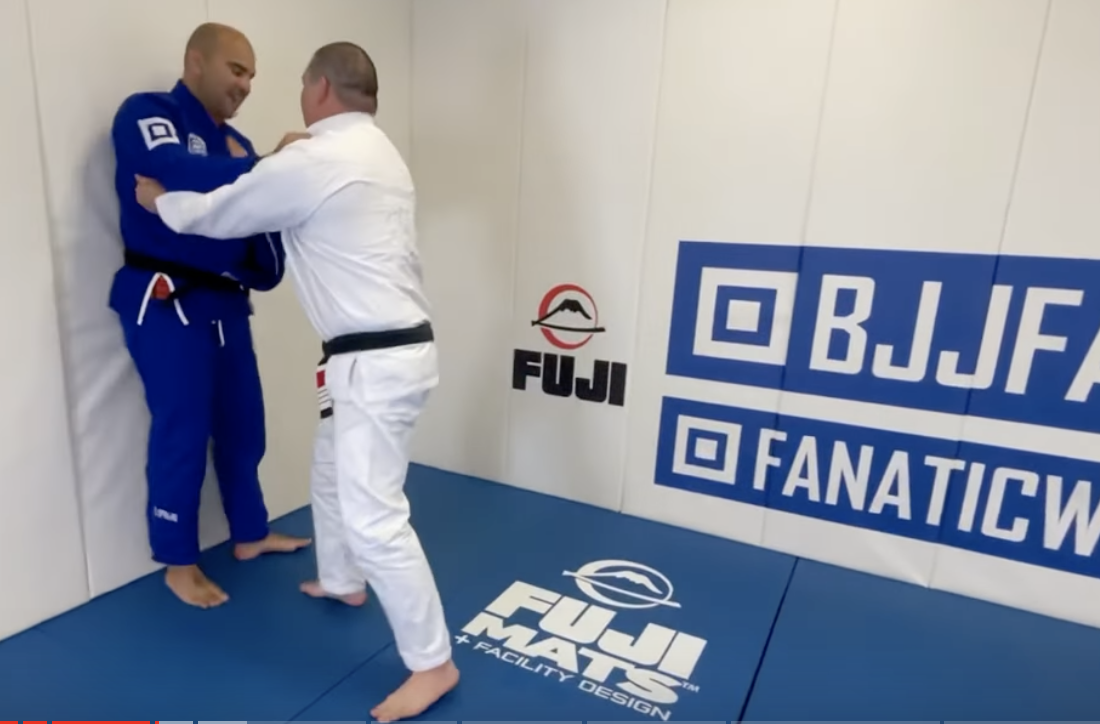
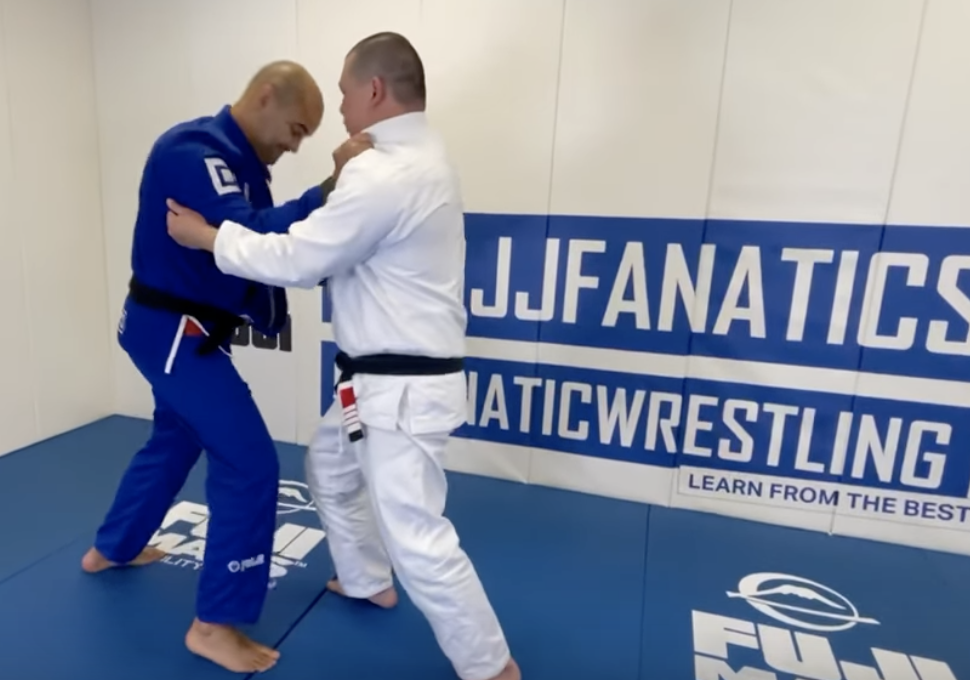
I like it when you can find those rare moments where martial arts seem to cross boundaries and blend into each other. I came across this video recently of Henry Akins explaining the concept of connection in BJJ, as taught to him by Rickson Gracie, and it doesn’t half remind me of Tai Chi…

There’s a lot of talking at the start, but he gets down to action at around the 4 minute mark and starts demonstrating rooting – something that you’ll find being practiced in most Tai Chi classes. These are what you’d see described as ‘simple jin skills’ or ‘jin tricks’ by a lot of Tai Chi experts. And they are what you are supposed to be doing in Tai Chi all the time, when you practice the form and when you do push hands. They’re the root (ha!) of classic phrases from the Tai Chi classics like, “4oz defeats a thousand pounds”.

In fact, a lot of people seem to think that these jin skills alone qualify something as being internal, which is why you see the descriptor, “internal”, being added to the name of a lot of martial arts, like ‘internal Wing Chun’ or ‘internal Karate’.

My take would be that, sure, these are an essential part of the internal package, but they’re not the whole enchilada. For instance, Henry is not doing anything particular with his dantien, and indeed, you don’t need to do anything in particular with your dantien to do these things. But these are still the first few steps to being an internal art.

As you know if you’ve read my blog for a while, I’m a BJJ practitioner myself, so it’s great to see somebody like Henry applying these principles to BJJ. I see it as a path to a version of the art that you can still do as you get older. I don’t think you’re going to be winning any competitions if you dedicate yourself to practicing these jin skills (the power and aggression of youth is pretty darn overwhelming to fight against in competition, particularly if it’s being done by dedicated athletes who train to a level the average guy with a job and two kids can only dream of). All I’m after is something that gives me the edge in friendly, hobbyist rolling and enables me to stay in the game and on the mat for as long as possible. “Do not go gentle into that good night”, as Dylan Thomas put it.


Push it, push it real good

In particular, Henry deals with one of the favourite subjects of Tai Chi – pushing. Henry pushes Bernardo, using power from his legs, not his arms – this is Tai Chi 101 – and then shows how to receive a push by aligning his body so that the push goes into the ground. He, (dare I say it?) tucks his butt, so that the force goes down his legs to the ground, rather than knocking him backwards. This is what you need to be working on in push hands when people push you. N.B. Tucking your butt does not mean adopting a forced and unnatural posture, it just means flattening the lower back and aligning the lower part of your spine with the upper, so that your bum doesn’t stick out.

What I like about this clip is that Henry, coming from a non-Chinese marital art, doesn’t use words like Jin and Qi – he just talks about alignment, relaxing and using the legs and ‘using the ground for support’. It seems much less mystical than the way it is typically presented in Tai Chi, and it goes to show that you can explain a lot of Tai Chi things without having to use words that are nebulous or hard to grasp for the Western mind.

But it’s really the concept of connection that Henry is teaching. As he says, a lot of the time in grappling what you want to do is connect to your opponent to use your techniques, and then learn how to disconnect from them when they try their techniques on you. He sees connection working in three main ways – and this is where I think Tai Chi teachers can benefit from his teaching –

  • Connecting within yourself,
  • Connecting to the opponent
  • Connecting to the ground.

That’s not a bad way to look at grappling at all, and I think it is a good way to help people understand that, when doing push hands, you can’t apply no force at all to the other person in a sort of noodle arms-display of rooting into the ground, because then you have no connection to them. If you move, they don’t move. Instead, you need to apply enough force at all times so that you are connected to their body and through listening (ting) you can feel when it’s time to break this connection too. Think of it a bit like an insect using the surface tension of the water to stay afloat.

Great work Henry, I would buy your instructional on Connection, if only it wasn’t almost $300. 🙂 But thanks for sharing that video above for free. I’ll have to wait for it to come into the ‘daily deal’ section of Fanatics, where they reduce the price. Osss!

If you haven’t already, check out my post on Jin Tricks and Mike Sigman explaining Jin. Both worth a watch.

If you haven’t checked us out on Facebook then please do, and why not give our Instagram page a look too, and our YouTube channel?

1,000 followers on Facebook! (and my most popular posts of all time)

The Tai Chi Notebook Facebook page has finally got far enough over the 1,000 followers milestone that I feel confident in shouting about it a little bit! So, here we go – 1,000 followers!

Thanks to everybody who has liked, subscribed and commented on The Tai Chi Notebook over the years – it’s all very much appreciated!

If you haven’t checked us out on Facebook then please do, and why not give our Instagram page a look too, and our YouTube channel?

Also, I’ve changed the sidebar on the blog over to the right —-> It now shows the most popular posts on the page by views and likes, so if you’re looking for something interesting to read about martial arts and Tai Chi, then look here to find something.

What came first in Tai Chi – the philosophy or the techniques?

It’s no secret that Tai Chi is a series of circles. The body opening and closing using circulation motions, like a yin/yang symbol in action. But when you look at a Tai Chi form, you’ve got to wonder, what came first, the techniques or the philosophy? Was Tai Chi created in a moment of philosophical purity and clarity, or was the philosophy simply bolted on to existing military or self-defence techniques (or popular movements from theatrical or religious rituals) that were already as old as the hills?

What I’m wondering is, was there at some point a founder of the art who decided, as a starting point, that he was going to purposely create a martial art based entirely on a philosophy based on the Tai Chi symbol, which would be both the overarching principle and the raw material, out of which martial applications would be fashioned?

Or did the idea of doing things in circles come later, and get added to existing martial techniques, and in so doing, alter them forever?

Well, let’s look at what we know as fact.

Fact 1: Tai Chi does indeed contain nothing but circular movements. I’m sure somebody somewhere can point out a movement in a form that looks linear, but it’s quite possible that the movement is actually being created in a circular way, or it has degraded over time into something else. All we can do here is talk in broad brush strokes. If you look at a Karate form, or a Tae Kwan Do form you see lots of examples of linear movements, that are usually lacking from Tai Chi forms. From this we can conclude that some sort of philosophical idea must have been involved in its creation.

Fact 2: The techniques in Tai Chi forms look a lot like other techniques in other Chinese martial arts forms, so are not in any way unique. If you look at a lot of forms from the Shaolin Temple, or village styles from all over China, you see postures and movements that are very similar to the techniques found in Tai Chi. In a way, there is nothing new under the sun.

When solving a murder, detectives look for two things first – opportunity and motive.

When Tai Chi first appeared in Beijing in the late 19th century it was promoted along with the idea that it had a founder, an immortal Taoist called Chan Sang Feng who had created the art based on his observation (or a dream) of a fight between a crane (or possibly stork) and a snake. And while certain groups (see my last interview with George Thompson) on Wudang mountain still take this story very seriously, and possibly literally, modern scholarship has tended towards the idea that it was a fighting art from the rural countryside (Chen village being the most popular choice for origin) that found its way to Beijing via a young Yang LuChan, who taught it to those at the highest level of influence inside the Forbidden City.

Of course, the shadowy figure of Yang LuChan is never adequately explained, and since he was an uneducated nobody – a rural rube – nobody really made a record of his existence. The story everybody, including all the heads of the various Tai Chi families, follows, (because it’s the story the Chinese government approves of), is that he learned the art in Chen village. But I always wonder about that time in the 1860s when Yang and the very well educated and important Wu brothers were in Beijing, as being a time when Tai Chi could have been invented. The Wu brothers would have known the philosophy on which to hang it, and Yang would have had the martial skills to make it work and turn it into something that could bring the fractured court of the late Ching Dynasty together, bonding over something that was essentially Chinese in the face of constant threat from foreign powers. Yang and the Wu brothers together had both opportunity and motive, and regardless of whether you accept that interpretation of history or not, Tai Chi has been used as a political football ever since, especially by the current government to whom Tai Chi (the world’s most practiced marital art!) represents the ultimate form of soft power, spreading Chinese culture and influence the world over.

T’ai Chi magazine, AI and punching bags

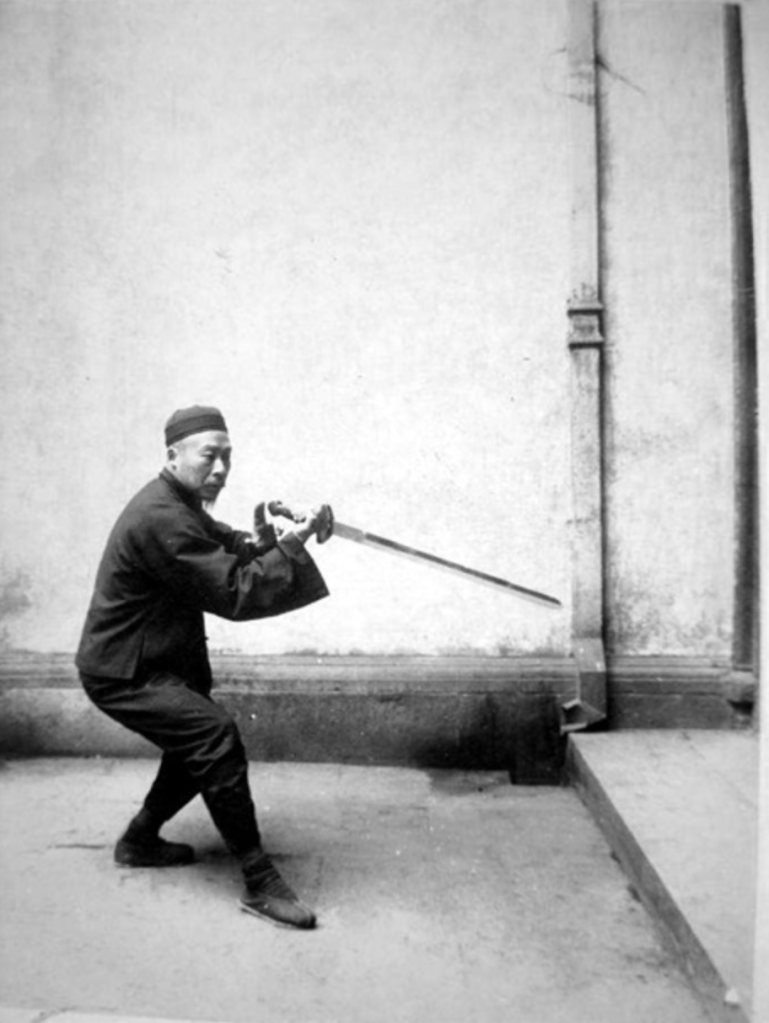
Sometime back in the early 2000s I had an article published in what was, at the time, the premier Tai Chi magazine, T’ai Chi Magazine. It was American, but you could find it in the UK in newsagents like WHSmiths and in martial arts shops. I was reminded of it recently and dug it out of my archive. Here it is! I looked a lot younger back then…

I remember being really excited that I got this article published. It’s hard to imagine now, but beyond your instructor or random seminar big wig in your town, T’ai Chi Magazine was one of the only ways to get information about Tai Chi before the Internet took over everything. It was run by its Editor, Marvin Smalheiser, who sadly passed away in 2016.

Whenever you dig out something from the past it’s a good opportunity to reflect on how things have changed. T’ai Chi Magazine was run to a pretty high standard, the images it published were always good, and many of them were in colour. The articles were generally of the interview type and provided a little glimpse into the T’ai Chi world for fanatic followers, who would look at the articles for hours, trying to work out what a particular pose could be for, or how the featured practitioner was doing something. Then VHS video came along and made still images irrelevant, since you could actually see the applications being done (a lot of the pages in T’ai Chi Magazine were dedicated to advertising VHS videos of forms and styles, mainly from China). And later online video sites like YouTube came along and made VHS look antiquated.

Considering the latest developments in AI it looks like our future will consist of an AI-generated person teaching us Tai Chi forms with no credit to the sources it stole it from, and probably teaching the moves wrong anyway. I’m not sure that technology is always moving us forward. You can imagine the fear that the first Tai Chi instructors had that if they put images of their form in a book it could be stolen from them. These days, it’s not only going to be stolen by AI, but it’s going to be manipulated into something else entirely!

You can imagine the prompts now:

“Alexa, teach me a Tai Chi form that lasts for 10 minutes and exercises all my major muscle groups”.

“Sure, here you go Graham.”

A video (or hologram?) of Alexa will then start teaching you some ‘follow along’ series of Tai Chi movements it’s magicked up out of thin air, with no credit to where it got them from, and slightly wrong.

And the worst thing will be, it’s probably exactly what people want.

Making your own form

“If correct timing and position are not achieved,
the body will become disordered
and will not move as an integrated whole;
the correction for this defect
must be sought in the legs and waist.

When you’ve been practicing Tai Chi for a while – a few years maybe – you’ll get to the stage where you start to think about making your own form. Something that puts all the bits you really like together, and is either shorter than what you usually do, or longer, or uses less space, or fits into your garden better, or… something.

It’s potentially driven out of a need to make your own mark on the world; perhaps a sense of ego. You want something that is yours! Or maybe it’s just that you are a creative person and you have a need to continually create. Or perhaps it’s just to bring a sense of aliveness and play back into your Tai Chi…

What will then happen is you’ll start making a form, and then you fiddle with it, and fiddle with it and fiddle with it… and years pass and you’re still fiddling with it.

Ultimately, you’ll realise that this process never ends, and that your form will never be “finished”. Just when you think you’ll got it finished, you’ll notice a part of it isn’t quite right.

Whenever I mentioned to my teacher, over the years, that I’d made my own little form he was usually completely nonplussed. I mean, he asked to see it, but I could tell it wasn’t setting his world on fire 🙂

As I was pondering on my millionth version of my form this morning, another thought occurred to me. An obsession with creating your own form is probably an indication that you are getting a little too concerned with the external aspects of Tai Chi.

Switch your focus in Tai Chi back to the ‘internal’ elements – your perception of your body in space. Slow down, put your mind on what you are doing, notice your breathing, feel the (for want of a better word) energy inside the movements, notice where your weight is on your feet, push up from the ground, etc…

Now you’ll find that it doesn’t really matter to you what form you are doing – it’s all the same. If you are focused on the inside, your concern for what order movements come in and how many times you repeat something isn’t what matters anymore.

Suddenly, the idea of creating your own sequence of moves seems a bit, well, meaningless. Instead, you create your own form every time you practice, with every movement you do.

Ep 24: George Thompson on Tai Chi and Taoism from Wudang mountain

George Thompson is a film maker and Tai Chi teacher who studied on Wudang Mountain in China under Master Gu.

His videos at https://www.youtube.com/@George-Thompson have been watched by over 15 million people and has over 200K subscribers. He runs the Wayfinder Academy at https://www.wayfinder.academy through which he teaches online courses for balanced living.

In this episode I ask George what it is like to live and train Tai Chi on Wudang Mountain, what Wudang Tai Chi is like and what lessons he’s learned from Taoism.

You too can learn from George’s teacher, Master Gu, 15th generation of Wudang Sanfeng Pai of Wudang mountain via his online learning site at https://www.taoistwellness.online/

Click on the 7 day trial option, then use the coupon code TAICHINOTEBOOK when you sign up and you’ll get a lifetime 8% discount. That’s equivalent to one free month a year!

You can get a similar discount from George’s website https://www.wayfinder.academy/ using the same discount code TAICHINOTEBOOK when you sign up.

Podcast.

Happy World Tai Chi and Qigong day (for yesterday)!

Yesterday was World Tai Chi and Qigong day (note the crazy mix of Wade-Giles and Pinying Romanisation going on there!)

So, I hope you celebrated the day by doing some sort of practice somewhere. I saw a couple of posts in my feed showing groups practicing Tai Chi in the park. Here’s one taken by Donald Kerr of Spinning Dragon Tao. Check out his YouTube channel.

Just a group of people getting together and peacefully practicing Tai Chi. Given the state of the world today, that’s no small thing.

Upcoming interview with George Thompson

I don’t normally do a preview of my podcasts guests before the podcast comes out, but in the case of George Thompson I think it’s worth doing one because not only is he a fellow Bristolian, but he has so much great media out there for you to view that it’s worth watching some of it before the next podcast drops (which will be episode 24, due in a few weeks).

George has a great YouTube channel that has lots of Tai Chi and Taoism videos. He spent time in the Wudang mountains learning in a small Tai Chi school and there are lots of great videos shot in China that just look amazing.

He also makes hour-long films and I’d recommend giving Journey to the East a go, it’s a documentary of his last trip to Wudang and his adventures getting there because he was attempting to travel by train across Europe to China just at the same time as the pandemic was breaking in 2020. Check it out!

New podcast featuring… me! The Tai Chi Classics: Part 1.

In the latest episode of the Tai Chi Notebook podcast host Graham is left all on his own without a guest, so he’s decided to pick up a book and read it to you! He’s gone for The Tai Chi Classic, one of the core works which make up a collection known as The Tai Chi Classics. Graham goes through the text a paragraph at a time and gives his interpretation of what the classic is saying. We hope you enjoy!

The Tai Chi Classic

In motion, the whole body should be light and agile,

with all parts linked as if threaded together.

The chi should be activated,

The mind should be internally gathered.

The postures should be rounded and without defect,

without deviations from the proper alignment;

in motion, your form should be continuous, without stops and starts.

The jin should be

rooted in the feet,

generated from the legs,

controlled by the waist, and

expressed through the fingers.

The feet, legs, and waist should act together

as an integrated whole,

so that while advancing or withdrawing

one can take the opportunity for favorable timing

and good position.

If correct timing and position are not achieved,

the body will become disordered

and will not move as an integrated whole;

the correction for this defect

must be sought in the legs and waist.

The principle of adjusting the legs and waist

applies for moving in all directions;

upward or downward,

advancing or withdrawing,

left or right.

All movements are motivated by Yi,

not external form.

If there is up, there is down;

when advancing, have regard for withdrawing;

when striking left, pay attention to the right.

If the yi wants to move upward,

it must simultaneously have intent downward.

Alternating the force of pulling and pushing

severs an opponent’s root

so that he can be defeated

quickly and certainly.

Full and empty

should be clearly differentiated.

At any place where there is emptiness,

there must be fullness;

Every place has both emptiness and fullness.

The whole body should be threaded together through every joint

without the slightest break.

Long Boxing is like a great river

rolling on unceasingly.

Peng, Lu, Ji, An,

Tsai, Lieh, Zhou, and Kao

are equated to the Eight Trigrams.

The first four are the cardinal directions;

South; Heaven, North; Earth, West; Water, and East; Fire.

The second four are the four corners:

Southwest; Wind, Northeast; Thunder,

Southeast; Lake, and Northwest; Mountain.

Advance, Withdraw,

Look Left, Look Right, and

Central Equilibrium

are equated to the five elements:

Metal,

Wood,

Water,

Fire, and

Earth

Taken together, these are termed the Thirteen Postures