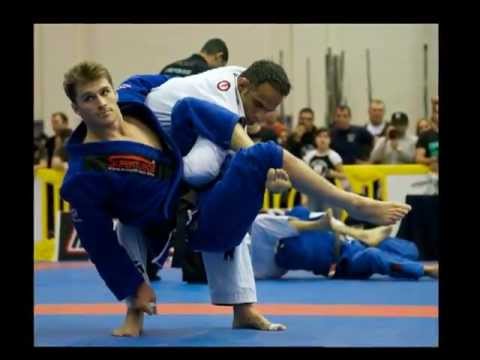
Is the shoulder lock done with the legs the most “BJJ” of all BJJ techniques?
Everyone who starts BJJ eventually goes through a bit of an omoplata obsession, I think it’s because it’s one of those techniques that is unique to BJJ. Triangles, armbars and cross chokes can all be found in Judo, and while it’s probably possible to dig up a Jiujitsu demo from the 1920s that features an omoplata (take that as a challenge dear reader!), the technique has really found its mark in the world of BJJ.
Read the rest of this blog post at my new blog… BJJ Notebook
Ancient Yogic breathing techniques make a return to the UFC
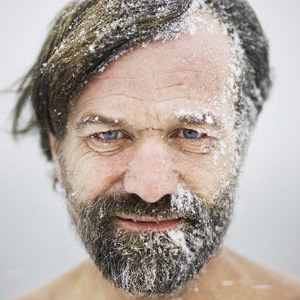
You might not have heard of Wim Hof, but he’s been creating a big buzz in certain circles and has gained the name “The Iceman” for his incredible acts of endurance and ability to withstand extreme cold using a breathing technique he calls Innerfire. He even climbed Everest in a pair of shorts. Watch this video to get an idea of what he’s about:
With the MMA world latching on to the new trend in ‘movement‘, it wasn’t going to be long before somebody noticed that Wim’s breathing methods and extraordinary abilities might be quite useful for fighting as well. I just wasn’t expecting it to be UFC title contender Alister Overeem that lead the way.
Overeem has had a chequered history since joining the UFC. There are allegations of juicing in his past, and he failed to live up to his potential in a number of fights. But then I remember being really impressed by his last performance in UFC on FOX 17 in December 2015 when he completely destroyed the always dangerous Junior Dos Santos, ending a dominant fight with a 2nd round KO. I remember thinking at the time that something had changed about Overeem. The arrogance that lost him his bout against Bigfoot Silva in 2014 was gone. Instead he seemed calm, composed and very focussed. Something had changed, and now I know why. He was training Wim Hof’s breathing methods, as this video shows. You can see Overeem doing push ups with breath control and even submerging himself in some very cold water for over 2 minutes.
Highlights from Overeem vs Dos Santos:
Here’s Wim explaining his method himself:
And here he is explaining it to Joe Rogan:
You can’t argue with Overeem’s impressive results, and as he says, breathing is one of the most important things to any fighter, regardless of the sport they’re in. I can see immediately how this level of breathing control and the improved cardio it promises could improve my BJJ, since once you gas, that’s it, you’re done, no matter how much skill you have.
I think I’m going to do more research into Wim and maybe try his methods. There’s even an iPhone app for Innerfire. I’ll keep you updated.
Seeing Jiu-Jitsu throws done without mats reminds you how much that would hurt if the person didn’t know how to land properly, or it was done on concrete. The above video shows some excellent technique demonstrated in the sort of throws we train in BJJ. It’s on a sprung wooden floor, but still, that’s going to hurt.
Before he started Tai Chi my Tai Chi teacher trained like this in a traditional Japanese system of Jiu-Jitsu back in the 1970s. They didn’t use mats – they just had a wooden floor. These days we’ve realised what the negative long term effects of this sort of training are, and we use mats, but it’s good to see somebody demonstrating it. I’m just glad it’s not me!
Marcelo Garcia rolling with Rafael Lovato Jnr is all sorts of fun
Everybody in BJJ who knows anything has heard of both Marcelo Garcia and Rafael Lovato Jr, so to have a clip of them both rolling in Marcelo’s Academy is a fantastic learning opportunity. They’re both legends in the sport, with Marcelo having 4 ADCC titles and 5 word titles to his name. Rafael Lovato Jr is one of the most successful US competitors and currently 2 and 0 in MMA.
Currently on a break from competition, Marcelo is often referred to as the greatest grappler of all time. If you’re not familiar with Marcelo then check out this documentary video by Stuart Cooper, in which he talks about his life:
To read the rest of this post see my new blog… BJJ Notebook
The ‘Master of Movement’ has a healthy respect for the ‘internal’ Chinese martial arts
If you follow what’s become known as ‘movement culture’ you’ll be familiar with the name Ido Portal, and his brand of movement-based exercise/philosophy called The Ido Portal Method. His method is a kind of freeform, soft-gymnastics influenced by everything from Yoga and Parkour to martial arts (specifically Capoeira), and it’s become popular in the exercise world thanks to videos that show Ido in amazing physical shape performing the sorts of athletic feats normally associated with comic book superheroes like Deadpool or Spider Man. His movement practice looks like this:
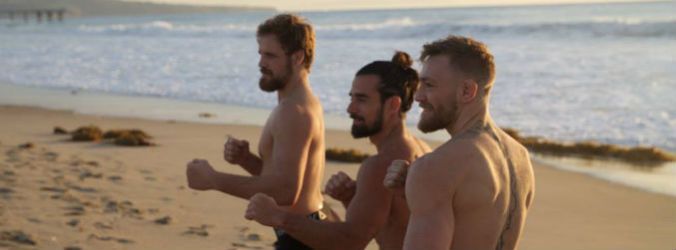
Ido recently moved out of the shadows of movement culture and into the mainstream when he appeared with the then UFC interim lightweight title holder Conor McGregor at the open workouts in Las Vegas, before UFC 194 Aldo vs McGregor. Open workouts are a chance to showcase the skills of a fighter and usually consist of demo-mode displays on the pads, followed by a bit of wrestling and groundwork. As well as some of this, Conor’s open workout featured appearances from Ido, who led Conor through a number of unorthodox arm-swinging, rolling and stick drills that left most of the world’s MMA media baffled. They hadn’t seen anything like it before, and therefore didn’t know what to make of it. Here’s a video of Conor’s open workout, followed by Aldo’s so you can see how different they were:
Ido worked with both Conor McGregor and Gunnar Nelson in the week before the UFC. While Gunnar Nelson went on to lose his match he put up brave resistance against a dominant (and more experienced) Demian Maia for three rounds, and avoided the submission. Conor went on to KO Jose Aldo with one perfectly placed punch and became the undisputed UFC Lightweight champion. In that instant Ido’s name and movement culture went global. The fight went down like this:
There’s more video available of Ido working with Conor and Gunnar in the run-up to the UFC. As you can see, it’s primarily about ‘movement’:
and
(As an aside, another thing Ido does really well is have fantastic soundtrack songs for his videos. Note: The amazing acoustic cover of The Black Key’s Lonely Boy by Matt Corby is one of my personal favourites 🙂 )
How much of Conor’s victory was down to training with Ido in ‘movement’ is unclear. He’s been a fan of movement culture for a long time, but it should be stressed that Conor would have been through his usual training camp before Ido was brought in for the last week, which is after all the hard work has been done. In the last week a fighter generally just needs to keep loose and work on his weight-cut. This would have fitted in perfectly with Ido’s routine, which relies more on relaxation and keeping moving than on lifting heavy weights.
If you want to know what on earth they’re doing with that stick in the video then a good primer on what Ido’s work is all about is his latest interview on London Real, in which he talks about his training philosophy and working with Conor. He also shows what he’s doing with that stick:
Another good source of information is the Movement Culture Facebook group. In a recent thread on the group somebody posted a video of an ancient Indian martial art called Kalaripayattu, which is rather grandly titled, “The Origin of all Marital Art”.
The classic story of the origin of Chinese martial arts is of the Buddhist monk Bodhidharma coming to China and on finding the monks in poor physical condition instituting a practice of physical exercise and martial arts, founding the first Shaolin Temple. The ancient fighting style of Kalaripayattu is therefore one possible origin for the Chinese martial arts. In fact, if you look at the 2-man form at 3.08 in the video it looks a lot like a 2-man Northern Shaolin fighting form I used to practice, a version of which is here:
However, all these claims and stories lack evidence. It’s not entirely clear who shared what with whom, and in which direction the information sharing went. Either way, Ido (who has by his own admission researched an incredible amount of martial arts) remains unimpressed with the movement quality he’s seen in Kalaripayattu, especially when compared to the Chinese Neijia (internal family) arts. Here’s his response to the video:
I appreciate his candour, and I agree with him, Kalari may be old, but the ‘movement quality’ shown in the video doesn’t compare to kind of things you can find in Chinese martial arts. It’s especially nice to see his appreciation for the internal arts, which makes me wonder if we’ll see their influence seeping into MMA at some point.
We’re at an exciting juncture in MMA right now. As discussed in a recent Joe Rogan podcast with MMA analyst and commentator Robin Black (see video below), MMA is transitioning from an era where the mantra had become “Boxing, Wrestling and Jiujitsu is the answer to everything” to a world of new possibilities, as exemplified by newer, unorthodox, fighters like Conor McGregor and Stephen ‘Wonderboy’ Thompson who have successfully introduced elements from traditional martial arts, like controlling the distance with kicks, that can catch out a seasoned wrestler/boxer who is not used to that sort of movement.
The best example of new meets old is perhaps Stephen Thompson’s most recent win against high-calibre opponent Johnny Hendricks, who he made look surprisingly ordinary by controlling the distance and utilising his kicks, until getting the KO in the first round. Instead of standing ‘in the pocket’ to trade blows as Hendricks would have liked, he moved in and out with ease. You can watch it here:
A one-time title holder himself, Hendricks had previously taken UFC Welterweight Champion Robbie Lawler through two five-round wars of bloody destruction, only just missing out on the win each time, but faced with somebody who wasn’t going to ‘stand and bang’ he looked lost.
It’s this sort of movement skill that’s the crossing-over point of mixed martial arts and movement coaches, and Ido Portal is definitely not the only person integrating the two worlds. Another person to look out for is Erwan Le Curre of Movenat, who has greatly influenced UFC fighter Carlos Condit, as you can see in the following video:
So, the interesting thing to me, as somebody who has a deep involvement in Chinese martial arts, specifically the Neijia, is what could those arts bring to the table for mixed martial arts?
I’d like to be able to say that going towards the refined Neijia movement would be the natural evolution of MMA, as it moved from its slug-fest beginnings to more evolved fighting techniques, however MMA evolution doesn’t work like that. It’s too simplistic to see it as an evolution from thuggish, brutish origins, to the more refined and technical fighters of the modern age. Sure, the early UFCs featured many pugilists who were more brawlers than anything else. And in contrast, today’s modern MMA fighter is a hugely technical martial artist, who needs to be well-rounded in several fighting disciplines, but the beginnings of the UFC were also characterised by victories obtained via a very, very technical martial art that didn’t require huge levels of athleticism, in the form of Brazilian JiuJitsu. So, while the evolution of MMA isn’t the nice, upward directed straight line starting at “brawling” and ending at “technical” we’d like to see, if we were going to make some sort of convincing argument for ‘more technical’ as being the final destination, things definitely are improving in terms of technique in all areas simultaneously – it’s just that we didn’t start from a level playing field for all the different areas that make up the modern fight game.
Kung Fu has plenty that can be added to MMA in terms of techniques, as I blogged about recently. What the Neijia can add specifically is a lot more subtle -it’s more about using your body as one unit to produce power, but as Ido Portal’s interest in the subject has shown, it is also about improving the quality of your movement, and that can’t be a bad thing for any fighter.
When we talk about Qi (Chi) in martial arts, what do we mean?
Chinese as a language can have meanings on different levels. The basic definition of Chi is ‘air’, but in terms of martial arts we’re talking about vital energy that’s intrinsic to the breath. If you put the word “Qi” into a Chinese/English translation you get all sorts of definitions, for different Chinese characters. So, to clarify the character we’re talking about is (in traditional Chinese)
It’s a bit like a picture of a pot of rice over a fire with steam rising upwards. In simplified Chinese it looks like:
Unfortunately, “vital energy that’s intrinsic to the breath” still doesn’t help much in terms of understanding what is meant by Qi when we talk about it in martial arts. The most practical way to understand what Qi is, is to take a look at Jin. You can think of Jin is the physical manifestation of Qi. When you manipulate your qi using your mind to do something, you manifest a direction of force in the body – and when the force can be expressed in a direction, without impeding it by tensing your muscles, so that it runs all the way from the feet to the hands, then that is Jin. So, if somebody pushes on your hand, you should be able to create a line of force from your foot to your hand (using your mind) that maintains your position, so that they are effectively pushing into the ground, not your hand. If you push on somebody’s outstretched arm and they feel really strong, like a rock, yet they’re not tensing their muscles then you could say they have “strong qi”.
In the following video Mike Sigman takes you though what Jin is, which should hopefully increase your understanding of what Qi is.
You can see that he’s talking about setting up pathways in the body – if you refer back to my previous post about basic silk reeling movement you can see how the two tie-in together.
We’re not here to take part, we’re here to take over
Kung Fu in MMA is a little guest blog post I wrote for Bookmartialarts.com – on MMA and Kung Fu. They couldn’t link to all the videos I mentioned on their site, so here’s the ones I wanted to show:
Here’s a simple takedown strategy for BJJ, that works
Takedowns are one of the things that don’t really get drilled in BJJ as much as they need to be. As Judo has taught us, you really need to drill takedowns over and over on a regular basis to actually be able to do them against resistance. Takedowns are weird like that. You need thousands of hours of repetition to make them work against pressure and resistance. Top Judokas usually have two or three throws they specialise in, like Uchi Mata or Seonage. They practice these over and over and over, every training session.
Read the rest of this post at my new blog… BJJ Notebook.
We’re in a strange situation where the vast majority of people who “do Tai Chi” are performing some kind of elegant, slow-motion movement ritual, but without the required ‘internal’ body movement. There’s not necessarily anything wrong with this, as most of the benefits Tai Chi can give you – like relaxation, better breathing, suppleness, improved general health and flexibility – don’t really require ‘proper Tai Chi movement’. If you’re up and you’re moving then you’re doing your body more good than everybody left on the sofa. This is particularly important for the elderly.
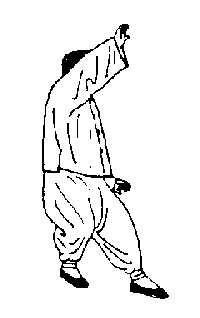
But what do I mean by ‘required internal body movement’? Well, I’m talking about how your body forms the posture of Tai Chi – the movement you use to get into the various postures and flow between them. By default everybody uses a kind of normal human movement – the sort you use when you reach for something in the cupboard, or when you are tidying up a room. You don’t think about it, you just do it. And it’s the same with performing a Tai Chi form. If you’re going to do White Crane Spreads Wings then one hand has to circle up, ending above your head, and the other hand has to circle down, ending near your hip. Like this:
The question is, how did the hands get there?
With ‘normal movement’ we just do it – our brain tells the muscles what to do and they do their thing, in the order and manner they’ve been working in since we were babies.
In Tai Chi we need to repattern the way our body moves to adopt the ‘internal’ model of movement. This involves creating a sense of connection from the toes to the fingers (like you’re wearing a suit), along which you can feel a slight stretch, and then keeping this stretch as you move, while powering and controlling the movement from the dantien and legs, not from the shoulders. In fact, the shoulders shouldn’t be actively doing much at all – they should act as conduits for power, not generators. There are other additives that are used to generate movement, but those are the basics.
It’s a lot easier to practice this sort of movement in a simple controlled way than it is to jump in at the deep end with a Tai Chi form and all the variation it offers. To help you do this, people have created are what have become known as “Silk reeling exercises”.
There are a ton of these on the Internet to watch and follow along with, but like most things of that nature, it’s not the exercise that’s the important thing, it’s how you do the exercise. Luckily, Mike Sigman has recently produced a couple of new videos that not only show the exercise, but also show how you are supposed to do them.
Take a watch, try them out, then see if you can repattern the way you are moving in your Tai Chi form.
Unfortunately, it’s hard to talk about Silk Reeling without getting into some of the style wars within Tai Chi. Silk Reeling is often though of as the preserve of Chen style Tai Chi, and that in other styles of Tai Chi they do something else. You can do you own research on the matter, but the conclusion I’ve come to is that all the various ‘tricks’ that you learn in Tai Chi (like bows, or rotation or sinking and rooting) are all different facets of silk reeling, and you can therefore save yourself a lot of time by just adopting the model wholeheartedly.
Here’s a link to an article on the Yang Family website extolling the virtues of silk reeling and why it’s so useful. I’ll leave you to draw your own conclusions about why it’s up there.
As it says in the article:
“We need to understand the requirement to ‘link everything together’. Not only does moving energy require going through all the joints, it also needs to be sent through the muscles and sinews above and below the joints. This is the function of spiralling silk reeling.”
So, to return to the aforementioned Crane Spreading its Wings – this is how you get your hands to circle up and circle down. Now you just need to go and practice it.
A discussion of the similarities between BJJ and Tai Chi
So, finally, here’s my much delayed look at the similarities between BJJ and Tai Chi. This is probably an impossible topic to give justice to fully, but I’ve given it a go and hopefully my perspective will be useful to others. I’ve already attempted to define Tai Chi in a previous post, so the next logical question is, ‘what is Brazilian JiuJitsu?’ Well, explaining what the art is, how it evolved and where it came from is not a simple job but luckily a lot of people have made a lot of (very long) documentaries that explain the whole story of the Gracie family, the in-fighting, the out-fighting and everything else in-between, so you’re better off watching those than having me explain it all again here. If you don’t fancy watching them all then the (very) short version is “it’s an off-shoot of Judo that has more emphasis on ground fighting”.
Try these for size:
The Gracie Brothers and the birth of Vale Tudo in Brazil:
If you want to find out how the art evolved once it entered the United States, and how it compliments other grapplings arts, then check out Chris Haueter’s incredibly entertaining speech at BJJ Globetrotters USA camp:
And finally, don’t miss the excellent Roll documentary on the spread of BJJ in California:
Fighting fire with water
But my concern here is not really the history of the art. I’m more interested in the technical similarities between Tai Chi and BJJ. I’ve heard Brazilian JiuJitsu described as being “like Tai Chi, but on the ground”. I understand where people coming from with that sentiment, but I can’t quite go down that route myself, or rather, I’d settle for saying that it is like Tai Chi, but also explicitly not the same. The one central idea that both BJJ and Tai Chi share is that it’s smarter to not oppose force with force, and instead “yield to overcome” (from a Tai Chi perspective) or “use leverage”, from a JiuJitsu perspective.
As it says in the Tai Chi classic “Treaste on Tai Chi Chuan”:
“There are many boxing arts.
Although they use different forms,
for the most part they don’t go beyond
the strong dominating the weak,
and the slow resigning to the swift.
The strong defeating the weak
and the slow hands ceding to the swift hands
are all the results of natural abilities
and not of well-trained techniques.
From the sentence “A force of four ounces deflects a thousand pounds”
we know that the technique is not accomplished with strength.
The spectacle of an old person defeating a group of young people,
how can it be due to swiftness?”
I’d disagree with the classic on one important point though – most of the traditional martial arts in fact do go beyond the strong dominating the weak, because without that key principle there is not much of an art left in the martial art at all. And I don’t know about the idea of defeating a “group” of young people either (that would be a tall order for any martial art, or martial artists), but to me the classic is suggesting that skill and technique can supersede the natural advantages of youth, such as speed and strength. And when it comes down to it, it’s hard to find an art that can deliver on this promise as well as BJJ can.
BJJ is one of the few martial arts where an older man (or woman) can be expected to regularly beat a younger man (or woman) by having more skill and technique, in a fully resisting scenario, thanks to techniques that manage the distance (a critical self defence skill) and use leverage and technique to overcome brute strength. That’s not to say that no strength is required, but you don’t necessarily need more strength than your opponent to make it work.
Rickson Gracie
To me, the BJJ practitioner that best exemplifies a similarity between Tai Chi and JiuJitsu is the legendary Rickson Gracie. He’s generally agreed to be the best of the Gracies. Compared to the acrobatic extravagances of today’s sport JiuJitsu champions, who favour inverted guards and bermibolos, Rickson’s style of Jiujitsu seems surprisingly simple, yet effective. There are no flashy moves, just basics done at a very high level.
The Rickson documentary “Choke”, which shows his training for a Vale Tudo fight in Japan, is essential viewing if you haven’t seen it before:
In the documentary you can see a young Rickson doing Yoga on the beach. Rumour has it that he also said he studied Tai Chi in a magazine interview, although I’ve not been able to find a transcribed version online to confirm this. Either way, it’s clear that he’s not averse to stepping outside of “pure jiujitsu” to add elements to his exercise, martial and health regimen. The cost of upholding the reputation of JiuJitsu and the Gracie family has been heavy though, and he has several herniated discs in his back, but he’s still on the mats teaching his family art, cornering his son Kron in his MMA fights and giving instruction through his JiuJitsu Global Federation. He also spends a lot of time surfing these days, instead of fighting.
If you read a Rickson seminar review, like this one, you can see that he keeps returning to two common themes – “connection” and “invisible jiujitsu”. The invisible part refers to what you can’t see happening; you can’t see where he is putting his weight and making his connection to his opponent, but you can feel it when he does it. He has detailed ways of making a connection in each position in BJJ.
This sort of teaching from Rickson, to me, is where I find the crossover between Tai Chi and BJJ to be strongest. In Tai Chi Push Hands, for example, we constantly seek to make a connection to the other person, through touch, so its a very familiar concept.
Here’s me doing some push hands:
Forget about the thing I’m trying to teach in the video, just look at the Push Hands routine we’re doing. As you can see, Push Hands very concerned with ‘feeling where the other person is’ and ‘yielding to their force without opposing it’ to neautralise the opponent. From this perspecitve, Push Hands starts to sound a lot like what Rickson is talking about in his seminars, but in a different format.
But the similarities don’t end there. When employing standing techniques Rickson also utilises some of the postural work found in Tai Chi and makes makes subtle nods towards the ‘internal’ method of body movement favoured by Tai Chi. He talks about making a connection to the ground through the feet. I’m not suggesting his ‘body mechanics’ ideas fully embrace everything you’d find in Tai Chi, but I can see the foundations of it being built.
For example, in a Rolled Up episode (3/4) from last year Rickson shows Budo Jake how to use some basic body mechanics to create a better root to the floor when meeting an incoming force while standing. He’s talking about transferring the force applied to the arm down to his foot and into the ground, then back up to move the opponent backwards. This is basic Tai Chi 101.
See here, from the beginning:
At.4.26 he starts to talk about ‘invisible jiujitsu’, specifically at 5.55 about ‘putting the weight in the hands’.
I was taught a very similar drill in Tai Chi – a kind of wrestling game, where you had to stand square on to the opponent and try to unbalance them with a push as they did the same to you. The key to doing it is to ‘put your weight into your hands’, so that when you push, it’s coming from the foot, not the shoulder. And when they push you root the push into the ground, instead of letting it push you over.
Here’s a video of me doing it from a few years ago. The camera is on the ground and not straight, so it looks like I’m leaning forward, but I’m not really:
I’m not an expert at it, and use too much arm strength, but hopefully you can see the similarity between this and what Rickson is talking about in the Rolled Up video.
Of course, Tai Chi takes this idea of creating a path from the foot to the hand to further levels of detail – first the idea of ‘pulling silk’ where you create a stretch from the fingertips (and toes) to the dantien and maintain that connection while moving, so it remains unbroken. Incidentally, the silk analogy refers to the way silk weavers pulled raw silk thread from a cocoon – you had to pull with an even pressure or the thread would break.
The next stage after ‘pulling silk’ in Tai Chi is to create windings on the muscle-tendon channels in the body, controlled from the dantien – the famous ‘silk reeling’ of Tai Chi. I think you can view this as the point where BJJ and Tai Chi diverge and head off along different paths – Tai Chi becomes highly specialised in this type of movement, while BJJ becomes more interested in the practicalities of actual fighting, and taking the fight to the ground (or just dealing with the fight on the ground) where it enters a whole new arena.
Realistically, and practically, there is no need for the type of highly specialised and, frankly, difficult, method of moving the body that Tai Chi employs for actual fighting, and also it’s questionable whether you can actually do ‘silk reeling’ type movement when on the ground, since it relies on using the power of the ground to push up from via the legs. Does that mean one art is better than the other? Well, they both are what they are, and they’re good for different things. I’ll probably leave it at that.
Conclusion
Interestingly, when I started BJJ (almost 5 years ago now) I found that my all years of experience in Tai Chi meant nothing at all on the mat when rolling against an experienced practitioner – even if they were a smaller, weaker person. Fighting on the ground is a completely different animal compared to stand-up. I was submitted as regularly as the next white belt, but I did find that my previous experience in Tai Chi meant I could learn quicker than average (I got my blue belt in a year). It let me see the concepts and principles hidden within the techniques of jiujitsu. And it helped me relax under pressure, which is a huge part of getting better at BJJ. Also, doing the Tai Chi form helped me recover quicker from the physical wear and tear which is characteristic of your first 6 months of BJJ, while your soft, squidgy body is still toughening up.
Unlike Tai Chi, which has, in a sense, become set in stone in terms of its evolution, BJJ is a constantly fluid and evolving art. Thanks to the highly competitive environment of the BJJ competition circuit, new techniques are always being created and being discarded. It’s becoming highly specialised towards what works in the most common competitive rule sets. Where I see the connection to Tai Chi is in the older, ‘original’ BJJ that was more self-defence orientated, as exemplified by Rickson Gracie. Where BJJ is headed next is anybody’s guess. Quite possibly it will evolve in several directions all at once, and it will be interesting to see if the legacy started by Rickson Gracie and his ‘invisible JiuJitsu’ lives on, or even gets expanded upon.