Here’s week 5 of my course Pulling Earth Pushing Heaven, on mindful Tai Chi movement.
OK, so to recap, we’ve started off looking at building the elastic connection along the channels. We’ve looked at relaxing the lower back and getting the power to come from the lower body. We’ve talked about not compromising the movement in the arms. We’ve added in reverse breathing. Now we’re going to try to keep all that and get the movement to be directed from the middle of the body – the dantien.
Born in 1990, Wang Yan became head coach of Cheng village training centre in 2013 and is as a Taiji fighter as well as a coach, not to mention an expert in forms. He was one of the “nine tigers” – the best nine students of Chen ZiQiang. There’s an interview with him in English on Chen Taijiquan blog, with some great pictures from his private collection. The interview is pretty long, but there are lots of really interesting insights into his daily training, San Da competitions training and how exhausting it all was!
“Our daily routine started in the morning with running and warming-up excercises. In the first morning class we studied forms, in the second class we did strength excercices, in the third class we did push hands exercises, kicks, punches and other self defense techniques, and during the last evening class we were again doing push hands exercises, and sometimes weight lifting.”
“When a student grows a little older, reaching his late teens and early twenties, then the school starts putting much more attention to learning taolu (forms).”
“When I was a young student, the training was more strenous then now. The approach has changed nowadays towards a somewhat softer way. Students now come from more comfortable backgrounds and are, generally speaking, often more interested in computer games than in serious training.”
“Some of us developed more in the direction of Taiji fighting, while the others became the very best in various Taiji forms.”
Competition training:
“To develop stamina we would practice frog jumps, running in a crouched position, running while carrying someone on our shoulders etc., until the point where I would be absolutely exhausted.
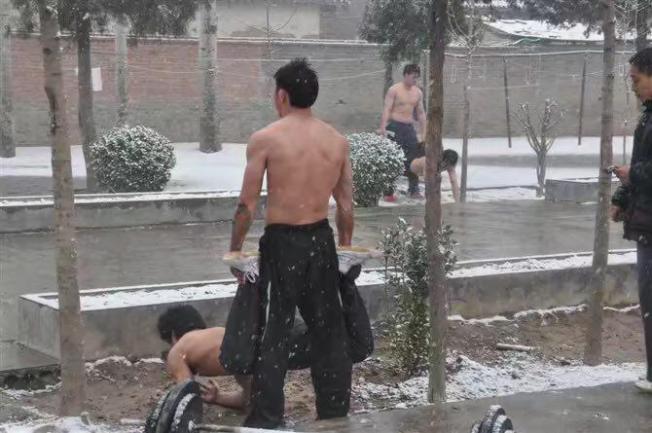
One method of practicing tuishou was, for example, being in a circle of about twenty students, who would challenge you one after another. When I knock the first one down, the next one would attack, and so on till the last one, after which the circle repeats itself. I also practiced the same circle exercise blindfolded in order to sharpen body sensations. Sometimes during wintertime, shifu would take us outside, dressed just in trousers, to train in the snow. One of exercises was to hold each other by the legs while ‘hand walking’ on the cold or frozen ground.
Before tuishou competitions I always have to control my weight, so during preparation time I would eat less and avoid spicy and very greasy food. Finally, after hard training, it is also important to have a proper rest.”
Training:
“There is a saying: “By missing one day of practice, your skill regresses for three days”. So, I make sure that I practice every day.That means that I go at least through forms. And when I have some more time, I do also some fitness exercises like running and weight lifting.”
It really does sounds beyond what most people could have physically and mentally endured at a young age, and more extreme than the training is in Chen Village these days.
There’s a lot of controversy in Tai Chi circles about the role of weight training in internal arts. It’s often dismissed as either unnecessary or worse, damaging to progress. It sounds like the antithesis of the frequently heard advice to relax more. Yang Cheng Fu’s “10 important points” essay is often read as a warning of the dangers of following an “external” path. (I think people often miss the meaning of that text though, so I’ll return to it at a later date.)
When the Chen Tai Chi masters teach seminars to Westerners they keep the focus on traditional conditioning exercises, like silk reeling, or zhan zhuang and forms, which do not involve weights, and emphasize things like relaxation and internal conditioning. Traditionally of course, training with heavy weapons would have been a form of weight training, and village farmers would have naturally been very strong people from all the physical labour, but there still seems to be a contradiction between the methods espoused to Western students in seminars and the content of the syllabus for training young fighters in Chen village itself.
There are also the ‘internet famous’ pictures of Chen ZiQiang doing weight training, and looking very ‘cut’ that spark off these debates, for example:
So, it’s interesting to read the above interview, where Wang Yan makes clear the role that weight training played in training his generation of Chen village teachers, especially when preparing for San Da competition. It’s also interesting to note that they may be the last generation to be trained like that, as “Students now come from more comfortable backgrounds and are, generally speaking, often more interested in computer games than in serious training.”
That’s an interesting point in itself, that makes me wonder if that generation was a kind of high point for martially trained Tai Chi fighters from Chen village. “May the children of your enemies live in luxury!”, as the famous Cynic philosopher Antisthenes said; a quote that echoes the famous poem/meme:
Of course, it’s all a matter of perspective. The people Wang Yan is training now are probably working a lot harder than most people could tolerate, even if they’re not doing wheelbarrows in the snow in winter wearing only their trousers 🙂
Full-time training
If I was training full time to be a fighter and I had a fight coming up in which somebody was going to try their best (under the rules) to hurt/beat me, then you can bet I’d be weight training too! You can’t fake fitness. And no matter how good your Tai Chi skills, if you get out of breath in a fight and your conditioning fails then you can’t fight back. Also, extra muscle mass doesn’t stop you from doing internal movement, although speaking realistically I don’t think that would have been the focus of training going into a fight.
Wang Yan was training as a full-time athlete. As well as doing all the hard physical training he would have been training in traditional Chen family methods at the same time. One does not preclude the other. While some might look down on all that physical training, it appears that the Chen village plan is to develop physical attributes first in its young people, including fighting skills, and later the more subtle Tai Chi skill is focussed on.
Here’s a video of Wang Yan doing some traditional Chen forms:
And here he is looking pretty good in a San Da match from 2013:
He’s a great inspiration for all Tai Chi practioners everywhere.
No, not my life. This guy’s life. He made a video about it:
Yes, I know the connection between Tai Chi and Wudang mountain is tenuous at best, and he repeats some old made-up stories about the origins of Tai Chi, but it’s a fun video to watch.
Here’s part 4 of the course. This week we focus on breathing. I cover the topics of normal and reverse breathing, then show a couple of different exercises that will get you on the right track for applying the breathing methods to the movement we are working on. Finally, we integrate the breathing into the movement, preserving all the progress we have made so far. Once you get the hang of it those breathing exercises I show are not required anymore, as you should be integrating it into your main exercise.
This week is more subtle than work showed previously. An inner focus will be required. Good luck! I’m happy to answer any questions you have.
I just wanted to say a few words about natural movement, and what we mean by it in Chinese martial arts, before I post part 4 of my 8-week course on Tai Chi movement on Sunday.
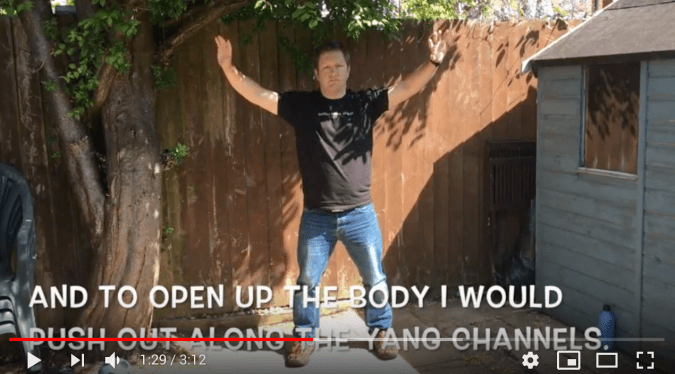
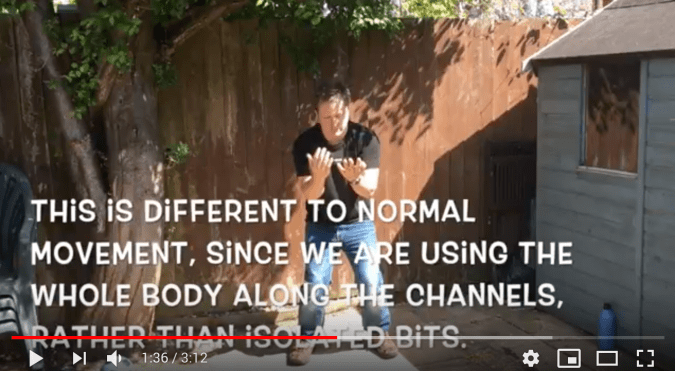
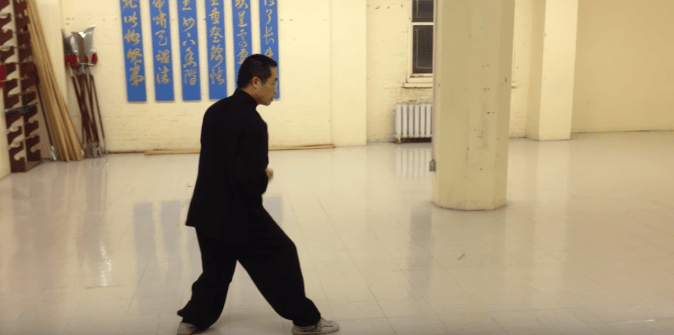
If you’ve been following the videos you’ll notice that I did a kind of ‘universal’ open and close exercise in part 1, which cycles between two phases
If you’ve been following up to week 3 you’ll know by now that it’s not a case of just mimicking these postures – you need to be going into and out of them using the elastic connection you’ve been developing by doing the arm circle exercise.
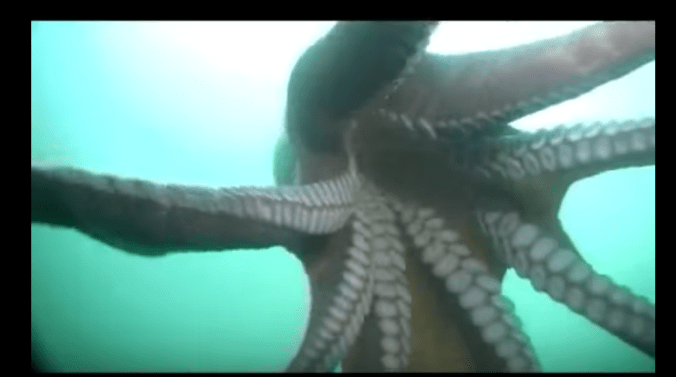
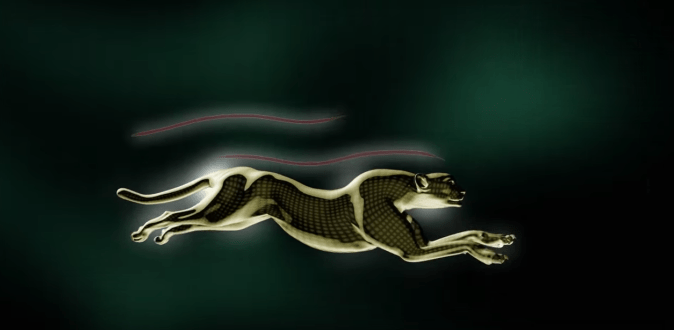
You can see these open and close postures in nature all the time, in movement – when a squid or octopus swims it kind of pulses between open and close.
The classic example in the animal world is the Cheetah, since it’s the most majestic animal when it comes to running. It cycles between open and close quite obviously too, which helps.
In the Chinese martial arts, all the ‘internal’ martial arts like Bagua, XingYi and Tai Chi should be using open and close. The martial art that best exemplifies it though is XingYi, as all the 5 element fists go through a very obvious open and close cycle.
When we say “natural movement” is used in internal arts, this is what is being talked about.
Of course, you can use the open and close sequence in everyday life too. Just yesterday I was kicking a ball about with my kids in the park and I started to play around with open and close as I kicked the ball, rather than just doing it with my leg in isolation. When you use open and close your whole torso and back get involved – I was quite surprised by how much extra power and direction I could give the ball when I started to use open and close to kick it. Like everything, it starts off big and clumsy and first, but you soon learn to remove the excess movement and refine it.
Look out for part 4 on Sunday when we’ll be taking a look at how breathing factors into the whole thing.
It’s all in Chinese, but I believe this video is a Tai Chi guy entering a BJJ competition in China… or maybe it’s a challenge match. From the way everybody is watching this one match, in particular, I get the feeling this is a special challenge.
Here’s the video. The match starts at around 8.30.
I can’t understand what is being said, but based on what I can see the “Tai Chi” guy showing a terrible lack of respect – he keeps hitting the BJJ guy, which is against the rules, then saying sorry to the audience, apologising profusely, then just doing it again. There’s lots of drama. The “Tai Chi” guy tries to walk off at one point when he realises the way things are going. Well done to the BJJ guy for keeping his cool.
When the “Tai Chi” guy inevitably gets submitted the ref separates them and then he tries to attack the BJJ guy after the match has ended, at which point the ref restrains him with a choke hold and chaos ensues.
Only in China 🙂
In a world where you can self-identify as anything, anybody can claim to be a “Tai Chi guy”, but apparently the guy is Zheng Jiakuan, known as the apprentice of Ma Baoguo, and the BJJ guy is a blue-belt player Zhang Long from Alliance.
Ma Baoguo produced this famous video which he claims showed the effectiveness of his techniques… while the MMA fighter claims otherwise.
Anyway, I think that says it all.
I don’t really know what the Tai Chi guy expected to achieve by entering a BJJ tournament, but by behaving so badly he’s ended up looking even worse than you’d expect. All the traditional Chinese values of respect are all displayed by the BJJ guy.
A better video for “Tai Chi vs BJJ” is the video of Marcelo Garcia against a Taiwanese push hands champion. Of course, lots of people don’t think these push hands champions are doing Tai Chi either, but at least respect was shown:
I found an interesting post on Slantedflying.com about Chen village and how it’s grown. There’s a video in it that shows an aerial view of the village and the massive training hall. It’s more like a small city than a “village” now!
It’s incredible how the popularity of Tai Chi has transformed this “rural backwater” (as I’ve often heard it described) into a bustling, modern, mini-city.
Here’s part 3 of my 8-week course on mindful movements with Tai Chi. Last week we looked at the lower body, this week it’s the turn of the upper body and I throw in a bit of zen wisdom at the end for good measure. Enjoy!
Standing Chi Kung exercise, or Zhan Zhuang, as it’s known in Chinese is one of the most powerful exercises for developing your inner power.
There’s a brilliant series of videos on YouTube on the subject of Zhan Zhuang taught by Master Lam Kam Chuen. They’re presented in a very ‘easy to follow’ manner, and they’re a great way to get started with standing exercises.
Here’s the first episode:
One question people often have is “what should I be doing in these postures?” Well, “it’s complicated” is probably the best answer. It depends what you’re working on.
But if you have to start somewhere then I think the following words written by Eckhart Tolle from The Power of Now, (and apologies in advance to anybody who gets offended by even the merest whiff of anything New Age) where he talks about connecting to the inner body, are a good start:
“CONNECTING WITH THE INNER BODY
Please try it now. You may find it helpful to close your eyes for this practice. Later on, when “being in the body” has become natural and easy, this will no longer be necessary. Direct your attention into the body. Feel it from within. Is it alive? Is there life in your hands, arms, legs, and feet — in your abdomen, your chest? Can you feel the subtle energy field that pervades the entire body and gives vibrant life to every organ and every cell? Can you feel it simultaneously in all parts of the body as a single field of energy? Keep focusing on the feeling of your inner body for a few moments. Do not start to think about it. Feel it. The more attention you give it, the clearer and stronger this feeling will become.
It will feel as if every cell is becoming more alive, and if you have a strong visual sense, you may get an image of your body becoming luminous. Although such an image can help you temporarily, pay more attention to the feeling than to any image that may arise. An image, no matter how beautiful or powerful, is already defined in form, so there is less so there is less scope for penetrating more deeply.
The feeling of your inner body is formless, limitless, and unfathomable. You can always go into it more deeply. If you cannot feel very much at this stage, pay attention to whatever you can feel. Perhaps there is just a slight tingling in your hands or feet. That’s good enough for the moment. Just focus on the feeling. Your body is coming alive. Later, we will practice some more. Please open your eyes now, but keep some attention in the inner energy field of the body even as you look around the room. The inner body lies at the threshold between your form identity and your essence identity, your true nature. Never lose touch with it.”
Chinese martial arts is full of genuine historical figures who become heroes. In this new blog series Will from Monkey Steals Peach blog is documenting his travels in China, discovering the places associated with the old heroes.
In his own words:
“Forget Jackie Chan & Bruce Lee, in this series I will be talking about some of the real heroes of Chinese Martial Arts, and their contributions to what we practice today. In this episode, I visit the Southern Great Wall in Taizhou to introduce the Generals Qi Ji Guang and Yu Dao You, who were massively influential figures in formulating the martial arts we practice today.”






 The Tai Chi Notebook