Martial Arts Studies Conference 2024

So, I’m going to the Martial Arts Studies Conference, June 4-6, 2024! It’s in Cardiff and there’s a video explaining exactly where:

My friend, Professor Paul Bowman, waffles on in that video about how to find a building that’s simply opposite the train station…. but I think all the vital info is in there on its price and location, except what the conference contains. I suppose that’s because the list of speakers is still being finalised, but I can tell you from my last visit to one of these that they are really interesting and the range of topics is always challenging, thought provoking and fascinating, and the speakers are absorbing and entertaining to the max. Last time I went I had such a good time, and met a lot of new faces, many of which are still friends to this day.

Are you going? If you are and you want to meet up then let me know. I’m available for Tai Chi push hands, BJJ rolling (in a gi please! There’s a possible open mat situation at a BJJ academy next door), weddings, funerals and evening festivities involving alcohol (hey, it’s my birthday at the same time!), just hit me up.

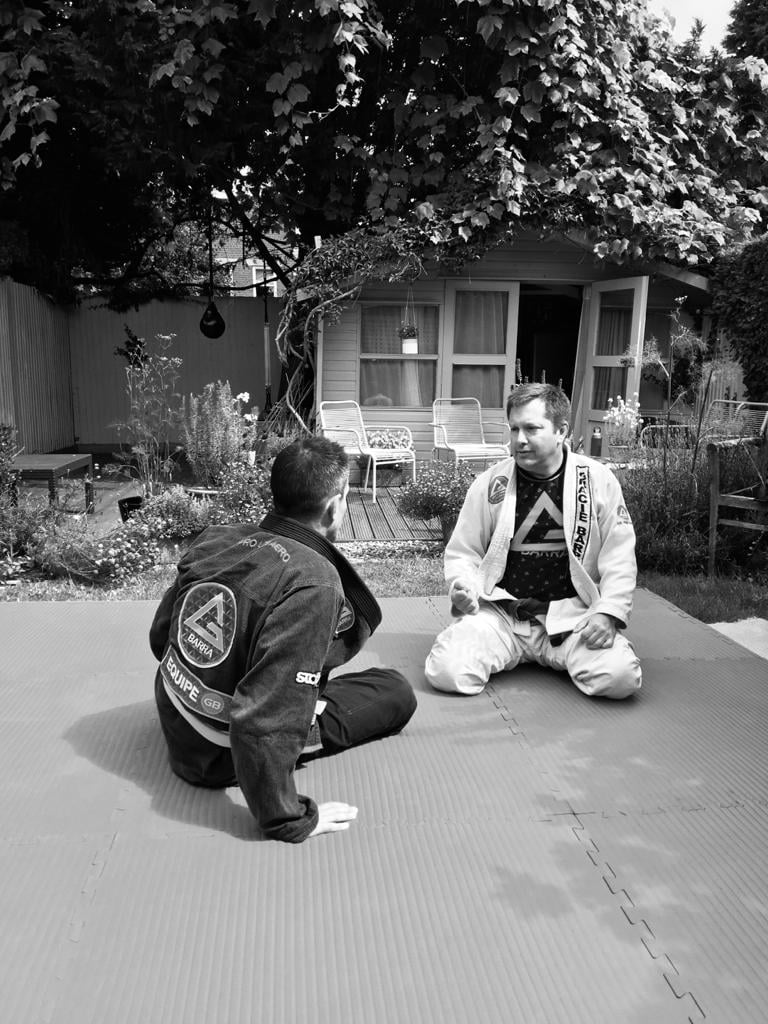
Paul and I, philosophising in his philosophers’ garden about the
intricacies of the guard.

Tongue behind the two front teeth

If you’ve been doing Tai Chi, meditation or yoga for any length of time you’ll have heard the old adage to ‘put your tongue behind the two front teeth‘. The explanation given for this is usually that it “connects the two meridians that go up the back and down the front of the body called the Ren and Du meridians, creating the micro-cosmic orbit”.

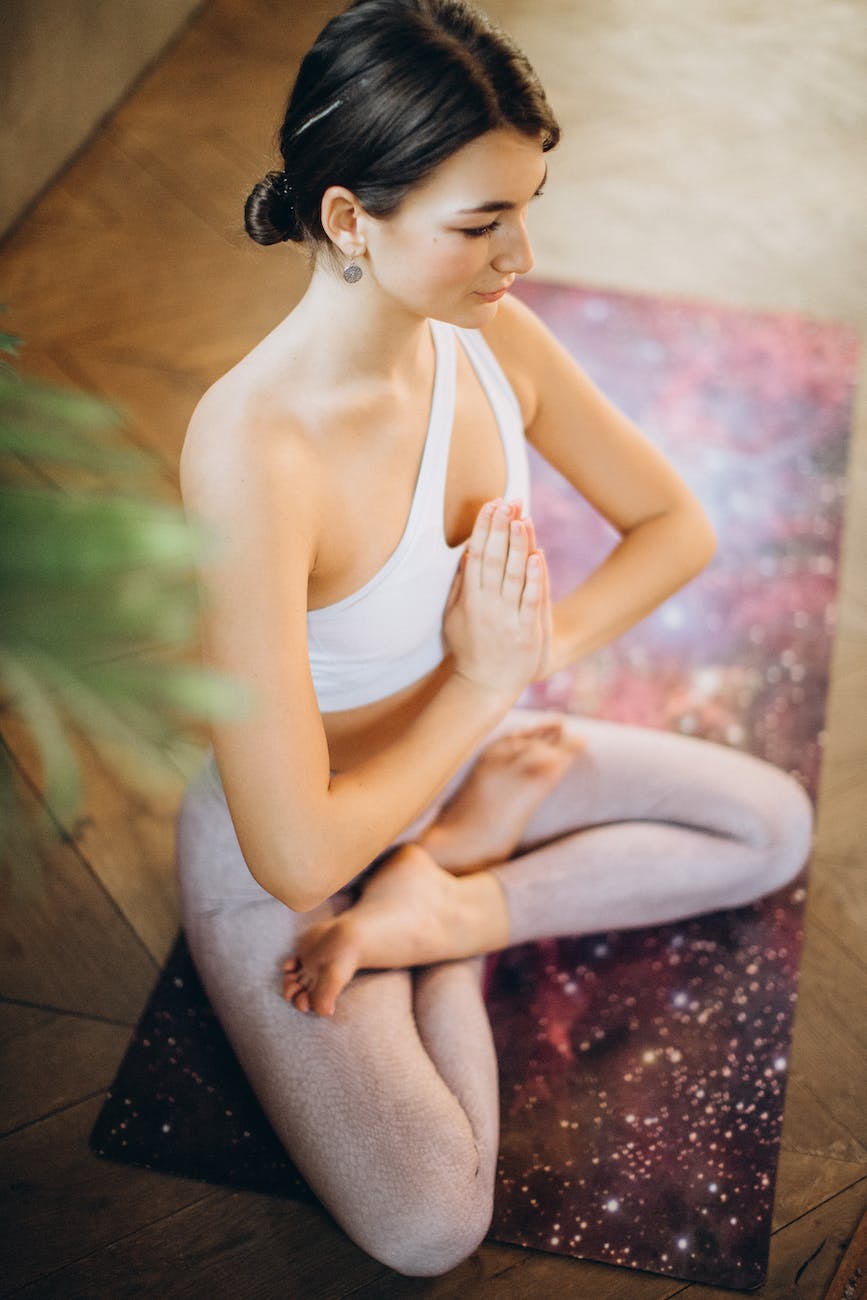
Micro cosmic orbit connected… man. Photo by Elina Fairytale on Pexels.com

From a Chinese medicine or Taoist perspective the perceived wisdom seems to be that “circulation of the Qi/Breath in Ren Mo and Du Mo is a bit like an electrical circuit. The two ends of the vessels must be connected for there to be an uninterrupted flow.”

Personally, I have my doubts about the whole idea of ‘energy’ or Qi ‘flowing’ around the body. I often think it’s really an ancient aberration of the simple idea of forces moving inside the body. In Chinese martial arts there’s a phrase you often hear – rise, drill, overturn, fall, which matches this circuit in the body with a martial technique. The best example of which is Pi Quan from Xing Yi, during which forces in the body (jin) rise up and then come crashing down into a strike.

Strength and balance

However, it’s not just Chinese medicine that recommends this tongue position. I’ve recently discovered that there are a lot of Western sources advocating the same tongue position. For example, Colgate toothpaste has an article about correct tongue position on its website that recommends the exact same thing – the tongue resting on the upper palette behind the two front teeth. The article links to a study in Radiology and Oncology called “Three-dimensional Ultrasound Evaluation of Tongue Posture and Its Impact on Articulation Disorders in Preschool Children with Anterior Open Bite“, which notes that “children with poor tongue posture were reported to have a higher incidence of anterior open bite, a type of malocclusion where the front teeth don’t touch when the mouth is shut. This may be because the tongue puts pressure on the teeth which can shift their position over time.” (Colgate).

In this article from Healthline, Dr. Ron Baise, dentist of 92 Dental in London explains “Your tongue should be touching the roof of your mouth when resting… It should not be touching the bottom of your mouth. The front tip of your tongue should be about half an inch higher than your front teeth.

While dentists may be aware of the benefits of good tongue position for your teeth and preventing problems with your speech, or mouth breathing from occurring, some exercise enthusiasts are going further and claiming that proper tongue position actually increases your strength and balance, something that is undoubtedly important for martial arts, like Xing Yi.

Pi Quan is said to be like the swinging of an axe. (Photo by Ivan Samkov on Pexels.com)

Now, I’m as aware as the next Tai Chi blogger that cherry picking studies that confirm your beliefs (and presumably ignoring everything that doesn’t) is a bit of a red flag. However, the idea that your tongue position effects strength and balance makes more sense to me than imaginary energy channels (Du/Ren) that may, or may not, exist in real life.

Apparently, good tongue placement can give you superpowers!

I remain slightly skeptical about the whole issue, however, my tongue does naturally rest behind my two front teeth on the upper pallet of my mouth… I can feel it there now as I write this. Was it always there? Or have I turned this into my natural position thanks to starting Tai Chi in my 20s?… I don’t know. All I can say is that it feels comfortable, and if my Ren and Du channels are connecting because of it, and my strength and vision is better because of it then…. so much the better.

How most people get Tai Chi breathing wrong

“Stop doing the wrong thing and the right thing does itself.”

– F. Mathias Alexander.

Breathing has become a hot topic these days. There’s Wimm Hoff with his patented breathing methods for overcoming extreme cold all over TV and YouTube, breathing classes have sprung up in every town where you can go to where you spend an hour focusing on your breath (just type in the town you live in an ‘breathing classes’ into Google and I bet you find something), and of course, there still are all sorts breathing methods you can find out there in yoga, tai chi and qigong classes.

Often in Tai Chi we’re told that we should be performing abdominal breathing, or ‘Taoist breathing‘ – so, as you breathe-in the abdomen should expand and as you breathe out, the abdomen should contract*. We equate this abdominal breathing with deep breathing – almost as if the more we can ‘fill’ our abdomen with air, the deeper and better the breathing will be – and think that it therefore must be healthy. (* there is also reverse breathing, but that’s another topic).

Just breathe! (Photo by Spencer Selover on Pexels.com)

How to breathe

I recently started reading the excellent book ‘How to breathe’ by Richard Bennan, which has made me reconsider the way I’ve been approaching breathing in Tai Chi.

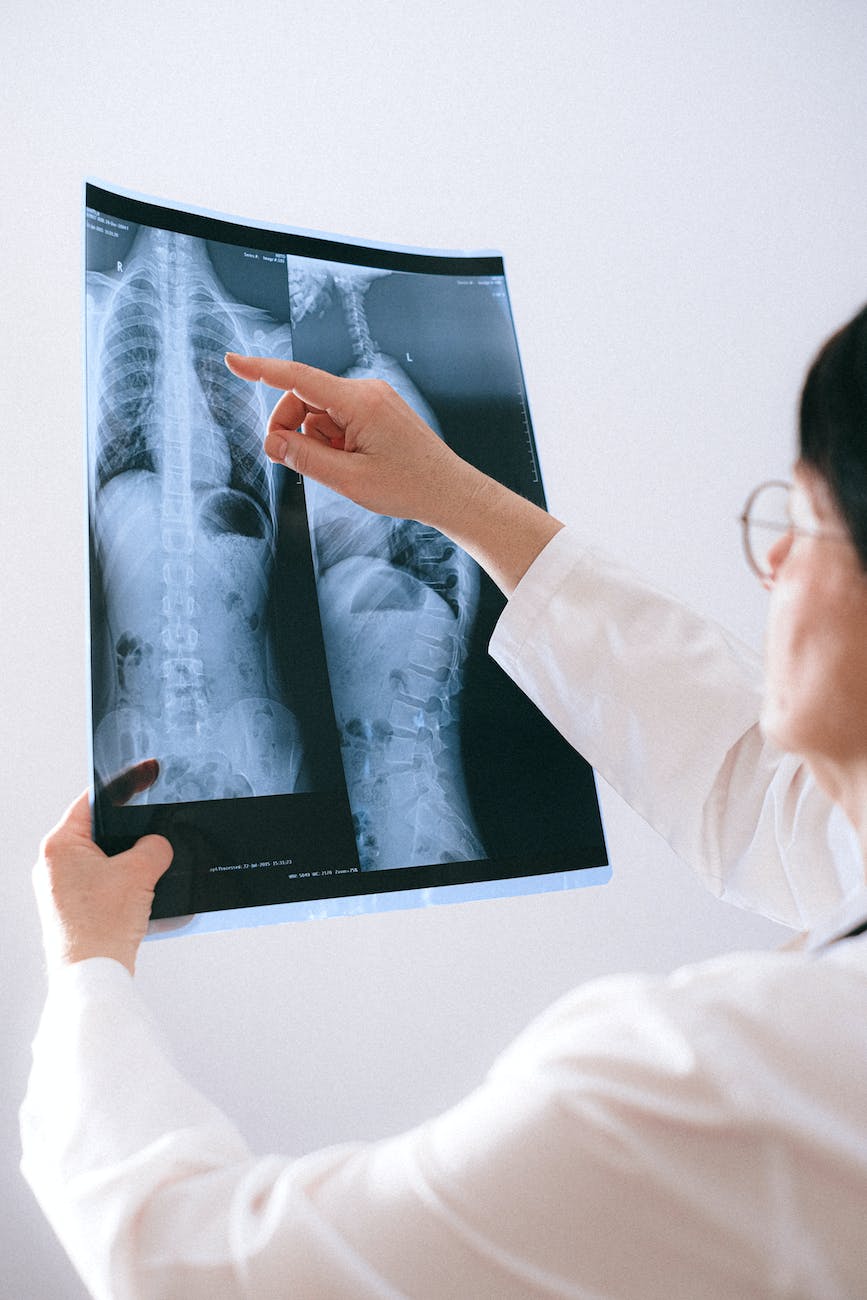
Firstly, let’s start with the basics. It’s worth remembering where your lungs are. They are behind the ribs and reach up higher than the collar bones on each side. Look at the picture below and you’ll be surprised by how far up the lungs go. So, when you expand your belly on an in-breath the air isn’t going down into your belly – it all stays in your upper torso. Of course, that might already be obvious to you, but you’d be surprised how many people think their belly is filling with air when they breathe in! It’s not.

Photo by Anna Shvets on Pexels.com

When you practice ‘belly breathing’ what you should be doing is expanding the whole torso on an in-breath, and it’s this expansion of the lungs and the dropping of the diaphragm that pushes the abdomen down and outwards (on all sides, not just the front). If you start to try to use your abdomen muscles to lead the process, or force-ably expand or contract the belly as you breathe in and out then you are just adding tension to the whole process, which is the exact opposite of what you want. There should be as little tension as possible for efficient breathing. Trust the process – it will work on its own.

So, with me now, try an in-breath and focus on the lungs themselves filling up and expanding and this wave of expansion being the motivating force for expanding the belly. It doesn’t really happen in a step by step way either – everything expands at once. So, don’t try to fill one section of the torso, then another, that is also just adding tension. Equally, don’t try and keep the ribs still. They are designed to expand and contract with the lungs. If you try and keep them still, then, you guessed it… You’re just adding more tension.

Once you can visualise where your lungs are, (and how far up they go above the collar bones), then just focus on letting them expand freely, and stop interfering with the breathing process. Less is often more.

You might also like to think about the posture requirements of Tai Chi and what effect these might be having on your breathing. We often hear words like “round the shoulders”, “lift the back” and “hollow the chest” in Tai Chi. Think for a minute about what effect those directions, if followed literally, might be having on your breathing. Do you think they are beneficial or harmful? It’s something to consider anyway.

Breathing should feel amazing. It should feel smooth, natural and healing. And it will, if you stop interfering with it.

* I think reverse breathing is a deliberate hack to the body’s natural way of breathing, but I don’t think people should be attempting it before they’ve got better at breathing in a natural way first. If you are already breathing in an unnatural way, and then you try and add on something else, well, it doesn’t take a genius to realise that you’re headed for long term problems.

Happy New Year (of the Dragon)

It’s 2024, if you’ve ever commented, read or shared a post of mine, then a big thank you for contributing to the story of The Tai Chi Notebook. I feel privileged that I get such good comments here, and quite often they inspire new blog posts, so we all play a part. Let’s see where it goes in 2024.

I’ve already done one post of a training idea for the New Year, however, for New Year’s resolutions I thought I might introduce you to the more professional side of my writing – here’s an article I’ve written for the iMore website on iPhone apps that will help you stick to your New Year’s resolutions. Since most of us have smart phones these days I think it’s widely applicable to my readers here (I’m sure Android versions of most of the apps also exist). I hope you enjoy it! I’m certainly going to be using some of those apps this year.

Photo by Eva Bronzini on Pexels.com

2024 will be the Year of the Wood Dragon, (which starts on 10th February). Japan Times says “In a dragon year, people are said to be able to harness the creature’s intelligence, leadership and abilities to pursue their dreams with creativity, passion, courage and confidence.”

So, here’s a bit of Xing Yi Dragon I recorded in 5 spare minutes I had between opening presents and eating another round of Christmas dinner/left overs/chocolates – it’s out of focus, but not out of mind 🙂

In a way Dragon is the most Xing Yi animal of them all. I’ve done lots of posts about Dragons before, so check some of them out here:

  • The Azure Dragon and Shuai Jiao
  • Dragon Dance and street theatre
  • The importance of Dragon to Xing Yi

Making up your own forms – it’s not as easy as you think

I had an interesting comment on my last post that made me think about the whole idea of making up your own forms (or Tao Lu) – in Tai Chi, Xing Yi, or whatever.

I’ve tried to do this over the course of several years and I’ve come to a few conclusions about it, which I’ll elaborate on here. Firstly, it’s hard. Making up new forms is not as easy as you think. But secondly, it depends what martial art you are making up a form in.

Author, performing Xini Yi Chicken (Ji) posture

If your martial art has forms that are constructed like lego bricks that can be slotted together in any order and still seem to work then it’s pretty simple to concoct a new form. Xing Yi is a good example of a martial art that has this quality. I was always told never to call Xing Yi tao lu by the English name “forms” because the correct term was lian huan which means “linking sequence” for this very reason.

The idea, (in our Xing Yi at any rate), is that all the links you learn are just examples, and you need to be constantly moving towards being able to spontaneously vary them as required, and then ultimately spontaneously create them. This idea has become heretical in the modern Xing Yi world to a large extent because modern Xing Yi has lost a lot of this spontaneous feel it used to (I admit that’s a subjective point) have, and things have become set in stone – forms that were once supposed to be fluid and flexible have become fixed and rigid. Forms of famous masters from the past now tend to be fixed forever. When words like “orthodox” start appearing to describe something you know it’s already dead, or on the way to dying.

But of course, anybody can make up a form, but is it any good? That’s a different matter. And it usually depends on the person doing it, not the moves themselves. With Xing Yi animals you can also ask the question – can I see the character of the animal being used coming out through the moves?

With Tai Chi I find it a lot harder to make up a form. Tai Chi’s approach to a form is quite different to Xing Yi, or other Kung Fu styles. The Tai Chi form tends to be a highly crafted piece of work that has been honed to perfection over many years. It is fixed because you need to be able to forget about the moves and concentrate more on what’s inside. It helps to do that if you don’t have to worry about what’s coming next because you’ve done it so many times that you can let go of that part of your brain and let it be aware of other things.

Tai Chi forms tend to start and finish in the same place for this reason. Usually, anyway. While long forms don’t tend to be balanced on left and right, a lot of the more modern, shorter forms make more of an effort to balance left and right movements.

If you understand Tai Chi and how to ‘pull’ or direct the limbs from the dantien movement then, sure you can make up your own Tai Chi forms, however, there is almost zero history of doing this in Tai Chi circles and it’s not really encouraged. I think this is because Tai Chi has push hands, which can be used as a kind of free-form expression of Tai Chi, completely away from the form and in contact with a partner to give you something to respond to, which is the whole strategy of Tai Chi Chuan, at least according to the Tai Chi Classics it is. To ‘give up yourself and follow the other’ you have to be spontaneous. There’s no other choice!

So, to conclude. I think that’s it’s in its application where the spirit of improvisation and spontaneity can be found in Tai Chi, not in the forms. I don’t think Tai Chi is particularly concerned with creating endless variations of forms and patterns like Xing Yi is, at all. Xing Yi, having a weapons starting point, doesn’t use this hands-on feeling and sensitivity to get started with spontaneity. Instead, it likes to create patterns, then vary them endlessly. Of course, you work with a partner when required, but it’s a different approach. Which is all quite natural, as these are two different martial arts, created by entirely different groups of people in a different locations and time periods.

You might like our Heretics history of Tai Chi and Xing Yi for more on that.


Tai Chi on the minute, every minute

A friend shared a post recently about an interesting way of exercising called On the Minute, Every Minute. All you need to do is a number of reps of an exercise on the minute, every minute. The suggested start point in the article is 15 push ups, then 20 squats, then 20 plank jacks. That would take 3 minutes, so you just keep going 6 more times, up to 18 minutes. I quite like the idea because it’s simple, and simple is doable.

Photo by Hebert Santos on Pexels.com

Then I started to think how you could apply the same OTMEM method to Tai Chi… Here’s one suggestion: One move every minute then hold until the next minute comes around. I think a short form has around 50-60 moves, so would take roughly an hour to complete like this. It depends what you count as a move. That’s basically an hour of stance training, which would be quite challenging. One for New Year’s Day perhaps? I’m going to give it a go, so let me know in the comments if you are going to join me.

And of course, if you want to push it further you could always up it to every two minutes!

Don’t be that guy – Blind spots, martial arts and cult-like rituals

Photo by Artem Podrez on Pexels.com

We often label other martial arts groups as a cult, and laugh at their silly behaviour and rituals, but at the same time we are a bit blind to the cult-like aspects to the things we do, because that’s ‘normal’ to us.

I went to a different BJJ school one time and they kept making jokes about my home school being a cult because we have to wear an official gi when training, which is more expensive to buy than a normal gi. There were a few other things mentioned, but that was their main issue. A white belt from another branch of my school had visited previously and he had committed the cardinal sin of facing the corner while tying his belt – that was apparently also a sign of a cult and they recounted the story with much hilarity – “I thought he was having a piss in the corner!”.

However, in that school I observed students doing several things that were equally cult-like, but were apparently completely normal to them:

  1. If you stepped on the mat without bowing, that was 10 burpees.
  2. Classes started and ended by lining up and bowing to the teacher.
  3. I (a grown man) had to ask permission from the teacher to have a sip from my water bottle, or if I wanted to leave the mat for any reason. And then ask permission to come back on.
  4. If a black belt asked somebody to roll, they weren’t allowed to say no, even if they had already agreed to roll with another person.

Now we do some of those things in my school too – we line up and bow at the start, for example, and bow onto and off the mat, but some of those things we don’t do. However, they’re all just different versions of showing respect to each other before and during training. We are learning techniques that have the ability to kill and maim, and people could easily get hurt in the training if we weren’t respectful of our partners safety. Building an atmosphere of respect around the training will hopefully instill that in the actual training.

There is something of an uneasy tension in modern martial arts between capitalism and customs. In modern times the people in a martial arts class are usually paying to be there – they are, as modern capitalism likes to call it “paying customers”. The phrase “the customer is always right” has not entirely entered the martial arts vocabulary yet. It still retains these throwbacks to its “traditional” student and master martial arts heritage, for the reasons outlined above.

But let’s not muse on capitalism too much. The point of this post is to draw attention to the blind spots we all have. To return to that BJJ school – the higher belts were technical, but also fighty without being overly aggressive or dangerous, and the instruction was good and clear, the rolls were good too. But I could have done without the undercurrent of tribalism that that had been instilled in the students and was reinforced by the higher belts.

I think it’s worth repeating that all martial arts are cults, and if you think yours isn’t… then isn’t that exactly what a cult member would say? My attitude is to accept the various rules and customs of each particular cult or organisation as the price for them existing. Without any rules anarchy and disorder would break out and there would be no club at all. The Xing Yi classics famously say – “There is only structure, and there is only Chi”. With no structure, the Chi just leaks all over the place, and with too much structure I guess it can’t flow anywhere. A happy medium is what you’re after.

We (human beings) have the same attitude to our own bodies as well – we don’t see our own blind spots. The way we walk feels natural to us, but that might involve pointing the toes outwards at 45 degrees, compromising our lower back, instead of forward, for no good reason except habit. We might have been doing that for 30,40,50 years, and will probably keep doing it until the day we die without question, until somebody comes along and points out our blind spot, at which point it has become our ‘normal’ and it feels weird to walk in any other way.

A little period of self refection on the subconscious and conscious beliefs we hold true, without thinking about them, is always a good thing.

Wrestling pictures from the late Ching Dynasty

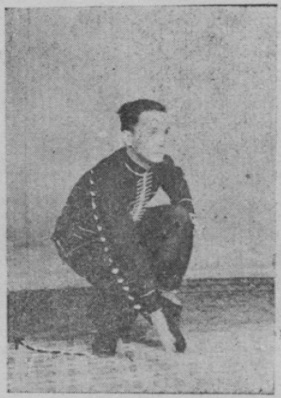
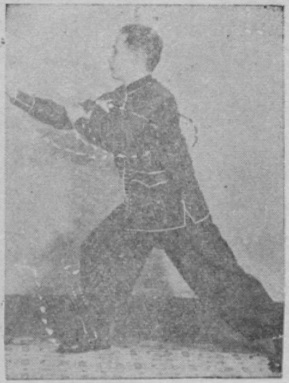
Byron Jacobs of Mushin Martial Culture recently posted some pictures, from his private collection, of wrestlers (and one of archery) on the grasslands from the late Ching Dynasty. They’re fascinating insights into what wrestling looked like at the time, and what clothing was worn. He’s given me permission to post them.

(Image credit: Byron Jacobs)

Byron has produced extensive research into the origins of Shuai Jiao (Chinese wrestling) which all points to it actually being an adaptation of Mongolian wrestling, and not a separate style with any sort of genuine history of its own.

A quick Tai Chi fix anybody can try: Tracking with the eyes

FYI: Owls can rotate their necks up to 270 degrees! 

To some Tai Chi people it’s important to know where the eyes are looking when doing a Tai Chi form for slightly esoteric reasons: “your eyes lead your intention and your intention leads your chi.” But I think we can come up with reasons for using the eyes in Tai Chi that require no mention of intention (yi) or chi.

Try this: Sit comfortably. Turn your head slowly to the side, back to the middle then the other side. It’s a typical neck stretching exercise that you’ll find done at the start of your typical Kung Fu, Tai Chi, or Yoga class. It’s good for your neck, but there’s nothing particularly special about it.

Now try this: Instead of just turning your head to the side, actively look to the side. Lead the movement with your eyes looking to the side. Now compare the feeling of doing that to the feeling of just turning your head to the side.

If you’re anything like me you’ll find the experience quite different. When you are looking to the side for a reason your whole body co-ordinates better, not to mention, I think you can turn your head a bit further too. I’m sure there is a scientific word for this purpose driven movement, but I don’t know it.

Think of an owl, when it turns its head to look at something interesting that might potentially be prey – the eyes are always locked in.

When doing the Tai Chi form, try actively looking with your eyes and turning your head in the direction you are going. Hopefully you’ll notice the different in the quality and coordination of your overall movement.

Heretics episode 100! Xing Yi DOUBLE XL episode

We should stop now and again to look back to see how far we’ve come. The Heretics podcast has reached episode 100! It’s a podcast designed to challenge the way you see the world, hence the name. We cover a lot of religious topics, but also a lot of esoteric topics and martial arts. To celebrate episode 100 we’ve done a 2 hour special on Xing Yi. The first hour is a continuation of our History of Xing Yi series, but the second hour is an off the cuff discussion about Xing Yi that you might enjoy more. Expect some heretical ideas and controversy!