In this episode we examine the Chen family’s relationship with General Yuan Shikai, the friction between modernising and conservative factions within China and the events of the Boxer Rebellion.
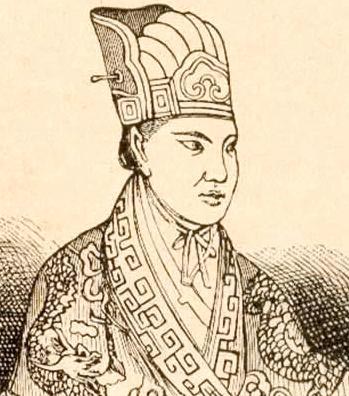
This is Hong Xiuquan, the extremist Christian who orchestrated the biggest and most bloody civil war in history, the Taiping rebellion. It happened around the same time as the American civil war, and shared a lot of similarities.
Hong Xiuquan
The Taiping’s had some previously unimaginable beliefs in China, like equality for men and women (women fought in their army, which reached a million people) and no private ownership of land.
From the Encyclopaedia Britannica:
Taiping Christianity placed little emphasis on New Testament ideas of kindness, forgiveness, and redemption. Rather, it emphasized the wrathful Old Testament God who demanded worship and obedience. Prostitution, foot-binding, and slavery were prohibited, as well as opium smoking, adultery, gambling, and use of tobacco and alcohol. Organization of the army was elaborate, with strict rules governing soldiers in camp and on the march. For those who followed these rules, an ultimate reward was promised. Zeng Guofan was astonished when, after the capture of Nanjing, almost 100,000 of the Taiping followers preferred death to capture.
Under the Taipings, the Chinese language was simplified, and equality between men and women was decreed. All property was to be held in common, and equal distribution of the land according to a primitive form of communism was planned. Some Western-educated Taiping leaders even proposed the development of industry and the building of a Taiping democracy. The Qing dynasty was so weakened by the rebellion that it never again was able to establish an effective hold over the country. Both the Chinese communists and the Chinese Nationalists trace their origin to the Taipings.
We believe these historical events contributed directly to the creation of Taijiquan. Without the Ching court being rocked to its core respected Confucian court officials like Wu Yuxiang and his brother would not have even interacted with a low-level martial artist like Yang Luchan. But the Taiping rebellion was not the only crises happening in China at the same time. A dynasty can survive one crisis, but several at once? No chance. The Yangtze river flooded leading to a catastrophic famine and loss of life and the British and the French started the second Opium war. There was also the Nian rebellion in the North.
The Taiping’s were eventually defeated with help from the Mongols and British. (The British wanted to sell opium, to sustain their empire and the Taiping’s were against that). If the rebellion had suceeded, just imagine the different China that would have emerged.
We cover all this in the 3rd part of your history of Taijiquan, and the crucial moment when the Wus first meet the Chens:
In this episode we look at how the effects of the Taiping Northern Expedition and the Nian Rebellion of the mid Nineteenth Century drew the confucian Wu brothers and the fighters of Chen Village towards each other for the first time.
Looking back over the last few blog posts I’ve written it occurs to me that a reader might think that I don’t actually like Tai Chi Chuan. I do. I practice it pretty much every day. There’s something in it that is just very good for you. Before practice I feel a bit unfocussed, and uncoordinated. After practice I feel like I’m back “in the zone”, and that’s a rare thing for any practice to deliver as consistently as Tai Chi does. And it always does.
If I contrast that with Jiujitsu (something I also love, or at least used to before this lockdown started), after that I’m an exhausted, sweaty mess in need of water and recovery. Jiujitsu is a lot of fun, but it breaks you down. In contrast, Tai Chi builds you up. You need both together. I’ve always practiced my Tai Chi with other more physical arts anyway. More dynamic things, like Choy Lee Fut or Xing Yi are great compliments to the relaxed, slow Tai Chi movements.
One of the reasons I criticise Tai Chi a lot is that it does have the most abysmally low standards amongst its practitioners of any martial art you’ll ever see. In fact, it’s a martial art that most people don’t actually practice as a martial art!
Regular readers to the blog, or regular listeners to the Heretics Podcast, will know that we recently started a series on “The Myth of Tai Chi“. Again, it sounds like it’s a bit of a negative attack on Tai Chi, but anybody with even a cursory understanding of Tai Chi history will realise that a lot of it is vague, unknown and contradictory, especially for a period of time (1850s onwards) in which other martial arts (like Xing Yi) have no confusion over their history and lineage.
Episode 1 of the podcast takes into account all the other things that were happening in China in 1850, and there was a lot! It was a period of turmoil that was about to become even worse with the most bloody civil war in world history – the Taiping Rebellion – which left an estimate 20 million dead. (If you’d like to know more about this and the various martial arts that were created around the same time period, like Wing Chun and Choy Li Fut, then I’d recommend Benjamin Judkin’s excellent book Creation of Wing Chun, The: A Social History of the Southern Chinese Martial Arts – it’s by far the best Chinese martial arts history book I’ve read).
The best Chinese martial arts history book you’ll ever read!
Now the scene is set, episode 2 (coming soon) will offer more definite conclusions on the origins of Tai Chi Chuan, but there’s still so much left to talk about that this will soon become a mult-part story. You might want to empty your cup before you listen though: Damon’s conclusions on what Tai Chi really is are not particularly favourable for any group trying to claim ownership of the Tai Chi brand – the Chens, the Yangs, the Wus the Taoists or anybody else. You’ll have to wait until episode 2 is released in the next few days to find out what the big reveal is!
But until then, just a little reminder that I do actually like Tai Chi Chuan (honest!), despite appearances. And regardless of its origins what matters is its actual practice. Learning about history won’t make you any more or less skilful, only practice will do that.
This podcast interview of Mark Chen by Ken Gullette is a real gem. If you haven’t listened to it before I’d really recommend it. It starts with a basic run-through of who taught who and in what order, and who all these people are, but then gets really interesting about halfway through when it talks of some of the more heretical things, like what happened during the utter insanity and madness of the Cultural Revolution in the 1960s. A period which is ignored by almost all Chinese martial artists. It’s just something that is not talked about these days – almost a non-subject, and those non-subjects always fascinate me.
There is also a section on the famous “Peng Lu Ji An” list used to describe the “powers” of Taijiquan, and the characters used. There are also some good thoughts about Taijiquan training and what Taijiquan is really all about. Overall this is an excellent podcast and shouldn’t be missed by anybody.
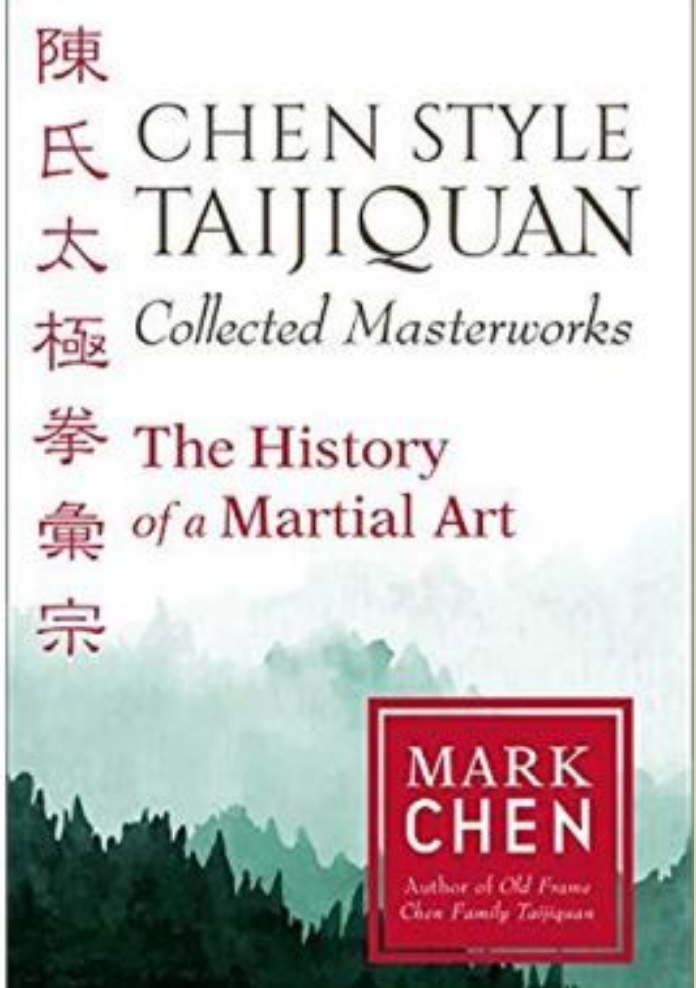
Mark’s book is a translation of most of the book by Chen Zhaopi’s book, published in 1935 and is available on Amazon in print and digital formats.
“Stand like a perfectly balanced scale move like a turning wheel.” Photo by Paweu0142 L. on Pexels.com
Uber-malcontent Oliver Gerets, is back in my comments section, this time complaining that my “statements are still oversimplified and misleading.” Which I think probably just means that he hasn’t bothered to read much of my blog before, as everything I said in the post he’s referring to on whole-body movement is pretty well explained in previous posts, if you want to look for it.
His issue is that I said the following were the 3 movement principles of Tai Chi, without further explanation:
1) moving from the dantien
2) power up from the ground (jin) – rooted in the feet, expressed by the fingers.
3) coiling and spiraling actions from the dantien out to the extremities and back.
He’s right – I did exactly that and moved on because I didn’t want to get sidetracked on them and get onto the main point I was discussing. You see, I’ve gone over those points before, but we might as well use this as a springboard to discuss these ideas again and un-simplify everything. Just like Al Pacino in the Godfather – just when I thought I’d got out, but he pulled me right back in.
Let’s deal with Oliver’s first complaint.
“1. There is no generally accepted definition what the dantien is amongst Taijiquan practitioners. Not even in Chen style. “Moving from the dantien” is a hollow phrase with very little practical meaning.”
I don’t know what he means with the “not even in Chen style” comment, so let’s ignore that.
I’d agree that there are no accepted definitions of anything amongst Taijiquan practitioners of what the dantien is, but there are no accepted definitions of anything amongst the practitioners. They’re a strange bunch of people ranging from weekend dabblers to full-on fanatics who have very differing views on everything under the sun, but the people at the top of the family trees tend to disagree much less. They all know what they mean.
I also think most Tai Chi people do know what the dantien is. For clarity, let me add my own definition:
The dantien I’m referring to is simply the lower abdomen area of the body. It encompasses the front, sides and back of the body. It’s a general area, rather than a specific point. When I’m talking about “moving from the dantien” I’m talking about movement originating in this area of the body. You could call this area the waist, if you like, so long as you understand that it’s not a line, like a waistline is.
I’ve got no idea why she’s written “out of order”, but there’s a photo of the dantien area for you. Photo by Kat Jayne on Pexels.com
I’m not sure what more explanation I can give of that – it’s fairly simple.
The how of the matter is not so simple. Anybody can move that area of their body without any connection to the rest of their body – the limbs and head, for example. Dancers do it all the time. What’s hard is making it connect to everything else.
In Tai Chi you need a tangible connection between the dantien area and the extremities so that once you move the dantien area, the extremities are also moved as a consequence. This connection is formed by what the Chinese called the muscle/tendon channels in antiquity. These then formed the basis of the meridian system over time.
Mammals usually have muscle/tendon channels on the front and back of the body.Yin channels on the front and yang channels on the back. They consist of muscle, tendon, ligaments, fascia and skin and can be affected by abdominal breathing (which is also centered on the dantien area).
If you can hold the body in a neutral position (the classic Zhan Zhuang posture “hold the ball” is good for this) then you can keep an equal tension on the front and back muscle-tendon channels. You can then use your breath to create a small pull on these channels when you breathe in and out. The connection starts off as very weak, but grows stronger over time.
So, Zhan Zhuang, Tao Yin and Qigong exercises strengthen this connection over time. Eventually, the connections get strong enough that you can affect the movement of the limbs with small changes in the dantien area, like rotating it left and right, or up and down, all in coordination with the breathing.
A Tiger showing a stretch along the yin channels on the belly and a corresponding contraction on the yang channels along the back. Photo by Flickr on Pexels.com
In Taijiquan, (which deals with humans standing upright, not tigers), the dantien, legs and feet must form a connection and drive the power of the rest of the body:
From the Tai Chi classics:
“The feet, legs, and waist should act together as an integrated whole, so that while advancing or withdrawing one can grasp the opportunity of favorable timing and advantageous position.”
“The principle of adjusting the legs and waist applies for moving in all directions; upward or downward, advancing or withdrawing, left or right.”
Movement originating in the dantien, therefore, becomes a real, physical phenomina, rather than an abstract idea.
This is what I mean, Oliver.
The best exercise I’ve seen to help you develop this skill is a single-arm wave from Chen style silk reeling. In my original post I linked to a video showing the basic single arm wave. I’ll link to it again here.
In future posts I’ll address Oliver’s next 2 complaints.
Time to address some more comments generated by my Whole body movement post. Oliver Gerets writes:
“The body can move/coordinate in an almost unlimited number of ways. These kind of oversimplified comparisons are useless and misleading. There is no general/right way of “whole body movement” in Taijiquan. Every school/lineage is at least slightly different. “
This is an interesting point. Are all the different styles of Tai Chi actually different martial art styles, or are they all one? The generally accepted wisdom on the matter (Chinese government-backed) is that (in theory) there is only one style of Tai Chi. But when you get on the ground, in amongst the weeds, then it’s really hard to see how somebody doing Sun style Tai Chi is doing the same thing as somebody doing Chen style, and how either of them are doing the same thing as somebody doing Yang style. Sure, if you follow the sequence of their long forms, they follow roughly the same order, but the stances are all different and the type of body movement looks different. They might have had the same starting point, but over the years, they seem to have diverged significantly.
Or have they? Let’s return again to the three principles I listed as the essence of Tai Chi whole body movement in my last post.
1) moving from the dantien 2) power up from the ground (jin) – rooted in the feet, expressed by the fingers. 3) coiling and spiraling actions from the dantien out to the extremities and back.
You can argue that these 3 things are happening in all Tai Chi styles.
Sun style.
Yang style
Chen style
But, the hard truth is that number 1 is not always observed in most practitioners, and number 3, is most often dropped entirely in the styles that don’t start with a letter C in their name.
Is that a bad thing? It’s point 2 that is the most important. Point 2 can be done without point 1 and 3 and you still have a functional martial art. Point 2 is also the thing I see that ties together all the “internal” arts in the most obvious way – Bagua, XingYi and Tai Chi Chuan.
We only have so many hours to train a week. I think you could make an argument that if you want to get anywhere in Tai Chi, then you’re better off spending most of your time working on point 2 anyway.
If you add in points 1 and 3 then you get even better movement. It’s a different type of movement. I think it’s worth investing time in learning points 1 and 3 as well, but make no mistake – it’s a significant investment of time. A good place to start is a simple single arm-waving silk reeling exercise:
Oliver’s final point is:
“There is no sense in moving like a cheetah, only if you want to run in a similar way. Which is not useful as a human being.”
It’s peculiar that he’s written this in a Facebook group (Ancestral Movement) which seems to enjoy looking at the way animals move and what we can learn from them. As mammals, our bodies really aren’t that different. Generally, we all have a spine, 4 limbs and a head.
I’m not suggesting that we should pretend to be a horse or a cheetah, but the principles of movement in mammals are shared amongst all species. Even us.
Here’s a review of an Ancestral Movement seminar, if you want to find out more about it.
Byron Jacobs, who produced the excellent XingYi San Ti Shi primer I posted recently, has launched a new podcast that’s well worth checking out.
In the first episode, Byron talks to Marin Spivak, Chen Tai Chi disciple of Chen Yu, about what it’s like going to live and train gung fu in Beijing as a Westerner back in the 1990s and 2000s. Both Byron and Marvin made the jump to live and train in Beijing, so they have a good insight into Chinese culture, and particular gong fu culture.
I really liked the discussion of the tangled network of gong fu culture a prospective student has to find their way through in China, and which the average western student has no idea exists at all.
He’s the ‘Marmite‘ of the Tai Chi world (well, one of the Marmites anyway, you could argue the Tai Chi world is made up of Marmite personalities all the way down 🙂 ), but this free article is a nice neat summation of Scott Phillips’s theory of Taijiquan as dramatic storytelling.
It’s easy to dismiss Scott as “he’s just a dancer”, but to me those Chen style movements he’s talking about look so stylistic and deliberate that they’re clearly not just martial movements. If you’re arguing that Tai Chi is just a martial art and nothing else then I think you’ve got a lot of explaining to do. It’s pretty easy to see what fighting looks like these days, since sport fighting is on TV every weekend.
I think the idea that ‘Ok, this might be true, but does this matter?’ has much more validity. If Scott is right and he’s tracked down the origins of Tai Chi, then it clearly been forgotten over time, and Tai Chi these days has become something else.
In fact, it had become something else over a hundred years ago. China has gone through several major political and cultural shifts over that time that changed their society completely (often resulting in the deaths of millions of people and associated trauma). The Boxer Rebellion, the 1912 Chinese Revolution, the Communist rise to power, the Cultural revolution and the current rise of nationalism under the guise of Communism, etc…
Anyway, the article is in-depth and it’s worth a read if you have an interest in the possible origins of Tai Chi:
Brush Knee Twist Step (called “Walk obliquely with twist step”, which was probably its original name) is a fundamental movement in all Tai Chi styles.
Chen Zheng Lei performing “Walk obliquely with twist step”:
The Yang style Brush Knee looks like a slightly simplified version of this. Here performed by Yang Jun, grandson of Yang Cheng-Fu :
And Sun Style looks like the Yang style, but with added steps. Here performed by Sun Peng who is Sun Lu Tang’s grandson :
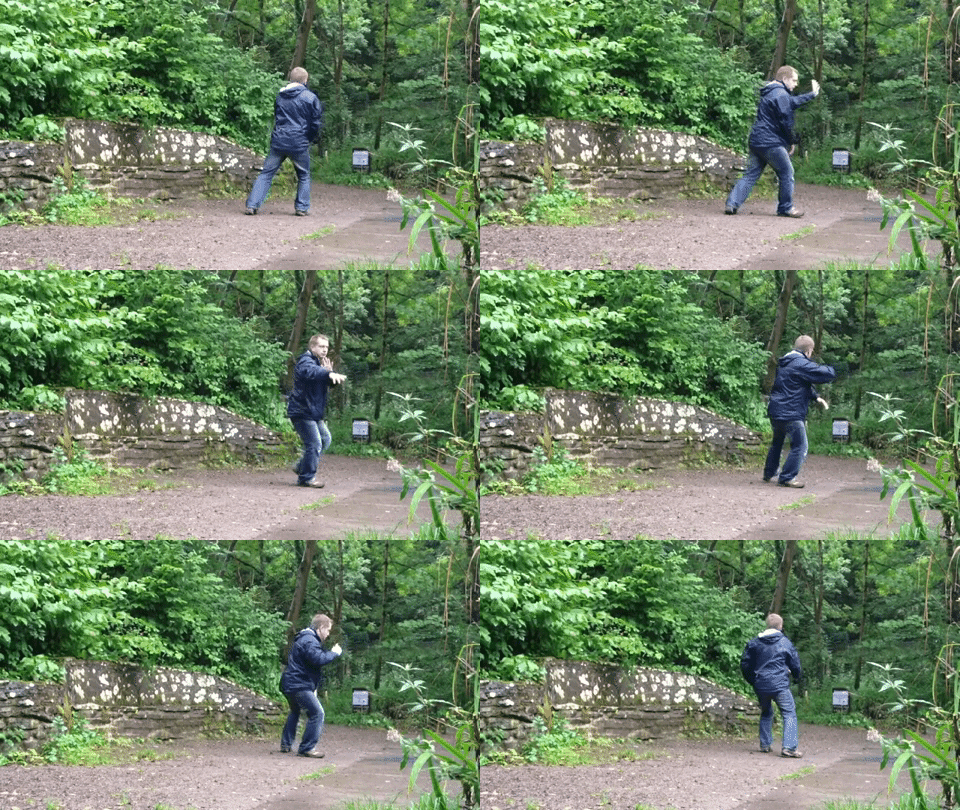
The version I personally do is somewhere between the traditional Sun and Yang styles. It’s got a step, but it’s most like Yang. Here’s a little GIF showing me doing an application of Brush Knee Twist Step in push hands from the Tai Chi style I practice.
Here’s how it looks in my form (a Yang style variant from the Gu Ru Zhang lineage that had input from Sun Lu Tang).
Of course, there are many possible applications of this movement, and I’m just showing one, but hopefully, that gives some indication of the usage.