REVIEW: Chen Taijiquan Illustrated, by David Gaffney & Davidine Siaw-Voon Sim


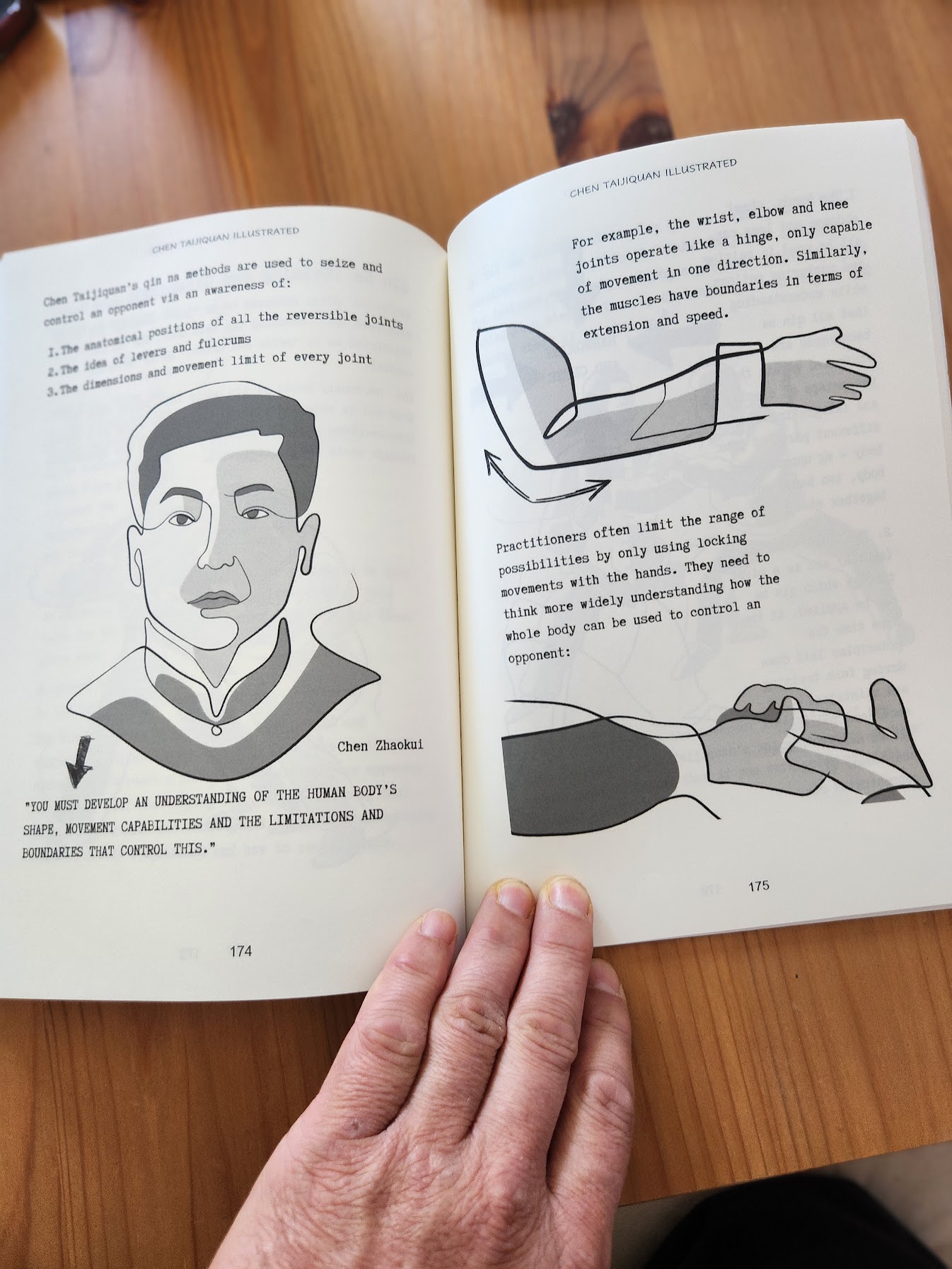
Chen Taijiquan Illustrated is an exploration of pretty much everything that makes up Chen Taijiquan, from principles, and body methods to practical usage and philosophy. But the most notable thing about this Taijiquan book, and the place where we should probably start, are the illustrations, because they are what really separates this book from others of its ilk.

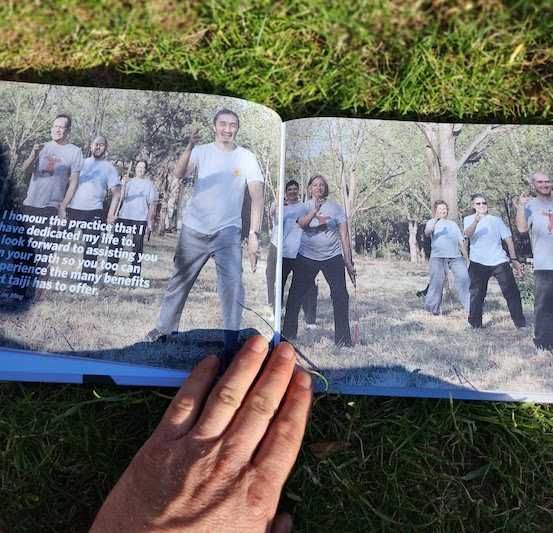
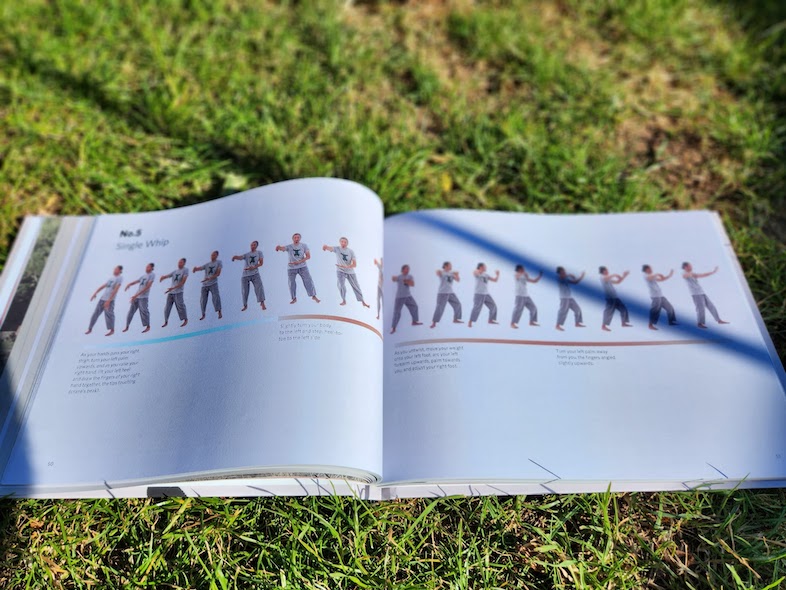
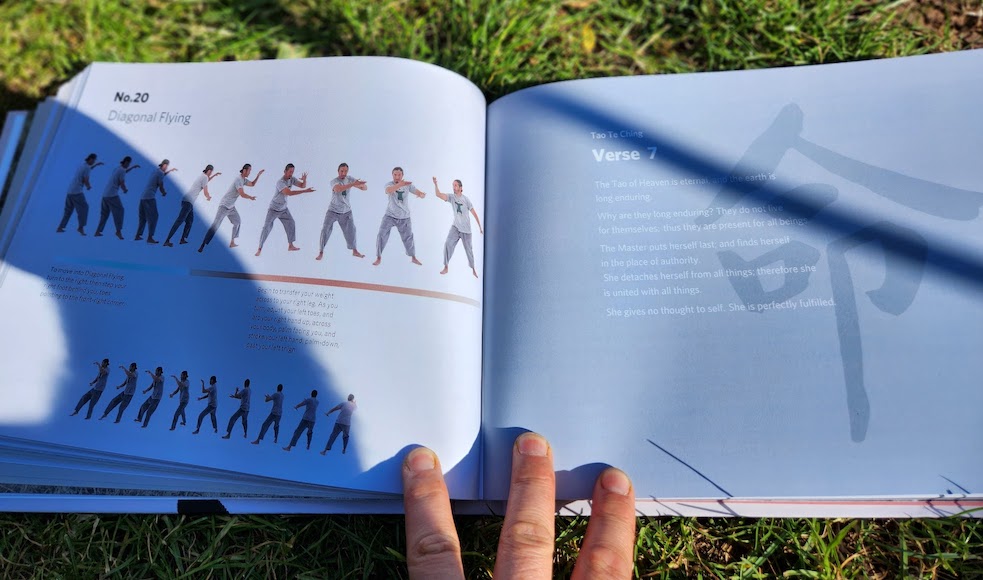
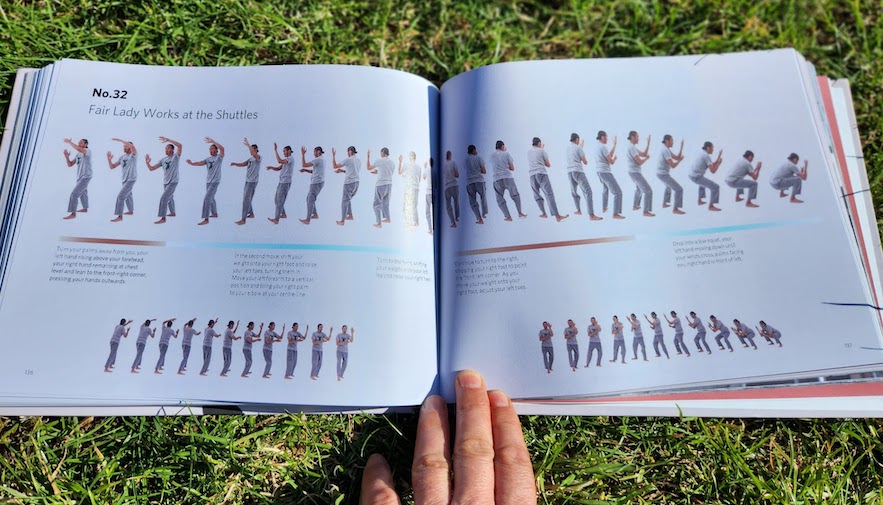
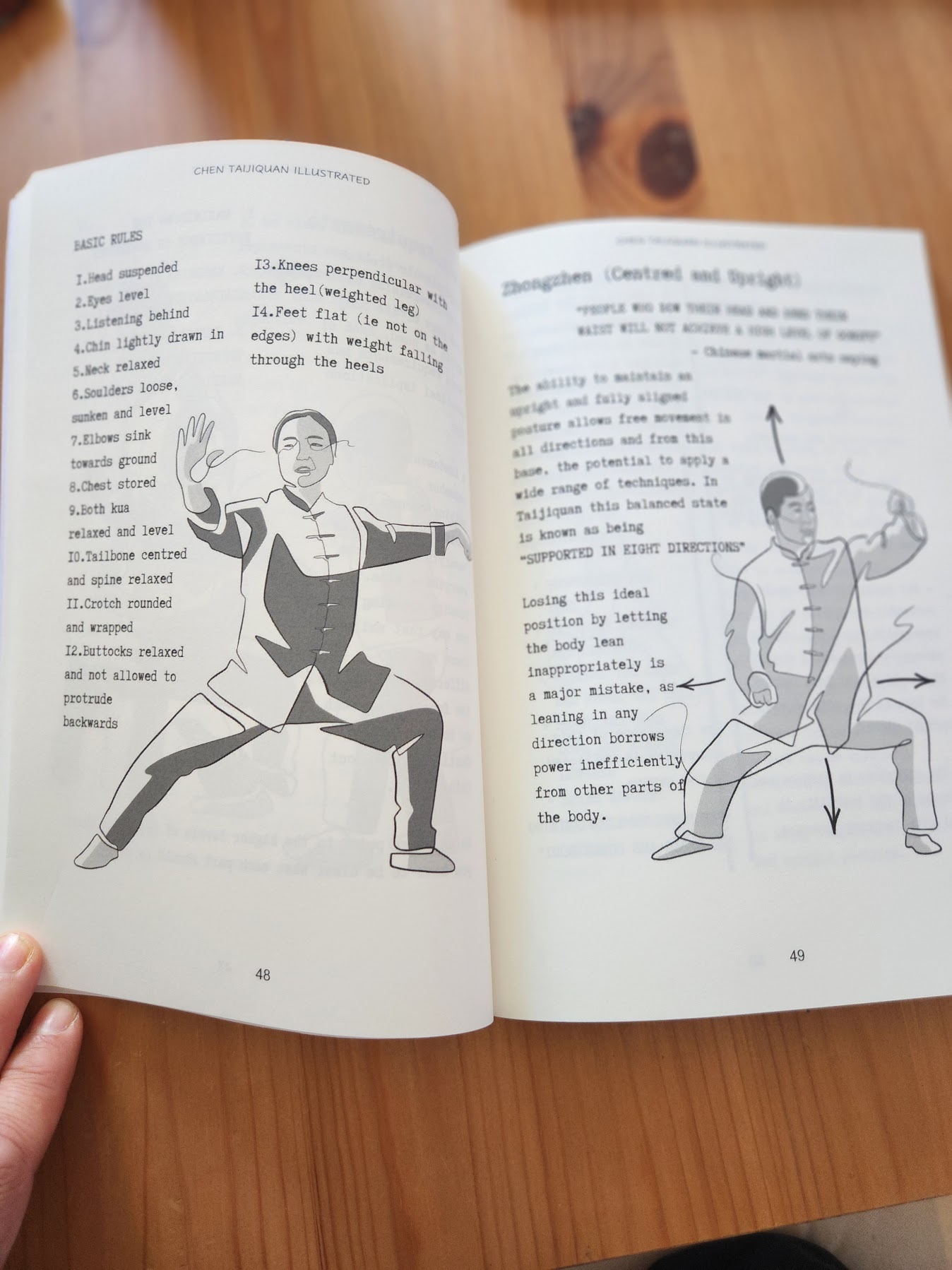
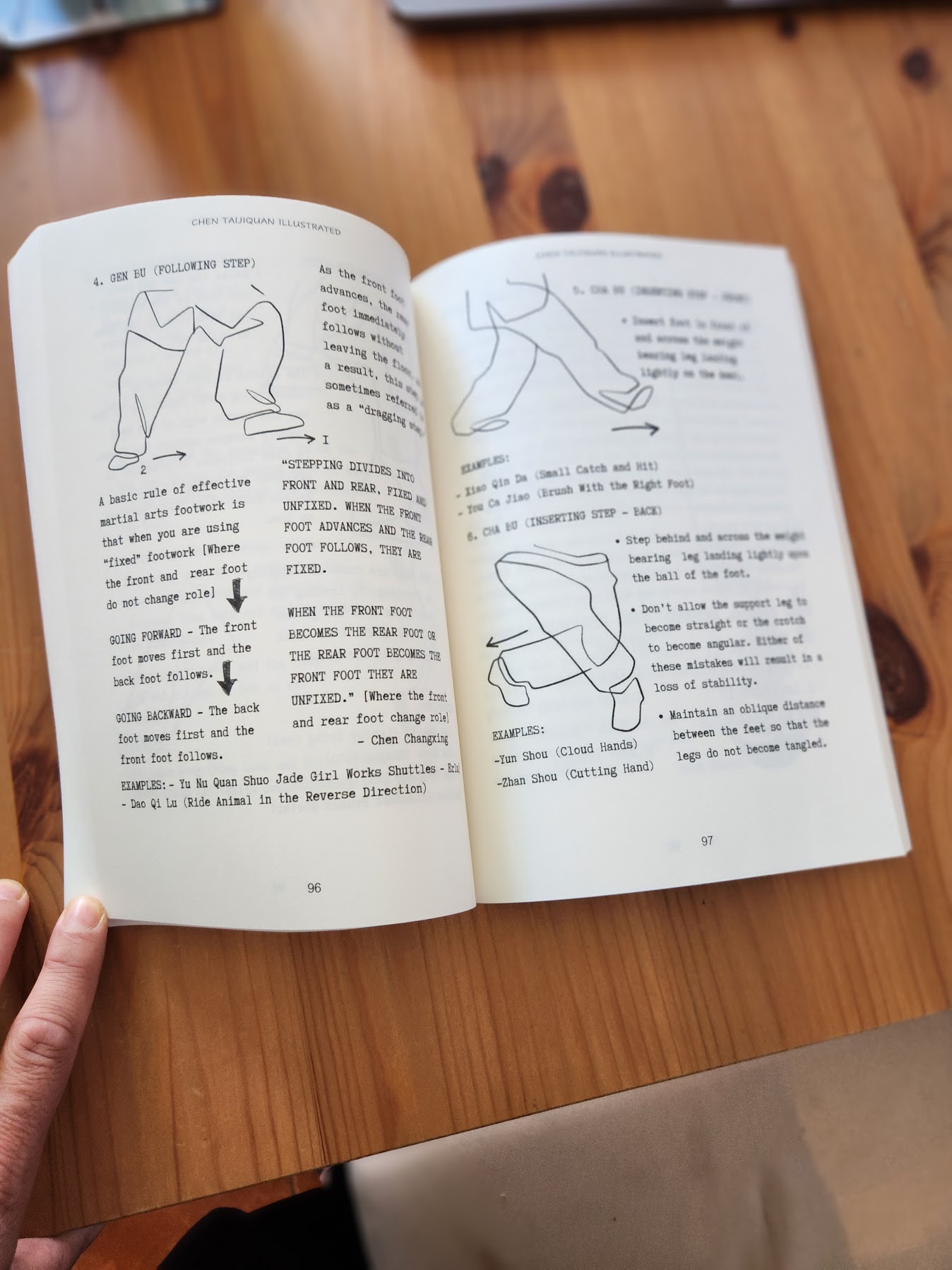
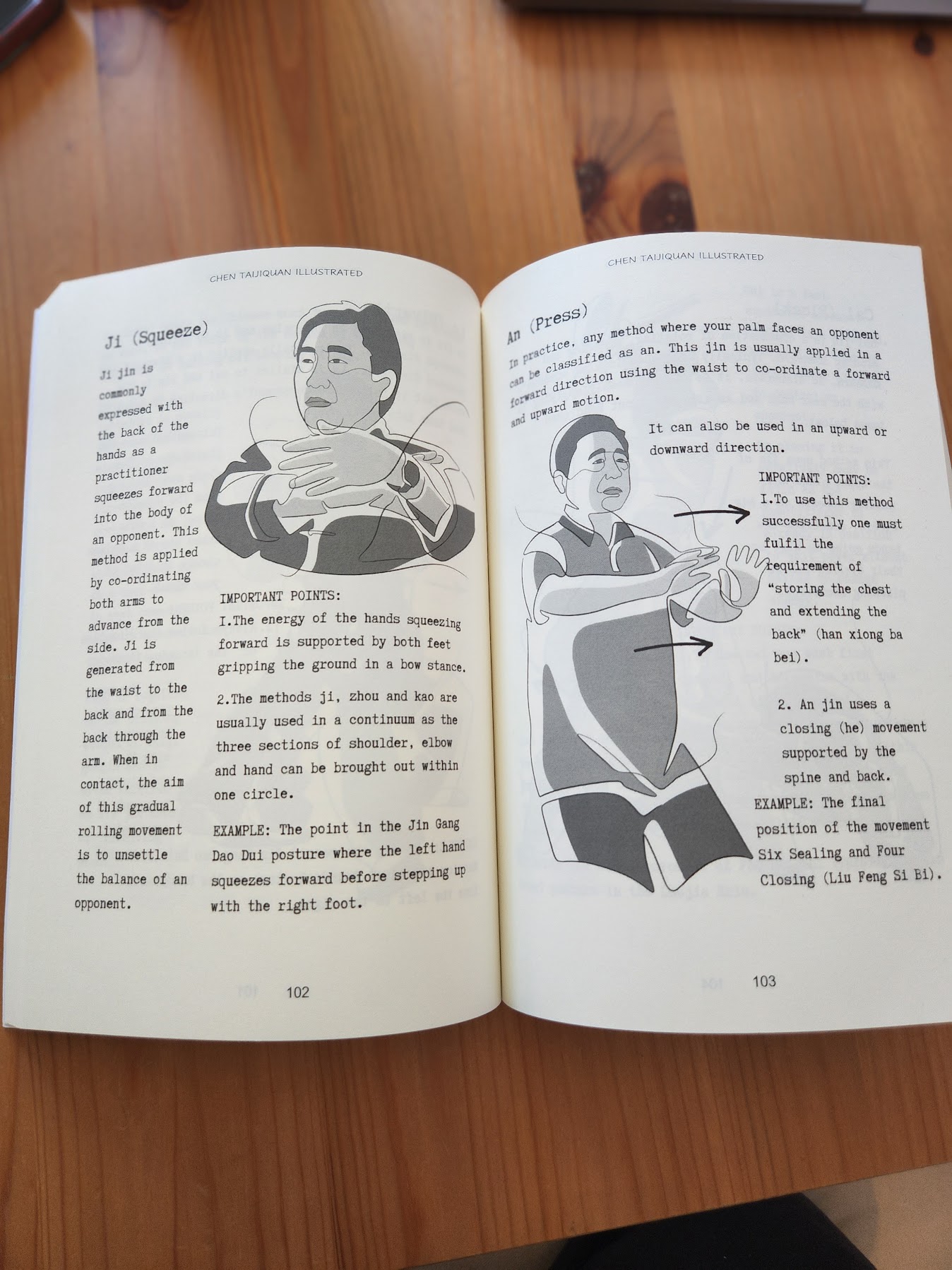
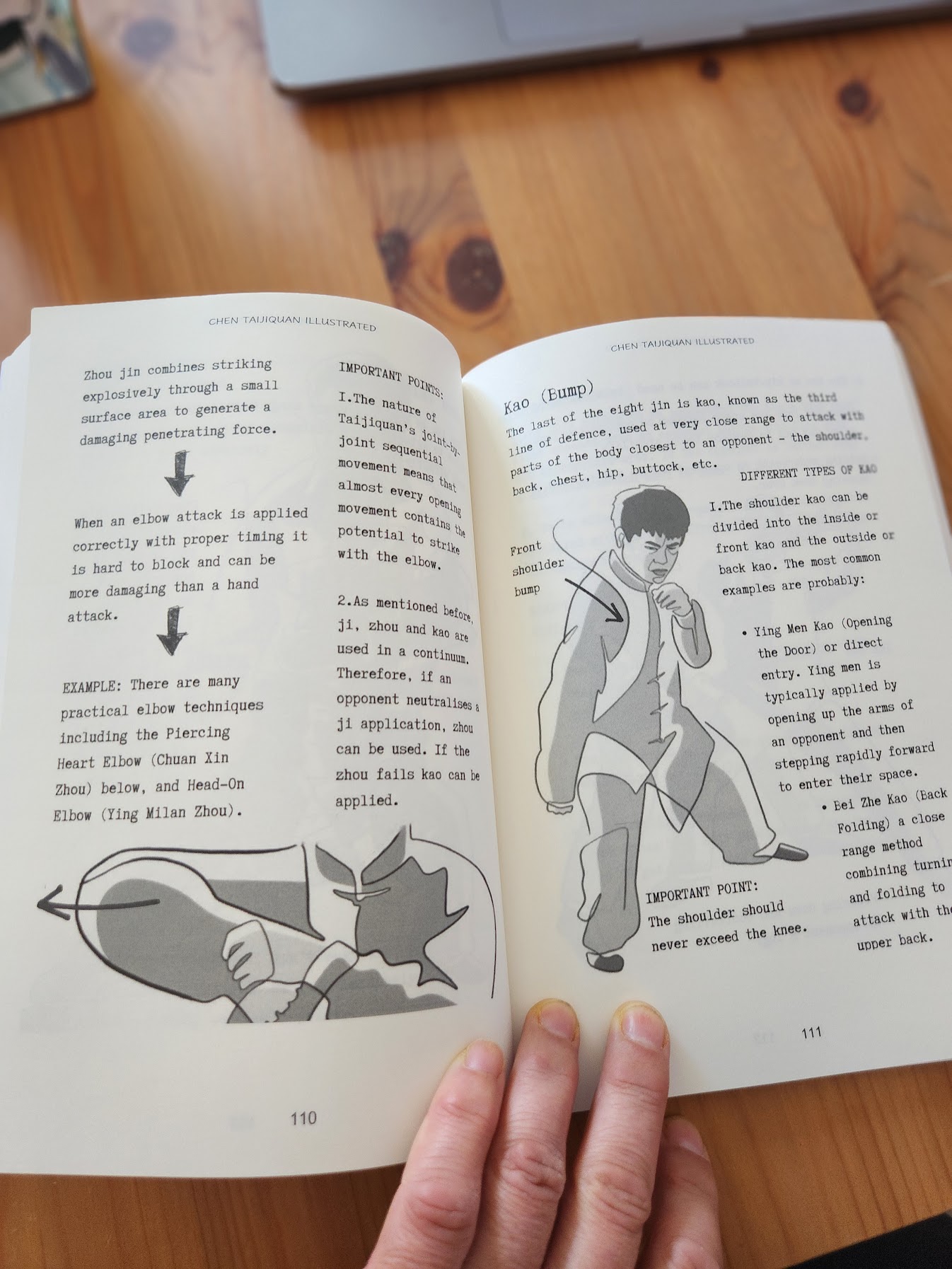
Almost every page here (and there are over 200) has some sort of detailed drawing on it that adds context to the text surrounding it. In fact, the whole book takes the form of a visual notebook, as if you are discovering a secret copy of the best-looking training notes you’ve ever seen. Surrounding the drawings are quotes from the most iconic practitioners in the Chen lineage, past and present, as well as explanations of principles, concepts and requirements of Taijiquan. Take a look and you’ll get the idea:

As you can see, the drawings are mainly done in a stylised cartoon way, which is actually very effective, and it’s pretty clear that these are photographs that have been traced over digitally, to produce the illustration, rather than drawn from scratch. The overall effect is really nice, and refreshingly modern and accessible. 

Because a Taiji master’s posture takes years to develop and is a reflection of their skill, you can learn quite a lot from just looking at it. So, having a drawing based on a real photo gives you the best of both worlds – you get to see the genuine skill of the practitioner on show mixed with the accessibility and visual appeal of an illustration. 

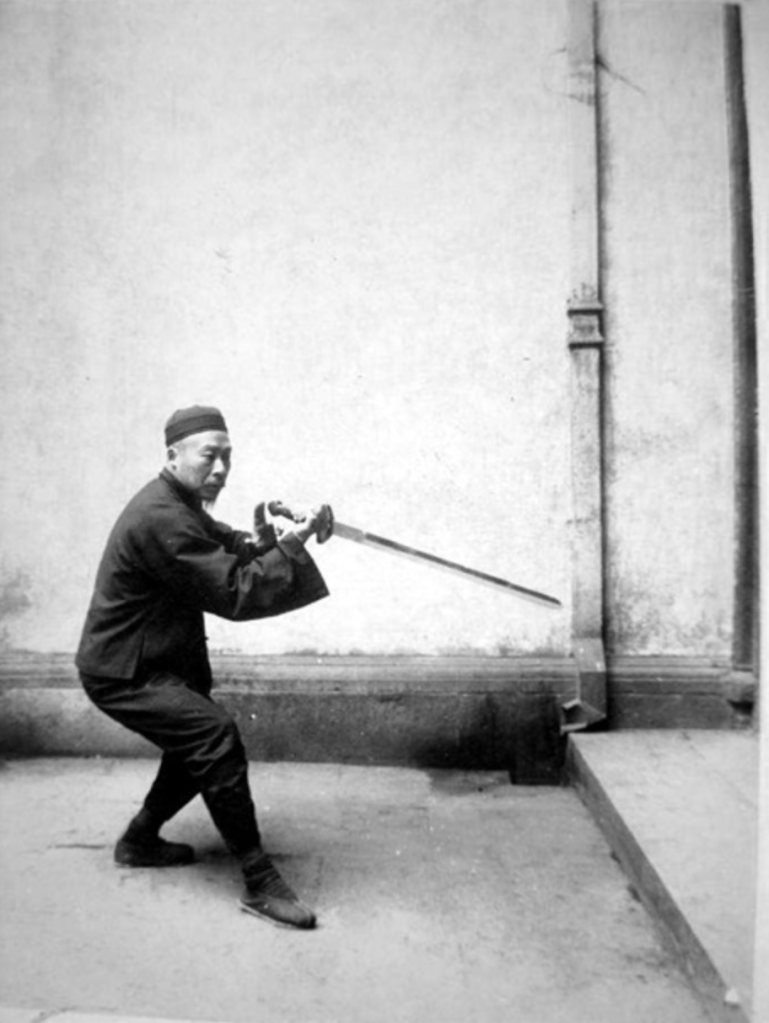
In fact, in a lot of cases you can guess the famous master that the drawing is based on. For example, the book cover shows, I believe, a digital tracing of a photo of Chen Xiaoxing, brother of Chen Xiaowang.

It should be pointed out that not all the illustrations in the book are done to the same high standard, but there are only a few where the quality dips significantly.

Chen Taijiquan Illustrated is split into three sections – Section 1, Body Rules (Shape and energy), Section 2, Practical use/Application and Section 3, Philosophical Roots. Section 3 on philosophy is tiny compared to the massive section two, which consists of a catalogue of pretty much all the practical methods found in Taijiquan – peng, lu, ji, an, listening, sticking, neutralising, push hands, hand methods, leg methods, stepping, chin na, etc. Pretty much everything to do with the Chen style is here!

The initial section on body requirements is very good, and something you can keep coming back to and the book goes into much more detail than you’d expect to find in a basic beginner’s book, which makes me happy. The explanations of the concepts and techniques in the second section can sometimes err towards being more of a catalogue of techniques than an in-depth ‘how to’ of each one, but there is always going to be a limit on how much can be achieved in print, and the illustration of various masters doing the method being discussed speaks volumes in itself, and adds a lot of depth. It’s also nice to see the martial methods of Taijiquan being discussed in detail, something that is also rare to find in a Taijiquan book.

Let’s talk for a moment about what the book doesn‘t include. For a start, there is no attempt to teach a form in this book, which is probably a good thing, as Chen style in particular would be hard to teach in a printed book due to its intricate nature and complex, spiraling movements. Also, there is no history section – personally I’m glad about that, as it’s a massive subject and would require too much space to do it justice, and frankly, it’s been done to death elsewhere, and matters not a jot to your actual practice of the art. If you want to discover the key to “internal movement” then you’ll find good pointers here, but if you really want to delve deeply into subjects like peng, groundpath and internal body mechanics then I’d say you should check out Ken Gullette’s book on the subject. Finally, there’s no mention of weapons here, which are obviously a huge part of the Chen art. The emphasis here is on body methods and bare hand methods only.

Taijiquan is a practical, doing art, not the sort of practice that benefits from too much intellectualism, and the visual nature of the book is great at reminding you of that fact, grounding the concepts and principles in practical reality.

Overall, I think this has to be one of my favourite books on Taijiquan ever produced. This is really one of the most comprehensive collection of training notes you’ll ever come across. And because everything is fitted around pictures, there are no long, boring, passages of text, meaning you can dip in and out at any point. In fact, just picking it up, flicking to a random page and starting to read for a few minutes can easily give you inspiration for your practice that day.

Highly recommended, and while obviously best suited to Chen style practitioners (there’s a lot of discussion of silk reeling), I think a Taijiquan practitioner of any style would get a lot out of it. I certainly did.

More thoughts on elbows and the classics of Tai Chi and Xing Yi

From  http://chentaijiquanworld.blogspot.com/ we find this nice quote about Chen Taijiquan:

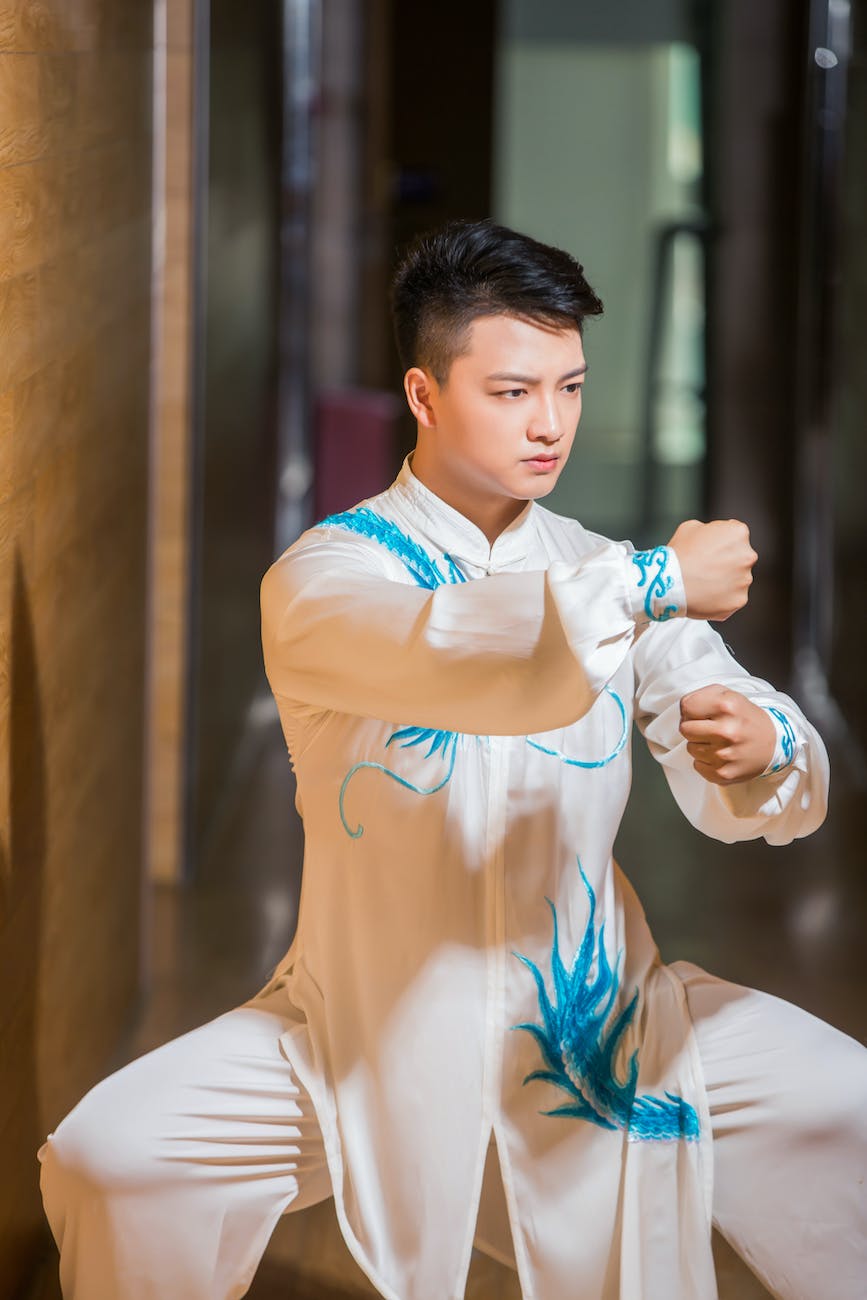
“The, at first sight, seemingly humorous Chenjiagou saying to “always keep an egg under your armpit” reflects the importance of not allowing the upper arms to become stuck to the side of the body.

This idea of always keeping a space under the armpit is something I’ve heard said in other styles of Tai Chi as well, and it fits in very well with the idea of “Peng all over the body” that you’re aiming for in Taijiquan, that kind of “inflated like a balloon, but also soft, springy and heavy” feeling. 

Taijiquan, with armpit gaps. Photo by Stephen on Pexels.com

But how does that relate to the question I was looking at recently about the issue of where the elbows should be in Xing Yi? “The elbows never leave the ribs” is a line from the Xing Yi classics* (more of that later) that has caused a lot of arguments between practitioners on its interpretation and meaning. 

And when you compare it to the previous saying about the armpit from Chen Village, it’s basically the complete opposite advice! And yet, both Taijiquan and Xingyiquan are said to be internal arts, and part of the same family. So, is the advice about the elbow a crucial element, as fundamental as, say, aligning the Bai Hui point (the crown) with the spine? Or is this more of a piece of strategic advice to do with the fighting style of Xingyiquan, and not anything to do with its fundamental body method?

Let me throw in a curve ball here and switch arts to BJJ. “Glue your elbows to your ribs” is something I say to my students in BJJ all the time when they are on the bottom defending a position like side control, knee on belly or mount.

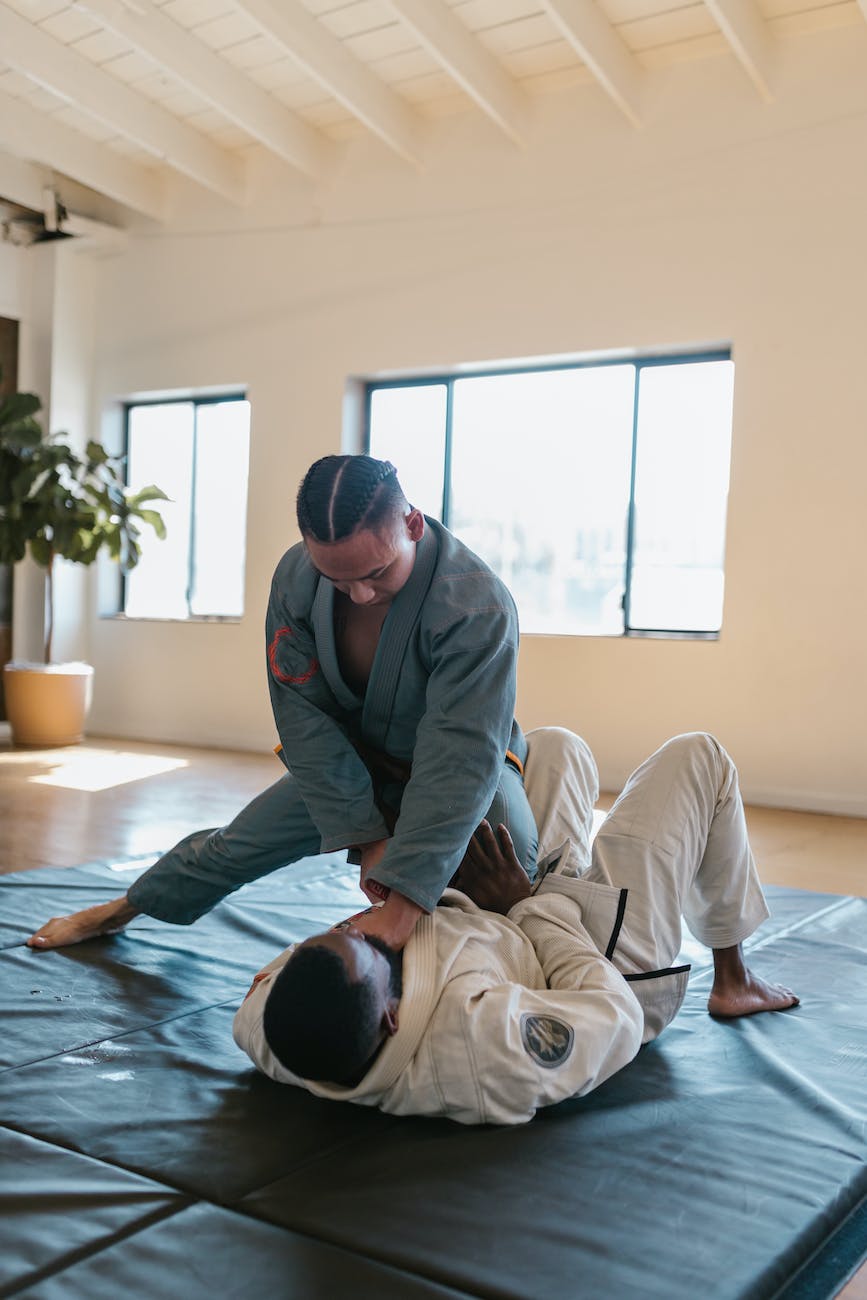
Knee on Belly in BJJ. Photo by RDNE Stock project on Pexels.com

If you let your opponent separate your elbows from your ribs in that position then only bad things can happen, so it’s great advice. Normally after I submit somebody new in BJJ I stop to explain to them how I did it, so we can turn it into a learning moment. 9 times out of 10 my explanation starts with “it started when you let me into the space under your armpit”. However, it would be ludicrous to make it into a hard and fast rule, to suggest that you should never let the ribs leave the armpit at any moment in BJJ. There are plenty of other times in BJJ where you need to pull with your arm, and you can’t do that fully without separating your elbow from your ribs.

* And let’s also decide on what constitutes a “classic” in Xing Yi. My own teacher only considered the 10 Thesis of Yue Fei  to be the classic writings in Xing Yi. Most of what people call the Xing Yi classics today are, in fact, writings created in the early 20th century when there was a publishing boom in martial arts manuals (See Chinese Martial Arts Training Manuals: A Historical Survey by Kennedy and Gau), and are based on the original Yue Fei writings anyway. For Xing Yi it started with Sun Lu Tang’s 1915 A Study of Xing Yi Boxing.

In the preface to his manual Sun says (Translation by Brennan), “While once at Bai Xiyuan’s home in Beijing, I got to see one of the Yue Fei manuals, not an original copy of course, but a handwritten copy made by someone in a later generation. It was not very detailed and unfortunately contained no explanations of its terminology, only the barest of text from beginning to end. I was suddenly inspired by this, immediately wishing to provide more complete information, even though I was fully aware that my level of learning and skill was superficial, and without being tempted to make anything up [in order to fill information gaps]. I secretly made my own copy and then deeply studied it, going through it posture by posture until bit by bit I had built up the material to make this book. There is no decorative language in it at all, for in my studies I have not dared to hold on to even the slightest exaggerations. Wherever flaws are found within my work, I hope my comrades will correct me, for which I would be very appreciative.

  – sincerely written by Sun Fuquan [Lutang] of Wan County, Baoding, 1915, 1st month, 15th day”

In his manual Sun has a chapter called “The Essentials of Practice” in which we find the advice about elbows and ribs. (Translation by Brennan)

“ESSENTIALS OF PRACTICE
The essentials of practice in Xingyi Boxing: 1. Sink your waist. 2. Shrink your shoulders. 3. Hollow your chest. 4. Press. 5. Lift. 6. Horizontal and vertical should be clearly understood. 7. Lifting, drilling, dropping, and overturning should be clearly distinguished.
  …
  Your head presses up during drilling, then shrinks back during overturning. Your hands lift during drilling, then drop during overturning. Your foot lifts during drilling, then drops during overturning. Your waist lifts during drilling, then drops during overturning. [from the Xingyi Boxing Classics:] “In lifting there is a horizontal aspect, but it is invisible [because it appears to be only upward]. In dropping there is a vertical aspect, but it is invisible [because it appears to be only forward].”
  Lifting is going out and dropping is striking, but when lifting is also striking, dropping is still striking. Strike with lifting and dropping, like the overturning waves of water, which are lifting and dropping. Regardless of lifting and dropping, drilling and overturning, going and coming, it should always be that your elbow does not leave your ribs and your hand does not veer off from your centerline.
  These are considered to be the essentials in Xingyi Boxing. Knowing these, the right path in the art will be obtained.“

But you can see that even in this passage, Sun is quoting the older “Xing Yi Boxing Classics”. So, you have to start to wonder, how old is the advice that the elbows do not leave the ribs, really? I know some styles maintain that their “quan pu”, ancient collection of classic handwritten writings their family possesses has this advice in. At least with Sun’s work we have a published date we can be sure of. 

Photo by George Sharvashidze on Pexels.com

But this also brings up the question of how much we dedicate ourselves to following the literal words of “the classics” to the letter. How much freedom are we allowed in our martial art? Were the classics intended to be a kind of set in stone, unwavering, set of rules to be followed on pain of death? The ancient writings of the founders always tend to take on this weight that gets heavier over time. If they’d been written a year ago, would we treat them with the same reverence? There are hard line Christians who treat every word of the Bible as the word of God, never to be questioned, and there are more modern progressive Christians who interpret the words in the Bible into a modern context, or see them as simply stories designed to teach an idea, and not to be taken literally.

So, the question still lingers, like a bad smell. 

Where do you put your elbows in Xing Yi? 

I think the best answer I’ve found so far is…..

“in between your shoulders and your wrists”.

Tai Chi Notebook News, May 25th 2023

So, a heads up about a couple of new books on the way, a robot teaching Tai Chi and a seminar write up that’s worth a mention. This post actually makes me think, should I be doing a newsletter? What do you think? Do you want one? Would you read it? Let me know!


XING YI NEWS

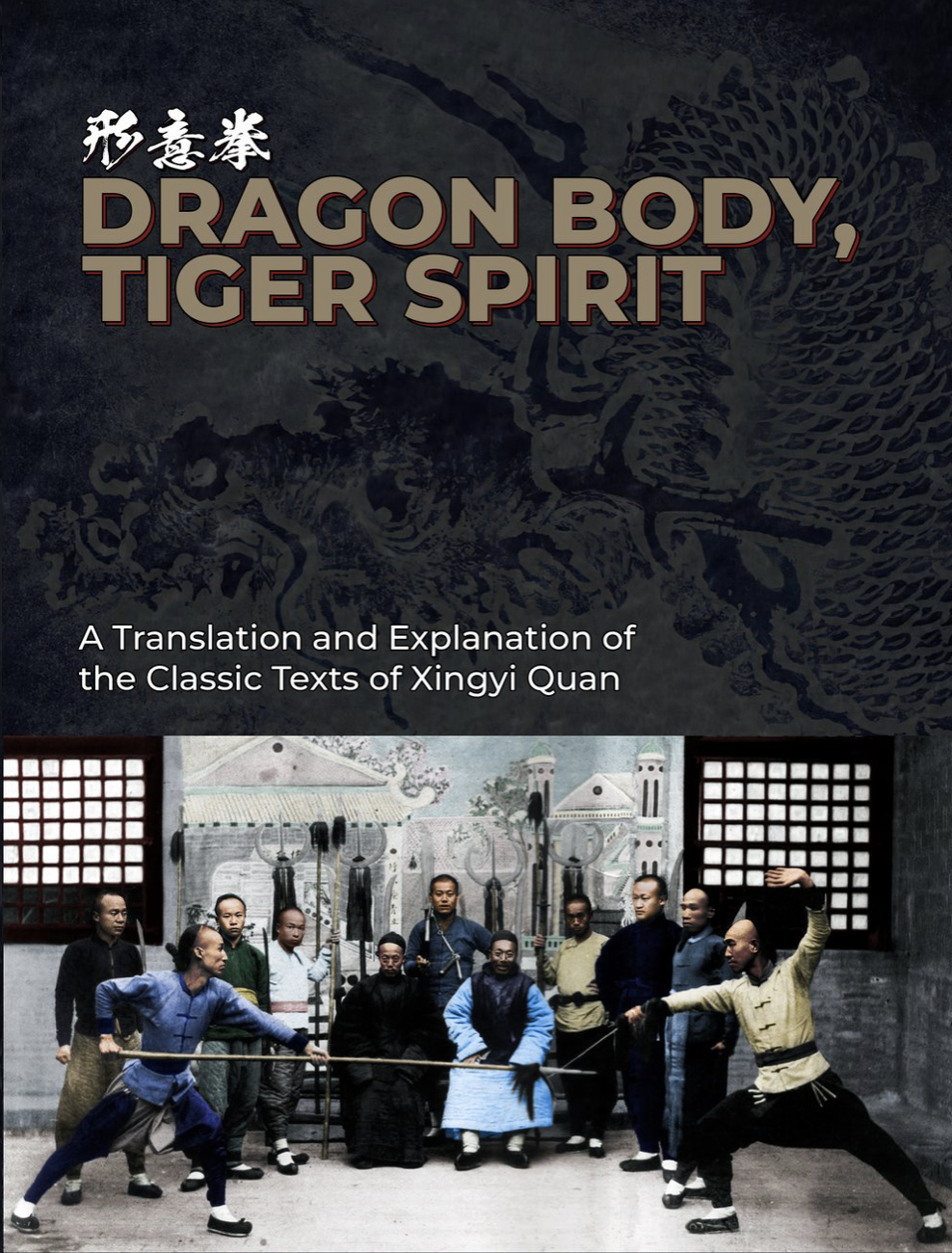
Dragon Body, Tiger Spirit

Byron Jacob has a new translation of the Xing Yi Classics, Dragon Body, Tiger Spirit, coming out, which looks like it will include a chapter on the history of Xing Yi written by Jarek Szymanski who you may know from his popular website China from inside.

Image Credit: Mushin Martial Culture

This is looking like it’s going to be good. The title is a nice play on “Crouching Tiger, Hidden Dragon” and it refers to things mentioned in the Xing Yi Classics. The cover also features a nicely-colourised version of the only photo we have of the famous Xing Yi master Guo Yun Shen, which has been very nicely done. (Master Guo is the guy seated centre right, and wearing the light blue tunic, next to Master Che.)

There have been many books that contain the Xing Yi classics translated, of course, but I’m hoping that Byron’s commentary will be the thing that makes this one different.

Byron says: “Dragon Body, Tiger Spirit will be available in hardcover, softcover as well as digital versions. To be notified of release visit mushinmartialculture.com and sign up to the newsletter.”

I’ll do a review once I get my hands on a copy.


TAI CHI NEWS

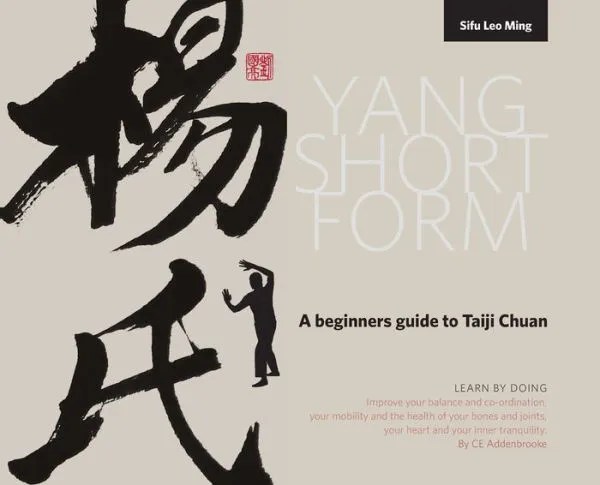
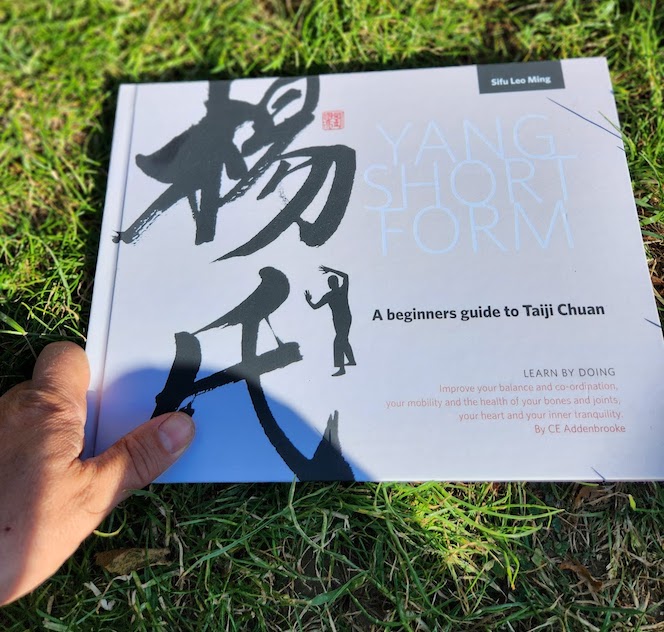
Yang Style Short Form

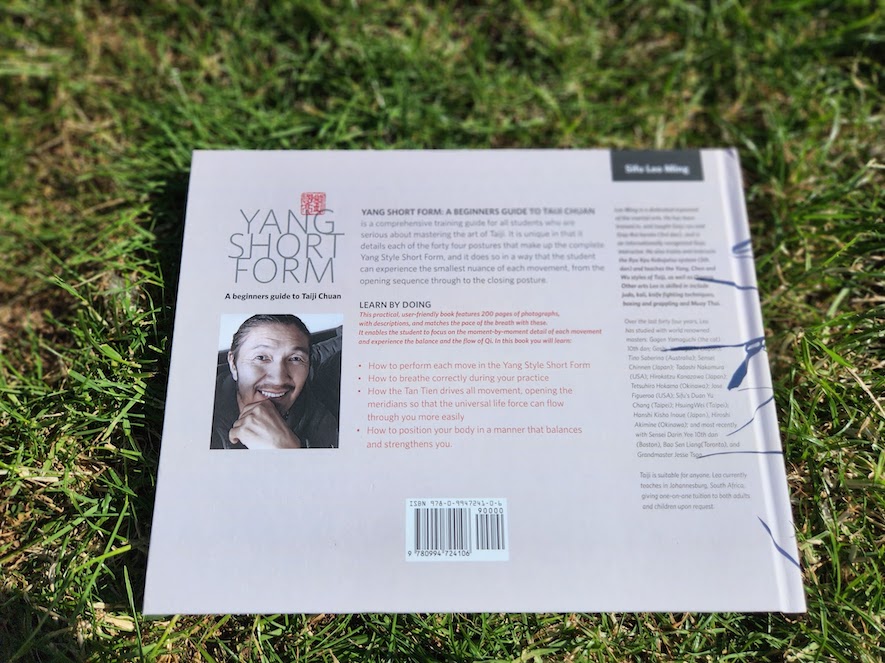
Another nicely presented book on my horizon is Yang Style Short Form by Sifu Leo Ming and Caroline Addenbrooke. The short form in question is the Cheng Man-Ching Tai Chi form, and calling it the “Yang Short Form” is a bit of a liberty, since it is not the official Yang Short Form. But names aside, it looks like it’s going to be interesting.

Here’s the description:

“A beginners guide to Taiji Chuan is a comprehensive training guide for all students of Taiji who are serious about mastering the art of Taiji. It is unique in that it details each of the forty four postures that make up the complete Yang Style Short Form, and it does so in a way that the student can experience the smallest nuance of each movement, from the opening sequence to the closing posture.”

It sounds interesting, especially since it goes on to say it will teach you how to breathe correctly during your practice and how the “Tan Tien drives all movement, opening the meridians so that the universal llife [sic] force can flow through you. “

A spelling mistake in the description of the book on the website (“llife”) is a bit of a red flag, but that could be Barnes & Nobles fault, and nothing to do with the book. However, I’m curious about the use of “Taiji Chuan” as a Romanisation on the cover though, since it seems to mix both Pinyin and Wade-Giles Romanisation systems. I have genuinely never seen anybody mix the two quite like this before. It’s usually either “Tai Chi Chuan” or “Taijiquan”. This will upset some people, I’m sure, but I don’t mind.

I’ll be reviewing the book soon.


Robot Tai Chi

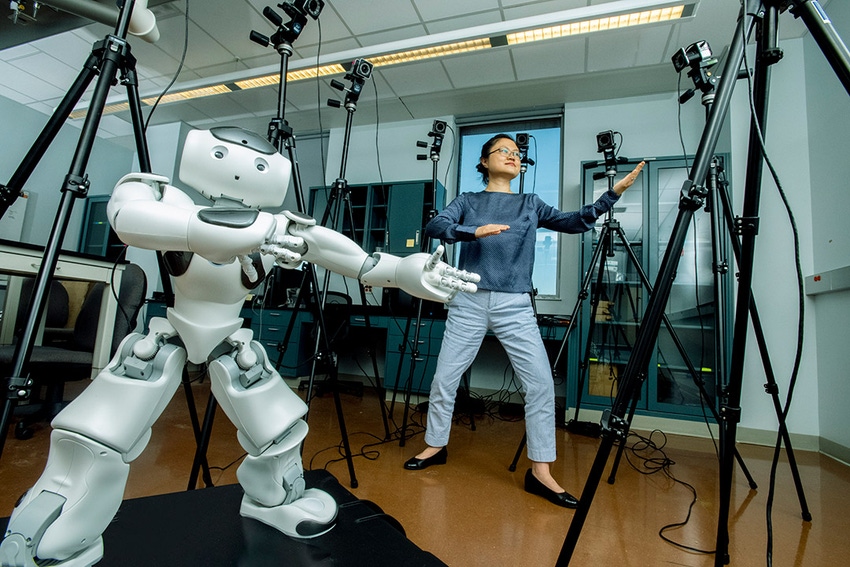
I guess it was inevitable, but somebody has made a life-size robot that teaches Tai Chi.

Image Credit: Credit: Rochester Institute of Technology

Depending on how it works (there’s no video!) this looks quite impressive, however, I’m left with one burning question – why? I don’t know how many thousands or millions of dollars it took to create this robot, but economically I’m pretty sure that paying Bob, your local Tai Chi teacher $50 to teach Tai Chi to the people in the old folks home once a week is a business model that is going to be hard for a multi-million dollar robot to beat. This looks like a solution in search of a problem to me.


Chen style seminar write up

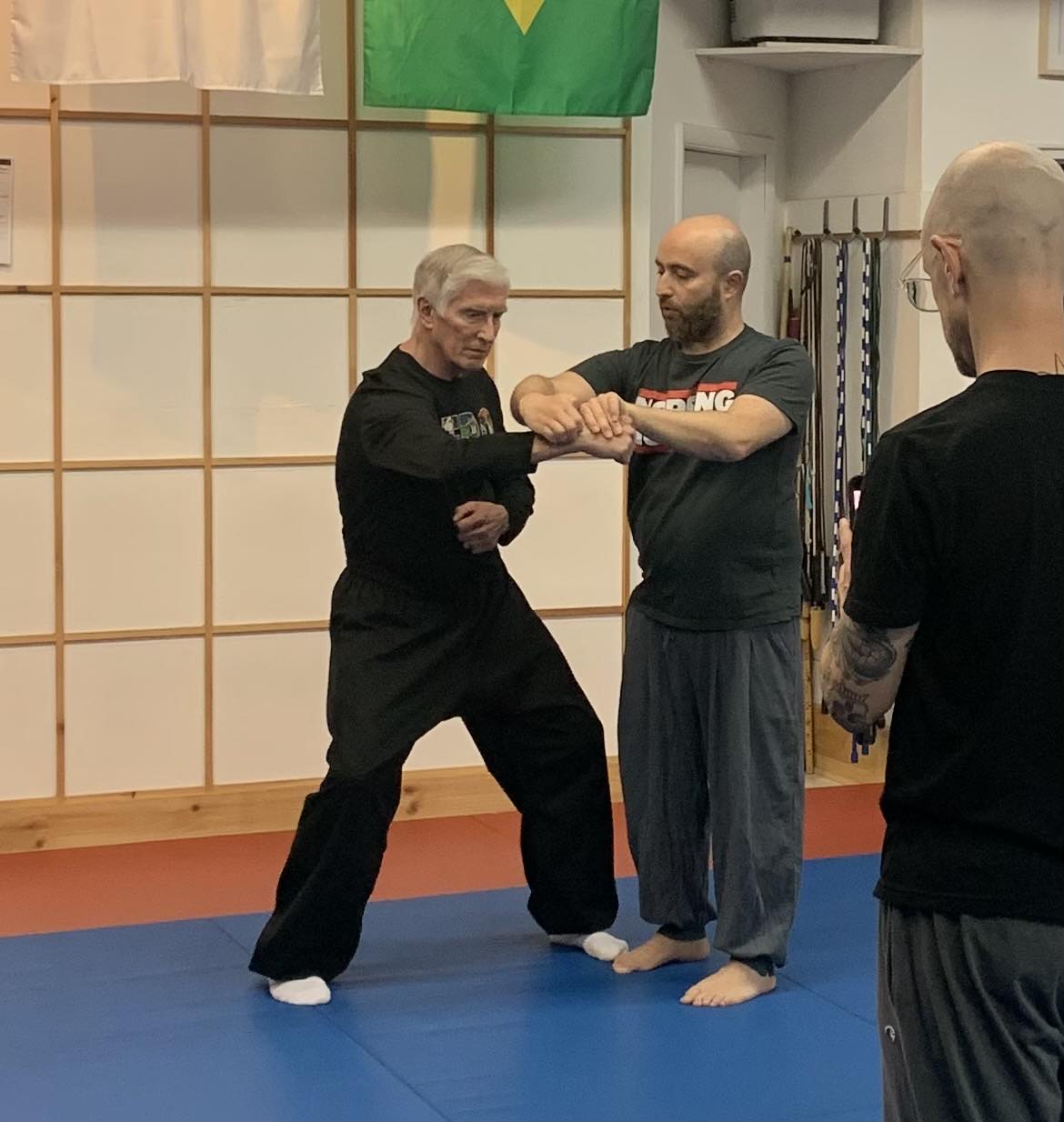
Let me give a shout out to my friend Ken Gullette of Internal Fighting Arts for his write up of a recent seminar with Chen Tai Chi mastermind Nabil Ranne in Philadelphia. Here’s a quote:

“What impressed me most about Nabil’s teaching was the level of detail. And there were differences — in the shorter stances where feet are parallel most of the time, in the shifting of weight, in the awareness of different jin in each movement, the fullness of the dan t’ien and the coordination of the mingmen, the opening and closing of the chest and back, the folding of the chest and stomach, the closing power in the legs, the grounding from the heels, the stability of the knees and the spiraling through the feet, and connecting it all in each movement; and peng — always maintaining peng, which I have worked on for over two decades but still learn new aspects.”

Image Credit: Ken Gullette

Nabil teaches Tai Chi in the Chen Yu lineage, and to my eye seems by far the best of the teachers available if you want to follow that particular line of Chen style. Plus, you can learn with him online at the Chen Style Taijiquan Network

If you want to get a quick glimpse of his style of Tai Chi then check out this Instagram page.


MORE LINKS

Recent Tai Chi Notebook posts

Here are 3 things I wrote this week that you should read:

1. The power of connection with Henry Akins:

I came across this video recently of Henry Akins explaining the concept of connection in BJJ, as taught to him by Rickson Gracie, and it doesn’t half remind me of Tai Chi…

2. Way of the Warrior episode: Shorinji Kempo

The classic BBC TV series, Way of the Warrior’s episode on Shorinji Kempo just appeared online, and it still holds up today.

3. Where should the elbows be in Xing Yi?

This blog is about a weird quirk of the Xing Yi world. There’s a surprisingly large amount of online debate in Xing Yi circles about where the elbow should be when performing Xing Yi.


If you haven’t checked The Tai Chi Notebook out on Facebook then please do, and why not give our Instagram page a look too, and our YouTube channel?

1,000 followers on Facebook! (and my most popular posts of all time)

The Tai Chi Notebook Facebook page has finally got far enough over the 1,000 followers milestone that I feel confident in shouting about it a little bit! So, here we go – 1,000 followers!

Thanks to everybody who has liked, subscribed and commented on The Tai Chi Notebook over the years – it’s all very much appreciated!

If you haven’t checked us out on Facebook then please do, and why not give our Instagram page a look too, and our YouTube channel?

Also, I’ve changed the sidebar on the blog over to the right —-> It now shows the most popular posts on the page by views and likes, so if you’re looking for something interesting to read about martial arts and Tai Chi, then look here to find something.

T’ai Chi magazine, AI and punching bags

Sometime back in the early 2000s I had an article published in what was, at the time, the premier Tai Chi magazine, T’ai Chi Magazine. It was American, but you could find it in the UK in newsagents like WHSmiths and in martial arts shops. I was reminded of it recently and dug it out of my archive. Here it is! I looked a lot younger back then…

I remember being really excited that I got this article published. It’s hard to imagine now, but beyond your instructor or random seminar big wig in your town, T’ai Chi Magazine was one of the only ways to get information about Tai Chi before the Internet took over everything. It was run by its Editor, Marvin Smalheiser, who sadly passed away in 2016.

Whenever you dig out something from the past it’s a good opportunity to reflect on how things have changed. T’ai Chi Magazine was run to a pretty high standard, the images it published were always good, and many of them were in colour. The articles were generally of the interview type and provided a little glimpse into the T’ai Chi world for fanatic followers, who would look at the articles for hours, trying to work out what a particular pose could be for, or how the featured practitioner was doing something. Then VHS video came along and made still images irrelevant, since you could actually see the applications being done (a lot of the pages in T’ai Chi Magazine were dedicated to advertising VHS videos of forms and styles, mainly from China). And later online video sites like YouTube came along and made VHS look antiquated.

Considering the latest developments in AI it looks like our future will consist of an AI-generated person teaching us Tai Chi forms with no credit to the sources it stole it from, and probably teaching the moves wrong anyway. I’m not sure that technology is always moving us forward. You can imagine the fear that the first Tai Chi instructors had that if they put images of their form in a book it could be stolen from them. These days, it’s not only going to be stolen by AI, but it’s going to be manipulated into something else entirely!

You can imagine the prompts now:

“Alexa, teach me a Tai Chi form that lasts for 10 minutes and exercises all my major muscle groups”.

“Sure, here you go Graham.”

A video (or hologram?) of Alexa will then start teaching you some ‘follow along’ series of Tai Chi movements it’s magicked up out of thin air, with no credit to where it got them from, and slightly wrong.

And the worst thing will be, it’s probably exactly what people want.

Making your own form

“If correct timing and position are not achieved,
the body will become disordered
and will not move as an integrated whole;
the correction for this defect
must be sought in the legs and waist.

When you’ve been practicing Tai Chi for a while – a few years maybe – you’ll get to the stage where you start to think about making your own form. Something that puts all the bits you really like together, and is either shorter than what you usually do, or longer, or uses less space, or fits into your garden better, or… something.

It’s potentially driven out of a need to make your own mark on the world; perhaps a sense of ego. You want something that is yours! Or maybe it’s just that you are a creative person and you have a need to continually create. Or perhaps it’s just to bring a sense of aliveness and play back into your Tai Chi…

What will then happen is you’ll start making a form, and then you fiddle with it, and fiddle with it and fiddle with it… and years pass and you’re still fiddling with it.

Ultimately, you’ll realise that this process never ends, and that your form will never be “finished”. Just when you think you’ll got it finished, you’ll notice a part of it isn’t quite right.

Whenever I mentioned to my teacher, over the years, that I’d made my own little form he was usually completely nonplussed. I mean, he asked to see it, but I could tell it wasn’t setting his world on fire 🙂

As I was pondering on my millionth version of my form this morning, another thought occurred to me. An obsession with creating your own form is probably an indication that you are getting a little too concerned with the external aspects of Tai Chi.

Switch your focus in Tai Chi back to the ‘internal’ elements – your perception of your body in space. Slow down, put your mind on what you are doing, notice your breathing, feel the (for want of a better word) energy inside the movements, notice where your weight is on your feet, push up from the ground, etc…

Now you’ll find that it doesn’t really matter to you what form you are doing – it’s all the same. If you are focused on the inside, your concern for what order movements come in and how many times you repeat something isn’t what matters anymore.

Suddenly, the idea of creating your own sequence of moves seems a bit, well, meaningless. Instead, you create your own form every time you practice, with every movement you do.

Episode 23 – Mike Ash on using Xing Yi Quan for combat

There’s a lot of great martial stuff in Xing Yi Quan, which is feeling more and more like an untapped resource these days. With that in mind I interviewed one of my old training partners, Mike Ash, for the latest episode of my podcast. Mike has always been interested in training Xing Yi Quan as a martial art, and that’s what we talk about. He’s also practiced plenty of other martial arts and has recently started a new study into Taijiquan.

We talk about all of that, plus the spiritual side of martial arts. Here’s the podcast:

A simple exercise for opening and closing in Tai Chi

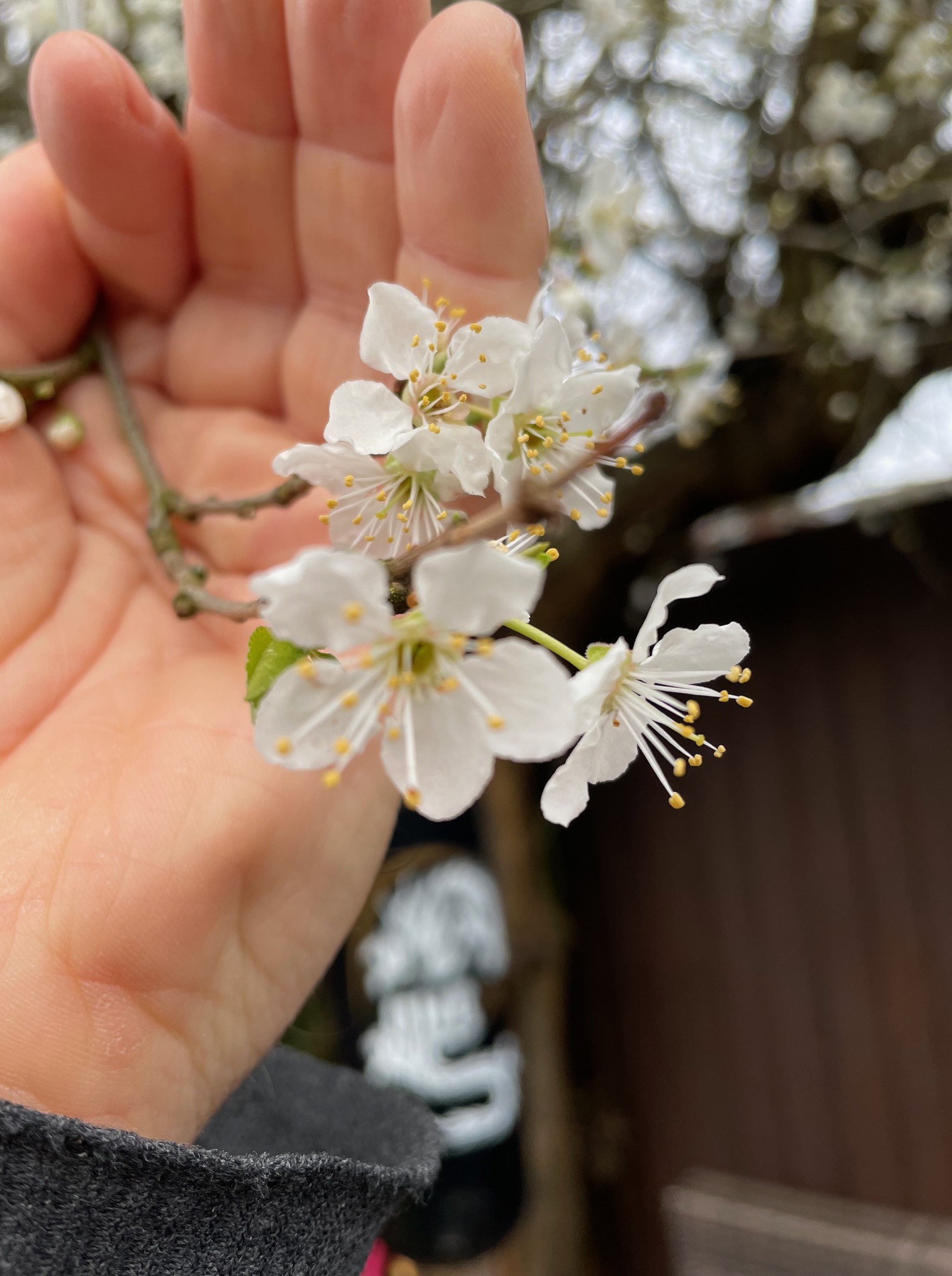
The plum tree in my garden is blossoming, and that can mean only one thing: Spring is here!

Without getting too poetic about it, the potential energy trapped within the tree over Winter is releasing and opening out to the world. So, in keeping with the cycle of the seasons, let’s return our Tai Chi practice to a similar aspect – opening and closing.

All Chinese martial arts contain movements that open and close the body, but I’d go as far as to say that a repeated pattern of opening and closing your body in movement is the fundamental action of Tai Chi Chuan. It’s perhaps the one thing that makes Tai Chi Chuan (Taijiquan) different to other Chinese martial arts.

For instance, a lot of Southern Chinese arts contain movements where the body is tightly closed under tension and then this tension is used to produce a tightly focussed sort of short power. White Crane is a good example – I really like this video of Martin Watts showing the connection between Chinese White Crane and the roots of Japanese Karate, for example.

Then there are also Chinese martial arts that use ‘open’ postures a lot, and produce power from the big turning actions of the waist and shoulders – Choy Li Fut is a good example of this.

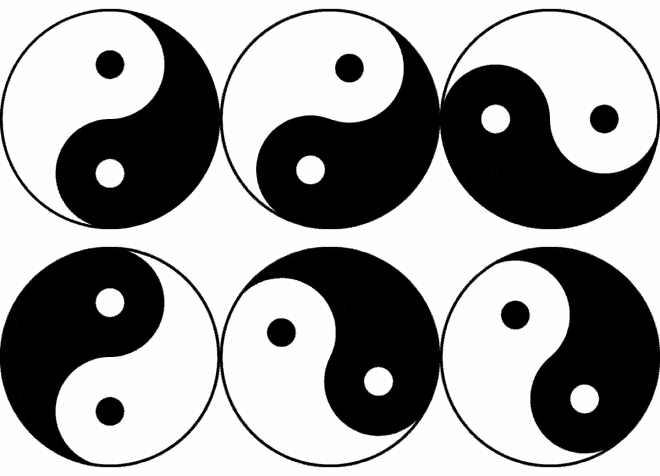
Of course, both these arts make use of both opening and closing movements in application, but what makes Taijiquan different is that it seems to have a rule that the body must constantly cycle through a series of opening and closing postures. You can see this when you look at Tai Chi forms – it shouldn’t matter which style you’re looking at, the opening and closing movements should follow each other in a cycle, very much like the Yin Yang symbol. If you imagine the Yin Yang symbol turning in a clockwise direction then the white fish becomes the black fish, which becomes the white fish, and on and on.

Silk Reeling exercises are a great way to focus on understanding open and close movements, as you just keep repeating the same pattern over and over, so your brain doesn’t get occupied thinking about the movement you are doing next (as it would in a Tai Chi form) and you can focus on the opening and closing actions.

So, what are the opening and closing actions? Well, I went over it in a video series a while ago. You can watch it here:

But it takes a while to watch all that series, so long story short, here’s a written explanation: an opening movement generally stretches out the front of the body (the Yin side – the soft parts, like the inside of the arms, and thigh, calves, and belly) and a closing movement generally stretches out the back of the body (the Yang side – the harder parts, like back of the arms, back and outside of the thighs and shins).

You can see these actions everywhere in nature: Cats tend to stretch along the front and back (yin and yang) of the body when stretching. (And it’s the same with the Yoga “Cat stretch” posture). But you see them in humans too – when you do one of those involuntary yawning/stretching movements in the morning, it tends to be opening the chest (yin stretch), occasionally followed up by a Yang side stretch.

It’s been noted that animals running are opening and closing the Yin and Yang sides of their bodies in sequence. So, this opening and closing action is fundamental to human and animal movement and the more we can utilise it, the more we are returning to our own natural systems of movement. Now, I don’t want to get sidetracked into a debate on what exactly “natural” movement is, but simply put, this opening and closing movement done in the human body feels good, it seems to put you in a good mood and you feel like your body and mind are returning to the way they are supposed to work. It requires less effort to perform tasks using it because it’s very efficient and it feels natural. If you watch skilled workmen and women then you’ll notice that they tend to gravitate towards easy body movements that have this natural opening and closing quality. Many of the people in ancient China who practised kung fu systems would have been agricultural village works who were familiar with natural movement patterns through necessity.


4 Directions Breathing exercise

Silk reeling exercises belong to the Chen style of Taijiquan, and while I (a Yang stylist) have no problem borrowing what works from other styles, a lot of Tai Chi practitioners might not want to do something from another style. However, almost all Qi Gong/Tao Yin type breathing exercises follow the same idea of opening along the Yin side of the body and closing along the Yang side that you find in Silk Reeling exercises.

You probably have some sort of exercise already that’s in your system to try this with, but let’s try one simple exercise to get our heads around the idea of open and close.

Stand in a Horse stance,

  1. Breathe in as you bring your hands up facing you and then move them around a large imaginary ball that’s in front of your chest, so that your hands are facing away from you.
  2. Push the imaginary ball forward away from you as you breathe out.
  3. Turn the hands over and bring them back in towards you as you breathe in, going around the outside of the ball.
  4. Push to the sides as you breathe out.
  5. Bring the hands back in, circling the ball, getting underneath it as you breathe in.
  6. Push upwards as you breathe out.
  7. Bring the hands back in, circling the ball, getting on top of it as you breathe in.
  8. Push downwards as you breathe out.
  9. Bring the hands back in, going around the ball as you breathe in.
  10. Let the palms face down and hands return to your sides as you breathe out.


Adding the opening and closing:

As you bring your arms up and towards you and go around a big ball that’s the opening movement. You can feel the slight stretch opening around the chest area, and you use that slight tension to help push your hands forward. As you do you’ll feel a slight stretch developing along your back. That’s the closing movement. You then use that slight tension to help bring your arms back. This is opening. Then as the arms push to the side, this is closing, and so on.

Here’s a video of me doing it:


Don’t use muscle

You often hear Tai Chi teachers say things like “don’t use muscle”. Normally this drives me mad, as you can’t physically make a movement without using muscles! However, what they’re really talking about is using that slight stretch you can feel to power the movement instead of just moving as you normally would, which results in making it “too physical” for Tai Chi. Finding the right words here is a delicate balance, but what we’re looking for is more of a whole body movement.


Final words

It helps to work on this in a stationary exercise, as described, but when you try your Tai Chi form, try and focus on keeping that feeling of opening and closing going throughout the whole form. The opening and closing movements are already there in the form, it’s up to you to reveal them. It’s a way of approaching the form from the inside, rather than the outside. So, if you’ve been struggling to get a movement to feel right in your form, it could be that the method described here will solve the problem for you. For it to work you have to be “sung” (relaxed) and focused on what you’re doing and the feelings inside the body. If your mind wanders off then inevitably so will your form. This is the start of what we call in the Tai Chi Classics “internal and external combine”.

Further reading: Turning Qigongs into functional Qi exercises

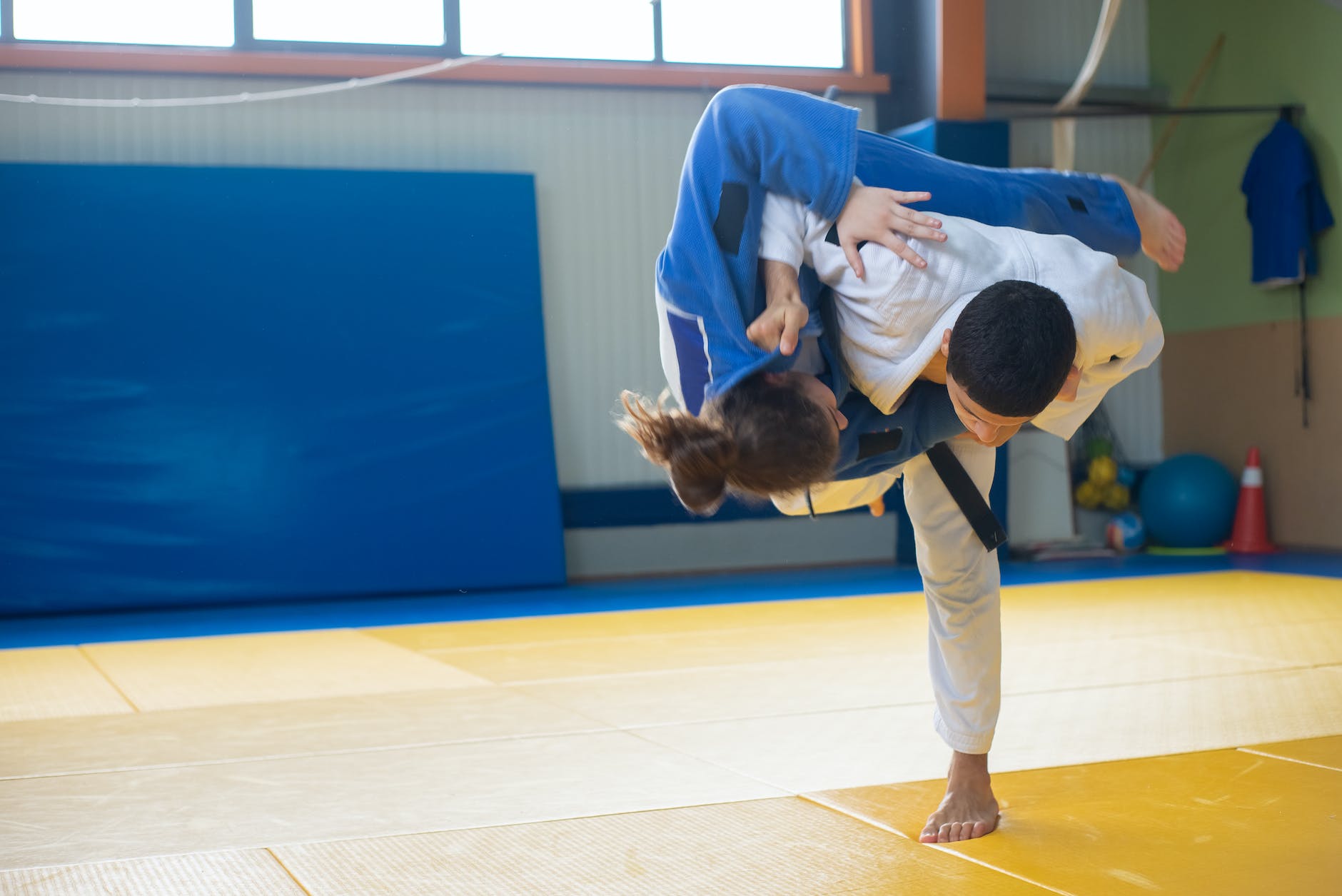
Which is a better compliment to Taijiquan – Judo or BJJ?

Occasionally, I get questions and this one was a good one, so I thought I’d post my answer here. The question was: Is Judo or BJJ a better compliment to Taijiquan?

Photo by Kampus Production on Pexels.com

“It’s an interesting question! BJJ has less rules about what you aren’t allowed to do, and is therefore closer to self defence, but it depends on the school you go to – Judo is pretty much the same everywhere you go. I’d say both are good. My personal preference is for BJJ because it isn’t as hard on the body and I prefer ground work to throws. If you’re more interested in throws then do Judo.

If you want something that is Chinese, then Shuai Jiao would be a good compliment to Taijiquan, however, it’s hard to find outside of China. There are some online courses available.

But I think my real answer is that it’s not the art that matters, it’s the teacher. Find a teacher you like who is skillful at something, and learn whatever they have to teach you is my advice. I think in the long run that matters more than what art you choose.”

The many lives of Yang Lu Chan

The latest edition 13 of the Martial Arts Studies journal is out! Of particular interest to practitioners of Taijiquan this issue is Douglas Wile’s article on The Many Lives of Yang Luchan: Mythopoesis, Media, and the Martial Imagination. Yang Luchan is, of course, the patriarch of the Yang style, yet very little is actually known about him for sure, although that hasn’t stopped people filling the void with many colourful stories.

Yang Lu Chan

Here’s the abstract:

“The life of Yang Luchan, patriarch of the Yang lineage and founder of taijiquan’s most popular style, is a biographical blank slate upon which conservative, progressive, orientalist, and just plain rice bowl interests have inscribed wildly divergent narratives. Conservative scholar-disciples sought to link him with the invented Wudang-Daoist lineage, while progressives emphasized his humble origins and health benefits of the practice. His life (c.1799-1872) straddled the height of the Manchu empire and decline into semi-colonial spheres of foreign influence, while successive generations of Yang descendants propagated his ‘intangible cultural heritage’ through Republican, Communist, ‘open’ and global eras. Practiced world-wide by hundreds of millions, taijiquan’s name recognition made it ripe for media appropriation, and Yang Luchan has been remythologized in countless novels, cartoons, television series, and full-length feature films. The case of Yang Luchan offers an unusual opportunity to witness an ongoing process of mythopoesis against a background of historical antecedents and to compare these narratives with traditional Chinese warrior heroes and Western models of mythology and heroology. If the lack of facts has not constrained the fabrication of invented biographies, neither should it discourage the quest for historical context as we sift and winnow truth from trope in examining the patterns of motivated reasoning that characterize the many reconstructions of Yang’s biography.”

Abstract