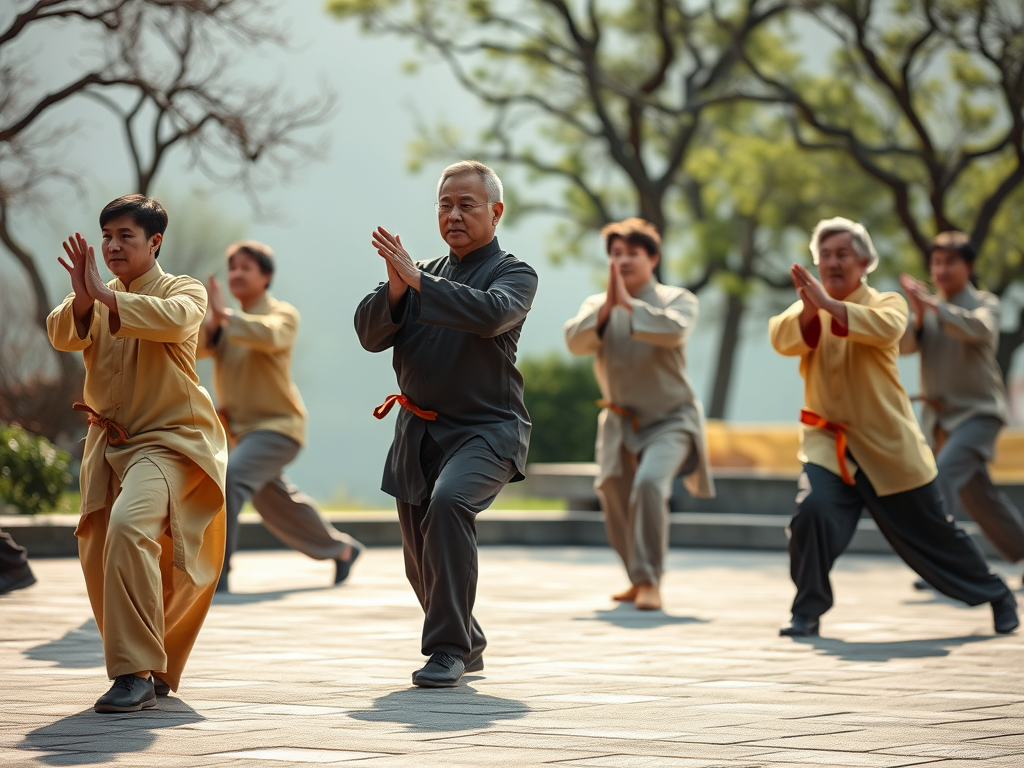
What the name tai chi chuan means

What’s in a name? When it comes to tai chi chuan (taijiquan), then the answer is… quite a lot.

Firstly, there’s the issue of how you write it. Occasionally, you will see an attempt to guess at the spelling of the name that makes the mind boggle, such as an email asking if somebody can come to your “thai chee” class, but usually it’s some variation of “tai chi” or “taiji”.

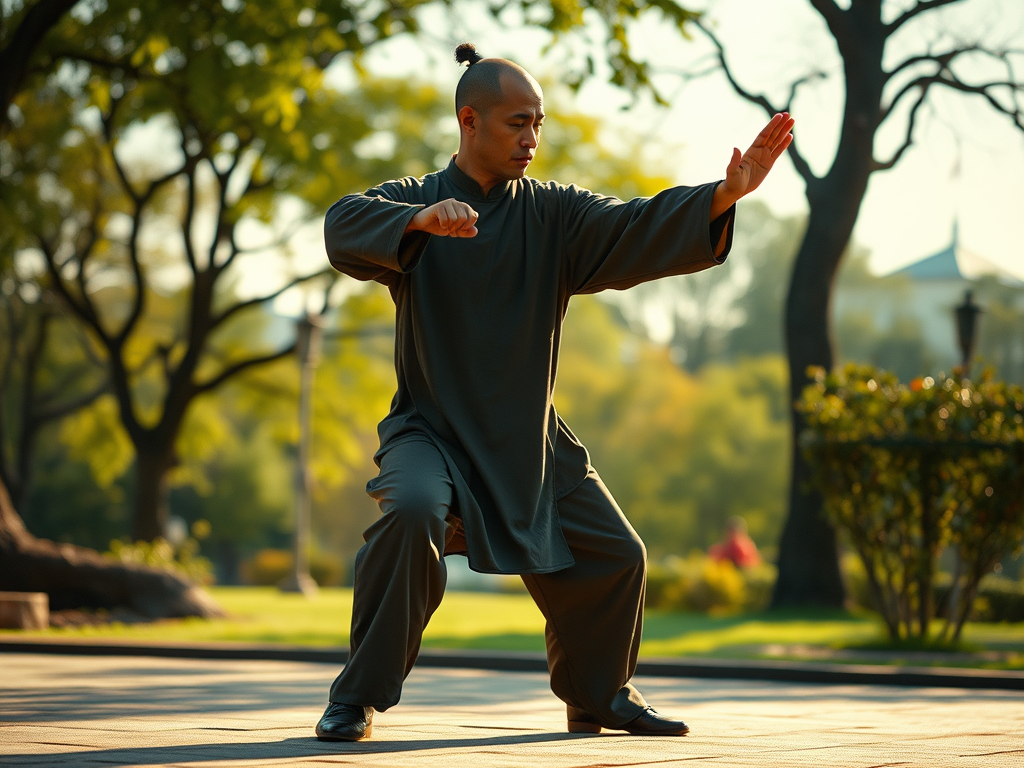
Photo by Klub Boks on Pexels.com

Tai chi was first romaised into English using the Wade–Giles system as “tʻai chi chʻüan”. But English speakers soon abbreviated it to “tʻai chi” and dropped the mark of aspiration. Nowadays, in the UK at least, we tend to use “tai chi” and forget about the “chuan”. Perhaps a better translation would be “tai chi boxing”, but this goes against the image of the art, which is usually practiced as a health exercise, so that’s never going to catch on. There really isn’t much “boxing” going on in most tai chi classes.

Then there’s he newer pinyin romanisation system, which has replaced Wade–Giles as the most popular system for romanizing Chinese. In pinyin, tai chi is written taijiquan. It’s popular to use taiji or taijiquan in English now to also remove any colonialist connotations of the term from a bygone era.

I get that, but I think the written phrase tai chi has slipped so far into the general populations consciousness that a lot of people have no idea what you’re talking about if you write taijiquan. I use tai chi myself.

Step back into the Qing dynasty

Then there’s the issue of when the art was given the name tai chi boxing. Tai chi emerged into public life in the royal court during the Qing dynasty, yet it wasn’t freely called tai chi until after the dynasty ended. If you try and find a written occurrence of the name published before 1912 you’ll draw a blank. There are certainly written documents that claim to be from years earlier that contain the name “tai chi boxing” yet not a single one of them was made public or published before 1912. What happened in 1912? The Qing dynasty collapsed and the new Republican era began.

My best guess as for the reason that this is the case is that Hong Taiji (1592 – 1643), the founding emperor of the Qing dynasty had adopted the name “Taiji”. It’s unclear if this was his personal name or a title, but there was certainly a taboo around using that name because it belonged to an emperor. It therefore became impossible for a marital art to be called “tai chi boxing” without breaking that taboo and suffering the (presumably harsh) consequences. However, once the Qing dynasty fell, the name was back on the market. (Credit to my friend Daniel Mroz for bringing this to my attention).

The taiji symbol

Then there’s the meaning of the name. The name taiji has obvious connections to the philosophical concept of the taiji symbol – the circle with the two fishes representing yin and yang and their constant interchangeable position. One state increase till it exhausts itself leading to the other in an infinite loop.

In Yang style tai chi lineages, the art has long been associated with Taoist ideas, which the taiji symbol is representative of. Chen style seems less Taoist in origin, however, the concept of taiji is a universal symbol, and used throughout all of Chinese thought.

The name taiji can be translated as “supreme ultimate”, which has lead many to conclude that tai chi boxing must have got the name because it was the boxing system par excellence of the Chinese martial arts scene. It is literally, the best! If only!

I wish that was true, but I think it’s just a common misunderstanding, which is perhaps played on as a marketing device in modern times. I mean, who wouldn’t want to be learning the supreme ultimate boxing system, right?

The concept of being a supreme ultimate is more to do with supremely different positions being harmonised. Extreme yang and extreme yin. Polar opposites that work together and find harmony. That’s the real meaning.

In Tai Chi your body moves through position after position – we call these ‘postures’ usually – in the transition between them the body will open and close in a repetitious cycle. Once yang (open) is exhausted the body will move to yin (close) once you’ve reached the extreme position of yin, you move back to yang again, and so on.

The opening and closing is a whole body action. So, you are literally enacting the taiji diagram with your body.

That’s the general idea. Of course, you can break down your body into sections and look at how each one of those opens and closes, there is seemingly no end to the level of detail you can drill down to, but on a basic level your body is always moving from yin to yang and back again, which is the reason for the name of the art – tai chi chuan.

Photo by Murillo Molissani on Pexels.com

A rare picture of Yang Cheng-Fu surfaces

Is this Yang Cheng Fu, or just a clever AI fake?

Yang Cheng Fu, grandson of the Yang style Tai Chi founder, Yang Lu Chan, is probably the most photographed of all the famous early Yang style practitioners, thanks to the publication of his 1930s books on Tai Chi that showed him performing his Tai Chi form as a series of fixed poses.

Of course, we all know that Tai Chi has no fixed positions, but if you are going to present a series of movements in a book then you either need a series of drawings or a series of photos showing poses. Film was rare and video recorders hadn’t been invented when Yang Cheng Fu published Methods of Applying Boxing (1931) and the Essence and Applications of Tai Chi (1934), which was translated into English in 2005 and published in print.

Yang Cheng Fu posing in Single Whip, from his Methods of Applying Boxing, 1931

Because of books like these we are used to seeing Yang Cheng-Fu in perfectly poised shots for the camera, which was why it was so surprising to discover this week that somebody had an ‘action shot’ of Yang Cheng-Fu taken while he was doing a form demonstration at a martial arts event.

So, full credit to the person who posted this: The photo was posted to Facebook by Wong Yuen-Ming in the Internal Arts Institute group with the message “Today I am making public one such a photo, possibly the only photo that shows Yang Chengfu demonstrating his Taijiquan in public that was shot by a photographer in action. It was taken on October 15, 1928 when Yang was demonstrating at the Chinese National Guoshu championship.” There is no name of the photographer mentioned.

It’s hard to know whether the photo is genuine, especially in the age of AI where it’s very easy to fake photos in a convincing way, but it does at least look like Yang Cheng-Fu. The posture shown also looks like Yang Cheng-Fu’s frame and style.

As for the location and date, that also checks out: The Central Goushu Institute held two events in 1928, the first in Beijing was a highly competitive lei tai tournament and the second was in Nanjing From Wikipedia: “This event came to be regarded as one of the most significant historic gatherings of Chinese martial arts masters. The tournament was presided by generals Zhang Zhijiang, Li Liejun, and Li Jinglin, who separated the 600 participants into two categories: Shaolin and Wudang.[2] After the first several days of competition, the fighting competitions had to be halted because many participants were severely injured. The final 12 contestants were not permitted to continue, with the public excuse being the fear more injury or a death. The winner was determined by a vote by the participants.”

It’s not clear which of these two events the alleged photo of Yang Cheng-Fu was taken at.

Is it genuine? I don’t know, but it’s very convincing. I initially thought he was performing in front of a mirror but the arms are not a mirror image, so there are two performers on the stage.

Episode 31: Mantis boxing, BJJ, self defence and heresy in martial arts

Here’s my latest podcast! Mantis boxing, BJJ, Self Defence and heresy in martial arts with Randy Brown.

Randy Brown is a Mantis Boxing and BJJ black belt coach teaching in the USA. In this podcast we explore how Randy has reworked his Mantis Boxing to explore the grappling potential hidden in its forms and how they can interact with his Brazilian Jiujitsu. We talk about a range of subjects including self defence vs sport, weapons vs barehand and how to turn dead systems into living arts again.

Links:
https://randybrownmantisboxing.com/

Tai Chi as a group practice vs solo practice

A group practices the Tai Chi 24 form together for World Kung Fu and Tai Chi day.

I’ve been getting back into teaching Tai Chi classes recently, and one thing I’ve noticed is the distinct difference there is between doing the form solo in your back yard compared to performing it as part of a group. I’ve been doing the form on my own now for years now. I stopped teaching formal classes in Tai Chi way back in 2011, and although I did a few private lesson things, lockdown really saw an end to that. So, it’s been a long time since I’ve been part of a group all doing the form together.

Group practice changes things. Your awareness in Tai Chi should always be this kind of delicate balance of internal and external. You need to stay aware of your internal sense of self, at the same time as not shutting out the outside world. This is, after all, a martial art, not a meditation session. If you’re not aware of what’s going on outside of you then it wouldn’t be much use for dealing with kicks and punches coming your way. But at the same time, Tai Chi does exist somewhere on the mediation spectrum It demands a sense of stillness and awareness over your inner state. Things like the feeling of your balance, your sense of whether your body is expanding or contracting, your centre of gravity (dantien) and where you are moving from all mater, not to mention keeping your mind fixed on the task in hand and your Yi (intention) flowing with the movements.

Doing that on your own is one thing, but when you are performing the form as part of a group, your awareness needs to also incorporate the group. The group seems to naturally develop a speed together. I wouldn’t say that a group of Tai Chi beginners possess the grace and beauty of a murmuration of starlings (!), but something of the same kind of non-verbal communication is going on. You are constantly picking up on little signals from other people that keep the whole group in check. But at the same time you can’t let the other people distract you and put you off your own job.

A murmuration of starlings

Just like Starlings, we are animals too, so we have these subtle senses and the ability to move in groups. If you’ve ever experienced being in a crowd of people that get a bit paniced you’ll know what I mean. The crowd seems to take on a life of its own and move as one.

Of course, it’s quite possible that you can perform Tai Chi with other people and remain blissfully unaware of any of this, particularly if you are new the Tai Chi and your head is so full of trying to remember the moves, or telling yourself off for getting them wrong, that there’s no room for anything else.

As a final thought, my feelings of seeing people doing Tai Chi together have always been a bit conflicted. On one hand it looks cool to see people brought together over a common goal, all silently concentrating and moving in harmony. But on the other, it expresses some of the worst aspects of the Communist ideas that ended up becoming a part of Tai Chi in the 20th century, that people should be ‘all the same’, bland, expressionless, worker units all doing whatever they are told to with no room for individuality.

There is always this tension between the group and the individual in society. The trick is to try and navigate it successfully.

Portable practices – Yoga and Tai Chi

Astronaut Samantha Cristoforetti exercises and practices yoga maneuvers by NASA Johnson is licensed under CC-BY-NC-ND 2.0

I really enjoyed the latest Martial Arts Studies podcast by Paul Bowman on Portable practices – Yoga and Tai Chi. (That’s not Paul Bowman in the picture, but I thought it illustrated the point nicely – Yoga is so portable, you can do it in space!

A usual for the Martial Arts Studies crew, the talk is about a lot more than just one idea, particularly interesting here for me was the nature of something being authentic. So many times now you see the labels “authentic”, “orthodox” and “traditional” added on to Taijiquan, and I think it’s always wise to be wary of these things. The reality is that what we think of as “traditional” are often modern recreations or what people thought people where doing a hundred years ago, but have been vastly influenced by modern practices.

This one is on video too:

The puzzle of learning Tai Chi

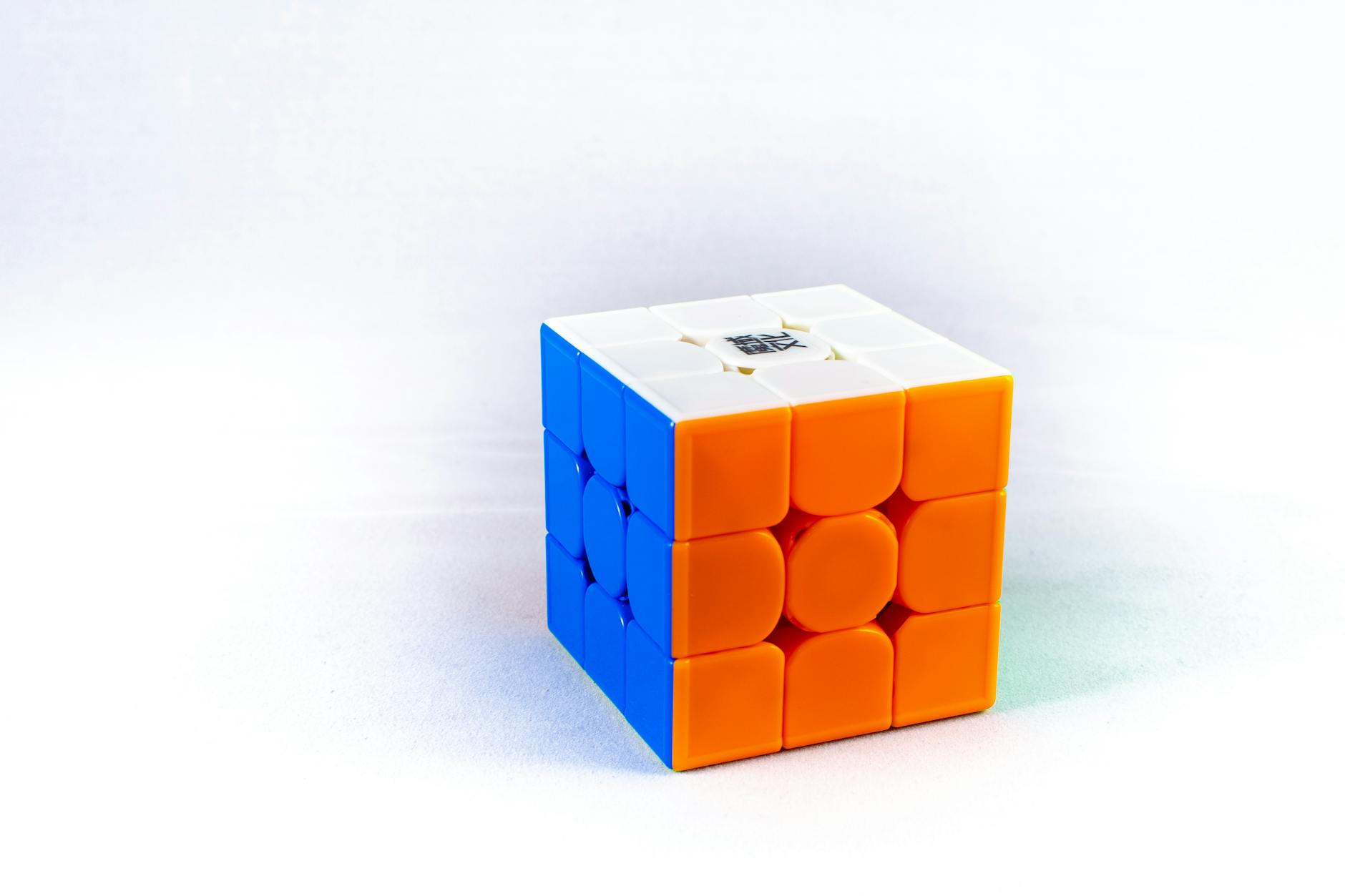
Photo by Brett Sayles on Pexels.com

This new article in The Guardian about learning Tai Chi made me smile. “It feels like my brain is solving a Rubik’s Cube”, says the author Jennifer Wong. From my recent experience in teaching Tai Chi to beginners, that sounds about right. After their first class all of them say some variation of “I didn’t know it required so much concentration!”, to me.

The initial stages of learning Tai Chi are hard, but not in the way you’d expect. I’d say, about it’s 90% mental effort. You have to learn to remember moves with the outward appearance of simplicity, which are actually very difficult to remember. Simplicity requires a lot of effort. I often teach people the same sequence of moves over and over, then ask them to do it without me and they are instantly lost. I think this is entirely normal.

One device I’ve adopted that seems to work better than saying things like ‘left hand on top’ is visual imagery. The moves in Tai Chi already have names, like Repulse Monkey and Single Whip, which I think were used for the same kind of aid to memory. Unfortunately, after being transplanted from one culture to another and one time period to another, a lot of them are not effective any more. “Single whip” doesn’t mean much to people living in England in 2024, so I’ve started to adopt my own names to act as visual images. The opening move I call “Fountain”, as it’s like water in a fountain, coming up the middle then down to the sides. After that we “scoop water left” which makes sure that it’s the palm of the hand that is being used to scoop the water, not the back.

So far, so good.

Tai Chi Notebook Podcast Episode 30: Nabil Ranné on Chen style Tai Chi training

Nabil Ranné is a Chen style teacher living in Berlin who offers classes and online training at CTN Academy Nabil is a student of Chen Yu, who is the only son of Chen ZhaoKui and grandson of the famous Chen Fake. Listen here.

Here’s what we talk about:

Timestamps:

1.00: Nabil’s background in martial arts and what attracted him to Chen style Tai Chi

3.40: What is Jin in Tai Chi?

7.30: What makes Tai Chi different to other marital arts?

11.15: What is the strategy for Tai Chi?

16.00: What is the function of Tai Chi push hands?

17.55: Competition push hands vs Tai Chi push hands

22.20: The Xin Yi podcast and how do you train applications in Tai Chi

28.00: Real life self defence situations

36.00: Martial arts vs marital sports

44.02: Zhan Zhuang: Standing pillar practice

46.55: Chen style FaJin methods and their purpose

55.00: Nabil’s book and getting in touch

Links:

Nabil’s training history

Nabil’s Instagram

Retreat to Ride Tiger

There are lots of tigers in Yang style Tai Chi. There’s ‘Bend Bow to shoot Tiger’, which is a pretty obvious punch, and each section of the forms ends with the classic ‘Carry Tiger to Mountain’. Today we want to look at ‘Retreat to Ride Tiger’.

Photo by Pixabay on Pexels.com

In Yang Cheng-Fu-like forms it looks like this:

It looks a lot like ‘White Crane spreads wings’ on the surface, but the hands are at a slightly different angle. Also you are always stepping back when doing this move and the intention of what you’re doing is slightly different to White Crane, too.

One aspect of the move I really like to emphasis is the Kou or ‘Shoulder Stroke’ that it contains. Rather than striking forward with your shoulder you are striking behind you as you step. I happened to be near a hanging heavy bag the other day so took the opportunity to show where the power goes in the move, like this:

Rather than thinking of it as striking with just the shoulder itself, it’s more like the whole of your back is the striking surface. In fact, the literal translation of Kao is not “shoulder stroke” as it’s normally written, it’s “lean”, so that gives some more insight this member of Tai Chi’s 8 energies.

Obviously, ‘Retreat to Ride Tiger’ isn’t just about striking behind you, the hands and legs can be doing applications facing forwards at the same time. Here are some ideas:

Possible origins of the Tai Chi Single Whip (Dan Bian) posture name

This post is going to start somewhere you don’t expect – over 1,000 years ago in Song Dynasty China during which we find the legendary founder of Xing Yi, Yue Fei, a general in the Song Dynasty army, mulling over the advancing (heavily armoured) Jin cavalry, and wondering how his foot soldiers are going to fair against the crushing advance of an army that had destroyed the Liao Dynasty troops, scattering them to the Western regions.

Photograph of the painting “The Battle of Zhuxian County” inside the Long Corridor on the grounds of the Summer Palace, constructed during the Qing Dynasty, in Beijing, China. Photograph taken on April 17, 2005 by Rolf Müller.

The Jin/Song wars would last a century, starting in 1125, when the Jin attacked the Song after a series of negotiations between the previous allies failed. During this period North and Southern China was effectively separated between Jin and Song, with the Song retreating into the south of China. The Jin advance into southern China in 1130 was stymied by Song generals like Yue Fei and Han Shzhong. Eventually the Song allied with the Mongols in 1233 to defeat the Jin, but the Mongols then went on to defeat their previous allies, the Song, and thus the Yuan Dynasty was born.

But why this history lesson? Well, one weapon that was popular during the Song/Jin wars was the ‘sword breaker’ called a bian, which translates as ‘whip’. But it was a very solid short stick made of iron, not a flexible whip. It was often used on horseback because it was effective against heavily armoured warriors, and the Jin cavalry was very heavily armoured.

The Tai Chi move “Single Whip” (Dan Bian), has the same character for whip as the one used for the ‘sword breaker’. It’s also similar to the characters for ‘shoulder pole’, which I’d previously speculated was a possible origin for the name. But people who are better at Chinese than me have cast doubt on this theory. It seems much more likely that it’s the ‘sword breaker’ weapon that is being referred to, not a shoulder pole.

To quote Atomic Tai Chi:

“Recently I’ve been made aware of some theories about the meaning behind “Single Whip” 單鞭 (dān biān)

Basically the claim is that the posture resembles a farmer carrying something on a pole or yoke and that the name refers to this yoke.

This yoke or shoulder pole is called 扁擔 (biǎndan)

So right away, simply linguistically, this claim is a little bit problematic.

English Character Pinyin Romanization.
Single Whip 單 鞭 dān biān
Shoulder Pole 扁 擔 biǎndan

We’re dealing with four completely different characters with completely different meanings. The dan in biandan is POLE not single.

To a native Chinese speaker this is like comparing apples to tennis balls. It’s just a ridiculous claim.”

The post goes on to look at the historical record, which is fairly interesting, and makes the case for the bian being the ‘sword breaker’.

Fair enough, the shoulder pole idea was just a theory of mine based on the similar name, and the way it looks. As with all good theories, it can be disproved with evidence. But as I also said in that original post of mine:

“The ‘whip’ could also be used as a weapon in Chinese Marital Arts. Again, it was usually referring to a short stick, not a flexible whip. In the excellent “Chinese Martial Arts Training Manuals”  by Brian Kennedy and Elizabeth Guo you’ll find a description of a book called “Tiger Tail Whip” by Jiang Rong Qiao published in 1930. It features a “long routine for the metal tiger tail ‘whip’, which is rigid and actually amounts to a type of cane.””

“Chinese Martial Arts Training Manuals”, by Brian Kennedy and Elizabeth Guo

The ‘sword breaker’ or ‘bar mace’ was certainly more substantial than a cane. As the name implies, it could break swords, but it was also good for attacking heavily armoured soldiers as it could impact the person under the armour. Check out what it could do in this excellent video:

What’s in a name?

But it’s still hard to work out why the Single Whip posture would be named after the ‘sword breaker’ in the first place. I mean, the posture doesn’t resemble the weapon at all… But then I saw something very interesting recently:

A post on the Facebook page “Collecting Chinese armor&Art” has the following (I’ve corrected the spelling):

“This brick carving is from a tomb of Jurchen Jin (1125–1234), describing a battle between Song and Jin cavalries. The one who faced to us with a sword breaker 锏 might be Jin cavalry, who snatched the pole weapon (三尖两刃刀, lit. ‘Three points double edged blade’ fig. 3) away from Song cavalry and swung his sword breaker 锏 to attack his head from right to left. Song cavalry’s head and helmet were totally whacked. Well, pole weapon user should always keep distance with enemy and, such blunt weapons like mace, sword breaker etc. are really excellent weapon against heavy armor.
Picture 2 was drawn by 咪咪妈的刘sir.”

Now, what I notice about this carving, and the painting, is that it isn’t a million miles away from the application of single whip that we practice in our Tai Chi. Check it out:

Spinning Dragon Tao performing Single Whip.

That’s a still taken from the video:

Maybe that’s where the name “Single Whip” comes from? The application of the move is certainly similar to the way you’d use a ‘sword breaker’ way back in the Jin/Song wars to grab the opponent’s long pole weapon and bash them on the head with your ‘whip’.

But why “single”? Well, it turns out that the ‘sword breaker’ was often a two handed weapon. You had one in each hand, as this carving of the Jin cavalry shows:

You can also see double maces being used by cavalry in the painting that opens this article.

It’s as good an explanation for “single whip” as I’ve read anywhere else. And at least this reasoning makes some sense. At the end of the day, it’s just another theory, ready for some eager beaver to disprove.

Perhaps this is the true application? 😉

The head over foot guy, and Tai Chi

I’m always on the look out for interesting bio mechanical things and that search recently lead me to a character called David Weck, who is known as the ‘Head over Foot Guy’. Of course, that’s not his only idea about biomechanics- he’s got loads of them – but this video is a good introduction to his Head over Foot idea:

(It’s unfortunate that there’s a picture of the controversial social media influencer Andrew Tate in the header image for that video, because he doesn’t feature in the video. I guess they’re just using him as an example of a good walker, but while he may be a good walker, I don’t like him or his opinions, nor do I think he’s a good example for kids to follow).

The ‘head over foot’ idea can be explained very easily – if you’re going to stand on one leg, then your head has to be directly over your foot if you want your balance to be good. You can try this now, by standing on one leg and playing with where your head balances over your foot. I think he’s right – if you move your head anywhere else but over your foot then your balance starts to go.

Weck then takes this into the idea of walking, so instead of the usual description of walking that you read, which is that it’s a series of controlled falls, if you alternately put your head over your foot as you walk then you end up with a more athletic, balanced and confident walking style with a bit of swagger. You can start off over exaggerating the swagger, then work on reigning it in and making it smaller until it’s hardly noticeable.

I like it – it takes a bit of getting used to, but the alternative of trying to keep your spine neutral and upright (as we are encouraged to do in Tai Chi) ends up with a very forced, stiff, walking pattern. The alternative walking pattern of placing your foot over your head creates a kind of infinity symbol movement around the solar plexus with an alternating pattern of one side of the body shortening and the other side extending.

The idea of being upright is talked about a lot in the Tai Chi classics. For example, the Tai Chi classics say “Stand like a perfectly balanced scale” (from the Treatise) and

“The upright body must be stable and comfortable
to be able to sustain an attack from any of the eight directions.
” (from the ‘mental elucidation of the 13 postures’.)

But that doesn’t mean that you should look like a robot when you do it. Your body is a fluid collection of hard unbending bones connected by soft joints that allow for movement. It is designed to move in spirals, and the ‘head over foot’ idea promotes this spiral movement.

A lot, in fact, almost all, of the time in Tai Chi your weight is either on one foot or the other, or you are actually standing on one leg with the other leg kicking. So, I find that thinking about whether your head is over your foot as you do the Tai Chi form is actually a good idea. If it is then your balance will be better.

Think about the classic Tai Chi walk. We do this exercise called the Hero Stroll, which looks like this:

It’s worth doing this and thinking about the concept of keeping your head over your foot as you do it, then applying that to your Tai Chi form. Hopefully you’ll find your Tai Chi becomes more balanced, especially in the kicking movements. I find that this is where a lot of beginners have problems – they can’t balance on one leg. Well, here’s the solution!