When it comes to tai chi, buyer beware

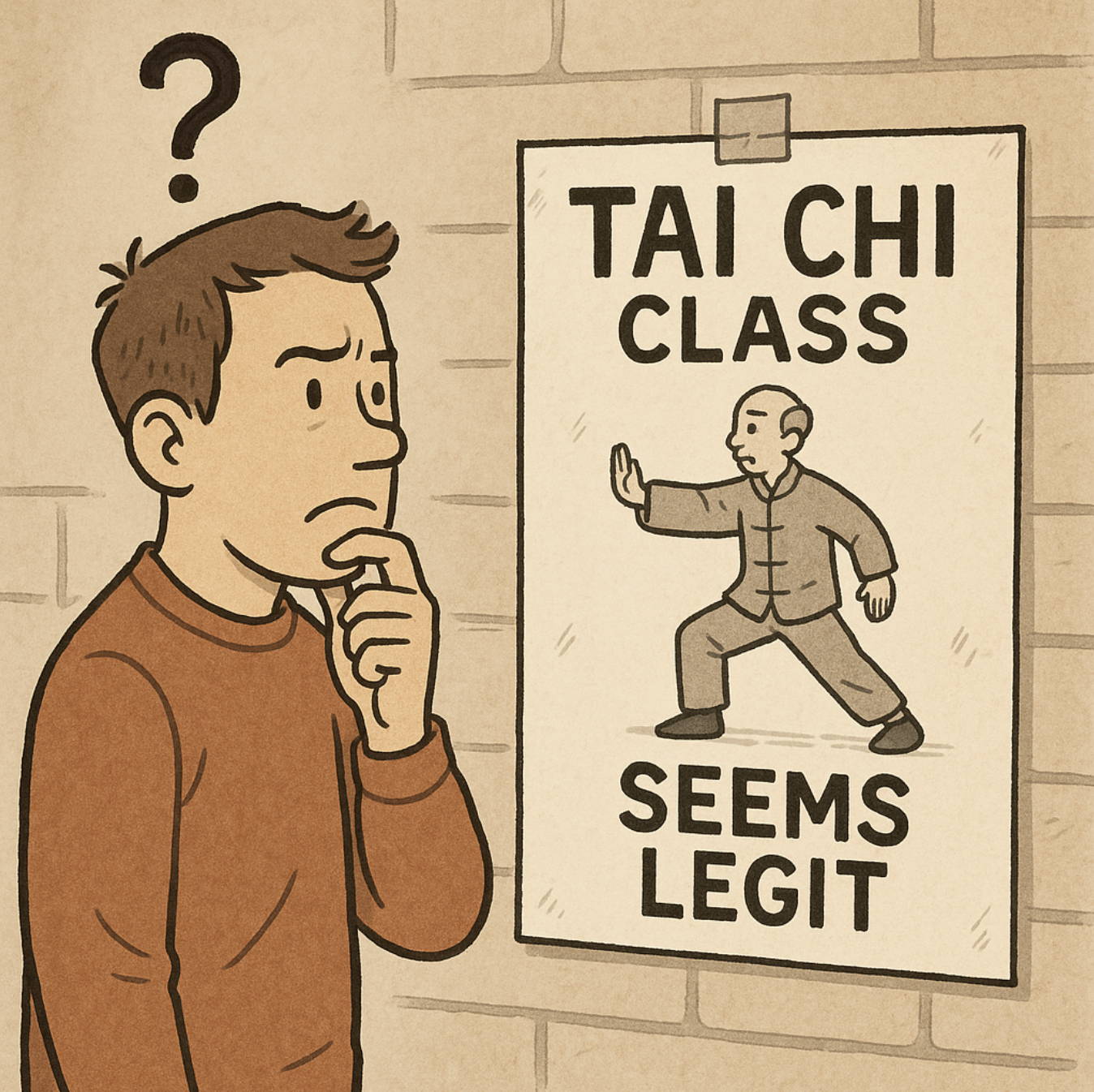
(FYI: Image made with ChatGPT)

I just saw an advert for a week long “Tai Chi for beginners” intensive with the teacher in question demonstrating a tai chi posture with the head thrust forward, so the chin juts out, the hips and pelvis thrust forward so it looks like he’s doing a bad Elvis impression, the arms awkwardly twisted so the shoulders lock up and the souls of the feet rolling to the sides and coming off the floor, so the ankle joint is not stable.

And yes, he was calling himself “Master”.

I think “buyer beware” is good advice in the tai chi market.

One thing I’ve observed in so many tai chi teachers is this desire to be the teacher way before they are ready. People don’t want to be the student – that’s boring! – they want the glory of leading something, of creating something, of being the person at the front of the class sharing their vast wisdom with their adoring students…

Why is this? I think it’s just ego. I’ve definitely felt it’s twinges in me. It’s a subtle trap that you need to avoid. And one I try actively to avoid all the time when I teach.

It is undoubtedly a nice feeling when people ask you for advice, and look up to you. However, I think it’s nearly always a mistake to want to be that person. People are rarely ever ready to teach tai chi when they start. You could say it’s the curse of tai chi in the western world. That’s why we have people called “master somebody” who can’t do basic tai chi postures or understand tai chi movement leading week-long intensives.

But what do we do about this? After all, somebody has to teach something or there would be no tai chi for anyone!

Perhaps some guidelines if you are teaching:

1. Think of yourself as a coach, or a guide, not ‘a teacher ‘master’. After all, people need to do the work themselves, you can’t do it for them.

2. Don’t let people start to treat you like some guru or master – if they do instantly stop that behaviour developing. You’ll be surprised, a lot of people want a guru to take away all their self responsibility.

3. Self reflect. Are you constantly talking about things you can’t actually do? If so, just stop. There’s never any need for that.

4. The most important thing: Be honest. Tell people what you know, how long you’ve been training, where you got it from. Don’t make yourself into something you’re not in other people’s eyes.

5. Finally, you also need a teacher. Find people you can learn from and don’t stop learning.

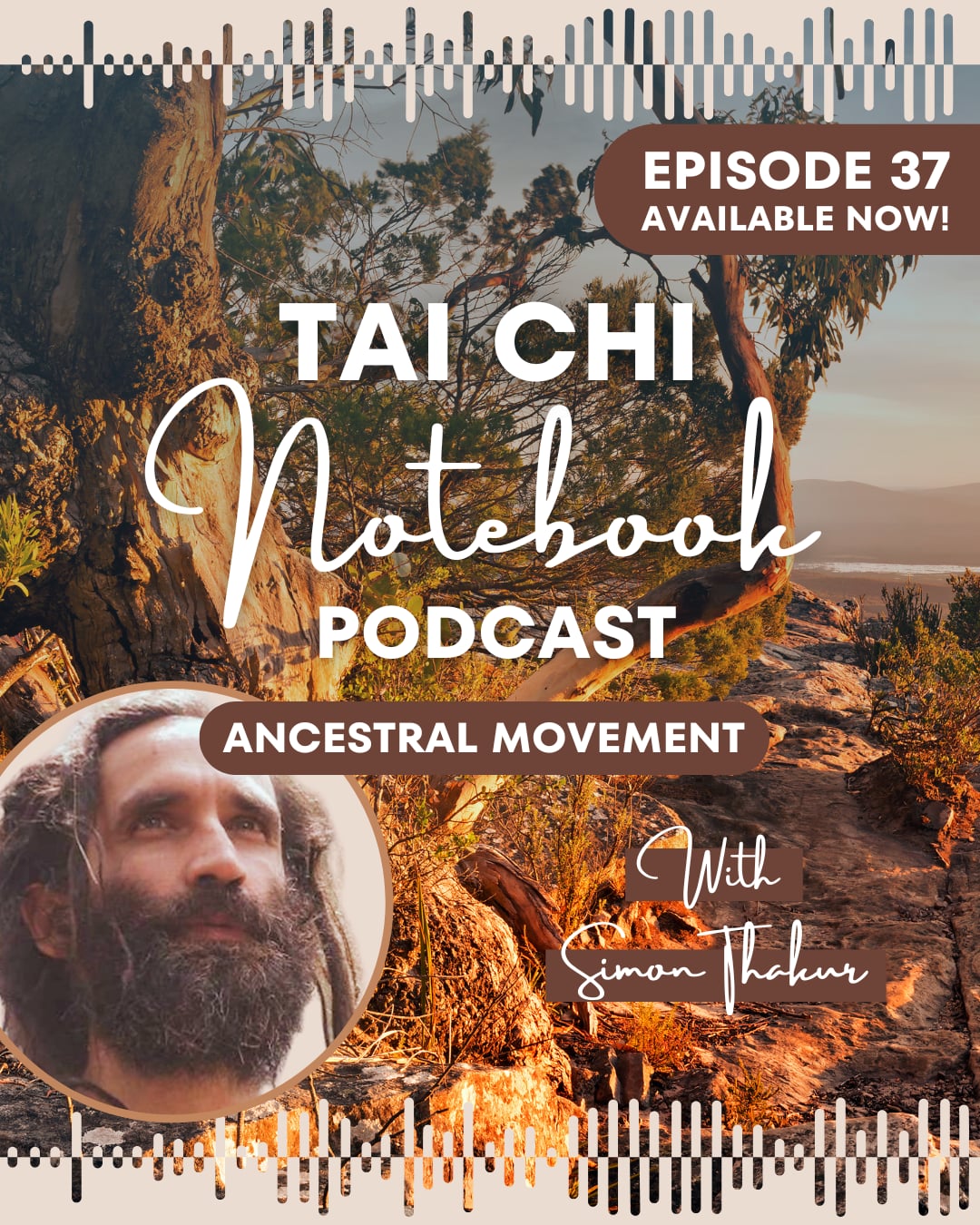
New podcast! Ancestral Movement, with Simon Thakur

Simon Thakur is the founder of Ancestral Movement, “An ecological approach to movement and mind-body practice, exploring ancient ancestral patterns of movement and awareness built into our bodies, rediscovering the power, grace and ease of natural movement and our bodies’ innate connection to the rest of the living world.”

In this episode we talk about many subjects including Yoga, Chinese Martial Arts, Brazilian Jiu-Jitsu, Tai Chi, Shamanism and more!

Simon’s website

Simon’s new online practice group

The best swordsman in the world…

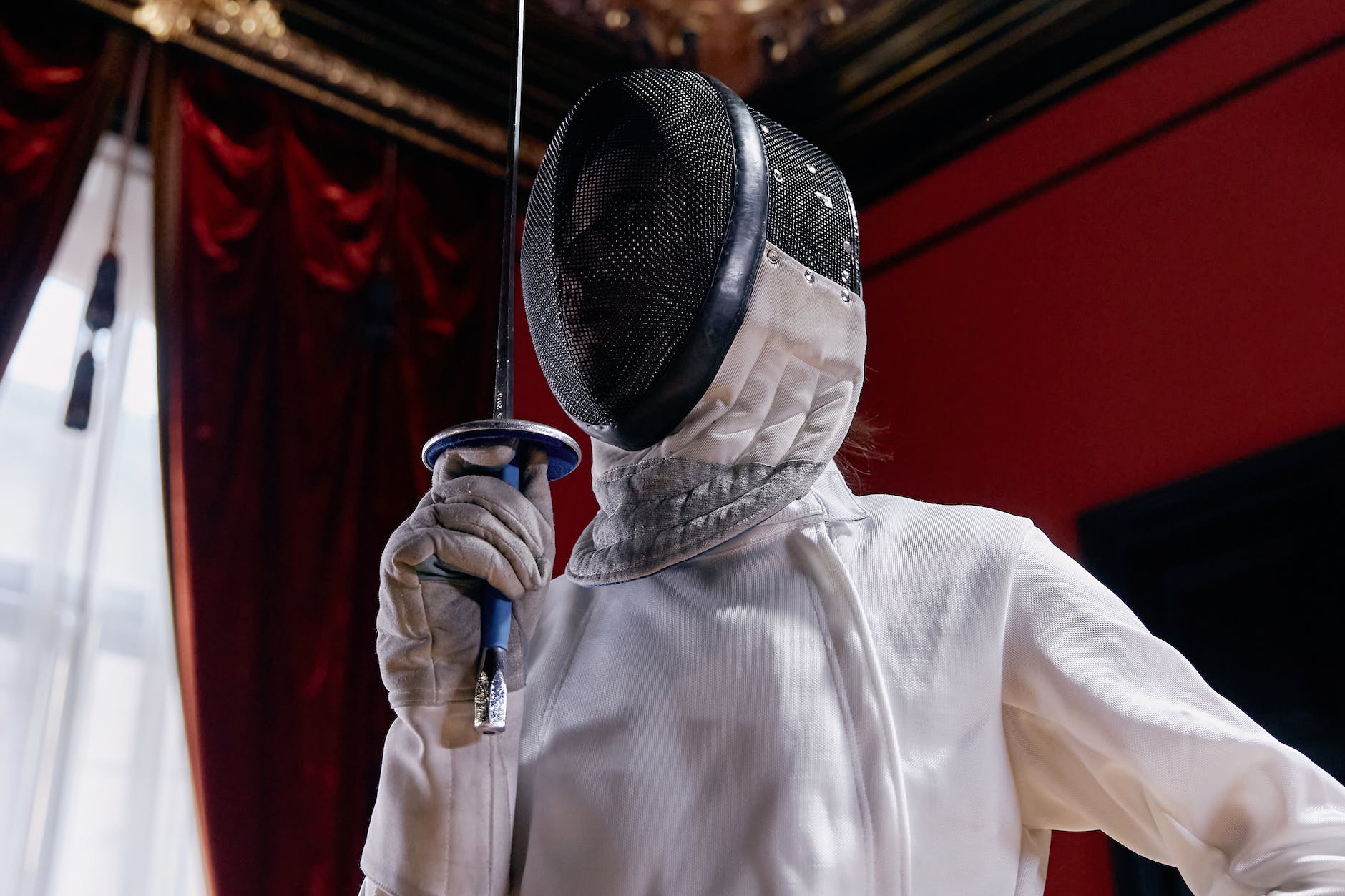
Photo by cottonbro studio on Pexels.com

You might have heard this quote before:

“The best swordsman does not fear the second best. He fears the worst since there’s no telling what that idiot is going to do.”

Many attribute the quote to Mark Twain, but it was actually a summation of something Twain wrote in “A Connecticut Yankee in King Arthur’s Court”, 1889, which was:

“But don’t you know, there are some things that can beat smartness and foresight? Awkwardness and stupidity can. The best swordsman in the world doesn’t need to fear the second best swordsman in the world; no, the person for him to be afraid of is some ignorant antagonist who has never had a sword in his hand before; he doesn’t do the thing he ought to do, and so the expert isn’t prepared for him; he does the thing he ought not to do: and often it catches the expert out and ends him on the spot.”

I think about that quote a lot, mainly because I spend a lot of my time sparring with people in jiujitsu who range vastly in skill level. And the reason I think about that quote a lot is because it’s true.

When I’m rolling with a higher belt in jiujitsu, my best jiujitsu comes out – I can pull off things – clever, complicated things – I can’t do with beginners because the more experienced person is reacting correctly for a jiujitsu person. However, when you roll with a beginner even they have no idea what they are going to do next, so you are constantly stuck in this awkward stop/start phrasing of movement where you have to be constantly on guard for the unexpected because the risk of injury is real. But rolling with beginners also reaffirms another maxim for me – often you don’t need complicated jiujitsu, you just need to do the simple thing well.

New podcast: Discovering Neijiaquan, with Jess O’Brien

My guest for this episode is Jess O’Brien, author of the book Neijiaquan and co host of the Neijiaquan podcast, which he runs with Isaac Kamins.

Since 1999, Jess has studied extensively under BK Frantzis. Over the years, he has also trained with other, preeminent internal martial artists like Luo De Xiu. He has been active in martial arts since his teens.

In this episode we discuss what drew Jess to the internal arts and how he trained with various different teachers before becoming a student of Bruce Kumar Frantzis.

Imposter syndrome and martial arts

I’ve been delving into the depths of imposter syndrome and how it relates to martial arts recently. It started when we had Dr Marc Reid of the Reid Indeed podcast and author of “You are not a fraud” on our Heretics podcast last week.

It was a great interview – one of the best episodes we’ve done, I thought. I’d never really thought much about Imposter Syndrome before, but once we had Marc booked as a guest I realised it was a great opportunity to discuss how it relates to martial arts, and that it was actually something that has been on my mind for quite a while.

I think every martial artist must deal with imposter syndrome to some extent. But, as I learned in the podcast, having a little bit of imposter syndrome can actually be a good thing for your development, as it allows you room to grow and stops you thinking you know everything.

The question, “am I really good at this?” Is one that I think plagues all long-term martial artists… after they get good enough at their art that it becomes a question worth asking, of course.

One thing that’s quite common to see, especially in Chinese marital arts, (where entering competition or testing against resistance is often frowned upon, as it prevents “lethal” techniques being used) is the ‘master’ demonstrating only on his own students who are literally throwing themselves on to the ground for him, at the lightest of touches. I mean, we’ve all seen Aikido demonstrations, right? I often wonder what’s going through the mind of the ‘master’ in those situations, because they must know they’re a fraud, yet they carry on as if they are unbeatable. But I guess that so long as they never out themselves in a situation where they will encounter any real resistance they will be! In a way, it’s almost like the performance of a magic show, and the students are subtly required to play along by the group dynamic by the magician performing his tricks.

Sadly, we’ve all seen the videos of what happens when these ‘masters’ try their tricks on tough people from outside their group who are not going to play along. Of course, not all Chinese marital artists (or Aikido schools) are like this. I need to say that now because otherwise you just get tarred with the “hater” brush.

One of the things that attracted me to BJJ initially was the live sparring. You get to ‘test’ your ability every class, since half the class is usually live sparring. You can see exactly how good you are compared to other people. I love that real, live, feedback – I guess you could call it direct contact with nature because you are experiencing what happens against a live person who is not just going to play along in the same way that somebody who thought they were good at running could try a long distance, or a weight lifter can try lifting a heavy weight.

BJJ sparring has a limited rule set, yes, there’s no punching or kicking, for example, but within the confines of that ruleset you can really go 100% and see what happens. As a tool to keep your ego in check, I think it’s invaluable. (Not that you want to be going 100% every roll, of course).

But even within BJJ there are opportunities for the imposter syndrome to sneak in in other, more subtle, ways. There are belts that get awarded as you progress, and to this day it’s rare for me to find somebody who has just been promoted who thinks they are worthy of the belt they’ve just been given – everybody feels a little bit like a fraud, even with all the live sparring going on, or even entering competitions and testing yourself against people of the same belt rank and age from other schools. Competing is time consuming and expensive and not everybody competes and you can start to worry that you are only good within the confines of your own school.

Bruce Lee had a lot to say about belts “Belts are only good for holding up your pants” was, I think, one of his. I remember that and “boards don’t hit back” being another classic Lee quote from Enter the Dragon. But it’s an interesting perspective – all this worrying about belts and being an imposter is completely in your own head – in realty, belts don’t matter, all that matters is what you can do.

That’s one of the reasons I make an effort to get out and train with other BJJ people whenever the opportunity arises, like at the recent 40+ Grappling event I went to. I get to mix with a range of belt levels, all from different schools.

Getting out there and mixing it up can certainly do wonders for quashing any imposter syndrome that might be building up in your head. Even if you don’t necessarily ‘win’ all the time, I find it really rare that any BJJ practitioner isn’t up to the level their belt suggests. BJJ belts tend to only get awarded when an instructor thinks you’re ready for it. Trust your instructor. They’re usually right.

There are also plenty of complete frauds in martial arts who are clearly running some sort of con. Fake black belts in BJJ tend to get found out pretty quickly, but the marital arts is a very unregulated profession and anybody can set up shop at any time, claiming whatever qualifications they like. If any serious martial arts practitioner compares themselves to these genuine imposters it’s pretty easy to realise that you’re not the imposter you might think you are.

The opposite of the impostor syndrome of course is the over confidence of the person who is slightly, or perhaps very, deluded about their own abilities. I’m sure we all know people who talk a good game (especially on the Internet), but if you ever see them move or demonstrate something they can’t hide their actual true ability, or lack of it.

So, maybe feeling like a bit of an imposter sometimes is actually good for you, and stops your ego taking control and turning you into one of these untouchable master types. I notice all the time when I’m teaching that people will try very hard to put you on a pedestal. To be honest it happened much more often when I was teaching Tai Chi compared to teaching BJJ, but it still happens. I’m very aware of people’s attempts to turn me, the teacher, or me the higher belt into some sort of idol and I try and stop it happening before it starts. A good start is to reject people calling you special Chinese titles like Sifu or Laoshi, (I’m not Chinese) in Tai Chi and in BJJ it’s a custom to call your teacher a Professor (Portuguese for “coach”), but I try and discourage that where I can. I’m happy with just my name. That’s my personal choice, and not a judgement on other people who may have very good reasons for using those titles. They can do what they want.
Tai Chi in 5 minutes a day

I’ve just finished listening to an interesting podcast where Dr. Rangan Chatterjee talks about about how to form daily habits in a way that actually works. The takeaway is that you need to make the habit as easy as possible and also tack it onto something you already do every day if you want it to stick. Dr Chatterjee makes the good point that we don’t have to force ourselves to brush our teeth in the morning and at night – we just do it. We don’t decide, oh, I’m a bit tired tonight or I’ve got a lot of work on, so I’ll just skip it for a couple of days. No, we just do it, and it’s easy.

Doing Tai Chi could be as easy as brushing your teeth. Photo by Andrea Piacquadio on Pexels.com

Forming a regular practice Tai Chi habit however can be hard. It’s very easy to convince yourself to not practice because you’re tired or just not feeling like it.

Tai Chi, Qigong or stretching is also a bit like brushing your teeth, because you don’t get much benefit from not brushing your teeth for a week, and then doing a massive 1 hour deep clean on a Sunday. No, brushing your teeth needs to be done a little every day if it’s going to work, and so does Tai Chi, Qigong and stretching.

Which brings us to the question of how we actually develop a strong practice habit like this for Tai Chi, and that takes me back to Dr. Rangan Chatterjee. Most of us make a pot of coffee, or cup of tea in the morning. It’s a ritual we’re already doing and nobody needs to force us to start doing. (If you don’t do this, I bet there is something similar you do in the morning?) What we need to do is start hacking that existing habit with the new habit we want to instill, in this case Tai Chi, stretching, standing, meditation, or whatever it is.

It’s all about maximising those moments of dead time. Photo by Rachel Claire on Pexels.com

While your coffee is brewing, stop looking at your phone and spend those minutes doing the thing you want to do. One thing I’ve started to do is pour the water on my tea bag, then do a stretching routine while it is brewing. This way I don’t need to rely on motivation to do the routine each morning, because motivation is great when it’s high, but a rubbish thing to rely on when you are feeling tired, rushed or grumpy.

Even a few minutes of whatever it is will make a difference. I already feel like I’m more flexible in my hips because of these few minutes. And doing those few minutes might make me feel like doing more immediately afterwards. Other ideas for things to do while the coffee is brewing would be some single arm silk reeling circles, some standing Qigong, or repeat small sections of the form, like Grasp Birds Tail. The choice is yours. Try it!

If you like this life hack then I’ve talked about a similar idea before to do with brushing your teeth in a horse stance. Check it out!

REVIEW Martial Art Essays from Beijing, 1760

By Michael A. DeMarco, MA

Amazon link (UK)
Amazon link (US)

Martial Art Essays from Beijing, 1760, presents 64 essays written by Yang Mingbin, a painter in the Royal court of the Ching dynasty. Or does it? As well as being a painter, Yang was also a martial artist and the papers are his thoughts on his martial practice, except that Yang Mingbin never actually existed, and the work is entirely a fictional piece of writing by the modern author, Michael A. DeMarco. DeMarco is a Tai Chi practitioner who used to publish the peer-reviewed quarterly Journal of Asian Martial Arts

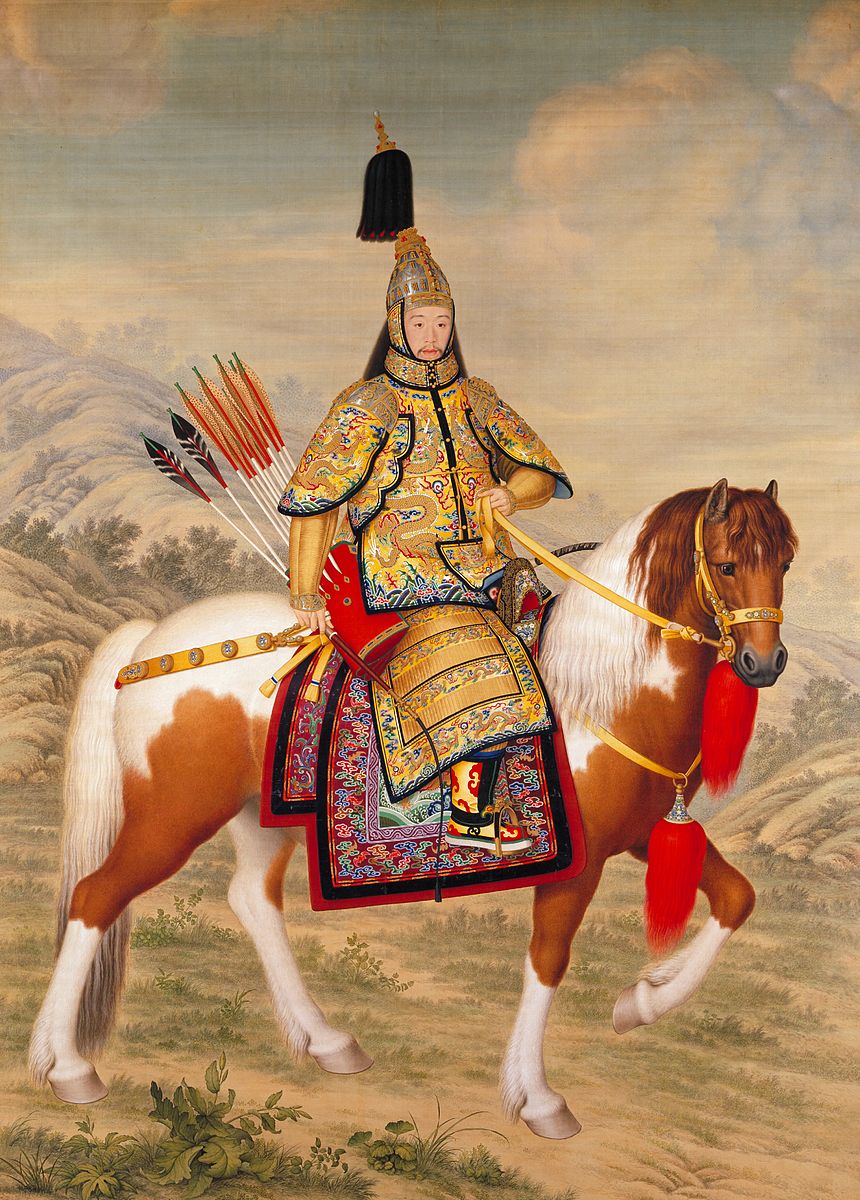
Yang Mingbin’s place in history is well researched, and surrounded by genuine historical figures such as Giuseppe Castiglione (1688-1766), a real Jesuit priest who was a painter in the Royal court in Beijing, and was responsible for influencing the Chinese style of painting of the era with western Renaissance ideas. You’ve likely seen some of his paintings before, such as the famous one of the Emperor Qianlong in ceremonial armour.

The Qianlong Emperor in Ceremonial Armour on Horseback Giuseppe Castiglione  (1688–1766)

So, the conceit here, then, is that you’re being asked to imagine what it would have been like if Giuseppe had had a friend in the court – another painter – who was also a martial artist, and what would happen if we had recently found a copy of his notes on martial arts. It’s a thought experiment, that the author begs your indulgence in as you read along.

Initially it works, because the historical setting feels authentic, but once we get into the actual meat of the book (Minben’s 64 martial arts essays), we find that Yang Minben writes exactly like a 21st century American who practices Tai Chi would write, rather than like somebody actually living in 1760 in China would! 

Actual martial arts writings from that period in history tend to be functional, pithy and less verbose. Worse, Mingben’s text often uses modern conventions, for example, (p63), 

Dive into a swift flowing river and swim against the current. Keep swimming, but gradually change the direction – 0 to 45 degrees, to 90 to 135, then to 180 – finally swimming directly with the current.

Would a Chinese person writing in 1760 have described this using degrees?

And things get very odd when, on p97, Minben writes, “between 1775 and 1779, Qing troops stabalized the northern and western boundary of Xingjang province, harshly squelching the rebellion in the area occupied by the Mongolic Zunghar tribe.” 

How is Minben writing about events that happened in 1779 when the current date is supposed to be 1760? 

That’s not to say there aren’t interesting things to learn here. I enjoyed the discussion of the Neo-Confucian scholar Zhu Xi and the concept of Li, the calligraphy analogies and the references to Lao Tze and Chuang Tzu. But if the author wants us to enter into his historical conceit, then I think it helps if the writing is consistent with the time period. I would have also liked to have heard more accounts of what Beijing was like in 1760. That would have helped build the illusion – city life, how business was done, what the pervading political climate was like, what the fashions were, what the gossip was – what was happening in Royal Court?

You could argue that since all of this is imaginary anyway, perhaps we do not need to make a big deal out of it? DeMarco’s writings are a collection of modern philosophical musings designed to be easily read and understood by the modern Tai Chi crowd and that draw in frequent references to the Daodejing and analogies with calligraphy and painting. I quite enjoyed them, but if you are looking for something that reads like the real classic writings on martial arts, you’ll be disappointed. However, if you’re after something a little easier to read and that inspires you to practice Tai Chi more, then you’ll find it here. 

T’ai Chi magazine, AI and punching bags

Sometime back in the early 2000s I had an article published in what was, at the time, the premier Tai Chi magazine, T’ai Chi Magazine. It was American, but you could find it in the UK in newsagents like WHSmiths and in martial arts shops. I was reminded of it recently and dug it out of my archive. Here it is! I looked a lot younger back then…

I remember being really excited that I got this article published. It’s hard to imagine now, but beyond your instructor or random seminar big wig in your town, T’ai Chi Magazine was one of the only ways to get information about Tai Chi before the Internet took over everything. It was run by its Editor, Marvin Smalheiser, who sadly passed away in 2016.

Whenever you dig out something from the past it’s a good opportunity to reflect on how things have changed. T’ai Chi Magazine was run to a pretty high standard, the images it published were always good, and many of them were in colour. The articles were generally of the interview type and provided a little glimpse into the T’ai Chi world for fanatic followers, who would look at the articles for hours, trying to work out what a particular pose could be for, or how the featured practitioner was doing something. Then VHS video came along and made still images irrelevant, since you could actually see the applications being done (a lot of the pages in T’ai Chi Magazine were dedicated to advertising VHS videos of forms and styles, mainly from China). And later online video sites like YouTube came along and made VHS look antiquated.

Considering the latest developments in AI it looks like our future will consist of an AI-generated person teaching us Tai Chi forms with no credit to the sources it stole it from, and probably teaching the moves wrong anyway. I’m not sure that technology is always moving us forward. You can imagine the fear that the first Tai Chi instructors had that if they put images of their form in a book it could be stolen from them. These days, it’s not only going to be stolen by AI, but it’s going to be manipulated into something else entirely!

You can imagine the prompts now:

“Alexa, teach me a Tai Chi form that lasts for 10 minutes and exercises all my major muscle groups”.

“Sure, here you go Graham.”

A video (or hologram?) of Alexa will then start teaching you some ‘follow along’ series of Tai Chi movements it’s magicked up out of thin air, with no credit to where it got them from, and slightly wrong.

And the worst thing will be, it’s probably exactly what people want.

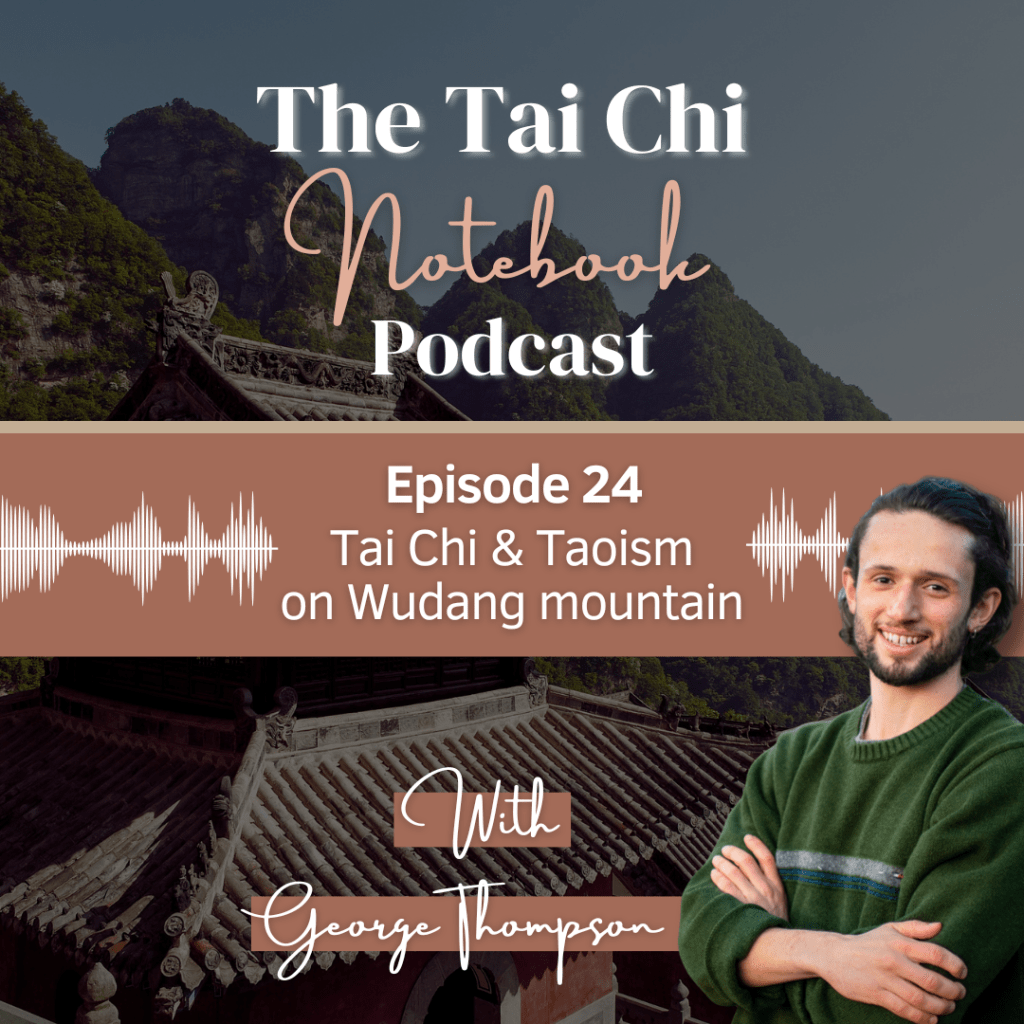
Ep 24: George Thompson on Tai Chi and Taoism from Wudang mountain

George Thompson is a film maker and Tai Chi teacher who studied on Wudang Mountain in China under Master Gu.

His videos at https://www.youtube.com/@George-Thompson have been watched by over 15 million people and has over 200K subscribers. He runs the Wayfinder Academy at https://www.wayfinder.academy through which he teaches online courses for balanced living.

In this episode I ask George what it is like to live and train Tai Chi on Wudang Mountain, what Wudang Tai Chi is like and what lessons he’s learned from Taoism.

You too can learn from George’s teacher, Master Gu, 15th generation of Wudang Sanfeng Pai of Wudang mountain via his online learning site at https://www.taoistwellness.online/

Click on the 7 day trial option, then use the coupon code TAICHINOTEBOOK when you sign up and you’ll get a lifetime 8% discount. That’s equivalent to one free month a year!

You can get a similar discount from George’s website https://www.wayfinder.academy/ using the same discount code TAICHINOTEBOOK when you sign up.

Podcast.

Episode 23 – Mike Ash on using Xing Yi Quan for combat

There’s a lot of great martial stuff in Xing Yi Quan, which is feeling more and more like an untapped resource these days. With that in mind I interviewed one of my old training partners, Mike Ash, for the latest episode of my podcast. Mike has always been interested in training Xing Yi Quan as a martial art, and that’s what we talk about. He’s also practiced plenty of other martial arts and has recently started a new study into Taijiquan.

We talk about all of that, plus the spiritual side of martial arts. Here’s the podcast: