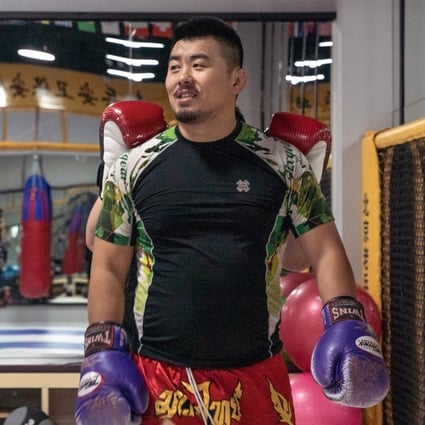
Now we’re a few months/years away from the high point of the Xu Xiaodong controversy it’s good to get a reasonable perspective on the matter from somebody who actually knows him and moves in the same martial arts circles in China.
It’s quite a long talk, but you can think of it like a podcast and listen to it while you’re doing your conditioning exercises. Wait, you are still doing those, right? 🙂
Filmed, edited and directed by Tim Cash. Follow members of the Oregon Tai Chi Wushu team as they travel with their teacher (JianFeng Chen) to China in search of the meaning behind a thousand year old art form : TAI CHI
I’ve been meaning to write a post on Shaui Jiao, the Chinese wrestling style, for a while now. We covered Shuai Jiao in one of our Heretics Podcast episodes a while ago, but you can’t say that it was a particularly good primer on what Shuai Jiao is. As usual, Damon found an obscure angle and the episode is really more about the strategies associated with the Azure Dragon in China, and linked somewhat tangentially to Shuai Jiao.
Shuai Jiao is wrestling. It’s done in a jacket, which can be gripped, and consists of a variety of throws and trips, the aim being to get your opponent to touch the ground with any part of their body other than their feet. It’s popular in various parts of China and regional styles have sprung up in different areas.
Almost any book you buy on Shuai Jiao will inevitably start with a history section, where the author links Shuai Jiao back to various ancient Chinese wrestling styles from different points in time – things like Jiao Di (‘Horn butting’) get mentioned. The idea is to establish a link between the Shuai Jiao practiced in China today and ancient wrestling arts spanning back several dynasties. The propaganda arm of the Chinese government would really like you to know that Shuai Jiao is 1) ethnically, Chinese, the ancient art of the Han peoples, and 2) Old.
Unfortunately, neither of these things are true. While things like Jiao Di, and actual wrestling styles existed in the past, there is no connection between them and Shuai Jiao.
Shaui Jiao itself is neither ancient or “Chinese” in origin. It has no direct connection to anything practiced by the ethnic Han Chinese. It was actually imported by the Manchu, the northern tribe who invaded China, overthrew the Ming Dynasty and started the Ching dynasty from 1644-1912. Like the Mongols before them, the Manchu loved wrestling as a form of strengthening soldiers and entertainment.
Byron Jacobs has produced an extensive history of Shuai Jiao over three videos that’s well worth a watch if you want to understand where Shaui Jiao really came from:
Of course, the origins of an art have no direct relationship to its effectiveness. As Damon says in the Heretics episode, being good at any form of wrestling is a big advantage in any martial art. Physical conditioning, being a strong robust person who is fit and good at physical alignment is a useful thing.
But wrestling often has more of a community function than other martial arts, and it’s the same in China as it is in the West – wrestling can be great fun. There is a Chinese Shuai Jiao tradition called Tian Qiao Shuai Jiao, which is an intangible cultural heritage of China. It’s a style of wrestling-based entertainment that any body who is familiar with the same tradition in the West will instantly recognise:
One of the ways you can tell genuine history from a ‘made up’ history (in Chinese martial arts, or in anything really), is that the real history is always pretty messy, convoluted and complicated, and a conveniently invented origin myth or history of a style is usually pretty simplistic. Tai Chi Chuan is a good example, I think. Attributing the origin of Tai Chi to one particular Taoist immortal, or one particular remote rural village, is a very neat and simple solution – and probably not the whole truth.
And I think the same thing applies to Chinese martial arts as a whole. The Chinese martial arts, (as we know them today) were not just invented fully formed, hundreds of years ago and have remained unchanged ever since. On this blog I’ve often quoted those who have proposed that kung-fu has a more convoluted pedigree than one might otherwise have expected. Historian Charles Holcombe’s excellent “Theatre of combat” on the subject of kung fu history from 1990 is a good starting point for this line of enquiry. Also check out my first podcast episode with Daniel Mroz.
To quote from Holcombe:
“In China the martial arts are far more than just techniques of hand-to-hand combat, although actual fighting skills are indeed traceable far back into antiquity. In China the martial arts are an aspect of religion, with all of the attendant mystery and miracles. At the same time, the public face of the martial arts has often been that of the entertainer, and the self-image of the martial artist has been thoroughly imbued with motifs drawn from fiction and the theater. The martial arts of today must be understood as a confluence of China’s unique approach to physical combat, Buddho-Taoist religion, and theater.”
Theater of Combat – Charles Holcombe
It’s worth reading that quote a couple of times.
One curious thing I’ve noticed from other martial artists is that they often can’t comprehend this argument at all. They don’t seem able, or unwilling, to hear it properly. Some internal bias seems to prevent it. I’ve had people come back to me a year later saying, “I thought you were saying that all Chinese martial arts comes from dance”. Or theatre. No, that’s really not what I’m saying. I’m saying, it’s complicated. I’ve even gone back to these people and shown them the exact thing I wrote, a year ago, saying exactly the opposite of what they think I said. But for some reason, it doesn’t go in. They hear what they think I’m saying rather than what I’m actually saying.
Real history is always complicated. “Kung Fu came from dance” is just too simplistic to be true.
I’d just like to draw your attention to this excellent article by SSD about Stanley Henning’s often-quoted article ‘Ignorance, Legend and Taijiquan’ on the origins of the term Taijiquan. Henning’s article is often used to discredit the idea of Taoist origins of Taijiquan. However, it’s not without its problems, as Adrian Chan-Wyles (ShiDaDao) writes:
“The tone and design of this work is generally dismissive and denigrating toward the subject of Chinese traditional culture, and represents, in my opinion, a continuation of the imperialist Eurocentric attitude that is essentially ‘materialistic’ in nature, and implicitly ‘intolerant’ to any other world-view. Astonishingly, this attitude that misrepresents Chinese culture is prevalent (even dominant) amongst Western martial arts media, and is found within martial arts online discussion forums, etc. One or two Taijiquan magazines in the West even partake in this attitude that demeans the Chinese cultural basis of the martial art they practice and support. Working from Chinese language source texts – which I do – I can say without a doubt that Henning’s viewpoints are not acknowledged as legitimate, and are ignored in China. The idea that certain lineal descendants of the Wu family of Taijiquan claim to have written the Yang family Taijiquan Classic texts appears to be only a Western trend – as this idea is not accepted within China. Indeed, such a claim is viewed as the Wu family trying to raise their lineage of Taijiquan above that of the Yang, but again, such a phenomenon could only happen in the West, outside of the cultural controls of Chinese culture. What is important is that the traditional Chinese cultural heritage is acknowledged and treated with respect. SDD)
What has this got to do with fighting? Photo by Vladislav Vasnetsov on Pexels.com
Thinking about my last post with the discussion from Tim Cartmell. Everything Tim says is great advice for people interested in learning to fight and applies to what we know as “martial arts” today, but I do wonder about the very starting point of their discussion, which is the assumption that underlies it all – “martial arts were created to teach people how to fight”.
It sounds so obvious that it’s not even worth mentioning. I mean, it’s almost farcical to think otherwise… but is it true? Were they all “created” for that purpose? How can we be sure?
Martial arts as practiced in Western countries today are obviously about teaching people to fight, but it seems to me that once you trace “martial arts” back further and further it becomes harder to separate them out from cultural practices that included “fighting”, but also encompassed a whole lot more – a whole world view that is no longer with us.
It seems to me that most people today see “martial arts” as the original, stripped-down, very concentrated pure combat practice, that over time has become waylaid with cultural and religious baggage that has been added after the fact.
I think they’ve got it backwards. I think it “martial arts” starts off as part of a really rich and deep, varied practice incorporating all sorts of aspects of the complex array of cultural activities… and in modern times we have stripped out the combat elements and separated them off from the other elements – to pursue in our leisure time, or by governments for political means. That was certainly what happened in China in the early 20th century, for example, with the Kuo Shu movement.
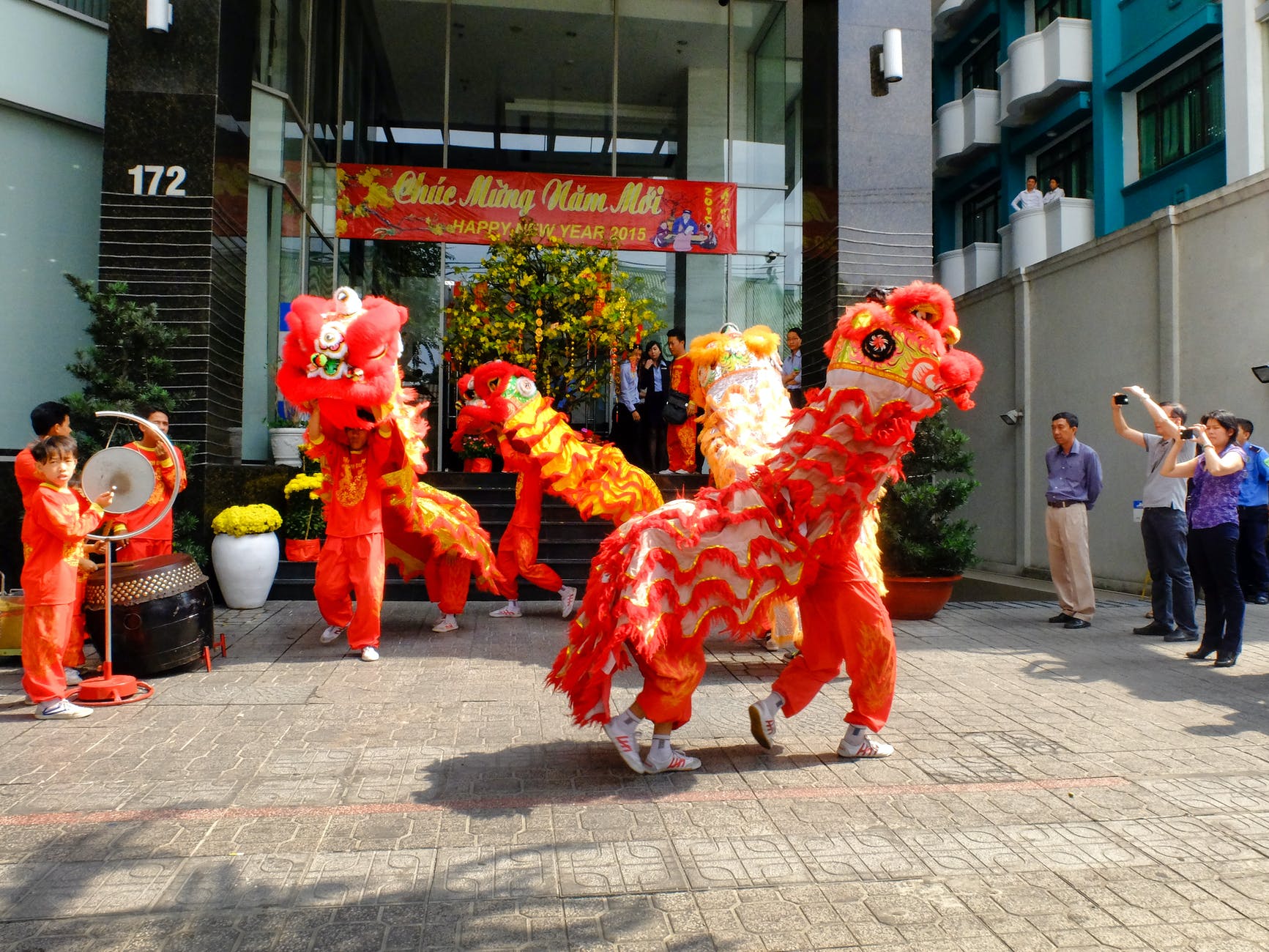
Does this matter? Does it make any difference to what we practice today. Probably not, but I think it’s a more honest view of the subject, and explains why we still have a lot of these cultural practices associated with marital arts, like the picture of Lion Dance above.
This period of Yang LuChan in Beijing (around 1860) is really the time we see the arrival of “martial arts” as a separate subject in Beijing, taught in its own right and not as part of something else, like a village ritual or festival rite, or as an entertainment performance, and different to what soldiers learned. Yang was teaching soldiers, yes, but he wasn’t teaching them how to fight on a battlefield. He was also teaching rich people. This was the newly created niche that “martial arts” fitted into – the serious leisure practice. After the Empress Dowager takes control and the Wu brothers are “out”, Yang loses his patronage and has to open a commercial school in Beijing, and it becomes a family business with his sons teaching too.
The “martial arts” as we know them, and as they were created, are a civilian occupation – the serious leisure practice of already tough men (think Yang LuChan’s banner men that he taught in Beijing), or the rich middle/upper class idlers with too much time on their hands (hello the Wu brothers).
The martial arts, as we know them, have very minimal connection to actual military arts. Those were for killing people, and required weapons. As General Qi Jiguang wrote in his 1560 Boxing Classic,
“(Boxing arts do not seem to be useful skills for the battlefield, but they exercise the hands and feet, and accustom the limbs and body to hard work. Thus they serve as basic training. Therefore I have included this discussion of them as the final chapter, in order to complete this study [of military theory].”
As you can see – boxing arts were being practiced in Ming Dynasty China, but they were not considered part of regular military training. They were part of something else.
What is Shamanism? And how does it relate to martial arts? In this episode I catch up with my old, friend and teacher Damon Smith to answer some of these questions.
Damon is an incredibly experienced martial artist with a background in various Japanese and Chinese arts including Karate, Kempo, Xing Yi, Baji and Choy Lee Fut. And those are just a few of the arts he’s pursued to a very high level.
But despite being a great martial artist Damon’s true love has always been Shamanism.
And while he’s no stranger to banging a drum, Damon’s shamanism is not the hippy dippy sort of practice you might associate shamans with, instead it’s a very down to earth and practical art, much like the martial arts he does.
In this episode we talk about the link between martial arts and shamanism, and where the crossovers lie.
In the last episode of the Heretics podcast we talked about Chinese wrestling – Shuai Jiao – but Damon also mentioned Manchu wrestling quite a bit. He described it, but you can’t get a proper idea of how it works without seeing it done, so let’s look a little closer.
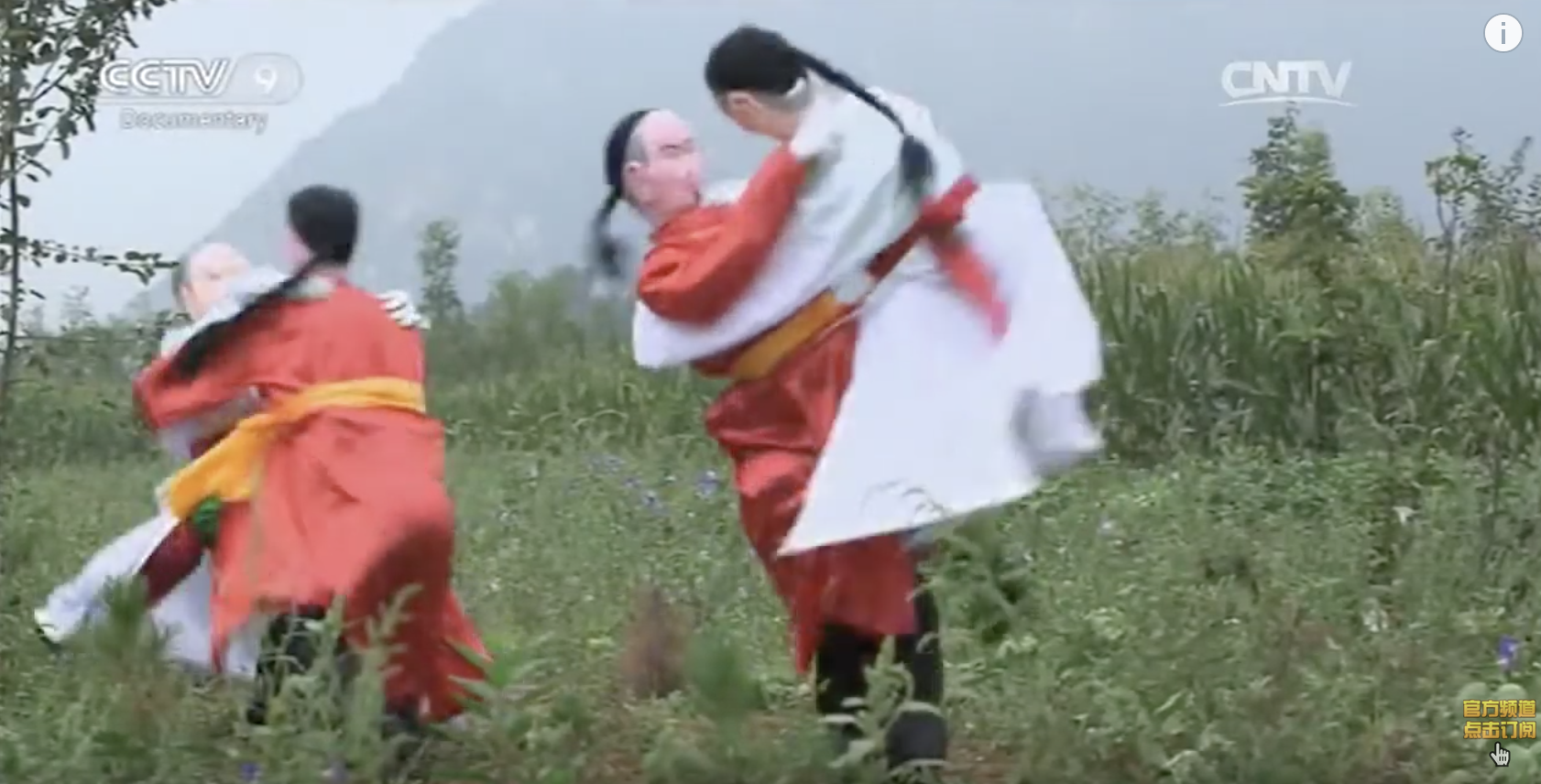
Manchu wrestling is a unique form of puppetry popular in certain parts of China where the participant wears a life-sized puppet of two wrestlers in a costume that turns ther legs and arms into both the puppet’s legs. Various wrestling maneuvers are then performed. The skill is to make it look like the two puppets are really wrestling and pulling off moves on each other.
To a western martial artist interested in only “learning how to defend myself” this might all look a bit silly, but if you watch this documentary you’ll see that there’s quite a lot to it:
There are so many things here worthy of note.
Firstly, the connection between puppetry and Chinese martial art is ripe for research – I’m thinking of the other famous puppet show that martial artists are known for – Lion and Dragon dancing. These cultural and religious practices are still done by martial arts groups at demonstrations and festivals.
Everybody in the Manchu wrestling documentary calls it “wrestling” even though it’s a solo drill. They don’t call it a dance or puppetry. To them this is “wrestling”, but we’d never call it that in Britain, for example – I find that pretty interesting.
It’s a damn good work out. If you’ve ever done any BJJ floor drills where you walk around on your hands and feet you’ll know that it’s instantly exhausting. Manchu wrestling will get you fit! If you don’t believe me then have a go at some of these drills before you tell me I’m wrong:
Manchu wrestling actually looks pretty dangerous – you can easily break a wrist with the high-speed spinning they’re doing, especially if the stick you hold in the shoe breaks.
Mental health benefits: a part of the documentary is focused on the mental health benefits of Manchu wrestling, especially looking at its life-changing benefits for rural Chinese women whose lives seem to be reduced to raising children and farming. I found this interesting in light of how much mental health benefits are talked about in BJJ culture – “BJJ saved my life” is a commonly used phrase amongst gym rats. Perhaps there is something inherently therapeutic about any style of wrestling movements and the human body?
There’s a new episode of the Heretics podcast out. In this chat, Damon and I discuss Shuai Jiao, the popular modern Chinese wrestling style and try and separate fact from fiction. We discuss what martial arts it is related to and also if there is a connection to Japanese Kempo.
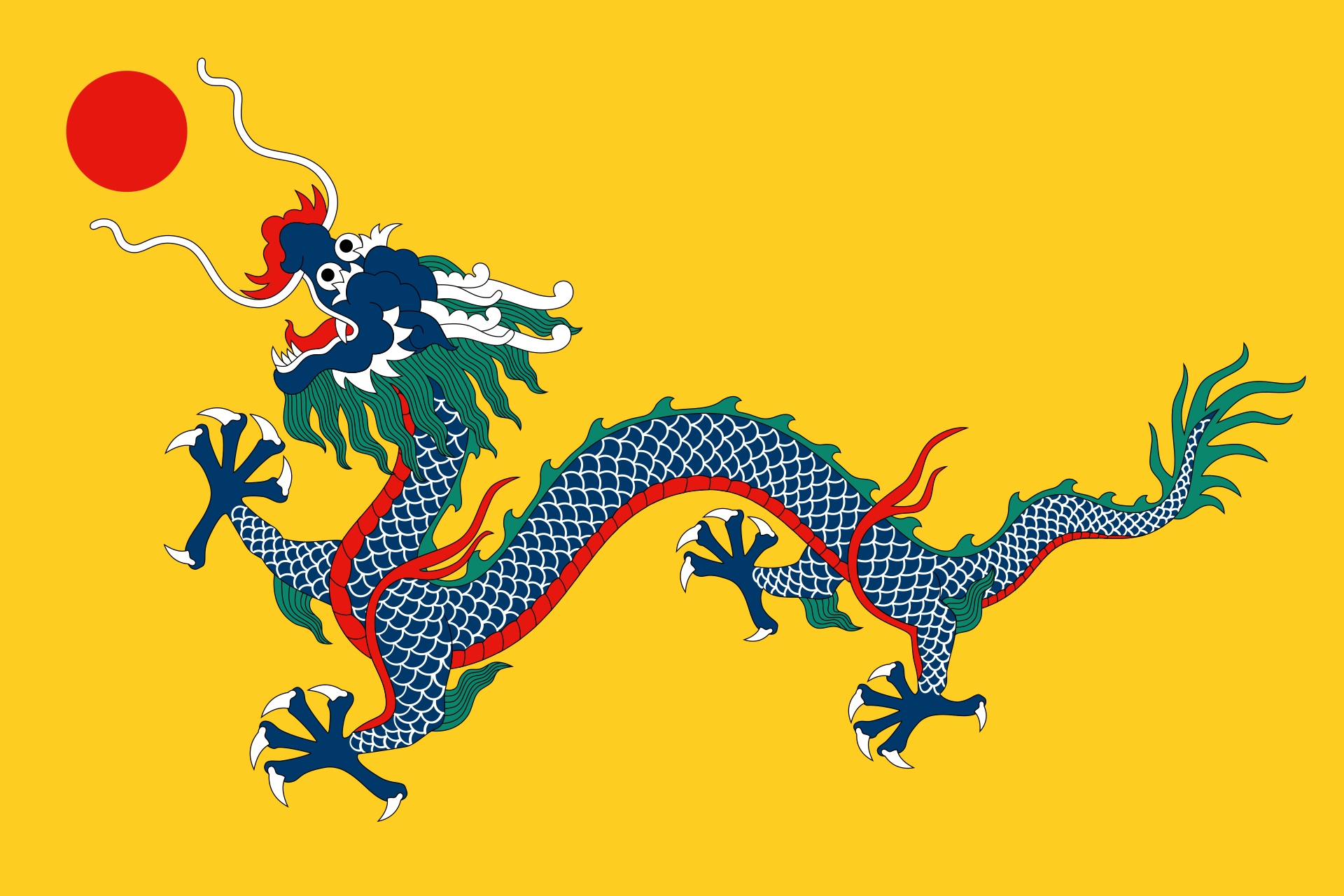
The best thing about this episode is that Damon talks a lot about Chinese cosmology, and how it may related to an earlier form of Chinese wrestling – we look at the cosmological concept of Qinglong, or the Azure Dragon.
The Azure Dragon on the national flag of China during the Qing dynasty, 1889-1912:
Byron Jacobs is a teacher of Xing Yi and Bagua based in Beijing, China. He’s a student of the famous Shifu Di Guoyong and is heavily involved in the martial arts scene in Beijing. As well as training traditional martial arts he’s also a BJJ practitioner and competitor.
In this wide ranging discussion we talk about training Xing Yi, Bagua and Tai Chi and whether Wu Shu will ever get into the Olympics. We also find out what it was like to train martial arts in Beijing during the Corona virus pandemic, and what the Chinese BJJ and MMA scene is like.