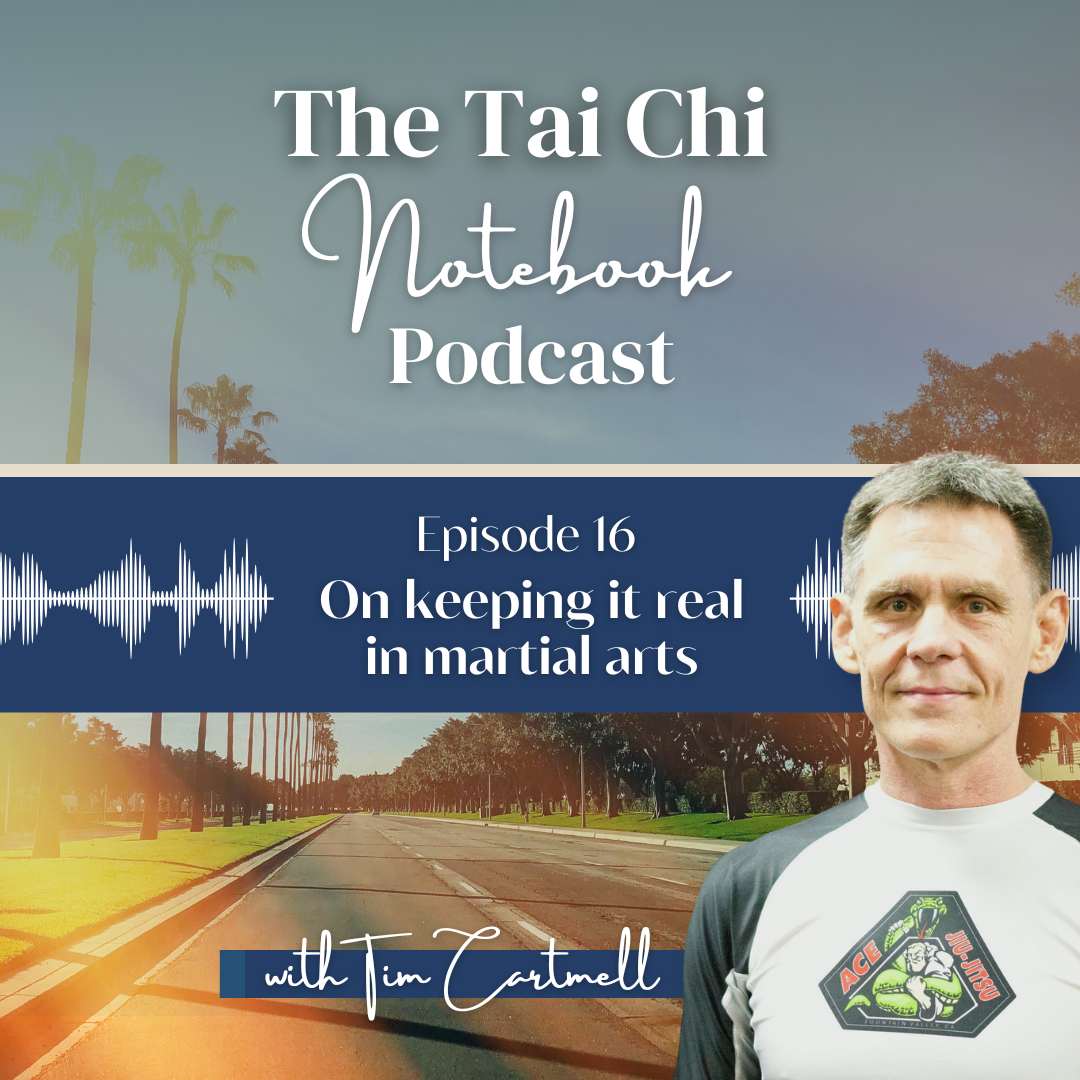
My guest in this episode will need no introduction to anybody who trains in the Chinese styles of Xing Yi and Baguazhang, especially in the United States. Tim Cartmell is a lifelong martial artist who spent many years living in Asia learning the internal arts, before heading back to the US where he took up BJJ, becoming a black belt. Tim is now the head jiujitsu coach at Ace Jiujitsu Academy in Fountain Valley, California where he teaches classes and trains professional MMA fighters. https://www.acejiujitsu.com/
In this podcast I ask Tim about his training tips, especially for older martial artists, where he thinks martial arts is going in the future and his approach to combining all the arts he knows into a single principle-based, reality-driven approach.
You can find out more about Tim at his website www.shenwu.com and don’t forget to check out the Shen Wu Martial Arts group on Facebook.
I hadn’t talked to Tim before this interview, but many of the people I’ve had as guests on my podcast have rated him highly, and now I know why – for somebody with so much experience of martial arts Tim is a very humble and genuine guy, as I hope you’ll discover over the next hour or so.
You can support The Tai Chi Notebook Podcast by becoming a patron. Head over to www.patreon.com/taichinotebook and become a patron today! You’ll get a version of the podcast you can download, exclusive video clips and articles.
I’ve always liked the turtle position in BJJ. It’s supposed to be a position that you don’t go to voluntarily, however, I’m quite happy there and I find there are good opportunities for sweeping your opponent. This is one particular sweep I’ve always liked doing.
It’s off the opponent’s attempted toreando pass. They grab your gi pants at the knee, ready to toreando. You hold both sleeves, so you can adapt to whichever side they go to. Once they move a side is chosen, you turn away from them and stiff arm the sleeve that’s now your top arm. Your bottom arm starts building a base from elbow to hand and gets you into turtle right underneath them. You then wrap the stiff arm around your body and execute a shoulder throw from your hands and knees. In most cases it’s a pretty easy sweep and they go head over heels and land on their back. If the armbar is available then take it, otherwise side control is there for the taking.
Multiple time BJJ world champion Leandro Lo died a couple of days ago in a nightclub in Brazil. He was shot twice in the head in an altercation over essentially nothing by an undercover cop carrying a gun. The tragedy is a waste of his life and talent.
It reminded me of some self defence sayings that are worth remembering:
Don’t ever start a fight over something that isn’t worth dying over.
If you do end up in an altercation then win.
and:
It takes a stronger man to walk away from a fight than to start one.
Rest in power Leandro Lo. Let’s remind ourselves of what it was that made you great thanks to the BJJ Scout breakdowns of his matches, which inspired so many of us back in the day:
Except for that tiny minority of ambidextrous people, most human beings have a dexterous hand and a non-dexterous hand. We use our dexterous hand for things that require precision, like writing and the non-dexterous hand for holding and framing. I’m sure we’ve all tried to write with our non-dexterous hand before and found it almost impossible, but here’s another thing to try…
Put your non-dexterous hand behind your back and try to write as normal with your dexterous hand. You’ll find it’s hard because you use your non-dexterous hand more than you think, in this case, to steady the paper you’re writing on and stop it moving. Both hands are actually involved in writing, but both have different jobs. If you wanted to get all “Tai Chi” about it we could call it a Yin and Yang split between the hands, which work together as a whole, and talk about the sword hand, but layering a bit more philosophy on the concept is probably not necessary, I prefer the phrases dexterous and non-dexterous hands.
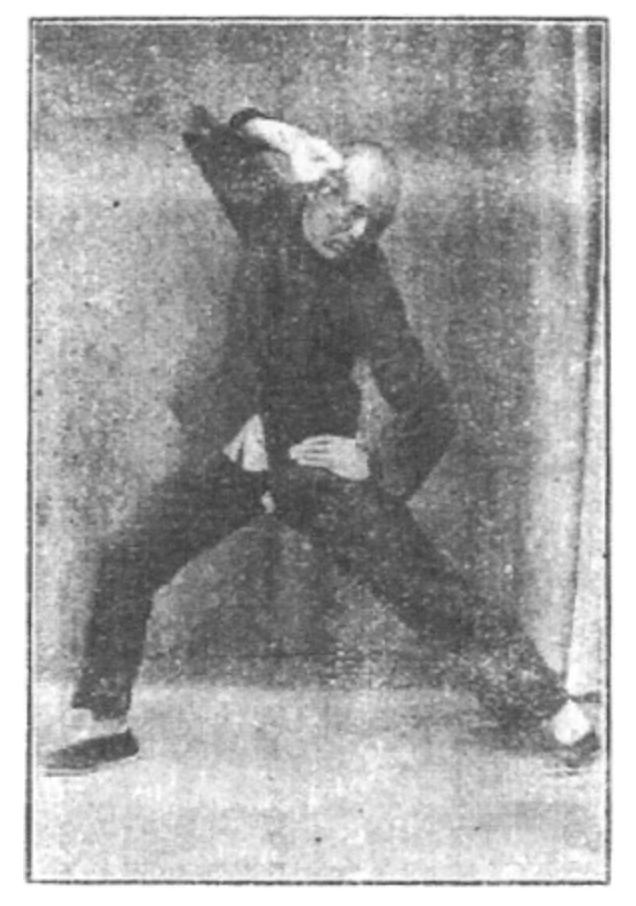
Large-Scale Postures Boxing Set by Huang Hanxun 1959
It’s the same in martial arts. I’m sure we’re all used to doing a technique quite competently on one side, then swapping it to the other side and feeling like a complete beginner. For this reason I’m quite against the idea that we should be able to do everything equally on both sides. Learning to do a technique on your non-dexterous side will be arduous, time-consuming and you’ll never be able to do it with the same flair, so why invest all that time in a pointless campaign?
If you look at the Tai Chi form (I’m thinking of Yang style, here since it’s the one I’m most familiar with) then you’ll see that some techniques are done equally on both side (brush knee, for example) but some techniques are only done on one side (all the grasp bird’s tails, for example go to the right, while all the single whips end to the left). I believe this is because the creators of these movements were well aware of the difference between our dexterous and non-dexterous hands.
In stand up arts of punching you see the same thing – people generally poke a jab with their non-dexterous hand to set up the big overhand from the dexterous side. I find if I put my dexterous side forward (southpaw) it results in a jab I can hit harder with but a cross that is less accurate.
But how do you choose which techniques to do on one side and which to do equally? The answer is simply to feel what works. And for this you’re going to need to do a lot of practice on another human, not solo form.
For example, in jiujitsu I have developed this one-sided approach through countless hours of practice. It’s most noticeable in my guard passing, but it also applies to my guard playing, although I’m not sure the idea extends to the legs – they both seem equally non-dexterous when compared to our arm! But in guard passing I notice that I naturally do some passes to my left and different passing to my right. For example, I knee cut with my right knee on both sides of the opponent’s body, so if I’m going left, I lead with my right knee and if I’m going to the right I also lead with my right knee – this naturally leads to two different techniques being used.
So, the answer is to feel, and don’t try to force yourself to do techniques that feel awkward because they are on the “wrong side” – look to see if there is something else you can do in that situation that fits better.
I got asked once by a CMA practitioner what the “Shen fa” (body methods) of Brazilian Jiujitsu were and I drew a blank. The only answer I could come up with was “we don’t have any”. What I think we have instead though are foundational movements. Let me explain.
While Chinese martial arts like Tai Chi, Xing Yi and Bagua all have “Shen Fa”, which are “body methods” that need to be internalised before the practitioner can be considered sufficiently proficient in the art, Brazilian Jiujitsu doesn’t have them in the same way. Instead, it has a series of foundational movements that crop up so often in techniques that they are considered the foundations of the art, and are usually done in class as warmups.
I taught an interesting Jiujitsu class this week. (Well, I thought it was interesting – I think you’d have to ask the students themselves what they thought!) I started with the group practicing the basic Technical Stand Up both forward and reversed (which is doing it backwards, so you go fro standing to sitting down), then with variations like a knee or an elbow on the ground instead of a foot or hand.
Sweaty work – a fun class!
A Technical Stand Up is a way of going from sitting on the ground to standing up that exposes you to the least risk if you’ve got an aggressive person attacking you. It minimises your chances of getting kicked in the head and also affords you the ability to kick back at the attacker’s knee, possibly hyper extending their leg painfully.
How to do a Technical Stand Up
Once everybody in the class could do a Technical Standup well enough we went on to practice applications that utilised it as part of the technique. A good example is a basic X Guard sweep, or a way of returning to base after completing a tripod sweep. (I’ll not explain what those are here, because I don’t want to get lost in the details of these techniques in this post, because that’s not what this is about.)
Foundational movements in Jiujitsu include the aforementioned Technical Stand Up, but also things like a bridging movement, a hip escape (shrimp), a triangle, a forward (and backwards) roll and an inversion. If you can’t perform these basic movements correctly then your chances of doing any technique correctly are going to be severely limited.
In contrast, Chinese martial arts “body methods” include things like dantien rotation, opening and closing the chest and rounding the kua. These body methods are postural observances and ways of moving that need to be kept in place during all movements.
Why one art should have developed body methods, and the other not even have that concept, is worth thinking about, and I think it relates to the role of form in Chinese martial arts. Practicing solo movement in the shape of a form done in isolation from other people allows the possibility of subtle things like body methods to be developed.
Torso Flung Punch by Chen Zhaopi, 1930,
There are no forms in BJJ. Sure there are solo exercises you can practice to warm up or condition the body, but they don’t have the same function as form (tao lu) does in CMA. BJJ is heavily partner orientated. All the drills and sparring need another person physically there to do it with. To practice BJJ we literally have to get together with other people in nice matted areas and throw down. There is no other way.
These body methods in CMA have resulted from forms, but my suspicion is that this was never planned, rather they have grown out of a situation that happens when you are required to practice forms. Why CMA started practicing forms in the first place is a different question – there are some clues as to why that might be in the video I shared the other day by Simon Cox on the Taoist concept of the Subtle Body.
It’s analogous to the situation in China between Shuai Jiao and Kung Fu (Wu Shu). Shuai Jiao has no extended tao lu (forms), like Kung Fu does, but it has an awful lot of solo conditioning exercises with and without weights and belts. I’m not a Shuai Jiao practitioner, but I think you’d be hard pressed to say that Shuai Jiao has Shen Fa in the same way that the various Kung Fu (Wu Shu) styles do.
Is one approach better than the other? I don’t know. They’re just different and personally I enjoy practicing both.
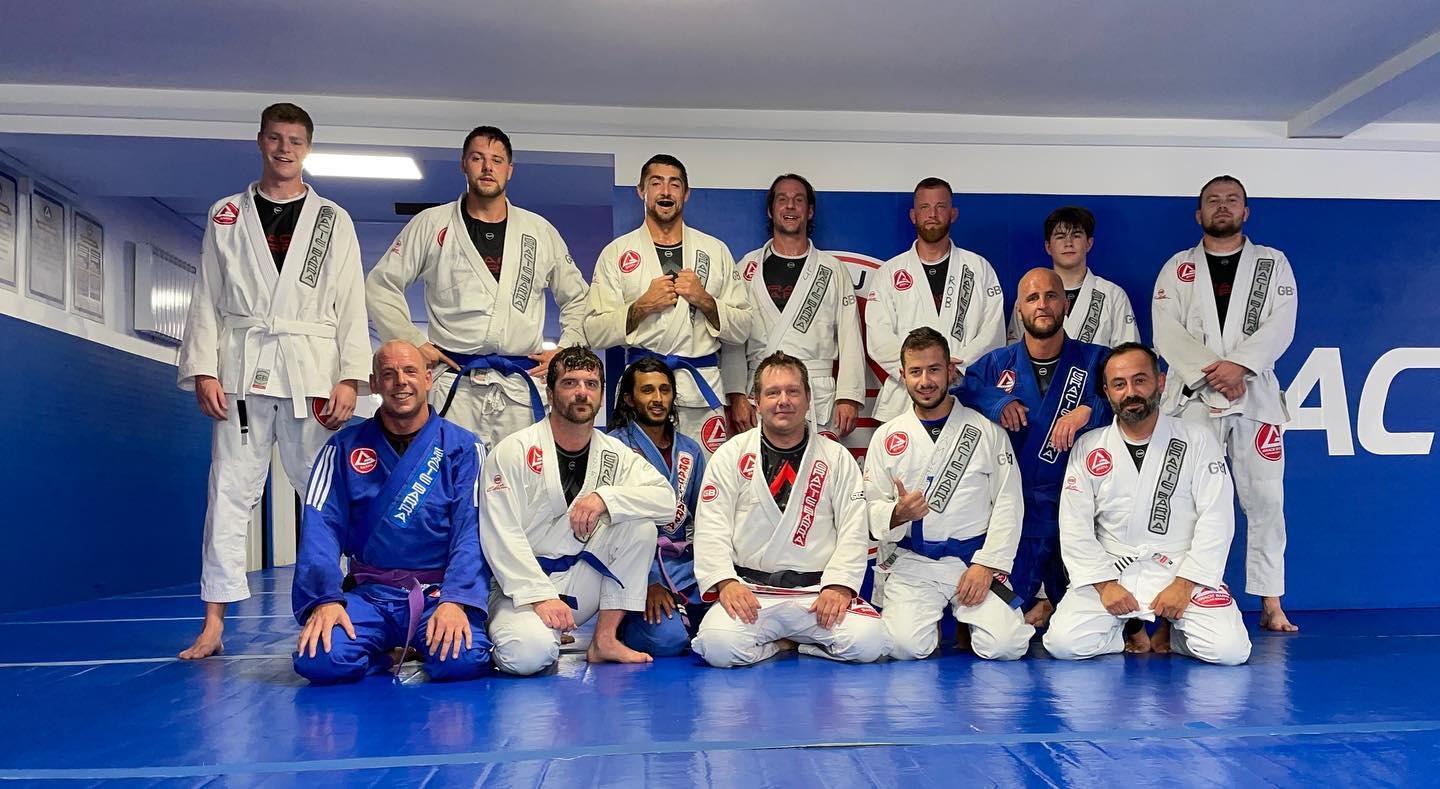
In this episode my guest is Seymour Yang, a long time acquaintance of mine who is also something of a legend in the BJJ world, where he goes by the name Meerkatsu and is famous for his BJJ artworks, which get turned into beautiful t-shirts, rash guards and gis.
Seymour is also a black belt in Brazilian jiujitsu and teaches at the Roger Gracie academy in South Hertfordshire. So, it’s no surprise that this episode is highly focused on the art of Brazilian jiujitsu.
We’re talking right after we both attended the same jiujitsu seminar up in Stafford with Priit Mihkelson (my guest in episode 5 of this podcast) so that’s where we start our conversation. I hope you enjoy it!
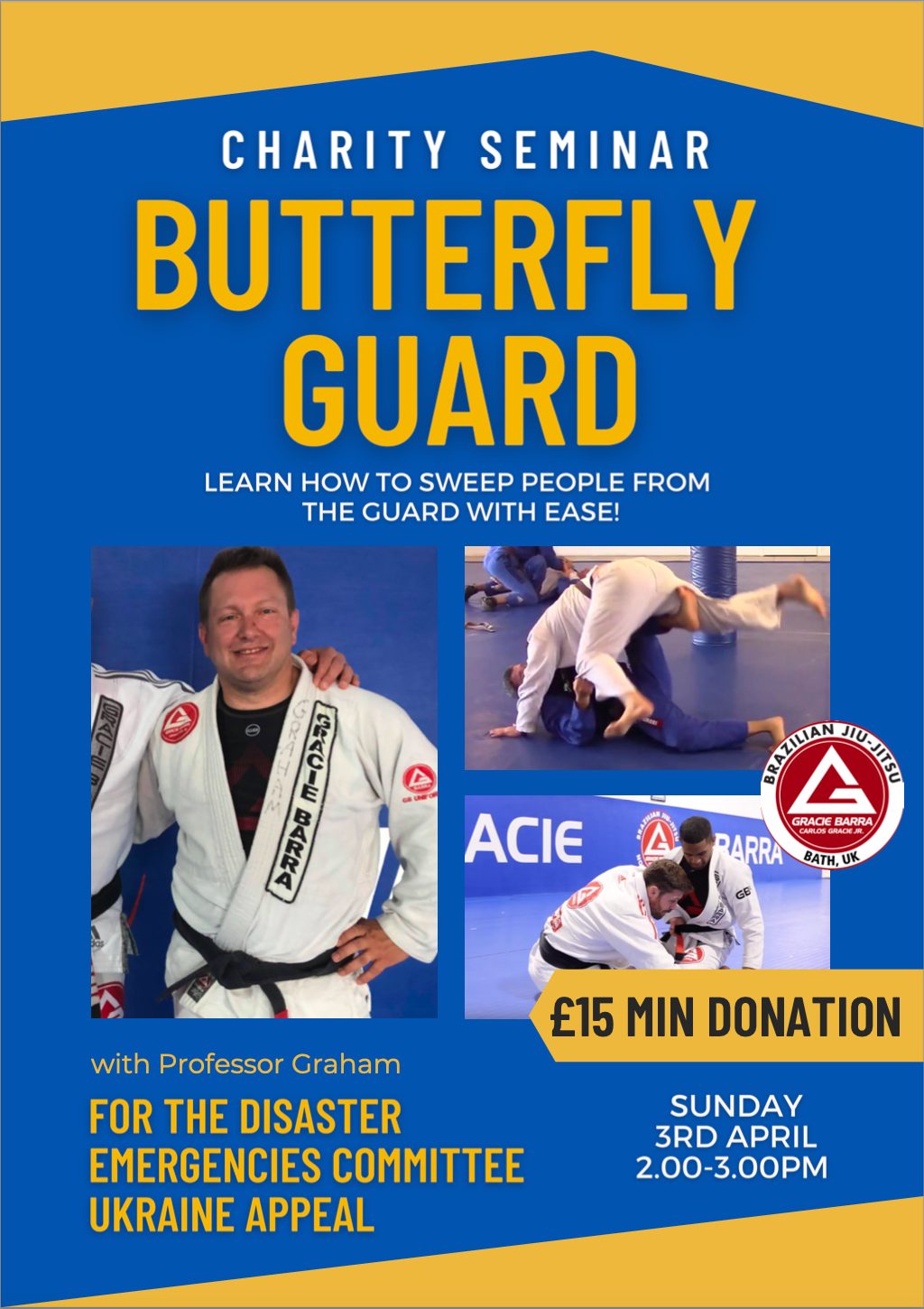
Just a heads up, I’m doing a BJJ seminar on Sunday at Gracie Barra Bath in aid of the Disasters Emergency Committee, Ukraine appeal. It’s open to all and £15 minimum donation. The Justgiving page is here. Thanks.
Let’s take a little diversion into the world of Brazilian Jiujitsu. Here is a video I shot this morning that shows some of my favourite options for getting submissions from side control. For some reason the sound didn’t work, but hey ho, let’s roll.
I’m demonstrating how I like to keep my knees off the mat, so that my body weight is going straight into my opponent, which I use to pin him, freeing up my hands. The hands are then free to see submissions. I show some chokes and armbars. The very last choke, where they get choked by their own arm across their body is my most common submission. It’s quite opportunistic, but the opportunity is there quite a lot if you know to look for it.
If you enjoyed this sort of content then you’ll probably enjoy my chat with BJJ black belt Stephan Kesting of GrappleArts.com. We talk about a lot of BJJ issues and also how BJJ has changed over the years.
In the latest episode of the Tai Chi Notebook podcast I’m talking to the man, the legend, that is Stephan Kesting. Stephan has taught thousands of people martial arts through his famous website grapplarts.com which, back in the day, was one of the first sites to put out quality Brazilian jiujitsu instructional material and is still putting out top notch instructional material today.
Stephan is a fireman, he has competed in marital arts, he has trekked across the Canadian wilds with a canoe and recently he’s undergone a full hip replacement and documented his recovery – and he’s about to return to training again, so he’s one tough old dude.
Stephan also hosts his own podcast, the Strenuous Life Podcast, which I’d recommend you listen to – because it’s always super interesting, especially his episodes debunking conspiracy theories.
I used to train jiujitsu with Brad back in the day, before he went on to become a UFC fighter, so I’ve known him for years. Brad is retired from the UFC now, but he recently accepted a fight offer from the famous D.K. Yoo, who teaches martial arts seminars all over the world. The fight is scheduled to happen on December 4th on pay-per-view here:
Brad and Joe are flying off to South Korea in just a few days for a boxing match that looks set to make a huge impression on the martial arts scene.
So, let’s find out how it all happened, how Brad’s training is going and what the boys think is going to happen on December 4th.