In some ways, the Tai Chi form is a necessary evil.
Because of all the form work involved in Tai Chi it’s easy to think that if you are ‘doing’ Tai Chi — either as two-person work or as a solo exercise — that you are assuming a particular type of posture – wide, open, upright, etc. We all know what graceful Tai Chi postures look like, but I don’t think of Tai Chi as a posture. I don’t think of it that way at all.
If you can’t respond to an immediate situation without first sinking into your posture or ‘sitting in your kwa’ or whatever else is required in a Tai Chi form then there’s not much point to what you’re doing. You’ll be fine for practice and for drills, but too slow for real life.
The Tai Chi form is a set of what I’d call ‘ideal circumstances’ that are repeated one after the other and blended into a long sequence. Ideal circumstances rarely exist in real life.
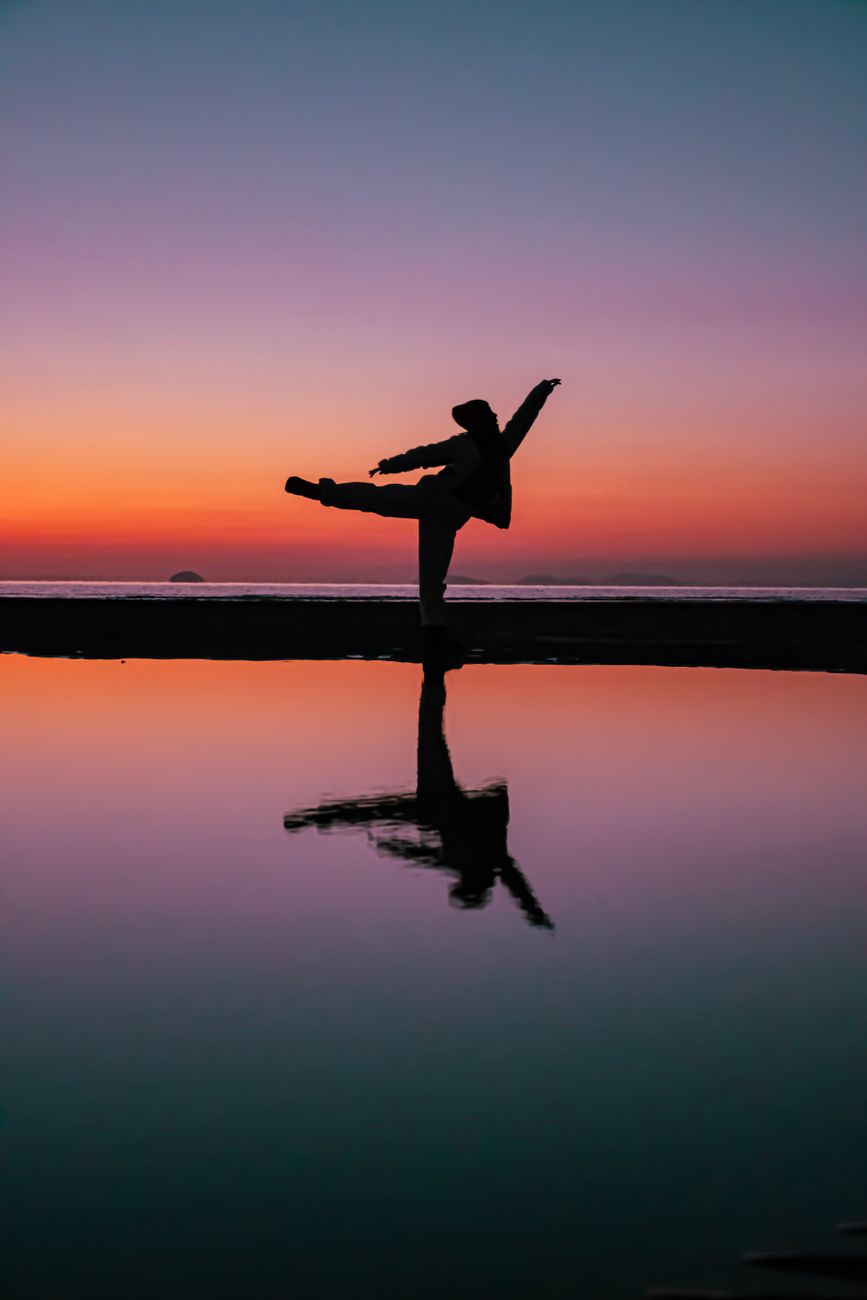
Instead, I prefer to focus on the qualities that are really important to the art, starting with your connection to the ground. That’s the fundamental, non-negotiable quality of Tai Chi for me. Whether I’m sitting at my desk, lounging on the sofa, doing a Tai Chi form or trying to perform an Uchi Mata on somebody in BJJ, the quality I’d value first and foremost is being connected to the ground.
Without my solid connection to the ground, everything I do is slightly tense.
But what does it mean to say “connection to the ground”? Aren’t we always connected to the ground in some way, unless we’re floating in space? Well, I guess we are, but in Tai Chi terms it means the feeling of sinking your weight to your feet. The bottom half of your body feels heavy, and as a result, the upper half can feel deliciously light and relaxed.
You’re like one of those toys called Weebles, which had the catchphrase “Weebles wobble, but they don’t fall down”. Remember them?
Again, it’s not a quality that only springs into action when you’re in a Tai Chi posture – in fact you don’t need any particular posture to embody it. It needs to be fluid to fit into daily life. You just need the ability to settle down inside your own body. Let your weight sink, while at the same time embodying the feeling of being pulled up by a thread from your crown. The gentle upward expression is really important to stop you from slumping down.
Over time, you learn to recognise the quality I’m talking about. If you practice it in your Tai Chi form regularly, then you become able to slip into that state much more quickly than you could before, until eventually you can almost do it without thinking. It just becomes a feeling.
You can test this state too by getting somebody to push you and seeing if you can learn to accept the force with the structure of your body without tensing and directing their weight to the soles of your feet. Don’t let them push you suddenly while you’re learning. You need slow, purposeful pushes to get the hang of it.
Once we’ve got that quality down, then we can talk about others, but until then, I don’t think they’ll make much difference. I cover this important quality and many others in my upcoming book.
In other news, I’ve recently appeared at no.2 in the Top 45 Tai Blogs from Feedspot.
Feedspot is an RSS Reader that lets you subscribe to blogs, news sites, and any website you want to keep up with.

