The Obamas have a bit of history with Tai Chi. Here’s Michelle Obama giving Tai Chi a try at a high school Tai Chi class as she visited in the Chinese city of Chengdu back in March 2014:
“It is a really stunning type of exercise, and I loved giving it a try,” the first lady wrote in a travel journal posted on the White House website. Press report here.
Well, it seems a bit of this might have rubbed off on her husband, judging from today’s picture of his awkward, misjudged handshake with Cuban President Raul Castro. Just as Obama reached in to shake his hand, Raul lifted Obama’s arm upwards, resulting in what can only be described as a picture-perfect Cheng-Man Ching-style Single Whip. Here’s the video:
My critical analysis would be that there’s a bit of residual tension in his left shoulder, but he deals with his attacker well. 🙂
Rory Miller is a name that will be familiar to many people involved with martial arts. He wrote the seminal book Meditations on Violence about his experiences facing violence on a daily basis. It’s often described as one of the best books on self defence ever written. He also runs a website that has lots of great articles on it.
A new interview with him by Rafe Kelley of Evolve, Move Play just appear that’s an hour long and well worth your time watching. He tackles some very interesting subjects, particularly his take on violence.
I’ve been watching Rafe’s work on YouTube for a while now with interest – he’s got some great ideas on rough housing and using martial arts as play. Check out the following video:
A different approach to overcoming strength and size in JiuJitsu
Last year BJJ world champions Saulo and Xande Ribeiro released 5 episodes of a YouTube-only JiuJitsu Reality TV show under the banner of their online instructional website, BJJ Library, called The BJJ Library Challenge. BJJLibrary.com is actually one of the best resources for online BJJ instruction you’ll find on the net – on the one had you’ve got lots of video lessons from Xande and Saulo, who both specialise in a “strong on the basics” approach to BJJ, and you’ve also got plenty of video instructional from the leading lights in the BJJ universe, like Leandro Lo, Clark Gracie, Eduardo Telles and JT Torres, all showing the techniques they have become famous for.
Read the rest of this post at my new blog… BJJ Notebook
Very rarely does a kung fu demo look like real fighting, but so what?
Chinese martial arts have a strong connection to what we (by which I mean people in Europe and America) would call ‘theatre’. All kung fu styles have some sort of performance element built into them. Historically a lot of kung fu styles were practiced by Chinese Opera performers, or have links to religious rituals, which became hidden inside Kung Fu styles. I’ve written about this before with respect to Tai Chi and its strange preoccupation with the Taoist Chang Sang Feng.
From the modern view point it’s easy to laugh at this idea, sine we tend to think that martial arts have one purpose – for kicking butt! But I think it’s valid to ask why do almost all Chinese Martial Arts contain so many solo forms if they’re not meant to be performed and appreciated as a performance? Compare it to something like Brazilian JiuJitsu or Wrestling – these arts don’t contain any solo kata or forms anymore, because they’re really just focussed on fighting techniques and conditioning. Sure, forms build up stamina, which is conditioning, and train techniques, and the flow of movements, but a lot of this could easily be done more effectively by repeating individual techniques over and over. Instead, in Chinese Marital Arts, they get put together into a (often highly stylised) form.
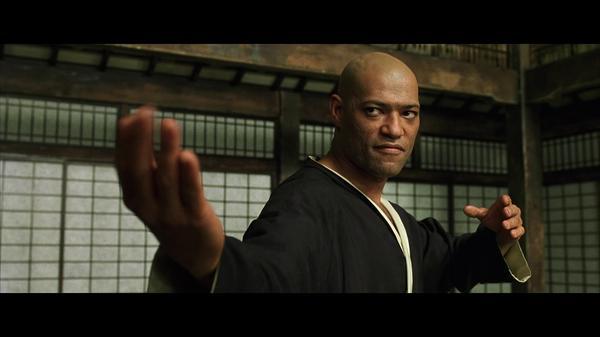
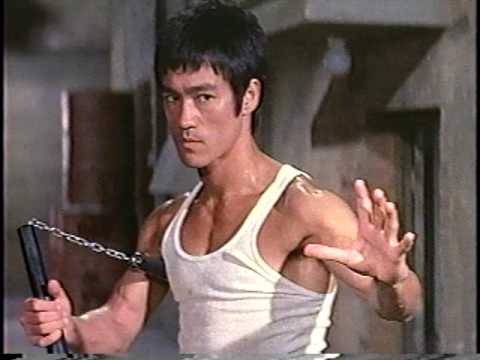
It’s no surprise to me that the kung fu film industry is so big, and has also crossed over into Western cinema, first with Bruce Lee and Enter the Dragon, and recently with Crouching Tiger, Hidden Dragon and The Matrix. It’s because kung fu has always been designed to be performed partly as theatre, making cinema its natural medium.
Kung Fu teachers back in the 1970s when kung fu started to take-off were well aware of this ‘for show’ element to the arts, and didn’t think it was anything to be concerned about. Some techniques were ‘good for show’ and some were ‘good for real use’, and your teacher knew the difference. Of course these days we’re in the era of the YouTube generation, so when a Kung Fu demonstration, with its flashy techniques done against minimal resistance, crops up for discussion there’s an immediate cry of ‘foul!’.
Take this video of a Choy Lee Fut demonstration, which got posted on RSF recently:
The teacher moves well, and clearly has a grasp of using the big swinging techniques of Choy Lee Fut, and demonstrates them with speed and efficiency, which is presumably the point of the demo, but it was instantly greeted with cries of “That was awful”, and “I liked how the camera shakes at some points. Real dragonball effect. Only one question …. why is it none of the “attackers” have their hands covering their heads? Ok one more. Why can they throw 2+ punches or kicks like he does?”
Because of the huge interest in MMA, which is probably as close to actual fighting for entertainment as we can get and still be relatively safe for the participants, everybody has at least some idea of what a fight actually looks like, so we’ve now got people looking at Kung Fu demonstrations questioning why it looks nothing like a fight. This is a good thing, because I get the impression that back in the 1970s and 1980s people thought this was what real fighting should look like. Then the UFC came along in 1993 with a healthy dose of reality that blew everybody’s perceptions out of the water. Sure there’s the usual ‘but that’s not the reality of the street’ and ‘but what about knives?’ objections, but I think they’re missing the point. Fighting looks like fighting. It’s scrappy and messy, and always will be.
These days I’m finding it harder to care that the polished, perfect kung fu demos we’re used to seeing don’t look like real fighting, and I’m just happier to accept them for what they are. Kung fu has evolved over many generations into an art that contains performance related elements, and that’s just the way it is. I’d rather just enjoy the performance and not worry about it being too ‘real’, because that’s what you’re meant to do.
I’m writing this on International Women’s day, so I’m going to end this post with a clip demonstrating that women have a long history in kung fu films, and were violently kicking mens’ butts years before things like ‘trigger warnings’ existed. Let’s not forget that. Here’s to the ladies of kung fu!
Is the shoulder lock done with the legs the most “BJJ” of all BJJ techniques?
Everyone who starts BJJ eventually goes through a bit of an omoplata obsession, I think it’s because it’s one of those techniques that is unique to BJJ. Triangles, armbars and cross chokes can all be found in Judo, and while it’s probably possible to dig up a Jiujitsu demo from the 1920s that features an omoplata (take that as a challenge dear reader!), the technique has really found its mark in the world of BJJ.
Read the rest of this blog post at my new blog… BJJ Notebook
Ancient Yogic breathing techniques make a return to the UFC
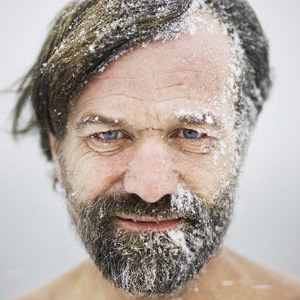
You might not have heard of Wim Hof, but he’s been creating a big buzz in certain circles and has gained the name “The Iceman” for his incredible acts of endurance and ability to withstand extreme cold using a breathing technique he calls Innerfire. He even climbed Everest in a pair of shorts. Watch this video to get an idea of what he’s about:
With the MMA world latching on to the new trend in ‘movement‘, it wasn’t going to be long before somebody noticed that Wim’s breathing methods and extraordinary abilities might be quite useful for fighting as well. I just wasn’t expecting it to be UFC title contender Alister Overeem that lead the way.
Overeem has had a chequered history since joining the UFC. There are allegations of juicing in his past, and he failed to live up to his potential in a number of fights. But then I remember being really impressed by his last performance in UFC on FOX 17 in December 2015 when he completely destroyed the always dangerous Junior Dos Santos, ending a dominant fight with a 2nd round KO. I remember thinking at the time that something had changed about Overeem. The arrogance that lost him his bout against Bigfoot Silva in 2014 was gone. Instead he seemed calm, composed and very focussed. Something had changed, and now I know why. He was training Wim Hof’s breathing methods, as this video shows. You can see Overeem doing push ups with breath control and even submerging himself in some very cold water for over 2 minutes.
Highlights from Overeem vs Dos Santos:
Here’s Wim explaining his method himself:
And here he is explaining it to Joe Rogan:
You can’t argue with Overeem’s impressive results, and as he says, breathing is one of the most important things to any fighter, regardless of the sport they’re in. I can see immediately how this level of breathing control and the improved cardio it promises could improve my BJJ, since once you gas, that’s it, you’re done, no matter how much skill you have.
I think I’m going to do more research into Wim and maybe try his methods. There’s even an iPhone app for Innerfire. I’ll keep you updated.
Seeing Jiu-Jitsu throws done without mats reminds you how much that would hurt if the person didn’t know how to land properly, or it was done on concrete. The above video shows some excellent technique demonstrated in the sort of throws we train in BJJ. It’s on a sprung wooden floor, but still, that’s going to hurt.
Before he started Tai Chi my Tai Chi teacher trained like this in a traditional Japanese system of Jiu-Jitsu back in the 1970s. They didn’t use mats – they just had a wooden floor. These days we’ve realised what the negative long term effects of this sort of training are, and we use mats, but it’s good to see somebody demonstrating it. I’m just glad it’s not me!
Marcelo Garcia rolling with Rafael Lovato Jnr is all sorts of fun
Everybody in BJJ who knows anything has heard of both Marcelo Garcia and Rafael Lovato Jr, so to have a clip of them both rolling in Marcelo’s Academy is a fantastic learning opportunity. They’re both legends in the sport, with Marcelo having 4 ADCC titles and 5 word titles to his name. Rafael Lovato Jr is one of the most successful US competitors and currently 2 and 0 in MMA.
Currently on a break from competition, Marcelo is often referred to as the greatest grappler of all time. If you’re not familiar with Marcelo then check out this documentary video by Stuart Cooper, in which he talks about his life:
To read the rest of this post see my new blog… BJJ Notebook
The ‘Master of Movement’ has a healthy respect for the ‘internal’ Chinese martial arts
If you follow what’s become known as ‘movement culture’ you’ll be familiar with the name Ido Portal, and his brand of movement-based exercise/philosophy called The Ido Portal Method. His method is a kind of freeform, soft-gymnastics influenced by everything from Yoga and Parkour to martial arts (specifically Capoeira), and it’s become popular in the exercise world thanks to videos that show Ido in amazing physical shape performing the sorts of athletic feats normally associated with comic book superheroes like Deadpool or Spider Man. His movement practice looks like this:
Ido recently moved out of the shadows of movement culture and into the mainstream when he appeared with the then UFC interim lightweight title holder Conor McGregor at the open workouts in Las Vegas, before UFC 194 Aldo vs McGregor. Open workouts are a chance to showcase the skills of a fighter and usually consist of demo-mode displays on the pads, followed by a bit of wrestling and groundwork. As well as some of this, Conor’s open workout featured appearances from Ido, who led Conor through a number of unorthodox arm-swinging, rolling and stick drills that left most of the world’s MMA media baffled. They hadn’t seen anything like it before, and therefore didn’t know what to make of it. Here’s a video of Conor’s open workout, followed by Aldo’s so you can see how different they were:
Ido worked with both Conor McGregor and Gunnar Nelson in the week before the UFC. While Gunnar Nelson went on to lose his match he put up brave resistance against a dominant (and more experienced) Demian Maia for three rounds, and avoided the submission. Conor went on to KO Jose Aldo with one perfectly placed punch and became the undisputed UFC Lightweight champion. In that instant Ido’s name and movement culture went global. The fight went down like this:
There’s more video available of Ido working with Conor and Gunnar in the run-up to the UFC. As you can see, it’s primarily about ‘movement’:
and
(As an aside, another thing Ido does really well is have fantastic soundtrack songs for his videos. Note: The amazing acoustic cover of The Black Key’s Lonely Boy by Matt Corby is one of my personal favourites 🙂 )
How much of Conor’s victory was down to training with Ido in ‘movement’ is unclear. He’s been a fan of movement culture for a long time, but it should be stressed that Conor would have been through his usual training camp before Ido was brought in for the last week, which is after all the hard work has been done. In the last week a fighter generally just needs to keep loose and work on his weight-cut. This would have fitted in perfectly with Ido’s routine, which relies more on relaxation and keeping moving than on lifting heavy weights.
If you want to know what on earth they’re doing with that stick in the video then a good primer on what Ido’s work is all about is his latest interview on London Real, in which he talks about his training philosophy and working with Conor. He also shows what he’s doing with that stick:
Another good source of information is the Movement Culture Facebook group. In a recent thread on the group somebody posted a video of an ancient Indian martial art called Kalaripayattu, which is rather grandly titled, “The Origin of all Marital Art”.
The classic story of the origin of Chinese martial arts is of the Buddhist monk Bodhidharma coming to China and on finding the monks in poor physical condition instituting a practice of physical exercise and martial arts, founding the first Shaolin Temple. The ancient fighting style of Kalaripayattu is therefore one possible origin for the Chinese martial arts. In fact, if you look at the 2-man form at 3.08 in the video it looks a lot like a 2-man Northern Shaolin fighting form I used to practice, a version of which is here:
However, all these claims and stories lack evidence. It’s not entirely clear who shared what with whom, and in which direction the information sharing went. Either way, Ido (who has by his own admission researched an incredible amount of martial arts) remains unimpressed with the movement quality he’s seen in Kalaripayattu, especially when compared to the Chinese Neijia (internal family) arts. Here’s his response to the video:
I appreciate his candour, and I agree with him, Kalari may be old, but the ‘movement quality’ shown in the video doesn’t compare to kind of things you can find in Chinese martial arts. It’s especially nice to see his appreciation for the internal arts, which makes me wonder if we’ll see their influence seeping into MMA at some point.
We’re at an exciting juncture in MMA right now. As discussed in a recent Joe Rogan podcast with MMA analyst and commentator Robin Black (see video below), MMA is transitioning from an era where the mantra had become “Boxing, Wrestling and Jiujitsu is the answer to everything” to a world of new possibilities, as exemplified by newer, unorthodox, fighters like Conor McGregor and Stephen ‘Wonderboy’ Thompson who have successfully introduced elements from traditional martial arts, like controlling the distance with kicks, that can catch out a seasoned wrestler/boxer who is not used to that sort of movement.
The best example of new meets old is perhaps Stephen Thompson’s most recent win against high-calibre opponent Johnny Hendricks, who he made look surprisingly ordinary by controlling the distance and utilising his kicks, until getting the KO in the first round. Instead of standing ‘in the pocket’ to trade blows as Hendricks would have liked, he moved in and out with ease. You can watch it here:
A one-time title holder himself, Hendricks had previously taken UFC Welterweight Champion Robbie Lawler through two five-round wars of bloody destruction, only just missing out on the win each time, but faced with somebody who wasn’t going to ‘stand and bang’ he looked lost.
It’s this sort of movement skill that’s the crossing-over point of mixed martial arts and movement coaches, and Ido Portal is definitely not the only person integrating the two worlds. Another person to look out for is Erwan Le Curre of Movenat, who has greatly influenced UFC fighter Carlos Condit, as you can see in the following video:
So, the interesting thing to me, as somebody who has a deep involvement in Chinese martial arts, specifically the Neijia, is what could those arts bring to the table for mixed martial arts?
I’d like to be able to say that going towards the refined Neijia movement would be the natural evolution of MMA, as it moved from its slug-fest beginnings to more evolved fighting techniques, however MMA evolution doesn’t work like that. It’s too simplistic to see it as an evolution from thuggish, brutish origins, to the more refined and technical fighters of the modern age. Sure, the early UFCs featured many pugilists who were more brawlers than anything else. And in contrast, today’s modern MMA fighter is a hugely technical martial artist, who needs to be well-rounded in several fighting disciplines, but the beginnings of the UFC were also characterised by victories obtained via a very, very technical martial art that didn’t require huge levels of athleticism, in the form of Brazilian JiuJitsu. So, while the evolution of MMA isn’t the nice, upward directed straight line starting at “brawling” and ending at “technical” we’d like to see, if we were going to make some sort of convincing argument for ‘more technical’ as being the final destination, things definitely are improving in terms of technique in all areas simultaneously – it’s just that we didn’t start from a level playing field for all the different areas that make up the modern fight game.
Kung Fu has plenty that can be added to MMA in terms of techniques, as I blogged about recently. What the Neijia can add specifically is a lot more subtle -it’s more about using your body as one unit to produce power, but as Ido Portal’s interest in the subject has shown, it is also about improving the quality of your movement, and that can’t be a bad thing for any fighter.
When we talk about Qi (Chi) in martial arts, what do we mean?
Chinese as a language can have meanings on different levels. The basic definition of Chi is ‘air’, but in terms of martial arts we’re talking about vital energy that’s intrinsic to the breath. If you put the word “Qi” into a Chinese/English translation you get all sorts of definitions, for different Chinese characters. So, to clarify the character we’re talking about is (in traditional Chinese)
It’s a bit like a picture of a pot of rice over a fire with steam rising upwards. In simplified Chinese it looks like:
Unfortunately, “vital energy that’s intrinsic to the breath” still doesn’t help much in terms of understanding what is meant by Qi when we talk about it in martial arts. The most practical way to understand what Qi is, is to take a look at Jin. You can think of Jin is the physical manifestation of Qi. When you manipulate your qi using your mind to do something, you manifest a direction of force in the body – and when the force can be expressed in a direction, without impeding it by tensing your muscles, so that it runs all the way from the feet to the hands, then that is Jin. So, if somebody pushes on your hand, you should be able to create a line of force from your foot to your hand (using your mind) that maintains your position, so that they are effectively pushing into the ground, not your hand. If you push on somebody’s outstretched arm and they feel really strong, like a rock, yet they’re not tensing their muscles then you could say they have “strong qi”.
In the following video Mike Sigman takes you though what Jin is, which should hopefully increase your understanding of what Qi is.
You can see that he’s talking about setting up pathways in the body – if you refer back to my previous post about basic silk reeling movement you can see how the two tie-in together.





 The Tai Chi Notebook