Are forms any use for fighting?

kwan-tak-hing-wong-fei-hung

The question above is my one-line distillation of the abstract provided by Douglas Farrier for his article called “Captivation, false connection and secret societies in Singapore“, which appears in the journal Martial Arts Studies. You can download the PDF of the article from that link.

The simple question, “are forms any use for fighting?” is one that will plague Chinese Martial Arts until the end of time. In true academic style, this article “adds to the conversation”, plus it’s got some great stories in there of traditional Choy Lee Fut training. In fact, the one time I met D. Farrier he was telling the exact story that is in this article. I asked him at the time what “the face” was. He gave me a serious look and said “I’ll have to show you later”. Our group split in different directions and he didn’t in the end. After reading the article I’m kind of glad about that…

(Don’t be put off that it’s in an academic journal as it’s not written in academic language, and is quite readable 🙂 )


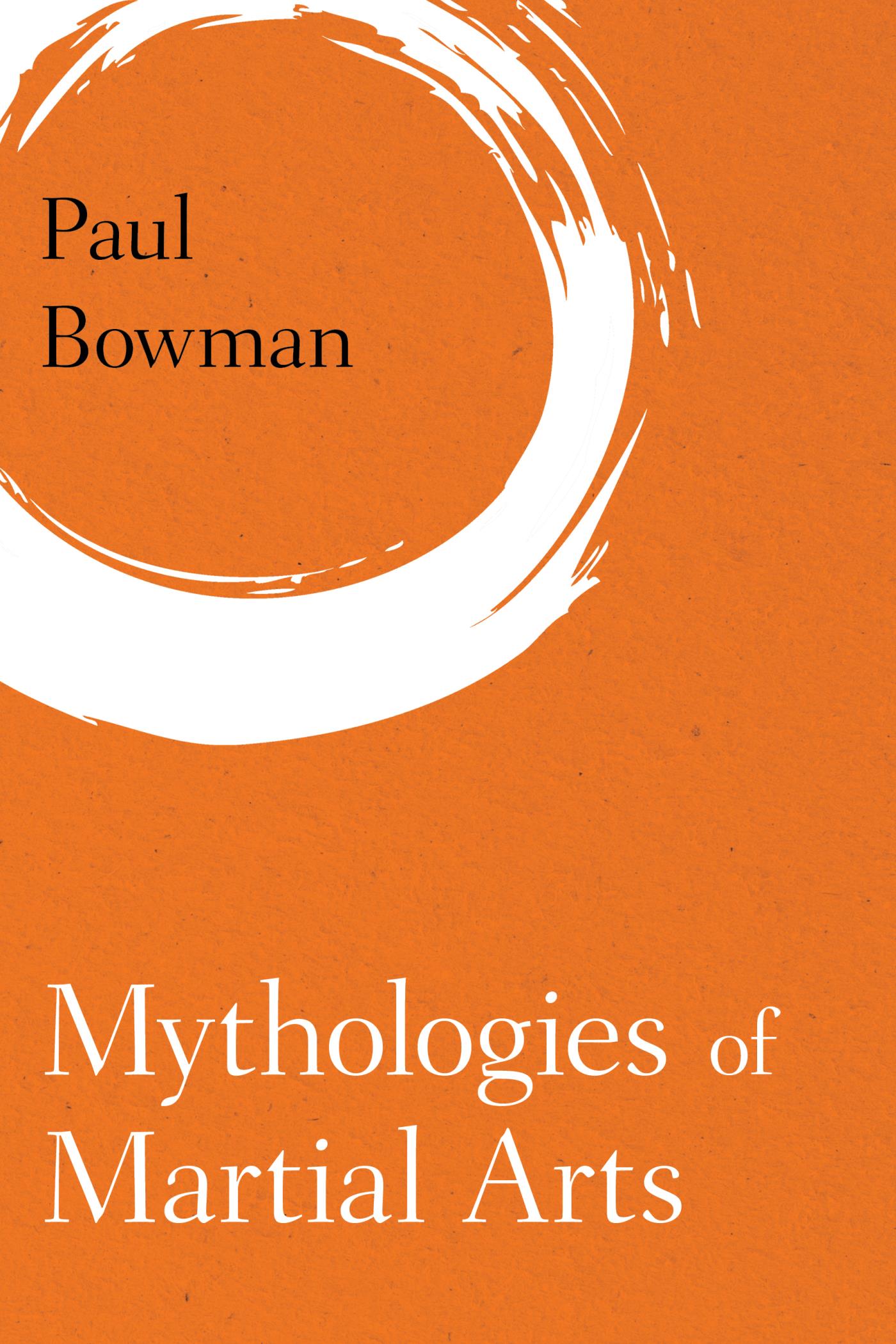
Review: Mythologies of Martial Arts By Paul Bowman

Are you a scholar boxer? Then I’ve got just the book for you.

58e5e98ff5ba740414c11ea3

While origin myths and lineages do feature from time to time in Mythologies of Martial Arts, the “Mythologies” in the title here relates instead to Roland Barthes 1957 book, Mythologies, which starts with an essay on wrestling – not the sportif, Olympic or college style of wrestling, but the entertainment-based, scripted type, which was popular in Paris at the time, and later found its way onto Saturday morning television in the UK throughout the 80s and is still hugely popular in the US. Essentially, Barthes was undertaking a high-brow analysis of low-brow entertainment – taking seriously what was not meant to be taken seriously; comparing the scripted wrestling dramas to the themes found in mythic tales of the Gods or Greek tragedies. That gives you an inkling of what this book is about. Using Barthes ideas on wrestling as a springboard, Bowman goes on to look at how Eastern martial arts are treated in popular culture, and why. It’s a fascinating discourse across a diverse range of subjects, which somehow all follow on from one another, yet all build towards returning to the central premise of the mythologies of today’s martial arts.

Perhaps unusually for an academic, Bowman is not talking from some lofty perch, looking down upon the martial arts, but rather as a lifelong martial arts enthusiast and practitioner he’s down in the trenches doing it with the rest of us, and asking the question, what exactly is happening here?

The chapter headings reveal the eclectic brew on offer:

  1. Wrestling myth
  2. The status of martial arts in the west: From the Kung Fu craze to Master Ken
  3. Cross-cultural desire in the Western Eastern martial arts
  4. The circulation of Qi (in media and culture)
  5. Myths of martial arts history, authority and authenticity
  6. On kicking, Kung Fu and knowing your lineage
  7. Enter the ethnicity
  8. The gender of martial arts studies
  9. Everybody was action film fighting
  10. From weird to wonderful and back again
  11. Martial arts myth today

I’ll be honest, your average martial artists will not have even thought about half of these topics before. I hadn’t. In that sense, this book is mind expanding. Most martial artists just get on with doing it without really thinking about why we’re doing it, or what is actually happening when they do it. As such this book will shine some lights on the unexamined parts of your psyche, your unacknowledged assumptions about martial arts and your own blind spots.

I particularly enjoyed the chapters on the aesthetic appeal of kicking, the similarity of ground fighting to the 1979 Ridley Scott film Alien, and the “delicious aural quality” of the sound of the words “Kung Fu” and “Gong Fu” in English. I also enjoyed the way he tackled his own real life critic in Chapter 5, combining the critic’s furious reactions into his research. (The critic remains nameless, but anybody involved in discussions of Chinese Martial Arts on Internet discussion forums will recognise him instantly). But frankly, a lot of this book is beyond me. When Bowman drifts into quoting Derrida (as he does often) and discussing ideas of deconstructionism I find myself drifting off and wanting to skip pages, but then he’ll talk about how Alien’s Facehugger bears striking similarities to Brazilian Jiu Jitsu ground fighting technique, or how Kung Fu technique keeps him awake at night and I’m right back in the room with him, enjoying his unique perspective.

Bowman’s focus is often on Eastern martial arts (or martial artists) that have been transplanted to the West and the cultural ramifications thereof, Bruce Lee being a perfect example. It should also be noted that Bowman is an authority on Bruce Lee, having written several books about him, and Chapter 7 here is dedicated to understanding this key figure to modern martial arts in more detail.

Bowman uses his own experience of training in these Eastern martial arts in the West as his fieldwork, which is fine, but has some downsides. So much of cultural significance seems to be going on with the incredible popularity of Mixed Martial Arts at the moment that it seems like a missed opportunity that it only gets the briefest of mentions here, mainly because it has not featured as heavily in the lived experience of the author as the Eastern arts of Taekwondo, Kung Fu and Tai Chi have.

Having been to an academic conference (only once in my life, so far though) it strikes me that the key to delivering a good academic paper is to present lots of ideas, backed up by evidence, but to never come to any definitive conclusion about any of them. Academics naturally see their work as contributing to a larger conversation. Whereas most of us presented with the task of writing a book, an article, or a blog post would reduce it to a point we were trying to convey, to move towards, to solidify on, academics seem more interested in asking questions, which in turn spark more questions, which in turn keeps the conversation moving and developing. They are worker ants contributing to the overall health of the colony, not brave explorers conquering and claiming new lands and while it would be a disservice to accuse Mythologies of Martial Arts as lacking coherence, or building to good final act, I’m left with the impression that this book, hailing from the world of academia, holds true to the same ideals.

Buy this book on Amazon.

—–

Full Disclaimer: A long time ago (possibly in a galaxy far, far away) I taught the author of this book Tai Chi and Kung Fu, and while I’m not mentioned by name I find my ghost wandering the pages of several chapters, where I am mentioned as the “instructor”, noted for knowing my martial arts lineage by heart, or as the person who introduced him to what he’d been searching for: Chinese Kung Fu, for the first time.

Old Wu style Tai Chi video

13h_e

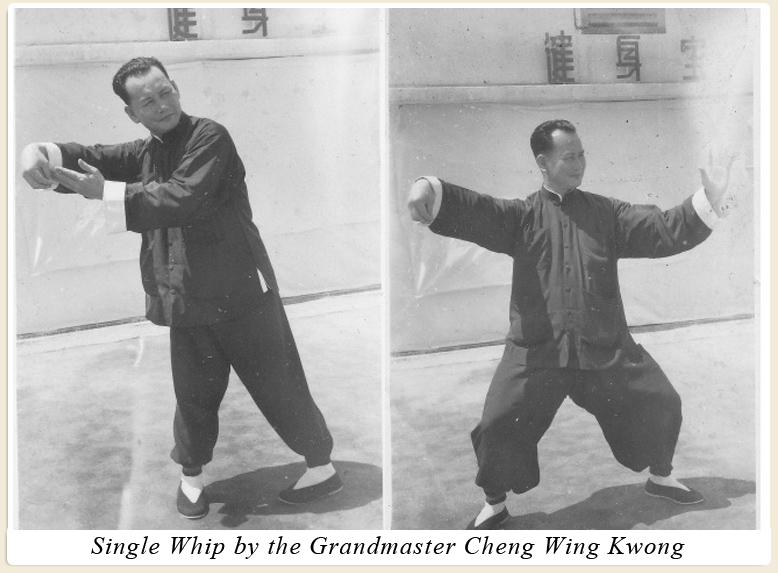
A video surfaced recently of an old performance of Wu style Tai Chi from a gentleman called Cheng Wing-Kwong (1903-1967), who was a disciple of the Wu Jian-Quan, the founder of Wu style Tai Chi.

The video is poor quality, but I like the performance – it’s flowing, well coordinated and done at a good pace, which makes it more interesting to watch. As Wu and Yang style continued to evolve along their separate trajectories they started to look more and more different to each other. In this older video, I think you can see that they looked closer to each other “back in the day”.


Traditional vs Brazilian Jiujitsu

pexels-photo-415983.jpeg

Thanks to Stephan Kesting for providing these videos comparing techniques that are common in Brazilian Jiujitsu with how they’re done in traditional Jiujitsu. It’s a fascinating glimpse into the past – when you had to worry about more “battlefield” things like hidden weapons, other attackers, armour, escape routes, who needs assistance, etc.


The Forgotten Style: Moral Art!

This is a guest post written by Justin Ford  of Cup of Kick (cupofkick.wordpress.com) a great martial arts blog you might like to check out.
pexels-photo-724184.jpeg

Close your eyes. Now imagine the best student ever:  They are always on time. They always take notes.

They absolutely LOVE learning. They ask really thought provoking questions that lead to even more learning. They work hard, in class and outside of class.

Just keep thinking about how amazing they are. Are you ready to teach them?

Oh, but…I forgot to mention something. They have a couple of flaws: They are arrogant and egotistical.

They are always bragging and showing off. They never show respect. Heck, are their lips staying closed together when somebody else is teaching or talking? They tell lies and are hard to trust because of it. They really couldn’t care less about anybody other than themselves.

Not so perfect now, are they? In the beginning, they sure sounded like an angel that fell from heaven. If their traits ended there, they would learn lots in life, both academically and martially. I mean, who wants to teach an A-hole? Not many people would, happily. Especially not somebody who is teaching because it is sharing a passion of theirs, not so that they can take tuition money.

Most teachers would agree that rather than new knowledge and skills, lesson number ichi would be about respect and proper conduct. Especially if the skills they would be learning are ones they can potentially use to harm another being.

That’s not to say that it would just be the teacher denying them new knowledge though. A bad student stunts their own growth as well. An arrogant mind learns very little.

Let’s turn our eyeballs to feudal Japan and the code of conduct the warriors of that era kept. Bushido.

HEADS UP: Keep in mind that these tenets were never written down and that you will see a different number of them depending on where you look.

If you look at Nitobe Inazo’s famous book published in 1900, Bushido: The Soul of Japan, you will hear about eight tenets of bushido. If you look into other texts that are older, you might only see seven.

A major part of these principles is that they were naturally absorbed into the Samurai class and always expected of them. Therefore they really didn’t need to be written down to remind them of how they were expected to act.

Regardless of the number, each is an important principle that the Samurai were expected to uphold, so let’s take a look at how they lived.

義 (Gi: Righteousness)

The top half is a radical (building blocks for the character) for ram. That might sound like some bull-sheep but rams in China (where the writing character originated) not only represented justice but also frequently represented respect because of the way they often kneel.

The character for ram can also be combined with the character for “big” to mean beautiful. The bottom half of the character means I/me/my and can be used when talking about ourselves, but can also be separated to mean a hand and a spear or a halberd. In a poetic sense, we can picture finding the path of beauty or respect even amongst conflict or struggle.

Even while fighting or arguing, I don’t sweat, I sparkle.

There is even a mythological unicorn-goat in ancient China called Xiezhi that can always tell who is innocent and who is guilty, kicks criminal bootie and – depending on where you hear the legend – even chomps down on the bad guys. Read that sentence again and just let the words sink in.

No matter where we are or what is happening around us, as martial artists we need to uphold our morality and always do what is righteous. Seek justice in the small acts and large acts we perform in our life.

pexels-photo-712473.jpeg

勇気 (Yu Ki: Courage)

The top half of the first character can mean path and the bottom half can mean power. They come together to characterize bravery, or perhaps the path of strength. Understand, that the character for bravery is only a piece of the character for courage or valor.

Bravery is a characteristic of somebody, an attitude. They are willing to be the hero and do what others may be fearful of. Courage is different.

Courage is when somebody is just as afraid as everybody else but accepts what they need to do anyway, whether for personal reasons or for somebody else’s benefit and health.

Did you ever watch the cartoon from the early 2000’s called Courage the cowardly dog? It was about a purple dog that was absolutely afraid of just about everything around it. But when his owners got in trouble, he acted to save them anyway. That’s the kind of courage we are building up to etymologically. That purple dog kind of courage.

The second character can actually be written a couple different ways. The Japanese version is what I listed above. The traditional Chinese version would be 氣 . The character is composed of the radical for uncooked rice and steam.

Stick with me now. I promise I haven’t gone too crazy.

There is a connection between courage and cooking rice. Pinky promise.  You see, the two radicals for the last character combine to mean a lot of different things: steam, air, gas, and more. It’s pronounced “ki” in Japanese and “qi” or “chi” in Chinese.

Yep.

The same “mystical” ki us martial artists always make a big deal about. It simply means energy. Not in an “ooooooollld chinese secret!” manner, but rather in a scientific way. The steam rising off of rice. That can be looked upon in a lot of different ways, philosophically and otherwise, but we’ll cover that in a later blog post.

To sum it all up, the two character together can represent the energy to be brave. Being brave while facing down somebody trying to brunoise dice you takes effort. It takes energy. It takes ki.

仁 (Jin: Benevolence)

I love this character! So. Much. If you wanted to describe benevolence, how would you do it? It takes some thinking but it is actually a lot simpler than one might think. There are two parts to this character. The radical on the left which represent man in the general humanity sense. The other radical (the two horizantal lines) means two.

Jin, benevolence, is the connection between two humans beings. It is how we treat the people around us, whether they are a hobo or a Hollywood celebrity. It represents what unites two people living on this planet earth together.

I suppose it should extend to a visiting alien or ghostly spirit as well though…

pexels-photo-796217.jpeg

禮 (Rei: Respect)

“REI!”

Admit it.

You just bowed, didn’t you?

Plenty of martial arts, especially Japanese ones, know rei to mean show respect. Let dive into the meaning a little further though.

The character is composed of two different radicals:


  • Abundance or plentiful
  • Demonstrate or manifest


Together, they are seen to represent a plentiful sacrifice for a ritual or ceremony. An act done in reverence and respect for somebody or something. An act that has importance. I find it worth noting that the modern simplified character (simplified Chinese came to existence around 1950’s) uses the radical for mysterious/small. The small things we do should be treated as a part of a rite with importance. Respect should be shown in every action we demonstrate and word we speak.


誠 (Makoto: Sincerity)

Half of the character is a radical meaning words or speech (it represents a mouth with a tongue sticking out or sounds coming out). The other half means complete or finished.  Together, we get “the complete speech”. Nothing hidden. Nothing left out with ill will.

Every martial artist (as well as decent human) should thoroughly practice integrity in their everyday living. Your students need to be able to trust you. Your classmates should be able to believe you. Your words, actions, and intents should never misalign.

This only becomes more important as the amount of McDojos increase around the world. Remain honest and sincere.

Perhaps most importantly though, you should be able to be honest with yourself.

Don’t pretend your favorite technique is invulnerable. Don’t make up an answer to your student’s question because you don’t know the answer. Admit when you make a mistake. Only then can you begin to really learn and grow.

Learning something new means admitting you didn’t know something before.

There is an unfortunate disease that spreads through any top level athlete or artist: ego. And that ego often leads to a lack of integrity in ourselves.

  • “Oh, I didn’t finish Bassai Dai perfectly because I’m just still tired from yesterday’s workout!”
  • “I could have beaten that guy in sparring but I wanted to go easy on him.”
  • “The other guy won the tournament because of favoritism from the judges!”

Just as we strive to be honest to the people around us, let’s be honest to the person inside us.
pexels-photo-210547.jpeg

名譽 (Meiyo: Honor)

The first character means position or rank/place (in the manner of where you stand among winners. 1st place, 3rd place, etc.) and can be broken down to mean…evening and mouth.

Y’know, it actually kinda makes sense.

I don’t know about you but I’m not getting out of the bed in the middle of the night unless the person calling my name is somebody really important. My dog and my teacher would get very different reactions to calling me and interrupting my beauty sleep.

The second character means praise or reputation. Break it down and you get “the words one carries on their shoulders”.

You can put the two characters together to mean “a position that is praised or carries a reputation” My question is this: Where does your reputation start?

Does your title give you meaning or are you the one giving it worth and weight?

Meditate on this deeply.


忠義 (Chu Gi: Loyalty)

This is another set of characters that can be viewed in a very poetic and beautiful way. The first character has two parts, heart and middle. It means devotion, something your heart is centered on.

The next character means righteousness. Yep. The same character we talked about at the beginning.

Remember? Man-eating justice obsessed unicorn goat? Yeah, we’ll just keep it moving.

Together, they can mean devotion to justice. It is interesting to note that the righteousness character can also mean adopted. We can also view this as staying devoted to the what and who we adopt.

~~~~
pexels-photo-356269.jpeg

What’s important to remember is that being a good person leads to being a good student and a good martial artist because of it (in addition to many other reasons).

If you teach kids classes, then that is one of the most important lessons you can teach. Heck, it applies to grown adults as well.

Martial arts are about living, not just surviving.

I don’t know about you but I don’t have a guy around the corner trying to punch me or stab me every minute of my waking day. I can’t recall but hopefully not in my sleeping nights either.

The part of your martial arts training that you get to use most is the moral and ethical side. Every day, we have to make decisions about how we act and just like most anything else, we can train to improve.

Ethics along with ability is such a universal idea that it is even prominent in other cultures and arts, not just in the east where respect is an inherent part of the country:

  • Chinese martial arts have a similar code of conduct called Wu De
  • European knights had chivalry
  • The pirates of the 17th and 18th century commonly had Articles of Agreement on how to conduct themselves
  • The Bible lists the Ten Commandments
  • Ancient Rome had the Corpus Juris Civilis Or Body of Civil Law
  • The medical field has the Hippocratic Oath
  • Modern courts in the US go by Common Law


It doesn’t matter what your “power” is, you have a responsibility to not abuse it.

It is a gift. Not just a powerful weapon.


A pilgrimage to Miao Feng Shan (Marvelous Peak Mountain)

212

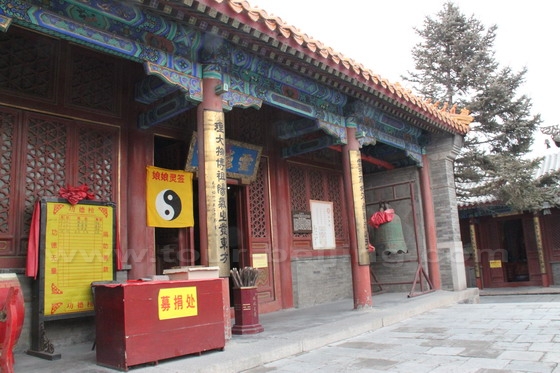
Miao Feng Shan Goddess Temple

Here’s a really good article over at Kung Fu Tea on the relationship between martial arts, religion and cultural practices that’s worth your time reading.

It’s about an old film from 1920s by Sidney D. Gamble showing a trip to Miao Feng Shan (Marvelous Peak Mountain), a popular Daoist pilgrimage site.

“Dedicated to the worship of the Goddess Bi Xia Yun Jun (Princess of the Clouds Before Dawn), the temple was located on a hill about 25 miles northwest of Beijing. Most worshippers made the arduous three-day journey in the spring. Pilgrims went either in groups organized by guilds or temple societies, or on their own as individual penitents. Although the primary purpose of the journey was religious, Gamble’s visual record illustrates that these pilgrimages also served a lively social function. Upon his return to America, Gamble edited the footage shot on one of his trips into a short 16mm documentary. We have re-edited his film slightly, retaining his original titles, and adding music.

Here’s the film (15 minutes)

And here’s the short edited highlights, showing the martial arts demonstration:

Once again, it highlights how hard it is for us, living in the present day, to connect what we know as martial arts practices with the way the people in this film understand martial arts practice. The Kung Fu Tea article makes a great point:

It may seem paradoxical, but the most important books out there for anyone attempting to understand the Chinese martial arts usually have very little to say about these fighting systems. The martial arts have many functions, and personal or village defense is certainly one of them. But on a more fundamental level these things are a type of social technology that allow individuals or groups to achieve their aims, more broadly defined. We will never understand how this technology functions if we remove it from its (always moving) cultural context and attempt to fix these techniques under ahistorical glass. As my friend’s teacher reminded me, dinner must come before dessert. Context comes before understanding.

Incidentally, the pilgrimages have been restarted in recent years. Here’s a film of a performance from 2016:


The legend, BJ Penn

bj-penns-last-stand-just-one-more-once-more

Really nice article by Jack Slack on MMA and Jiujitsu legend BJ Penn.

There have been few falls from grace as ugly and lengthy as that of BJ Penn. Nobody who knows the game is hung up on his 16-10 record, he has nothing to prove to anyone who knows their onions in that regard. It is simply that Penn spent so many years being in many ways remarkable, in a few ways wanting, and continued to drag out his attempts to find the mythical ‘motivated BJ Penn’ rather than addressing the actual issues in his game.

“You’re really tight” is meaningless

pexels-photo-356053.jpeg

I found this article recently that I thought was pretty interesting. It’s about massage and the often used phrase “you’re really tight” by therapists.

Statements like “you’re really tight” are a bit of a verbal tic, something automatic — even expected — that massage therapists to say to pass the time and make conversation with clients. Tightness doesn’t even actually have a clear meaning.3 In this context, it is trivial and harmless.

Being “Sung” (translated as “relaxed”) is one of the things we get told to do all the time in Tai Chi, and it’s open to a lot of misinterpretation. Really, what it’s talking about is not overly tensing muscles, so that the power of an incoming force can be directed to the ground without the muscles taking the load. If you can get the ground to take the load then your muscles are free to do other things.


January forms challenge!

New Year, new form

chenfake

Due to a nasty training injury, I’ve had to lay off the “rough stuff” for a while, which means I’ve got more time to spend on forms practice than usual. The latest little project I’ve been amusing myself with is learning the start of a different Taiji form than the one I know.

I’ve picked Chen style, since this is the oldest style, and pretty different to my Yang style form.

It’s often hard to see the connection between Yang and Chen style since they look so different, but as I’ve discovered, if you start to learn the beginning of one after already knowing the other it’s very easy to see how they have the same root. This has already provided lots of insights into my regular form by looking at how Chen style treats familiar movements.

To be clear, I’m just learning the first few moves of the form. Probably I’ll get up to the Crane Spreads Wings move (or whatever they call it in Chen). After that, I think the law of diminishing returns starts to kick in and the time spent working on a new form and remembering it starts to outweigh the benefits you get from practising it.  I already know a long form, so I don’t think there’s much to be gained by undergoing the arduous process of learning another one.

This little project has made me think about a few side issues, which I’d like to go over below:

  1. Learning from video

There’s this unwritten rule in martial arts that learning anything from a video is bad, or so the conventional wisdom goes. Learning from a real person is preferable, but not always practical. If you’ve got enough experience in an area then I think you can learn a lot from video. Also, let’s not forget, that there are videos on YouTube of recognised experts, like Chen Xiao Wang, doing the form, who are doing it a lot better than any local teacher you’ll find.

For instance, here’s the renowned Taijiquan expert Chen Zheng Li doing the Chen Lao Jia Yi Lu form in a nice relaxed pace that’s easy to follow:

Of course, there will be fine details I’ll miss by copying him, but I’m doing this more as an exercise in personal exploration, rather than in trying to get the Chen form perfect. In fact, I’ve already modified one move I felt would work slightly better in a way I’m more familiar with. (I’m a heretic, I know)

2. Distinguishing ‘energy’ from ‘moves’

Taiji uses the four primary directions of Jin – Peng (upwards), Ji (away from the body), Lu (towards the body) and An (downwards) in various combinations. It’s often hard for people to separate this ‘energy’ direction from the physical movements themselves. So, a “ward off” posture is one thing, but the energy that you usually use with it – Peng – is another. Confusingly, Peng is often translated as “ward off”, so the two become conflated. By doing a new form with different moves, you get to see how the same ‘energy’ is used in a different arm shape.

For instance, in Yang style the ‘ward off’ movements tend to have the palm pointing inwards towards the body, while in Chen style, they are pointed outwards, away from the body.


3. Spotting similarities

So, while a Chen form may look very different to a Yang form, once you start thinking in terms of which of the 4 energies you’re using, you start to see the similarities, even if the postures look different.

For example, both forms start with a Peng to the right, a step forward, another Peng forward, a splitting action, then another Peng to the right, then into the Peng, Lu, Ji, Lu, An sequence known in Yang style as “Grasp Birds Tail” in Yang and “Lazily tying coat” then “Six sealing four closing” in Chen style. (Apparently, the Yang naming came from a mistranslation of the original Chen name, but this matters not to me).

(Note: In some performances, of Chen style – like the one above by Chen Zengli, he misses out the “Lu then Ji” move of the sequence. In others, like this one by CXW below, it’s in there. I don’t know why. Personally, I like to put it in, because it connects me to the Yang style I know.)

Doing Peng in a different arm configuration than you’re used to is, frankly, good for your practice, because it helps you break out of the mould a bit, into a freer execution that is not dictated to by the conventions of your particular style.

The New Year Challenge! Do it yourself

I’d like to challenge you to do the same thing in January. If you’re a Chen stylist, then learn the start of the Yang form up to White Crane Spreads Wings. If you’re a Yang stylist, then give the Chen form a go. Alternatively, investigate the opening sequence of Sun, Wu or Wu(Hao) style. Give it a go!

Here’s a video of Yang and Chen forms done side by side that I’ve posted before because it helps show the similarities: