Defining Tai Chi Chuan

6 harmonies movement, the classics and the boxing art

crane
This article was supposed to be a description of some key similarities between BJJ and Tai Chi. Unfortunately while writing it I realised I first needed to define Tai Chi properly before I could successfully contrast the two. Then I realised that this wasn’t an easy task.

Some people consider the fact that it is taught by a family that has a style of Tai Chi named after them to be enough to legitimately say the art they do is “Tai Chi Chuan”. You might consider that attitude to be similar to the attitude of Leung Bik in this little martial arts film clip about Wing Chun where Ip Man meets Leung Bik. When questioned by a young Ip Man if what he’s doing is really “Wing Chun” he says “Whatever comes out of my fist is Wing Chun!”. In essence he’s saying that he is the style, so there is no restriction on what defines the style.

On the flip side, there’s also the argument that for movement to be truly “Tai Chi Chuan” it must follow a strict number of movement principles, or rules. Some of which you’ll find in the Tai Chi Classics, and some of which you won’t.

The Tai Chi classics actually talk a lot about fighting strategy, particularly the idea of not opposing force with force. But I’d argue that this isn’t really what defines Tai Chi. In fact, most martial arts adopt this strategy, since a martial art where your strategy is just to attack like an unthinking robot until your enemy is dead in HULK SMASH! mode is unlikely to keep its students in the long run! Therefore, it’s no surprise to me that a lot of the writing in the Tai Chi classics seem to apply equally to Brazilian JiuJitsu, Jeet Kune Do, Aikido, Karate and lots of Kung Fu styles just as well as they would to Tai Chi. The writing in the classics doesn’t talk too much in the actual mechanics of movement, and instead talks a lot about fighting strategy.

For example, lines like the following could apply to most martial arts:

“The feet, legs, and waist should act together
as an integrated whole”

“Empty the left wherever a pressure appears,
and similarly the right.”

“It is said if the opponent does not move, then I do not move.
At the opponent’s slightest move, I move first.”

So, if you find that the Tai Chi classics cannot be relied upon to adequately define “Tai Chi Chuan”, what can? The best answer I’ve found is held in the concept of 6 Harmonies movement, or 6H for short. The idea of “Six Harmonies” is actually older than Tai Chi Chuan itself.

The six harmonies are broken down into 3 internal harmonies (the “desire” leads the “mind”, the “mind” leads the “qi”, and the “qi” leads the “strength”) and the 3 external harmonies – the shoulders connect with the hips, the elbows with the knees and the wrists with the ankles (or hands and feet, if you want). You can think of the internal harmonies as being about the desire to do something and turning it into a physical action – the actual Chinese word is “Xin”, which translates as “heart”, but in the sense of the desire arising to do something coming from your heart, not your head. In contrast, the external harmonies describe how the movement actually goes through the body (from the fingertips to the toes) via muscle-tendon channels, a process trained in Tai Chi through “silk reeling” exercises.

The distinctive feature of 6 harmonies movement is a complete connection of mind and body, producing force that appears soft, but penetrates deeply. It’s quantifiably different in feel to force produce by local muscle usage, although to somebody unfamiliar with it, it can look just like normal movement it should feel different. While the initial stages of learning 6 harmony movement may use large circular motions, they can be made imperceptibly small by an expert, which makes it even more difficult to quantify and identify.

Credit must be due to Mr Mike Sigman of the 6H Facebook group here for putting these Chinese concepts into words that English speakers (like myself) can understand without too much problem. He’s produced perhaps the most comprehensive and organised explanation of the process I’ve seen written down in English. If you want to delve deeper into it, I’d suggest joining his Facebook group and looking through some of the older posts.

I’m undecided as to wether there was originally a fully formed 6H theory that goes back hundreds of years, and is the origin, or essence of all Chinese martial arts, or if it’s something that has been refined over the years as a distillation of all the “good bits” of Chinese martial arts. The fact that the ancient meridian system used in acupuncture overlays the muscle tendon channels used in 6H is a good indication that it is an old, old theory, and lots of old Chinese martial arts have the phrase “Liu He” (6 harmonies) in their name (like Xin Yi Liu He Quan), which adds weight to the theory, but we’re drifting into speculation here. In a sense it doesn’t matter if you want to think of 6H as the modern distillation of “internal” movement methods or an ancient system, the important thing is the doing of it, and that requires practice.

Note: I’ve left “qi” in my description above, but that’s because, ultimately, I think its more problematic to replace it with an English word, when there isn’t one that’s really up to the job. Please note – there is much more to the theory and practice of 6 harmonies movement than I’m describing here (for example, dantien rotation, open/close, reverse breathing and the microcosm orbit), so I’d suggest that the reader who is seriously interested in the topic join the Facebook group if you want to get a proper handle on it. It is not a trivial subject!

So, to finally return to the question, what defines Tai Chi Chuan? I’d say it’s a combination of all three of the ideas expressed above – it needs to be from a lineage connected to the original Tai Chi families (the Chen, Yang, Wu, Woo and Sun families), it needs to conform to strict principles of movement, the most cohesive set of which I’ve seen is 6 harmonies movement, and it needs to follow the fighting strategy expressed in the Tai Chi classics.

Now that’s covered, I can get onto my intended subject of the similarities between BJJ and Tai Chi, and a look at the legacy of a certain Mr Rickson Gracie…
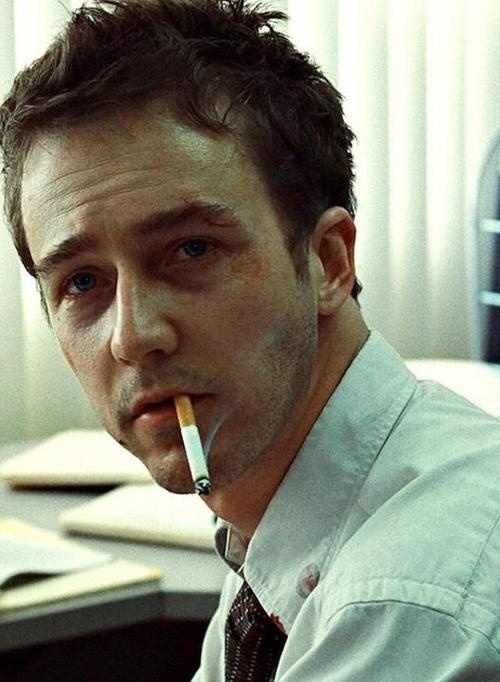

 

The first rule of Fight Club…

… is that you don’t talk about Fight Club!

5975176693cdc47d2491ad4662aa8816
My year started with a bang. In fact, a bang to my face. In JiuJitsu class I was sparring with a beginner. As is often the case with white belts in BJJ they do unexpected things to get out of controlling positions. He did an explosive movement, trying to throw his legs over his head. You have to admire the ambition, but unfortunately, all it achieved was that he kneed me in the face, right below my eye. It didn’t hurt that much, and there was no black eye when I went to bed that night, but when I woke up the next morning I had a proper shiner.

The reaction of my wife was “you get no sympathy from me!”, with eyes to heaven.

The reaction of my JiuJitsu coach was “nice black eye!”, with a smile.

The reaction of work colleagues is a shocked “Ooh! what happened?!?!”, with concern.

I usually reply to the last one with “Well, the first rule of fight club is…” which puts them at ease. Then I have to explain that it was just an accident in training and no, I haven’t been in a fight, or mugged. It’s “ok”.

Because, well, it is. If you practice a martial art that has resistant sparring as a training method then getting the occasional black eye is just par for the course. You don’t think much of it yourself, or you are secretly proud, as it can be a badge of honour at your club. It’s other people’s reactions to it that are more interesting.

Anyway, now I’ve introduced some BJJ onto my blog my next post will be about the similarities between Tai Chi and BJJ, which is quite an interesting topic.

The top 30 martial arts blogs

We’ve been noticed…

BMA-top30Blogs-badge-180x180px

Good news! The Tai Chi Notebook has been picked as one of the top 30 martial arts blogs by bookmartialarts.com

It’s worth a look at the full listing because it has links to the other 29 martial arts blogs, which you might want to check out. I certainly discovered some great new ones there, along with some old favourites.

Thank you BookMartialArts, I’m honoured to be included amongst such great talent. I guess I better up my game now!

(How to) Move from the centre

Let’s get this thing moving!

solar-system-fully-animated-1-728


It’s pretty well established now that you need to ‘move from the centre’ in Tai Chi – (or ‘center’ if you’re American). But what is the centre?

In the ‘internal’ model of moving the body in Chinese martial arts, the centre is expressed as the ‘Dan Tien’, the point roughly an inch below the navel and 2 inches in from the surface. This is where you put your mental focus to move your body from. So, rather than the arm movements coming from the shoulders they come from the torso, which is turned by moving the waist, which is, in turn, powered by moving the dantien. So it all works together, but with the movement coming from the dantien.

The problem with moving from the centre like this is that you can do it roughly correctly and your movements will still be flat (for want of a better word) and lacking power. Sadly, most of the Tai Chi you see demonstrated is like this. I could post a video, but it would seem like picking on somebody, so I won’t – but just search YouTube for Tai Chi videos and ask yourself if they look powerful or not. It’s far too easy to have the dantien ‘floating’ on top of the hips, so that the legs are just propping it up, rather than being involved. To make the movements truly powerful you need to get the legs involved.

As it says in the classics, the jin (power) should be…

“rooted in the feet,
generated from the legs,
controlled by the waist, and
manifested through the fingers.”
If you imagine a triangle drawn from the two feet up to the dantien, that’s the power source of Tai Chi. So, as the dantien turns, so the legs need to spiral in and out to help support the movement and transfer this spiral force to the rest of the body.

Chen Xiao Wang explains it very well in this video. After talking about the legs and rotating dantien he goes on to talk a lot about Qi and Yin and Yang, which can be confusing, but just concentrate on what he says at the start for now about the legs working with the dantien to power the arms.

Of course, there’s more to it, which he goes on to discuss, but that’s for another time.

A really nice Tai Chi warm-up routine

Something to get the chi flowing

If you’re looking for some new warm ups to practice before Tai Chi then here Chen Zhenglei demonstrates some really nice ones. Notice that he’s using his whole body, including the dantien and legs to do each one, even the first one which looks like it’s only about the wrists. So, as well as being a good warm up for the joints, which must be free of tension, they’re also a good way to practice whole body movement.


The three word formulae for effortless power: “Grab. My. Wrist.”

If they say this, run!

I just saw another one of those ‘secret to internal power’-type videos online. In fact, I tell I lie. I didn’t actually watch it. You see, I just couldn’t bring myself to click play because the video thumbnail was a guy being uprooted while holding the wrist of another guy who was looking all ‘effortless’. That was enough to put me off.

The formulae for effortless power is actually very easy, I joked to myself, it’s three words “grab my wrist”. That’s it! To be honest, it’s pretty darn easy to manipulate anybody who does you the favour of grabbing your wrist and isn’t being too resistive. Of course, what doesn’t work is when they go all limp. To prove your incredible internal power you need to move people around, so a bit of resistance (but not too much: “hey, just relax!”) is required and then all you have to do is just punt them in the general direction you want to go – up, down, forward or backward – any hey presto they follow.

I’m not saying there’s no value in doing things from a wrist grab – it provides a low level of resistance to work with, sure. But I’m tired of seeing people use it as demonstration of anything ‘good’. If you want to show me your incredible internal power in use then do it against somebody throwing some genuine shots at your head or body. It would also be nice if, as a martial arts teacher, you didn’t look severely overweight. But hey, I know you can’t have everything.

I’ll leave you with this little gem from Napolean Dynamite. Rex Kwan Do. “Grab my arm. NO! MY other arm.”. Ah, we’ve all been there. 🙂

Chinese martial artists “disgust” with MMA

Very interesting post over at internalmma blog about a particular view that I’ve also come across from Chinese Martial Artists. The idea that MMA is somehow disgusting.

“I know that there is a stigma amongst the Chinese who train in their martial arts that ground fighting is what dogs do, and you don’t want to be a dog (I have had Chinese friends tell me personally that they think MMA fighters are beasts/animals and not even human).”

Usually there’s also a whole load of “gay” jokes thrown in as well. Let’s be honest, there is something a little bit homoerotic about two shirtless sweaty men wrestling each other in positions usually associated with sex, but it only appears that way to an outsider who doesn’t understand the game. Grab a roll with a BJJ blue belt and you’ll be too busy worrying about staying alive to give a second though to any of that. Even rolling with a female, if you’re a straight male, (or vice versa) isn’t awkward at all, once you get used to it, which can happen in a matter of minutes – it’s all about the art, and you simply don’t think about anything else.

Anyway, Check out the full blog:

As old as I want to be 


Saw a great quote about Tai Chi today that I’d like to paraphrase.

Taijiquan, at least originally, was created as a discipline for self-perfection, long life, happiness and found its ‘application’ as a martial art – it contained teachings from previous Taoist practices.

I think that’s pretty good because it acknowledges that tai chi was never just a martial art, which explains the wacky applications you see doing the rounds, and also acknowledges that it isn’t ancient itself, but contains practices within it that might be.

More Taiji fakery

Oh, why do they do this?

Who is ready for some more depressing news about martial arts and China? I bet you are. Anyway, here’s the latest in a long line of Taiji magic tricks that don’t fool anybody:

“We’re challenging these Thais to a match in the spring, I need to show these fighters to my master in Henan,” explained Chen Jia. “It’s going to be televised all over China.”

This is the story of how a Taiji group organised a challenge match against a group of pro Thai boxers. Original article here:

http://fightland.vice.com/blog/taiji-vs-muay-thai-the-fight-i-put-a-stop-to

If you know anything about Thai Boxers then you know that this would be the equivalent of a group of school children challenging a Special Forces unit to a gun battle. The author, realising this, tries to stop it going ahead, thinks he has, but at the end of the article it says the fight went ahead anyway, and the Taiji guys won 3-2, with no further explanation. Winning 3 to 2 sounds amazingly good for the Taiji guys, especially considering who they were fighting.

But then another article appeared recently with a further explanation:

http://thelastmasters.com/taiji-vs-muay-thai/

“So I got the links and watched the fights. Sadly, this “match-up” was exactly what everyone says fights in China are like. The fights were rigged – Chinese fighters wore black pants to hide shinguards, referee saved Chinese fighters from anything more than a 3-punch combo, Thai guys were paid to take a fall.”

I’m not surprised at all, this is the way everything seems to be done in China. It’s such a continual disappointment, and another reason why the Chinese Martial Arts are in such a poor state.

“A girl atop Huashan outside of Xi’an told me once that “fakery is a part of our Chinese culture,” and she said it with a measure of pride. The trickster has always been a hero in Chinese culture, and held above the great warriors who must eventually sacrifice themselves for either cause or country, while the schemer survives. That tradition, combined with a half-century of non-stop brutal lies and another three decades of desperate money mongering, has reached its most bloated moment.

I don’t think the moment can last forever, and I believe a cleansing of the martial arts will hasten the end of a century of lying.”

I’m not so optimistic, I think it will just continue like this forever until there is a change of government in China and an explosion of democracy. Until then we’re going to get stuff like this on Chinese TV. I wonder if the Chinese people know it’s fake, or not? Sigh.