Ruby Wax – Frazzled, live

A Tai Chi teacher reviews Ruby Wax’s latest show

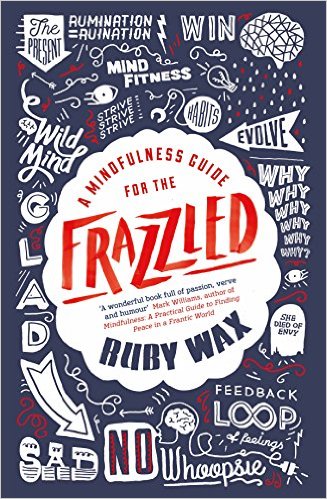
My wife and I went to see Ruby Wax doing a promotional tour for her new book, A Mindfulness Guide for the Frazzled.
618sgp7zy3l-_sx325_bo1204203200_

After her previous life as a TV personality ended up with her crashing and burning into a breakdown and rehab, Ruby looked to science to provide the answers to depression and found them in mindfulness, which seemed to be one of the few alternative therapies that showed real scientific results of success. She got a masters degree in Mindfulness Based Cognitive Therapy from Oxford University and went on to write Sane New World about her experiences, and got an OBE for her efforts to remove the stigma that surrounds mental illness, and have it accepted as an illness, just like any other. I have not (so far) suffered from a mental illness, so I did feel like a bit of a fraud sitting amongst the audience, but I have meditated and felt the benefits of doing so, so I was interested in seeing her show. Tai Chi, after all, is a mindfulness-based practice, but more of that later.

Firstly, the show was at the Playhouse in Weston-super-mare, which is a seaside town, so you’re probably conjuring up images of sunny Brighton in your head. Stop. It’s not like that. When he heard I was going to Weston at the weekend one of my friends said – “I really like Weston because it can’t get any worse. It’s kind of at the bottom, and doesn’t pretend to be anything its not.” That’s about it, really. The beach is very long and sandy, and there are lots of shops that sell seaside tat, like candy floss, sticks of rock and buckets and spades. There’s also a lot of drinking. By 5.00pm in the evening on a sunny but cold April day several packs of bald, intimidating, tattooed men and shouty, even more intimidating, drunken women were trawling up and down the strip looking for the next table to land on to keep the party going. Occasionally two packs would meet, and the outcome would be pretty horrendous.

In the midst of all these people blatantly doing their best to drink themselves into oblivion and escape from reality, we were going on a talk on mindfulness, which is blatantly an attempt to return to it.

The show itself took the form of a question and answer first half, where Ruby was ‘interviewed’ by her friend (whose name I can’t remember, but she used to be in Grange Hill when she was 14) who asks her a series of clearly prepared questions about mindfulness that she answers in an entertaining way while trying to make it not look like these are rehearsed answers. We all play along, because that’s what you do. There was a little bit of audience participation where she’d get us to discover our senses by clapping our hands, or sniffing the scented flier she’d thoughtfully left on each seat.

In the interval she signed books then returned to the stage for a second half where the audience got the chance to ask her questions. Interestingly, most of the questions revealed that the audience hadn’t really been paying attention to the first half, as everybody seemed to have a view on mindfulness which wasn’t exactly the same one that Ruby had. “That’s not really what I said…”, was a common refrain.

I think that’s often the problem with ‘mindfulness’ – it gets treated like any other ‘thing’ on offer to distract us from doing the hard work of coming back to face our lives as they actually are, which is what it’s really about. Instead we want another book to read, another movie to watch, or another phone to check. Everybody already has an idea of what mindfulness means to them, and it’s going to take a lot of mindfulness to change it.

Anyway, Ruby disappeared off into the Weston night, and so did we, which was utterly terrifying as by the time we left the theatre the walking dead were out in full force, tottering from pavement to road and back again, and then into a bush to be sick. There wasn’t a police man in sight. They’d either given up on Weston and abandoned it to the shadows, or they were all too scared to come out of the police station. We scampered back to our hotel and hid in our hotel room until the shouting and screaming stopped, then we could sleep.

I did enjoy Ruby’s show. It wasn’t anything amazing. Nothing extraordinary happened but, as she repeatedly said, a life without highs and lows, where you just maintain an active presence is really our best hope of being sane and healthy. The mindfulness practice she introduced, where you focus on your senses, and just keep coming back to them instead of letting your thoughts steal ‘you’ away and keep you captive, reminded me a lot of Tai Chi. This is what Tai Chi practice is – if you let yourself float away in your thoughts while doing the form then you lose half the benefit of practicing Tai Chi. You need to be in your body, feeling its movements, aware of its fluctuations and shifts. When you get caught up in your thoughts about Tai Chi you stop doing Tai Chi, so you need to keep coming back to the body.

It says in chapter 3 of the Tao Te Ching (an ancient book of Chinese wisdom, which has influenced Tai Chi)

“Therefore the sage, in the exercise of his government, empties
their minds, fills their bellies, weakens their wills, and strengthens
their bones.”

Again, it’s the idea of getting out of your head, and into your body, if you want to successfully govern yourself.

I imagine a lot of Buddhists and Taoists have their nose put out of joint by the popularity of mindfulness, which has essentially taken the core bit of their practice and stripped out the religious elements into a kind of Buddhism-Light. But so what? If it works, do it.

Anyway, I bought her book. I’m sure it will distract me for long enough until there’s another one on mindfulness for me to buy. Or I might even sit down, shut up and practice it. Let’s see what happens.

King of swords – was the katana the ultimate weapon?

It might be time to rethink what we know about ancient swords.

47-ronin-samurai-warrior-1152x864
I was having a discussion recently with a friend of mine who does Iaido. He’s working towards his first dan grade, which will take him about 18 months. The first kata, kneeling, has two cuts in total but there are (apparently) 140 mistakes you can make from start to finish. Seriously, what’s up with that? Personally, I would struggle to get excited about spending 18 months learning to use a sword that precisely. I mean, you could get a blue belt in Brazilian JiuJitsu in that time!

It doesn’t seem to really be about fighting with the sword, either, leaving that to Kendo to worry about. Of course, they do some two person ritualised combat stuff, but mainly they just spend their time trying to look Japanese, mysterious and spiritual, while cutting the air. People criticise kung fu for its “too deadly for the ring” mentality, yet Iaido, with its ritual drawing and cutting into the air, takes this further into “too deadly even for the training hall!” territory.

OK, I’m being facetious – doing the cuts in that video requires a lot of skill, but personally I’d rather be learning practical skills like how to really fight with a sword, not cut up tatami omote. Other people seem to love these things and that’s ok, one man’s meat is another man’s poison, as they say.

Inevitably talk of Iaido leads to discussion of the katana. The popular narrative, that the Katana is the king of all swords – the ultimate weapon – runs deep. From films like Kill Bill (A Hanzo sword!) to the Katana-wielding Michonne in The Walking Dead, we all know that if you want the ultimate sword, you need to go to Japan to get it. However, I’ve found that the more you look into Asian martial arts, the more the solid ground becomes quicksand, and the more the real becomes the unreal. The idea we have of the katana being the ultimate sword lies with the modern recreation of the samurai, the most fearsome warriors ever to walk the face of the earth, and bushido, the strict martial code they lived by.

These concepts and images permeate so many aspects of our culture, however, the truth is that much of Japanese history surrounding the samurai was re-written in the late 1800’s (by government decree) in order to bolster Japan’s own importance.

In his book “Inventing the way of the Samurai” Oleg Benesch writes of bushido, the strict moral code of the samurai:

“Rather than a continuation of ancient traditions, however, bushidō developed from a search for identity during Japan’s modernization in the late nineteenth century. The former samurai class were widely viewed as a relic of a bygone age in the 1880s, and the first significant discussions of bushidō at the end of the decade were strongly influenced by contemporary European ideals of gentlemen and chivalry.”

The book is expensive, but the dissertation on which it was based can be read for free online.

But it wasn’t just the Japanese who were romanticising and recreating their past – Europeans had a hand in it too. There has long been a western fascination with all things oriental, but this really took hold after the Russo-Japanese War (1904-1905).

“According to accounts of the time, the Japanese were using their swords during that conflict with surprising effectiveness. It was for a simple reason: every other nations were letting go of the sword as a weapon of war (and rightly so), but the Japanese were still training their men in fencing with a lot more energy. So of course when the Russians and Japanese met on the battlefield for duels (and some of them were recorded) the Japanese often won. It left an enduring image in the public’s consciousness as these stories got reprinted all over the Western world.” – Maxime Chouinard, posting in Martial Arts Studies group

We’re used to seeing documentaries that extoll the virtues of the Katana, like this one from NOVA:

In the description it says: “English archers had their longbows, Old West sheriffs had their six-guns, but samurai warriors had the most fearsome weapon of all: the razor-sharp, unsurpassed technology of the katana, or samurai sword.”

(Incidentally, I often wonder how much this idea of “unsurpassed technology” is again a modern construct, based on Japan’s status in the 1990s as the world leader in technology. It seemed like every cool piece of technology in that era came out of Japan, from cars and video games to Walkmans. This is just speculation on my part, but I think this is a reputation that Japan has never truly shaken off, and is often used to backfill history.)

But was the katana really that much more technologically advanced than European blades of the time? Not everybody thinks so.

From the Dimicator website: “Medieval European swords … were hi-tech weapons of their time, masterly crafted and mechanically superior even to the famed samurai swords… European blades flex back to straightness when bent.”

It would appear that, as with all tools, swords were primarily designed for the particular problems the users had to overcome. Medieval European blades tended to be designed for, and used, on the battlefield. The katana, in contrast, was introduced at a time of relative peace, and was used mainly for ritualised duelling. It was criticised for being ineffective on the battlefield, and the two person sequences were referred to as “flower swordsmanship”.

The katana is defined by having a curved blade. Indeed, curved blades are inherently stronger and easier to cut with than straight ones, but clearly the ideal design for a thrusting blade is straight, as most European blades were, indicating that the katana was more for slashing and cutting with than thrusting. This has often lead people to believe that the Kata was developed for fighting from horseback, however this idea has been refuted. There is also an academic paper by Michael Wert, “The Military Mirror of Kai: Swordsmanship and a Medieval Text in Early Modern Japan“, which observes that the Samurai’s main weapons were the lance and bow.

In terms of metallurgy, the European blades were every bit as sophisticated – they were just different types of swords, designed for a different purpose – often on the battlefield. Roland Warzecha from the Dimicator school comments:

“Katanas cannot flex because only the edge is hardened and the back is not. So when they are distorted to a particular degree, they either snap or remain bent. The distribution of high carbon steel and low carbon iron in a blade in order to make a sword both hard enough to keep an edge and cut but at the same time not too brittle to prevent breakage, is one of the true challenges with sword making, and their have been various solutions.

I think katanas are superb for the context they were made for. I am convinced that Japanese swordsmiths would have developed flexible swords if combat requirements had called for it. My theory is that it was the absence of shields in sword-fighting that is the reason, plus, because raw material was extremely limited, the sword remained an elite weapon, not available to most – unlike in post-1300 Europe.”

In terms of metallurgy, European blades were just as sophisticated, as this post on the Dimicator Facebook page reveals.

It’s looking like we may need to rethink our idea of the katana as the ultimate sword. The narrative that European blades were inferior to Japanese ones is slowly being rewritten.

Any sword is a series of compromises, and ultimately just a tool. Every tool has a purpose. Perhaps the real answer is that it’s not the sword that matters – it’s the person wielding it, and whether or not they have the skill to do so.

Lo and behold! Leandro Lo – the master of the BJJ guard pass


Breaking down the floating guard pass game

Despite being young, Leandro Lo is already a legend in the sport of BJJ, and he’s only just getting started. Training out of the same gym as the Myao brothers in Brazil, Lo has been winning major comps for a few years now, moving up in weight while doing so. He won this year’s Pan Ams against Romulo at medium heavy. His matches are always exciting to watch, as his style is characterised by frenetic guard passing and what appear to be plenty of mad scrambles.


Read the rest of this post at my new blog… BJJ Notebook


The Iceman cometh

Ancient Yogic breathing techniques make a return to the UFC

wimhof-face

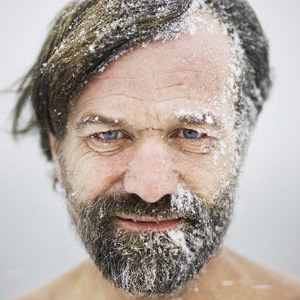
You might not have heard of Wim Hof, but he’s been creating a big buzz in certain circles and has gained the name “The Iceman” for his incredible acts of endurance and ability to withstand extreme cold using a breathing technique he calls Innerfire. He even climbed Everest in a pair of shorts.  Watch this video to get an idea of what he’s about:

With the MMA world latching on to the new trend in ‘movement‘, it wasn’t going to be long before somebody noticed that Wim’s breathing methods and extraordinary abilities might be quite useful for fighting as well. I just wasn’t expecting it to be UFC title contender Alister Overeem that lead the way.

Overeem has had a chequered history since joining the UFC. There are allegations of juicing in his past, and he failed to live up to his potential in a number of fights. But then I remember being really impressed by his last performance in UFC on FOX 17 in December 2015 when he completely destroyed the always dangerous Junior Dos Santos, ending a dominant fight with a 2nd round KO. I remember thinking at the time that something had changed about Overeem. The arrogance that lost him his bout against Bigfoot Silva in 2014 was gone. Instead he seemed calm, composed and very focussed. Something had changed, and now I know why. He was training Wim Hof’s breathing methods, as this video shows. You can see Overeem doing push ups with breath control and even submerging himself in some very cold water for over 2 minutes.

Highlights from Overeem vs Dos Santos:

Here’s Wim explaining his method himself:

And here he is explaining it to Joe Rogan:

You can’t argue with Overeem’s impressive results, and as he says, breathing is one of the most important things to any fighter, regardless of the sport they’re in. I can see immediately how this level of breathing control and the improved cardio it promises could improve my BJJ, since once you gas, that’s it, you’re done, no matter how much skill you have.

I think I’m going to do more research into Wim and maybe try his methods. There’s even an iPhone app for Innerfire. I’ll keep you updated.

Jiu-jitsu with no mats

That’s gonna hurt in the morning

Seeing Jiu-Jitsu throws done  without mats reminds you how much that would hurt if the person didn’t know how to land properly, or it was done on concrete. The above video shows some excellent technique demonstrated in the sort of throws we train in BJJ. It’s on a sprung wooden floor, but still, that’s going to hurt.

Before he started Tai Chi my Tai Chi teacher trained like this in a traditional Japanese system of Jiu-Jitsu back in the 1970s. They didn’t use mats – they just had a wooden floor. These days we’ve realised what the negative long term effects of this sort of training are, and we use mats, but it’s good to see somebody demonstrating it. I’m just glad it’s not me!

Marcelo Garcia vs Rafael Lovato Jr breakdown pt.1

Marcelo Garcia rolling with Rafael Lovato Jnr is all sorts of fun

Everybody in BJJ who knows anything has heard of both Marcelo Garcia and Rafael Lovato Jr, so to have a clip of them both rolling in Marcelo’s Academy is a fantastic learning opportunity. They’re both legends in the sport, with Marcelo having 4 ADCC titles and 5 word titles to his name. Rafael Lovato Jr is one of the most successful US competitors and currently 2 and 0 in MMA.

Currently on a break from competition, Marcelo is often referred to as the greatest grappler of all time. If you’re not familiar with Marcelo then check out this documentary video by Stuart Cooper, in which he talks about his life:


To read the rest of this post see my new blog… BJJ Notebook

5 unmissable martial arts videos this week

The Joe Rogan Experience – Mark Sisson

Mark Sisson is a fitness author and blogger, and a former distance runner, triathlete and Ironman competitor. His latest book “Primal Endurance” is available now via Amazon. If you’re interested in nutrition, then watch this.

Ido Portal – A Moving Conversation – PART 1/2 | London Real

Master of ‘movement’, Ido Portal talks about his holistic approach to exercise and training UFC champion Connor McGregor:

Discovery Channel Dragon Girls Martial Arts School Documentary 2015

The documentary “Drachenmädchen” (Dragon Girls) tells the story of three Chinese girls, training to become Kung Fu fighters, far away from their families at the Shaolin Tagou Kung Fu School, located right next to the Shaolin Monastery in China, place of origin of Kung Fu. Three girls in a crowd of 27.000 children, under pressure to conform to the norms and structures: They are turned into fighting robots and yet, if you look behind the curtain, you see children with dreams and aspirations:

Did Sage Northcutt Tap Too Quickly??? PLUS the “Gogo Choke” (Gracie Breakdown)

Renner Gracie breaks down Sage Northcutt first loss in the UFC, Rener points out some critical details about the choke that will make you reconsider whether or not he tapped too quickly. Additionally, he discusses Ben Rothwell’s “Gogo Choke” that led to Josh Barnett’s first (legitimate) submission loss in MMA.

Scott Glenn

Watch veteran actor Scott Glenn, 75, Take You Through His Knife-Fighting Workout
http://www.gq.com/story/scott-glenn-knife-workout

Tai Chi Notebook video round-up: 27/1/16

The best martial arts videos posted in the last week from the world of Tai Chi and beyond…

Xing Yi Quan Snake vs. The Jab – Moving into grappling range (Hsing I Chuan)
By Xing Yi Academy

The Science Of Mental Toughness – Firas Zahabi on Inside Quest
By Tristar Gym

Popular Bagua master, He Jing-Han has a new video showing arm rotations:

The #1 Mistake Made by Martial Arts Instructors
By Gracie Breakdown:

Sword & Buckler Fencing with Sharp Swords
by Dimicator

How to Defend Against the Backstep Guard Pass by Roberto ‘Gordo ‘Correa
By Stephan Kesting

We have a Facebook group

fb-art

You may have noticed that I’m ramping up the features on the blog – we now have shareable buttons at the end of each story, so you can share it on social media, or email it to a friend.

I’ve also added a new page on Finding a Tai Chi class, which links to the excellent Tai Chi Finder website, and answers a question I frequently get asked.

I’ve also created aTai Chi Notebook Facebook Page. If you want to be notified of new posts on this blog then I suggest ‘liking’ the Facebook page is a good idea, as they will then automatically appear in your newsfeed.

One of the consequences of adding  a Facebook Page was that some older blog posts get rediscovered. Last week my blog post on The Tai Chi Magician proved very popular once again thanks to a link back from my friend and skilled Tai Chi practitioner Scott at Tabby Cat blog and MERGE Facebook group (closed).

We also have a Twitter account.

Onwards!