Observable benefits and skills

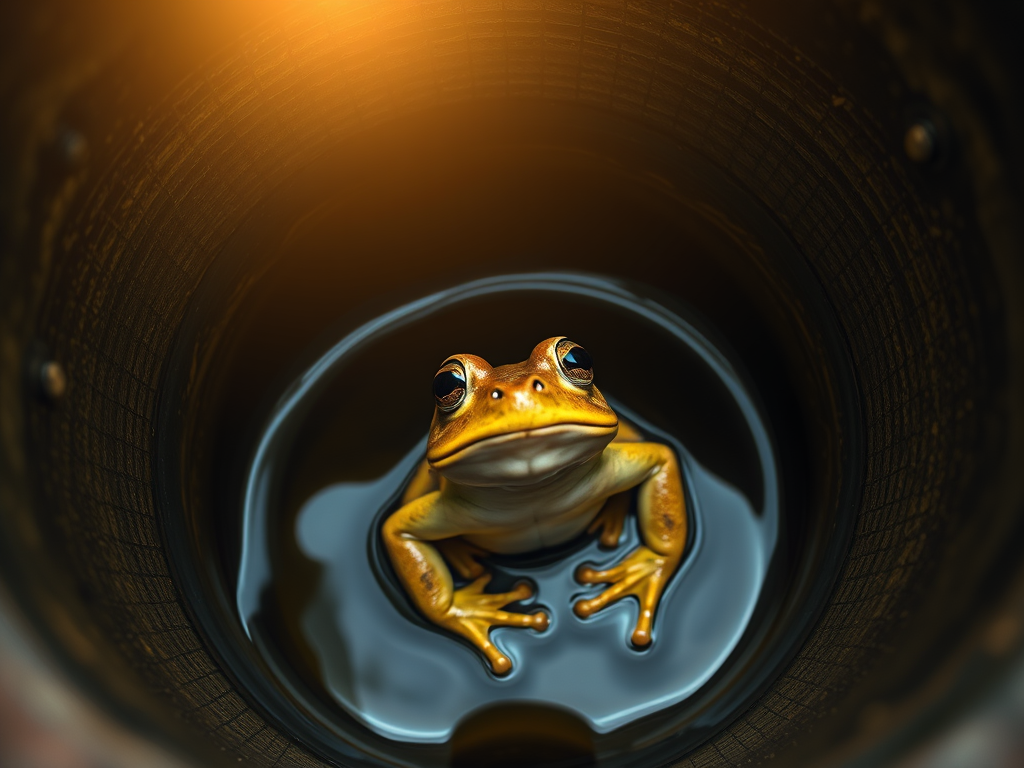
A frog in a well, looking up at the sky

Something I read today was, “training material in my personal practice only includes the methods which have always consistently produced observable benefits and skills. Anything which hasn’t done so in a trial period of regular practice is eliminated and abandoned. I don’t have time for anything which doesn’t give a good return on the investment of time and effort to practice.”

That’s an interesting point of view, and seems logical and rational. It seems very in-line with modern efficiency-based exercise or martial arts thinking. I just don’t think it’s a realistic approach to studying the internal arts or qigong in any depth.

I remember talking to Simon Cox who trained for years at Wudang mountain in one of my podcasts and (I’m going by my failing memory here) he said something like his teacher asking them to do meditation for a few years, with barely minimal instructions, then just leaving them to it. Forget “a good return on investment”, you were just expected to do it, without any hope of a result.

I’ve often heard people say things like, “A year is not a long time in qigong practice”.

And from my own experience, I can say with confidence that you do need to practice without “observable benefits and skills” for a long, long time.

Most people simply stop, and therefore never get anywhere. They stay scratching the surface, thinking that they are deep into their practice.

Once again, I’m reminded about Zhuāng Zǐ’s Frog in a Well story.

But what do you think? Let me know in the comments below.

How we made Brazilian Jiu-Jitsu: The Ultimate Illustrated Guidebook


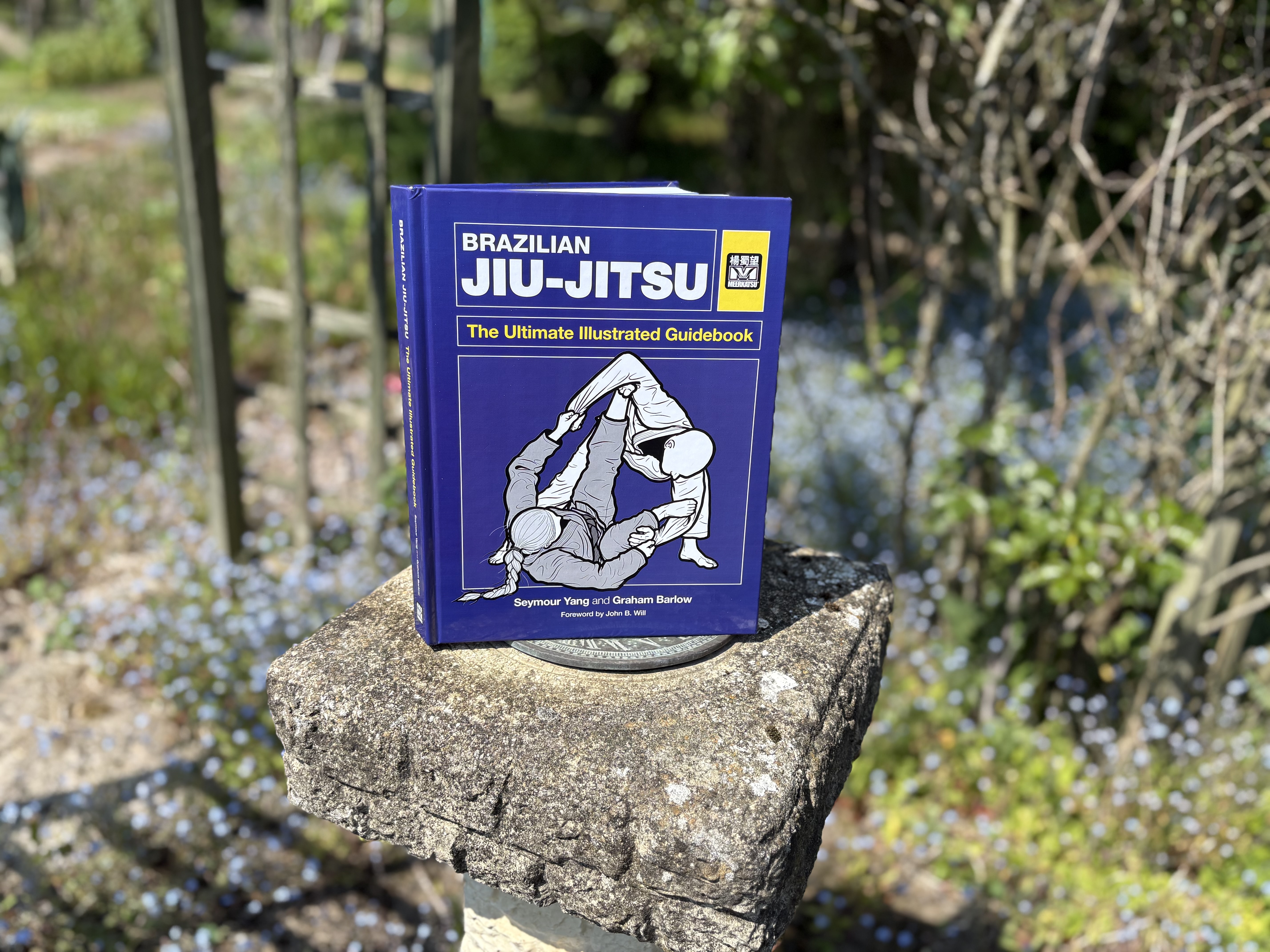
I wanted to share the process and journey of how Seymour Yang and I made our new Brazilian Jiu-Jitsu book.

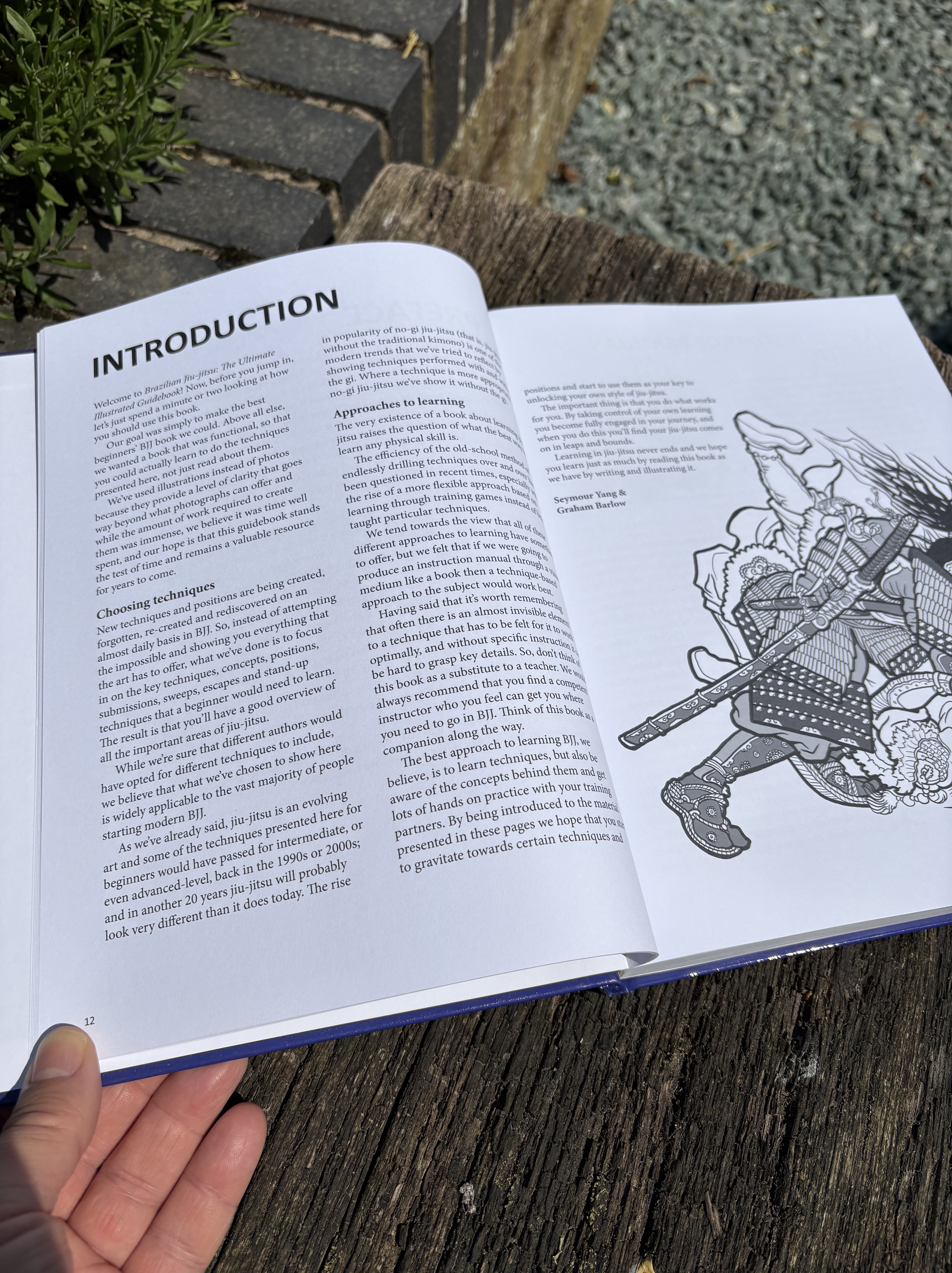
First of all it’s worth noting we are both black belt instructors with many years of teaching experience. The book is aimed at beginners to developing white and blue belts and covers everything we felt was useful and relevant in today’s Jiu-jitsu club environment.

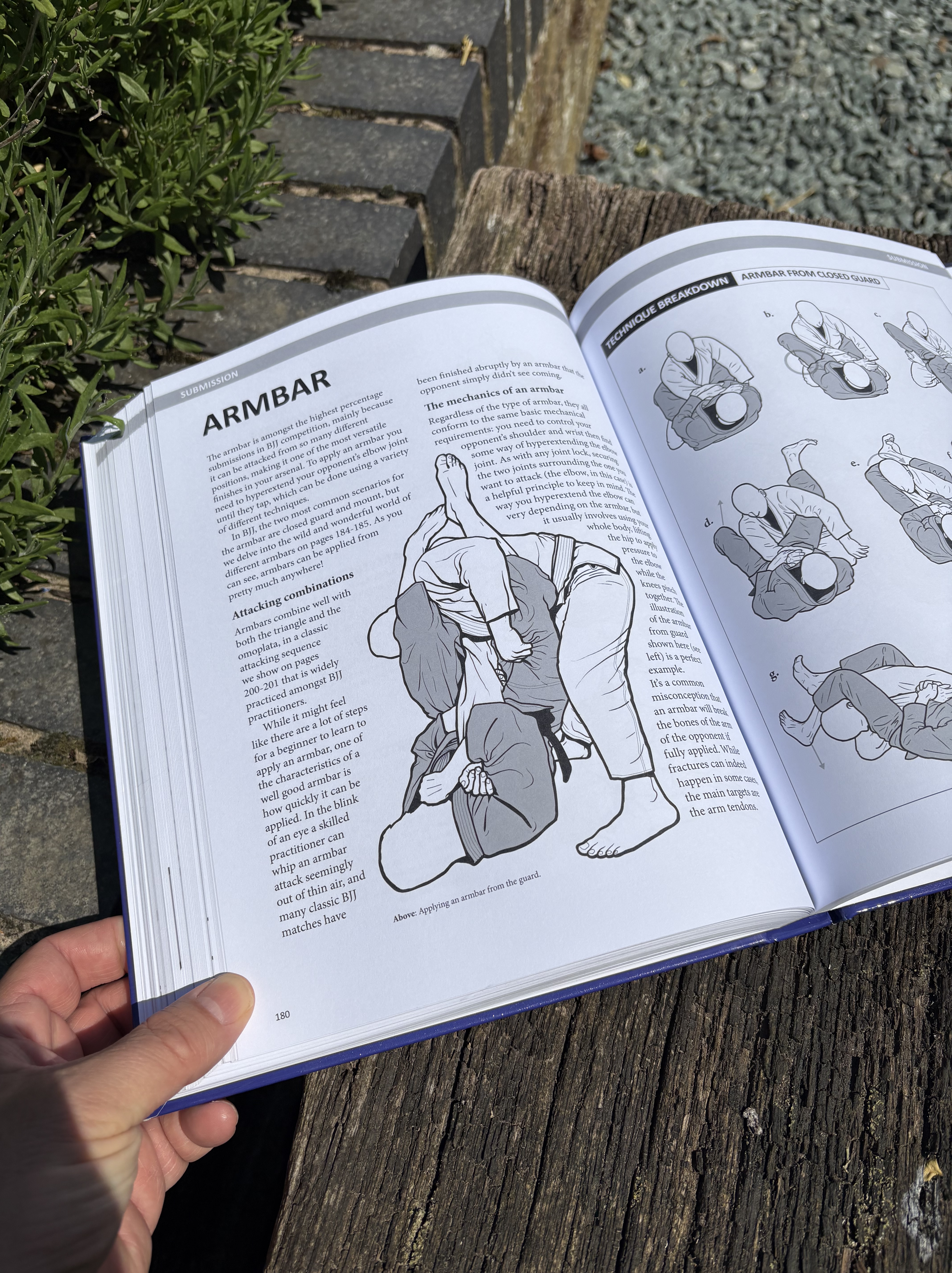
After much time planning and researching we then set about creating the contents. Every illustration is based on a photograph or video still that we took of our students or training partners. These stills Seymour used as references to hand draw the line art images. I then wrote the text.


That was just the beginning. The hardest stage was making sure the book was as accurate and tight as possible as a work of reference. For this we spent a long time proofing, editing and redesigning it. We then tested sample after sample from independent book printing companies to find the best one (we did not want to go the Amazon print on demand route)

I’m proud to say the book is finally available for our followers to buy (as a pre-order) and so far it’s proving very popular.

We decided to make it a pre-order as we just didn’t know quite how many to print in advance. A two week window was decided and after the pre-order window closes (June 11) we can then tell the print house how many to make.

If you want to know even more about how we made it then check out this informal 2 hour (2 hour!) video where we chat about making the book (it will be released in a more thoroughly edited audio-only version as an episode of my Tai Chi Notebook podcast shortly):

Want a free chapter from my new book, Brazilian Jiu-Jitsu – The Ultimate Illustrated Guidebook?

As some of you will be aware I’ve been working on a book about Brazilian Jiu-Jitsu for the last year, and well, that book – Brazilian Jiu-jitsu: The Ultimate Illustrated Guidebook – is finally finished, and will be available for pre-order very soon.

It’s a collaborative project with renowned illustrator and author Seymour Yang who goes by the brand name Meerkatsu, and is famous for his BJJ-themed illustrations, which are used in all sorts of BJJ clothing products like rash guards and gis.

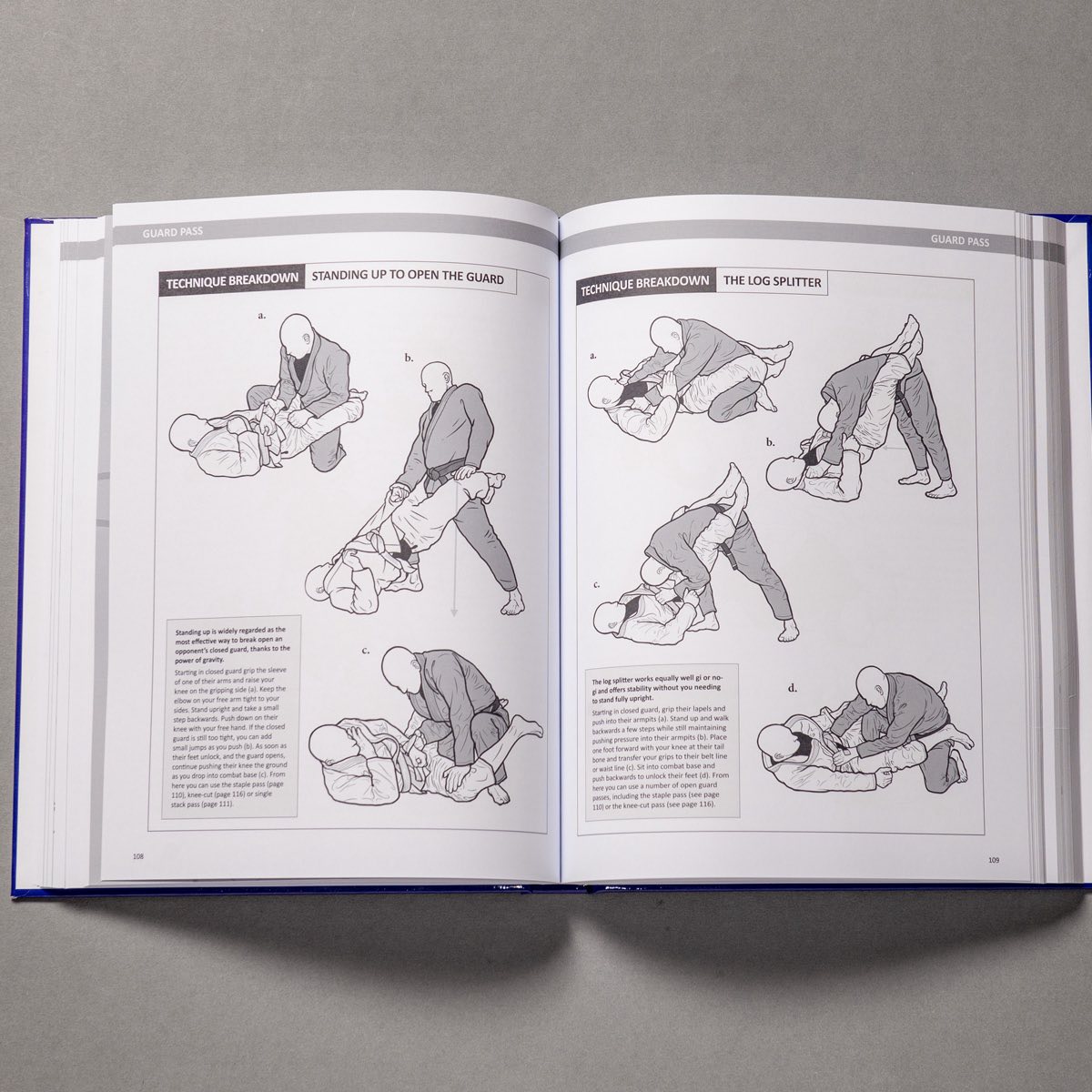
The book is a hefty hardback one-stop resource for everything a beginner, and even a more experienced person, needs to know about Brazilian jiu-jitsu. It contains over 260 pages containing over 970 hand-drawn illustrations that show each technique in detail. It covers all our favorite standup techniques, positions, different guards, guard passing, sweeps, submissions and escapes.

Get your free chapter!

Head over to meerkatsu.com, enter your email address into the popup box to sign up for the Meerkatsu newsletter and you’ll receive details on how to get your FREE chapter very soon.

Tai Chi basics: Rounding the kwa to make your tai chi form better

Paying attention to your inner thighs can bring better structure and a feeling of power to your tai chi form

If you’ve read my last post about keeping the knees bent during tai chi practice, and most importantly can do your whole tai chi form without violating this principle, then the kwa (inner thigh) is a good thing to focus on next.

Quite often in Zhan Zhuang chi kung standing practice we use the imagery of balloons supporting various parts of the body. You can imagine balloons supporting your arms, under your armpits and that you’re sitting on an imaginary beach ball. Balloons are soft but strong when pressured, so they’re a good image to help with the idea of staying relaxed and that feeling of springy peng (‘bounce’) energy that needs to be in the body during tai chi.

We don’t tend to use the supportive balloons imagery when explaining tai chi because it’s a moving practice, so the imaginary balloons would inevitably float off at some point! But you can still use the imagery in a couple of places – imaging balloons under the armpits and one held between your thighs that is gently pressing the knees outwards is a good place to start.

The kwa needs to be kept open at all times in tai chi practice.

One of the things beginners often fail at in Tai Chi is sufficiently rounding the kwa. By kwa I mean the area of the inner thigh and groin. I’ve been told that this area is more correctly called the dang in Chinese, but kwa/dang/whatever, I mean the arch formed by the inside of the thighs and containing the pelvic floor. As I’ve discussed before, beginners tend to want to straighten their legs, rising everything up in their stance, which has the effect of collapsing this kwa area, so that it effectively closes as the thighs move together.

In tai chi we always want to maintain the feeling that we’re holding a small balloon between the thighs so that this area is always rounded. Of course, there is opening and closing going on in tai chi all the time. As you progress through a move, one side of the kwa is opening and the other is closing, but regardless of any opening and closing movement that is going on, you need to keep a general feeling of openness in the whole area throughout the form. Even in postures where the feet are together. If you stand with your legs together, then that is considered a closed kwa, but in tai chi that area always has the feeling of being open – even when the legs are together.

You might find that last statement confusing, but it’s helpful to remember that in tai chi we are not performing an exact science, but we are dealing with feelings. The feeling of being open is what I’m talking about.

The last thing to mention is the why. Why do you need to do this? That’s where you need a teacher to give a demonstration of the application of tai chi against a simple push. With the kwa rounded you create a good base from which you can receive and launch attacks. When pushed, you can use that base the rounded kwa gives you to receive and then bounce away an attacker. If your kwa collapses when your upper body is pressured then you can’t do this without using a lot of effort and strength in the upper body. In tai chi this is wrong. Using your legs is always a better way.


Thank you for supporting The Tai Chi Notebook. If you are reading this on a website that isn’t thetaichinotebook.com, then it’s highly likely it’s been stolen. Please let me know so I can issue their webhost a DMCA takedown notice for copyright breach. Thanks. And if you have the great idea of starting a tai chi website by stealing other people’s work to fill it with content for clicks then take a good hard look at yourself, and do better.

Making an easier Tai Chi form

I’ve returned to teaching beginners recently and that’s left me with a problem: I need a simpler Tai Chi form to teach.

The main problem with beginners learning Tai Chi is remembering the movements. While this is all a distant memory for me, lost behind 30 years of practice, I can see that the struggle is real for them – where does this arm go? Where are my feet? What move is next?

Also, the complexity of movements is an issue. Moves involving kicks where you have to stand are a lot harder for people without any background in a sport or a martial art to do.

I also need a Tai Chi form that’s short enough that the end of it isn’t so far away as to be unattainable to beginners, but has enough content in it that there’s something of a work out going on.

So I came up with doing some modifications to the first section of our long form and running with that. Here it is:

I think this form has a good balance of everything – it’s long enough that there’s enough to learn and practice, plus the movements are relatively simple for beginners, with no complicated kicking or turning manoevers. But it’s not so long that it’s going to take months to get to the end of.

Once the form has been learned and the first 6 posture principles of Tai Chi adhered to:

  1. Suspend the head
  2. Centre the coccyx
  3. Round the shoulders
  4. Bend the elbows
  5. Hollow the chest/raise the back
  6. Bend the knees

…and a reasonable level of relaxation achieved, then they can work on principles, like arms following the body, not moving independently. A good way to work on this is through silk reeling exercise.

Of course, after beginners have reached a reasonable standard in this form, they can move on to the full Lam short form, which is more of a challenge. But I suspect that for a lot of people, this little form will be enough.

I also updated my Tai Chi teaching website with a new name Slouching Tiger. Check it out.

Image credit: eberhard grossgasteiger

Criticising solo forms – again

In this post I want to ask a question. I’m going to give an answer too, so the question is slightly rhetorical, but I think it needs to be asked.

“Why do internal martial artists spend so much of their time criticising each other’s solo forms?”

Let’s break this down – firstly, is this statement true?

I’ll give you one recent example to act as a poof of the statement:

As somebody who has been involved in discussing internal martial arts on the Internet since around the year 2000 I can attest that this happens all the time. In fact, I would say that it’s the majority of the discussion is of this nature.

You don’t need to watch the whole video. It’s long, boring, petty and doesn’t display a particularly high level of etiquette or skill.

It’s essentially one Chinese martial artist ciricising another Chinese martial artists for the same thing over and over, which is sticking his elbow out a bit too much. I know! The horror!

Ok, he probably has a point, but you could easily turn this around and criticise all the mistakes that the tall skinny guy is making too.

The question I have is why did he make this? Why must internal arts people spend all their time criticising each other’s solo forms?

Look at other martial arts – especially the ones that have a sporting side. They don’t tend to do this. MMA people do not do this,

With internal arts it’s an endless debate on degree of uprightness, too much or not enough opening of the kua, level of relaxation, sinking enough or not enough, degree of the knee flextion, etc. The list goes on…

But ok, here’s my caveat. Internal arts are obsessed over these details because they matter. The amount of opening and closing of your kua dictates the amount of power you can produce, and the quality of your movements. The position of your elbow has a direct connection to whether you can produce whole body power or not.

But nobody has the same set of rules that these things are being judged by. In theory, there should be a standard set of rules, but in reality, different styles do things in different ways, and always will. I’m more inclined to think that obsessing over details of solo forms is a bit of a trait of internal arts and less valuable than seeing what a practitioner can do in application/sparring.

The language of internal arts is also based on the same ideas. People go to their Tai Chi teacher to get corrected. The language itself is kind of negative. Nobody talks like this is in sports. You spend time with a good boxing coach and get improved.

But, what do you think?

Why you can’t learn Tai Chi from a book

woman holding newspaper while burning

Photo by Bruno Moretti on Pexels.com

I’ve been talking a lot about how to move from the dantien recently, and you might be wondering how easy this is to teach or do.

As it happens, I was trying to get a friend to understand how to do it today. I’ve been trying to get him to do this for a while actually (more than 2 years), but despite practicing diligently, he’s never really got it before. He’s got better at parts of it, but never the most important bit – moving from the dantien. It’s a very difficult thing to teach. You can describe it in words, but they’re open to misinterpretation. You can show them what you mean by doing it yourself, but its very hard to see unless you know what you’re looking for. You can even try and move their body for them in the right sort of way, but again, it’s not really the same thing as them doing it for themselves.

For some reason, today the penny dropped and he got it! You could almost see a light bulb appear above his head. The key seemed to be a combination of using the phrase “the arms trail behind the dantien” and trying a double-handed silk reeling exercise for the first time and watching me do it. For some reason, this time, it worked. It was a real Eureka! moment.

Of course, he can’t do it perfectly yet, but at least now I know he’s on the right track. He’s letting the pull of his dantien guide his arms. It sounds so simple, but it’s very hard to actually do. You can lead somebody to the gate as best you can, but they need to go through it themselves.

What was interesting was that with this new way of moving, he instantly felt muscles in his abdomen and lower back moving in ways they hadn’t done before. They were being worked. Instead of this area being ‘dead’ it was now full of movement. So much so that doing a Tai Chi form in this way was suddenly physically demanding. What had once been empty, floating movement was now full, rich and damned hard work. It was also mentally demanding. If he stopped paying attention, he stopped doing it.

His immediate observation was, “You can’t learn this from a book”.

Yes, he’s right. You can’t.

To learn Tai Chi you need to practice, under the guidance of somebody who has gone through that ‘move from the dantien’ gate. Once you’ve got through the gate it’s much easier to practice on your own, as that is the basis of everything that follows.

What you can find in books, like the Tai Chi Classic, which I recently produced a commentary on, only really makes sense once you’ve gone through the gate.

A lot of the requirements of Taijiquan that you find in writings are really external rules to encourage you to go through that gate. For instance, the rules about feet matching the hands, and knees the elbows, etc. These are all external requirements for dantien-driven movement. If you truly are moving from the dantien then your feet and hands will already be co-ordinated. Your knees and elbows will already be in harmony. All these rules will make sense. Before then there are still too many possibilities of going down blind alleys or faulty understanding.

In that sense, books and rules are useful in that they can help you stay on course, but they’re also a trap that you can get stuck in.

Tai Chi is also not an intellectual process. It’s a feeling. As human beings we tend to want to define everything and label it so we can think we understand it that way. Tai Chi isn’t like that. You need to do it, not think it.

I heard about a teacher once that used to confiscate any Tai Chi book that he saw on sight for the benefit of the student attempting to read it. He was probably right.

The non-shakers and movers of the XingYi world

Byron Jacobs just posted the latest in his excellent XingYi primers, this time on the last of the XingYi elements Heng Quan:


Byron got into a discussion on the XingYi Facebook group when asked when he was going to show “an advanced version with the “fajin” motions.”

His reply was so good I’m reposting the whole thing here, with his permission, as I feel the same way and he explained it very nicely:

A: these are Primer videos to get people to understand the basics in order to begin practice, so that’s their purpose, fundamentals. Maybe in future I’ll release some other ones with function and application etc. I would like you to clarify what your are asking for with “an advanced version with fajin motions”?

Q: the shaking motions in your strikes where penetrates internally?

A: A couple of things. Its a misunderstanding to think that Fajin means something like a specific method or something. It simply means to issue force. That is all it meant in the past, and that is all it means today. Its real meaning has been twisted and misunderstood, even more so in the west. In more recent times some strange focus on shaking has come into CMA which is not how things were and definitely this too has been twisted into something that it never was. The Xingyi classics never discuss “shaking” and in fact older generation teachers will admonish you for this telling you overtly shaking makes “power leak” from your target. An example is even quoted from Feng Zhiqiang talking about how Chen Fake taught them “While issuing power the body should be relaxed, but one should be very conscious about so-called “Shaking Power” (Dou Jin). This power has to be focused and not scattered all over the body. The more advanced one is, the smaller the shaking. When we were learning Taijiquan from Chen Fake shaking the body in Fa Li was the greatest taboo to be avoided.”

Good issuing of force is firstly dependent on the correct structure, then the correct method and finally using body mechanics to assist with generating optimal force. This is all covered in those basics, and its the long term practice of these key points I put in those videos that will enable you to develop strong issuing of force. Strong issuing of force penetrates

Staying rounded in Taijiquan

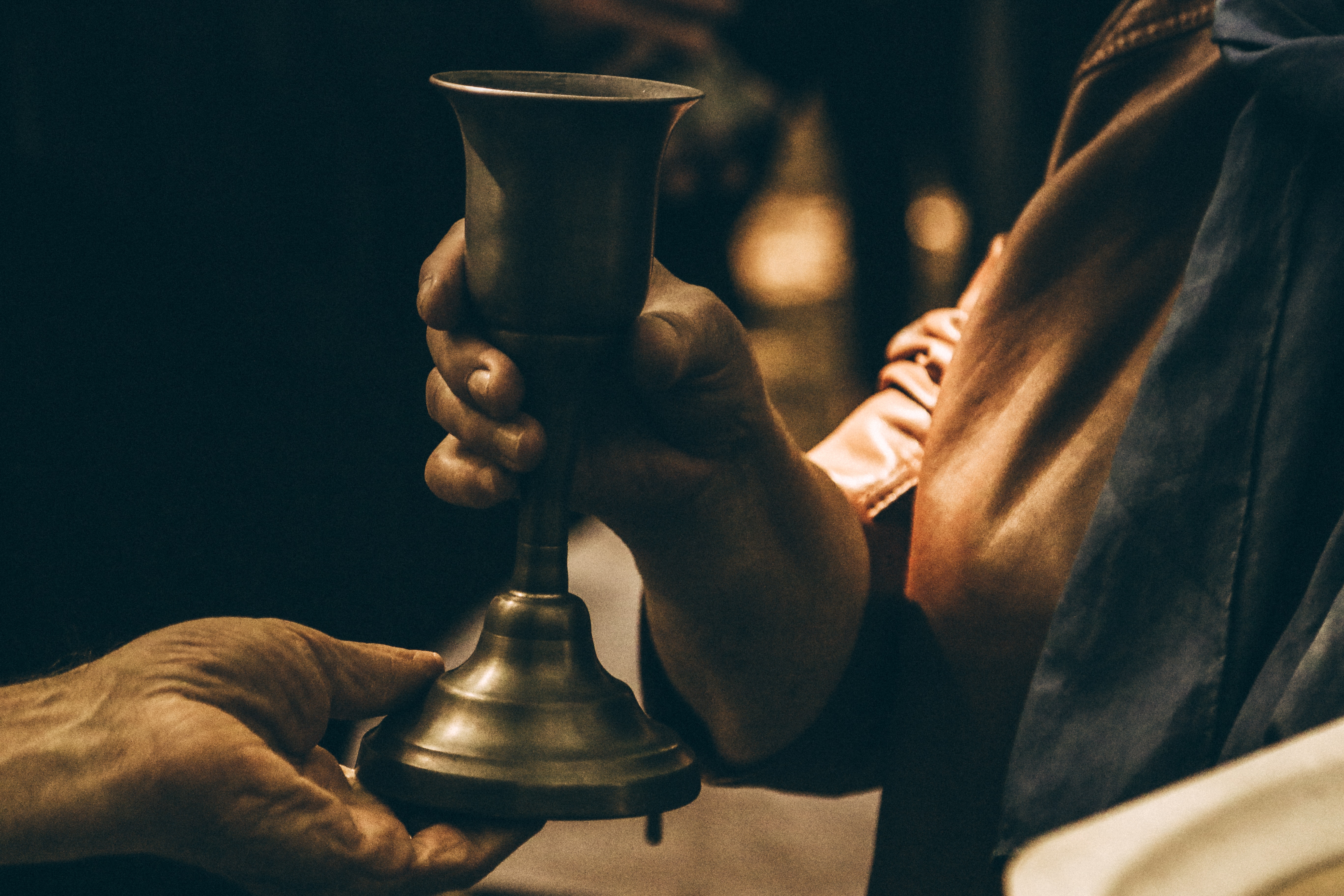
My Xing Yi teacher invented the word “chalicity” as an English equivalent of the Mongol phrase “Bak Tam Stay Saub”, which means (very roughly) “a bit like a capacious container”. So, chalicity means, “a bit like a chalice.”

A chalice, or a cup, is a rounded structure designed to contain a fluid with no leaks, and has parallels for both the mental aspect and physical aspect of a posture in the internal arts.

jametlene-reskp-21xmyDjZPck-unsplash.jpg

Photo by Jametlene Reskp on Unsplash

In the context of his shamanism practice, chalicity is more about the mental parallel – the space inside the cup reflecting the space inside a mind that is empty of thought.

However, in the context of Taijiquan and martial arts, you can think of ‘chalice-like’ as the physical structure of the body creating the space necessary to contain “Peng” energy, that is, the ground force used in internal arts expressed through a rounded structure.

Think of Peng energy as being the fluid inside the cup and your body as being the structure of the cup. Or you can think of it as the air inside a rubber ball. If you keep your body rounded, it holds the Peng energy nicely. If you don’t, it leaks out.

The posture requirements of Taijiquan

All the posture requirements of Taijiquan create a rounded structure for the body. Here are some:

1. Head suspended from above

2. Elbows drooped.

3. Chest sheltered / back lifted

4. Shoulders rounded.

5. Chi sunk to the dantien.

6. Kua rounded

7. Knees bent.

These requirements create the structure for your ‘chalice’ within which you can hold the Peng force.

These days all internal martial arts make use of Zhan Zhuang, “standing like a tree” standing postures, which the practitioner is required to hold for extended periods, work the same way. They all maintain this same Peng shape, with gently rounded limbs and upright spines.

adult and cub tiger on snowfield near bare trees

Photo by Pixabay on Pexels.com

Xing Yi Quan uses the San Ti Shi standing posture which has 6 requirements, two of which are bear shoulders and tiger embrace. Together these two requirements mean your torso and arms take up the same chalice-like posture. You maintain the Peng shape. It’s all the same idea.

Maintaining structure while moving.

Structure isn’t something that’s meant to be achieved only in a static posture. Part of what you’re training when you perform a Tai Chi form, for example, is the ability to keep this Peng shape as you move.

If you keep the requirements you can maintain Peng. If you break the requirements then your Peng force will leak out of your body, just as water would leak from a cup with a hole in.

So, if you start to drop your head or stiffen the neck, for example, or straighten your legs or raise your elbows, you lose the natural power of the body working together all powered from the ground, and you have to start muscling it to compensate in your techniques.

So, to work in internal arts, all the techniques need to be expressed within the framework of this structure, and some techniques in martial arts just aren’t suited to maintaining this Peng structure.

Take for example, a side kick.

jason-briscoe-HN_4K2diUWs-unsplash

Photo by Jason Briscoe on Unsplash

There’s nothing wrong with a side kick, but you physically can’t keep the body ‘rounded’ while performing a side kick to the opponent’s chest because of the angle you need to open your hip to. Just look at the photo.

I think that’s one reason why you don’t often see the a side kick in most Tai Chi forms or in fact in Xing Yi or Bagua. The kicks you do see in the internal arts tend to not take the hip out of alignment with the rest of the body.

Does that mean you can never do a side kick again? Of course not, but generally, you need to keep your rounded structure at all times when practicing internal arts, that way you keep your Peng energy rounded and the true power of the internal martial arts can be expressed.
Xing Yi Zuan Quan

My friend Byron Jacobs has added another video to his excellent Xing Yi Ten Minute Primer series. This time it’s on the water element, Zuan Quan, known as Drilling Fist.


The other parts are linked below: