An irrational fear of dance

ba3c2e63a0c90ad00e34f9bcf1a0318e

One thing I notice is that the majority of “martial artists” seem to have an irrational fear of the dance or entertainment roots of their arts. While we all like to believe that Kung fu originated in the Shaolin temple under the austere eye and strict tutelage of a high-ranking Zen monk, I think we all know that most of these stories are bunk now.

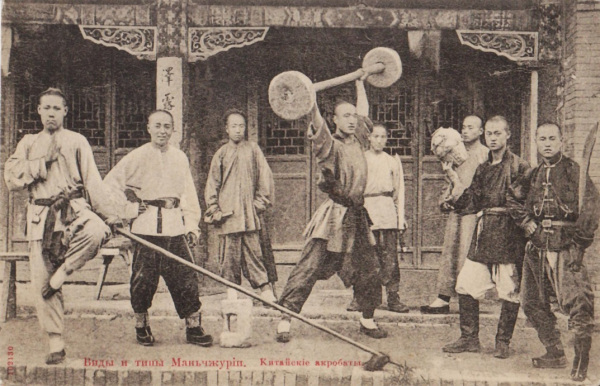
In fact, it seems that most Kung Fu masters were earning a living as street performers. It’s not as glamourous, is it? If you search back in the lineage of Wing Chun, for example, you soon end up at an Opera company – these were traveling entertainers. In Europe we’d call them a circus. A lot of other Kung Fu styles can trace their origins back to particular rituals and festivals where a martial group put on a demonstration. You still see these sorts of things today with Lion dances at festivals. They are always run by a Kung Fu school.

acrobats-of-manchuria

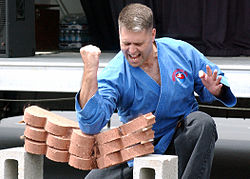
And even today, what do most martial arts groups do to attract new students? They put on a stunning demonstration, usually involving breaking something, again another form of entertainment. The martial arts lend themselves to ‘putting on a show’ so very, very easily.

250px-breaking_technique

And don’t forget, these days the most popular martial arts is MMA, which is, after all, a sport done for entertaining large crowds in an arena, in a way that’s very similar to the Roman Gladiator experience.

crowd-1024x576

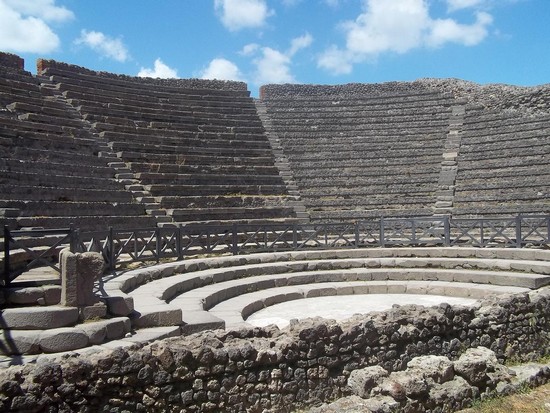
How different is this really to the Roman amphitheater?

pozzuoli-amphitheatre

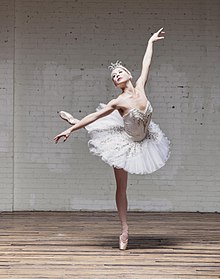
But let’s turn it around and look at Europe’s past, not its present. I’m thinking about that killer martial art known as Ballet 🙂

220px-kc_ballet_swan_lake_1_282442289632329

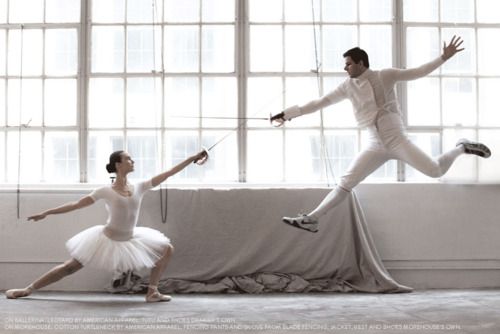
Our aristocracy’s preferred movement art form came out of its martial art of choice – fencing. The aristocracy was obsessed with fencing, especially to settle disputes. (Is it any wonder our leaders lead us into World War I when this was their preferred method of conflict resolution for centuries?)

But anyway, Ballet, with it’s turned out legs, has clear origins in fencing. As this video shows you:


The connection between movement arts like dance and martial arts is deep, and shouldn’t be dismissed because dance is seen as a more feminine expression these days. In 14th century France, Ballet was a very manly occupation.

Remember, Bruce Lee was a dance champion in Hong Kong 🙂 And don’t forget David Branch, a middleweight and light heavyweight champion of the world, swore by ballet classes.

“The first day I went, it was harder than any workout I’ve ever done,” Branch told wsof.com. “I feel it in my balance. I feel it in my overall physical strength. I feel it everywhere. Just in my posture and I feel like when I get into scrambles in a fight or anything fighting wise that involves entanglement and striking, I feel so strong. It’s natural strength, you know?”

Just ask Kate Winslet – she knows:


Sand in your face and sickly children. Martial arts narratives.

At 6.28 in this BJJ promotion video from the early 1950s by Helio and Carlos Gracie, a “skinny guy” gets his girl stolen by bigger, stronger bully.  But don’t worry – he signs up for jiujitsu lessons and wins her back!

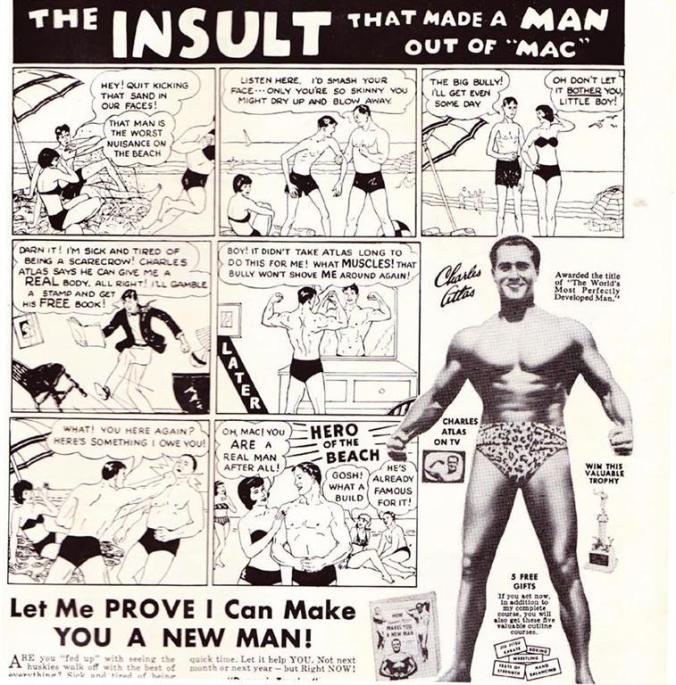
Let’s ignore the 1950’s idea of women as property and prize, which jars with modern sensibilities, and look at the marketing message. This narrative around the marketing of jiujitsu is clearly based on this classic advert for the Charles Atlas body building system “The insult that made a man out of Mac”:

615-1


Again, a skinny scrawny guy, discovers the secret information that will turn him into a strong young bull and he has the powers to repel the sand kickers (with unlawful assault this time, but let’s forget about that at for a moment – it was a different age). He goes from being called a “little boy” by his girlfriend to being a “real man”.

In both cases we can see they’ve identified the target audience as the geeks. The skinny, scrawny men who need to gain knowledge and skills to compete with their more athletic contemporaries to win the approval of women.

So many times we hear the narrative that the founder of system x,y,z of martial arts was a sickly child or young man who overcame this using the power of his martial system to defeat not only his opponents but also his own weaknesses.

For example Chen Man Ching “An attack of tuberculosis turned Mr. Cheng’s attention to Tai Chi Chuan, which he credited with restoring his health.”

Bruce Lee “remained a sickly, skinny child throughout his early years”.

Grandmaster Huo Yan Jia (founder of Chin Woo) “frequently became ill and, as a result, was often taken advantage of by the other children”.

Notice that in the older, more conservative, Chinese narratives, there’s very rarely a women involved, unless it is the person’s mother. Sun Lu-tang was “a small and frail seeming child… When Sun’s mother heard that he was studying Kung Fu, She at first objected, afraid that he would hurt himself. Then she saw how much healthier her formerly-sickly child looked and give her blessing to him to continue his studies. ”

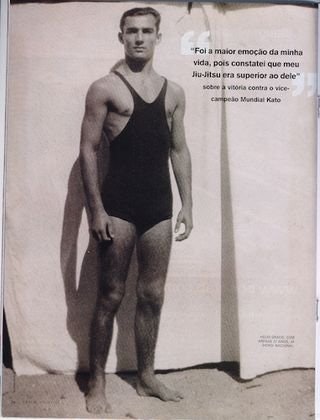
Do these stories bear much relation to reality? Sometimes, but often not. Here, for example, is a picture of the weak and sickly Helio Gracie who created Brazilian Jiujitsu by modifying the techniques of Jiujitsu to make them less physical, because he couldn’t use any strength in his techniques due to his frail condition.

yurweltrcyrkblvuu3ktkpr_2aokqfmznnu22huk1wy

He “was always a very physically frail child. He would run up a flight of stairs and have fainting spells, and no one could figure out why. “

There probably is a lot of truth to sickly or weak people practicing martial arts diligently to improve their health, but the narrative is so often used and so often repeated that I can’t help but think a bit of marketing has slipped in at the same time.

And what’s the modern day equivalent? I suppose that it’s become about marketing martial arts directly to women. Women today don’t need a man to protect them – they can do it themselves!


Where will it go in the next 10-20 years, I wonder? Classes for men to learn to protect themselves from women? It’s possible….

I don’t think there’s anything wrong with any of these marketing trends, but I think it’s important to see them as trends. As always with martial arts – Caveat emptor “Let the buyer beware!”.


Asian Boss: What do Chinese people think of Blackface?

As China makes more entries onto the world stage elements of an isolated culture are clashing full on with a global culture that has, how shall we say? Moved on a bit… There was a recent incident of Blackface appearing on a popular Chinese show, the Lunar New Year TV gala, where Chinese people dressed up as African people for laughs. The show was watched by 800 million people. 800 MILLION PEOPLE! Those numbers are staggering.

The following video about the show is interesting, especially if you watch past around the 10-minute mark where a black lady living in China gives her view on daily life in China and the sort of casual racism she encounters.

My general impression from watching the video is that it’s coming from a position of ignorance, not of hate. I can’t help but see the parallels to how the UK used to be when my grandparent’s generation were running things. Blackface used to happen regularly on British TV, most famously the Black and White Minstrel Show in the 1960s. Things will move on.


Also: Reviews of Black Panther from China.

Using movement for self defence, not blocks

I really liked the above clip by Rob Poynton of Cutting Edge Systema. It’s about the idea of using movement, rather than a fixed, rooted stance or hand blocks, to defend yourself.

To break down the message:

  • Your first reaction should be to move.
  • Use the legs for defence (stepping) and not the arms to block.
  • With your arms free you can use them for other things – like takedowns or strikes.

It’s simple, common sense advice when it comes to martial arts. The XingYi I learned was based around exactly the same concepts, incidentally. If you look at a lot of MMA fighters you see the same set of principles in action. If you think about it, you generally don’t see them doing a lot of blocking with their hands. Instead, they are moving and slipping punches. Obviously, there are exceptions – for example, the last MMA fight I watched was Yoel Romero vs Luke Rockhold, at UFC 221 in which Romero did a series of bizarre-looking arm blocks throughout the fight, yet came out on top.

916785142-0

To be fair though, it wasn’t getting him anywhere – he was getting him picked apart by Rockhold until Romero finally broke through and delivered a knockout blow, possibly by virtue of being one of the toughest human beings alive at the moment.

I think Rob’s right in saying that the traditional arts are slow to teach this concept of movement, though. Generally, you hear things said like “if you don’t spar you’ll never be able to use it”, which is true, of course, but how about actually breaking down and analysing what you learn in sparring, and bringing it back into training to refine it? I think that’s what Rob is showing here.

The point about a fear-based response vs a confidence-based response is also very interesting.

Of course, the counter-argument is ‘where are all the great Systema fighters, then?’ But it’s pretty clear that Systema isn’t really designed primarily for being used in a cage. It seems like a pretty useful life skill though, full of concepts you can more easily transfer to your day to day existence.

Labels like ‘internal’ do matter in martial arts

pexels-photo-312839.jpeg

It’s quite ‘Zen’ and deconstructionist to talk about labels not mattering. But over long years I’ve come to the conclusion that labels (for martial arts) exist in the world because they do matter. If they didn’t matter (to whatever extent) then they wouldn’t exist.

I was reading recently (an idea from Mike Sigman) that the best way to view a martial art with regard to the question of “How internal is this?” is as a sliding scale of 1 through 10 from just using local muscle on the left (0-1), through to external martial arts in the middle (5) that use Jin (ground force) to some extent, on to internal martial arts at the end (10 being the highest) that use full dantien control of movement.

I’d put things like Wing Chun or Karate that go beyond just using basic movement in the middle of the scale. These things often get called the true ‘internal’ versions of the arts, but they don’t really use the dantien. The official version of Yang style Tai Chi that you see done by Yang Jun I don’t think is a full 10 either – it just doesn’t use the datien for full control all the time. I think Chen style Tai Chi would be a 10 – of course, that’s the theory. Most practitioners would be bottom to middle of the scale at best.

There was some talk recently on internal aspects in arts like BJJ. I think BJJ and Judo have the potential for being in the middle of the scale – some Jin usage. Often this is what you see termed as ‘invisible jiujitsu’. I think that’s exactly what you need for groundwork (and for fighting generally) – beyond that it’s a case of returns vs time spent. If you want to make your living as a pianist you don’t need to become a master of the very hardest pieces of classical music. It’s almost irrelevant. Of course, if you want to devote your life to it then, it’s your life and it’s a world of discovery.

The Forgotten Style: Moral Art!

This is a guest post written by Justin Ford  of Cup of Kick (cupofkick.wordpress.com) a great martial arts blog you might like to check out.
pexels-photo-724184.jpeg

Close your eyes. Now imagine the best student ever:  They are always on time. They always take notes.

They absolutely LOVE learning. They ask really thought provoking questions that lead to even more learning. They work hard, in class and outside of class.

Just keep thinking about how amazing they are. Are you ready to teach them?

Oh, but…I forgot to mention something. They have a couple of flaws: They are arrogant and egotistical.

They are always bragging and showing off. They never show respect. Heck, are their lips staying closed together when somebody else is teaching or talking? They tell lies and are hard to trust because of it. They really couldn’t care less about anybody other than themselves.

Not so perfect now, are they? In the beginning, they sure sounded like an angel that fell from heaven. If their traits ended there, they would learn lots in life, both academically and martially. I mean, who wants to teach an A-hole? Not many people would, happily. Especially not somebody who is teaching because it is sharing a passion of theirs, not so that they can take tuition money.

Most teachers would agree that rather than new knowledge and skills, lesson number ichi would be about respect and proper conduct. Especially if the skills they would be learning are ones they can potentially use to harm another being.

That’s not to say that it would just be the teacher denying them new knowledge though. A bad student stunts their own growth as well. An arrogant mind learns very little.

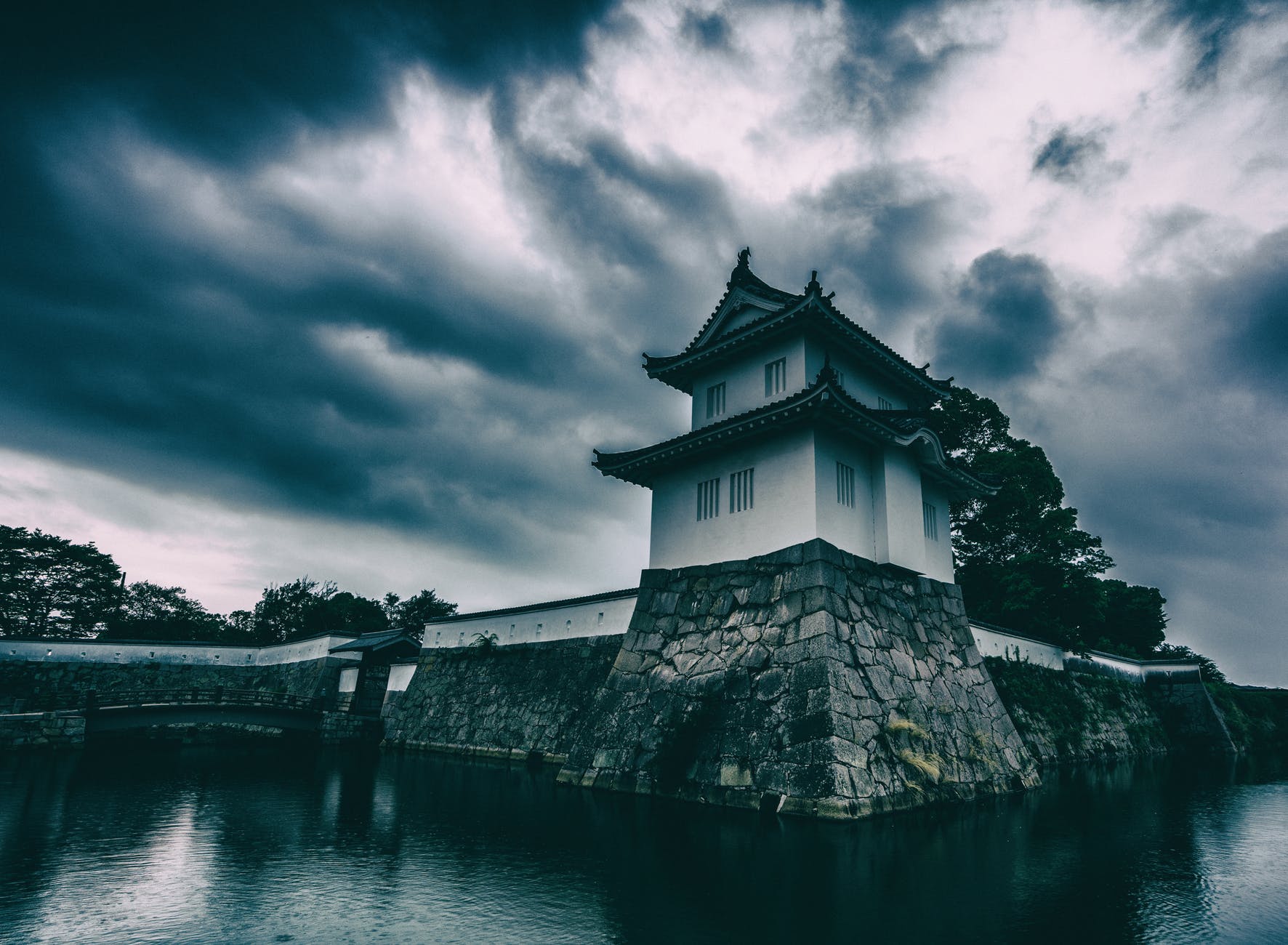
Let’s turn our eyeballs to feudal Japan and the code of conduct the warriors of that era kept. Bushido.

HEADS UP: Keep in mind that these tenets were never written down and that you will see a different number of them depending on where you look.

If you look at Nitobe Inazo’s famous book published in 1900, Bushido: The Soul of Japan, you will hear about eight tenets of bushido. If you look into other texts that are older, you might only see seven.

A major part of these principles is that they were naturally absorbed into the Samurai class and always expected of them. Therefore they really didn’t need to be written down to remind them of how they were expected to act.

Regardless of the number, each is an important principle that the Samurai were expected to uphold, so let’s take a look at how they lived.

義 (Gi: Righteousness)

The top half is a radical (building blocks for the character) for ram. That might sound like some bull-sheep but rams in China (where the writing character originated) not only represented justice but also frequently represented respect because of the way they often kneel.

The character for ram can also be combined with the character for “big” to mean beautiful. The bottom half of the character means I/me/my and can be used when talking about ourselves, but can also be separated to mean a hand and a spear or a halberd. In a poetic sense, we can picture finding the path of beauty or respect even amongst conflict or struggle.

Even while fighting or arguing, I don’t sweat, I sparkle.

There is even a mythological unicorn-goat in ancient China called Xiezhi that can always tell who is innocent and who is guilty, kicks criminal bootie and – depending on where you hear the legend – even chomps down on the bad guys. Read that sentence again and just let the words sink in.

No matter where we are or what is happening around us, as martial artists we need to uphold our morality and always do what is righteous. Seek justice in the small acts and large acts we perform in our life.

pexels-photo-712473.jpeg

勇気 (Yu Ki: Courage)

The top half of the first character can mean path and the bottom half can mean power. They come together to characterize bravery, or perhaps the path of strength. Understand, that the character for bravery is only a piece of the character for courage or valor.

Bravery is a characteristic of somebody, an attitude. They are willing to be the hero and do what others may be fearful of. Courage is different.

Courage is when somebody is just as afraid as everybody else but accepts what they need to do anyway, whether for personal reasons or for somebody else’s benefit and health.

Did you ever watch the cartoon from the early 2000’s called Courage the cowardly dog? It was about a purple dog that was absolutely afraid of just about everything around it. But when his owners got in trouble, he acted to save them anyway. That’s the kind of courage we are building up to etymologically. That purple dog kind of courage.

The second character can actually be written a couple different ways. The Japanese version is what I listed above. The traditional Chinese version would be 氣 . The character is composed of the radical for uncooked rice and steam.

Stick with me now. I promise I haven’t gone too crazy.

There is a connection between courage and cooking rice. Pinky promise.  You see, the two radicals for the last character combine to mean a lot of different things: steam, air, gas, and more. It’s pronounced “ki” in Japanese and “qi” or “chi” in Chinese.

Yep.

The same “mystical” ki us martial artists always make a big deal about. It simply means energy. Not in an “ooooooollld chinese secret!” manner, but rather in a scientific way. The steam rising off of rice. That can be looked upon in a lot of different ways, philosophically and otherwise, but we’ll cover that in a later blog post.

To sum it all up, the two character together can represent the energy to be brave. Being brave while facing down somebody trying to brunoise dice you takes effort. It takes energy. It takes ki.

仁 (Jin: Benevolence)

I love this character! So. Much. If you wanted to describe benevolence, how would you do it? It takes some thinking but it is actually a lot simpler than one might think. There are two parts to this character. The radical on the left which represent man in the general humanity sense. The other radical (the two horizantal lines) means two.

Jin, benevolence, is the connection between two humans beings. It is how we treat the people around us, whether they are a hobo or a Hollywood celebrity. It represents what unites two people living on this planet earth together.

I suppose it should extend to a visiting alien or ghostly spirit as well though…
pexels-photo-796217.jpeg

禮 (Rei: Respect)

“REI!”

Admit it.

You just bowed, didn’t you?

Plenty of martial arts, especially Japanese ones, know rei to mean show respect. Let dive into the meaning a little further though.

The character is composed of two different radicals:


  • Abundance or plentiful
  • Demonstrate or manifest


Together, they are seen to represent a plentiful sacrifice for a ritual or ceremony. An act done in reverence and respect for somebody or something. An act that has importance. I find it worth noting that the modern simplified character (simplified Chinese came to existence around 1950’s) uses the radical for mysterious/small. The small things we do should be treated as a part of a rite with importance. Respect should be shown in every action we demonstrate and word we speak.


誠 (Makoto: Sincerity)

Half of the character is a radical meaning words or speech (it represents a mouth with a tongue sticking out or sounds coming out). The other half means complete or finished.  Together, we get “the complete speech”. Nothing hidden. Nothing left out with ill will.

Every martial artist (as well as decent human) should thoroughly practice integrity in their everyday living. Your students need to be able to trust you. Your classmates should be able to believe you. Your words, actions, and intents should never misalign.

This only becomes more important as the amount of McDojos increase around the world. Remain honest and sincere.

Perhaps most importantly though, you should be able to be honest with yourself.

Don’t pretend your favorite technique is invulnerable. Don’t make up an answer to your student’s question because you don’t know the answer. Admit when you make a mistake. Only then can you begin to really learn and grow.

Learning something new means admitting you didn’t know something before.

There is an unfortunate disease that spreads through any top level athlete or artist: ego. And that ego often leads to a lack of integrity in ourselves.

  • “Oh, I didn’t finish Bassai Dai perfectly because I’m just still tired from yesterday’s workout!”
  • “I could have beaten that guy in sparring but I wanted to go easy on him.”
  • “The other guy won the tournament because of favoritism from the judges!”

Just as we strive to be honest to the people around us, let’s be honest to the person inside us.
pexels-photo-210547.jpeg

名譽 (Meiyo: Honor)

The first character means position or rank/place (in the manner of where you stand among winners. 1st place, 3rd place, etc.) and can be broken down to mean…evening and mouth.

Y’know, it actually kinda makes sense.

I don’t know about you but I’m not getting out of the bed in the middle of the night unless the person calling my name is somebody really important. My dog and my teacher would get very different reactions to calling me and interrupting my beauty sleep.

The second character means praise or reputation. Break it down and you get “the words one carries on their shoulders”.

You can put the two characters together to mean “a position that is praised or carries a reputation” My question is this: Where does your reputation start?

Does your title give you meaning or are you the one giving it worth and weight?

Meditate on this deeply.


忠義 (Chu Gi: Loyalty)

This is another set of characters that can be viewed in a very poetic and beautiful way. The first character has two parts, heart and middle. It means devotion, something your heart is centered on.

The next character means righteousness. Yep. The same character we talked about at the beginning.

Remember? Man-eating justice obsessed unicorn goat? Yeah, we’ll just keep it moving.

Together, they can mean devotion to justice. It is interesting to note that the righteousness character can also mean adopted. We can also view this as staying devoted to the what and who we adopt.

~~~~
pexels-photo-356269.jpeg

What’s important to remember is that being a good person leads to being a good student and a good martial artist because of it (in addition to many other reasons).

If you teach kids classes, then that is one of the most important lessons you can teach. Heck, it applies to grown adults as well.

Martial arts are about living, not just surviving.

I don’t know about you but I don’t have a guy around the corner trying to punch me or stab me every minute of my waking day. I can’t recall but hopefully not in my sleeping nights either.

The part of your martial arts training that you get to use most is the moral and ethical side. Every day, we have to make decisions about how we act and just like most anything else, we can train to improve.

Ethics along with ability is such a universal idea that it is even prominent in other cultures and arts, not just in the east where respect is an inherent part of the country:

  • Chinese martial arts have a similar code of conduct called Wu De
  • European knights had chivalry
  • The pirates of the 17th and 18th century commonly had Articles of Agreement on how to conduct themselves
  • The Bible lists the Ten Commandments
  • Ancient Rome had the Corpus Juris Civilis Or Body of Civil Law
  • The medical field has the Hippocratic Oath
  • Modern courts in the US go by Common Law


It doesn’t matter what your “power” is, you have a responsibility to not abuse it.

It is a gift. Not just a powerful weapon.
 

Walk like an Anglo Saxon

medieval-fantasy-high-field-shoes-2

I do enjoy Roland Warzecha’s high-quality videos on medieval weapons and their usage. I’m not entirely sure how to feel about this one, however. He’s suggesting that medieval people walked with a different type of step than us modern humans, because of the different footwear. The old way (he suggests) was to land on the ball of the foot first (but put the whole foot on the ground, not just the ball) instead of heel striking first. In a way it’s similar to the type of stepping you find in the Chinese martial art of Baguazhang.

I just tried this way of walking on a little trip around the office and I did notice that it was possible to walk around like this, and it definitely works the calves in a way that ‘normal’ walking does not. For me it’s still a big ask to believe that people used to do such a fundamental human activity, like walking,  in a very different way to the way we do it today. Either way, it’s interesting. Have a watch and see what you think:

Edit August 2021: A note on this video now says: “I have learned a lot about this topic ever since this video was recorded, and consider the presentation incomplete now. Read more here: https://www.patreon.com/posts/13655286

Roland also has some great videos on medieval posture and fighting with weapons that are also worth watching if you haven’t seen them before:

The thrusting posture does look odd, especially for combat,  but I can see what he means about it developing different muscles in the back.

This video about Viking arts is also a good watch:

And here’s some nice Sword and Buckler sparring from 2019:

The problems with being a teacher


badteacher

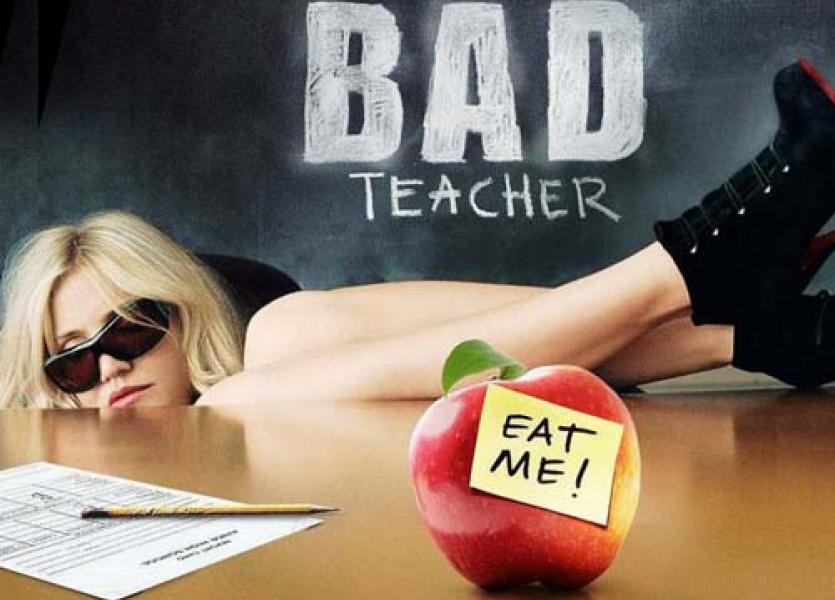
This is something I’ve seen happen a lot in martial arts. After a period of being a “teacher” or a “coach”, you somehow start to believe your own hype, and end up as an “expert”, or you allow others to see you as such (i.e. you become complicit even if you don’t announce yourself as the expert). Of course, you might legitimately be an expert. There’s no problem with that, or with acknowledging somebody’s skill at something (belts in martial arts have their uses), but for your own development, taking on the mantle of ‘expert’ can be an absolute dead end to your progress. Let me explain.  

You start out at something, and get pretty good at it. After a while people start asking you for advice and you end up as the teacher. After a lot of experience of teaching you get pretty good at that too and you go and turn what you’ve got into a system(™), online course (™) or book (™) and whatever you’ve produced ends up being codified, systemised, named, labelled and becomes a kind of law. Maybe you even develop followers (also known as customers these days) who go around championing your cause. I’m pretty sure that Jesus (if he existed) didn’t start out with the aim of having followers or producing the Bible. In fact, he wrote nothing down! (Well, that we know of anyway).

That’s all great until you are faced with some new information, far too late into your career, and realise that you’ve got something terribly wrong. Or perhaps you meet a real expert, and find that your knowledge isn’t as all encompassing as you thought it was. What do you do? Suddenly your ‘fame’ means nothing. You can’t go back to all the people that have invested their time, their money and their belief in your system and tell them ‘“sorry guys, I got it wrong, we’re going to start again with this new idea and take it from there…” Well, I mean, you could, theoretically, but very few people in human history have ever done that. Instead what usually happens is you either reject the new information, because it doesn’t fit your model, or you try and incorporate it into your world view, when in fact, it doesn’t fit that either, because it contradicts what you’ve previously been saying, and you end up with this sort of bastardised half truth…

The people I most admire in martial arts are the ones who are happy not to have everything all worked out. The ones who are constantly open to new ideas and retain a kind of ‘beginner’s mind’.

So what should we do? Yes, we should have ideas and theories. But we should always be testing them against nature, against resistance and against each other. We should never end up ‘locked in’. Unfortunately, as soon as you hit the publish button on your course, your video, your article or your online course, you are, effectively, locked in.  

Having said all that, I publish blog articles, I make videos and fully intend to write a book about this stuff one day, I’m just going to make sure (at least in my head) I have a massive disclaimer at the start of anything I do along the lines of ‘Warning! Some of these ideas may not reflect reality’ 🙂


Jin in Chinese martial arts (and tennis)

wushu20was20one20of20eight20sports20in20the20frame20for20tokoy20202020inclusion20but20missed20out20along20with20bowling20and20squash

Looking at Chinese martial arts from our stand point in today’s modern world is very confusing. There are so many styles – so many different approaches and so many different theories of its evolution. In fact, it’s bewildering!

Human beings like patterns. It’s our nature to see patterns in things. So, naturally, we start to classify these myriad arts in different ways – Northern or Southern is a popular way to do it since you can generalise some characteristics about each branch. Internal and External is another way to do it. So is ‘long range’ and ‘short range’. And so on.

Without exception, however, all these classifications ultimately break down. They’re good for talking in the general sense, but once you dig down into individual cases it soon becomes a little murkier. For instance, you’ll find a style that is known as a ‘kicking style’ has a few punches in one of its forms. A style that is ‘long range’ actually contains quite a few short range techniques in one of its obscure forms, and so on.

But perhaps there is one all encompassing thing we can say about the subject. All Chinese martial arts make use of Jin ‘refined strength’ to great or lesser extent. Now, as always, language is a problem. It would be foolish to suppose that what a professional boxer is doing isn’t a highly refined method of punching. Of course, it is. In fact, under boxing rules, it’s obviously the best way to punch. Secondly, which ‘Jin’ are we talking about? A lot of Chinese martial arts have a long list of ‘Jins’ that they contain and practice, so which one do I mean? Also, a lot of them also don’t even use the word at all.

What I mean is using the ground as a path to power, rather than your physical structure or power derived primarily from your local muscle use. This is my definition of “basic jin”.

Obviously we need to use our muscles to stand up at all, but in the case of punching, for example, most punches originate from the shoulder. In contrast, I’m talking about using the power from the ground and bypassing the shoulder as a generator of power completely when punching. Instead, the shoulder switches function to a transmitter. for the power coming up from the ground.

So, how do you do this?

Well, let’s start in the most sensible place – Tennis. 🙂

It should be no surprise that if this method of using force exists and can be done by humans, then its use isn’t limited to martial arts. I’ve noticed recently that sports coaches are starting to catch on to these Tai Chi, or Chinese Martial Arts, concepts these days. Watch the following video:

Now, while he doesn’t explain what’s happening much, he’s getting across the concept of pushing down into the ground to increase the upward force that bounces back. If your body is relaxed (‘Song’) then this is upward rebound of force can be utilised as power.

From www.feeltennis.net/ground-force-for-power/

ground-force-tennis

By “sending the force” downward – which you can see on the weighing scale – you can generate more upward force.

This is the basic mechanics for the Tai Chi “Push” you see demonstrated so often. Instead of pushing into the person you first push ‘down’ from the dantien into the ground and use the rebound force as the power generation.

cheng-man-ching20

It requires a relaxed frame – which is the “Song Jin” of Tai Chi Chuan. The more you can push ‘down’ from the dantien, the more force you can exert back up. Try it!

To return to my subject about Jin in Chinese martial arts. The Tai Chi example above is what I’d call a very ‘pure’ example of using the ground force. Tai Chi specialises in this very relaxed ‘song’ way of doing it. Other Chinese martial arts use different postures and different methods and can augment the pure ground force with specific trained muscle use in various ways – which is one of the reasons you see the characteristic rounded back in Southern Chinese marital arts. You could called these a type of ‘muscle jin’.

I found a video recently that I thought really showed this ground force being very nicely used in Wing Chun. It’s by a master called Chu Song Tin, who is now sadly deceased. I posted it on a discussion forum and it got me in some very hot water, as I’ll explain below.


In the video he says the following:

“now let my force go to the ground,…. don’t fight me by pulling up.”

“now it’s going down to his feet(i.e the ground)”

“if i use strength to push on him and he use strength to fight me.”

“now pull up, and can you feel it in your shoulder? and this way the force can’t go down to his feet.”

Now, it turns out that CST didn’t ever use the word “Jin” to describe what he was doing – he created his own term “nim tao”, and if you suggest that what he was doing was Jin… then people in his lineage will get really upset with you because you don’t have the necessary lineage to comment and it is disrespectful if you do. It becomes a lineage and politics game and there’s no way to really get anywhere once that happens, better to just yield.

According to the next video, CST never felt he could adequately describe what he was doing, which I find really interesting. His students have kept the lineage alive and if the following video is to be believed are still trying to work out exactly how he did it.

I’m happy that they’re continuing the research, and I don’t really have any desire to get involved in the politics of lineage, but my question would be, if it isn’t ground force, then what is it?