The 98th Regiment of Foot at the attack on Chin-Kiang-Foo (Zhenjiang), 21 July 1842, effecting the defeat of the Manchu government. Watercolour by military illustrator Richard Simkin (1840–1926).
The history of Tai Chi Chuan (Taijiquan), rather than its actual practice, is one of the most controversial subjects to do with the art. Various different groups have tried to claim Tai Chi as their own, and considering the amount of money involved in the art it’s very hard to know who to trust in this matter.
In this podcast we’ve tried to look objectively at the facts, and the result is that it doesn’t look good for anybody, especially the British 🙂
The history of Tai Chi Chuan is a subject I’ve wanted to tackle on our podcast for a while, but now (thanks to one of our patreons, Gabriel) it’s finally a reality.
In this episode we begin a new series of episodes on this subject by setting the scene and historical background to the mythmaking around the origins of Tai Chi that occurred starting from the middle of the Nineteenth Century in response to social turmoil and unrest exemplified by the Taiping Rebellion and Opium Wars.
Photo by ArtHouse Studio on Pexels.com Does his performance look competent to you? What about authentic?
As noted at about 6.58 in this lecture on Tao Lu (forms) by Daniel Mroz, which I find myself coming back to frequently, martial artists, when evaluating others, are primarily concerned with two things: 1. authenticity and 2. competence.
Firstly, to be “good” a video clip showing a form performance, or sparring sequence must be authentic, by which I mean it must be clearly demonstrating the martial art style it claims to be. Evidence for this can be found amongst the many howls of “that’s not even Tai Chi!” That lie in the comments section beneath any video clips pertaining to be Tai Chi shown in some sort of real, full or semi-contact application.
Even competence, without the necessary authenticity to back it up, is thrown out. Imagine the horror of a kick boxing clip accidentally labelled “full contact Wing Chun” leaking onto the Internet for example. People would get very upset. And it would inevitably lead to accusations that “You are destroying the very art itself!”, regardless of whether the techniques shown were competent.
Authenticity, then, is the most important thing. But who is to judge the authenticity of a performer? Quite often it cannot be seen in their performance, but is inferred by their lineage. One of the many reasons that lineage is such a big deal in Chinese martial arts, and not such a big deal in other martial arts that have a more sporting focus, is that it confers legitimacy. Any authenticity gathered by being able to overpower somebody in a confrontation (whether cooperative, staged or real) is instantly rendered null and void if it turns out that your teacher’s teacher was a DVD player. In contrast, martial arts that have a sporting side can derive their credibility from competition results instead, so lineage is not such a big deal.
Sometimes the aesthetics of the situation can speak to authenticity. Chinese martial artists often wear silk pyjamas and sippers, despite their complete lack of suitability for opening a can of whoop ass in, but they do confer the image of authenticity. Then there’s the ethnicity. Being Chinese clearly gives you an advantage in the authenticity stakes. These are, after all, Chinese martial arts.
But once authenticity is established, what next? We then look to competence. Does what they are doing look competent? i.e. would it work. And often this is where most martial artists, who exist in a modern Wu Shu culture that has no concept of a punch to the face being a regular and valid occurrence, seem to have the most trouble.
Chinese television regularly ran TV shows where state-approved martial arts masters presented themselves doing completely ridiculous things, like single-handedly beating a bunch of rugby players at rugby, or stopping a bird taking off from the palm of their hand because of their advanced sensitivity. Beating strong men in strength contests. Even beating a Judo player at Judo. This was not done with a sense of comic irony, as it would be in the West. The viewer was expected to take these things at face value, and it seems that a lot of people actually did. Including many Western martial artists who posted these tragicomedies as proof of the untapped potential of the internal arts. (See my recent post for more of this phenomena).
Competence then, like beauty, is also, it seems, in the eye of the beholder.
What is to be done about this situation? Probably nothing. It always was thus, and probably always will be.
However, you can start to notice when you fall into the same trap. You can bet that 90% of the arguments you find on martial arts discussion forums are not about the thing itself being discussed, but about what the thing is called. Take away the name of the video clip, martial art or subject and you remove the majority of issues of authenticity, and you are often left with only competence to discuss, but as we’ve seen, even that is subjective. Still, I would argue it makes for a better discussion.
Authentic and competent? You decide. Photo by ArtHouse Studio on Pexels.com
This podcast interview of Mark Chen by Ken Gullette is a real gem. If you haven’t listened to it before I’d really recommend it. It starts with a basic run-through of who taught who and in what order, and who all these people are, but then gets really interesting about halfway through when it talks of some of the more heretical things, like what happened during the utter insanity and madness of the Cultural Revolution in the 1960s. A period which is ignored by almost all Chinese martial artists. It’s just something that is not talked about these days – almost a non-subject, and those non-subjects always fascinate me.
There is also a section on the famous “Peng Lu Ji An” list used to describe the “powers” of Taijiquan, and the characters used. There are also some good thoughts about Taijiquan training and what Taijiquan is really all about. Overall this is an excellent podcast and shouldn’t be missed by anybody.
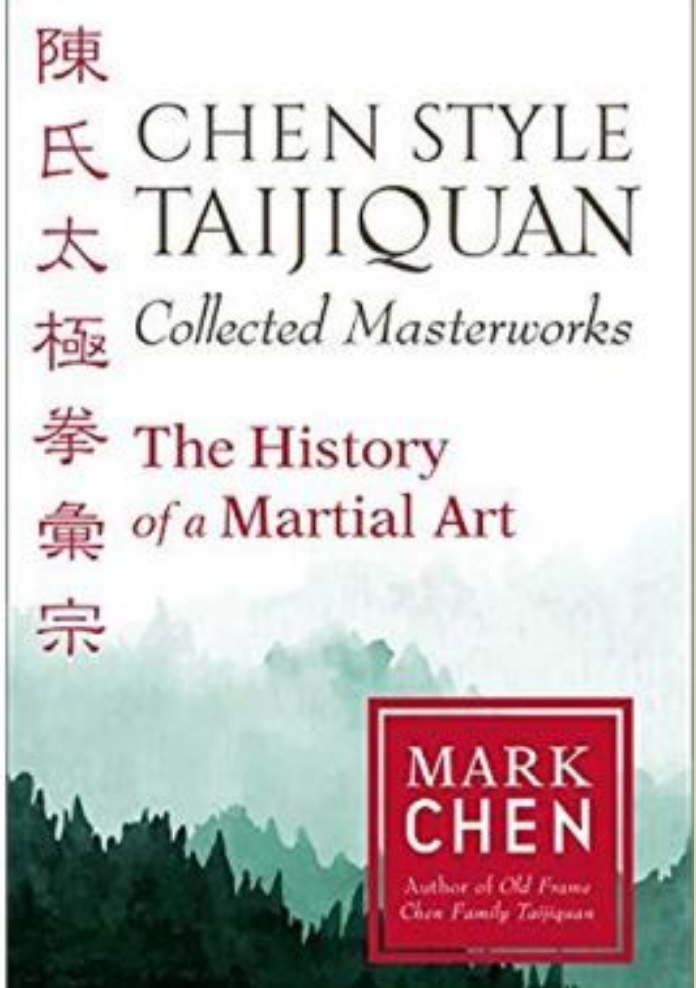
Mark’s book is a translation of most of the book by Chen Zhaopi’s book, published in 1935 and is available on Amazon in print and digital formats.
I’d like to point you to an excellent article by Sascha Matuszak on the Ming Dynasty General Qi Jiguang. In his 1560 book Jixiao Xinshu (“New treatise on disciplined service”), which contains a chapter called “Quanjing Jieyao Pian” (“Chapter on the fist cannon and the essentials of nimbleness”). This chapter is famous because it contains the first written reference to Kung Fu written by a military person.
“There is a lot of speculation as to why Qi Jiguang included martial arts in his military treatise, but it is most likely that several trends converged to make including martial training a sensible thing to do. A few of them would be the rise of taijiquan during the late Ming Dynasty, the superior close combat skills of Japanese pirates, an incredible lack of disciplined, trained Chinese troops, and Qi Jiguang’s own experience training martial arts and developing farmers into soldiers.” – Sascha Matuszak
While I love the article, I’m puzzled by the inclusion of the rise of Taijiquan as a reasoning device for the inclusion of the chapter on kung fu, since 1560 was three hundred years before anybody had even heard of Taijiquan. The great populariser of Taijiquan, Yang LuChan died in 1872.
Interestingly, the chapter written by General Qi does contain references to some things that crop up in Taijiquan centuries later… Does this sound familiar to Yang stylists?
“The Golden Rooster: stand on one leg and cock the head askew.”
“Golden Rooster stands on one leg” is a well known Taijiquan posture.
“The Ambush Crouch posture: it is like using the hunting bow to lie in wait for a tiger;”
I’m thinking of the posture known as “Bend the bow to shoot the tiger”, also found in Yang style Taijiquan.
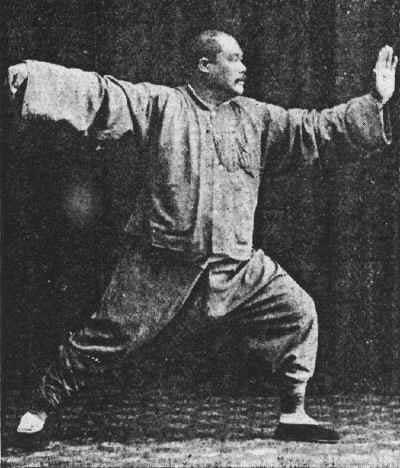
“Change to a lower position and momentarily take the single whip stance”.
Yang Cheng Fu showing Yang style Taijiquan “Single whip”.
While Qi seems to have a love/hate relationship with Kung Fu, it’s interesting to note that Qi incorporated “Chinese individuals capable of acrobatic performance including boxing instructors and Buddhist monks” into his army to meet the challenge of fighting Japanese pirates, who were much better versed in close-quarter combat skills than uniformed Chinese soldiers.
In chapter 14, he makes criticisms of the existing martial arts of the time as being too specialised, and that by combining them you can cover all bases better. My feeling is that although he does say he engaged in training at Liu Caotang’s Striking Fists school, he’s a military man, an outsider looking at civilian arts he isn’t involved with personally or practices, so you get an interesting perspective.
He’s continually judging what is credible and what is not – something that continues to this day on martial arts forums on the Internet!
We may be reaching the end of the ‘Tai Chi Master vs MMA guy’ phenomena that has lit up the martial arts world in the last couple of years. I mean, how many more old guys do we need to see knocked out to make the point?
In light of the most recent fight, Will of Monkey Steals Peach has interviewed Byron Jacobs, who is deeply embedded in the martial arts world of Beijing, to get a fuller picture of events. I think it gives the most all-encompassing overview of the phenomena, and why it is happening, I’ve heard yet. See what you think:
A new video in the long line running ‘Tai Chi master vs MMA guy’ series got posted the other day. Rather than talk about it here straight away I wanted to see what the reaction was from the martial arts community, and boy, it didn’t disappoint!
This whole MMA vs Tai Chi genre was started by the now-infamous Xu Xiaodong who posted the first video showing what happens when a delusional Tai Chi “master” gets in a fight with an MMA guy.
The qualifications for being a “Tai Chi master” these days seem to be that you have:
1) The backing of Chinese state TV, who will post lots of faked videos of you performing magical martial skills.
2) You have a sufficient number of minions and followers to do you bidding.
3) You look the part (silk pyjamas) and have can talk a good talk about your abilities.
Of course, none of these martial abilities are grounded in reality, so when you get in a challenge match with an MMA guy it usually ends quickly and badly for you. Chinese martial arts, particularly Tai Chi, is the focus of the soft power emanated by Beijing and the hyper-nationalistic Chinese government on the global stage. Therefore, publicly humiliating a Tai Chi “master” doesn’t make the MMA guy very popular in China, and Xu Xiaodong has been badly persecuted – his social credit score is now so low that he can’t even travel on trains and his social media accounts keep being deleted.
After the initial video of Xu Xiaodong surfaced he didn’t let the persecution put him off and he kept calling out the masters boasting of their skills on state TV. Challenge after challenge followed. One involved self-proclaimed Tai Chi/Xing Yi Master Ma Bao Guo who had previously paid a retired cage fighter Peter Irving in the UK to perform in a demo video that made him look good, and was boasting that this video was proof he was the real thing.
In this excellent article, Peter recounts the story behind the video.
Here’s the video:
To anybody that knows anything about fighting it’s obvious that Peter is just feeding attacks to Ma who reacts with some twitching responses. The fact that some people thought this was real says a lot about the mentality of minions and followers.
Xu and Ma’s challenge match was all set to go ahead (and would have ended the same way as all the others) but Ma actually called the police on his own challenge match and it was called off!
But Ma Bao Guo wasn’t giving up. At 69 he recently got in a challenge match with a San Da (Chinese kickboxing) guy who was 20 years younger than him. Here’s the video of Ma Bao Guo vs the San Da guy
As expected, it was a shocking display of ineptitude, and as I said, the reactions of the martial arts community have been interesting. Here are a few of the common responses I noticed:
The rebranding of this as MMA vs Tai Chi to fit the narrative.
The fight is actually between two practitioners of Chinese styles – one is Tai Chi/Xing Yi and the other is San Da, which is a homegrown Chinese kickboxing style. But it instantly becomes “MMA” because it fits the story created so far.
“The Chinese have absolutely ruined kungfu.” Hard to argue with this really.
Concern for Ma’s safety.
This was my first thought – getting knocked out like that at 69 could have been fatal, and will likely have long-term effects.
He needs to be sued for fraud.
I wonder how many minions and followers he convinced of his nonsense over the years? I wonder what they think of his teachings now? If they gained health benefits are they now invalid?
Why don’t those Kungfu guys that angrily complain about the fraudulent masters’ performance themselves step up to make Kungfu great again?
It seems like a bit of false reasoning to me. I think the point is that if you are going to claim abilities then you need somebody to test them. Perhaps you need to be more realistic about what you claim? The reason Xu is not challenging 20-year-old kickboxers, is that they’re not claiming magical abilities on state-run TV. And also, it’s usually the old masters doing the challenging!
“I look at someone getting beaten and it has little to do with me or my training.”
True – exposing the delusional Tai Chi masters doesn’t mean that Tai Chi itself is delusional. If you are honest about what you can and can’t do, then that’s a good thing.
But then we get to number 7, and this is the one that really gets my goat…..
7. “It says a lot about those that post these clips.”
What???
Aiming your ire at the guy lifting the curtain to show a little old man, not a wizard, behind it is something you’d attribute more to the mad emperor Nero, (who had a habit of shooting dead the bearers of bad news) than the sane and balanced mind of Marcus Aurelius, one of the last ‘good’ emperors of Rome.
The event was done publicly. There were press there with cameras. Ma had clearly arranged for this to be broadcast. And I can bet if (by some miracle) Ma had actually defeated the San Da guy, then heralds of his victory would be celebrated far and wide by everybody who purports to be a Chinese martial artist.
Stop trying to shame people for exposing the bullshit.
You can’t have it both ways. If you do something sportive and public then it remains pubic, regardless of whether you like the outcome. The point of challenge matches is to see what works. Part of the appeal of MMA for me is that it’s on one hand sport, but on the other a long-running public education project about what works in fighting.
I can already feel the voices of those “MMA is not for the street!” guys building as I write this, but you know – screw them. A good answer to that is that if you can’t make your art work with a limited rule set that simulates a real fight as closely as we can make it, how are you supposed to make it work when the other guy isn’t even restricted by those few rules?
San Da, boxing or MMA is a young man’s game. Old masters of whatever martial art it is should really stop trying to engage in it altogether. Putting yourself in a position where you can get knocked out cold at 69 years old is just a terribly bad idea. The implications for what remains of your life are serious. There’s a reason that Muay Thai fighters’ careers usually end in the 20s.
The whole thing was folly.
Ma was delusional for
Thinking that whatever martial skills he had gained from a lifetime of pushing minions, followers, and paid performers, around while wearing silk pyjamas could actually translate into real fighting skills.
Thinking that you could do this at 69 years old.
But human beings are delusional. And in normal life, we can get away with it up to a point because there are no serious consequences. I talked about this in my recent interview on the Martial Arts Studies podcast. My point was that nature is not delusional, which is why the Song Dynasty had such success economically and military thanks to the Li Movement, which aimed to get back to looking at nature for what it is, not what we think it is. That was the point I was making about studying animal methods (that I don’t think my interviewer quite picked up on) that a snake does what a snake does regardless of what human beings think about it, or even better, with no human beings around at all.
Similarly, MMA or San Da or challenge matches bring martial artists into direct contact with nature, or reality, if you like. And sometimes that can be a painful act of recognition.
It should be celebrated, not turned away from. Look it full in the face and learn. As the old martial arts saying goes:
“In martial arts you either win or you learn.”
It’s probably not a good idea to wait until you’re 69 to start learning.
Xing Yi is a fascinating subject. Because it’s such an old martial art, there are so many different branches of it. These different branches have tended to focus around geographic location. So, there’s a Shanxi branch, a Hebei branch, a Henan branch, etc.
Ultimately, while they’re all different, they’re all part of the same family, so it can be useful to investigate how other branches train and how it relates to what you were taught in your branch.
Will of the Monley Steals Peach YouTube channel has put out a lot of content recently on various different styles of Xing Yi and Xin Yi. (The arts have slightly different names, but to me they’re all part of the same family).
What I’ve found most interesting is seeing his videos on Xin Yi Lie He (6 Harmony Heart-Mind boxing). This style is practiced mainly amongst the Muslim community in Henan province in China, but also elsewhere. As Will says “There are two main branches of Xinyi Liuhe, one in the city of Zhoukou which you can also find in Shanghai, and the Luoyang style which is incredibly rare. In this episode, we meet Ma Zhi Ping in the local Mosque to learn about the Luoyang style of Xinyi Liuhe.”
If you look at XYLH it initially looks quite different to my style – Hebei Xing Yi – there are lots of jumps, big movements, extended arms and long stances. None of these things you could say are characteristic of Hebei Xing Yi. Have a look:
However, if you look closer you will find that the principles behind the art are closer to what I was taught by my teacher than versions of Xing Yi in other places.
My teacher did not empahsise the dantien, but instead talked a lot about the Dragon Body. You find the same explanation in this second video on the Shanghai branch which looks at the fundamental body movements behind XYLH:
Dragon coiling around tree
Chicken step
Thunder sound
These principles so easily map onto what I was taught that I can undertand them straight away.
Let’s take Chicken Step as an example: while the Chicken Step exercise in XYLH (in the video above) is a different stepping pattern to what you commonly see in Xing Yi the principles behind it are the same –
Constant motion,
Using your stepping for defence not blocking
Twisting the body so there’s always power available
No “pushing off” the ground – more like a hovercraft.
While my Hebei Xing Yi doesn’t look like XYLH on the surface, I find it interesting that in terms of principles it’s much more similar to this style (which mine branched off from 100 years of years ago!) than even some of its more closely related Xing Yi styles based in Shanxi, which seem to specialise in a type of shaking power or the more dantien-rotation-centric styles like Dai style Xin Yi.
You can never hope to even try to learn all of the different Xing Yi/Xin Yi styles. The art is just too big! But you can at least see how they do things and spot similarities which help you reflect on your own practice, thanks to YouTube, and thanks again to Will for making the videos and doing all the traveling for us! Check out his channel, it’s full of content.
I grew up watching Monkey on TV. This Japanese TV series based on the ancient novel Journey to the West was dubbed into English and run by the BBC from 1979 onwards. It was hugely influential in introducing Kung Fu and Taoist/Buddhist ideas to the West via a children’s story.
It’s quite fitting that I watched it as a child, because it is a story for children, but if you look closer, you’ll find that it deals with a lot of deeper issues.
Journey to the West follows the story of a Buddhist monk and three immortal animal spirits (four if you count the horse) who follow ‘him’ (this was always confusing to me, as the actor in the TV series was clearly a woman) on a journey to ‘the west’, which was India, in search of the Buddha. Along the way, they have to endure various trials and tribulations.
Journey to the West is a classic work of Chinese literature, and can be read as an allegory for all sorts of things – is it about the taming of the ‘monkey mind’? Is it a criticism of Buddhism by Taoists? Or Taoist by the Buddhists? Or is it a religious text that acts as a guide to spiritual enlightenment?
As you’ll discover from this fascinating discussion between Chinese language and literature professors Katherine Alexander and friend of the Tai Chi Notebook, Scott Philips, all things are possible!
Katherine Alexander is a professor of Chinese Language and Literature at the University of Colorado at Boulder, and has a PhD from the University of Chicago. Her PhD dissertation, “Virtues of the Vernacular: Moral Reconstruction in late Qing Jiangnan and the Revitalization of Baojuan” addresses popular religious literature and culture in Jiangnan during and after the Taiping War. https://www.colorado.edu/alc/katherin…
There’s a great article over on Kung Fu Tea about the life of one of the most influential Chinese martial artists of all time, Sun Lu Tang.
One of the persistent problems that I see in amateur discussions of “Chinese martial studies” is a lack of understanding of how broad the traditional martial arts really were, and the variety of life experiences that they encompassed. In fact, rather than discussing China’s martial culture in the singular, it would probably be better to think about these cultures in the plural. The martial arts never were just one thing, and our experience with the modern “traditional” arts tends to seriously skew our perceptions of the past.
It’s a good read, so sit down with a cup of tea and put your feet up with your laptop.
Just finished watching series 4 of Glitch. It’s a Netflix show where dead people get reanimated in a rural Australian town (why this happens is a long story).
In season 4 a Chinese immigrant who died in the dust and mud of the bush in the 1850s comes back to life.
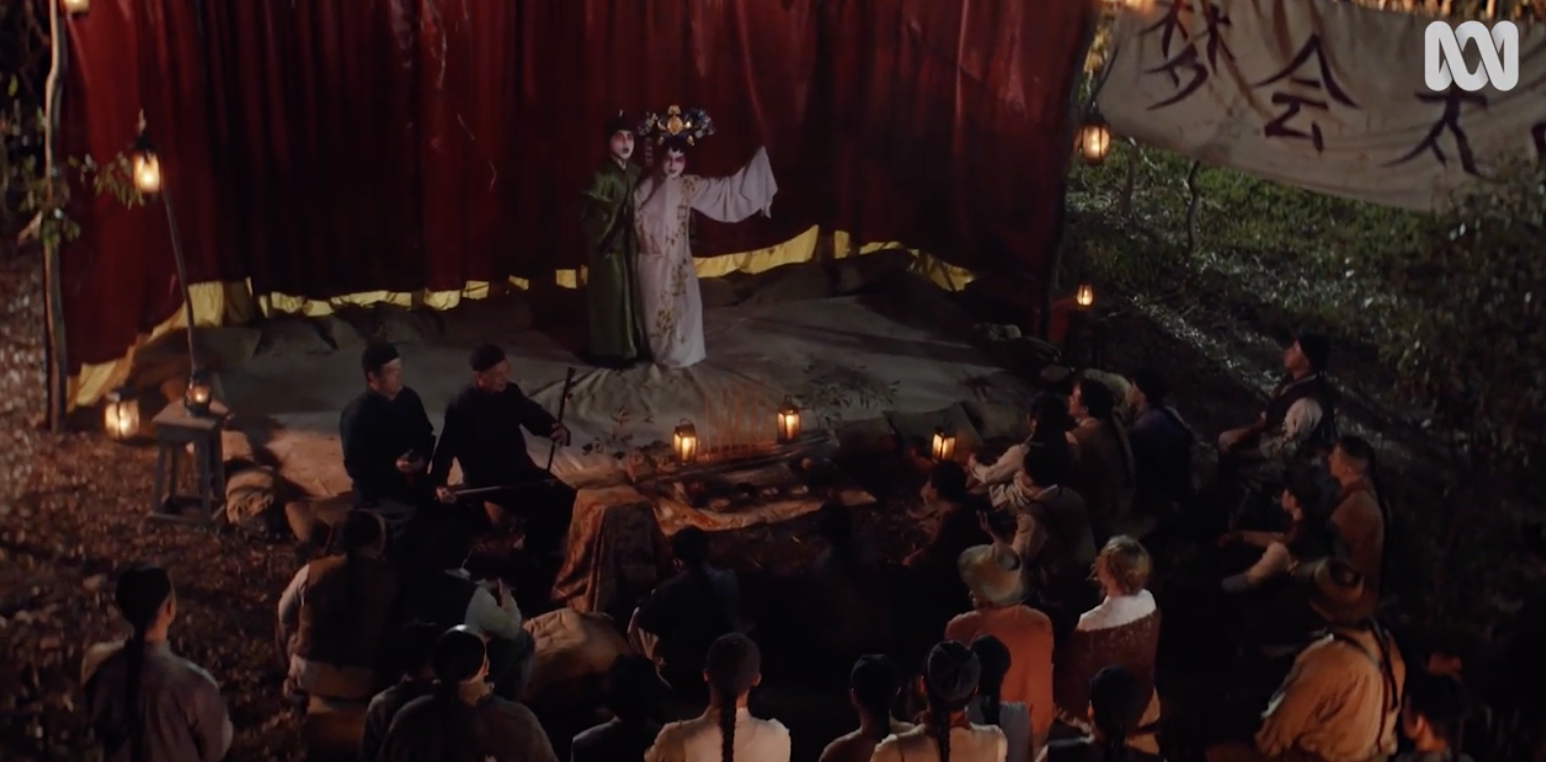
At the time, Australia was the most multi-cultural place on earth. We see flash backs from his life touring the Chinese camps of the Victorian goldfields performing Opera, which was the pop music of its day.
It’s pretty well done. Here’s some background on the history:
There are several bits in the series where the actor Harry Tseng performs Opera moves that look just like “kung fu”.
These days it’s pretty hard to imagine what life was like over 100 years ago. Some people still have the idea that “Kung Fu” has absolutely nothing to do with Chinese Opera. Clearly it was all part of the same cultural mix.






 The Tai Chi Notebook