A visit to Monkey World gives me new insight into the name of one of the most famous Tai Chi sequences – Repulse Monkey.
Yesterday we had a family trip to a local ape rescue centre called Monkey World. All the larger apes were suitably majestic, and the little ones suitable cheeky. The ones that stole the show though, were the white cheeked Gibbons. In terms of dancing through the trees these guys have got it made – they look so totally effortless with their arm hanging and swinging. They have no tails, so they swing in the classic way that humans attempt when using the monkey bars, but it looks so utterly effortless for them, because their arms are extrodinarily long when compared to the length of their body and their shoulder and wrist joints are different to ours. They swing one hand at a time, like this:
Gibbon, swinging
That’s when it occurred to me that this must be where the famous Repulse Monkey sequence in Tai Chi forms gets its name.
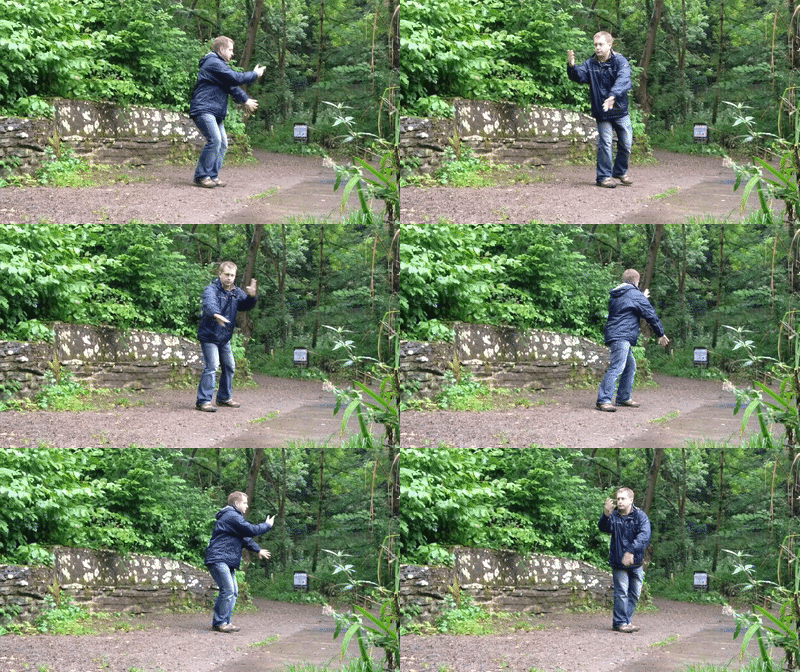
Me, doing Repulse Monkey
The “repulse” bit I’ve always thought was kind of obvious, because you’re pushing (or striking) something away, but I could never understand what was monkey-ish about this sequence, since you are used large extended postures, rather than what I’d come to associate with monkey styles of kung fu, which are usually full of small crouching postures and darting and rolling about. However, if you look at Gibbons swinging from branch to branch, it makes sense.
“Interactions between humans and gibbons have a long history in China, as reflected in the Chinese literature and art. Especially in early China, gibbons made the objects of many literary and artistic compositions.
The popularity of captive gibbons being kept as pets appears to go as far back as written history, although a proverb by the philosopher Huai-nan-tzû (died 122 B.C.) stated: “If you put a gibbon inside a cage, you might as well keep a pig. It is not because the gibbon is then not clever or swift anymore, but because he has no opportunity for displaying his abilities” (van Gulik, 1967, p. 40).”
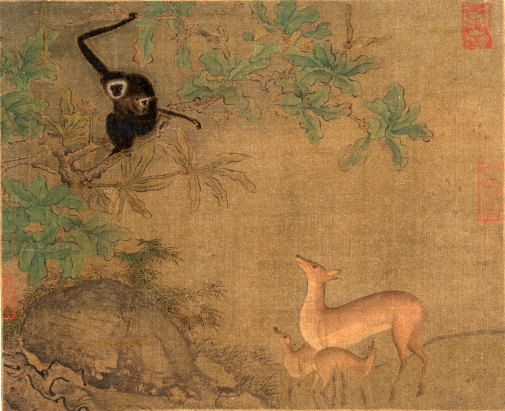
An example of Gibbons in historical Chinese painting:
Unknown artist from Southern Song Dynasty.
Moving away from Gibbons, one unique character I observed in all the apes was a kind of nonchalance. One Gibbon came to the edge of their enclosure, on the farthest out branch and hung there for a few minutes by one arm looking at the strange humans who had come to see her. They are really unhurried and unbothered by anything. The Chimpanzees on patrol walk the edge of their territory unconcerned with all the people watching. Apes don’t ever appear stressed or worried by thoughts – they just do. Perhaps they’re the ultimate masters of mindfulness.
XingYi, the great internal martial art from China, has Monkey (Hu) as one of its 12 animals. I often find myself doing this sequence in a hurried way, since the movements are inherantly quick and fast, but now I think I’m going to try and slow down a bit and add an element of nonchalance to the moves as well. I think to really get that monkey character right you need to appear unconcerned about the attacker – after all, a monkey can often retreat to the safety of the higher branches after engaging, a luxury other animals don’t have when hunting or defending themselves. I think this nonchalant feel is be a key element to being able to master the XingYi animal in the correct way.
I can’t let the new documentary on Professor Cheng Man Ching, one of the early pioneers of Tai Chi in the West, slip out without giving it a mention on this blog.
Much has already been said about it, so there’s not too much more to add, except that I haven’t seen it yet, and I might blog again after watching it, because it will probably stimulate some thoughts.
Cheng Man Ching is one of those contentious figures who splits opinion. By being one of the very few people in the US publicly teaching Tai Chi in the 1960s, and thanks to the gushing endorsement in books by his student Robert Smith, and his ability to push big, heavy Westoners around with comparative ease, Cheng very quickly achieved a big reputation.
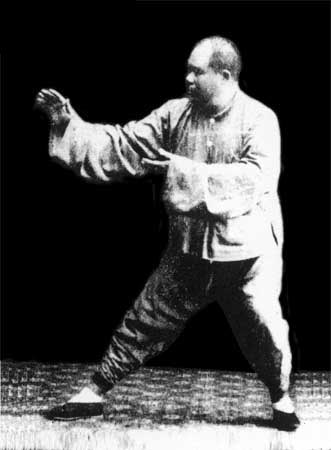
Cheng modified the Yang Tai Chi form he learned from Yang Cheng-Fu, creating one of the first short forms of Tai Chi. His Tai Chi also had a distinctive look compared to his teachers – in (I believe) an effort to stick as closely as possible to the writings of the Tai Chi classics, he changed some of the postures slightly, adopting a more upright body, and a softer hand and arm position. Some would say his Tai Chi was too soft, and his influence is responsible for the typical ‘soft like a noodle’ style of doing Tai Chi often found in the West. But if you watch him do his form, you can see that he looks solid as hell. He exudes the ‘peng’ quality of energy rising upwards and outwards, and being rooted in the legs.
Undoubtedly he was an example of what happens when a small fish in a big pond suddenly becomes the only fish in a very small pond, but he was also a skilled practitioner of Tai Chi. Of that there can be no doubt. Was he also a world class martial artists? No, probably not. Did his students put him on an unrealistic pedestal? Yes, undoubtedly they did. But that’s what happens with human beings. We’re like that with people we admire.
A look at the Cloud Hands movement of Tai Chi, and what it’s really all about
Cloud hands, or ‘wave hands like clouds’ as it’s also known, is one of those classic Tai Chi movements that characterise the art. It’s done in slightly different ways in different Tai Chi styles. Take a look at the variations:
Master Yang Jun, (Yang Cheng Fu, Yang style):
Master Chen Zhen Lei, (Chen style):
Master Sun Ping, (Sun style):
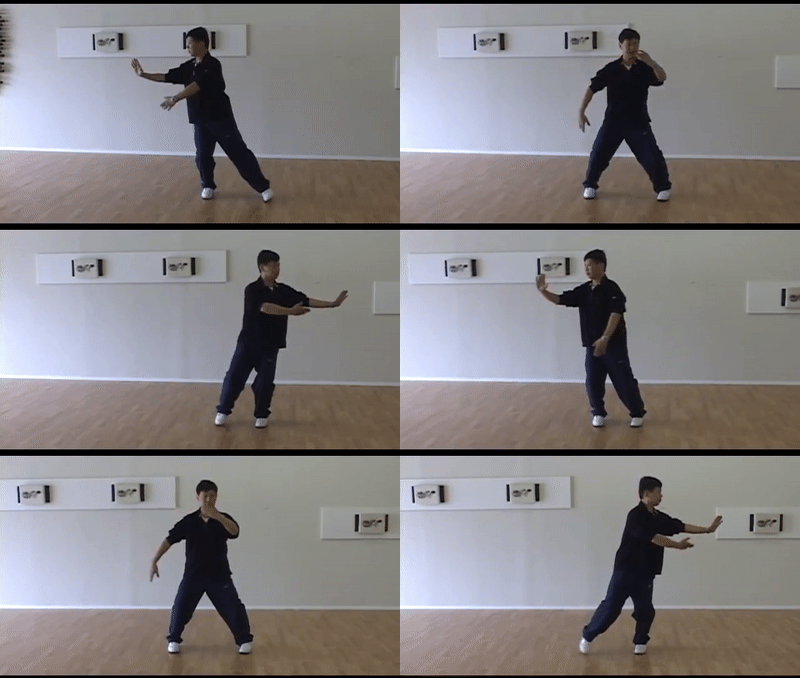
I’m not comparing myself to the masters above, but here’s a GIF of me doing it, since I have that on video I might was well add it to this post:
Me: (Old yang, also called Gu style)
As you can see, the Yang style is more of a vertical arm block, the Chen style is more of a horizontal elbow strike while the Sun style has the palms facing outwards. It’s a case of different horses for different courses, but while there are subtle differences between them, they all involve the common theme of stepping to the side while rotating the arms in circular motions (presumably like clouds on a windy day).
Martially speaking, I think of this movement as intercepting an opponent’s strike and throwing the attacker out, or applying a lock to their arm through the action of turning your waist. To the attacker it should feel like they’re putting their hand into a blender – it gets caught up and crushed and it shouldn’t feel easy to retract your arm once it’s trapped.
It’s easy for beginners to make the arms ‘flat’ in this posture – instead they need to be continually projecting outwards. I think of them as being like the antlers of a stag, or the branches of a tree – they grow outwards, and are slightly curved. If you’re going to intercept your opponents strike with this technique, then it’s going to help ‘catch’ their attack if the intent in your arms (your antlers) is to project outwards.
The real lesson of Cloud hands though is to turn the waist. It’s a common mistake to not turn the waist enough in Tai Chi, and I find that, for the beginning student, a breakthrough in this area often only comes about through a study of Cloud Hands as an isolated technique, repeated over and over. Notice that if you removed the stepping from Cloud Hands then it wouldn’t be a million miles away from the stationary silk-reeling exercises that go along with Tai Chi, with one hand performing a clockwise circle and the other an anticlockwise circle. Indeed, performing Cloud Hands repeatedly can serve a similar function to basic Silk Reeling exercises.
As it says in the Tai Chi classics, the body should be directed by the waist at all times, so as you turn from side to side in Cloud Hands (let’s not worry about the stepping for now) your arms should only be moving because your waist is moving. If your waist stops, then your arms should stop too. This especially applies at the crossover points, when you’ve turned all the way to the side and the arms swap position, so that the lower one becomes the upper one, and vice versa. This is the point that beginners usually drop the principle and use some isolated arm movement, instead of keeping it all coming from the waist. It’s usually a revelation to the student here that you need to turn the waist a little more than you think you do to keep it as the commander of the movement – you should feel this using muscles in your lower back you normally don’t reach.
Remember, in Tai Chi you’re looking to continually maintain a connection (a slight pull) from the toes to the fingers, with movement directed by the dantien like the spider at the centre of a web. If you keep this connection (or slight tension) and the waist control at these crucial crossover points in Cloud Hands then you’ll be well on your way to keeping it throughout your whole form performance.
Bruce Lee was onto something with his water analogies…
I recently read the phrase, “Don’t push the river, listen to it instead”, and it resonated deeply with me because it’s a great way of summing up my approach to jiujitsu’s rolling and tai chi’s push hands. The water analogy was famously used by Bruce Lee and also crops up a lot in the Tai Chi classics, for example “Chang Ch’uan [Long Boxing] is like a great river rolling on unceasingly.”
The flow of water is analogous to the flow of energy, or movement, when performing a Tai Chi form, or between two people engaged in a martial activity . In both jiujitsu and tai chi your ultimate goal is to ‘go with’ this flow in such a way that you come out on top. You want the opponent to be undone by their own actions.
In jiujitsu that might mean not using excessive strength to press home a collar choke from mount if your partner is defending it well, and switching to an armbar instead, then switching back to the collar choke (and hopefully getting it) when they defend the armbar.
In push hands it could mean not resisting your partner’s push and using Lu to let it pass you by, then switching to an armbar to capitalise on their over extension.
Of course, this is for when you’re engaged in the ‘play’ mode of both these arts, which is the mental space you need to occupy if you want to get better at either of them. This is the relaxed practice that nourishes the soul. It kind of goes without saying that in competition or in a self defence situation you’d be better off in Smash Mode. But when winning isn’t the only thing that’s important you need to open up your game a little and keep it playful. Or ‘listen to the river’ as the phrase has it. It takes a lot of expertise to be able to be that relaxed in a real situation, but as your experience in the art increase so too should your ability to remain relaxed under increasing amounts of pressure.
Rickson Gracie said, ‘you can’t control the ocean but you can learn to surf’ and that’s the heart of what I’m talking about.
To be aware of the way the river is flowing, and not waste futile energy pushing it in a direction it doesn’t want to go you need a degree of self awareness, and the ability to be aware of the situation you are in. And to get that you need to slow down and stay calm. Or, as the ancient Taoists said:
“Do you have the patience to wait
Till your mind settles and the water is clear?
Can you remain unmoving
Till the right action arises by itself?”
Lau Tzu, Tao-te-Ching
Men of martial arts! If you’ve ever stopped to wonder why you spend your free time getting punched in the face for fun, you might want to watch this.
There are lots of articles written about women and martial arts, but relatively fewer about why men do it, since, you know, they dominate the martial arts, so why bother writing about them? I therefore like it when I read an article that looks at what it is that drives men specifically to do martial arts for purely selfish reasons, since I often wonder why I’ve had this lifelong attraction to martial arts myself. I know there’s The Professor in the Cage, but I’ve not read it because I’ve heard it takes a reductionist argument that everything comes down to evolution. I think it’s more complex and nuanced than that.
Then last night Grayson Perry came out (ha!) with a TV programme that addressed this very issue. Playing up to stereotypes, he went to the North East to find the toughest of men the UK had to offer, the Ironborn, to see what makes them tick. But ignoring the obvious problems of playing up to caricature, the programme is excellent. I was going to blog about it, but my friend Paul Boman (who comes from the North East) beat me to it, so you might as well read what he wrote instead here. To be honest, he wrote it up better than I could anyway.
If you’re in the UK (or know how to browse with Tor) you can watch the whole program on demand here.
Here’s the best thing to do after you’ve applied Tai Chi’s rollback.
One of the things that comes up a lot in Tai Chi push hands training that’s geared towards the martial side of Tai Chi is what to do with the opponent after you’ve done Rollback. Rollback uses Lu energy to lead the opponent in and control them, with their arm kind of locked, but not to the point where they’d tap. In the Yang form there’s no ‘finish’ from this position – after controlling them you strike with Press (Ji). This is ok, but to me it seems like you’re giving up the advantage you have over them because of the control that rollback affords in exchange for a quick strike. It looks like this:
There are several alternative things you can do – turn it into a push away (into a wall?), turn it into a takedown where you keep the pressure on the arm and shoulder, forcing them into the ground, or you can go for my preferred answer, which is to turn it into a standing arm bar as shown in this video:
Key things to note:
1. He puts his elbow over the top of their arm and makes sure the locked arm is snug in his armpit.
2. On the locked arm the little finger edge is pointing to the sky.
3. In the finish position he rotates his wrists around the opponent’s wrist so that both his thumbs point upwards – this gives you maximum leverage on the arm.
4. Once the opponent is controlled you can look around and watch out for further danger from somebody else.
I like this solution because it’s a really powerful arm lock and you can move into it from the end of the Tai Chi rollback posture fairly easily. You can feel it would be easy to break the arm from here, and the opponent is pretty much helpless. Obviously, in a self defence situation the level of force you exert needs to match the severity of the threat you feel you are under, so don’t go breaking the arm of people who have innocently patted you on the back, and also take care of your training partners. Don’t break your toys!
After her previous life as a TV personality ended up with her crashing and burning into a breakdown and rehab, Ruby looked to science to provide the answers to depression and found them in mindfulness, which seemed to be one of the few alternative therapies that showed real scientific results of success. She got a masters degree in Mindfulness Based Cognitive Therapy from Oxford University and went on to write Sane New World about her experiences, and got an OBE for her efforts to remove the stigma that surrounds mental illness, and have it accepted as an illness, just like any other. I have not (so far) suffered from a mental illness, so I did feel like a bit of a fraud sitting amongst the audience, but I have meditated and felt the benefits of doing so, so I was interested in seeing her show. Tai Chi, after all, is a mindfulness-based practice, but more of that later.
Firstly, the show was at the Playhouse in Weston-super-mare, which is a seaside town, so you’re probably conjuring up images of sunny Brighton in your head. Stop. It’s not like that. When he heard I was going to Weston at the weekend one of my friends said – “I really like Weston because it can’t get any worse. It’s kind of at the bottom, and doesn’t pretend to be anything its not.” That’s about it, really. The beach is very long and sandy, and there are lots of shops that sell seaside tat, like candy floss, sticks of rock and buckets and spades. There’s also a lot of drinking. By 5.00pm in the evening on a sunny but cold April day several packs of bald, intimidating, tattooed men and shouty, even more intimidating, drunken women were trawling up and down the strip looking for the next table to land on to keep the party going. Occasionally two packs would meet, and the outcome would be pretty horrendous.
In the midst of all these people blatantly doing their best to drink themselves into oblivion and escape from reality, we were going on a talk on mindfulness, which is blatantly an attempt to return to it.
The show itself took the form of a question and answer first half, where Ruby was ‘interviewed’ by her friend (whose name I can’t remember, but she used to be in Grange Hill when she was 14) who asks her a series of clearly prepared questions about mindfulness that she answers in an entertaining way while trying to make it not look like these are rehearsed answers. We all play along, because that’s what you do. There was a little bit of audience participation where she’d get us to discover our senses by clapping our hands, or sniffing the scented flier she’d thoughtfully left on each seat.
In the interval she signed books then returned to the stage for a second half where the audience got the chance to ask her questions. Interestingly, most of the questions revealed that the audience hadn’t really been paying attention to the first half, as everybody seemed to have a view on mindfulness which wasn’t exactly the same one that Ruby had. “That’s not really what I said…”, was a common refrain.
I think that’s often the problem with ‘mindfulness’ – it gets treated like any other ‘thing’ on offer to distract us from doing the hard work of coming back to face our lives as they actually are, which is what it’s really about. Instead we want another book to read, another movie to watch, or another phone to check. Everybody already has an idea of what mindfulness means to them, and it’s going to take a lot of mindfulness to change it.
Anyway, Ruby disappeared off into the Weston night, and so did we, which was utterly terrifying as by the time we left the theatre the walking dead were out in full force, tottering from pavement to road and back again, and then into a bush to be sick. There wasn’t a police man in sight. They’d either given up on Weston and abandoned it to the shadows, or they were all too scared to come out of the police station. We scampered back to our hotel and hid in our hotel room until the shouting and screaming stopped, then we could sleep.
I did enjoy Ruby’s show. It wasn’t anything amazing. Nothing extraordinary happened but, as she repeatedly said, a life without highs and lows, where you just maintain an active presence is really our best hope of being sane and healthy. The mindfulness practice she introduced, where you focus on your senses, and just keep coming back to them instead of letting your thoughts steal ‘you’ away and keep you captive, reminded me a lot of Tai Chi. This is what Tai Chi practice is – if you let yourself float away in your thoughts while doing the form then you lose half the benefit of practicing Tai Chi. You need to be in your body, feeling its movements, aware of its fluctuations and shifts. When you get caught up in your thoughts about Tai Chi you stop doing Tai Chi, so you need to keep coming back to the body.
It says in chapter 3 of the Tao Te Ching (an ancient book of Chinese wisdom, which has influenced Tai Chi)
“Therefore the sage, in the exercise of his government, empties
their minds, fills their bellies, weakens their wills, and strengthens
their bones.”
Again, it’s the idea of getting out of your head, and into your body, if you want to successfully govern yourself.
I imagine a lot of Buddhists and Taoists have their nose put out of joint by the popularity of mindfulness, which has essentially taken the core bit of their practice and stripped out the religious elements into a kind of Buddhism-Light. But so what? If it works, do it.
Anyway, I bought her book. I’m sure it will distract me for long enough until there’s another one on mindfulness for me to buy. Or I might even sit down, shut up and practice it. Let’s see what happens.
It might be time to rethink what we know about ancient swords.
I was having a discussion recently with a friend of mine who does Iaido. He’s working towards his first dan grade, which will take him about 18 months. The first kata, kneeling, has two cuts in total but there are (apparently) 140 mistakes you can make from start to finish. Seriously, what’s up with that? Personally, I would struggle to get excited about spending 18 months learning to use a sword that precisely. I mean, you could get a blue belt in Brazilian JiuJitsu in that time!
It doesn’t seem to really be about fighting with the sword, either, leaving that to Kendo to worry about. Of course, they do some two person ritualised combat stuff, but mainly they just spend their time trying to look Japanese, mysterious and spiritual, while cutting the air. People criticise kung fu for its “too deadly for the ring” mentality, yet Iaido, with its ritual drawing and cutting into the air, takes this further into “too deadly even for the training hall!” territory.
OK, I’m being facetious – doing the cuts in that video requires a lot of skill, but personally I’d rather be learning practical skills like how to really fight with a sword, not cut up tatami omote. Other people seem to love these things and that’s ok, one man’s meat is another man’s poison, as they say.
Inevitably talk of Iaido leads to discussion of the katana. The popular narrative, that the Katana is the king of all swords – the ultimate weapon – runs deep. From films like Kill Bill (A Hanzo sword!) to the Katana-wielding Michonne in The Walking Dead, we all know that if you want the ultimate sword, you need to go to Japan to get it. However, I’ve found that the more you look into Asian martial arts, the more the solid ground becomes quicksand, and the more the real becomes the unreal. The idea we have of the katana being the ultimate sword lies with the modern recreation of the samurai, the most fearsome warriors ever to walk the face of the earth, and bushido, the strict martial code they lived by.
These concepts and images permeate so many aspects of our culture, however, the truth is that much of Japanese history surrounding the samurai was re-written in the late 1800’s (by government decree) in order to bolster Japan’s own importance.
“Rather than a continuation of ancient traditions, however, bushidō developed from a search for identity during Japan’s modernization in the late nineteenth century. The former samurai class were widely viewed as a relic of a bygone age in the 1880s, and the first significant discussions of bushidō at the end of the decade were strongly influenced by contemporary European ideals of gentlemen and chivalry.”
The book is expensive, but the dissertation on which it was based can be read for free online.
But it wasn’t just the Japanese who were romanticising and recreating their past – Europeans had a hand in it too. There has long been a western fascination with all things oriental, but this really took hold after the Russo-Japanese War (1904-1905).
“According to accounts of the time, the Japanese were using their swords during that conflict with surprising effectiveness. It was for a simple reason: every other nations were letting go of the sword as a weapon of war (and rightly so), but the Japanese were still training their men in fencing with a lot more energy. So of course when the Russians and Japanese met on the battlefield for duels (and some of them were recorded) the Japanese often won. It left an enduring image in the public’s consciousness as these stories got reprinted all over the Western world.” – Maxime Chouinard, posting in Martial Arts Studies group
We’re used to seeing documentaries that extoll the virtues of the Katana, like this one from NOVA:
In the description it says: “English archers had their longbows, Old West sheriffs had their six-guns, but samurai warriors had the most fearsome weapon of all: the razor-sharp, unsurpassed technology of the katana, or samurai sword.”
(Incidentally, I often wonder how much this idea of “unsurpassed technology” is again a modern construct, based on Japan’s status in the 1990s as the world leader in technology. It seemed like every cool piece of technology in that era came out of Japan, from cars and video games to Walkmans. This is just speculation on my part, but I think this is a reputation that Japan has never truly shaken off, and is often used to backfill history.)
But was the katana really that much more technologically advanced than European blades of the time? Not everybody thinks so.
From the Dimicator website: “Medieval European swords … were hi-tech weapons of their time, masterly crafted and mechanically superior even to the famed samurai swords… European blades flex back to straightness when bent.”
It would appear that, as with all tools, swords were primarily designed for the particular problems the users had to overcome. Medieval European blades tended to be designed for, and used, on the battlefield. The katana, in contrast, was introduced at a time of relative peace, and was used mainly for ritualised duelling. It was criticised for being ineffective on the battlefield, and the two person sequences were referred to as “flower swordsmanship”.
The katana is defined by having a curved blade. Indeed, curved blades are inherently stronger and easier to cut with than straight ones, but clearly the ideal design for a thrusting blade is straight, as most European blades were, indicating that the katana was more for slashing and cutting with than thrusting. This has often lead people to believe that the Kata was developed for fighting from horseback, however this idea has been refuted. There is also an academic paper by Michael Wert, “The Military Mirror of Kai: Swordsmanship and a Medieval Text in Early Modern Japan“, which observes that the Samurai’s main weapons were the lance and bow.
In terms of metallurgy, the European blades were every bit as sophisticated – they were just different types of swords, designed for a different purpose – often on the battlefield. Roland Warzecha from the Dimicator school comments:
“Katanas cannot flex because only the edge is hardened and the back is not. So when they are distorted to a particular degree, they either snap or remain bent. The distribution of high carbon steel and low carbon iron in a blade in order to make a sword both hard enough to keep an edge and cut but at the same time not too brittle to prevent breakage, is one of the true challenges with sword making, and their have been various solutions.
I think katanas are superb for the context they were made for. I am convinced that Japanese swordsmiths would have developed flexible swords if combat requirements had called for it. My theory is that it was the absence of shields in sword-fighting that is the reason, plus, because raw material was extremely limited, the sword remained an elite weapon, not available to most – unlike in post-1300 Europe.”
In terms of metallurgy, European blades were just as sophisticated, as this post on the Dimicator Facebook page reveals.
It’s looking like we may need to rethink our idea of the katana as the ultimate sword. The narrative that European blades were inferior to Japanese ones is slowly being rewritten.
Any sword is a series of compromises, and ultimately just a tool. Every tool has a purpose. Perhaps the real answer is that it’s not the sword that matters – it’s the person wielding it, and whether or not they have the skill to do so.
A quick shout out to my friend Rob Poyton of Cutting Edge Systema, who has started a new blog, which hopefully he’ll update regularly.
Starting with a background in various martial arts Rob moved into Tai Chi, then later discovered Systema, the Russian system, and quickly converted. I’ve always been impressed with the practical and down to earth way he approaches training. He’s also very generous with his information and produces lots of videos showing the sort of work he gets up to. Whatever they do, it always looks like they’re having fun, which is a lot more important that you’d imagine in martial arts!
Anyway, his most recent post is about reality in training and contains this great quote:
“Ultimately though, if you want your training to be “real” I suggest you work on a behavioural level. Rather than learning some techniques, or even working on the principles behind the techniques, you train in such a way to make your work something you are rather than something you do. Under any kind of stress, your breathing works as it needs to – rather than you going into a breathing pattern. Your body responds to hostile contact as it would a hot object. No thought required. No plan or technique, just appropriate action. Freedom of thought and freedom of movement go hand in hand. Not clouded by assumptions, fear or agression, just doing what needs to be done. Training in this (Systema) way develops faith in the body, leaving your mind free for other things. Not blind faith, but faith developed over a wide and deep range of training which challenges us on all levels.
It’s difficult to overstate the benefits this has on our overall life. Whether applied tactically, combatively, sporting, or just everyday living, your training becomes reality and reality becomes your training. The world is your gym. No constructs, no wishful thinking, no fooling ourselves, but a powerful way of dealing with life as it unfolds before us.”
Forget the snake and the crane, Tai Chi is stuck between a rock and a hard place in the modern martial arts world, and it’s hard to see how it’s going to get out
Tai Chi, it is said, was created by the immortal Taoist Chang Sanfeng after watching a fight between a snake and a crane. Seeing the way the snake coiled and retreated to avoid the strikes of the bird’s beak he invented a martial art that relied on the ancient Taoist idea of softness overcoming hardness, and thus Tai Chi Chuan (‘Supreme Ultimate Boxing’) was born. Or so the story goes…
Obviously, you need to take all these origin stories with a hefty pinch of salt. I’ve talked about Chang Sanfeng before, and I’d like to do again at some point, because I think there’s more to say on the subject, but for now let me just point you to a couple of ideas that show the Yin and the Yang extremes of people’s views about him.
On the one hand there the pragmatic, logical, view, that Chang Sanfeng was a sort of Robin Hood-style character and his whole mythology was just a nice little story that people made up as a “made-to-order counterpoint to Bodhidharma” as the founder of Chinese martial arts, and later to hide and ostracise the true creators of Tai Chi, the Chen family of Chenjiagou village. This view is best expressed by Stanley Henning in his classic essay Ignorance, Legend and Taijiquan.
In these more enlightened times, the people who actually believe in the whole Chang Sangfeng story seem to be few and far between, but on the flip side of the coin you’ve got this intriguing point of view from Scott Park Phillips, expressed in his blog post on, Channelling Zhang Sanfeng. Phillips offers a fresh (or should that be old?) perspective on what the Chang Sang Feng connection with Tai Chi was really all about:
“Zhang Sanfeng was a ubiquitous figure in the late 1800s, not just because he was a popular trickster of the theater but because he was the subject of widespread spirit writing cults. Groups of literati would gather together and do a kind of ritual séance, in which they would write in the voice of Zhang Sanfeng.”
Sanfeng therefore becomes a part of the richer cultural world view you need to adopt to understand Tai Chi’s place in history.
Whatever the motives for bringing Chang Sanfeng’s name into the story of Tai Chi Chuan – whether to hide its humble origins amongst simple peasant folk, or as an esoteric way of connecting to a spirit cult, it’s pretty clear that he didn’t exist as a real person, all of which doesn’t bode well for selling Tai Chi as a serious marital art. To make matters worse, the Tai Chi world is full of lunatics and fakes. I’ve written about Tai Chi fakery before, and on the cult of the Tai Chi Magician who can fling his followers around with magic Qi blasts. Sadly, this is all par for the course for the Tai Chi world, and sadly for martial arts in general. It seems that the environment of the martial arts class is the perfect breeding ground for cult masters to recruit their willing followers. They’re everywhere in marital arts, and frequently exposed on YouTube.
I’m not going to talk about these sort of fringe behaviours this time. Instead I’m addressing the meat and potatoes of the Tai Chi world – those teachers who do their best to present an old martial tradition as a living, breathing martial art, and the problems that inevitably throws up in a world where MMA is starting to supplant boxing as the most exciting contact sport in the mainstream’s consciousness.
Where martial Tai Chi now stands
The dominant format for expressing martial arts in modern times, MMA, is generally composed of striking, grappling (with throws and takedowns) and ground work. If you want to look at where Karate fits into this then it’s easy – it occupies the striking segment of the venn diagram of MMA. Similarly, JiuJitsu can be found in both the grappling and ground work section. Tai Chi? It’s not so easy. It doesn’t fit neatly into the formulae. Tai Chi is a mix of standing grappling, locking, throwing and striking. The techniques flow interchangeably between the different stand-up mediums, but never in a way that makes sense to MMA.
As a training device Tai Chi uses Push Hands – a kind of limited rules stand-up grappling that is either done fixed step, or free step within an area. The rules for competition push hands are very, very restrictive. For fixed step, if you move your foot you’re ‘out’, and in free step, you just need to push your opponent out of the area. No strikes or locks are allowed, and there are various other rules restricting grabbing.
This is a typical example of a push hands competition. I’ve got to be honest, if an outsider saw that they’d wonder what on earth it was all about. To somebody with experienced of typical grappling competitions it also looks bizarre. The phrase “Well if you’re going to that then why not just learn proper BJJ/Judo/Wresting (delete as appropriate) instead?” springs to mind…
The problem is that compared to a grappling tournament under Judo, BJJ or Shuai Jiao (Chinese Wrestling) rules the whole thing is slightly on the ludicrous side, but the real problem is that this competition push hands doesn’t really have anything to do with what real Tai Chi push hands, and Tai Chi itself, is supposed to be about.
It’s contentious to say what is ‘real’ and what is not when it comes to Tai Chi, so I’m just going to go with my gut. There are basically two types of training in Tai Chi – training for self defence and training for developing the sorts of skills you need for Tai Chi. Let’s call these “Jin skills”. It turns out that ‘real’ push hands is supposed to be an exercise in learning Jin skills and not a sort of contest to find out who is the best at pushing somebody over (which is on the self defence side). Jin skills involve learning how to deal with an opponent’s incoming force using your Qi and Jin (I’ve blogged about what these terms means in martial arts before). To do this in a Tai Chi way requires you to repattern your body’s habitual way of moving, and not fall back on the way you usually move. The problem is that once you try to push somebody over and they resist, or you add a bit of competitiveness into the mix, that’s invariably what’s going to happen.
One notable teacher of internal arts once remarked to me in conversation that “So far I have never seen a video in which the westerner had even a remote clue how to do push-hands”… which brings me onto this video of Chen Ziqiang, which I think exemplifies the problem that Tai Chi is going to have if it’s going to make any impact on the modern martial arts scene.
Chen Ziqiang is the oldest son of Chen style master Chen Xiaoxing, and he is the nephew of Grandmaster Chen Xiaowang – therefore I think it’s safe to say that he knows what he’s doing. I’m not sure if the video is meant to be push hands, wrestling, or just freestyle playing around, but either way, he’s at a considerable size and weight disadvantage to his opponent, and suffers for it. So, does this mean that Tai Chi doesn’t work? Hardly.
The Chen-style of Tai Chi is famous for its ability to do damage by releasing power suddenly and for its joint-locks … but in a ‘push hands’ format where he can’t use either of his main weapons, Chen is going to be at a big disadvantage. I’m sort of surprised that he keeps allowing people to video his “push hands” matches, which always turns out to be some westerner trying his grappling skills against him. And I’m not sure how this format is going to persuade others that there is some martial skill that is worth perusing Tai Chi for? Why not just do western wrestling?
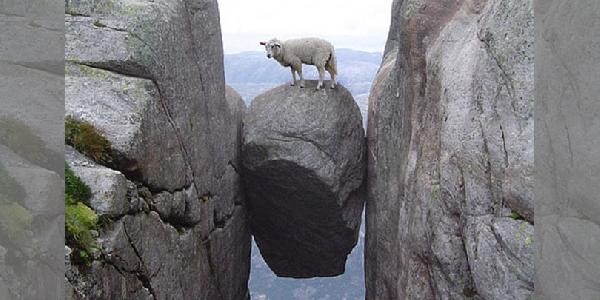
In short, I’m glad that Chen Ziquang isn’t adopting the usual unassailable mantle of a Tai Chi master who won’t actually get hands-on with students, but the downside of that is he’s going to be made to look very human against bigger people who have wrestling skills. If it is to convince people of the value of its Jin skills,and their use in martial arts, then I don’t know what the answer is, but this isn’t it. Tai Chi remains stuck between a rock and a hard place.










 The Tai Chi Notebook