The debate over leaning vs upright posture may have less to do with force and more to do with identity
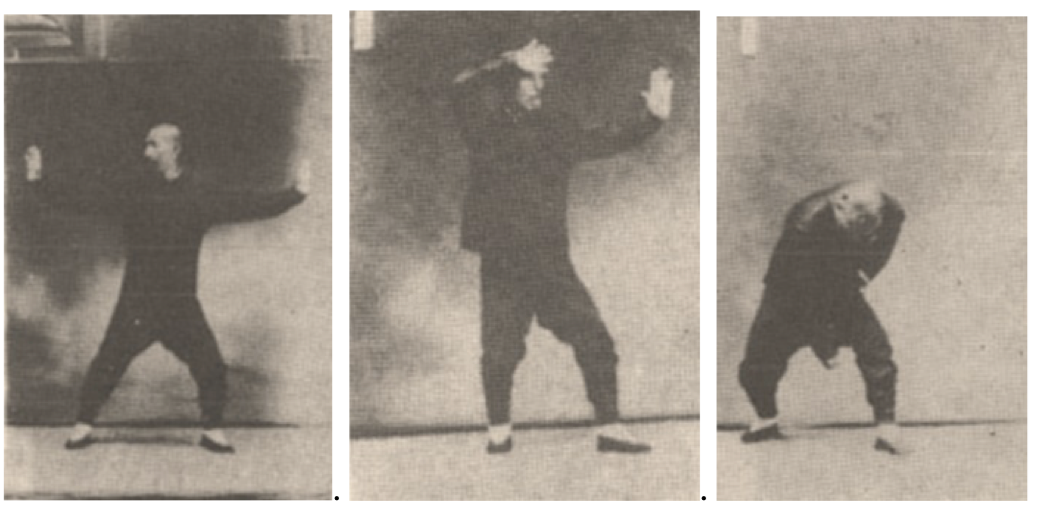
Does your tai chi style lean forward or stay upright? The debate over which is “correct” has been raging for decades now. Well, maybe “raging” isn’t quite the right word for a group of tai chi practitioners, but at the very least there’s been some polite disagreement.
The usual way of looking at this issue is biomechanical. Which structure delivers force—jin—more efficiently? Which alignment is stronger, more stable, more effective?
But what if we’ve been looking at this the wrong way?
What if the difference isn’t really about efficiency at all, but about who the posture was for?
I’ve just been watching a lecture by Sander L. Gilman called Stand up Straight! Cultural Perspectives on Posture, and it adds an angle to this debate that feels like it’s been missing.
Gilman’s core idea is simple, but powerful: the body isn’t just biological—it’s cultural. The way we stand, move, and hold ourselves isn’t neutral. It’s shaped by what society thinks is healthy, respectable, or even fully human.
Historically, posture has been loaded with meaning. Standing upright has been associated with discipline, control, and refinement. Slouching, or anything that deviates from that ideal, has often been framed as a lack of those qualities.
Crucially, those ideas have often been tied to class.
In one example Gilman highlights, early 20th-century medical writing didn’t just describe posture, it judged it. Working-class bodies and rural populations were sometimes compared unfavorably to “primitive” forms, while upright posture was framed as something closer to a civilized ideal. (source).
Strip that down, and you get a striking idea: “respectability” is something performed through the body. Posture becomes part of that performance.
So what happens if we apply that lens to tai chi?
Most histories trace tai chi back to Chen Village in Henan province, but its spread through Beijing brought it into very different social contexts. Some styles developed in courtly or intellectual circles, others among martial artists, soldiers, and working practitioners. And when you look at the postures, a pattern starts to emerge.
Styles associated with more scholarly or “refined” figures, like Wu (Hao) style or Sun style, developed by the famously intellectual Sun Lutang, tend to emphasise a more upright frame.
By contrast, versions of Yang style and Wu style, shaped by professional martial artists and military figures, often include a noticeable forward lean.
Of course, these systems evolved over time and weren’t defined purely by class. But the contrast is hard to ignore.
Even Cheng Man-Ch’ing, often described as a scholar and artist as much as a martial artist, modified what he learned from Yang Chengfu into a distinctly upright form. His idea of the “five excellences” — calligraphy, painting, poetry, tai chi, and medicine — paints a clear picture of the kind of cultivated identity he was expressing.
Seen through Gilman’s lens, this looks like a cultural divergence, rather than one based on pure technique.
Maybe upright posture isn’t just about alignment. It’s about signaling control, refinement, and education. And maybe the forward-leaning versions reflect a different set of priorities: function, application, and practicality over presentation.


Well, the official Yang-style, via Yang Cheng Fu, called for straight stance or at least a straight line from Hui Yin to the Bai Hui. Yang Lu Chan studied and taught the Chen-style … what you’re talking about is downstream semblances of “Tai Chi” that had lost all the original teachings and made it up as they devolved. The Cheng Man Ching style was purely his own and had little to do with the Yang style, as members of the Yang family will diplomatically point out.
There are mechanical reasons for being upright, but the main one has to do with the jin holding the head up, which in turn keeps the qi under the slight tensile connection that is required.
LikeLiked by 1 person