In the last episode of my podcast episode with Alan Wycherley about fantasy vs reality in tai chi we mentioned a subject that might have been unfamiliar to some of you – the ecological approach. This is a training method that is finding a lot of familiarity with BJJ right now, but I believe it has always been a part of tai chi training too, since tai chi contains push hands as a training method, which has the potential to be a free and playful exploration of movement.
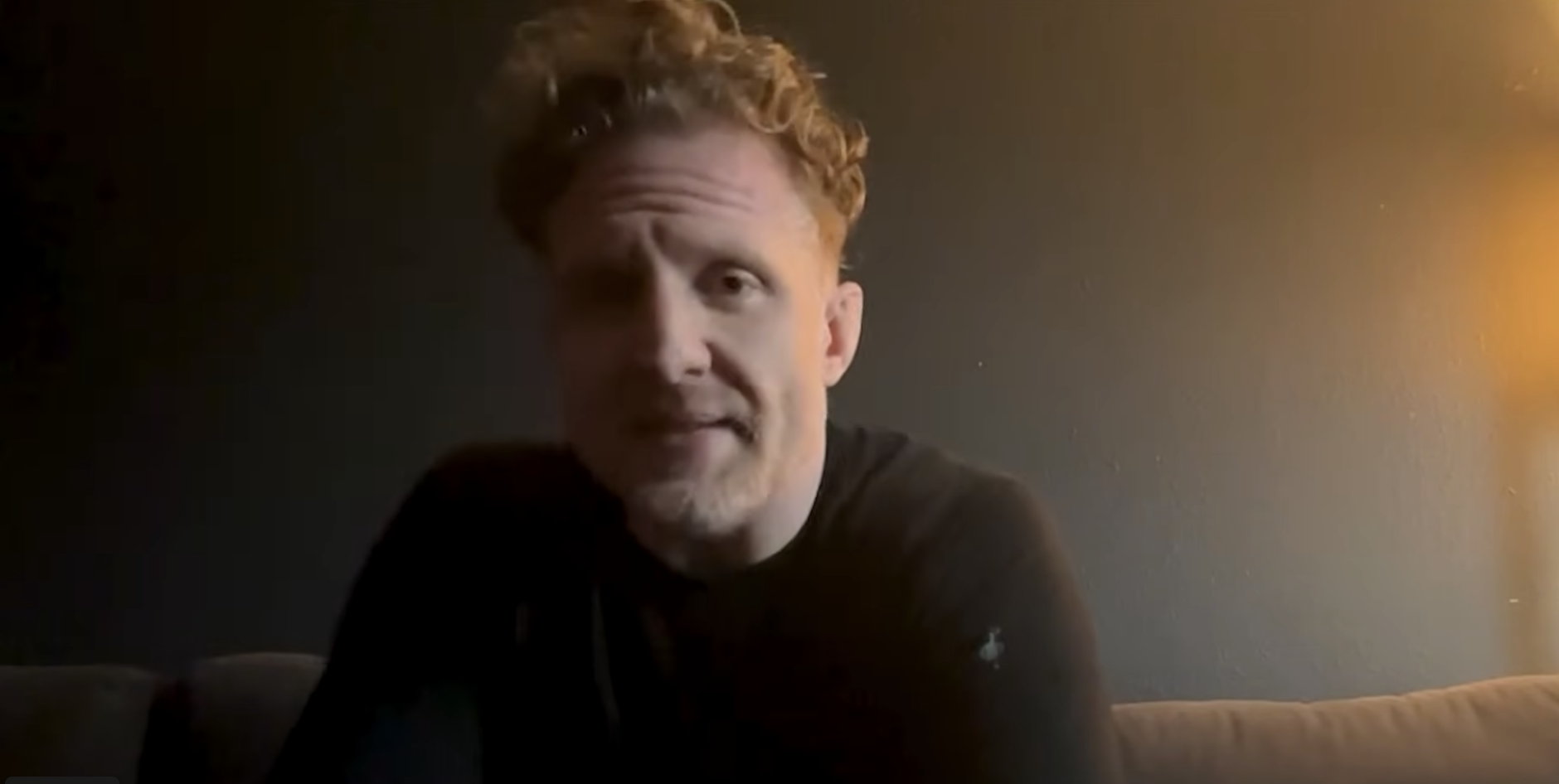
Rather than try and explain the ecological approach myself, I thought it would be better to hear directly from the guy who made it famous in BJJ, Greg Souders. As you’ll discover, he’s not afraid to say controversial things about the learning method adopted by most BJJ academies!
So, here he is on a no punches pulled episode of the Grappler’s Perspective podcast. Have a listen and see what you think:


Yes, I think you’re right, for taijiquan, push hands is the place to start. I already play some games, like keep your opponent from touching this point on your shirt (teaching hand position and attitude) or let the opponent press right onto your centerline (allowing students to overcome their fear of being pushed and introducing centerline defenses). But, instead of just letting them explore, I usually give them an answer to try. I need to figure out how to give them constraints, so they come up with answers themselves. Then, I need to tie the drill into their broader knowledge base and reinforce the skill, which I have not been doing, so it has been an isolated game instead of becoming a part of their body of physical knowledge and skill.
There may also be possible breaks with traditions. The thing that makes the Practical Method “practical’ is that foundation movements, forms, and push hands are all done in exactly the same way. Each is supposed to reinforce the others, which should speed up learning. In practice, students do hundreds of drills and thousands of forms, often mindlessly, with the idea of programming the neural pathways to make push hands better. That should probably be inverted: Use constraints to develop the push hands skill that informs the foundation skill and form movements. This feedback is already part of the system, but it is perhaps not optimized.
That then calls into question what is the role of solo, empty-hand drills and what is the role of the form. I still think these have their place. For example, the old study where basketball players were divided into three groups: Control, who did no extra practice; Group 1, who shot free throws; and Group 2 who only imagined shooting free throws and went through the motions without a ball. The Control showed no improvement, and Group 1 and 2 both improved but were not statistically different. The idea is to multiply and reinforce your practice when you do not have an ideal practice situation. The Ecological Approach would have introduced variability into the training rather than a static shot only from the free throw line. I am unsure how to do this with form and foundations, perhaps differences in tempo, varieties of surfaces, or physical interferences with the form or drill.
The role of form and foundations as a kind of diagnostic to see if the student is moving in a correct manner may become amplified. What is going wrong in an action that keeps it from working is not always obvious, especially with skills a subtle as those in taijiquan. However, instead of moving a hand or elbow to a certain place or changing the angle or width of a leg, which has always seemed fruitless to me anyway, a constraint could be given or possibly a push hands experience. CLA also includes the use of tools, such as a ball under an arm make sure it is at the correct angle and so on.
I don’t know. I am just spewing out ideas. It seems like a good framework for coaching though. I’ll share my experience as time goes on. I’d love to hear from others.
LikeLike
That’s great, thanks Richard. I’ll look up those resources as I have played with adopting elements of the ecological method in my approach to teaching jiujitsu. I think it’s a lot easier to do it when it’s a two person game, which push hands can be. You can easily imagine game-like situations in push hands. e.g. the goal is to keep your hands on top and trap your partner’s hands underneath yours, or your goal is to try and touch the other person’s shoulders without them touching yours, etc. Teaching a form in an ecological way might be a little more challenging! However, teaching body methods is perhaps not – ‘try and move your arm in a circle without powering from your shoulder, but by only turning the waist’, for example.
LikeLike
Graham, Thanks for posting this video. It is fortuitous timing for me as I am planning to resume teaching taijiquan this spring. I had not heard of the Ecological Approach. I think it will fill some gaps and improve some other teaching methods I’ve been using. It has already fostered some new ideas. I think it will really help me and probably others too.
The video’s interview and discussion format made the subject a little hard for me grasp as deeply as I wanted, so I looked up some of Mr. Souders’ sources and on YouTube found the Rob Gray channel. He is a professor at Arizona State University and a proponent of the Ecological Approach to skill acquisition. Two videos were particularly helpful. Key Principles of the Ecological Approach to Skill was an overview of the system, and An Ecological Approach to Hockey Goaltending Practice Design was an application to teaching a skill. I would post the URLs, but they seem to cause my replies to get filtered out from this blog.
I had made some trial-and-error strides in this direction in facilitating my taijiquan classes and from classroom teaching I had done. The most impactful of which was to transition to student-centered learning from teacher-centered presentation, or the Sage on the Stage approach. I was also familiar with Differential Learning (DL), but I hadn’t thought to apply it to taijiquan. The Constrains-Led Approach (CLA) to coaching was totally new to me. I think adopting the CLA is my next shift in method. This will give me a framework to re-evaluate what I am teaching and why.
I think taijiquan will adapt nicely to these approaches, but it will require some out-of-the-box thinking to do it well. I’d love to hear others’ ideas and experiences.
LikeLike