A friend shared a post recently about an interesting way of exercising called On the Minute, Every Minute. All you need to do is a number of reps of an exercise on the minute, every minute. The suggested start point in the article is 15 push ups, then 20 squats, then 20 plank jacks. That would take 3 minutes, so you just keep going 6 more times, up to 18 minutes. I quite like the idea because it’s simple, and simple is doable.
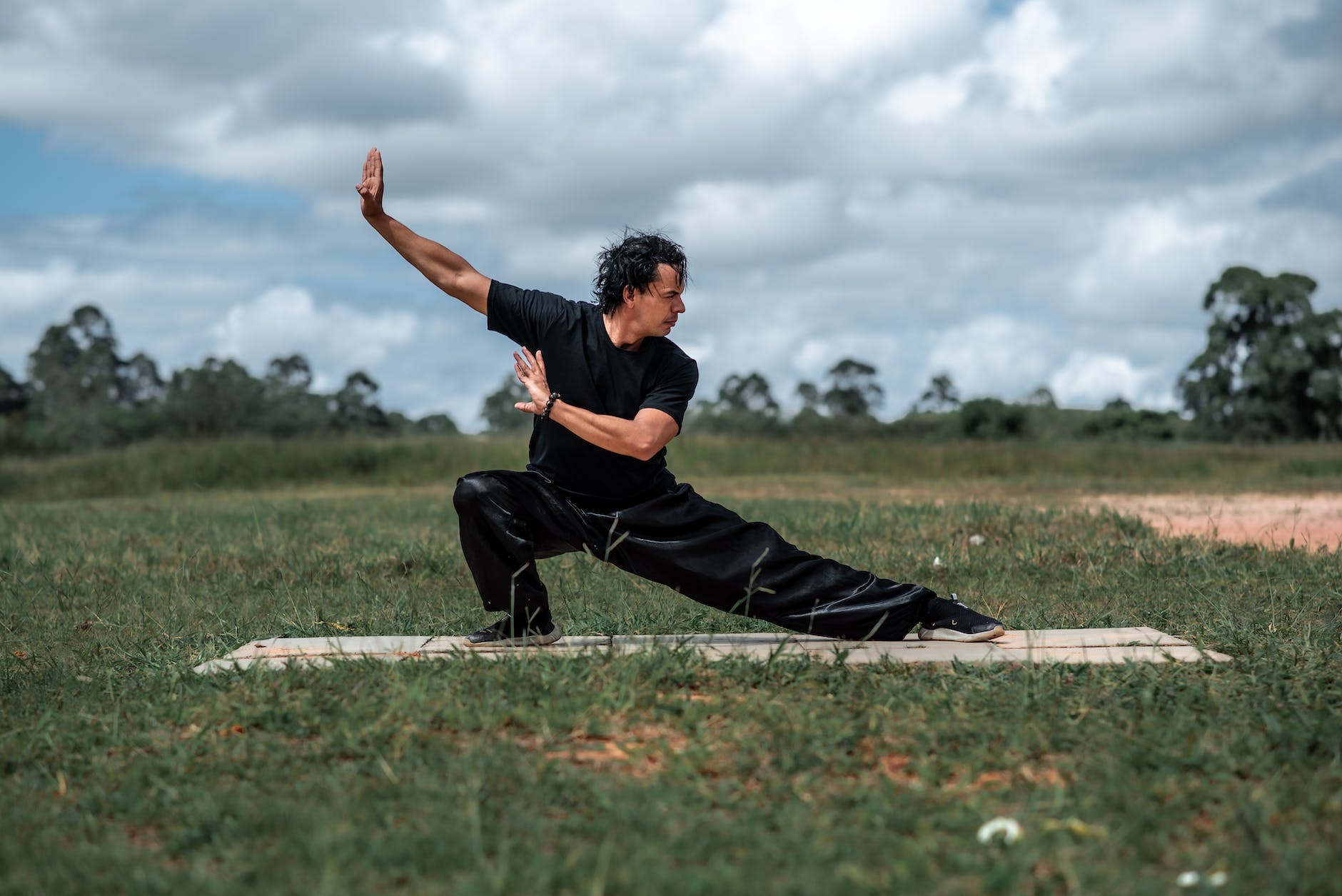
Then I started to think how you could apply the same OTMEM method to Tai Chi… Here’s one suggestion: One move every minute then hold until the next minute comes around. I think a short form has around 50-60 moves, so would take roughly an hour to complete like this. It depends what you count as a move. That’s basically an hour of stance training, which would be quite challenging. One for New Year’s Day perhaps? I’m going to give it a go, so let me know in the comments if you are going to join me.
And of course, if you want to push it further you could always up it to every two minutes!
 The Tai Chi Notebook
There’s nothing mystical or magical about Zhan Zhuang, Mike. I thought your beloved Chen Xiaowang was a big proponent of it?
LikeLike
Mike,
I think you are missing the point. Also, watch out so you don’t make other things onto mystical, magical things.
Enjoy your practice!
LikeLike
Graham, this is still based on the idea that Taiji postures are mystical, magical things unto themselves and it is the postures that make up a Taiji form. A form is a choreography; the basis of Taijiquan is how you move, qi, jin, dantian pulling and twisting the body via the qi, reverse breathing, and so on. What are you thinking? As Chen Xiaowang once said, if you truly understand how to move correctly, a form is not important: make up your own form.
LikeLike
It’s a nice variations on a couple of existing protocols. I like that it makes you cognizant of the volume of exercise you are performing. An important element for optimizing results is building in sufficient recovery time within each minute and after the sessions.
There are better protocols for cardiorespiratory fitness and better ones for maximum strength training. The way Graham suggests would develop muscle endurance. As soon as lactate builds up, the muscles turn to jelly. Muscle endurance exercises try to push that lactic acid threshold out in time.
Other options, besides holding stances are moving through stances. This could be a sequence of stances or a short section of a form.
As the article also intimates, training is as much about recovery as what you are doing as an exercise stimulus. So, don’t hesitate to interlace short recovery periods, or even break up the total time with one or more several minute recovery periods. And be sure to get good nutrition and sleep. This kind of training has the potential to be quite intense and need a significant recovery period.
LikeLike