How to use the mind in Tai Chi

art beautiful bloom blooming

Photo by Magda Ehlers on Pexels.com

All movements are motivated by Yi, not external form”,

I’ve talked a lot on this blog about things to do with the body in Tai Chi, but I’ve not really said much about the mind before. That’s because it’s a lot harder to talk about, since, as you’ll discover, the requirement for correct use of the mind in Tai Chi has nothing to do with “thinking”, which makes it especially hard to talk about because as soon as you verbalize or write down your thoughts you are, in effect, thinking about it. See the problem?

The classics use three words to describe the mind in Tai Chi:  Shen, Xin and Yi.

We’ll leave Shen and Xin off the table for now, but the important point is that different words are being used to describe different aspects of the mind.

Let’s look at the big one: Yi.  The Tai Chi classics are pretty unequivocal about the importance of Yi to Tai Chi:

All movements are motivated by Yi,

not external form.”

But what is meant by Yi? The English translation given is usually “intention”. However, I think this is cause of more confusion about Tai Chi than anything else. People take it literally and think it’s the intention you have when performing the movements of Tai Chi – like the intention to grab and arm, or the intention to fight, or the intention to break a wrist, etc..

When people try to demonstrate this correct intention they simply pull a mean face and try to look a bit stern and aggressive while punching or doing something dramatic. That’s not it.

The word “intention” is definitely related to what Yi really is, but it’s not what is meant by Yi, not by a long way.

If you look at the face of somebody good performing Tai Chi they never look like they’re straining, aggressive or mean. Instead, they look like they are full of awareness, absorbed in what they’re doing, but open to their environment at the same time.

Yi has nothing to do with thinking, in the conventional sense at all. If you look at somebody doing Tai Chi who is thinking at the same time their movements look a bit empty, their eyes fidget all over the place, they are absorbed in themselves but not really ‘in’ their bodies. The mind and body have become separated.

In Tai Chi you want to achieve a unity of mind and body, so that there’s effectively no difference. You are just one unit doing the work, or rather, letting the work be done through you. You are present, but simultaneously aware.

I like to call Yi “directed mind”. It’s all about directions. When I’m performing the opening movement of Tai Chi for example, I am performing an opening of the body as the hands raise and a closing of the body as the hands fall. My mind is performing the directions up, in, down and forward in that order.  I am directing where the body is going with my mind and eyes. Your eyes have to be working in harmony with the whole process, not distracted, or looking in the wrong direction for the movement you’re doing. Don’t look at your hands, look through them. When you do press for example you are pressing towards the horizon, not just at your imagined opponent.

All of this direction thinking – the quality of using the mind this way – is impossible if you are thinking thoughts. As soon as you notice you are thinking thoughts you’ve lost it.

When attempting this type of training my Tai Chi teacher would advise me to stop the form altogether if I noticed my mind had wandered off and go back to the start. After repeatedly doing this, your mind kind of gets the message that you’re not kidding. You really want it to stay with the body and what you’re doing for the next 5 minutes, and it quietens down and takes a back seat, allowing your awareness to come to the fore.

“Focussed awareness” is another good phrase to use to describe Yi.

Hopefully this post has helped you understand what is meant by the phrase, All movements are motivated by Yi, not external form”, a little better. As you can see, it’s tricky to talk about. The only way to ‘get it’ is by practice. What I’m describing is a quality that isn’t a physical object or movement, so it’s hard to grasp, but with repeated practice over time it will become as real as the very device you’re reading this on.

The Jing Cheng Wushu archives

Screen Shot 2019-12-30 at 9.22.07 AM.pngI just wanted to give a quick shout out to the work Byron Jacobs is doing preserving old Chinese TV performances of Chinese martial art from the 1980s.
“Jing Cheng Wushu” (京城武术) is a series that ran on Beijing TV in the 80’s. The title “Jing Cheng Wushu” means ‘The Wushu of Beijing’. Each episode focused on a Chinese martial art style popular in Beijing at the time and featured many prominent older generation practitioners, many of whom have passed away since.

He’s done three episodes so far, digitising and adding English subtitles. They are:

XingYi Quan


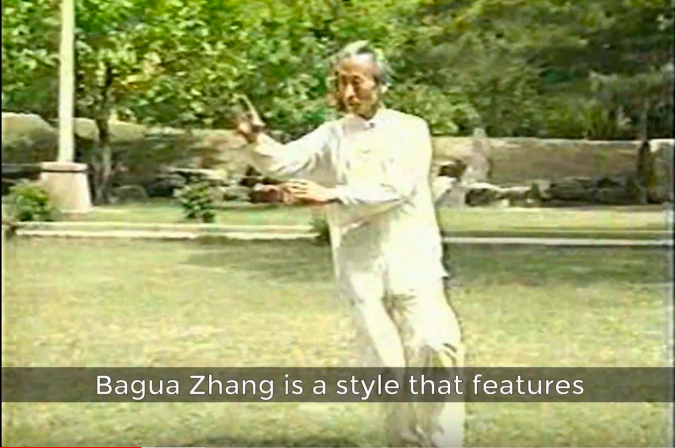
Bagua Zhang


Taiji Quan


The punch you didn’t see coming

action adult athlete athletes

Photo by Coco Championship on Pexels.com

I’ve already talked about how we use jin (planet force) all the time. I think there’s a good example from MMA and boxing that sheds some more light on this.

When boxers or MMA practitioners get knocked out by a punch it’s usually from one they didn’t see coming. The counterpunch is a deadly strike in combat because at the very moment you think you are punching them, they’re hitting you. Its effectiveness is partly down to surprise, and often you get a double impact because the attacker is moving forward into the punch of the counter attacker – a perfect example of ‘using their own force against them’.

But the surprise factor and force on force don’t explain why a punch that the guy doesn’t see coming is often twice as effective as a punch he is mentally prepared for.

I believe the answer is to do with jin and the subconscious mind. When you can see a punch coming, your brain can – in the fractions of a second you have available, – make subtle postural adjustments so that the force is absorbed by your body better against the ground. This is similar to the idea of a jin path to the ground we’ve already talked about. I believe we automatically and subconsciously do this in response to any impact we can see coming.

When we can’t see that punch coming it’s more damaging because we are not ‘in position’ to receive it as well.

The next time you watch a boxing match or an MMA match, think about this idea and see if it looks true on the slow-motion replay.

The upsidedown world of Tai Chi

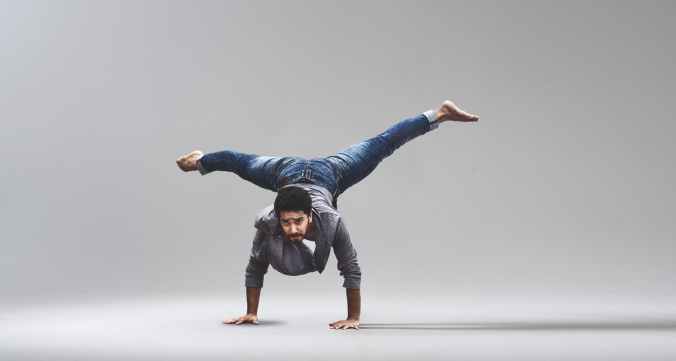
man performing handstand

Photo by Yogendra Singh on Pexels.com

I’d like to give a quick shout out to Cook Ding’s Kitchen who reposted one of my blog posts “Don’t Try“, which gave me the chance to read it again. It was about using less effort and not forcing things. Difficult words to live up to.

This started me thinking about one of the things that can help in using less effort in Tai Chi. A good trick is to turn our normal perspective on the human body upside down. We normally think of doing things with our arms and hands and don’t think much about the legs at all. In Tai Chi we want to reverse that.

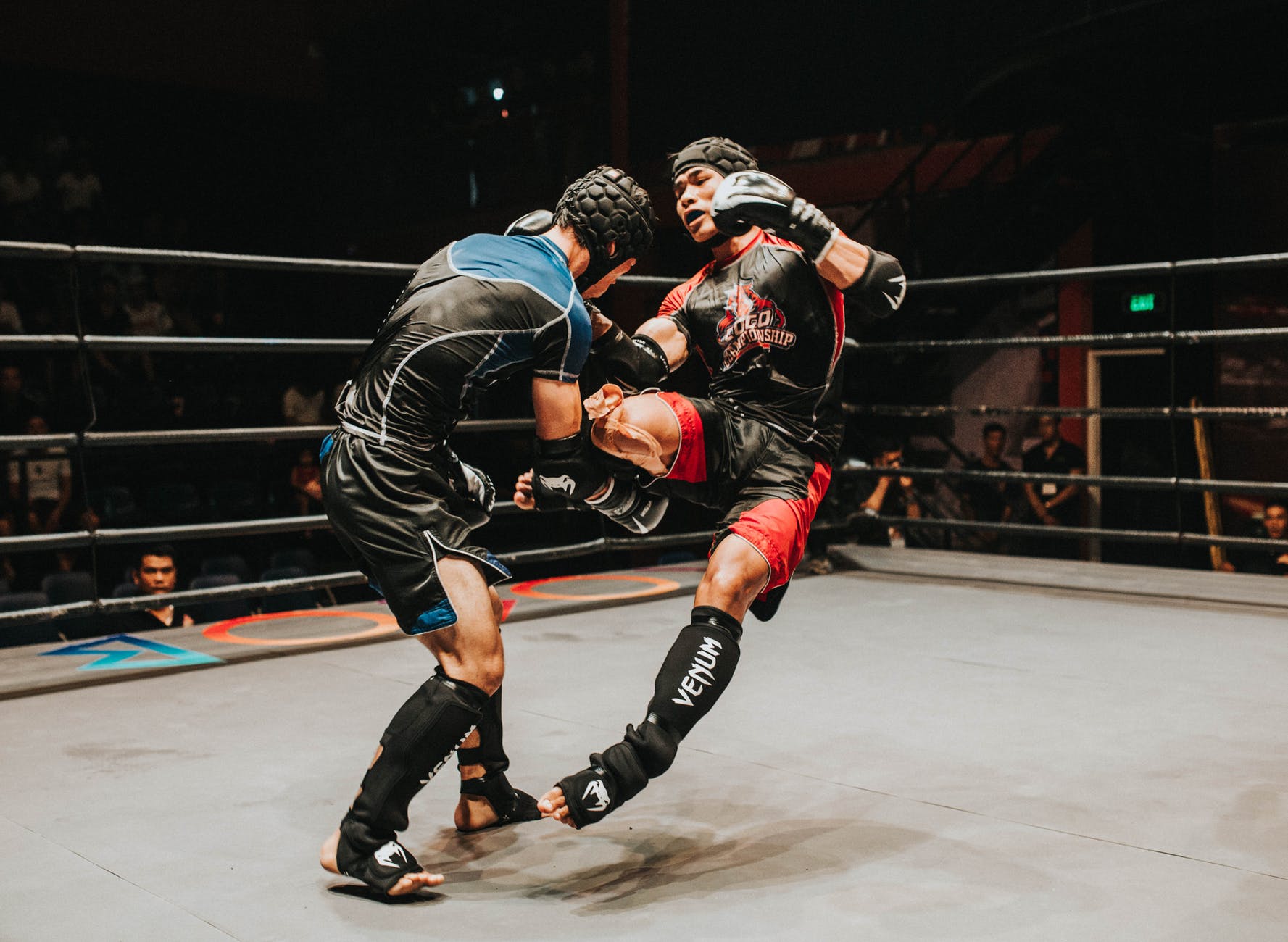
If we watch a boxing match, for example, we tend to look at what’s going on with the hands a lot, since that’s where all the action is, and generally miss the subtle changes of the legs.

low angle photo of two men fighting in boxing ring

Photo by Sides Imagery on Pexels.com

Tai Chi is boxing with the legs: You use your legs like arms, and your arms like legs. When you’re doing the Tai Chi form, stop using your arms to ‘do’ things and put all your focus into using your legs to do it. It’s a bit like walking on your hands: your arms and legs swap their normal functions over.

When doing the form or applications, your toes grip the ground, your weight moves fully forward or backward on the feet (no wishy-washy stances floating about in the middle ground, please), you are sunk and slightly low in your stance so you can get fully into your legs. In contrast, the upper body should be empty. Relax. Let the arms go where they need to go, but don’t move them there deliberately. Let your legs, directed by your middle, do the work. Think them into position with a directed focus (yi).

The Press posture is a good example of what I’m talking about:

ycf2

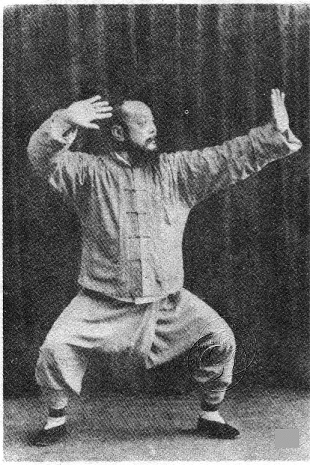
Yang Cheng Fu – Press

You put your inside hand on the outside arm wrist and push towards the opponent in a linear direction. Because you’re forming a particular shape with your hands in Press, it’s tempting to do this move with your arms cut off from the body. Instead, the power needs to come from the ground via the legs. Drop down and release from the dantien area to the ground and let the power of the ground rise up to the hands. Done right, you’re hitting the opponent with the force of the planet (jin), not just the force of your body.

As it says in the classics:

“The jin should be
rooted in the feet,
generated from the legs,
controlled by the waist, and
manifested through the fingers.”

and

“The whole body should be threaded together
through every joint
without the slightest break.”

and

“All movements are motivated by yi,
not external form.”


Staying rounded in Taijiquan

My Xing Yi teacher invented the word “chalicity” as an English equivalent of the Mongol phrase “Bak Tam Stay Saub”, which means (very roughly) “a bit like a capacious container”. So, chalicity means, “a bit like a chalice.”

A chalice, or a cup, is a rounded structure designed to contain a fluid with no leaks, and has parallels for both the mental aspect and physical aspect of a posture in the internal arts.

jametlene-reskp-21xmyDjZPck-unsplash.jpg

Photo by Jametlene Reskp on Unsplash

In the context of his shamanism practice, chalicity is more about the mental parallel – the space inside the cup reflecting the space inside a mind that is empty of thought.

However, in the context of Taijiquan and martial arts, you can think of ‘chalice-like’ as the physical structure of the body creating the space necessary to contain “Peng” energy, that is, the ground force used in internal arts expressed through a rounded structure.

Think of Peng energy as being the fluid inside the cup and your body as being the structure of the cup. Or you can think of it as the air inside a rubber ball. If you keep your body rounded, it holds the Peng energy nicely. If you don’t, it leaks out.

The posture requirements of Taijiquan

All the posture requirements of Taijiquan create a rounded structure for the body. Here are some:

1. Head suspended from above

2. Elbows drooped.

3. Chest sheltered / back lifted

4. Shoulders rounded.

5. Chi sunk to the dantien.

6. Kua rounded

7. Knees bent.

These requirements create the structure for your ‘chalice’ within which you can hold the Peng force.

These days all internal martial arts make use of Zhan Zhuang, “standing like a tree” standing postures, which the practitioner is required to hold for extended periods, work the same way. They all maintain this same Peng shape, with gently rounded limbs and upright spines.

adult and cub tiger on snowfield near bare trees

Photo by Pixabay on Pexels.com

Xing Yi Quan uses the San Ti Shi standing posture which has 6 requirements, two of which are bear shoulders and tiger embrace. Together these two requirements mean your torso and arms take up the same chalice-like posture. You maintain the Peng shape. It’s all the same idea.

Maintaining structure while moving.

Structure isn’t something that’s meant to be achieved only in a static posture. Part of what you’re training when you perform a Tai Chi form, for example, is the ability to keep this Peng shape as you move.

If you keep the requirements you can maintain Peng. If you break the requirements then your Peng force will leak out of your body, just as water would leak from a cup with a hole in.

So, if you start to drop your head or stiffen the neck, for example, or straighten your legs or raise your elbows, you lose the natural power of the body working together all powered from the ground, and you have to start muscling it to compensate in your techniques.

So, to work in internal arts, all the techniques need to be expressed within the framework of this structure, and some techniques in martial arts just aren’t suited to maintaining this Peng structure.

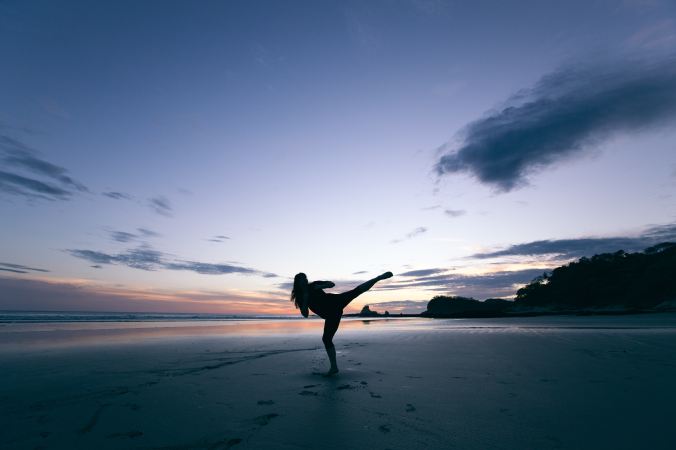
Take for example, a side kick.

jason-briscoe-HN_4K2diUWs-unsplash

Photo by Jason Briscoe on Unsplash

There’s nothing wrong with a side kick, but you physically can’t keep the body ‘rounded’ while performing a side kick to the opponent’s chest because of the angle you need to open your hip to. Just look at the photo.

I think that’s one reason why you don’t often see the a side kick in most Tai Chi forms or in fact in Xing Yi or Bagua. The kicks you do see in the internal arts tend to not take the hip out of alignment with the rest of the body.

Does that mean you can never do a side kick again? Of course not, but generally, you need to keep your rounded structure at all times when practicing internal arts, that way you keep your Peng energy rounded and the true power of the internal martial arts can be expressed.

Tai Chi is open and close happening simultaneously


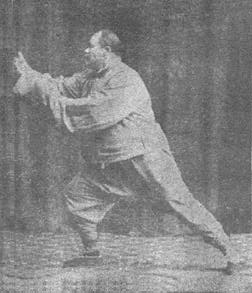
Wu Jienquan not lean

Wu Jianquan

Tai Chi is opening and closing happening simultaneously.

That’s one of the secrets of Tai Chi, right there. Unfortunately, as with much of the truths about Tai Chi Chuan, the statement doesn’t make any sense unless you already know what it means.

As an art, much of Tai Chi is self secret like this. In one way that’s frustrating, but in another way it’s freeing because it means teachers don’t have to hold things back. The secrets reveal themselves over time.

Look at the Tai Chi Classics, for example. They’re a collection of pithy martial arts sayings that hide deeper meanings. “5 ounces of force deflects a thousand pounds“, “Walk like a cat.“, “Store up the jin like drawing a bow.”, etc.

Many of the sayings in these documents don’t mean anything to people reading them who don’t already understand them. So, there’s no risk in losing ‘the secrets of the art’ by publishing them, which is perhaps one reason why the Tai Chi classics are in wide circulation, while other martial styles keep their writings secret, held only within families.

Perceiving opening and closing

When you’re doing your form, can you perceive movements that are obvious opening movements, and movements that are obviously closing movements?

It’s good if you can. If you can’t then think about this – roll back (lu) is clearly a closing movement, and ward off (Peng) is obviously and opening movement. Look for the same actions in the other movements. On the opening movements, the body expands outwards. On the closing movements the body contracts inwards.

ycf_roll_back

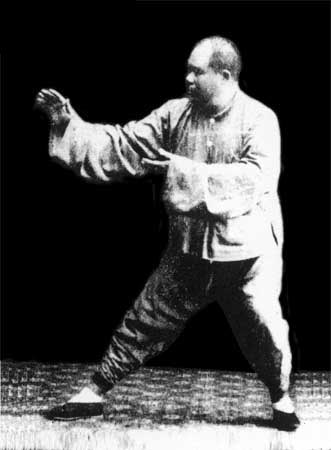
Yang Cheng Fu – Roll back

But that’s not the end of the story.

If you’re perceiving the form like this – a series of opening and closing movements that happen one after the other, then you’re not quite on the right track.

The key is that the opening and closing are both happening all the time simultaneously. So, as one part of the body is closing whilst another part is opening.

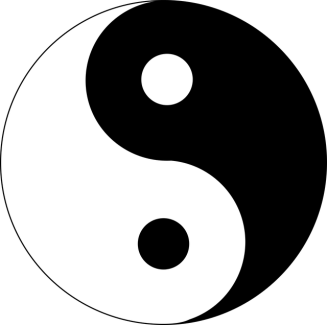
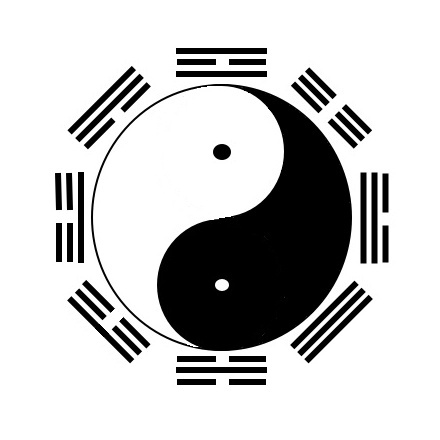
Look at the yin yang symbol. If you follow it around in a circle with your eye you can see that as one aspect grows stronger, the other aspect diminishes, but is also being born again and growing. It goes on in an endless cycle.

PakuaPostHeaven

It’s these cycles you need to pay attention to in the form. It should feel like this cycle of opening and closing movements is going on with one movement giving birth to the next, rather than perceiving them two separate movements where one starts, then stops, then the other starts and stops. The movement is continuous. It goes out, it comes back, it goes out again.

Silk reeling circles

Let’s break this down into something more tangible.

A while ago I made a video course on the basic single handed silk reeling exercise. This exercise is great because it gives you a chance to work on opening and closing in a relatively simple movement.

Out of the whole course, part 1 is probably the most relevant video to explain what I mean:

Here’s what I’m doing in the video: I’m looking for a slight stretch across the front of my body and a slight stretch across the back of my body (the yin/yang aspects). As the arm goes out the front of the body gradually becomes more taught until there’s enough tension there that I can use it to pull the arm back in. As the arm comes back in, the back of the body becomes slightly more taught until there’s enough tension there to use it to expand the arm outwards. This is all integrated with reverse breathing which powers everything from the Dan Tien area. It’s a very stretchy, rubber band-like practice.

You can start with big, crude circles, but work down to smaller more subtle circles.

But ultimately you’re looking for the feeling of the cycle of yin and yang, opening and closing going on in the body.

It’s this feeling that you need to take into the Tai Chi form where opening and closing happening simultaneously through a myriad of different movements.

Kung Fu Tea on Sun Lu Tang

sun_lutang-self-portrait-for-publication

There’s a great article over on Kung Fu Tea about the life of one of the most influential Chinese martial artists of all time, Sun Lu Tang.

One of the persistent problems that I see in amateur discussions of “Chinese martial studies” is a lack of understanding of how broad the traditional martial arts really were, and the variety of life experiences that they encompassed.  In fact, rather than discussing China’s martial culture in the singular, it would probably be better to think about these cultures in the plural.  The martial arts never were just one thing, and our experience with the modern “traditional” arts tends to seriously skew our perceptions of the past.

It’s a good read, so sit down with a cup of tea and put your feet up with your laptop.

Link.

Real world uses for Taijiquan, Aikido and XingYi, from a real police officer

2.2-udegaeshi-or-daojuangong

I love this article by Bill Fettes, a retired Australian police officer, I came across recently on Ellis Amdur’s blog. It discusses real world uses for the techniques found in the Internet Arts he has trained- Aikido, Tai Chi and XingYi. I like the mix of no nonsense description and practical demonstration.

What’s great is that Bill gives clear recollections of the techniques he actually used “on the streets”, then provides demo pictures of how it played out with a partner. Take a look!

My overwhelming observation is that what he’s showing looks exactly like the kind of techniques my Tai Chi teacher does all the time in push hands/sparring. In fact, I recall being on the end of them several times!

5.4-eagle-bear-or-ji

A lot of the time I see people training Chinese Martial Arts with too much emphasis on getting a single hit in, as if that would be the end of everything. It won’t. “One strike one kill” is a nice idea in theory, but I don’t think you’re meant to take that idea litterally.

One thing my Tai Chi teacher emphasises is that he wants the fight to end with the other guy controlled at his feet, pinned to the ground in some way so he can be incapacitated or restrained. If you want to run away then why not give yourself a head start by breaking something first, or calming them down? Or if you want to hold them in place until help arrives you need to have trained that skill.

You can’t just keep hitting people – it prolongs the conflict and turns what started as a self defence situation into an assault by you on the attacker, even if you were the original victim. Just imagine how it’s going to look on CCTV, which is everywhere in the UK.

Homework time

Tai Chi people! I would suggest you incorporate these techniques into your push hand if you are not doing so already – it’s not hard to see where you could fit them in.

XingYi people! – Note, there’s also a nice reference to one of my favourite XingYi animals, the bear eagle, in the article. And also check out the quote below about the observation of wild animals – this is your homework 🙂

Everyone! One more thing to consider about this article – he’s not really talking about weapon assaults or multiple opponents. How do you think that would change outcomes and what he’s doing? Discuss.

Animal observation

Quite often in martial arts like XingYi we are encouraged to observe actual wild animals and the way they fight. I really like the part of the blog post where he describes a similar instruction from a teacher, and real world example of usage:

When living in Japan, I attended several meetings of martial minded fellas, organized by Phil Relnick. Phil was kind of a godfather to most of us non-Japanese martial artists, having lived and trained in the country since 1955. At once such meeting, a U.S. student living in Singapore, who was studying the Shaolin animal forms, was invited to speak. He told us that his teacher had him go to Singapore zoo each day and study his animal: the boar. He then had to report back with anything he had learnt. I thought that was a pretty cool idea until Master Wang Zhong Dao designated me a ‘tiger,’ and gave me the same instructions. Then it became hard work. I was not sure why he designated me a tiger, maybe my big paws or shoulders, or maybe because I was always pacing or prowling, never being able to keep still. Most masters don’t explain their reasoning to plebs, anyway, so I spent a lot of time observing my namesake behind bars. One thing I did notice about the tiger was that when attacking, it generally uses its weapons on the throat; I used this a couple of times on the street with quite unusual results.


Tai Chi should be heavy, like a stone


samuel-castro-0-L3vTLT7E4-unsplash.jpg

Move your hips! Photo by: Samuel Castro

One of the most frequent things you hear in BJJ is “move your hips“.

Brazilian teachers tend to say “escape your hips“. Which is an odd-sounding translation of presumably something that sounds better in Portuguese. In American and English it usually gets turned into “hip escape“, as in, “do a hip escape here“, “it’s not working because you need to hip escape more“.


We hip escape up and down the gym as a warm up (also known as “shrimping”) because it’s a fundamental movement you need to have in your tool box that you can pull out without having to think about it.

But why? What is it? Simply put: It’s designed to create more space between you and your opponent on the ground.

You can use hip escapes for escaping bad positions like side control and mount. But it also has benefits for attacks too. Basically a good rule of thumb is that if what you’re doing isn’t working try doing a hip escape and doing it again. The change of angle and leverage will probably fix it.

Now we know what a hip escape is, let’s get to the point of all this.

When we say “move your hips” that’s not the part of the body that you need to move from. If you just moved from your hips you’d never go anywhere.  You’d just spasm on the floor like a dying fly having its last buzz. What you actually need to do is push with your toes and feet on the ground so that your hips move.

Screen Shot 2019-09-26 at 11.12.11 AM.png

Your hips moving is the result of the action, not the action itself.

Which brings me onto Tai Chi Chuan and the dantien (the lower abdomen area of the body).

All wise and knowledgeable Internet-enabled Tai Chi practitioners know that we need to “move from the dantien” in Tai Chi Chuan. (This is the supposed secret to Tai Chi that you get told by your wise master only after you have paid the required tuition fees for a number of years. 🙂 )


800px-cheng_man-ching

Cheng Man Ching, Single Whip posture.

But again, where does the action originate? I would say that, just as in JiuJitsu, you don’t actually “move from the dantien” by originating action there. Your dantien moves, but it’s your foot that provides the impetus. Your foot pushing against the ground is where the ‘power’ comes from in Tai Chi Chuan.

(A side note here for the Order of Advanced Tai Chi Wizards of the Internet: When you get this concept of the power from the ground you will find that you can actually originate the movement in the dantien as a kind of dropping force that is then rebounded from the ground, so it’s less of a push with the legs. File this under “advanced” if it makes no sense right now and come back to it later).

What Tai Chi Chuan specialises in is transmitting this power to the extremities without interfering with it as much as is humanly possible. We know that in Tai Chi we need to be relaxed (song), which seems like the last thing you’d want to be if you have to hit something hard, but there is a method in the madness.

In Tai Chi Chuan you are trying to transfer that power – the ground reaction force – from your foot all the way to your fingers as smoothly as possible and directing it with the dantien. This is called ‘threading a pearl through the 9 crooked gates‘ in the Tai Chi classics. The gates here are the joints of the body. All the breaks in connection between your foot and fingers are the points where power leaks out. Usually we cover these things up by using muscular strength to get by – you can spend years fooling yourself with this, and it’s a very hard habit to stop.

basecheng

Points of interest, where we generally mess this up, are the lower back (keep it open) and the shoulders (stop using them as a power source). The whole body should be Song.

‘Relaxed’ doesn’t mean light and floaty. It means heavy and rooted like a stone.


Gu Ru Zhang style Tai Chi Chuan

I posted this video of me doing Tai Chi in the rain back in 2012. This is a short form derived from the full long Yang form of Gu Ru Zhang (Ku Yu Chang) the famous “King of Iron Palm” from Hong Kong.

You see the famous picture of him breaking tiles without spacers quite a lot:

guruzhang3B

Gu Ru Zhang

Gu Ru Zhang’s style of Tai Chi is still quite rare. It’s from the Yang family originally, but had some input from his friend Sun Lu Tang, and you sometimes see it incorectly called Sun Style.

Gu published a book in 1936 on Tai Chi called “Tai Chi Boxing”, which you can find translated on the Brenan Translation website.

I’ve done various different styles of Tai Chi, but I always come back to this form. It’s my favourite. Anyway, here’s my video: