Update – December 2025: I received a message from the person who posted the 1974 Whitehouse video linked below, who has written a Wikipedia article with more info: “I just published an article on Wikipedia regarding this chapter of wushu history: https://en.wikipedia.org/wiki/1974_China_national_wushu_team“
I’ve actually only just noticed a comment on my Contacts page from January by Robert Lepper:
“I suggest you do an article about the 1974 historic visit to the United States by the elite Chinese National Wushu Team. There was a famous visit to the White House Rose Garden with President Nixon, Dr. Kissinger and other dignitaries. In October 2024 the team celebrated their 50th year celebration of the U.S. performances in Beijing and Qingdao City. After the U.S. demonstrations in 1974 they demonstrated in Great Britain (1975) and many other countries. These martial artists were the best of the best. It was the opening of China and Chinese martial arts to the world. Jet Li at age 11 was on this famous team.
There are many pictures available and a news video (poor quality) of the demonstration in the White House Rose Garden.”
Well, this actually seems like a good idea, especially since it was Jet Li who was demonstrating. I had a quick look online, and yes, there is a video of the event, showing a young Jet Li demonstrating a 2-man wushu form in front of President Nixon:
From what I can see, this looks like a version of the ‘Shaolin 2-man form’ that I learned years ago. Certainly some of the still postures – like the one in the video thumbnail cover – are postures I recognise.
Nixon first visited Beijing in 1972, in an effort to start establishing relations with the People’s Republic of China, after years of diplomacy that favoured the Republic of China, based in Taiwan. The visit was a huge symbolic gesture. This 1974 visit looks like a return visit, with the PRC trying to push the image of Chinese Wushu to the West.
It’s interesting to think of how Wushu is being used here as a demonstration of China’s soft power, and there’s no sign of any Taijiquan. This was not long after release of Enter the Dragon, when Bruce Lee had introduced kung fu to the international stage for the first time. Li would later become famous as a kung fu movie star in his own right, starring in films such as Shaolin Temple, the single most influential feature film in Shaolin history, and the film that many people suspected to have caused the re-population of the Shaolin temple with monks and the creation of a major tourist centre in China. I’d recommend Matthew Polly’s book American Shaolin.
It’s such an interesting historical footnote to see both a young Jet Li and President Nixon interacting together, back in 1974.
Now, you can agree or disagree with Rantwo’s opinion on whether the Pak Mei guy can fight or not. Personally I think Rantwo brings up some good points, but I’ve heard other people argue that he’s kind of missing the point – sparring never looks good.
Anyway, I don’t want to get into that. My comment on the video would be that Rantwo is making the classic mistake that a lot of people make when looking at videos of traditional master getting beaten up by average/bad kickboxers and then deciding that martial art XYZ must be no good: It’s always a reflection on the person involved, not the whole style.
I don’t think you can view a couple of videos of Pak Mei guys then decide the whole style is “not for fighting”. I can guarantee you there are Pak Mei guys out there who have no problem throwing down. To just dismiss a whole style like that seems to be incredibly naive.
When it comes to sparring, I don’t think there are styles, there are just individuals. At least that’s the way I look at it.
I’ve been meaning to read the story of Matthew Polly’s time spent training at the famous Shaolin monastery for years, but I finally got around to it recently thanks to my Audible.co.uk subscription*. And what a great read it is! I’m sure we can all identify with the teenage Polly, unsure of himself and his place in the world, who falls under the spell of Kung Fu and decides to dedicate his life to the pursuit of it as some kind of escapism from the pressures and fakeness of the modern world. To Polly, Kung Fu represented something sublime, pure and otherworldly that actually meant something. But unlike most of us, he did more than just dream about it, he actually went to Shaolin and lived there for almost a year, at a time when there was no Internet, no easy way to get there and China had only recently opened up to foreigners, so most Chinese people had never even seen a Laowai in the flesh before.
Polly’s story could best be summed up as a sequence of misadventures punctuated by moments of sublime martial arts inspiration. He manages to get into all sorts of scrapes involving accidentally offending senior party officials, being entered into a tournament against a San Da champion and hilarious misadventures with the opposite sex. Part Bill Bryson-style travelogue, and part kung fu geek-out, this is a rewarding, even emotional, look into what the Shaolin monks were really like in the 1990s, just as their international fame as stage performers was starting to spread and take over from the mystical image everybody had of them from the Kung Fu TV show. (Interestingly, at one point Polly watches the Kung Fu TV show with the monks who laughed their heads off at the idea of burning a dragon and tiger into your arms by lifting a hot anvil and dropping it into the snow – “why would you do that???”)
What you really get from this book is a sense of what the Shaolin monks are really like back then, and how much more human, relatable and down to earth they are compared to the lofty ideas we all have of them. It answers all the big questions like, how good are they at actually fighting, how seriously they take the “monk” side of their lives and how they train iron first, arm, head and even iron crotch.
The little snatches of Chinese you pick up by reading the book are also a hidden bonus and bring the characters to life marvellously. By the end of the book you feel like they are your friends and you know them just as well as Polly did. Anybody who likes this blog would love this book. Recommended.
N.B. The cover with a monk holding a Burger King bag is representative of the idea of American values seeping into China, but a little misleading as there were no Burger Kings in China then, and certainly nothing like that in the rural backwater of the Shaolin village.
*Like a number of other books, American Shaolin is included in the cost of an Audible subscription, so if you are a subscriber you get it free.
“When you can take the pebble from my hand, it will be time for you to leave.” – Master Kan
Here’s the blurb:
“Did Western movies and TV lead to the creation of the Shaolin Warrior monks? Did the modern Shaolin fake something that had already been reinvented anyway? Did the Qing Dynasty really destroy the Shaolin temple, or did they instead create it? What influence did three subsequent phases of communism have on Shaolin? Was there a Southern Shaolin Temple, and what about the modern stuff at Wudang Mountain? These questions and more answered in our new episode on the infamous temple and its monks.”
Seeing these old masters from Taiwan looking so good while practicing their external arts has made me wonder about switching my priorities.
I’ve been enjoying the recent series of videos from Will on his Monkey Steals Peach YouTube Channel of his tour of Taiwan Kung Fu schools. The latest one features Long Fist. It’s been great to see so much good technique demonstrated and also a few of the younger students, proving the arts have a future.
But of course, a lot of the practitioners Will has featured are older, but that doesn’t stop them being proficient in dealing out the ass whoppings. This has made me reflect on my own training priorities. A lot of these fit-looking older men are training in arts that would be classified as ‘external’ like Long Fist and Mantis, rather than the so-called ‘internal’ arts like Tai Chi or Xing Yi, which are more normally associated with older people.
Perhaps shifting focus to these external arts, which have longer postures with more twisting and stretching, and are practiced more vigorously is a good idea as you get older?
I’ve got to admit, that while I do feel good after a few run throughs of the Tai Chi form, I probably feel more energised and exercised after a few runs through of a Choy Li Fut form. My cardiovascular system is placed under more stressed for one thing, and my joints get moved through a larger range of motion.
“When you practice the form, the slower the better!” – Yang Cheng-Fu
Of course, Yang Cheng-Fu in his 10 Important Points, famously used this distinction between internal and external to explain that external arts were “harmful” for you, and the fact that you don’t get out of breath doing Tai Chi proved its superiority! He wrote (recorded by Chen Weiming, and translated by Jerry Karrin):
“External martial artists prize leaping and stomping, and they do this until breath (chi) and strength are exhausted, so that after practicing they are all out of breath. In Tai Chi Chuan we use quiescence to overcome movement, and even in movement, still have quiescence. So when you practice the form, the slower the better! When you do it slowly your breath becomes deep and long, the chi sinks to the dantian, and naturally there is no harmful constriction or enlargement of the blood vessels. If the student tries carefully they may be able to comprehend the meaning behind these words.”
Yang Cheng Fu
Now, it doesn’t take a genius to make an observation that Yang Cheng-Fu could have done with losing a few pounds himself, and that since he died relatively young his thoughts on longevity should be taken with a pinch of salt. Frankly, I think he could have done with getting a bit out of breath now and again!
It’s also fairly obvious to anybody who has seen Chen style Taijiquan that ‘leaping and stomping’ can be a part of Taijiquan too.
However, I do think there’s something to what he’s saying. When moving slowly and achieving a mediative state of mind you can experience profound levels of relaxation that do feel different to other types of exercise. When you “slow your breath” and it becomes “deep and long” it can feel wonderful. However, is that enough? I think it’s a mistake to use this type of exercise to replace more traditional cardiovascular exercise, and your body will not thank you in the long run.
Why not do both? Tai Chi has its place, but so do external arts of the Shaolin variety. Perhaps the best approach is to not skew too heavily in favour of either, but to adopt a balanced approach where you train both equally? Let me know what you think.
My guest for this episode is Will Wain Williams. Will has a background in Taiji Mantis Kung Fu, which he trained in China, where he also lived for 13 years. He’s traveled around Asia documenting ancient Kung Fu systems for his YouTube Channel Monkey Steals Peach ( https://www.youtube.com/@MonkeyStealsPeach ).
I talk to Will’s about his travels documenting kung fu styles, as well as his upcoming trip to Taiwan and how he’s recently started Brazilian Jiujitsu.
People often claim that it was Bruce Lee who was the father of the Kung Fu boom of the 1970s, but was he really? Sure, Bruce brought a sense of realism to the genre, but it was Kwai Chang Caine who set the ball rolling. The other popular TV series Monkey and The Water Margin were also influential, but felt like they were aimed at a younger audience. And for kids like me it wasn’t possible to watch a Bruce Lee movie – they all tended to be rated 18.
I’d go as far as to say that Lee wouldn’t have had the movie success he had, particularly in the west, if it weren’t for the Kung Fu series.
Here’s a good documentary on the making of Kung Fu – I still remember some of these action sequences, particularly the one where he kicks the knife out of the guy’s hand and it sticks in the roof, which is shown in this video. That moment was the start of my lifelong interest in Chinese martial arts.
Just a short post today, but I really liked this video of Shaolin Da Hong Quan (“Big Hong Fist”) from Will at Monkey Steals Peach. He shows some applications at the end too, so keep watching. The applications look like some I learned in Tai Chi, and I can see some of the punches have a lot of similarity with Xingyiquan. More evidence that Chinese martial arts are all one big family.
Michael Rook posted about an online course in Hap Gar that’s starting in January, so I thought I’d check it out and had a go with one of the free videos as my morning workout. The teacher is David Rogers of Rising Crane, and the workout is a nice, not too heavy, way to start your day while learning some Kung Fu. Plus it’s free, so give it a go! I really enjoyed it. After a warm up you’ll work on the first 5 basic punches of Hop Gar and some stances.
Richard is a teacher of Tai Chi and Hap Gar Kung Fu through the Rising Crane. David only takes one or two student groups a year for online learning, and it’s a very interactive, personalised training session so a whole group can move through it together, getting feedback as they go.
I haven’t done Hap Gar before, but I’ve done a lot of Choy Lee Fut, and to my eyes there appears to be very little difference between the two. Hap Gar looks like a version of Choy Lee Fut to me, even the same names are used for the moves, so it was great to experience a Kung Fu style I was already familiar with, but from a slightly different perspective. I also liked his thoughts on fighting strategy for these long range styles that he gives at the end, around the 35 minute mark, plus I liked his thoughts on MMA.
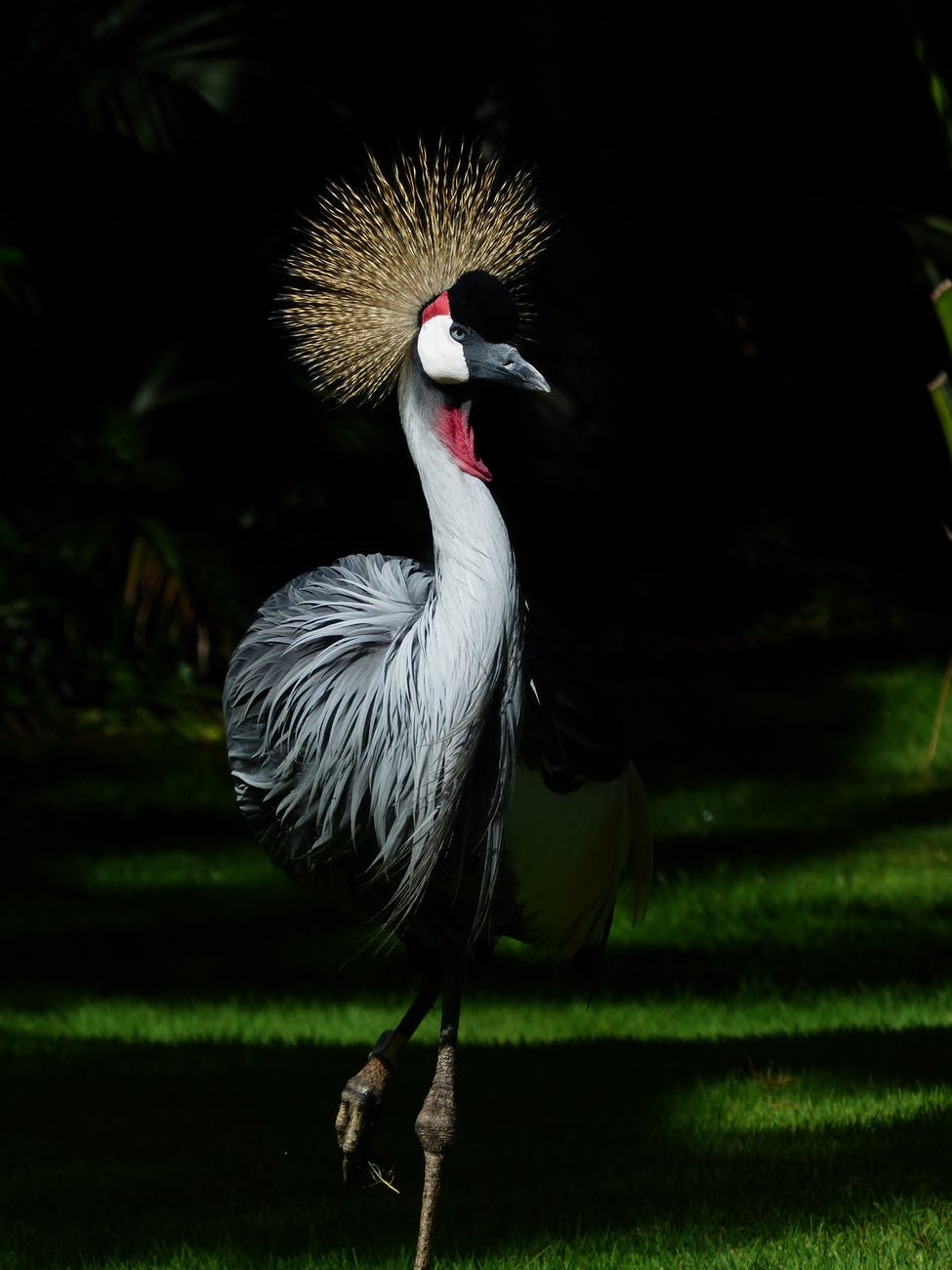
That is one mean looking crane. Photo by Pixabay on Pexels.com
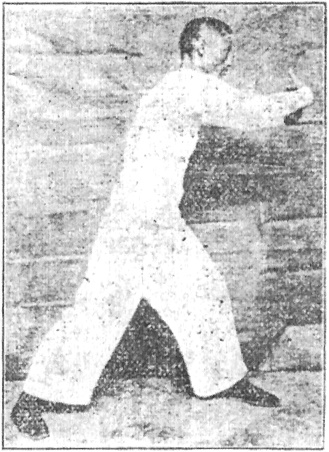
Long Zixiang performing the “press” movement of Tai Chi Chuan (1952, Brennan Translation).
People always want their favourite martial art to be really old, as if that somehow makes it more effective. In reality, age has no bearing on effectiveness and it’s the practitioner that is effective anyway, not the art.
In short, it doesn’t matter what martial art you practice, it matters what you can do with it.
Looking for scraps of evidence to somehow prove your art is older than it is, is a pedantic and pointless route to go down.
I’ve still seen no credible evidence that Tai Chi existed before 1850 beyond legends and myths. However there were plenty of Republican era Tai Chi manuals published in China by the Kuomintang, and almost all of them include some sort of dubious history section that traces Tai Chi back over a thousand years. Don’t latch onto these things – they are a product of their time, a time when the martial arts was being politicised to strengthen the nation in the face of foreign aggression and burn out the memory of previous humiliation by European powers who had advanced all the way to Beijing and captured the city during the second Opium war, forcing humiliating concessions from the Ching.
Thanks to the Brennan Translation website, you can read a lot of these Republican era manuals for free, and look at the photos, which are a fascinating insight into martial artists of the time and what they looked like.
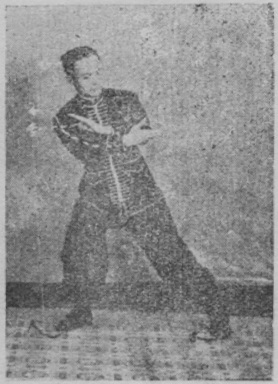
Gu Ruzhang, “King of iron palm” and author of Taiji Boxing.
Myths and legends
For example, the famous Gu Ruzhang, the “King of Iron Palm”, wrote a 1936 “Taiji Boxing” manual which contains one of these history sections.
He writes: “China’s boxing arts have many names, but amount to no more than the internal skill and the external skill. The ancestor of the external is Shaolin. Its movements are all magnificently expressed. Since its principles have been spelled out by many previous generations, they do not need to be repeated here. The ancestor of the internal is Wudang. Its strength is stored within, such as in Taiji Boxing. Its power not being outwardly displayed, it instead has a pure naturalness. Like an unending circle, its movements are lively. And so it is deemed internal and is different from Shaolin. Taiji Boxing’s origin can be separated into five versions:”
The idea of Taiji Boxing being different to Shaolin is the thing he’s highlighting here – he’s trying to create something in contrast to Buddhist outside influence. Something Chinese that can bind the nation together in the face of foreign aggression (British and French before and Japan had just invaded). So, he’s saying that anything from this “internal school” is “Taiji Boxing’s origin”, without an actual lineage connection, this is a bit dubious at best, but let’s go with the flow.
Gu Ruzhang performing the Press movement from Tai Chi Boxing. 1936 Brennan Translation.
One “Chinese” lineage he then mentions is Chan Seng Feng on mount Wudang (which has no validity, and is just myths and legends):
He writes: “What Zhang Sanfeng taught was of the Wudang branch (because he was living in the Wudang mountains), and it was known as the “internal school” of boxing. This version had the highest number of movements yet. Again the name was changed, now to Taiji Boxing, and it went down two paths:
Again, Wudang = Taiji Boxing!
Another 2 lineages of Taiji Boxing he lists starting in the Tang dynasty (the Tang Dynasty was 618AD-907AD, which is over a thousand years ago!), he also lists 1 southern and 2 northern lineages for Taiji Boxing that go through Chen village (our podcast has discussed this and found it unlikely, but not impossible).
It appears that Taiji Boxing is springing up everywhere in China from multiple sources!
He concludes with: “These are just the people we know about, to give a general idea. To cover every person who has received it and make a clear survey of the prominent practitioners of each generation, that will have to wait for a future edition. More will be added later so that future students can know about the source of their art.”
This statement seems to be that he’s admitting he doesn’t really know. It’s just a collection of things he’s been told. None of which there is credible evidence for beyond what he’s been told. Sure there could be a document somewhere proving “Yu family taught something called Innate Nature Boxing” in the Tang dynasty, but how does that related to Taiji Boxing?
There’s no connection beyond the idea that anything Wudang-like must be the origins for Taiji Boxing because,….. it just is, ok?
Obviously, nothing comes from nothing – whatever Yang Luchan created post 1850 in Beijing was from what he learned previously. You could use the same logic to argue for a lineage all the way back to the pre-human monkey in 2001 banging bones together in front of a black monolith. Or you could go back to the start of the universe. It’s an interesting philosophical question, but for sanity’s sake I think you have to start somewhere with a style that has a name and a collection of training methods called “Tai Chi Chuan”. Otherwise, all martial arts are infinity years old.
But to get back to my point. It’s not the age of the art that matters, it’s what you can do with it that does. These old boxing manuals are a real treasure, but I look at them for their practical advice, their description of forms and strategies and applications, not their accounts of history from an age where saying the wrong thing could get you beheaded. Unfortunately for the writers of many of these manuals, the Communists took over in 1949 and they were forced to flee to Taiwan and Hong Kong. A lot of them didn’t make it.




 The Tai Chi Notebook