Self defence and swimming on dry land

The age-old debate on sport vs self defence training opens up again, and this time, I’m in it!
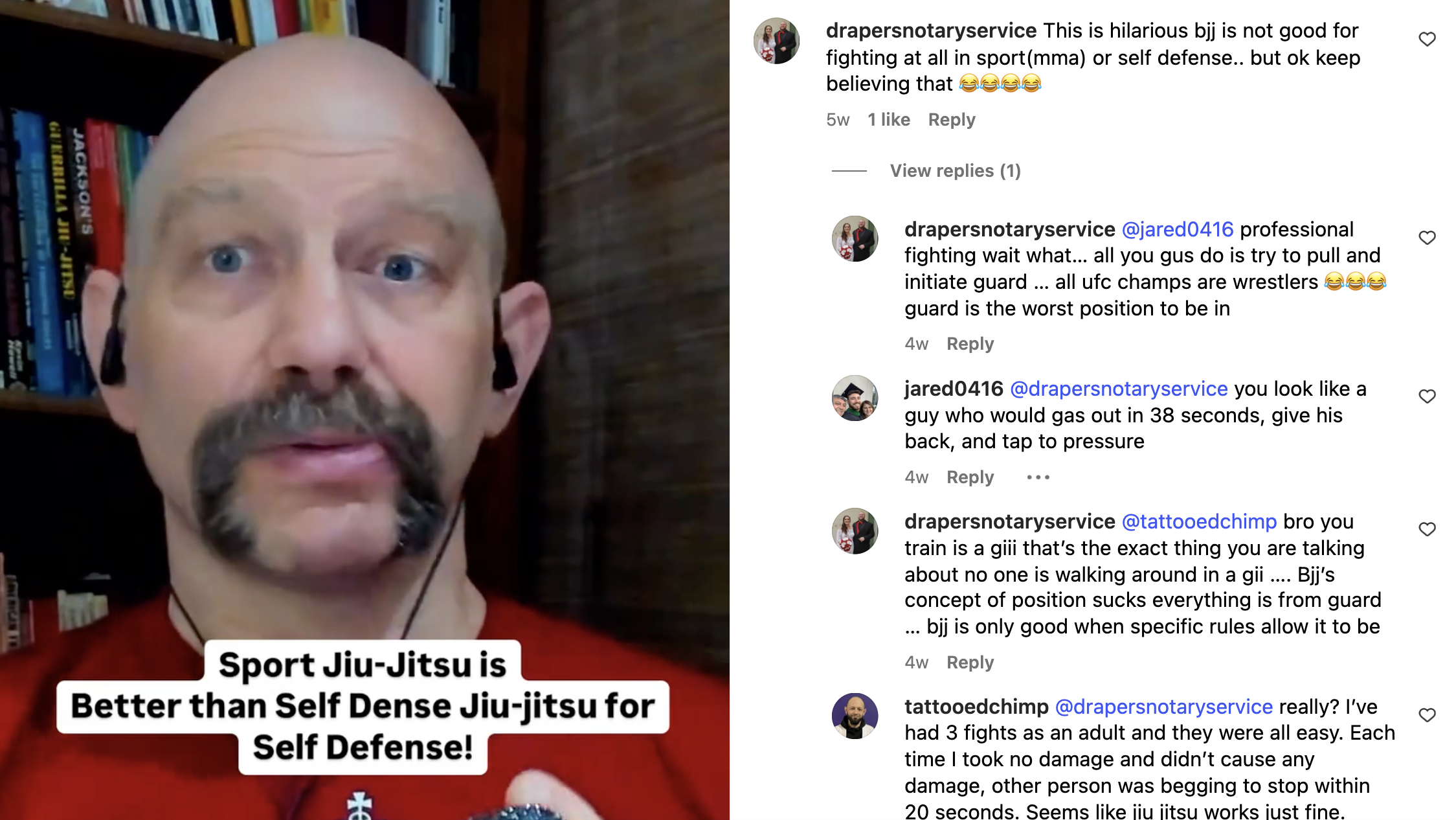

“I’ve said it before and I’ll say it again. If you had somebody who has only ever trained sport jiu-jitsu and they’ve done the most sporty of the sport jiu-jitsu – they’re only ever training berimbolos, crab rides and rolling back takes – that’s their whole game, but they’re training against resistance, and they compete, especially if they compete, they are 100 times better at self defence than a guy who just practices self defence techniques in isolation.” – Stephan Kesting

That’s a quote from the first part of this clip that has been making its way around the Internets from Stephan Kesting, one of the shining lights in the Brazilian Jiu-Jitsu community.

He goes on to say more, but the above quote is the essence of what he’s saying. 

I completely agree with him, but not only that, I’m actually in the clip – I’m the guy with the glasses at the bottom of the screen.

This clip was part of the longer podcast we recorded I recorded along with my writing partner Seymour Yang (Meerkatsu) with Stephan about our new BJJ book, which is currently being shipped out to people that brought the pre-order.

Incidentally, the book is not on sale anymore, that pre-order was a limited run, hard back, collectors edition. We’ll probably release a softback version in the future on a similar limited print run idea, but we haven’t decided for sure yet.

But back to the clip. 

Obviously, because this is the Internet and people can’t read or listen to something without immediately copying and pasting their own opinions about what they think he said, or wrote. So, this clip caused a bit of a ruckus online, attracting comments such as:

“This is hilarious BJJ is not good for fighting at all in sport (MMA) or self defense.. but ok keep believing that “

“I don’t know not all fights end up on the ground right away. And no one’s is gonna wait for you to sit down and start fighting. My complaint with some of the sports jiujitsu has to be Takedowns, it’s like they forgot to do takedowns.”

Now on their own there is some merit to the points being made, however they don’t refer to what was actually being said by Stephan. Let me reframe his statement in the way that Bruce Lee used back in the 1970s with his article calledLiberate Yourself from Classical Karate”:

Stephan is saying that the spontaneity and natural reactions that ‘live’ training will develop is worth 100 times what you’ll learn by practicing ONLY dead forms.

That’s the point, not the applicability of BJJ to self defence or whether all fights end up on the ground. And obviously it’s not an either/or choice, and there’s a lot of grey area in regards to marital arts triaining, but that’s the crux of the matter

Bruce framed the argument around the idea of live, spontaneous training vs repeating dead forms. There are a lot of great quotes in the article by Bruce Lee, but here’s a couple I particularly like:

“It is conceivable that a long time ago a certain martial artist discovered some partial truth. During his lifetime, the man resisted the temptation to organize this partial truth, although this is a common tendency in a man’s search for security and certainty in life. After his death, his students took “his” hypotheses, “his” postulates, “his” method and turned them into law. “

“Prolonged repetitious drilling will certainly yield mechanical precision and security of that kind comes from any routine. However, it is exactly this kind of “selective” security or “crutch” which limits or blocks the total growth of a martial artist. In fact, quite a few practitioners develop such a liking for and dependence on their “crutch” that they can no longer walk without it. Thus, any special technique, however cleverly designed, is actually a hindrance.”

To me the argument that Stephan is making and the argument that Bruce is making are different aspects of the same thing. It’s the ‘learning to swim by never getting in the pool’ analogy all over again. You simply can’t learn to swim without getting wet, no matter how great your theory of swimming may be.

We would all laugh in the face of a theoretical swimmer who only ever practices on dry land and yet we tend to revere the opinions of the theoretical martial artist far too strongly, especially if they have a cool uniform and a black belt with lots of stripes on it.

Personally, I find that the less I practice sparring in a week the stronger the need for coming up with solutions for theoretical situations becomes in my mind. The more actual resistive sparring I engage in, the less my mind craves these sorts of questions. Instead, I’ve actually got something useful to be thinking about, like how I would do a technique from that last round better, or how I would escape a particular situation that actually happened, next time.

Just imagine if you haven’t done any actual sparring for years. There are plenty of ‘martial artists’ like this. Their heads must be full of theoretical knowledge, most of which probably wouldn’t survive an encounter with reality. And all of which can be silenced with just a few seconds of actual sparring practice.

Into BJJ and looking for Jiu-Jitsu gifts?
Forget Mount Wudang, the latest hot Kung Fu mountain is Mount Emei, and this time it’s girl groups leading the way

It’s all about the needles

Emei Mountain is the latest hot Kung Fu trend coming out of China, and a group of Kung Fu girls is leading the charge, according to a new article in China’s GlobalTimes.

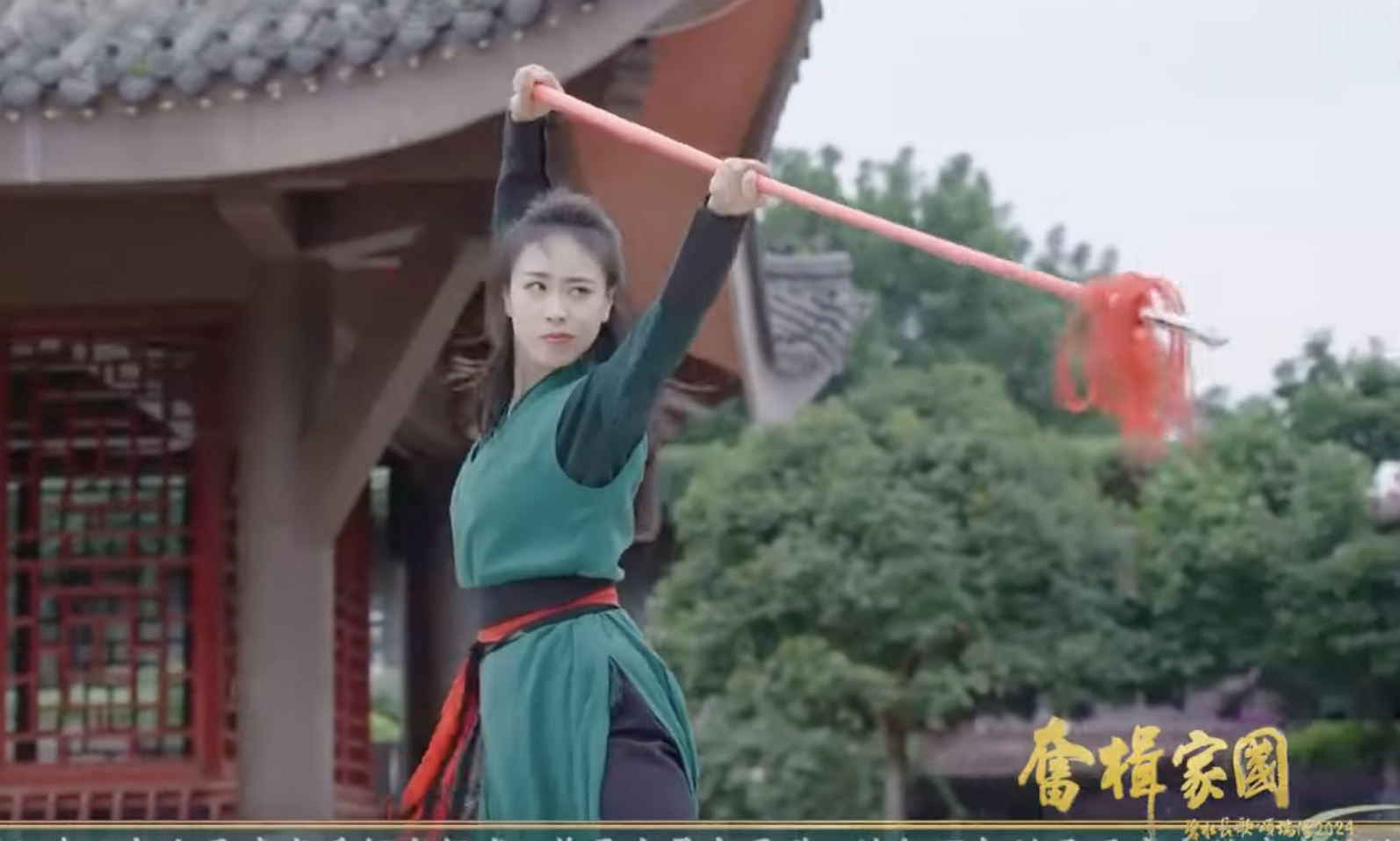
In April 2024 a video appeared showing nine female Kung Fu performers doing Kung Fu moves against the backdrop of Emei Mountain.

Chen Yufei, 23, one of the group members is quoted in the article: “Unlike the dramatized versions of Emei kung fu in TV shows, which ­focus on legends, our practice is rooted in the practical skills and traditions of Emei martial arts.”

The video shows performance with a variety of Kung Fu weapons including double whips, swords and of course, the famous Emei needles *, but the phrase “traditions of Emei martial arts” raises a few red flags for me.

A standout line from the article reads “In 2008, Emei martial arts, with a history spanning over three millennia, were designated a National Intangible Cultural Heritage.”

Ok, hang on, what?

Mount Emei has long been a sacred mountain for Buddhism, sure. But a 3,000 year old tradition of Kung Fu?

If you look up Kung Fu training camps on Mount Emei you’ll find a complete history of the martial arts and styles there: “Emei School has 1,093 bare-hand fighting skills, 518 skills with weapons, 41 pair practice routines and 276 practice methods.”

Call me a cynic, but I don’t believe any of this. It appears to me that the Kung Fu traditions of Emei Mountain really belong to the work of modern wuxi fiction of author Jin Yong who wrote a lot about a fictional Emei Sect. In his book, The Heaven Sword and Dragon Saber, the Emei School is founded during the early Yuan dynasty by Guo Xiang around the same time as when the Wudang School is established.

Of course, this being a complete fiction hasn’t stopped the Kung Fu tourist industry from setting up shop on Mount Emei. As this 2012 article describes, there was not much Kung Fu on the mountain back then, but it was starting to be set up, complete with a history. But if you look up Mount Emei today you’ll find Kung Fu competitions are held there, and very much like the operation at Mount Wudang, you can go there to study Kung Fu, for the right price.

The all-female Kung Fu troop heralding from Mount Emei seem to be as much a creation of the Kung Fu tourist industry as anything else, at least to me.

So where does their martial arts come from? Looking through various pages on the Internet I found a Reddit post that sounds true to me: ” “Emei” is just a generic term for martial arts from Sichuan, extremely few styles have any actual direct relation to anyone who loved or practiced on Emei shan.  Also almost everything called “Emei” today are modern offshoots of northern Chinese martial arts brought to Sichuan with nationalist troops as they were forced westward by the Japanese in WWII.”

None of which, of course, is to take away from the performance of the Emei all-female Kung Fu group, who are pretty damn good at WuShu.

  • Note 1: Mount Emei even has its own weapon, the Emei Ci which are sharp steel rods known as needles or piercers, that can be worn on a ring on your finger and spun around.

A visit to Mount Emei by Will of Monkey Steals Peach:

Looking back at The Tao of Pooh all these years later, I can’t believe what’s happened to its author, Benjamin Hoff

Things have not worked out well for the author of the book that got me started with Tai Chi…


The reason I got interested in Tai Chi in the first place was a combination of watching Kung Fu, the classic TV series starting David Carradine, in my early childhood, which primed to be receptive towards “Kung Fu” (whatever I thought that was at the time), and Star Wars with its emphasis on Eastern-influenced spiritual warriors with special powers that could be trained with a rigorous martial arts-like training programme, and then reading The Tao of Pooh by Benjamin Hoff when I was about 20.

This was the version of the book I had, The Tao of Pooh, by Benjamin Hoff.

This simple book combined a nostalgic look back at the Winnie the Pooh books by A.A.Milne from my childhood, which I loved, together with the basics of Eastern philosophy. And somewhere in the pages there was a single mention of a martial art that embodied the best of both, called “T’ai chi ch’uan” (as it was always written back then). That lead me to my first Tai Chi class, and I was hooked from the first minute I tried it. There was no Internet back then – you had to discover martial arts classes by looking at notice boards, that were usually found in health food shops. I remember I got a wobbly 2nd-hand VHS copy of the teachers in my first class doing their form, and I must have worn it out playing it over and over to copy the moves. What we would have given to have had YouTube back then!

The nature of politics and human affairs

Today I wondered what had happened to Benjamin Hoff, and if he was still alive, so I went off to have a look. It turns out he is still alive, but a visit to his website doesn’t reveal the comfortable life of a well respected author, sitting back on his laurels and reaping the benefits that writing one of the most popular books on Pooh and Tao should surely bring you. Instead there’s mention of vicious legal battles with publishers that has lead to a deep depression and a lack of funds. It all sounds rather sad. It’s an unfortunate and desperate station for somebody who has brought so much pleasure to people in the world, not to mention uncharacteristic for somebody who also authored a book about, “how to stay happy and calm under all circumstances”.

In addition to The Tao of Pooh, Hoff also wrote The Té of Piglet, which is also very good, and (I’ve just discovered) he wrote his own Tao Te Ching translation:

Benjamin Hoff’s Tao Te Ching translation.

His author Bio on GoodReads reads:

“Hoff was awarded the American Book Award in 1988 for The Singing Creek Where the Willows Grow. The Tao of Pooh was an international bestseller and spent 49 weeks on The New York Times’ bestseller list. The Te of Piglet also became an international bestseller and spent 59 weeks on The New York Times’ bestseller list.

In 2006, Hoff published an essay on his website titled “Farewell to Authorship”, in which he denounced the publishing industry and announced his resignation from book-writing.”

If you want a summation of Benjam’s problems with the publishing industry then I’d recommend reading this essay “Farewell to Authorship” – it is very well written. It seems to have been removed from his website, but you can find it on an Internet archive page.

They say that every great career ends in failure but it’s sad to see that the author who inspired me (and presumably many others) all those years ago to start Tai Chi has ended up in this situation, but perhaps all human lives end in some kind of failure. It’s inevitable, it’s just the nature of the Tao. His books, however, remain great.

In the beginning was the Tao.


All things issue from it;


all things return to it.


Tao Te Ching, Chapter 52.

Don’t get triggered

One of the things that martial arts training should give you, over the years, is better self control. At least in theory. You see some higher ranked people and it’s clear that it doesn’t always work out that way, but that’s the plan, at least in theory.

I’m a bit fan of Japanese martial arts expert Ellis Amdur who wrote the excellent book Hidden in Plain Sight about Aikido. That’s not the only book he’s written of course, and I really should try to read some of his others, but he’s done a lot of work in the fields of mental health and dealing with conflict resolution in a professional capacity. He made a recent short video, on the use of the word “triggered”, his point is that how we define or label something becomes your reality. If you define yourself as triggered by something, then you are saying that you have no control over the situation. You are, in effect, helpless. But if you redefine how something makes you feel, using a different word then you can define yourself as having agency, and that is the kind of training that martial arts can give you. I kind of agree, but not entirely*.

As Viktor E. Frankl said, “Between stimulus and response there is a space. In that space is our power to choose our response. In our response lies our growth and our freedom.” I think martial arts training should be a way to get used to stressful situations so you can more easily inhabit that space.

Of course, you need to be engaging in practices that take you out of your comfort zone to get these benefits. Most of the time being outside your comfort zone is not where you want to be but with repeated exposure to the discomfort of being pinned, attacked, thrown, etc, you can start to take these things less heavily, and you can learn to play within the spaces that appear once you stop panicking.

*I’d counter argue the point that Ellis is making – just because you say you are triggered by something that doesn’t necessarily imply action. Ellis equates the word trigger to imply a gun, and once a gun has been shot it can’t be un-fired. Well, maybe, but “triggered” could also just mean the state of readiness you are in to fire a gun – you still have that moment to take your finger off the trigger.

There’s a risk of being lost in semantics here, so let’s not lose sight of the whole thing – the point is, finding that moment of freedom and growth between stimulus and response and learning to live in it. Now that is one of the real benefits of martial arts.

Don’t try

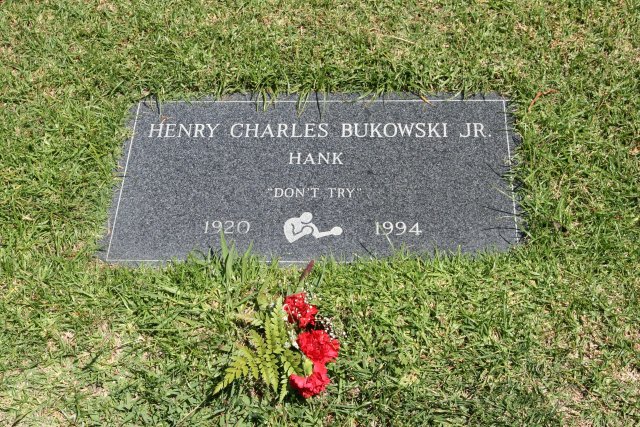
One of my poetic/literary heroes, Charles Bukowski had “Don’t try” written as an epitaph on his tombstone. To many people he was simply an alcoholic, womanising, bum who pissed way his talent, but I bet Charles Bukowski did more honest days work in his life than a lot go his critics ever did. Writing was his way out of a life of oppressive blue collar jobs that had ground him down, and he only succeeded as a writer late in life, and that gave him a unique perspective.

 There’s a video that explains his seemingly paradoxical philosophy of “Don’t try”.

But if you don’t have time to watch it then Bukowski explained it himself in one of his letters:

“Somebody asked me: “What do you do? How do you write, create?” You don’t, I told them. You don’t try. That’s very important: not to try, either for Cadillacs, creation or immortality. You wait, and if nothing happens, you wait some more. It’s like a bug high on the wall. You wait for it to come to you. When it gets close enough you reach out, slap out and kill it. Or if you like its looks, you make a pet out of it.”

    – Charles Bukowski

I think anybody versed in the philosophy of Tai Chi can see an instant parallel here to the Taoist ideal of Wu Wei – “not doing”. Quite often if you can wait for the mud the settle the water becomes clear all by itself, and the right action becomes obvious.

There are a number of quotes you can find in the Tao Te Ching that elucidate on this idea, right from the start of the book, where in chapter 2 Lao Tzu states: “The sage acts by doing noting”, then later in chapter 22 he says “Because he (the Sage) opposes no one, no one in the world can oppose him.” And in Chapter 48, “When nothing is done, nothing is left undone.”

Now I wouldn’t say that Lao Tzu and Bukowski have exactly the same take on this idea, but they’re not a million miles apart.

There are obvious applications of “Don’t try” in all areas of your life – from creativity, as Bukowski found, to business and your home life, but one of the most obvious I find is in martial arts.

If I find I’m engaged in too much of a struggle during sparring, rather than go harder, I have slowly learned to back off. Rather than fight through something it’s much easier to change track and go around it. 

In Tai Chi push hands you can encounter this idea whenever you feel resistance from your opponent. How do you react? Do you push harder, knowing if you do, you can impose your will on them? Maybe you can, but you’re just engraining a bad habit that’s not going to lead to success when you try it on somebody bigger than you. 

In Jiujitsu I often find guard passing is the best example of this idea of Don’t Try. If you try and force a guard pass, like a knee slide for example, when your partner is defending well then quite often you can make it work, but it’s a lot of effort and ultimately you’ve depleted your energy reserves more than you had to. And again, it won’t work on somebody bigger and stronger. That’s when the words “don’t try” tend to appear in my mind. If the knee slide pass is defended then change the angle, work something else, see if you can switch to a bull fighter pass instead. Or change to a back step. There are always ways around the problem instead of having to power straight through it.

Don’t try. This is the way.

There is no correct technique there is only appropriate technique

grey metal hammer

Photo by Pixabay on Pexels.com

As you may know I co-host the Heretics podcast with my old XingYi teacher Damon Smith. (Our last episode was pretty rad, so check it out. It’s on Heraclitus, the pre-Socrates Greek philosopher who was as Taoist as Chang Tzu – but we manage to cover Mongolian metal music and martial arts amongst other things).

It’s almost impossible to explain what a high level martial artists Damon is, so I’m not even going to try. He does a particularly good job of hiding it as well, so you’d never know unless you saw him perform some sort of martial technique just how good he is.

One of Damon’s favorite sayings is “there’s no correct technique, there’s only appropriate technique”. The first time I heard this it kind of annoyed me. I mean, a technique either works or it doesn’t, right? So in a way there is a ‘correct’ technique… however, the deeper meaning is that if you apply a ‘correct’ technique at time that is inappropriate then it’s as useless as an incorrectly performed technique.

If you watch martial art competitions you see this all the time. The perfectly executed jab/cross combo gets completely nullified by the opponent changing level and going for a body lock and takedown; the beautiful double leg that goes straight into a waiting knee to the face or the perfect hook punch counter that leaves the fighter open to the straight cross. The list goes on.

Another way I’ve been thinking about this recently is to do with styles. In BJJ everybody talks about their ‘game’. My game is this, my game is that. “I’m a butterfly guard player”, “I’m a top player”, “I like half guard”.

In Chinese martial art whole styles are dedicated to a particular type of fighting. Tae Kwan Do is kicking; Wing Chun is close range and Choy Lee Fut is long range, etc..

That’s great, but what if this thinking is holding us back? Perhaps a better way of thinking about martial arts is that you need to build up a variety of skills in different situations or positions. The more skill sets you have the easier you will be able to respond to what the opponent is doing in an appropriate way.

If, for instance, you’re in a self defense situation and the attacker is grabbing you, then you need to have some grappling skills. If you lack those skills then sure, you can fall back on your striking skills, but there might be a much easier solution you are completely missing. And equally, if you are in a situation where somebody is attacking you with a knife and you have to fight back, grappling them can be quite counter productive, if not fatal. If you knew how to use a short weapon, like a stick, and one was available then that might be a much better solution.

In the end, it’s appropriate technique that is required, but (and here’s the clincher) you can only access appropriate technique if you are already skilled in a variety of different positions and situations.

If you haven’t thought about this before then now might be the time to get out there and expand the limits of your training.


Don’t try! The paradoxical approach of Tai Chi Chuan, Charles Bukowski and Yoda.

Is there a secret to Tai Chi? To martial arts? To life? If there is I think it might be encapsulated in the two words, “Don’t try”.

Famously offensive American poet and author Charles Bukowski had “Don’t try” written on his gravestone:

don't try

It makes you wonder what he meant. Did he mean just give up? I don’t think so. Underneath “don’t try” is a picture of a boxer, indicating a struggle.

Mike Watt in the San Pedro zine The Rise and the Fall of the Harbor Area interviewed his wife Linda about, “Don’t try”:

Watt: What’s the story: “Don’t Try”? Is it from that piece he wrote?

Linda: See those big volumes of books? [Points to bookshelf] They’re called Who’s Who In America. It’s everybody, artists, scientists, whatever. So he was in there and they asked him to do a little thing about the books he’s written and duh, duh, duh. At the very end they say, ‘Is there anything you want to say?’, you know, ‘What is your philosophy of life?’, and some people would write a huge long thing. A dissertation, and some people would just go on and on. And Hank just put, “Don’t Try.”

As for what it means, it’s probably best to let Bukowski tell us:

“Somebody asked me: “What do you do? How do you write, create?” You don’t, I told them. You don’t try. That’s very important: not to try, either for Cadillacs, creation or immortality. You wait, and if nothing happens, you wait some more. It’s like a bug high on the wall. You wait for it to come to you. When it gets close enough you reach out, slap out and kill it. Or if you like its looks, you make a pet out of it.”
– Charles Bukowski

Now that’s starting to sound like Tai Chi to me…

I was working on an application of diagonal flying yesterday. The one where you get underneath their shoulder, arm across their body and lift them up and away. There’s a sweet spot as your shoulder goes under their armpit where you have leverage. Where they move easily. You go an inch or so in the wrong direction and you lose it. The technique doesn’t work.

Compared to wrestling and judo I think there are different factors to consider in making a Tai Chi throw work.

You have to think more about your posture. Say, your chest position (is it sheltered? Are the shoulders rounded?) and if you are sunk and in contact with the ground correctly. Is your butt sticking out? Are your legs bent enough?

All these factors matter more in Tai Chi than in Judo and wrestling because Tai Chi is a less physical art. (Whether that’s a good thing or bad thing is debatable, but it either way, it just is.)

With a less-physical art it’s much easier to notice when you’re having to “try” more to make a throw work. Having to “try” too much is a sign you’re muscling it, not letting posture, correct position, leverage and Jin (power from the ground) do the work. Judo and wrestling incorporate these elements too, but Tai Chi relies on them. And without them it just falls apart.

In BJJ I also really like the philosophy of “don’t try”.

For example, if I’ve got the knee on belly position on my opponent I love to go for the baseball bat choke:

The problem is that once you set your grips up on the classic baseball bat your opponent doesn’t just lie there – he defends. He grabs your arms, shifts his hips and generally does everything he can to prevent you from getting the finish.

Now the video shows you three ways to do this – they’re clever little counters to his counters. (I really like the last one actually – I’m going to try that).

But I tend to prefer a slightly different approach. Rather than think of each technique in isolation I like to think of them as being paired. Quite often when I go for a baseball bat choke I set up my grips and immediately my partner has cast iron grips on both my hands. Now sure, I could fight through this – ie. “try” to make the choke work – or I could just go, “you know what? The way he’s defending this means he’s lifting his far elbow – I’ll use that instead”. I give up the baseball choke entirely, but before you know it I’ve spun around and I’ve got a successful kimura grip. He defends the kimura and guess what? It leaves his neck open, and I go back to the baseball choke, so on.

I’m not trying to make anything work, I’m just going with what he gives me. And eventually all the pieces fit together like a jigsaw and it’s done.

I don’t always get it right. More often than not I get it wrong, but that’s what I’m aiming for. If you’re going to adopt this attitude you have to have a really flexible mind. You can’t get fixated on one thing. In fact, you can’t think too much. Just go with what you feel is available.

What I’m talking about is getting off the baseline and onto the middle and top lines. For a full explanation of what this means you’d need to listen to the Woven Energy podcast, but in a nutshell, it means you stop using the thinking, rational part of your brain and just use direct feedback from nature (your partner in this case, who is as much a part of nature as you are) and that gives you access to the midline (body) and topline (spirit).

In Chinese culture the topline, midline and baseline form a trigram, which can have broken or unbroken lines, as so:

trigram_for_thunder

And since we’ve returned to China we should note that the Taoists were all about this “Don’t try” philosophy. They called it Wu Wei – to do by not doing.

From the Tao Te Ching chapter 2:

Therefore the Master
acts without doing anything
and teaches without saying anything.
Things arise and she lets them come;
things disappear and she lets them go.
She has but doesn’t possess,
acts but doesn’t expect.
When her work is done, she forgets it.
That is why it lasts forever.


Or as Yoda put it, “Do or do not, there is no try”.


And to return to the topic of Tai Chi, it is also exemplified in the short but concise classic on push hands:

Song of Push Hands (by unknown)

Be conscientious in PengLuChi, and An.

Upper and lower coordinate,
and the opponent finds it difficult to penetrate.

Let the opponent attack with great force;
use four ounces to deflect a thousand pounds.

Attract to emptiness and discharge;
Zhan, Lian, Nian, Sui,
no resisting no letting go.

And to finally return to Bukowski, he might be a strange role model, but I kind of like the old guy. His poems aren’t beautiful, but at least they are honest. He was always, exactly himself. He didn’t need to try.