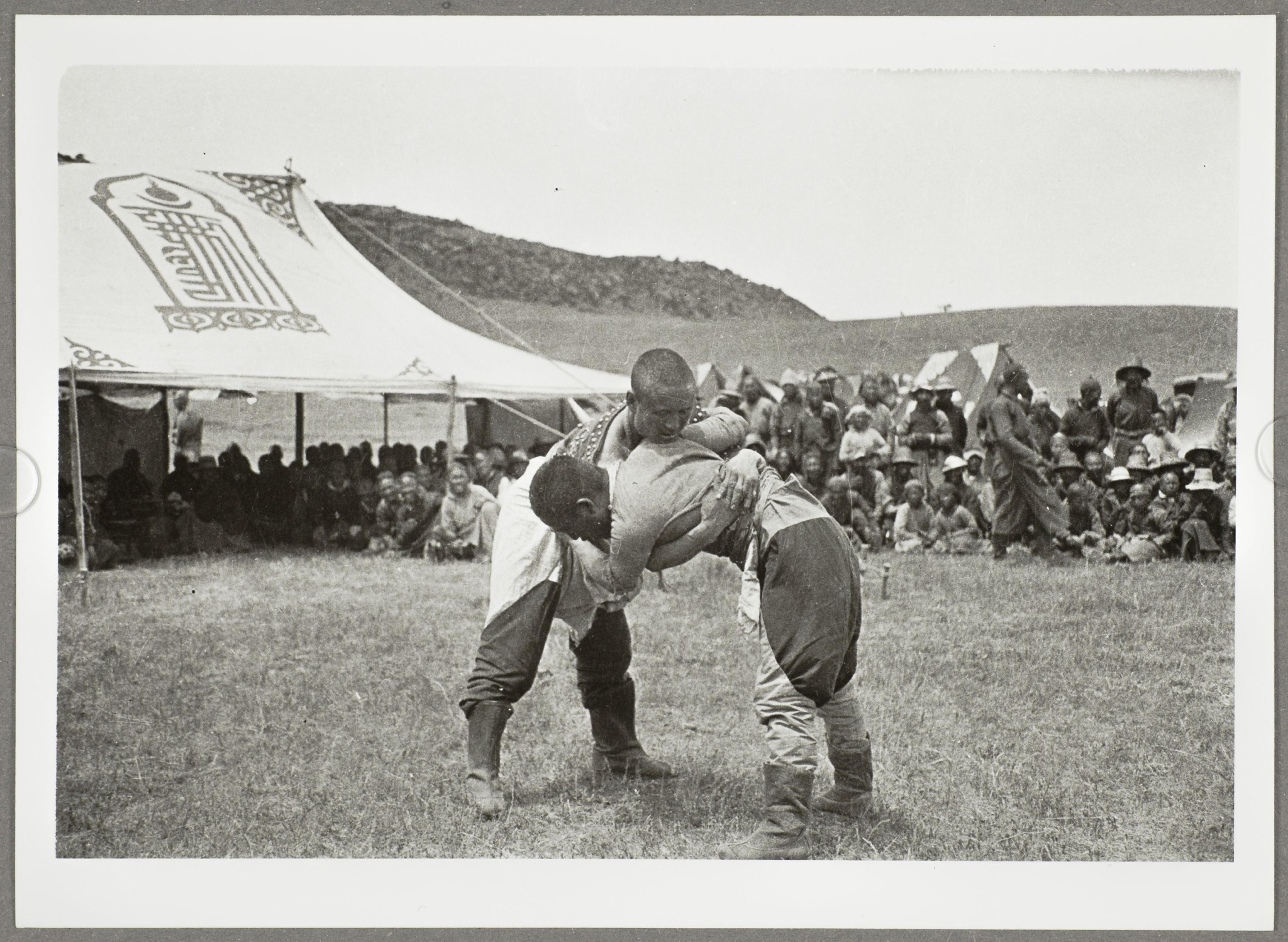
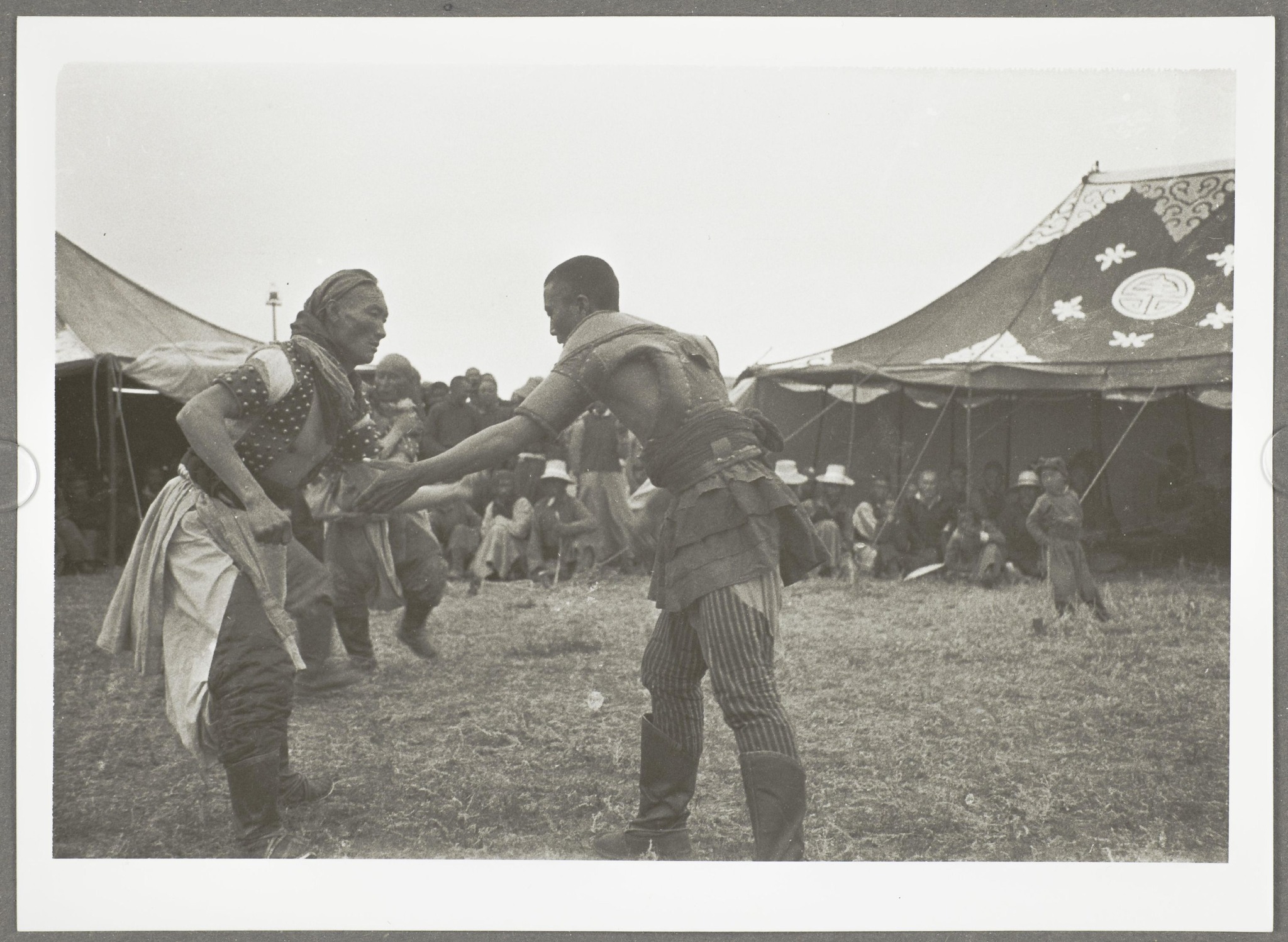
Byron Jacobs of Mushin Martial Culture recently posted some pictures, from his private collection, of wrestlers (and one of archery) on the grasslands from the late Ching Dynasty. They’re fascinating insights into what wrestling looked like at the time, and what clothing was worn. He’s given me permission to post them.
(Image credit: Byron Jacobs)
Byron has produced extensive research into the origins of Shuai Jiao (Chinese wrestling) which all points to it actually being an adaptation of Mongolian wrestling, and not a separate style with any sort of genuine history of its own.
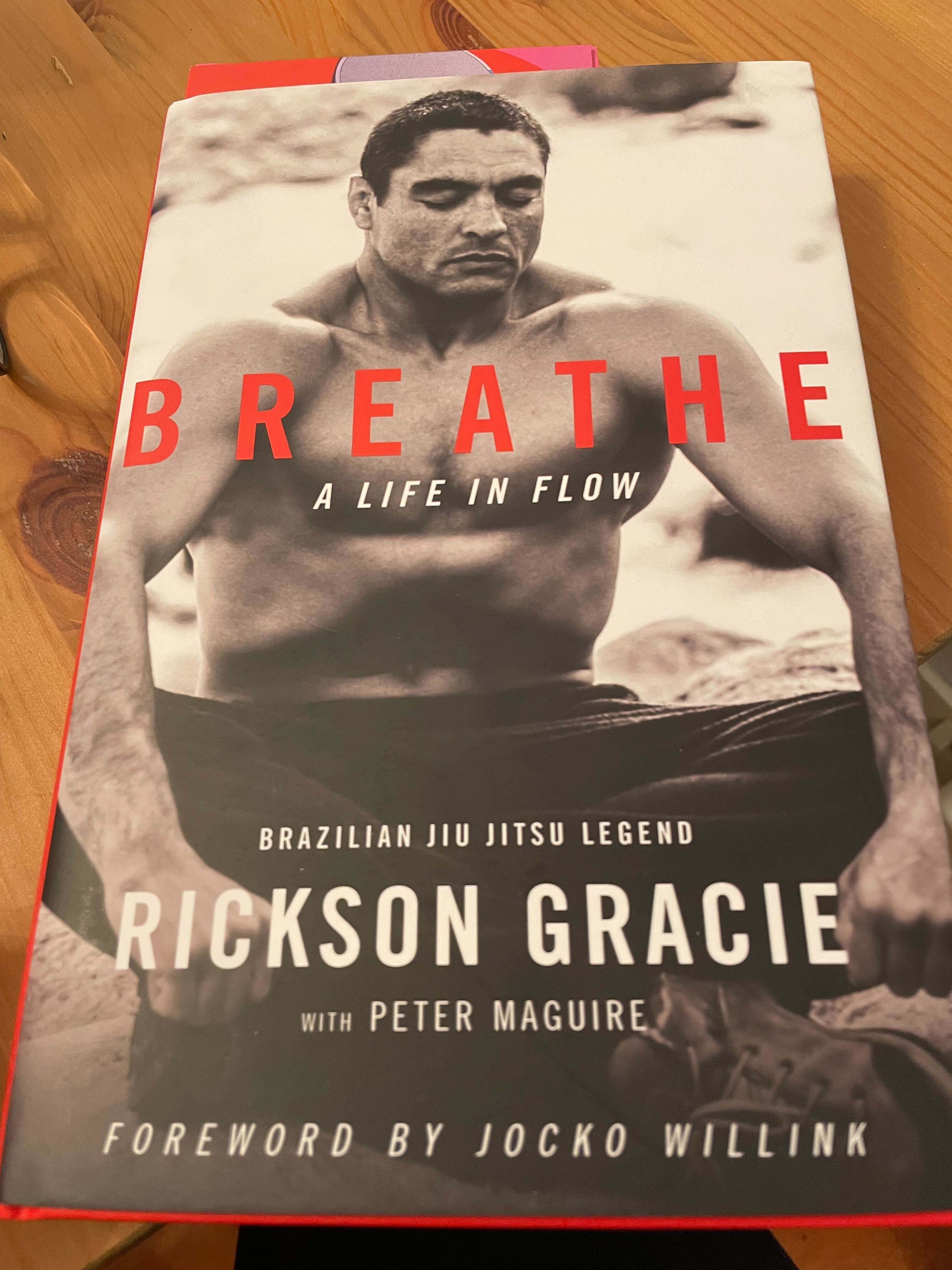
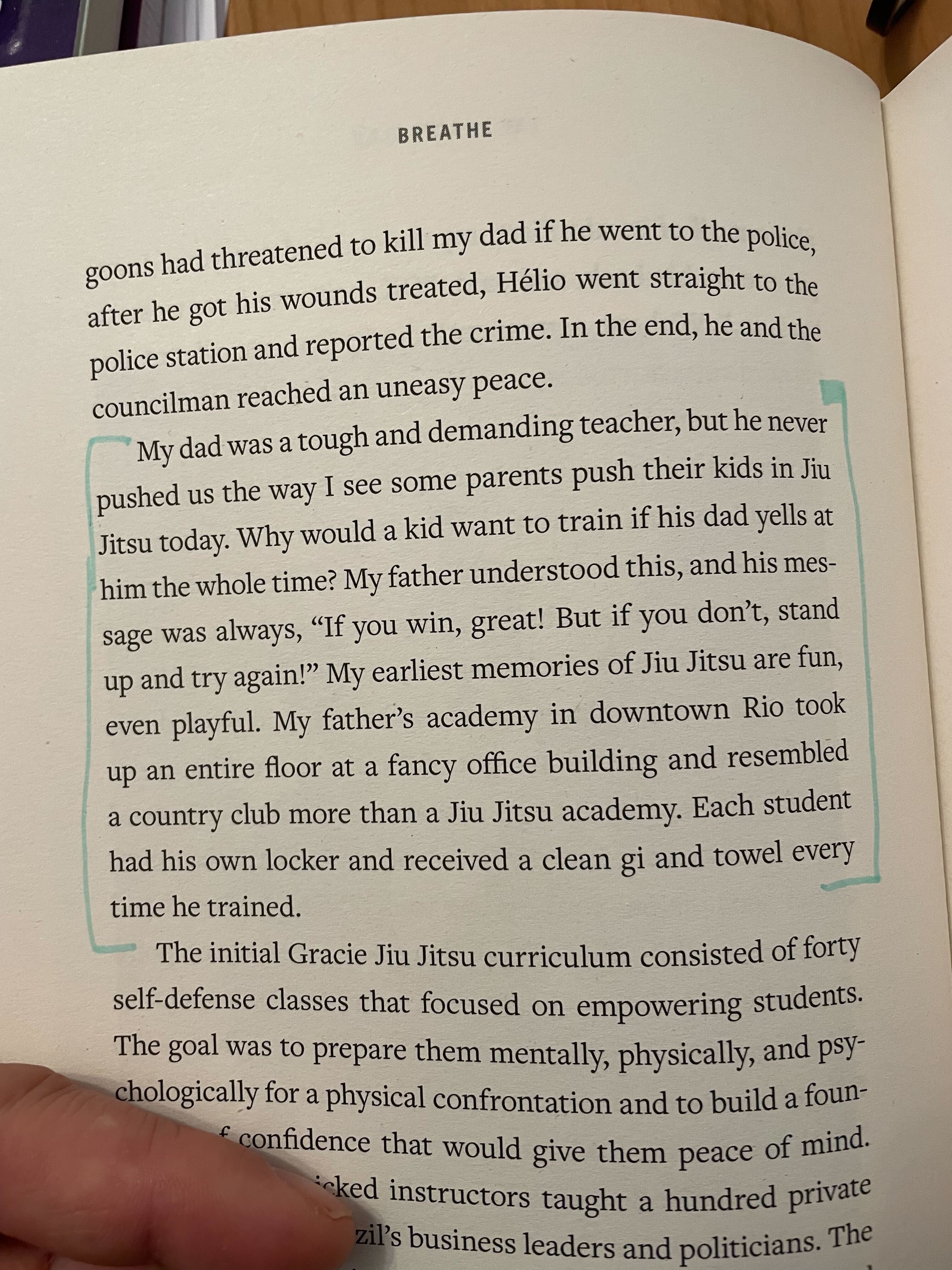
I’ve been finally getting around to reading Breathe by Rickson Gracie, which I got for Christmas last year, just before Christmas, this year 🙂 I found this paragraph near the start that resonated with me.
Over on the Heretics podcast Damon frequently talks about one of his great loves, Mongolian wrestling, and how they create the same relaxed, nurturing training environment, especially for children who start learning through games and just messing around, rather than structured lessons. The child’s natural sense of curiosity and playfulness is encouraged, not shut down, which seems to be the rule in many other ‘martial’ training systems.
The results of this type of training, is that Sumo at the highest levels is dominated by Mongolian-born Sumo wrestlers. The Japanese approach to Sumo training couldn’t be more different to the Mongolian wrestling approach, it is competitive, austere and harsh. The anecdotal evidence is that a more relaxed approach is actually better.
I’m not an expert of Sumo, or even follow it, so I don’t know, but I believe the best Sumo wrestler of all time is generally believed to be Hakuho Sho. Sho was born Mönkhbatyn Davaajargal in Mongolia. If you watch a few of his matches you can see that’s he’s a master of slipping and evading:
I find talking – as in real talking, not discussion forum kind of talking – with other martial artists always inspires some great thoughts. Recently, I was having a chat about some Eagle movements in Xing Yi and my venerable discussion partner noted that they were very similar to the Eagle Dance that Mongolian wrestlers do before a match.
Eagle dance.
My friend noted that the arm positions in the eagle dance are also quite similar to a lot of the arm positions in Baguazhang’s circle walking, like this one:
Baguazhang performed by Master Zhang Hong Mei.
Obviously, the performance is not exactly the same – the eagle dance can have music or a drum beat, but often doesn’t. However, music or not, it does have a rhythm, a beat, which are all things usually lacking in performances of Baguazhang. But Baguazhang does look a bit like a dance. It’s wonderfully twisty, mobile and changeable, but the Mongolian Wrestling dance is so much freer, it’s done with a smile, it’s clearly about having a good time. In contrast, Baguazhang is much more dower and serious. You could almost say it’s as close to dance as you could get if weren’t allowed to actually dance. You’re certainly not supposed to be smiling or showing emotions. I’m going to steal my friend’s hilarious comment about Baguazhang circle walking: “It’s almost like, ‘I want to boogie, but my Confucian culture won’t let me!‘”. 🙂
(As a side note, he also told me a theory about why there is no syncopation in classical Chinese music – it’s because in ‘ancient times’ drums were used to whip up the armies of the various tribes into a kind of pre-battle fighting trance, and when they wanted to unite the Han dynasty, they had to stop the tribes fighting. So, syncopation was removed from the music. I’ve got no proof for this theory, so just take it as an interesting idea, but banning drums it does sound exactly like the sort of thing Confucians would do.)
And that brings me onto my crazy Baguazhang/Mongolian Wresting/Archery theory. Dong Haichuan, the founder of Baguazhang and Yin Fu – his main student, spent 10 years together in Mongolia collecting taxes for Prince Su. This would have been during our Victorian times, so you can get an idea of the time period. Back in China the Dowager Empress Cixi sat on the throne in the Forbidden City.
10 years is a long time, and I find it impossible to believe that, being keen martial artists, that Dong and Yin didn’t have at least some exposure to Mongolian wrestling and/or religious practices, like Eagle dance, and that it could very well be reflected in the content of Baguazhang. I also wonder what all that exposure to a different culture to their own did for them.
Mill stone posture
Let’s look at another popular motif found in Baguazhang, the Mill store posture”.
Baguazhang performed by Master Zhang Hong Mei.
The key feature of the ‘mill stone posture’ is that the upper body and lower body are twisted away from each other in opposite directions as you walk the circle. If you’ve watched a lot of videos of Mongolian martial arts then it might remind you of something…
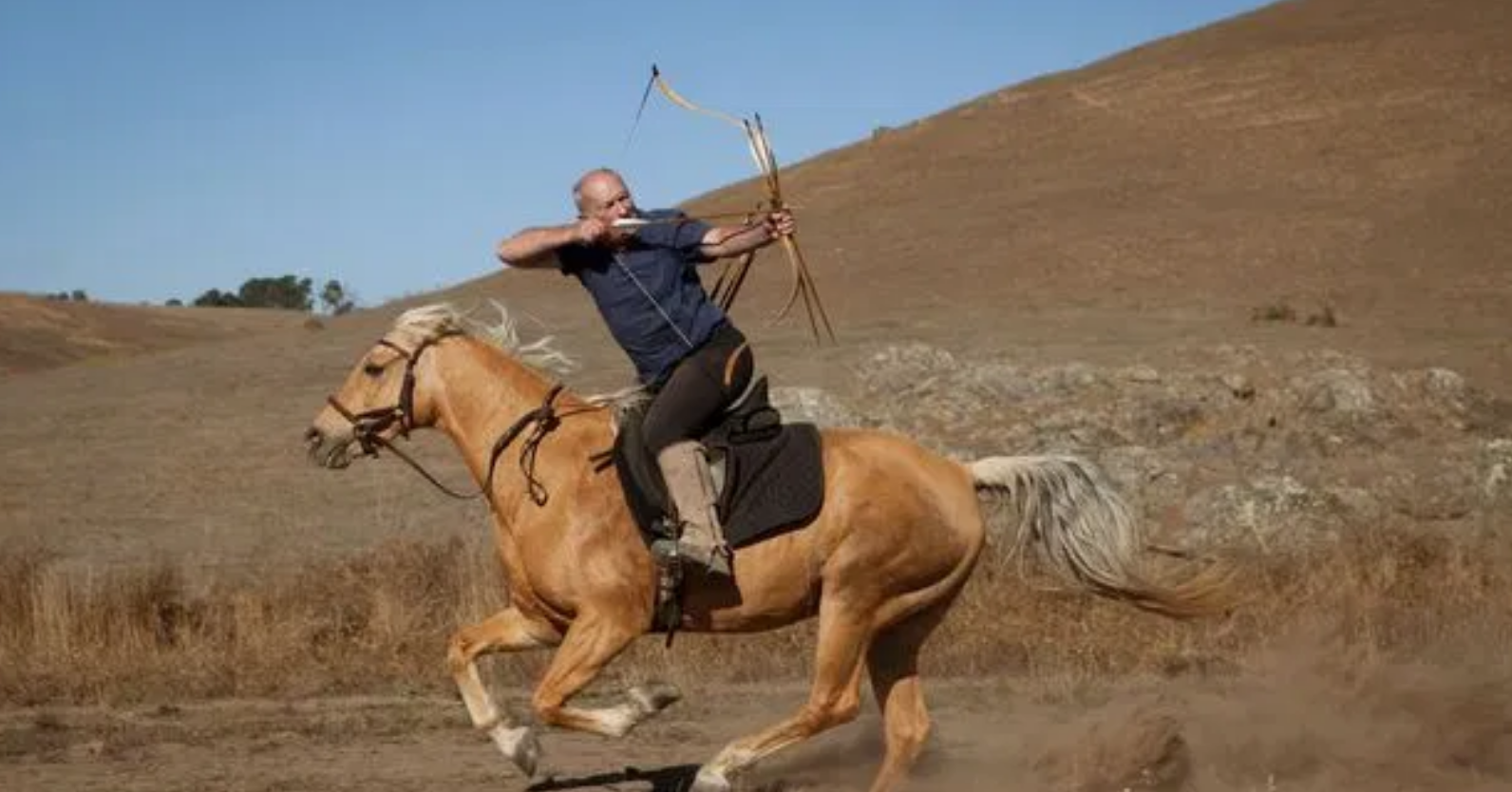
Another of the “manly arts” of Mongolian culture is horseback archery, which includes the ability to shoot an arrow behind you – the famous Parthian Shot, a horseback archery technique of feining a retreat then turning and shooting behind you 180 degrees once the enemy commit to chasing you.
Parthian Shot
The millstone standing posture of Baguazhang looks (to me) like some sort of training method for the Parthian Shot.
Here’s a video example of it being trained as a drill in Baguazhang:
Dong He Chuan was inside the imperial palace starting in 1864, the ruling Manchu’s (from the North) still had horseback archery as part of the military service exam. Is the simiarity of many Baguazhang postures to Mongolian martial arts a coincidence, or not? Who can say. The historical connection between Dong and Mongolia is there though.
And to finish things off, here’s a funny video I made with my kids when they were little. I wanted to boogie, but my kids wouldn’t let me! Ah, I miss those days, but I don’t miss the disturbed nights 🙂






 The Tai Chi Notebook