UFC 295 – Alex Pereira vs Jiri Prochazka: Chicken vs Swallow fight analysis

One of the things I like to do when watching UFC fights is to try and analyse what the fighters are doing in terms of Xing Yi’s 12 animals. Now, I’ve got at least one friend who hates when I do this because he believes it makes people think that by practicing a few Xing Yi moves twice a week in your back yard you can somehow be on the level of professional MMA fighters. Yeah, I get that. Comparing martial arts can easily lead to delusion… however, my No. 1 one rule for The Tai Chi Notebook is this: this is my blog and I can write what I want! So, I’m going to do it anyway. But also, I genuinely think that if you’re a Xing Yi practitioner yourself, then trying to analyse MMA fighters in terms of the 12 animals is a really valuable hobby to get into. It will increase your understanding of not only the animals, but also of fighting itself.

Viewed through the modern Xing Yi lens (by modern, I mean, post Boxer Rebellion, from the early 20th century onward) it’s popular to understand the 12 Animals of Xing Yi as merely variations on the 5 Elements. This approach is indicative of the reductive, simplistic, winds of change that blew through Chinese martial arts over that century. It’s not a wrong view technically (the 5 elements are the basics, so of course they are inside the 12 animals), but it’s also a huge misunderstanding. The 12 Animals are more than just variations of the 5 Element fists, they are older and contain the essence of the art. They’re a continuation of a tradition that started back in the Song Dynasty. If you really want to understand that point of view then I’d point you towards the History of Xing Yi series we’ve been doing on the Heretics Podcast for a few years now – and is currently up to part 15, about to start the Ming Dynasty section.

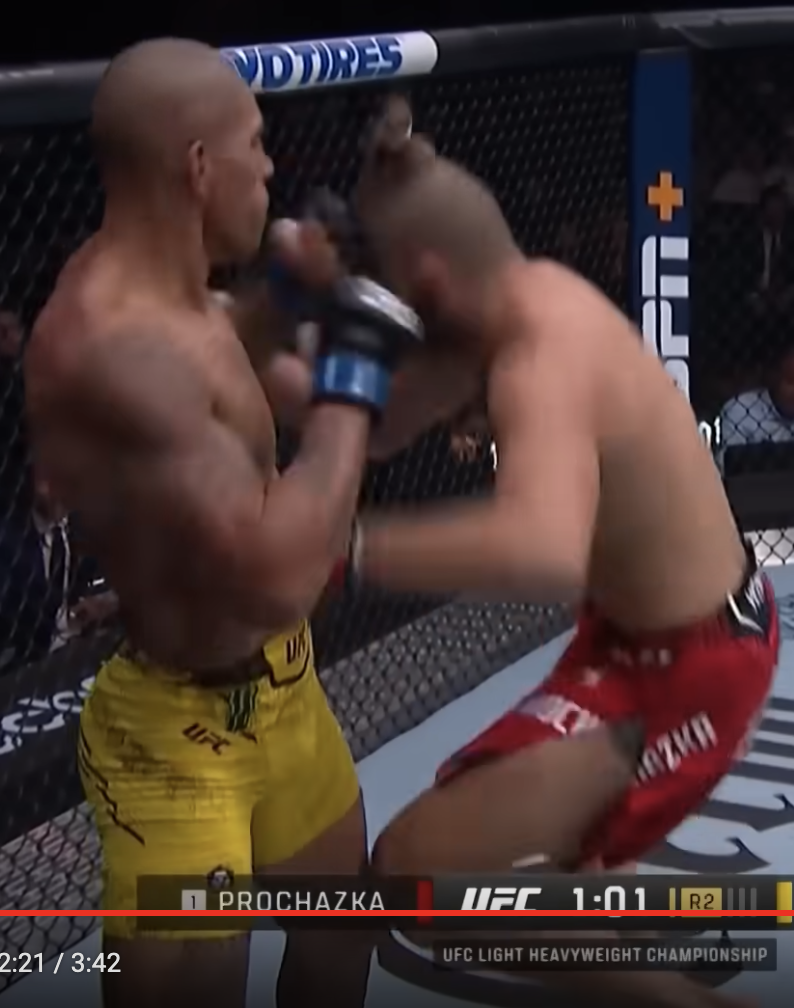
But coming back to the present day, last week saw Alex Pereira vs Jiri Prochazka for the UFC Light Heavyweight belt at UFC 295. It was a great fight resulting in a knockout for Pereira, but honestly it could have gone either way. There was some debate about the finish being an early call from the ref, but Jiri himself said he was out cold, so it was fair. Highlights here:

Looking through my Xing Yi lens at what the fighters were doing, UFC 295 was a good one because it was very clear what animal strategy each of them was using. (Obviously, neither gentleman has probably ever heard of Xing Yi, however, like I said earlier, I’m simply using the 12 animals to analyse fighting styles.)

Swallow (yan xing)

So, on one hand we have Jiri Prochazka (red shorts) whose attacks frequently go from high to low:

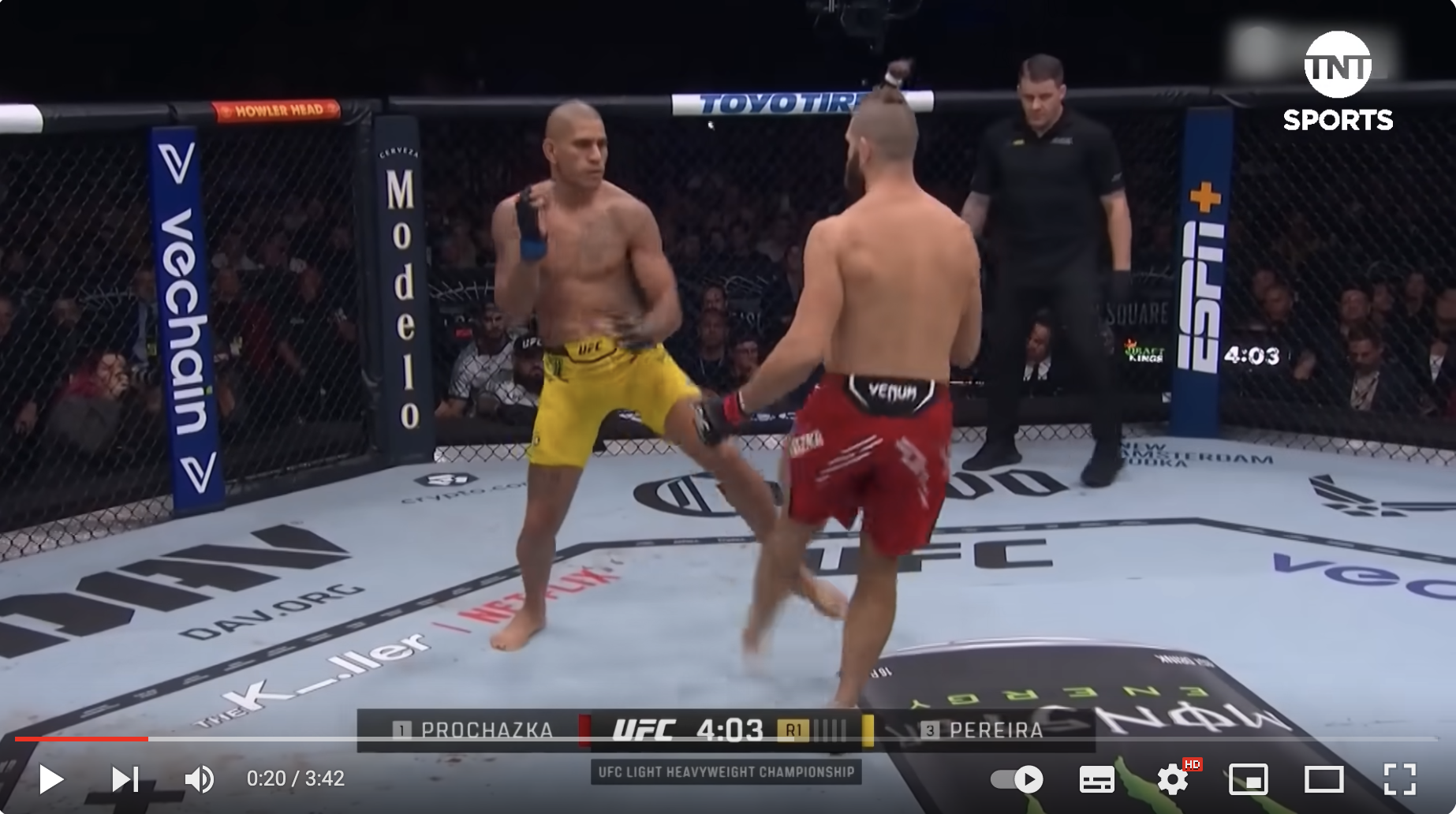
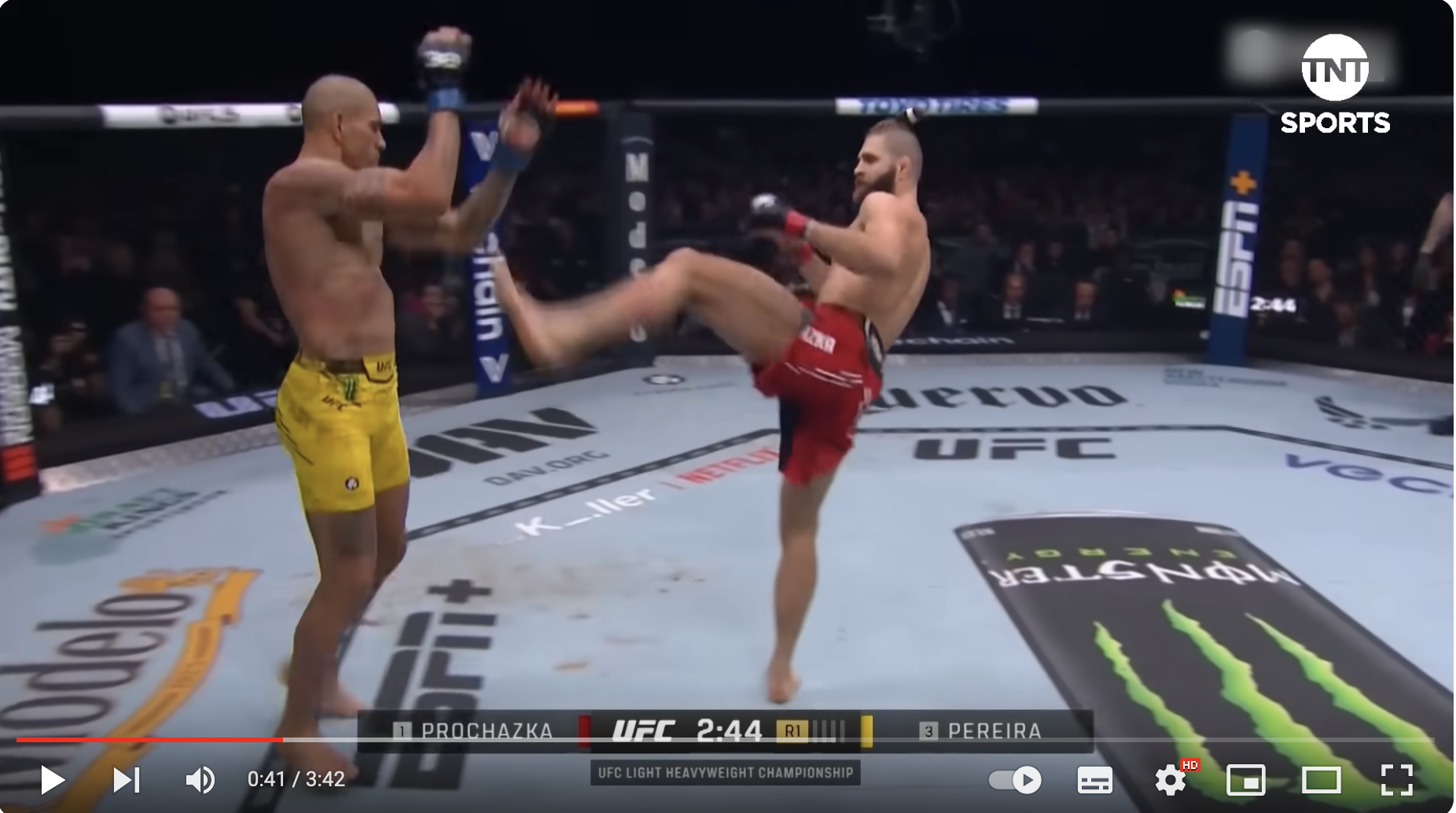
He kicks high to the head, then kicks low to the ankle:
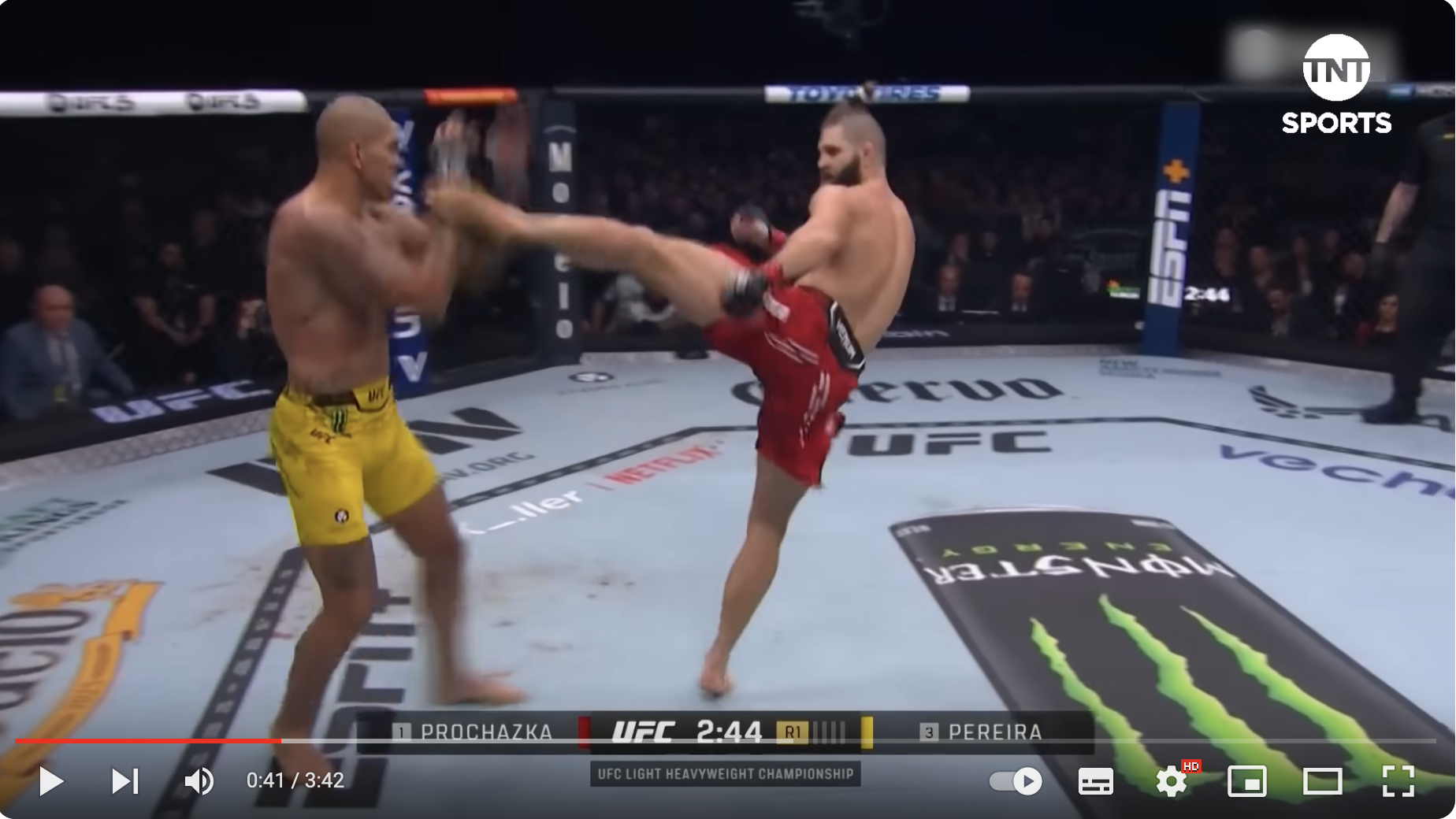

(Obviously a lot, but not all, MMA fighters kick to both heights, but it’s the alternating way he does it, as a strategy, that I’m interested in. It’s not the techniques that make something an animal style, it’s the intent and strategy behind them, but also certain styles lend themselves naturally to certain techniques – which is a subtle point)

He dummys a wrestling shot low but then comes up with an upper cut.
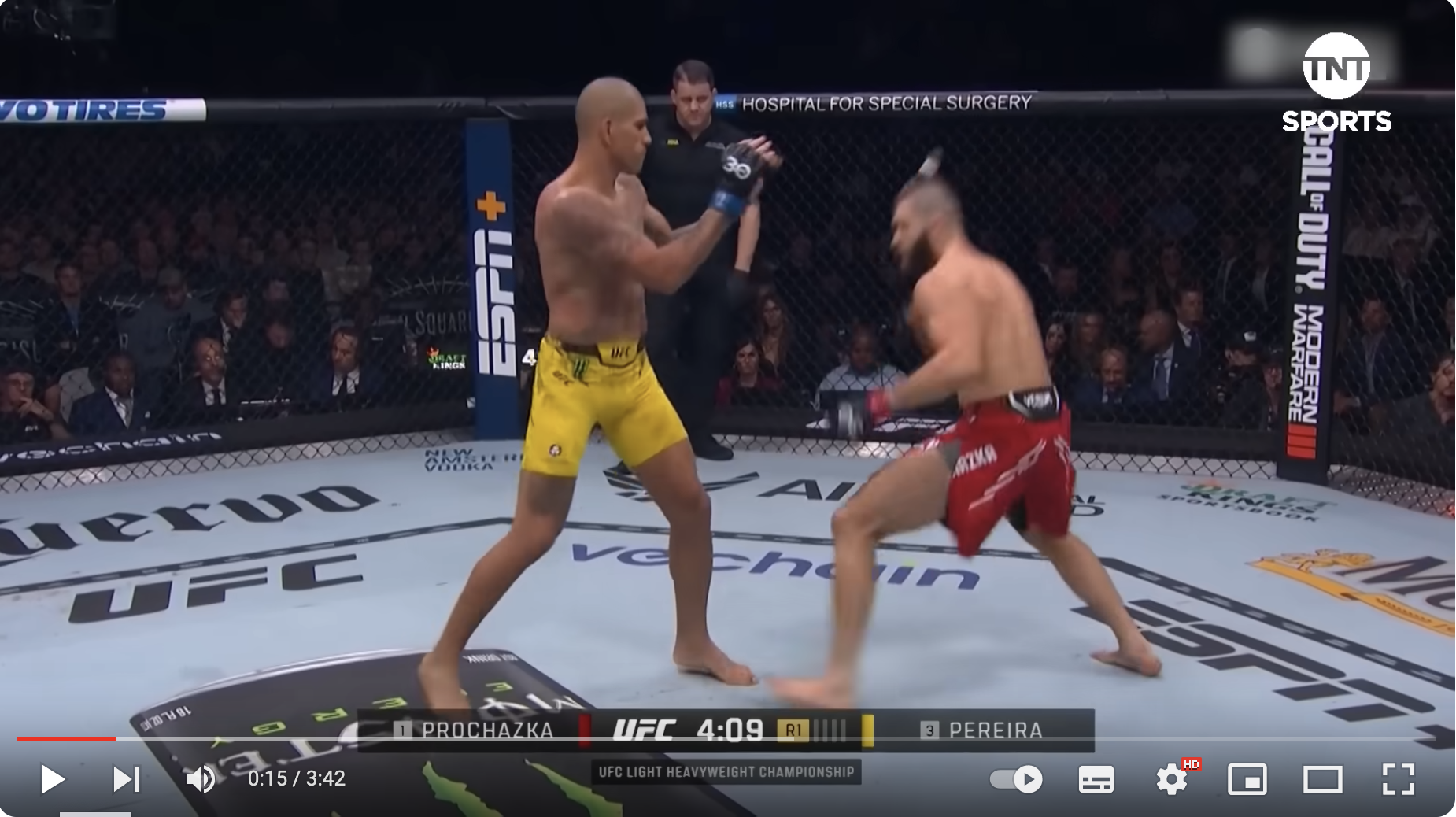
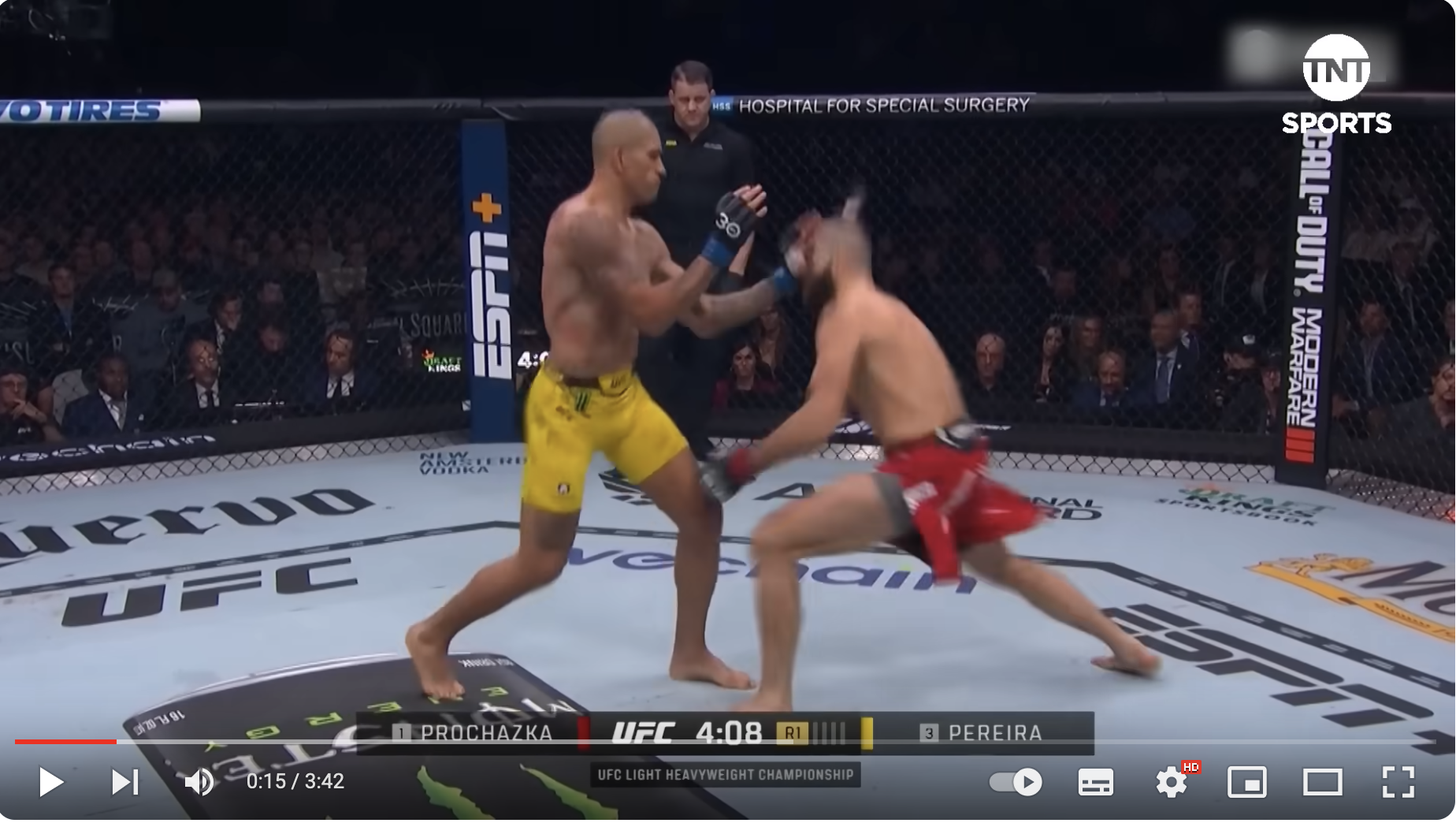
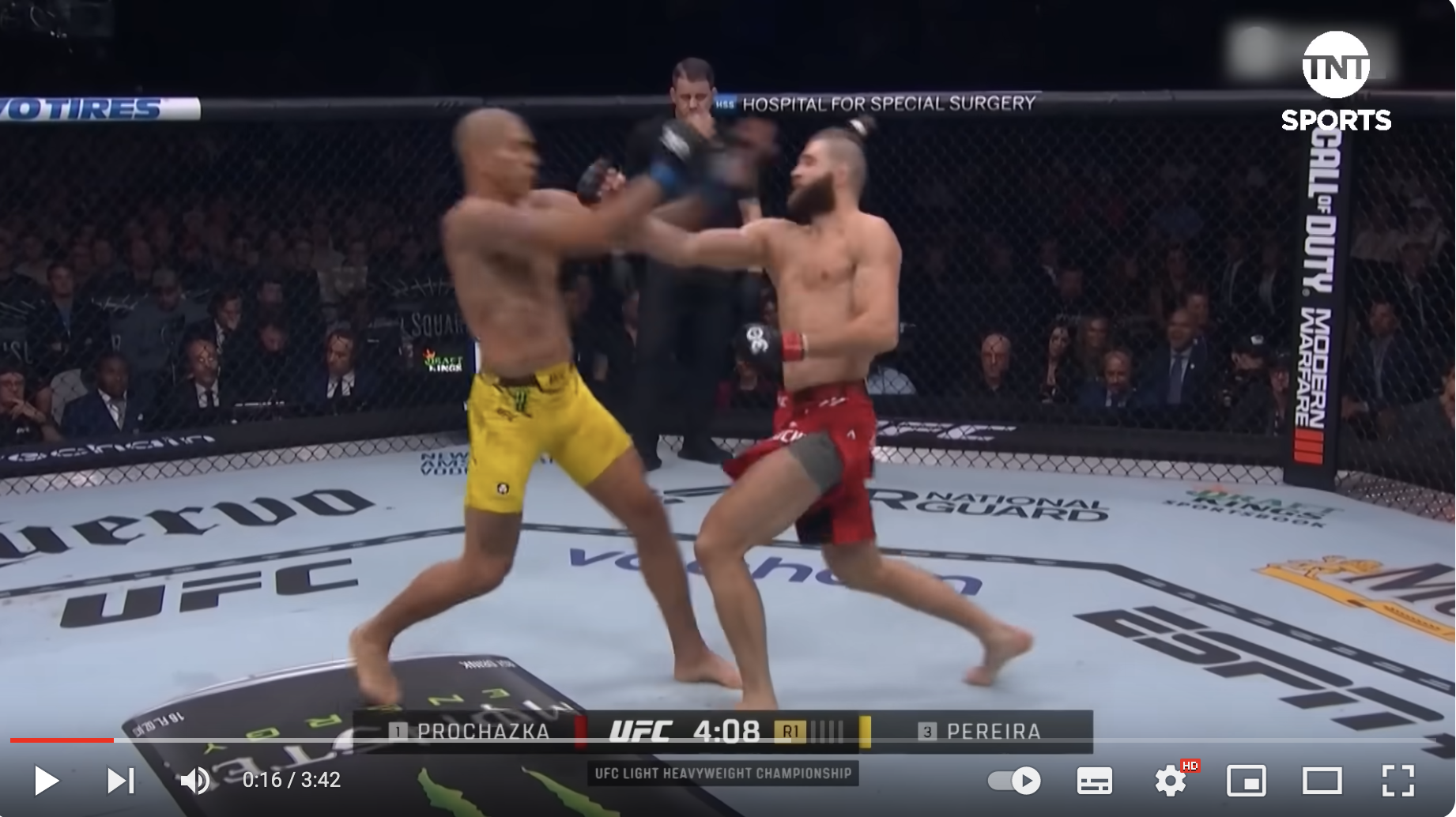
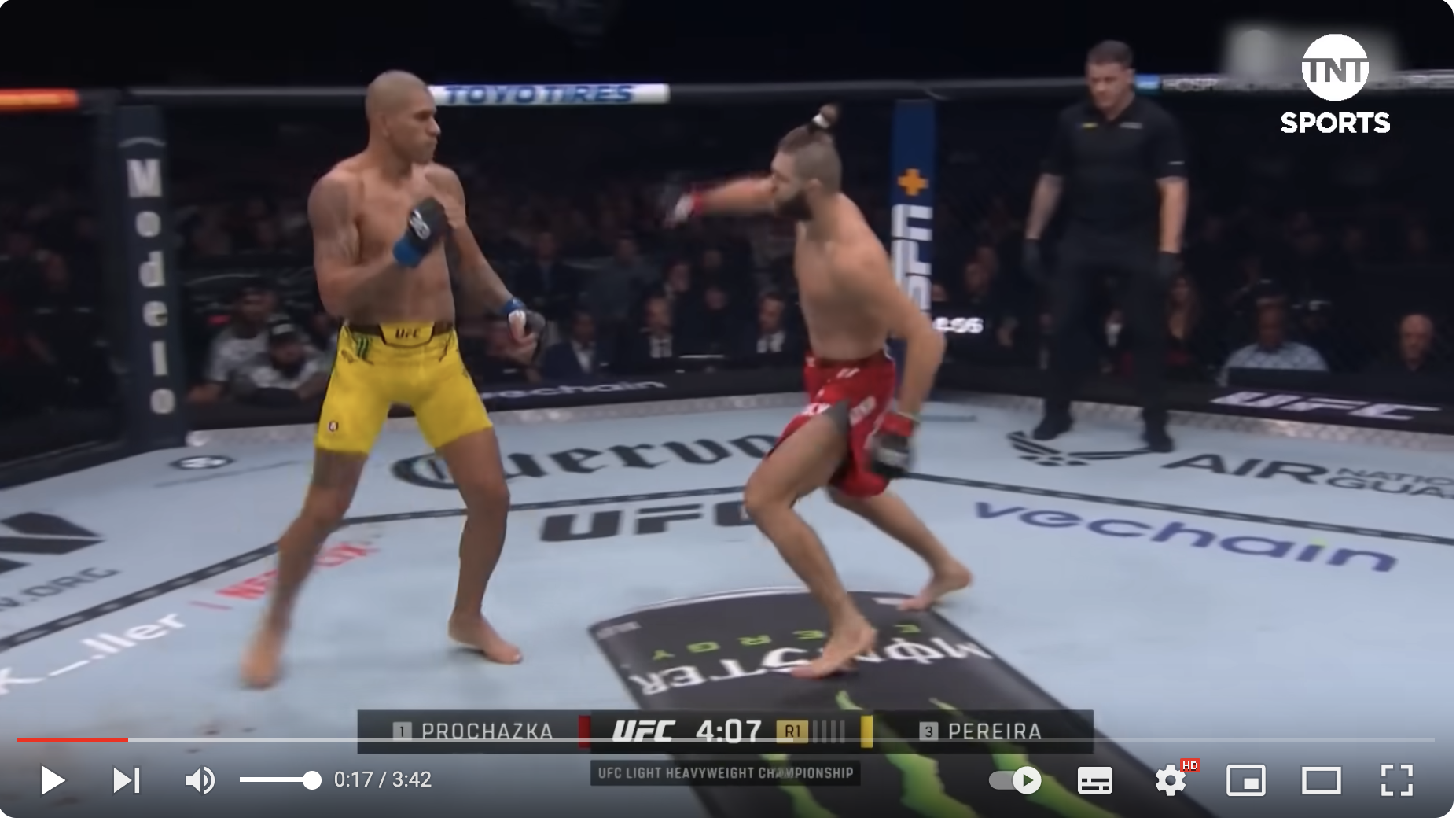
His preferred range is long, and when he punches he throws arcing punches that start low, go high and finish low:
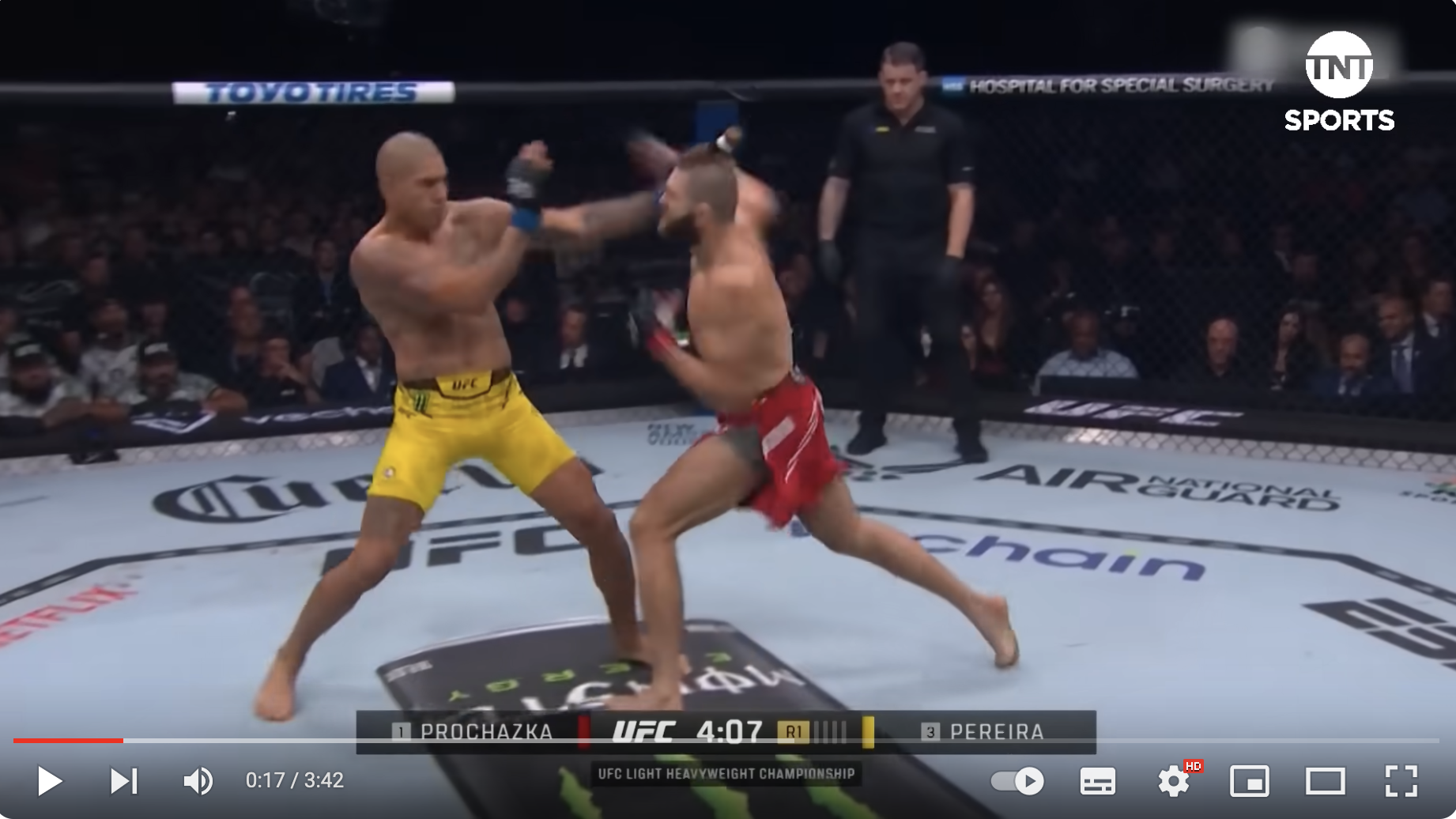
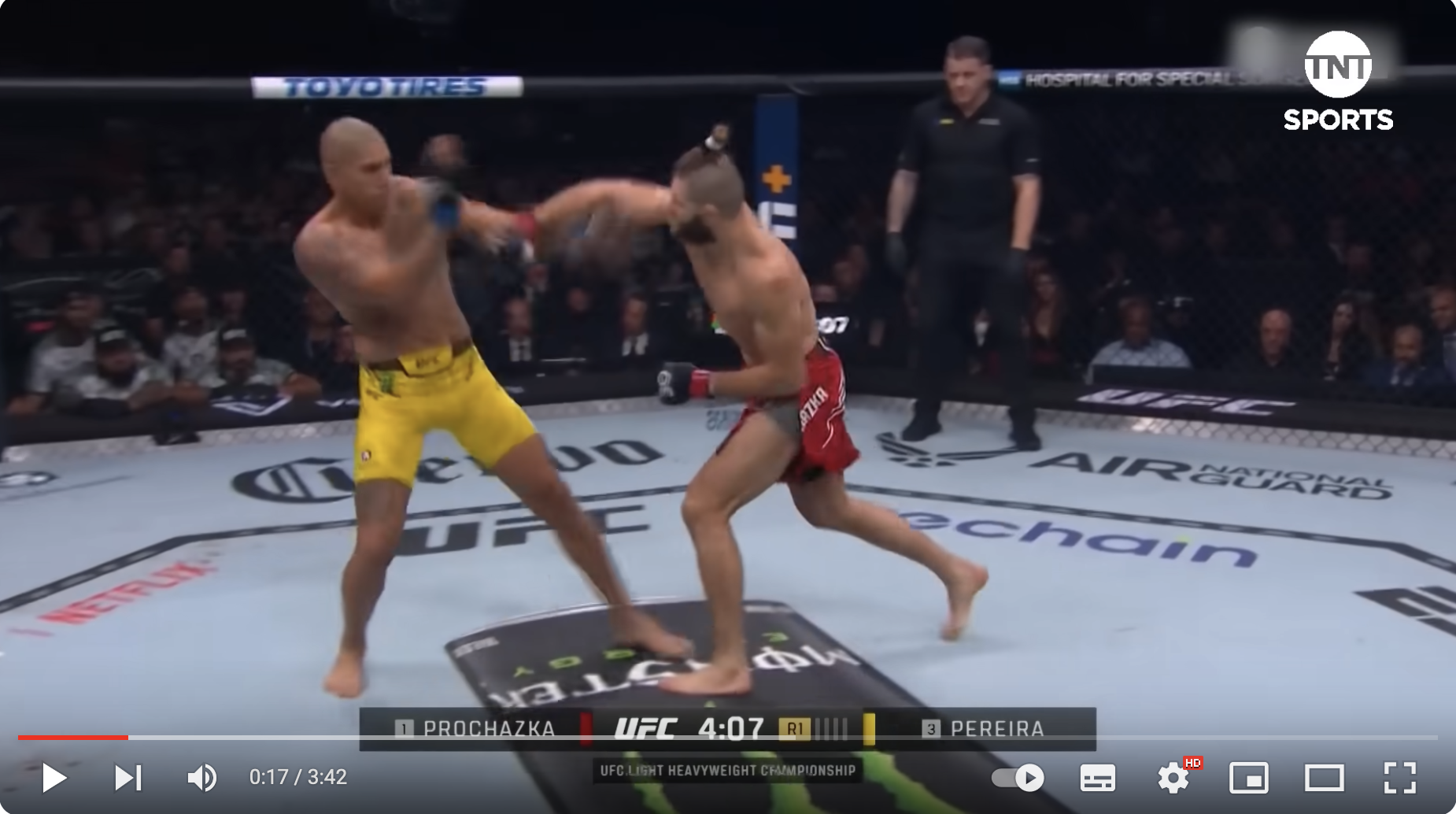
To me this is clearly a Swallow strategy. Swallow is a bird you wouldn’t normally associate with fighting, but it aggressively hunts insects on the wing, and defends its nesting location by dive bombing potential intruders, including humans! Its characteristics are swooping low then going high, particularly over water and “swallow skims the water” is a name often given to a popular swallow movement in forms in Xing Yi, Bagua and Qigong. But the swallow is also famous for its absolutely beautiful aerial acrobatics that are always elegant and graceful.

A swallow defending its nest – I like this clip because you can see the speed that the swallow attacks with, and how unafraid it is of something as big as a human.
The classic “swallow skims water” in action, by the true masters of the art – the swallows themselves.

A typical “swallow skims water” movement found in Chinese martial arts. This one from Cheng style Bagua.

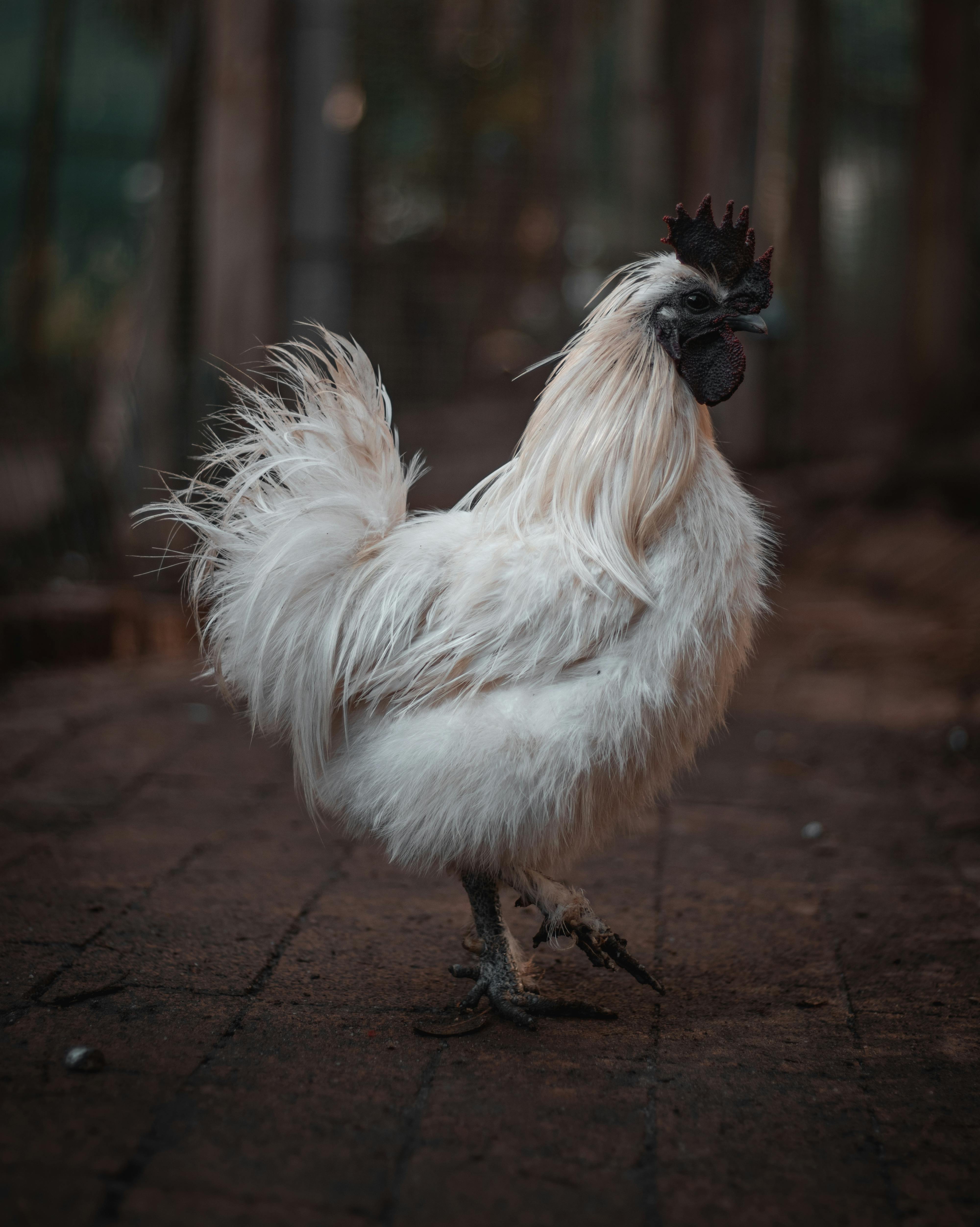
Chicken (ji xing)

But let’s get back to UFC 295. In contrast his opponent, Alex Pereira is famous for his minimal movement and crushing low calf kicks. There’s a great clip of him playing about with UFC commentator Daniel Cormier taking his low kick:

A native of Brazil, Pereira is also famous for his indigenous face paint he wears to the weigh in events:

(For people that like to argue that Shamanistic things have no part in MMA, I always like to point them to double UFC champion, Alex Pereira!)

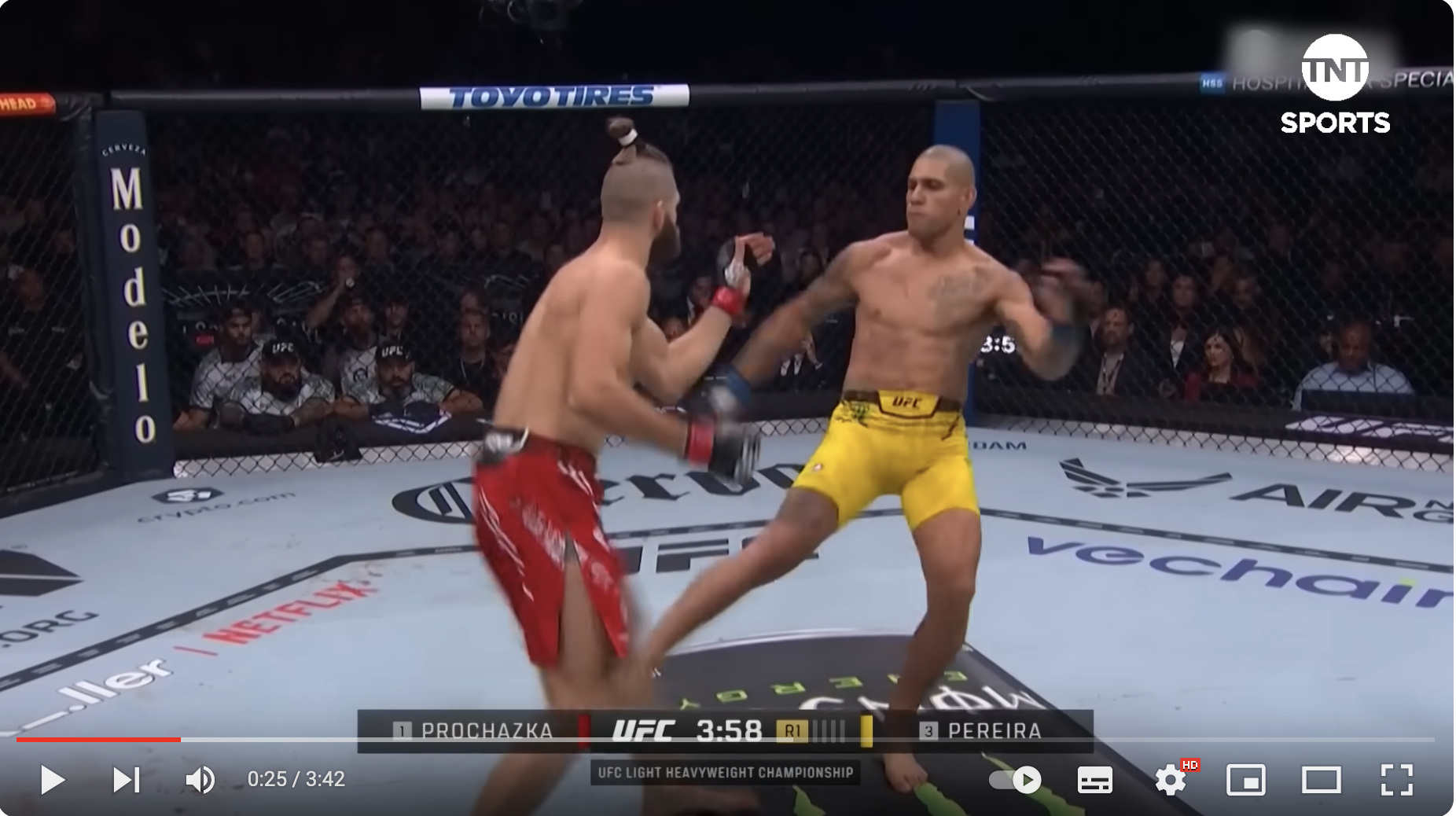
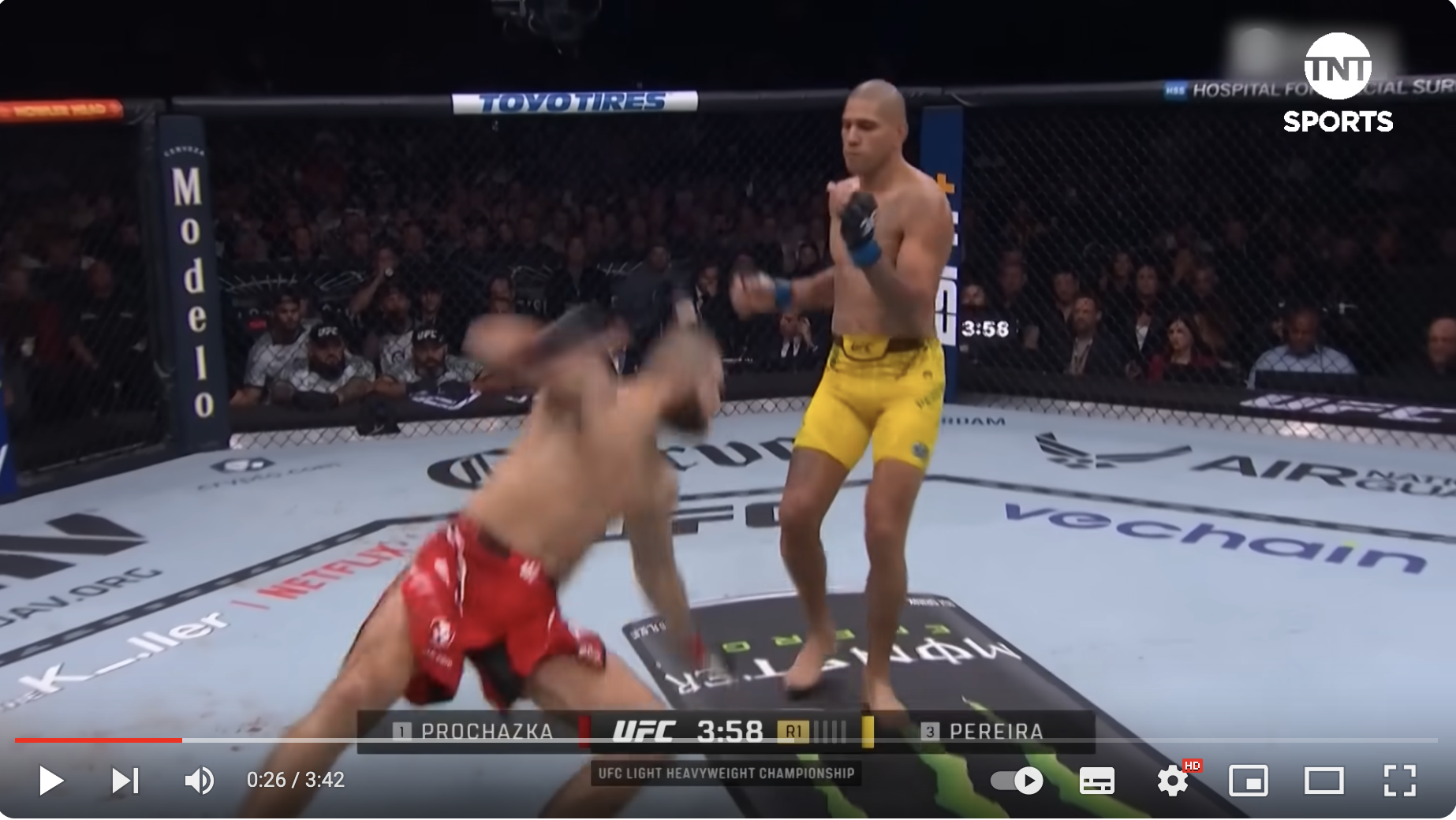
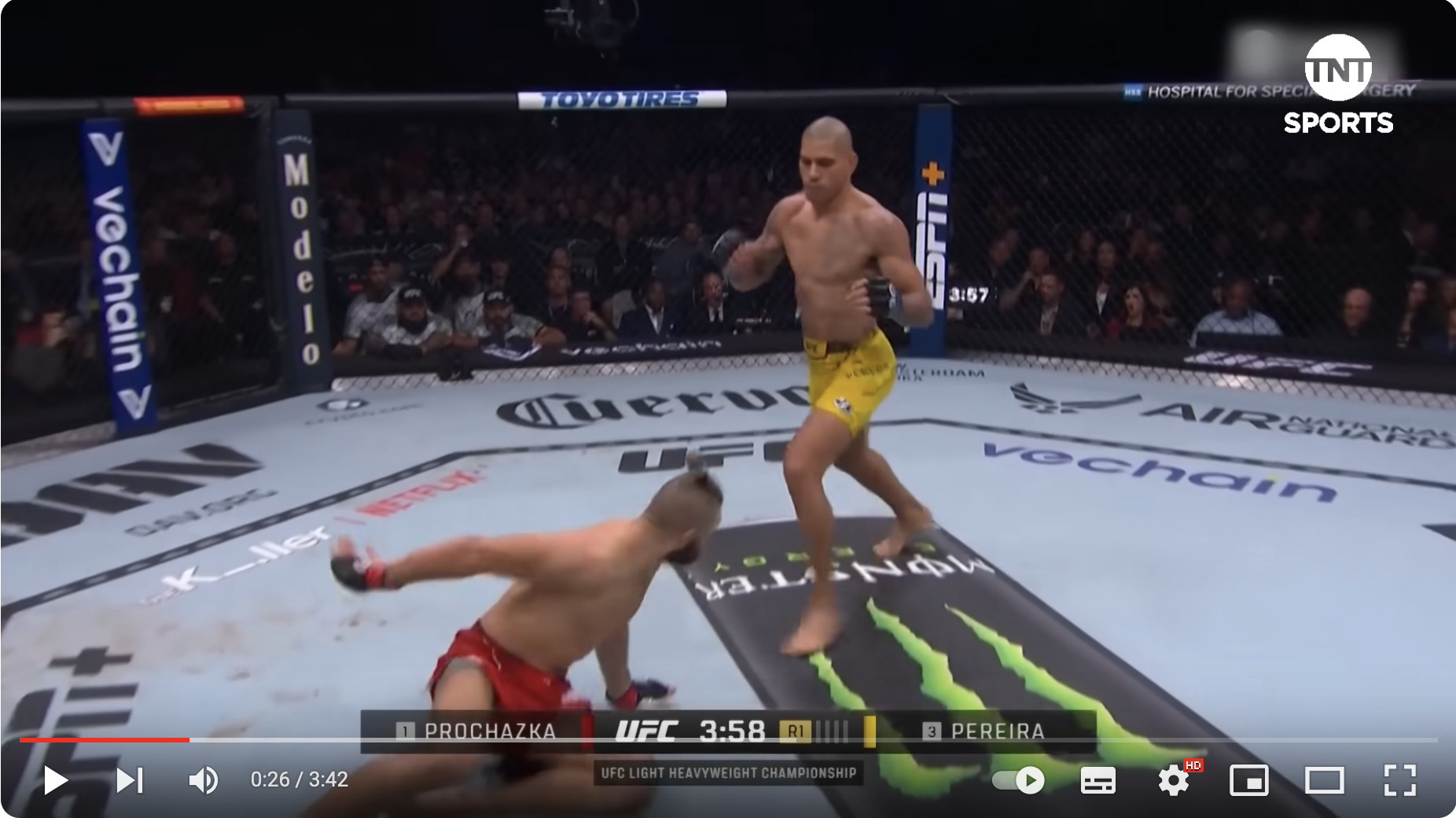
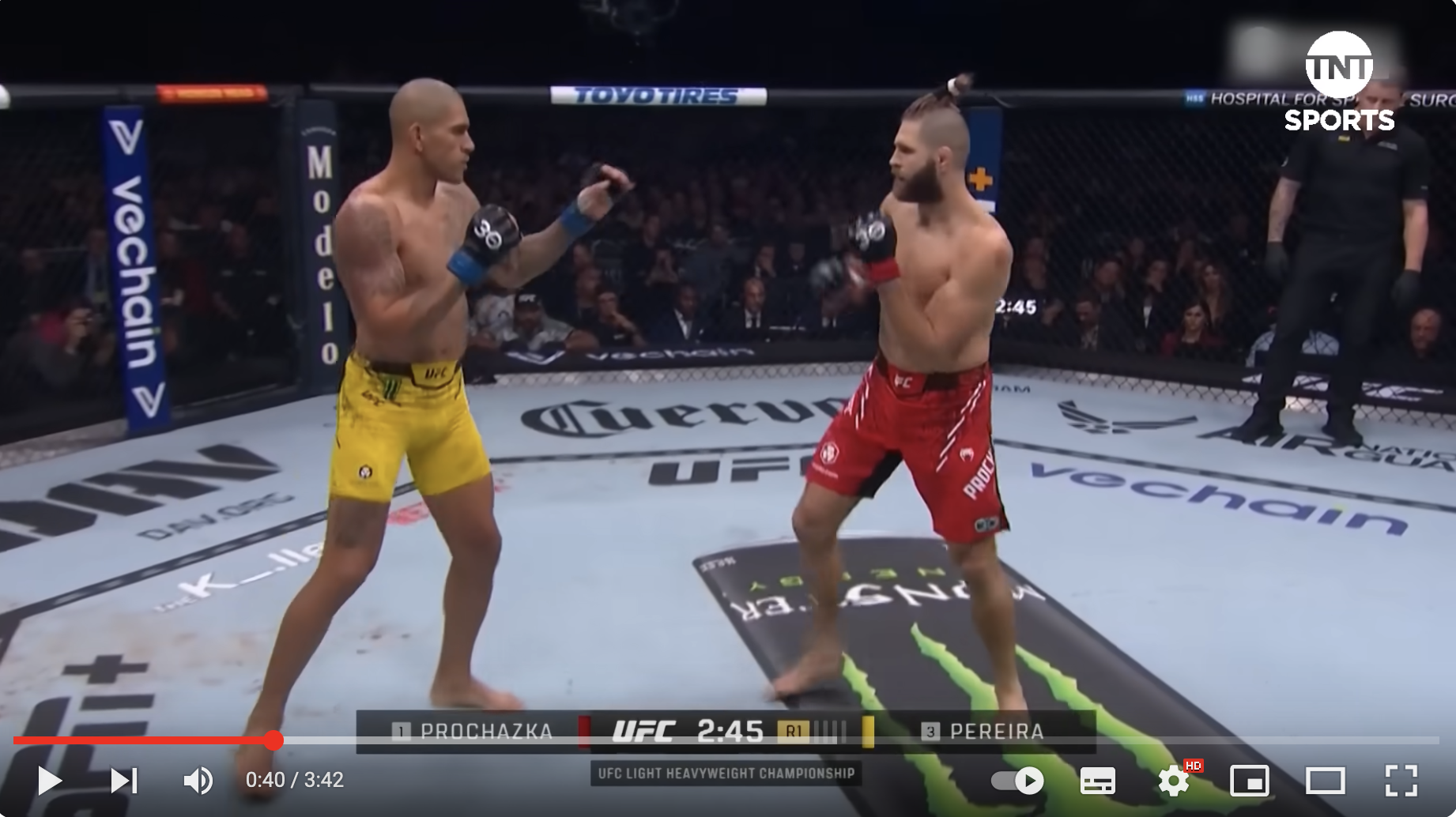
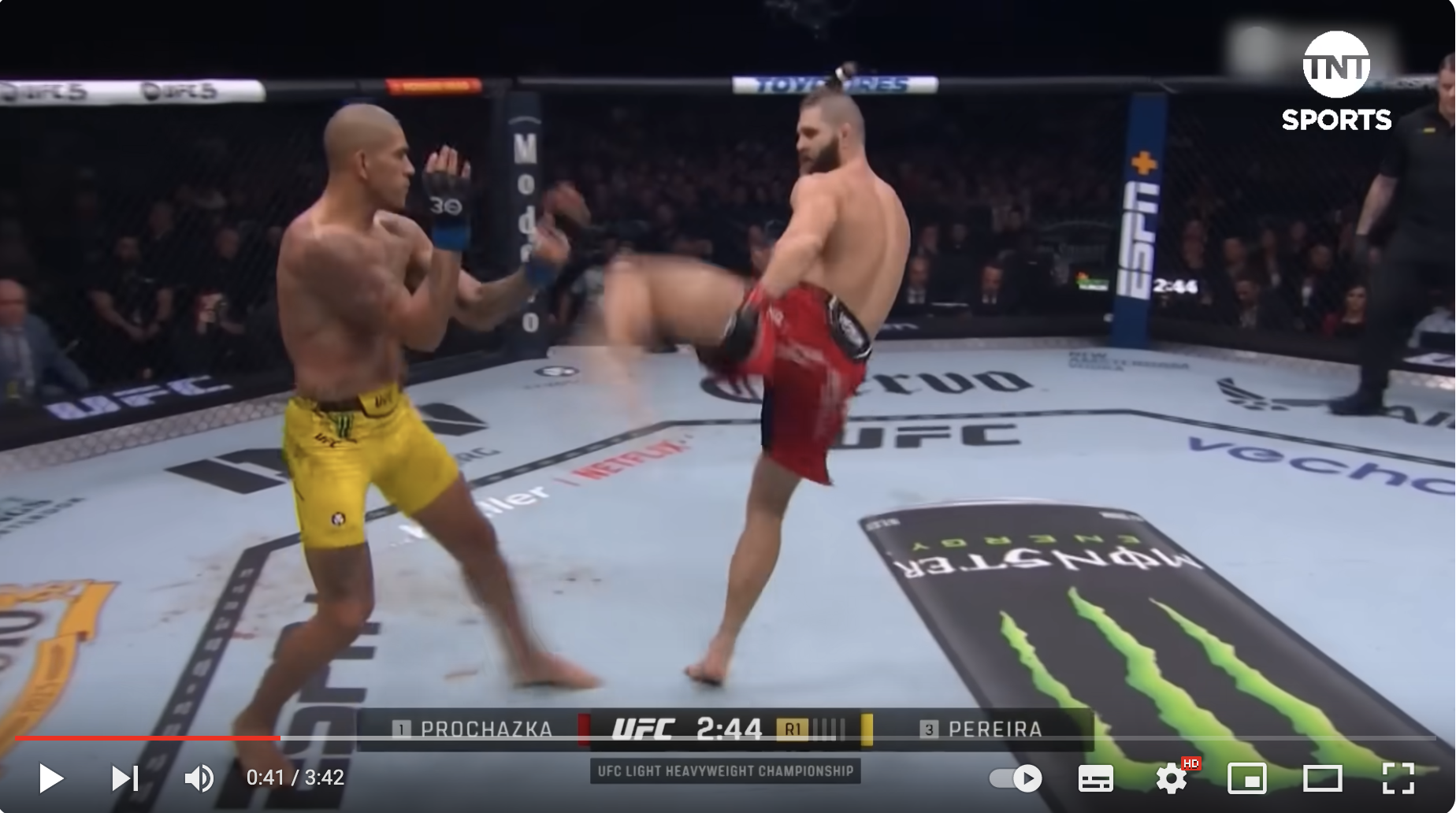
You can see his famous calf kick in action in UFC 295, completely taking Jiri off his feet:
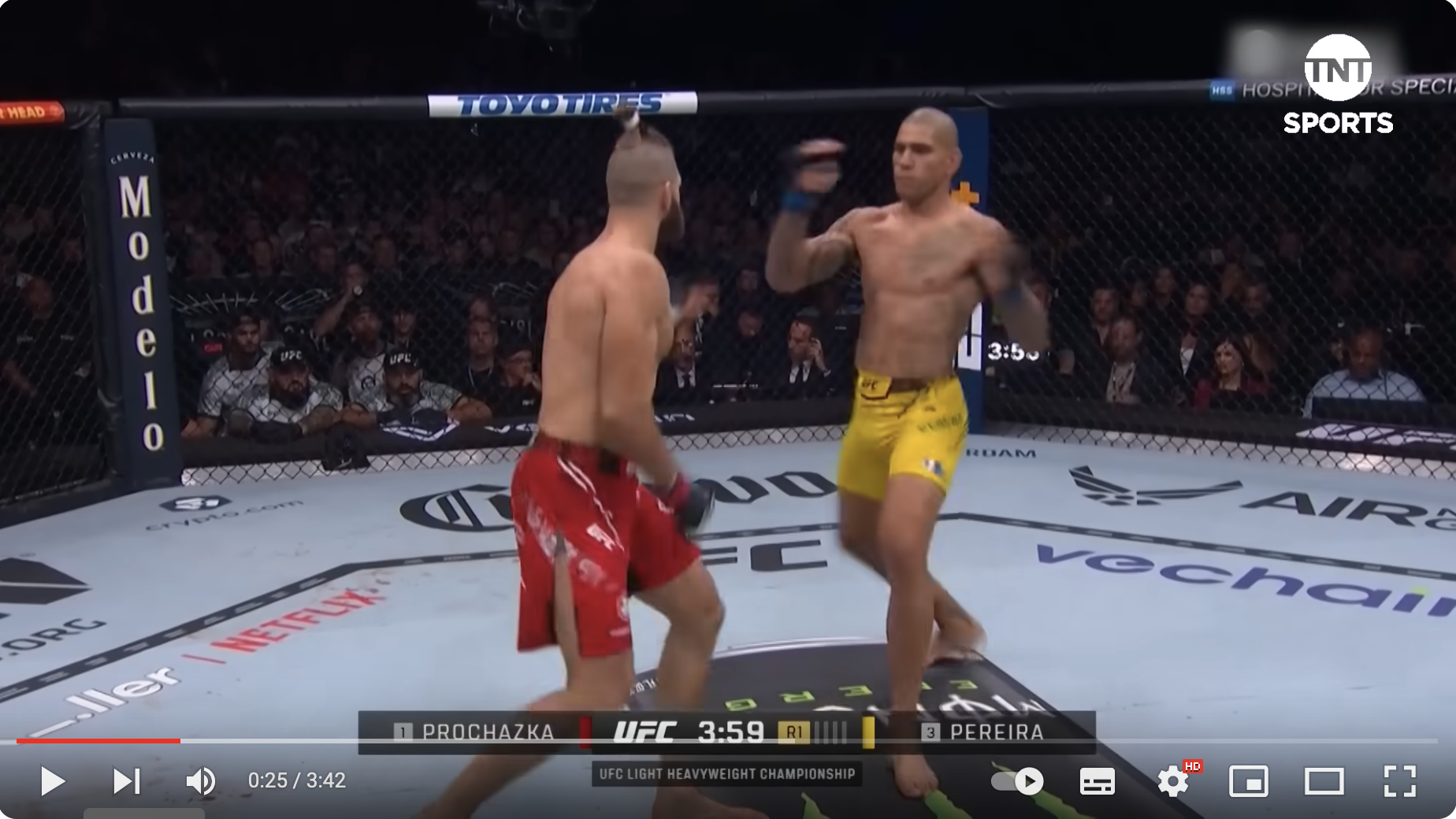
What’s remarkable about the Pereira calf kick is how little wind-up there is, which makes it hard to see coming – he just snaps it out. He does three identical kicks in a row in that part of the fight – the pictures above show the first – but all three hit home. His punches are delivered in the same way – the hand just snaps out with almost no telegraphing movement at all. You can see in the screen captures above of the kick that his body stays facing the opponent at all times. They don’t look like powerful shots, but you can see the deadly effect they have on his opponents. That very tight coil in his body around the spine that he’s using to pop his kicks and punches out is absolutely indicative of Chicken xing. “Chicken shakes its feathers” is a characteristic move of the animal found in Xing Yi links (forms) and somewhat resembles the Fa Jing expression that you see demonstrated in Tai Chi styles:

A chicken shaking its feathers.

Chicken step

When Pereira defends he is using footwork to evade rather than ducking his body – in fact, he stays very upright and his hands are kept high and defensive, just like they are in Xing Yi Chicken, which relies on footwork for evasion.
The blows which set up the finish from Pereira were so fast and minimal they were hard to see in real time, but it was a counter 1-2, again delivered with that very upright body with the hips underneath the shoulders that is so characteristic of Chicken:
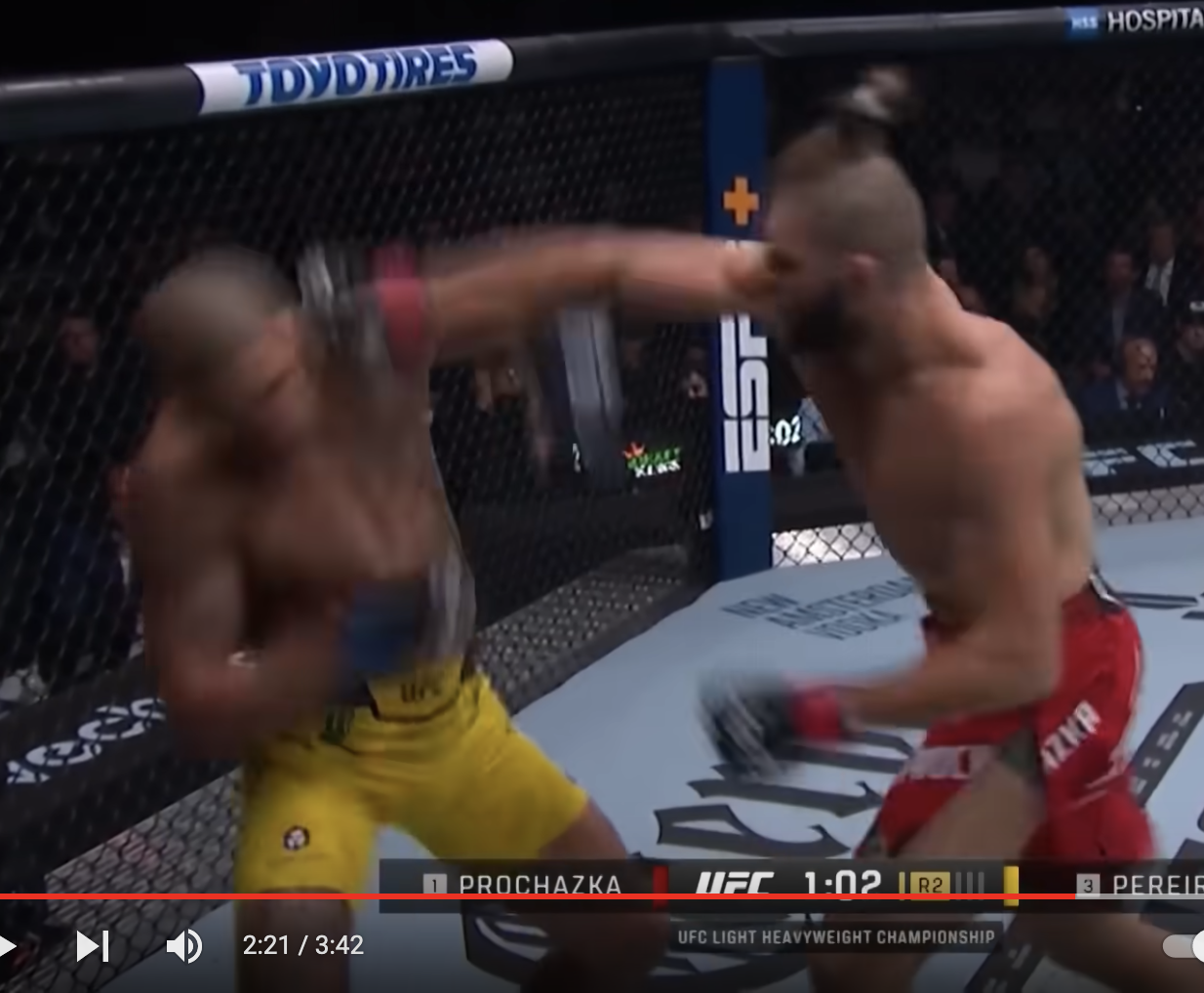
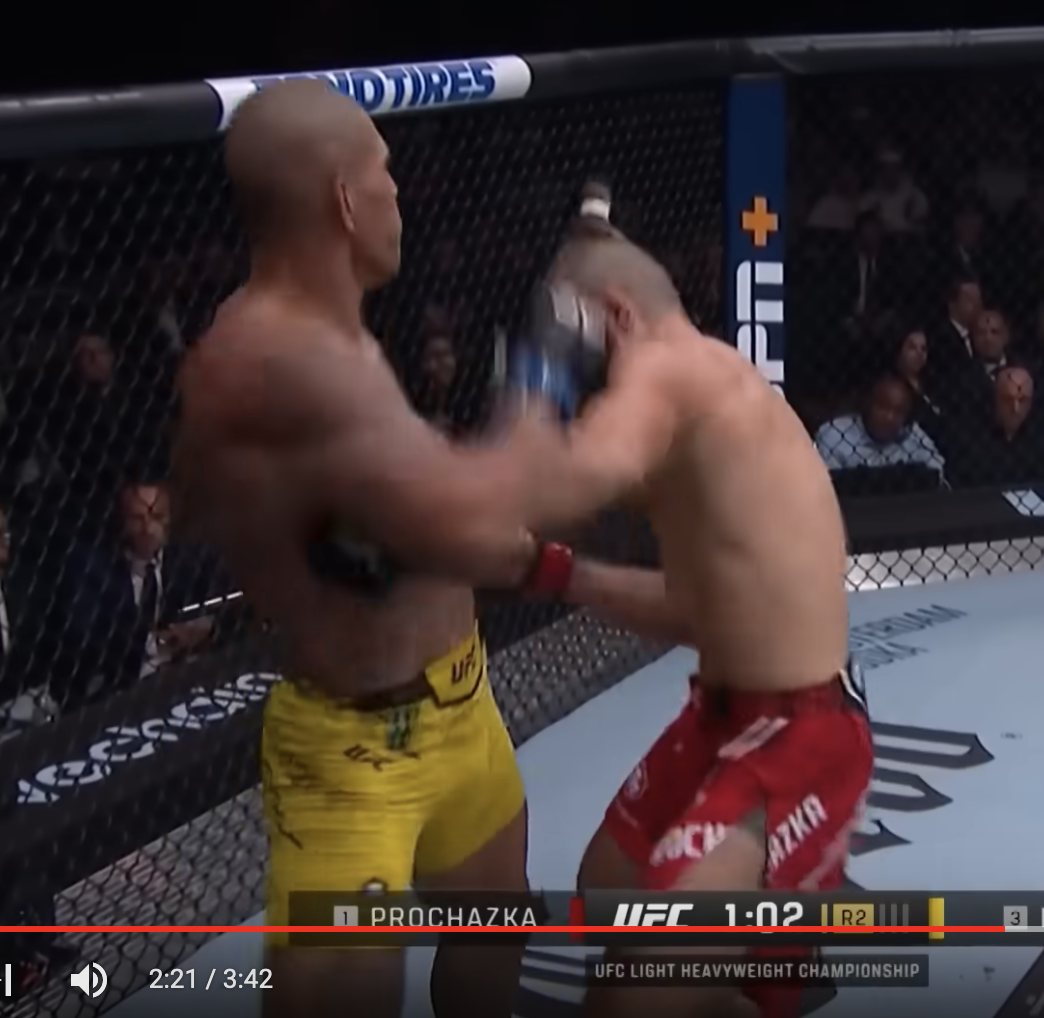
The very tight techniques of Chicken in Xing Yi are very metal in nature – sharp and cutting.

A perfect example of this Chicken style applied to MMA is the standing guillotine. When somebody shoots in for a takedown, wrapping the neck and using your hips to stand tall, with a narrow base is a very chicken-like technique. In fact, Pereira almost finishes the match with Jiri earlier with one:
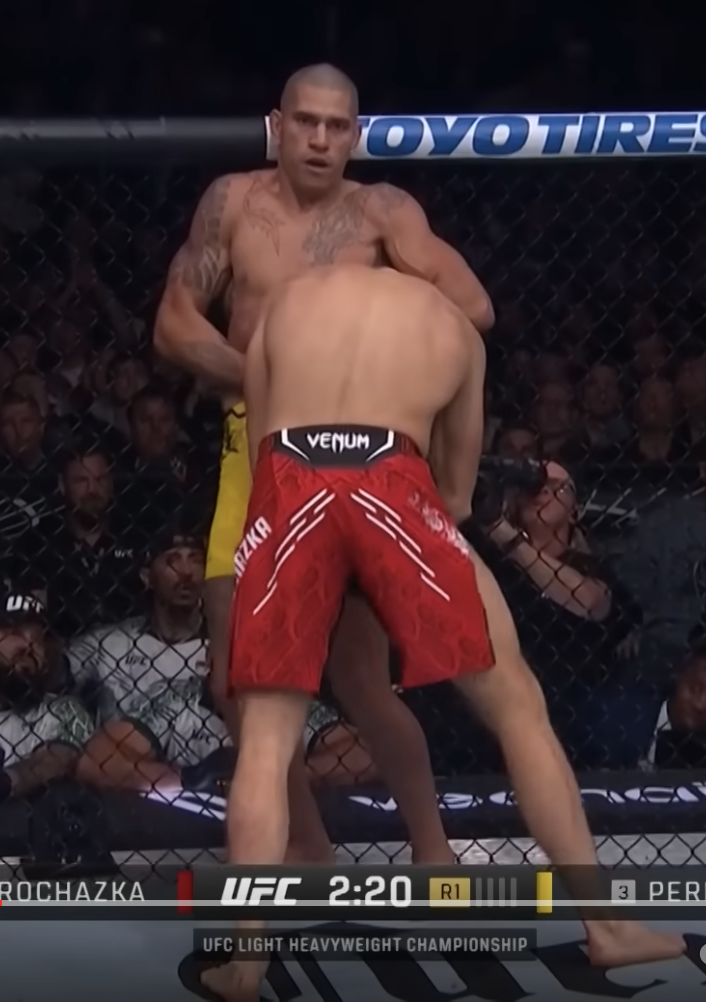
Standing guillotine attempt from Pereira.

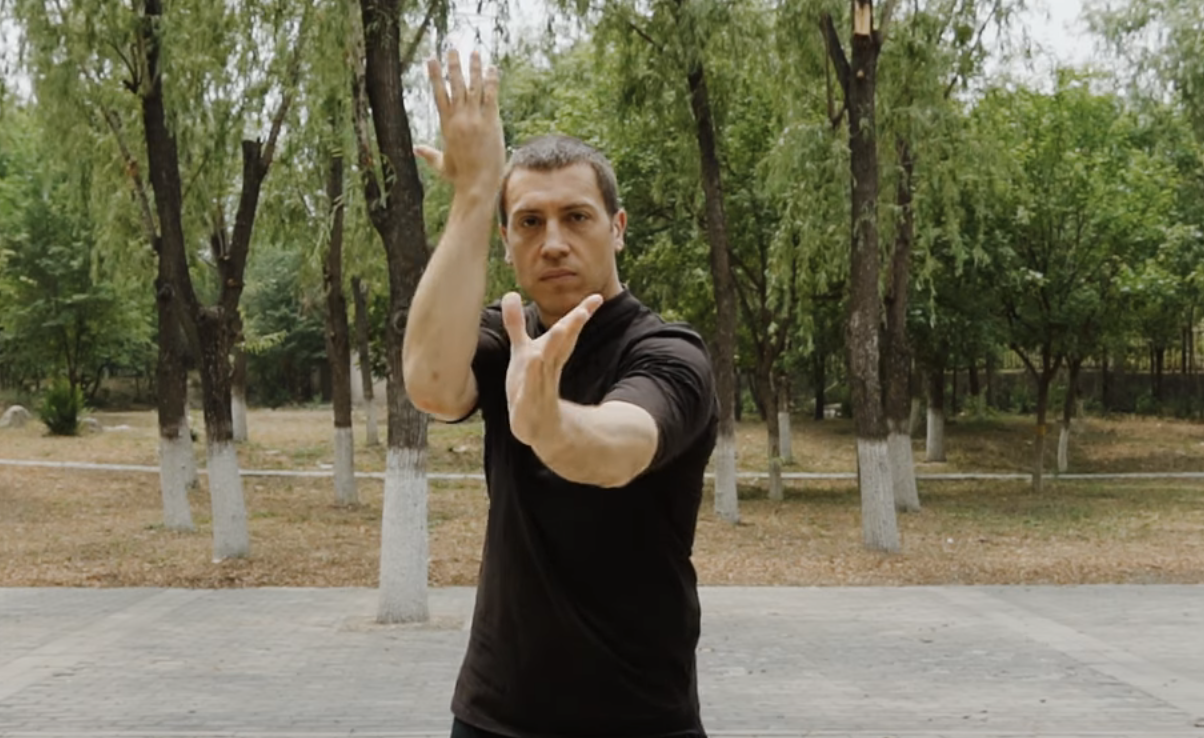
Here’s a video of me doing some Xing Yi Chicken:

As I mention in the video, Chicken is an important animal in Xing Yi because it provides one of the requirements of the San Ti Shi structure – chicken leg.

Another thing Chicken (done by humans) is famous for are the knee strikes, which in real chickens are enhanced by the spurs it has on the back of its legs, and elbow strikes. You see this with fighting chickens especially. My teacher always said that the martial art that most resembles Xing Yi Chicken is Muay Thai, which is famous for knees and elbows.

The finish in UFC 295 was delivered by downward elbows from Alex Pereira and he has finished UFC fights with his famous flying knee before, delivered here in a way that looks very similar to the knee strikes in the Xing Yi link I do above:

Hopefully I’ve made my case.

To repeat: I’m not saying something simplistic like, “UFC fighters are doing Xing Yi”, but that as a tool for analysing fighting styles, I find Xing Yi really useful and the 12 Animals remain really fascinating.

A bit of homework for you…

Finally, I want to leave you with a bit of homework – also on that card that night at UFC 295 was British heavyweight Tom Aspinall. He managed to secure the interim heavy weight championship belt that evening. To me he’s a clear example of another one of Xing Yi’s 12 animals. The question is which one? You have 10 to choose from! Post your answers, compete with your reasoning, in the comments section below and I’ll give a prize for the correct answer (correct according to me, anyway, and I am the final word in this 😉 ).

Have a watch here:

Swallow Photo by Rajesh S Balouria: https://www.pexels.com/photo/close-up-of-swallow-17484064/

Chicken Photo by Luke Barky: https://www.pexels.com/photo/white-chicken-on-a-concrete-pavement-2886001/
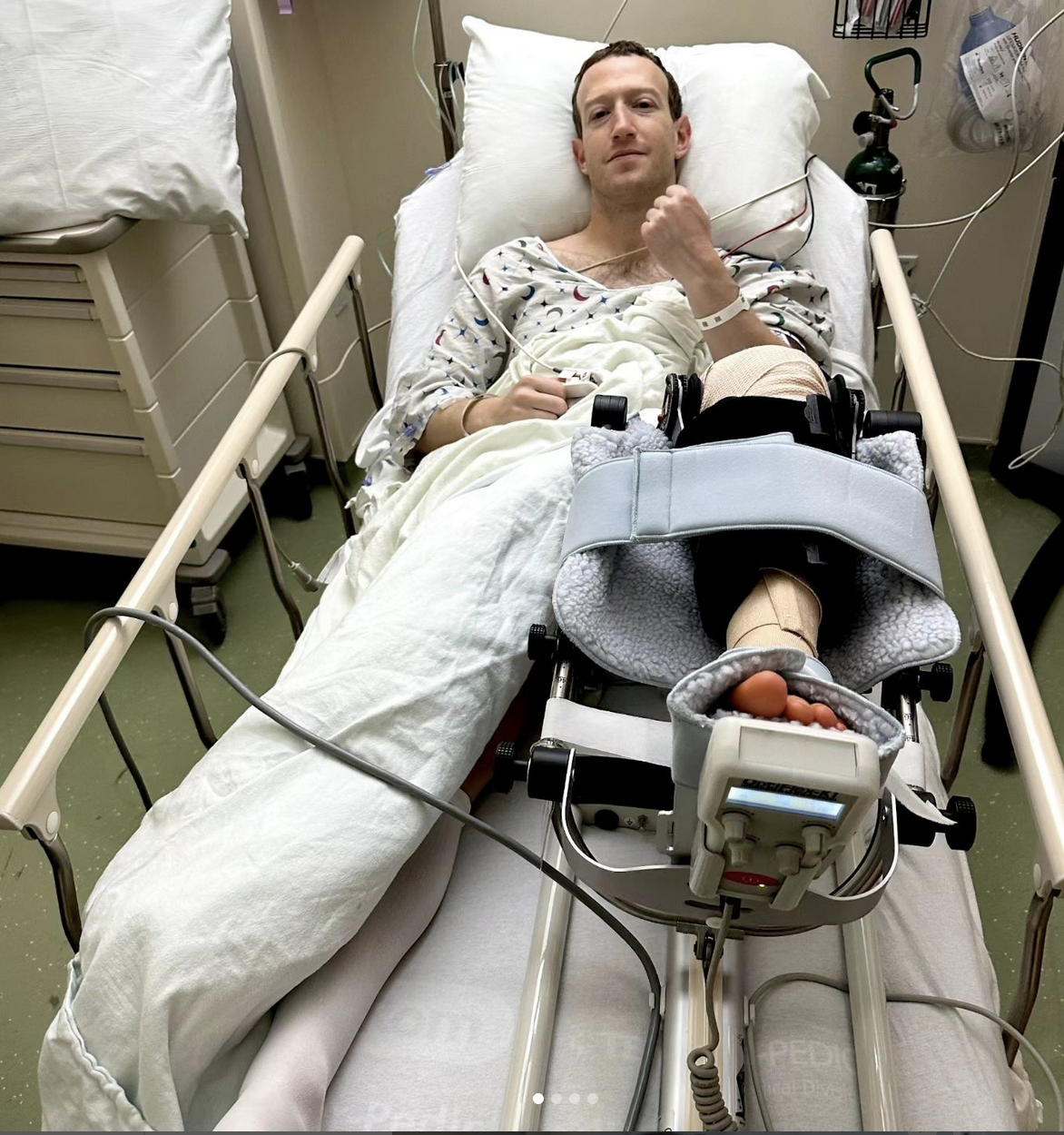
Zuckerberg blows out his ACL doing martial arts

Get well soon, Zuck! (Image credit: Mark Zuckerberg).

Meta (nee Facebook) founder Mark Zuckerberg has undergone ACL surgery thanks to an injury sustained during his preparation for his first MMA fight.

Tore my ACL sparring and just got out of surgery to replace it. Grateful for the doctors and team taking care of me. I was training for a competitive MMA fight early next year, but now that’s delayed a bit. Still looking forward to doing it after I recover. Thanks to everyone for the love and support.


He wrote that on his Facebook and Instagram account along with pictures of him punching the air from his hospital bed, and also a strange one of his wife mopping his brow and tending to him as he lays there. What is that telling us about his psyche? He’s clearly a little bit proud of his injury, since it adds to his macho credentials. Especially the shot of his woman tending to his wounds! 🙂

Like many previously unathletic or “nerdy” men who discover Brazilian jiujitsu or MMA training in their middle years, it looks like Zuckerberg has been utterly consumed by his new hobby. I understand – I got consumed by a passion for BJJ when I discovered it around the time I was due a mid-life crisis. It is the perfect salve for so many things that happen to people around that time of their life. But when you combine a billionaire’s bank account with a new found passion you get the ability to take your new obsession to stratospheric levels. Zuck has done exactly what I would have done if I was a billionaire – reorganise my entire life around my new hobby and pay for the very best people in the world to train me.

For example, there’s video of him sparring with two of the UFC’s current champions on a matted training area presumably on one of his many private yachts… That’s a ridiculous level of privilege.

However, even billionaires are human and an ACL surgery is no joke. Like most people who came to BJJ later in life, I had no idea what an ACL (anterior cruciate ligament) was before I took up BJJ. But once you do start BJJ you hear it mentioned so often you pick up knowledge of knee injuries by osmosis, or just go and google it to find out. Of the four main ligaments in the knee, it’s the one that snaps most often due to twisting injuries. That can happen in BJJ and MMA mainly due to takedowns/wresting or leg locks, some of which, (like the heel hook), are designed to specifically target ligaments in the knee. The idea is that you tap before injury occurs, but life is full of little accidents. Clearly Zuck has either had a takedown gone wrong or been on the wrong end of a leg lock and not tapped in time.

But people destroy their ACLs doing other things too – football is a classic example, and so is skiing. Pretty much any sport you decide to do has the potential to injure you, so you might as well pick something you love. In fact, I remember a few years ago when people used to talk about Tai Chi being really bad for your knees, however that craze seems to have died down recently.

Zuck will be back, but recovery from ACL surgery is a painful, slow and frustrating business. We’re talking months of physio-type movements just to get a normal range of movement back into the knee. He might be pumping his fist in pride in his photos at the moment, but this injury will change him. Hopefully it will give him a wider perspective on life.

If you’re going to train in combat sports then it is almost inevitable that at some point you will be injured. Especially if you go in with too much enthusiasm and passion. I too have been injured doing the sport I love, and sometimes there’s nothing you can do about it, but quite often it happens in moments where you’re being just a little bit reckless. The lesson for us all is that massive enthusiasm and passion for something new often needs to be tempered with a bit of restraint. Remember, look after your training partners and tap early and often.

Get well soon, Zuck!

If you liked this article then you’ll like these:

Episode 19: Salvatore Pace on the evolution of Brazilian Jiujitsu

Salvatore Pace, or Salvo for short is a 3rd degree black belt in Brazilian Jiujitsu and owner of Gracie Barra Bath, the Head Quarters of Gracie Barra in the South West of the UK, Gracie Barra West Wilts and co-owner of Gracie Barra Gillingham. He is a two time NAGA European Champion and Grappler’s Quest champion. Salvo grew up in Sicily and had a passion for martial arts as a young boy, practicing everything he could get his hands on, from boxing and Kung Fu to wrestling, and then MMA in the emerging combat sports scene in the UK, but it was his first encounter with Brazilian Jiujitsu and his main teacher Professor Carlos Lemos Jnr, that changed his life forever and put him on a plane to Brazil and then the USA, where he trained with some of the biggest names in the sport.

Returning to the UK Salvo had a dream of teaching jiujitsu for a living and set up Gracie Barra Bath in 2007, back when most people hadn’t even heard of Brazilian jiujitsu. And that’s where our paths crossed,  I first met Salvo way back in 2011 and I’ve been with him ever since, getting all my belts from white to black from his hands and it’s been a pleasure to watch his students and academy grow and develop and expand to new locations around the South West.

Jiujitsu has certainly evolved a lot since those early days, but we can let Salvo tell that story, so here he is.

Links:

Gracie Barra Bath (South West HQ)

Gracie Barra West Wilts

Gracie Barra Gillingham


Episode 16: Tim Cartmell on keeping it real in martial arts

My guest in this episode will need no introduction to anybody who trains in the Chinese styles of Xing Yi and Baguazhang, especially in the United States. Tim Cartmell is a lifelong martial artist who spent many years living in Asia learning the internal arts, before heading back to the US where he took up BJJ, becoming a black belt. Tim is now the head jiujitsu coach at Ace Jiujitsu Academy in Fountain Valley, California where he teaches classes and trains professional MMA fighters. https://www.acejiujitsu.com/


In this podcast I ask Tim about his training tips, especially for older martial artists, where he thinks martial arts is going in the future and his approach to combining all the arts he knows into a single principle-based, reality-driven approach.

You can find out more about Tim at his website www.shenwu.com and don’t forget to check out the Shen Wu Martial Arts group on Facebook.

I hadn’t talked to Tim before this interview, but many of the people I’ve had as guests on my podcast have rated him highly, and now I know why – for somebody with so much experience of martial arts Tim is a very humble and genuine guy, as I hope you’ll discover over the next hour or so.

You can support The Tai Chi Notebook Podcast by becoming a patron. Head over to www.patreon.com/taichinotebook and become a patron today! You’ll get a version of the podcast you can download, exclusive video clips and articles.

The head kick from hell! Leon Edwards UFC 278

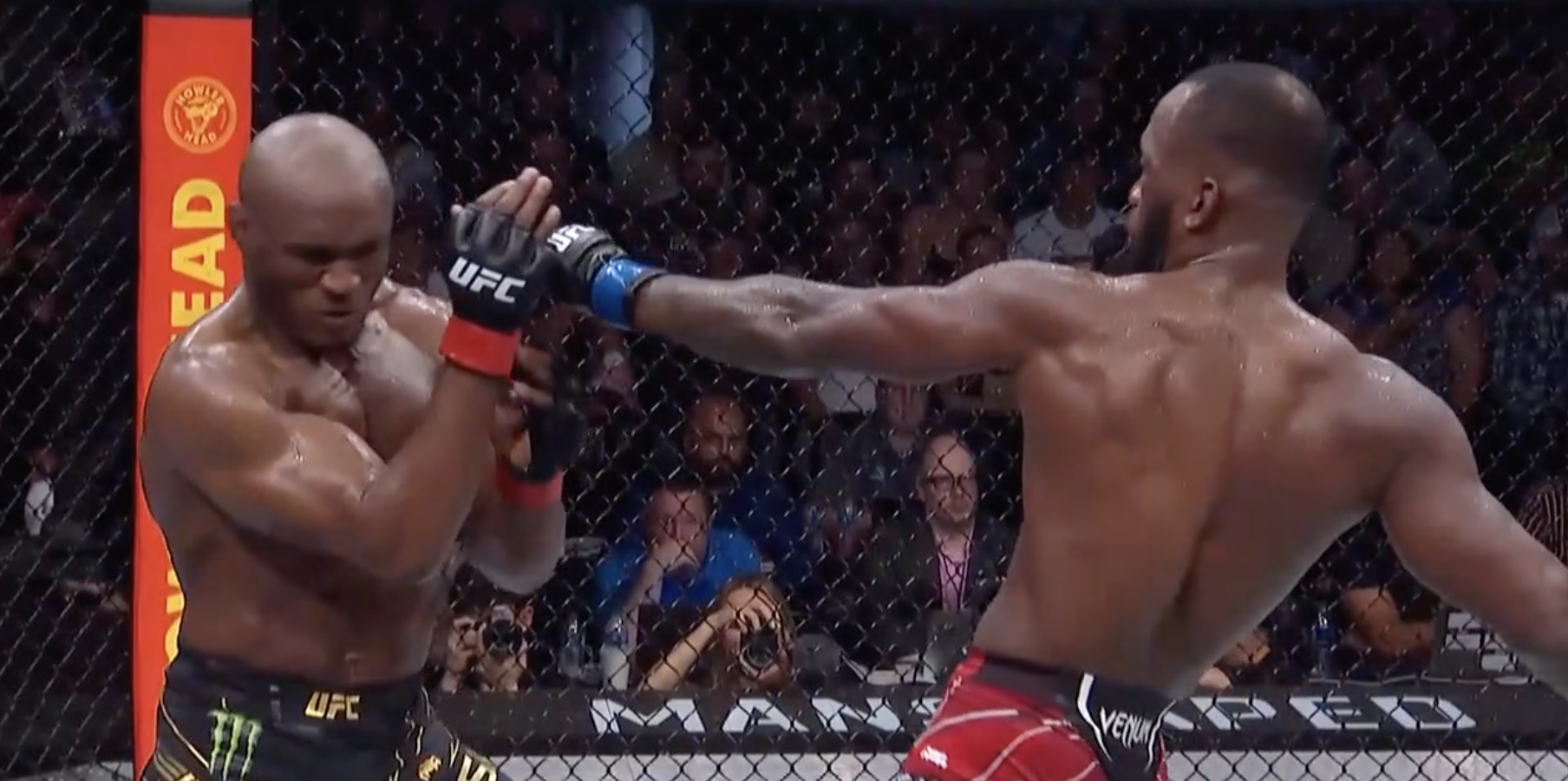
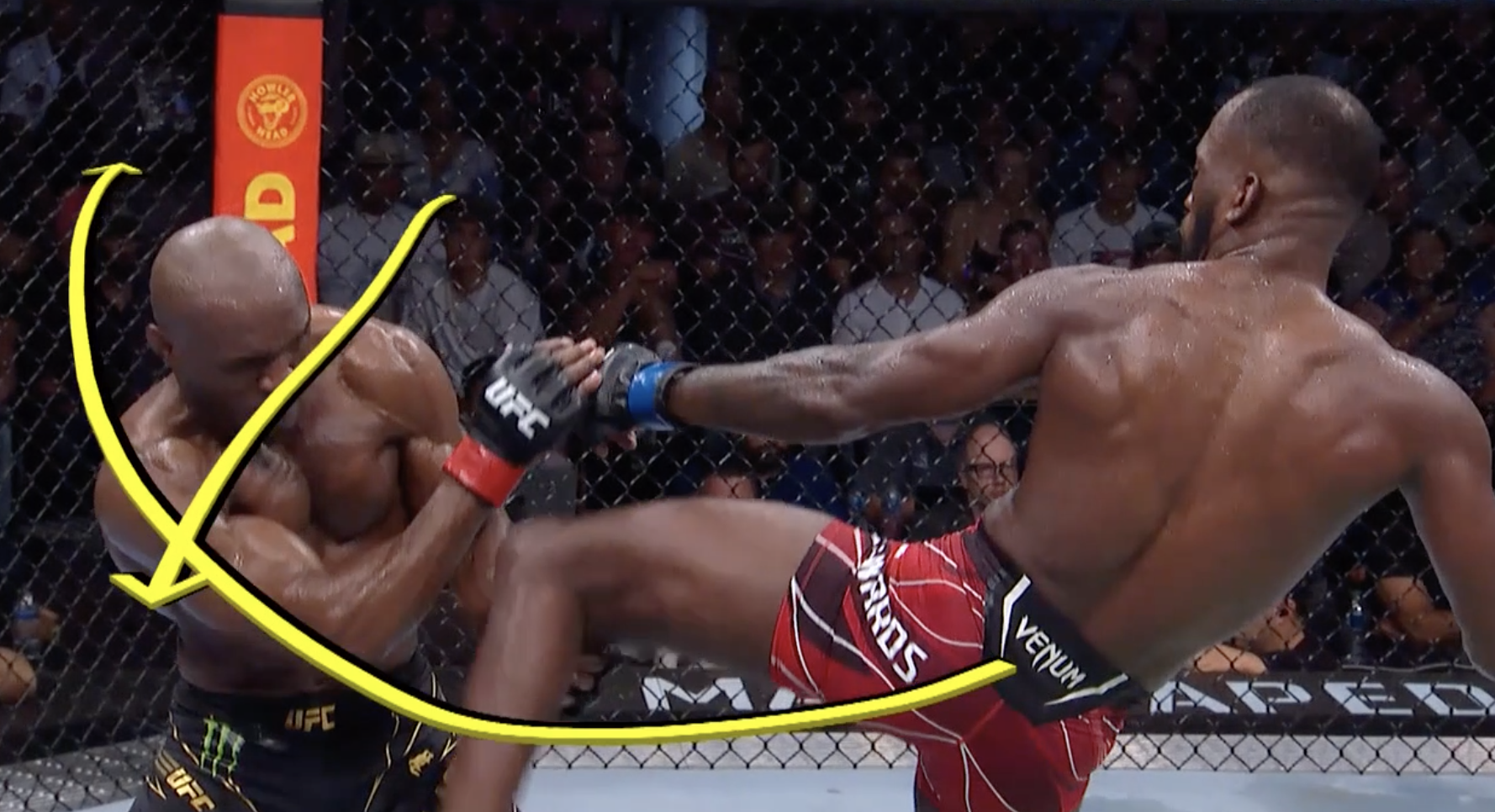
Congratulations to the UK’s Leon Edwards for becoming the new UFC Middleweight Champion of the world with his stunning head kick victory over Kamaru Usman. After a great first round Edwards was clearly losing on points having been dominated by the champion in each round since, but in the fifth and final he pulled off a near perfect head kick as you’re ever going to see, sending Usman crashing to the canvas and making him the new champion.

As the photos show, he set it up with a left that tells Usman to dip his head to the right, but that kick is already coming and it’s all over.

1. Feint the left.
2. Usman dips his head.
3. Kick connects!

Can traditional masters beat MMA?

Friend of the Notebook, Byron Jacobs, who runs the Mu Shin Martial Culture Youtube channel and the Hua Jin Online Learning Program for Xing Yi and Baguazhang, just posted this monologue about Xu Xiaodong and the challenge matches that happened between him and various (self proclaimed) Chinese martial arts masters.

Now we’re a few months/years away from the high point of the Xu Xiaodong controversy it’s good to get a reasonable perspective on the matter from somebody who actually knows him and moves in the same martial arts circles in China.

It’s quite a long talk, but you can think of it like a podcast and listen to it while you’re doing your conditioning exercises. Wait, you are still doing those, right? 🙂

Criticising solo forms – again

In this post I want to ask a question. I’m going to give an answer too, so the question is slightly rhetorical, but I think it needs to be asked.

“Why do internal martial artists spend so much of their time criticising each other’s solo forms?”

Let’s break this down – firstly, is this statement true?

I’ll give you one recent example to act as a poof of the statement:

As somebody who has been involved in discussing internal martial arts on the Internet since around the year 2000 I can attest that this happens all the time. In fact, I would say that it’s the majority of the discussion is of this nature.

You don’t need to watch the whole video. It’s long, boring, petty and doesn’t display a particularly high level of etiquette or skill.

It’s essentially one Chinese martial artist ciricising another Chinese martial artists for the same thing over and over, which is sticking his elbow out a bit too much. I know! The horror!

Ok, he probably has a point, but you could easily turn this around and criticise all the mistakes that the tall skinny guy is making too.

The question I have is why did he make this? Why must internal arts people spend all their time criticising each other’s solo forms?

Look at other martial arts – especially the ones that have a sporting side. They don’t tend to do this. MMA people do not do this,

With internal arts it’s an endless debate on degree of uprightness, too much or not enough opening of the kua, level of relaxation, sinking enough or not enough, degree of the knee flextion, etc. The list goes on…

But ok, here’s my caveat. Internal arts are obsessed over these details because they matter. The amount of opening and closing of your kua dictates the amount of power you can produce, and the quality of your movements. The position of your elbow has a direct connection to whether you can produce whole body power or not.

But nobody has the same set of rules that these things are being judged by. In theory, there should be a standard set of rules, but in reality, different styles do things in different ways, and always will. I’m more inclined to think that obsessing over details of solo forms is a bit of a trait of internal arts and less valuable than seeing what a practitioner can do in application/sparring.

The language of internal arts is also based on the same ideas. People go to their Tai Chi teacher to get corrected. The language itself is kind of negative. Nobody talks like this is in sports. You spend time with a good boxing coach and get improved.

But, what do you think?

Podcast Episode 2: Byron Jacobs on Beijing martial arts

Episode 2 of the Tai Chi Notebook podcast is out!

Byron Jacobs is a teacher of Xing Yi and Bagua based in Beijing, China. He’s a student of the famous Shifu Di Guoyong and is heavily involved in the martial arts scene in Beijing. As well as training traditional martial arts he’s also a BJJ practitioner and competitor.

If you’d like to be taught by Byron in the arts of Xing Yi and Bagua, then he has an online learning platform available .

In this wide ranging discussion we talk about training Xing Yi, Bagua and Tai Chi and whether Wu Shu will ever get into the Olympics. We also find out what it was like to train martial arts in Beijing during the Corona virus pandemic, and what the Chinese BJJ and MMA scene is like.

Show notes
—————

(9.45)
Byron’s Hua Jin Online learning platform
https://www.patreon.com/mushinmartialculture

(15.22)
Byron’s Mu Shin Martial Culture YouTube channel
https://www.youtube.com/channel/UCg_V6eznSvYOFz2naGlgRpg

(47.05)
DQ’d for Kicking TOO HARD? – Doctor Reacts to Olympic Karate Controversy and Knockout Science
https://www.youtube.com/watch?v=6QFxxM3QOws

(1.05.30)
Speed passing by Rafa Mendes
https://www.youtube.com/watch?v=Qu_9Lcdrh_w

(1.18.11)
Ku Yu Chang (Guruzhang’s) Yang style Taijiquan:
A STUDY OF TAIJI BOXING by Long Zixiang
https://brennantranslation.wordpress.com/2018/03/30/the-taiji-manual-of-long-zixiang/

(1.23.00)
Stand Still Be Fit by Master Lam Kam Chuen
https://www.youtube.com/user/StandStillBeFit

You can find it on all the usual places you find podcasts – search for The Tai Chi Notebook on Apple podcasts, Spotify, etc.. or here’s a link:

Spotify
Apple
Web

The current state of martial arts, with Dan Hardy

I’ve been listening to, and really enjoying, Dan “The Outlaw” Hardy’s recent interview on the Raspberry Ape podcast. With a background in traditional martial arts, Dan was a pro MMA fighter and official UFC commentator.

Warning! It’s long. Over 3 hours, in fact, it’s almost 4 hours long.

The issue of how long a podcast should be is always a contentious one – you hear a lot of people say it should be as long as a commute to work, so 20 minutes to half an hour, but I have no objections to something like this one, which weighs in at over the 3 hour mark. I’m an adult – I can handle the idea of not listening to something all in one go.

Dan has a lot to say about the current state of the UFC, MMA, traditional martial arts, combat sports, capitalism, the old days, growing up and more. It’s quite a run through of various related topics. His thoughts on self defence, violence and the place of MMA in society I thought were particularly interesting.

Give it a listen – just not in one sitting!