Making an easier Tai Chi form

I’ve returned to teaching beginners recently and that’s left me with a problem: I need a simpler Tai Chi form to teach.

The main problem with beginners learning Tai Chi is remembering the movements. While this is all a distant memory for me, lost behind 30 years of practice, I can see that the struggle is real for them – where does this arm go? Where are my feet? What move is next?

Also, the complexity of movements is an issue. Moves involving kicks where you have to stand are a lot harder for people without any background in a sport or a martial art to do.

I also need a Tai Chi form that’s short enough that the end of it isn’t so far away as to be unattainable to beginners, but has enough content in it that there’s something of a work out going on.

So I came up with doing some modifications to the first section of our long form and running with that. Here it is:

I think this form has a good balance of everything – it’s long enough that there’s enough to learn and practice, plus the movements are relatively simple for beginners, with no complicated kicking or turning manoevers. But it’s not so long that it’s going to take months to get to the end of.

Once the form has been learned and the first 6 posture principles of Tai Chi adhered to:

  1. Suspend the head
  2. Centre the coccyx
  3. Round the shoulders
  4. Bend the elbows
  5. Hollow the chest/raise the back
  6. Bend the knees

…and a reasonable level of relaxation achieved, then they can work on principles, like arms following the body, not moving independently. A good way to work on this is through silk reeling exercise.

Of course, after beginners have reached a reasonable standard in this form, they can move on to the full Lam short form, which is more of a challenge. But I suspect that for a lot of people, this little form will be enough.

I also updated my Tai Chi teaching website with a new name Slouching Tiger. Check it out.

Image credit: eberhard grossgasteiger

Tai Chi as a group practice vs solo practice

A group practices the Tai Chi 24 form together for World Kung Fu and Tai Chi day.

I’ve been getting back into teaching Tai Chi classes recently, and one thing I’ve noticed is the distinct difference there is between doing the form solo in your back yard compared to performing it as part of a group. I’ve been doing the form on my own now for years now. I stopped teaching formal classes in Tai Chi way back in 2011, and although I did a few private lesson things, lockdown really saw an end to that. So, it’s been a long time since I’ve been part of a group all doing the form together.

Group practice changes things. Your awareness in Tai Chi should always be this kind of delicate balance of internal and external. You need to stay aware of your internal sense of self, at the same time as not shutting out the outside world. This is, after all, a martial art, not a meditation session. If you’re not aware of what’s going on outside of you then it wouldn’t be much use for dealing with kicks and punches coming your way. But at the same time, Tai Chi does exist somewhere on the mediation spectrum It demands a sense of stillness and awareness over your inner state. Things like the feeling of your balance, your sense of whether your body is expanding or contracting, your centre of gravity (dantien) and where you are moving from all mater, not to mention keeping your mind fixed on the task in hand and your Yi (intention) flowing with the movements.

Doing that on your own is one thing, but when you are performing the form as part of a group, your awareness needs to also incorporate the group. The group seems to naturally develop a speed together. I wouldn’t say that a group of Tai Chi beginners possess the grace and beauty of a murmuration of starlings (!), but something of the same kind of non-verbal communication is going on. You are constantly picking up on little signals from other people that keep the whole group in check. But at the same time you can’t let the other people distract you and put you off your own job.

A murmuration of starlings

Just like Starlings, we are animals too, so we have these subtle senses and the ability to move in groups. If you’ve ever experienced being in a crowd of people that get a bit paniced you’ll know what I mean. The crowd seems to take on a life of its own and move as one.

Of course, it’s quite possible that you can perform Tai Chi with other people and remain blissfully unaware of any of this, particularly if you are new the Tai Chi and your head is so full of trying to remember the moves, or telling yourself off for getting them wrong, that there’s no room for anything else.

As a final thought, my feelings of seeing people doing Tai Chi together have always been a bit conflicted. On one hand it looks cool to see people brought together over a common goal, all silently concentrating and moving in harmony. But on the other, it expresses some of the worst aspects of the Communist ideas that ended up becoming a part of Tai Chi in the 20th century, that people should be ‘all the same’, bland, expressionless, worker units all doing whatever they are told to with no room for individuality.

There is always this tension between the group and the individual in society. The trick is to try and navigate it successfully.

How much practice is enough?

Photo by Andrea Piacquadio on Pexels.com

I remember reading in a Zen book that I enjoyed that you should not practice for yourself, but just practice for the sake of practice. I like that. There’s a kind of grim realism to it but it raises the issue of how exactly are you supposed to approach these sort of goaless activities, like Tai Chi and Zen? The sort of activities where even having a goal can become a problem because it interferes with the activity itself, because it needs to be about being open and aware in the moment, not thinking about things far off in the future. By definition, if you have a goal you cannot be ‘living in the moment’.

Watching that Bagua Boy documentary that I linked to in my last post I was struck by how much Mr Rogers had practiced over his lifetime. He said he spent a lot of years practicing for hours a day. It’s impressive, but it also sounds very lonely, and even if most people had the free time to do that, they wouldn’t. You need to have some sort of drive deep within you to practice anything that much.

Lots of people in the Tai Chi world practice for hours a day. Some people meditate for an hour a day. Some people stand in Zhan Zhuan for an hour.

Today I read an article by Sam Pyrah in The Guardian that asks the question, at what point does a fitness activity become a ball and chain around your neck? At some point she realised that her life long addiction to running had left her very healthy, but with a very narrow life, and at the end of the day, what was the point?

People start Tai Chi for all sorts of reasons and the reasons for doing it change over a lifetime. Since I discovered Tai Chi I’ve always practiced, but I tend to do my personal practice in little pockets of time scattered throughout the day, not in big chunks of hours at a time. Maybe when I’m too old to work I’ll do a lot more Tai Chi than I ever did before? Everything has a cost, and I wonder if the people who practice for hours a day sometimes sit down and smell the flowers and wonder if it was all worth it… Like the Bear of Little Brain, I’ve always valued doing nothing as a worthwhile activity.

Practicing a bit is good, practicing a lot is better, but sometimes you can practice too much.

Photo by brittany on Pexels.com

Are you going to review Lou Reed’s Tai Chi book?

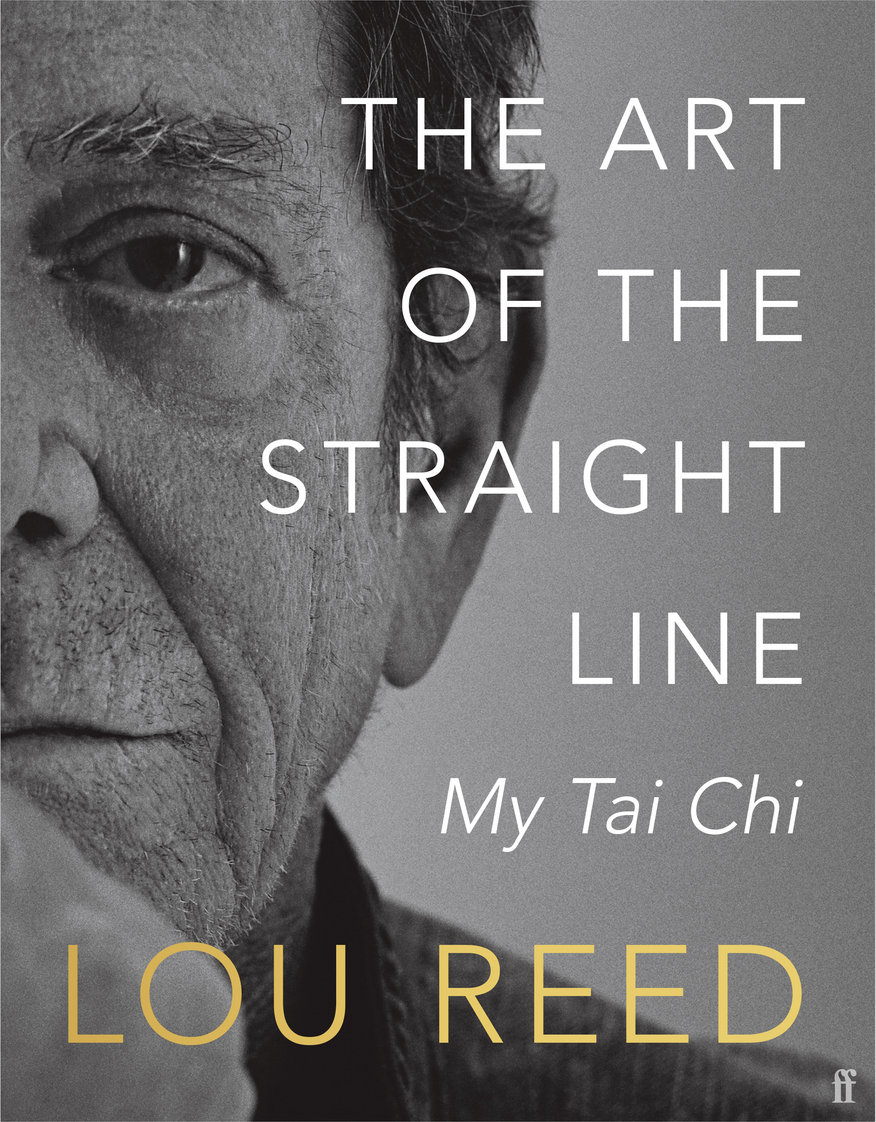
I was asked recently if I’m going to review Lou Reed’s book “The art of the straight line”, which, as you can see below, is his book about Tai Chi, released a few years after his death.

No. I’m not.

Lou was a practitioner of Chen style Tai Chi under Ren Guang-Yi. By all accounts he was quite the enthusiast. I had a quick look at a preview of the book and it looks to me like this isn’t really a complete book that he’s written. Instead, it’s a collection of old letters, scrappy notes and interviews with people who knew him about his love of Tai Chi.

But that wouldn’t be so bad if the writing was good, but it’s not. It’s meandering, scattered and the interviews are full of people talking about other people you’ve never heard of. I very quickly lost interest. It looks like it’s something for the serious Lou Reed fan, rather than the serious Tai Chi enthusiast.

Sorry Lou, but this is not my bag. I’d suggest a walk on the wild side instead.

Have you read it? Am I wrong? Let me know what you think below.

The puzzle of learning Tai Chi

Photo by Brett Sayles on Pexels.com

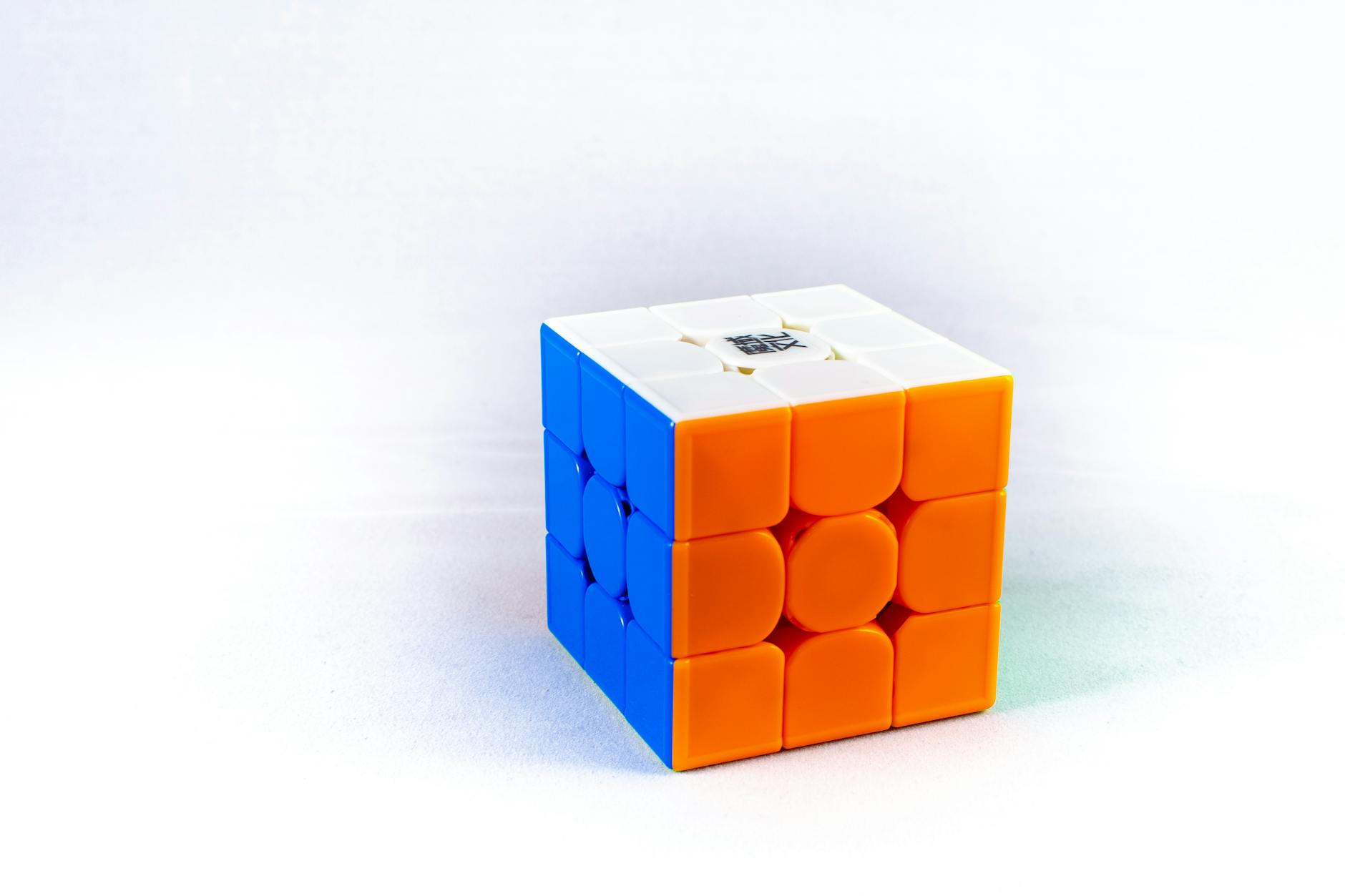
This new article in The Guardian about learning Tai Chi made me smile. “It feels like my brain is solving a Rubik’s Cube”, says the author Jennifer Wong. From my recent experience in teaching Tai Chi to beginners, that sounds about right. After their first class all of them say some variation of “I didn’t know it required so much concentration!”, to me.

The initial stages of learning Tai Chi are hard, but not in the way you’d expect. I’d say, about it’s 90% mental effort. You have to learn to remember moves with the outward appearance of simplicity, which are actually very difficult to remember. Simplicity requires a lot of effort. I often teach people the same sequence of moves over and over, then ask them to do it without me and they are instantly lost. I think this is entirely normal.

One device I’ve adopted that seems to work better than saying things like ‘left hand on top’ is visual imagery. The moves in Tai Chi already have names, like Repulse Monkey and Single Whip, which I think were used for the same kind of aid to memory. Unfortunately, after being transplanted from one culture to another and one time period to another, a lot of them are not effective any more. “Single whip” doesn’t mean much to people living in England in 2024, so I’ve started to adopt my own names to act as visual images. The opening move I call “Fountain”, as it’s like water in a fountain, coming up the middle then down to the sides. After that we “scoop water left” which makes sure that it’s the palm of the hand that is being used to scoop the water, not the back.

So far, so good.

Tongue behind the two front teeth

If you’ve been doing Tai Chi, meditation or yoga for any length of time you’ll have heard the old adage to ‘put your tongue behind the two front teeth‘. The explanation given for this is usually that it “connects the two meridians that go up the back and down the front of the body called the Ren and Du meridians, creating the micro-cosmic orbit”.

Micro cosmic orbit connected… man. Photo by Elina Fairytale on Pexels.com

From a Chinese medicine or Taoist perspective the perceived wisdom seems to be that “circulation of the Qi/Breath in Ren Mo and Du Mo is a bit like an electrical circuit. The two ends of the vessels must be connected for there to be an uninterrupted flow.”

Personally, I have my doubts about the whole idea of ‘energy’ or Qi ‘flowing’ around the body. I often think it’s really an ancient aberration of the simple idea of forces moving inside the body. In Chinese martial arts there’s a phrase you often hear – rise, drill, overturn, fall, which matches this circuit in the body with a martial technique. The best example of which is Pi Quan from Xing Yi, during which forces in the body (jin) rise up and then come crashing down into a strike.

Strength and balance

However, it’s not just Chinese medicine that recommends this tongue position. I’ve recently discovered that there are a lot of Western sources advocating the same tongue position. For example, Colgate toothpaste has an article about correct tongue position on its website that recommends the exact same thing – the tongue resting on the upper palette behind the two front teeth. The article links to a study in Radiology and Oncology called “Three-dimensional Ultrasound Evaluation of Tongue Posture and Its Impact on Articulation Disorders in Preschool Children with Anterior Open Bite“, which notes that “children with poor tongue posture were reported to have a higher incidence of anterior open bite, a type of malocclusion where the front teeth don’t touch when the mouth is shut. This may be because the tongue puts pressure on the teeth which can shift their position over time.” (Colgate).

In this article from Healthline, Dr. Ron Baise, dentist of 92 Dental in London explains “Your tongue should be touching the roof of your mouth when resting… It should not be touching the bottom of your mouth. The front tip of your tongue should be about half an inch higher than your front teeth.

While dentists may be aware of the benefits of good tongue position for your teeth and preventing problems with your speech, or mouth breathing from occurring, some exercise enthusiasts are going further and claiming that proper tongue position actually increases your strength and balance, something that is undoubtedly important for martial arts, like Xing Yi.

Pi Quan is said to be like the swinging of an axe. (Photo by Ivan Samkov on Pexels.com)

Now, I’m as aware as the next Tai Chi blogger that cherry picking studies that confirm your beliefs (and presumably ignoring everything that doesn’t) is a bit of a red flag. However, the idea that your tongue position effects strength and balance makes more sense to me than imaginary energy channels (Du/Ren) that may, or may not, exist in real life.

Apparently, good tongue placement can give you superpowers!

I remain slightly skeptical about the whole issue, however, my tongue does naturally rest behind my two front teeth on the upper pallet of my mouth… I can feel it there now as I write this. Was it always there? Or have I turned this into my natural position thanks to starting Tai Chi in my 20s?… I don’t know. All I can say is that it feels comfortable, and if my Ren and Du channels are connecting because of it, and my strength and vision is better because of it then…. so much the better.

Rewire your brain in six weeks – the benefits of meditation

There’s an interesting article on the BBC website about how a six week mediation programme (that you can access free online) can produce measurable changes in the human brain. It’s interesting, but does end with the disclaimer that “A final note of caution – it is important to acknowledge that any brain changes we had seen could also be random“.

Photo by Mike Bird on Pexels.com

Just one Thing – Dr Michael Mosley on Tai Chi (BBC Radio 4)

The Just One Thing series from Dr Michael Mosley is a radio show on little ideas that might make a big difference to your life. This week he’s looking at Tai Chi, and seeing what difference 15 minutes a day can make.

Dr Mosely looks at the scientific evidence for Tai Chi being as effective as conventional exercise. It’s quite interesting. One study said Tai Chi was better than brisk walking, for example, which is something I’ve always wondered about. He also looks at Tai Chi’s effect on the brain.

Here’s the blurb

“If you’re looking to add more exercise into your lifestyle why not consider Tai Chi. It’s an ancient Chinese martial art – it’s sometimes called “meditation in motion”. It’s a series of different postures that gently flow into each other in slow movements. One of the big benefits to Tai Chi is that it can significantly enhance the activity of our immune system. And although it looks gentle, it can be a surprisingly good workout! Michael Mosley speaks to Dr. Parco Siu from the University of Hong Kong, who has been studying the health benefits of Tai Chi for over a decade. His research has revealed that Tai Chi can lead to faster brain benefits than other exercises. He also found that Tai Chi was as effective as conventional exercise like moderate-intensity aerobic exercise or muscle strengthening activities for reducing body weight and visceral fat!”

Listen here. (15 minutes long).

Tai Chi beneath the surface

As we approach the holiday season, stress starts to enter the body and mind, family dramas intensify and it’s easy to forget the simple things in life. That’s where Tai Chi can help.

The question of what use Tai Chi or martial arts are to modern life comes up frequently. Unless you’re in a job that requires frequent encounters with violence most of us will live our whole life with minimal exposure to violence.

So what else can martial arts offer? This short film by Pamela Hiley shows some of the meditative sides to life that Tai Chi can reveal, where questions resolve to silence and are answered by nature.

“True to Life’ is a cinematic essay portraying the spiritual ideas of Pamela Hiley, a Welsh born Taiji master living in Norway. This is an exploration of Taoist philosophy, seen through her eyes, with very little factual information apart from ideas on the transcendent mind: breathing, balance, defence, neutralisation of conflict and moving beyond polarity. We follow Pamela on a trip to China where she meets with masters and students of these ancient arts – they love and share a deep respect for the mysteries of their common practice. But this film is not about a journey in the physical world, but rather trip into the the inner landscape of the mind.”