A rare picture of Yang Cheng-Fu surfaces

Is this Yang Cheng Fu, or just a clever AI fake?

Yang Cheng Fu, grandson of the Yang style Tai Chi founder, Yang Lu Chan, is probably the most photographed of all the famous early Yang style practitioners, thanks to the publication of his 1930s books on Tai Chi that showed him performing his Tai Chi form as a series of fixed poses.

Of course, we all know that Tai Chi has no fixed positions, but if you are going to present a series of movements in a book then you either need a series of drawings or a series of photos showing poses. Film was rare and video recorders hadn’t been invented when Yang Cheng Fu published Methods of Applying Boxing (1931) and the Essence and Applications of Tai Chi (1934), which was translated into English in 2005 and published in print.

Yang Cheng Fu posing in Single Whip, from his Methods of Applying Boxing, 1931

Because of books like these we are used to seeing Yang Cheng-Fu in perfectly poised shots for the camera, which was why it was so surprising to discover this week that somebody had an ‘action shot’ of Yang Cheng-Fu taken while he was doing a form demonstration at a martial arts event.

So, full credit to the person who posted this: The photo was posted to Facebook by Wong Yuen-Ming in the Internal Arts Institute group with the message “Today I am making public one such a photo, possibly the only photo that shows Yang Chengfu demonstrating his Taijiquan in public that was shot by a photographer in action. It was taken on October 15, 1928 when Yang was demonstrating at the Chinese National Guoshu championship.” There is no name of the photographer mentioned.

It’s hard to know whether the photo is genuine, especially in the age of AI where it’s very easy to fake photos in a convincing way, but it does at least look like Yang Cheng-Fu. The posture shown also looks like Yang Cheng-Fu’s frame and style.

As for the location and date, that also checks out: The Central Goushu Institute held two events in 1928, the first in Beijing was a highly competitive lei tai tournament and the second was in Nanjing From Wikipedia: “This event came to be regarded as one of the most significant historic gatherings of Chinese martial arts masters. The tournament was presided by generals Zhang Zhijiang, Li Liejun, and Li Jinglin, who separated the 600 participants into two categories: Shaolin and Wudang.[2] After the first several days of competition, the fighting competitions had to be halted because many participants were severely injured. The final 12 contestants were not permitted to continue, with the public excuse being the fear more injury or a death. The winner was determined by a vote by the participants.”

It’s not clear which of these two events the alleged photo of Yang Cheng-Fu was taken at.

Is it genuine? I don’t know, but it’s very convincing. I initially thought he was performing in front of a mirror but the arms are not a mirror image, so there are two performers on the stage.

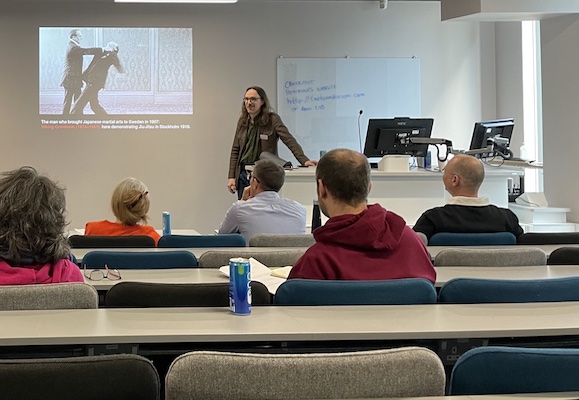
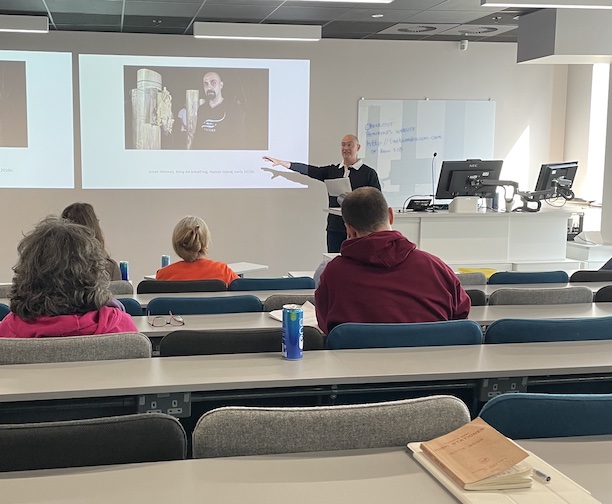
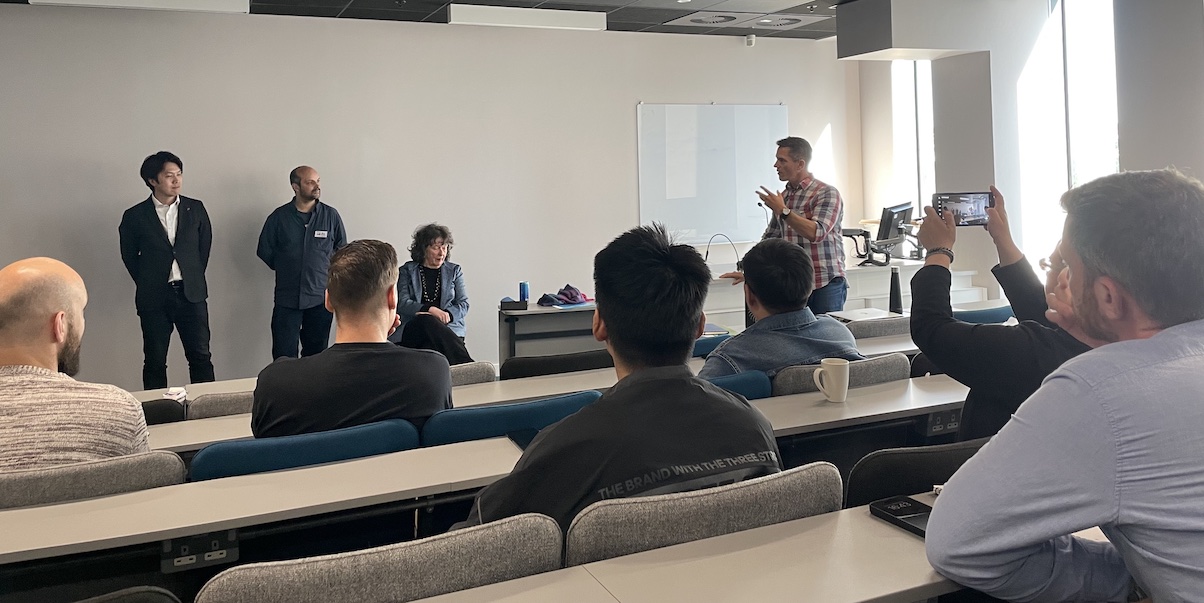
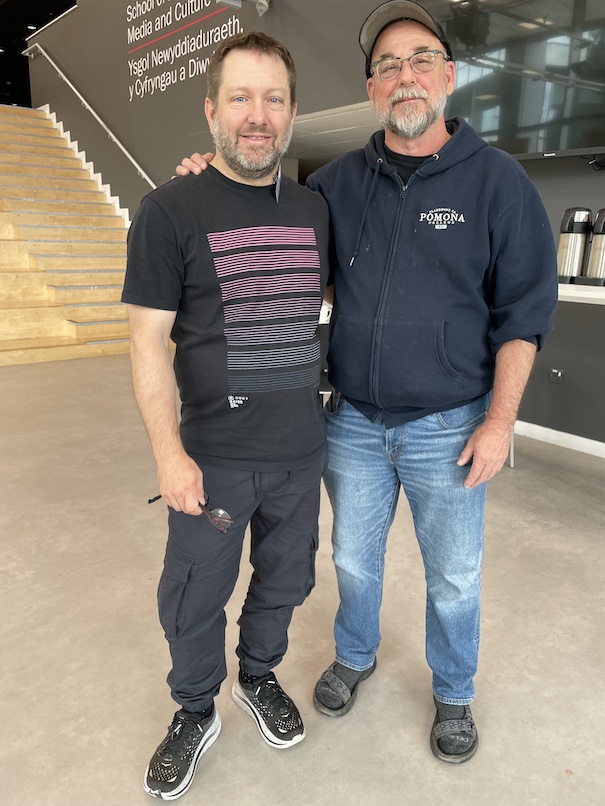
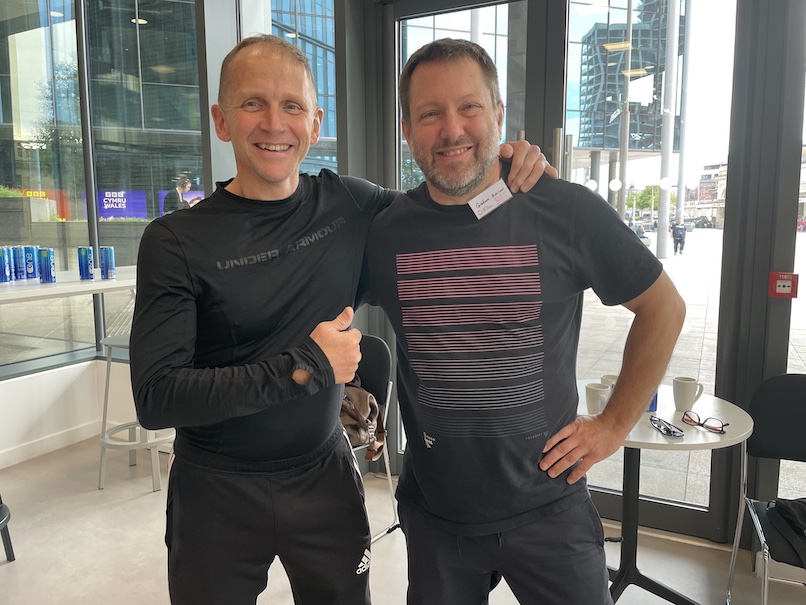
Martial Arts Studies Conference, Cardiff June 2024, write up

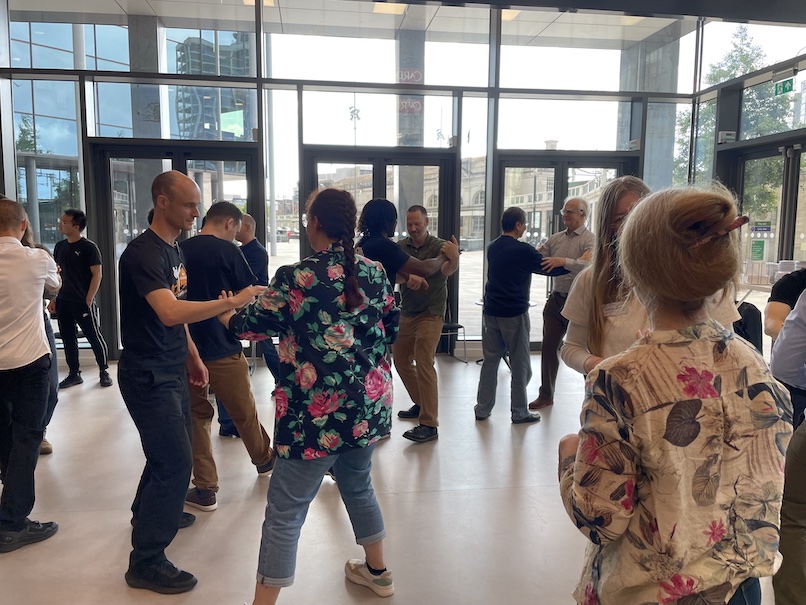
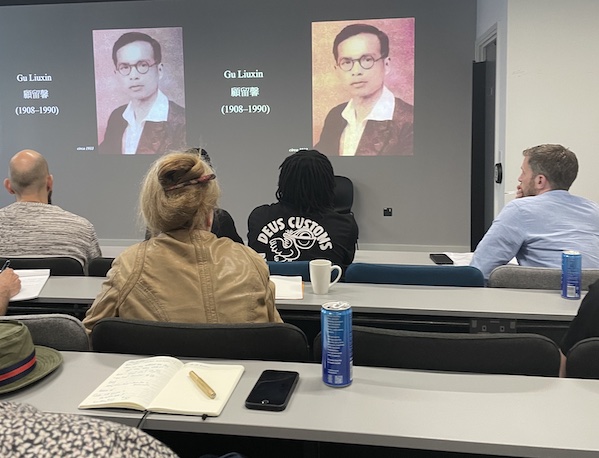
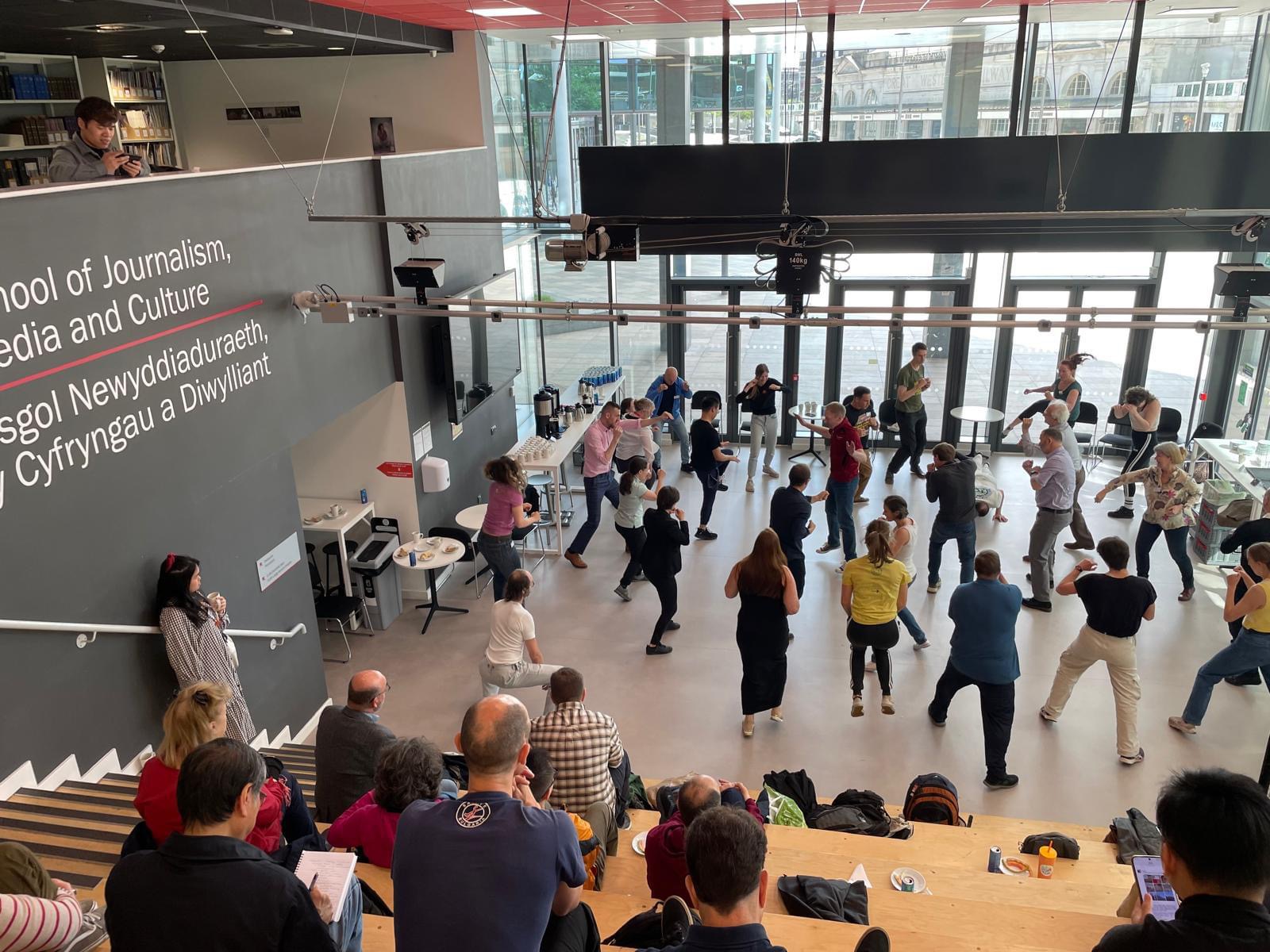
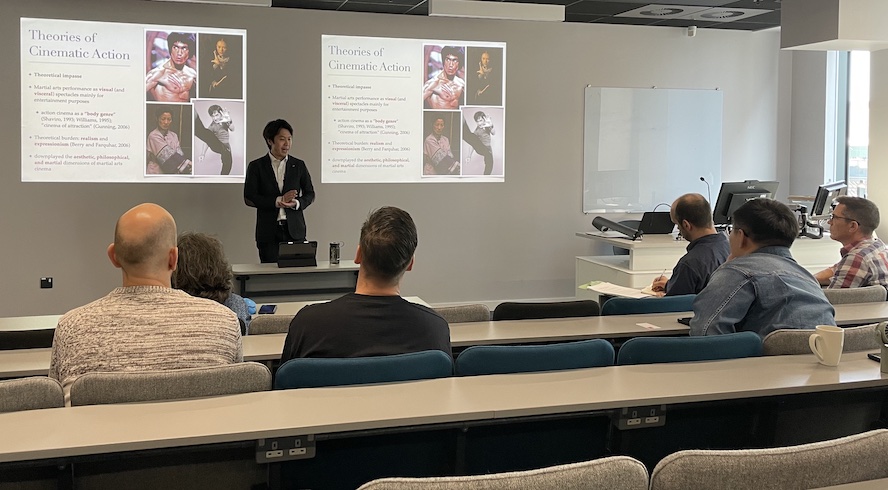
It’s really hard to do the 2024 Martial Arts Studies Conference justice in a write up. It’s an intense 3 days of thought-provoking lectures on all aspects of martial arts research that can open up huge vistas of unexplored subjects, ripe with possibilities for further study, or make you reevaluate what you think you already know about subjects you maybe thought were common knowledge. It’s attended by academics and researchers from all over the world and a few ‘civilians’, like myself, who are more populist writers or practitioners.

Maybe I could just recap a few of the things I learned after three days in Cardiff of having my preconceptions about martial subject gently poked, enlightened and challenged.

Firstly, I’m now much more informed on the subject of trauma-informed martial arts practice thanks to the excellent work of Georgia Verry who runs the Conscious Combat Club project and podcast who, as well as delivering a paper, ran a workshop on trauma-informed kickboxing. There’s also Dr Alex Channon and his work with the Love Fighting Hate Violence project on the same subject. I now have a new appreciation of the brilliance of 80s martial arts hero Cynthia Rothrock thanks to a paper delivered by Prof Meaghan Morris of the University of Sydney, and I have new ways to think about questions that used to fox me, like “why do you still do martial arts?”, thanks to a thought-provoking paper delivered by Wayne Wong. Daniel Mroz delivered new perspectives on martial arts history and Adam Frank gave me new ideas on how to think about qi. Scott MacMillan gave me some ideas about why Brazilian Jiujitsu answers life’s existential questions. And Tran Khải Hoài gave me insights into how Communist revolutionary Ho Chi Min may have influenced Taijiquan practice in ways we haven’t thought about. Yes, really!

But that’s just scratching the surface. The full schedule is here. I didn’t get to listen to all the talks as they were usually happening in parallel, so you had to choose which one to go to. However, I’m hoping they were all recorded and all appear on the martial arts studies YouTube channel soon so I can pick up the ones I missed.

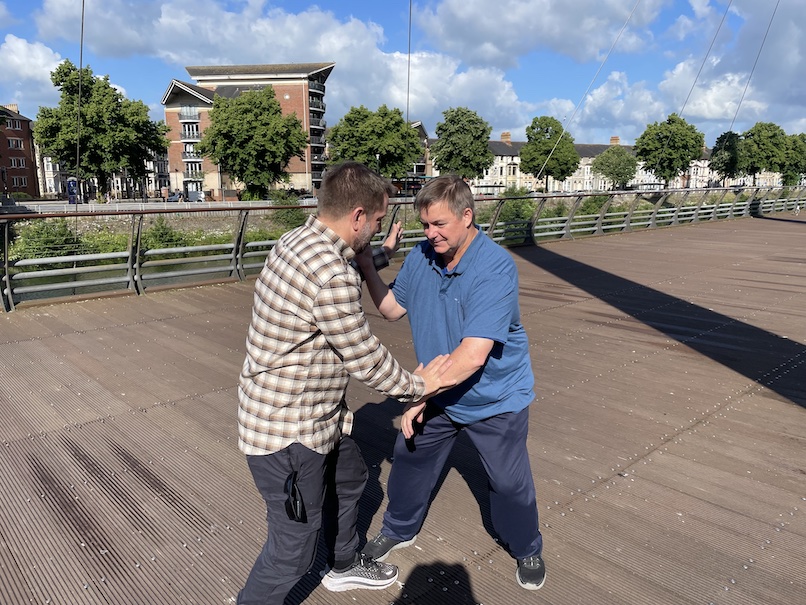
But really it’s the meeting of such a great bunch of people and the social elements that really make the event special. From an impromptu push hands session opposite the Millennium Stadium with Ian Sinclair from Canada to little demonstrations of martial technique here and there in pubs and restaurants in the evening (thanks Randy Brown!), it’s an invaluable opportunity to meet with really experienced practitioners of martial arts from all over the world. I got to talk at length with practitioners about Okinawan Karate, French Boxing Savate, Vietnamese martial arts, Capoeira, Mantis Boxing, Taijiquan, Ninjitsu, Aikido, Brazilian Jiujitsu, MMA and probably many more that I’ve forgotten, and regardless of the martial art, the positive conference vibe remained strong.

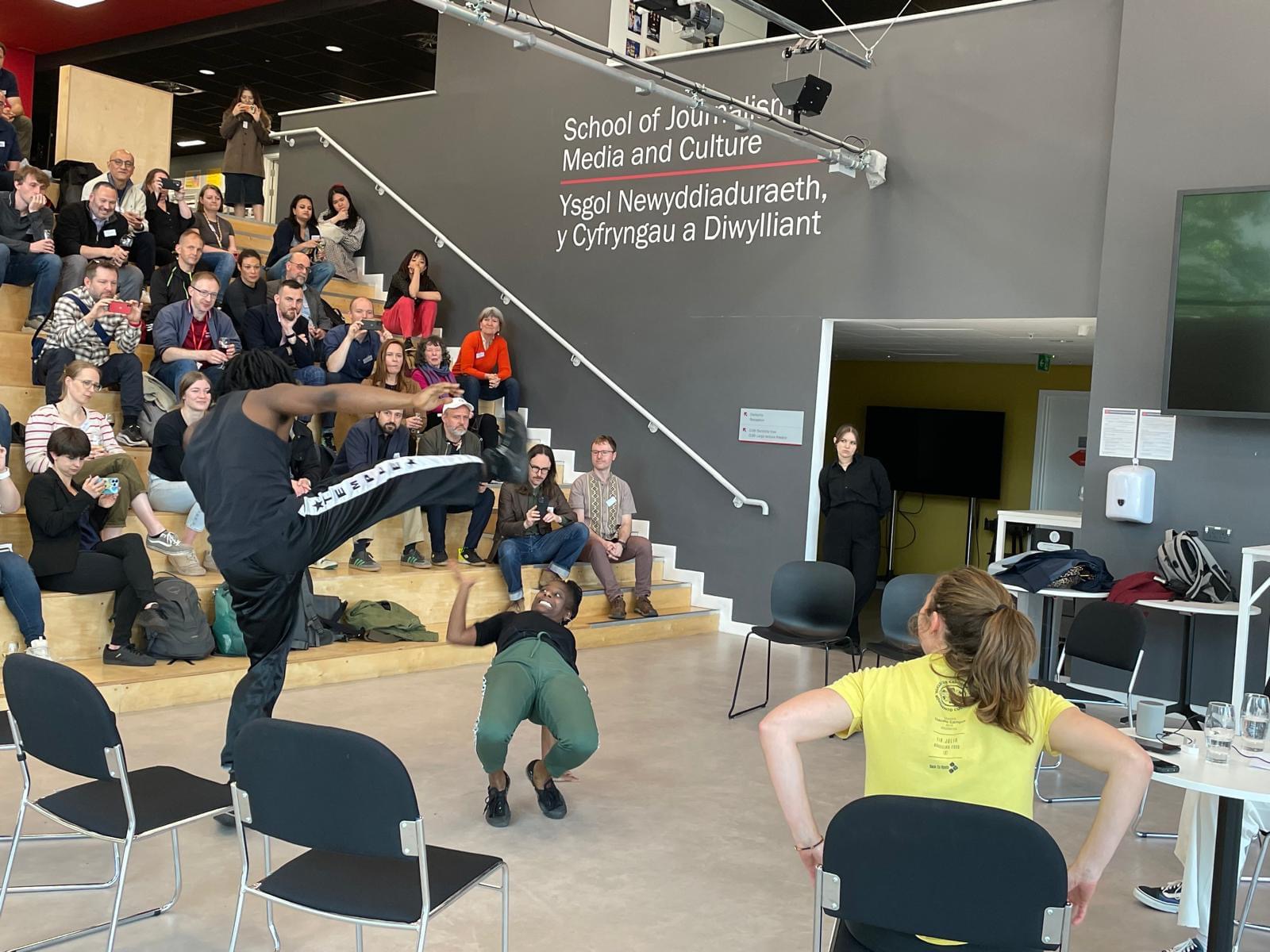
And let’s not forget the brilliant Capoeira demonstration that sought to teach us the difference between the Regional and Angola styles.

I didn’t want the conference to end, it was great to meet old friends and make new ones, and as one participant said “end of the MAS Conference Blues are a real thing”.

I’ve made lots of contacts so hopefully there will be more new faces appearing on my podcast in the weeks and months to come. Thanks to Paul Bowman for doing a great job organising it. Here’s to the next one.

Tai Chi as a group practice vs solo practice

A group practices the Tai Chi 24 form together for World Kung Fu and Tai Chi day.

I’ve been getting back into teaching Tai Chi classes recently, and one thing I’ve noticed is the distinct difference there is between doing the form solo in your back yard compared to performing it as part of a group. I’ve been doing the form on my own now for years now. I stopped teaching formal classes in Tai Chi way back in 2011, and although I did a few private lesson things, lockdown really saw an end to that. So, it’s been a long time since I’ve been part of a group all doing the form together.

Group practice changes things. Your awareness in Tai Chi should always be this kind of delicate balance of internal and external. You need to stay aware of your internal sense of self, at the same time as not shutting out the outside world. This is, after all, a martial art, not a meditation session. If you’re not aware of what’s going on outside of you then it wouldn’t be much use for dealing with kicks and punches coming your way. But at the same time, Tai Chi does exist somewhere on the mediation spectrum It demands a sense of stillness and awareness over your inner state. Things like the feeling of your balance, your sense of whether your body is expanding or contracting, your centre of gravity (dantien) and where you are moving from all mater, not to mention keeping your mind fixed on the task in hand and your Yi (intention) flowing with the movements.

Doing that on your own is one thing, but when you are performing the form as part of a group, your awareness needs to also incorporate the group. The group seems to naturally develop a speed together. I wouldn’t say that a group of Tai Chi beginners possess the grace and beauty of a murmuration of starlings (!), but something of the same kind of non-verbal communication is going on. You are constantly picking up on little signals from other people that keep the whole group in check. But at the same time you can’t let the other people distract you and put you off your own job.

A murmuration of starlings

Just like Starlings, we are animals too, so we have these subtle senses and the ability to move in groups. If you’ve ever experienced being in a crowd of people that get a bit paniced you’ll know what I mean. The crowd seems to take on a life of its own and move as one.

Of course, it’s quite possible that you can perform Tai Chi with other people and remain blissfully unaware of any of this, particularly if you are new the Tai Chi and your head is so full of trying to remember the moves, or telling yourself off for getting them wrong, that there’s no room for anything else.

As a final thought, my feelings of seeing people doing Tai Chi together have always been a bit conflicted. On one hand it looks cool to see people brought together over a common goal, all silently concentrating and moving in harmony. But on the other, it expresses some of the worst aspects of the Communist ideas that ended up becoming a part of Tai Chi in the 20th century, that people should be ‘all the same’, bland, expressionless, worker units all doing whatever they are told to with no room for individuality.

There is always this tension between the group and the individual in society. The trick is to try and navigate it successfully.

How much practice is enough?

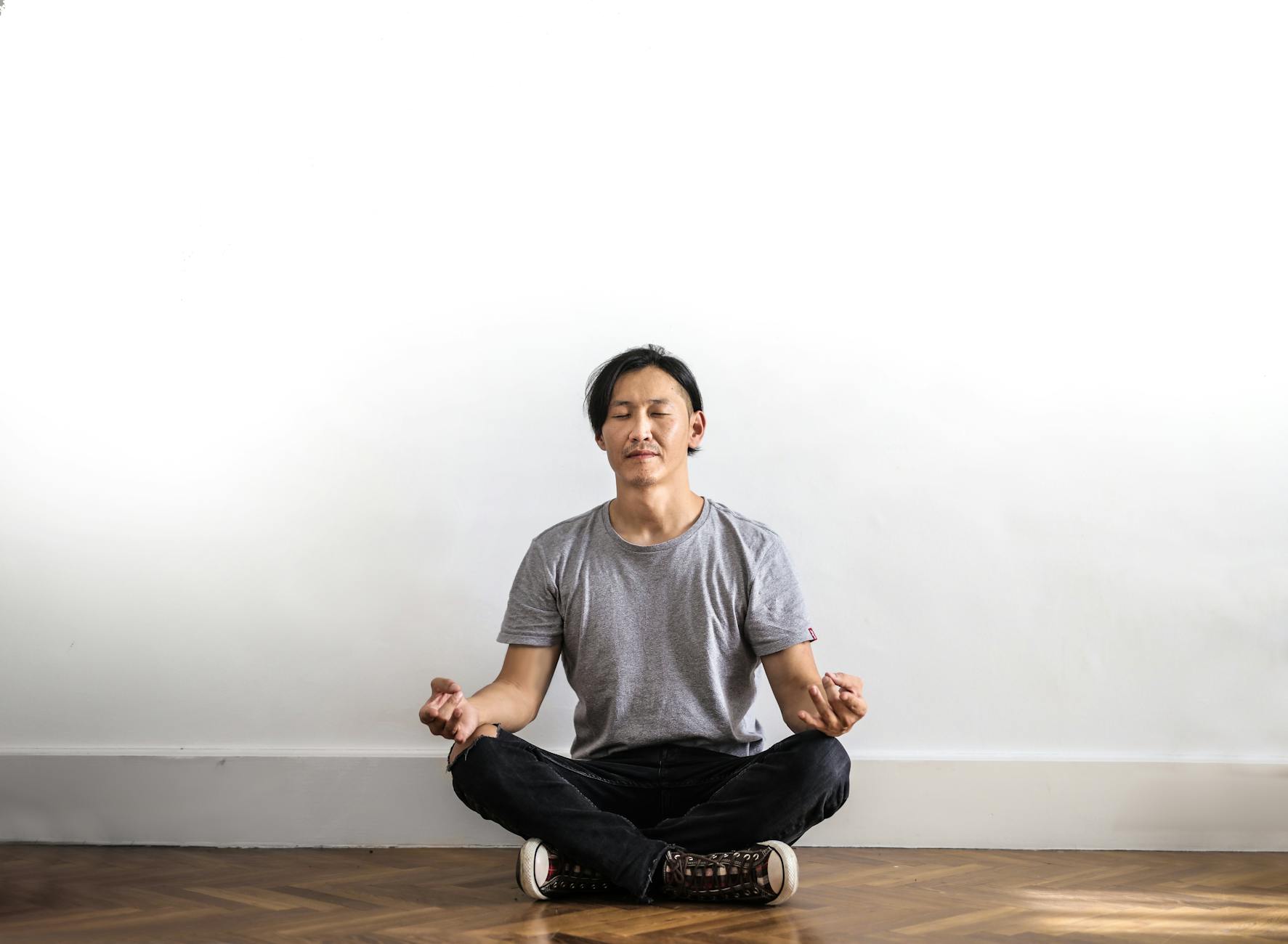
Photo by Andrea Piacquadio on Pexels.com

I remember reading in a Zen book that I enjoyed that you should not practice for yourself, but just practice for the sake of practice. I like that. There’s a kind of grim realism to it but it raises the issue of how exactly are you supposed to approach these sort of goaless activities, like Tai Chi and Zen? The sort of activities where even having a goal can become a problem because it interferes with the activity itself, because it needs to be about being open and aware in the moment, not thinking about things far off in the future. By definition, if you have a goal you cannot be ‘living in the moment’.

Watching that Bagua Boy documentary that I linked to in my last post I was struck by how much Mr Rogers had practiced over his lifetime. He said he spent a lot of years practicing for hours a day. It’s impressive, but it also sounds very lonely, and even if most people had the free time to do that, they wouldn’t. You need to have some sort of drive deep within you to practice anything that much.

Lots of people in the Tai Chi world practice for hours a day. Some people meditate for an hour a day. Some people stand in Zhan Zhuan for an hour.

Today I read an article by Sam Pyrah in The Guardian that asks the question, at what point does a fitness activity become a ball and chain around your neck? At some point she realised that her life long addiction to running had left her very healthy, but with a very narrow life, and at the end of the day, what was the point?

People start Tai Chi for all sorts of reasons and the reasons for doing it change over a lifetime. Since I discovered Tai Chi I’ve always practiced, but I tend to do my personal practice in little pockets of time scattered throughout the day, not in big chunks of hours at a time. Maybe when I’m too old to work I’ll do a lot more Tai Chi than I ever did before? Everything has a cost, and I wonder if the people who practice for hours a day sometimes sit down and smell the flowers and wonder if it was all worth it… Like the Bear of Little Brain, I’ve always valued doing nothing as a worthwhile activity.

Practicing a bit is good, practicing a lot is better, but sometimes you can practice too much.

Photo by brittany on Pexels.com

Bagua Boy Documentary

Alex Kozma of Line of Internet has made his 1+ hour documentary on Paul Rogers and his son available free online. It concentrates on how Paul learned in China in the 1990s then back in the UK has trained his son from the age of 5 in Baguazhang. Definitely worth a watch.

The elbow positioning is interesting in this style of Bagua. Thanks to Mr Kozma for making this free as it’s definitely worth a watch. Check out Line of Intent’s online store for their other releases.

And here’s part 2 looking at spear and more:

Are you going to review Lou Reed’s Tai Chi book?

I was asked recently if I’m going to review Lou Reed’s book “The art of the straight line”, which, as you can see below, is his book about Tai Chi, released a few years after his death.

No. I’m not.

Lou was a practitioner of Chen style Tai Chi under Ren Guang-Yi. By all accounts he was quite the enthusiast. I had a quick look at a preview of the book and it looks to me like this isn’t really a complete book that he’s written. Instead, it’s a collection of old letters, scrappy notes and interviews with people who knew him about his love of Tai Chi.

But that wouldn’t be so bad if the writing was good, but it’s not. It’s meandering, scattered and the interviews are full of people talking about other people you’ve never heard of. I very quickly lost interest. It looks like it’s something for the serious Lou Reed fan, rather than the serious Tai Chi enthusiast.

Sorry Lou, but this is not my bag. I’d suggest a walk on the wild side instead.

Have you read it? Am I wrong? Let me know what you think below.

The puzzle of learning Tai Chi

Photo by Brett Sayles on Pexels.com

This new article in The Guardian about learning Tai Chi made me smile. “It feels like my brain is solving a Rubik’s Cube”, says the author Jennifer Wong. From my recent experience in teaching Tai Chi to beginners, that sounds about right. After their first class all of them say some variation of “I didn’t know it required so much concentration!”, to me.

The initial stages of learning Tai Chi are hard, but not in the way you’d expect. I’d say, about it’s 90% mental effort. You have to learn to remember moves with the outward appearance of simplicity, which are actually very difficult to remember. Simplicity requires a lot of effort. I often teach people the same sequence of moves over and over, then ask them to do it without me and they are instantly lost. I think this is entirely normal.

One device I’ve adopted that seems to work better than saying things like ‘left hand on top’ is visual imagery. The moves in Tai Chi already have names, like Repulse Monkey and Single Whip, which I think were used for the same kind of aid to memory. Unfortunately, after being transplanted from one culture to another and one time period to another, a lot of them are not effective any more. “Single whip” doesn’t mean much to people living in England in 2024, so I’ve started to adopt my own names to act as visual images. The opening move I call “Fountain”, as it’s like water in a fountain, coming up the middle then down to the sides. After that we “scoop water left” which makes sure that it’s the palm of the hand that is being used to scoop the water, not the back.

So far, so good.

Looking back at The Tao of Pooh all these years later, I can’t believe what’s happened to its author, Benjamin Hoff

Things have not worked out well for the author of the book that got me started with Tai Chi…


The reason I got interested in Tai Chi in the first place was a combination of watching Kung Fu, the classic TV series starting David Carradine, in my early childhood, which primed to be receptive towards “Kung Fu” (whatever I thought that was at the time), and Star Wars with its emphasis on Eastern-influenced spiritual warriors with special powers that could be trained with a rigorous martial arts-like training programme, and then reading The Tao of Pooh by Benjamin Hoff when I was about 20.

This was the version of the book I had, The Tao of Pooh, by Benjamin Hoff.

This simple book combined a nostalgic look back at the Winnie the Pooh books by A.A.Milne from my childhood, which I loved, together with the basics of Eastern philosophy. And somewhere in the pages there was a single mention of a martial art that embodied the best of both, called “T’ai chi ch’uan” (as it was always written back then). That lead me to my first Tai Chi class, and I was hooked from the first minute I tried it. There was no Internet back then – you had to discover martial arts classes by looking at notice boards, that were usually found in health food shops. I remember I got a wobbly 2nd-hand VHS copy of the teachers in my first class doing their form, and I must have worn it out playing it over and over to copy the moves. What we would have given to have had YouTube back then!

The nature of politics and human affairs

Today I wondered what had happened to Benjamin Hoff, and if he was still alive, so I went off to have a look. It turns out he is still alive, but a visit to his website doesn’t reveal the comfortable life of a well respected author, sitting back on his laurels and reaping the benefits that writing one of the most popular books on Pooh and Tao should surely bring you. Instead there’s mention of vicious legal battles with publishers that has lead to a deep depression and a lack of funds. It all sounds rather sad. It’s an unfortunate and desperate station for somebody who has brought so much pleasure to people in the world, not to mention uncharacteristic for somebody who also authored a book about, “how to stay happy and calm under all circumstances”.

In addition to The Tao of Pooh, Hoff also wrote The Té of Piglet, which is also very good, and (I’ve just discovered) he wrote his own Tao Te Ching translation:

Benjamin Hoff’s Tao Te Ching translation.

His author Bio on GoodReads reads:

“Hoff was awarded the American Book Award in 1988 for The Singing Creek Where the Willows Grow. The Tao of Pooh was an international bestseller and spent 49 weeks on The New York Times’ bestseller list. The Te of Piglet also became an international bestseller and spent 59 weeks on The New York Times’ bestseller list.

In 2006, Hoff published an essay on his website titled “Farewell to Authorship”, in which he denounced the publishing industry and announced his resignation from book-writing.”

If you want a summation of Benjam’s problems with the publishing industry then I’d recommend reading this essay “Farewell to Authorship” – it is very well written. It seems to have been removed from his website, but you can find it on an Internet archive page.

They say that every great career ends in failure but it’s sad to see that the author who inspired me (and presumably many others) all those years ago to start Tai Chi has ended up in this situation, but perhaps all human lives end in some kind of failure. It’s inevitable, it’s just the nature of the Tao. His books, however, remain great.

In the beginning was the Tao.


All things issue from it;


all things return to it.


Tao Te Ching, Chapter 52.

Tai Chi Notebook Podcast Episode 30: Nabil Ranné on Chen style Tai Chi training

Nabil Ranné is a Chen style teacher living in Berlin who offers classes and online training at CTN Academy Nabil is a student of Chen Yu, who is the only son of Chen ZhaoKui and grandson of the famous Chen Fake. Listen here.

Here’s what we talk about:

Timestamps:

1.00: Nabil’s background in martial arts and what attracted him to Chen style Tai Chi

3.40: What is Jin in Tai Chi?

7.30: What makes Tai Chi different to other marital arts?

11.15: What is the strategy for Tai Chi?

16.00: What is the function of Tai Chi push hands?

17.55: Competition push hands vs Tai Chi push hands

22.20: The Xin Yi podcast and how do you train applications in Tai Chi

28.00: Real life self defence situations

36.00: Martial arts vs marital sports

44.02: Zhan Zhuang: Standing pillar practice

46.55: Chen style FaJin methods and their purpose

55.00: Nabil’s book and getting in touch

Links:

Nabil’s training history

Nabil’s Instagram

Retreat to Ride Tiger

There are lots of tigers in Yang style Tai Chi. There’s ‘Bend Bow to shoot Tiger’, which is a pretty obvious punch, and each section of the forms ends with the classic ‘Carry Tiger to Mountain’. Today we want to look at ‘Retreat to Ride Tiger’.

Photo by Pixabay on Pexels.com

In Yang Cheng-Fu-like forms it looks like this:

It looks a lot like ‘White Crane spreads wings’ on the surface, but the hands are at a slightly different angle. Also you are always stepping back when doing this move and the intention of what you’re doing is slightly different to White Crane, too.

One aspect of the move I really like to emphasis is the Kou or ‘Shoulder Stroke’ that it contains. Rather than striking forward with your shoulder you are striking behind you as you step. I happened to be near a hanging heavy bag the other day so took the opportunity to show where the power goes in the move, like this:

Rather than thinking of it as striking with just the shoulder itself, it’s more like the whole of your back is the striking surface. In fact, the literal translation of Kao is not “shoulder stroke” as it’s normally written, it’s “lean”, so that gives some more insight this member of Tai Chi’s 8 energies.

Obviously, ‘Retreat to Ride Tiger’ isn’t just about striking behind you, the hands and legs can be doing applications facing forwards at the same time. Here are some ideas: