“The origin of internal arts” is probably what I’d have called this really interesting podcast with Peter Lorge about the history of internal martial arts, however Kung Fu Genius decided to name it “Chinese Martial Arts History is Mostly FAKE” because, well, it probably generates more clicks, or something. Anyway, Lorge turns over a few sacred cows here, and I also liked what he had to say about BJJ.
Have a listen:
I think Peter makes a great point about all these different ‘internal’ things throughout Chinese history all definitely existing, but all being completely separate and unconnected until the 1920s Guoshu Institute needed to create the category of “internal” to exist in opposition to shaolin and external, so it brought them all together. (The gentleman whose name he forgets when talking about this is obviously Sun Lu Tang.)
I do wonder if instead of looking back for mentions of “internal” throughout Chinese history a look back for the phrase Liu He “six harmonies” would make a better connection between the dots of Chinese martial arts history. While the term “Neijia” may not appear very often pre-1920s, Liu He definitely did. If we’re looking at how we got where we are today, then that’s probably a better bet.
Here’s my latest podcast! Mantis boxing, BJJ, Self Defence and heresy in martial arts with Randy Brown.
Randy Brown is a Mantis Boxing and BJJ black belt coach teaching in the USA. In this podcast we explore how Randy has reworked his Mantis Boxing to explore the grappling potential hidden in its forms and how they can interact with his Brazilian Jiujitsu. We talk about a range of subjects including self defence vs sport, weapons vs barehand and how to turn dead systems into living arts again.
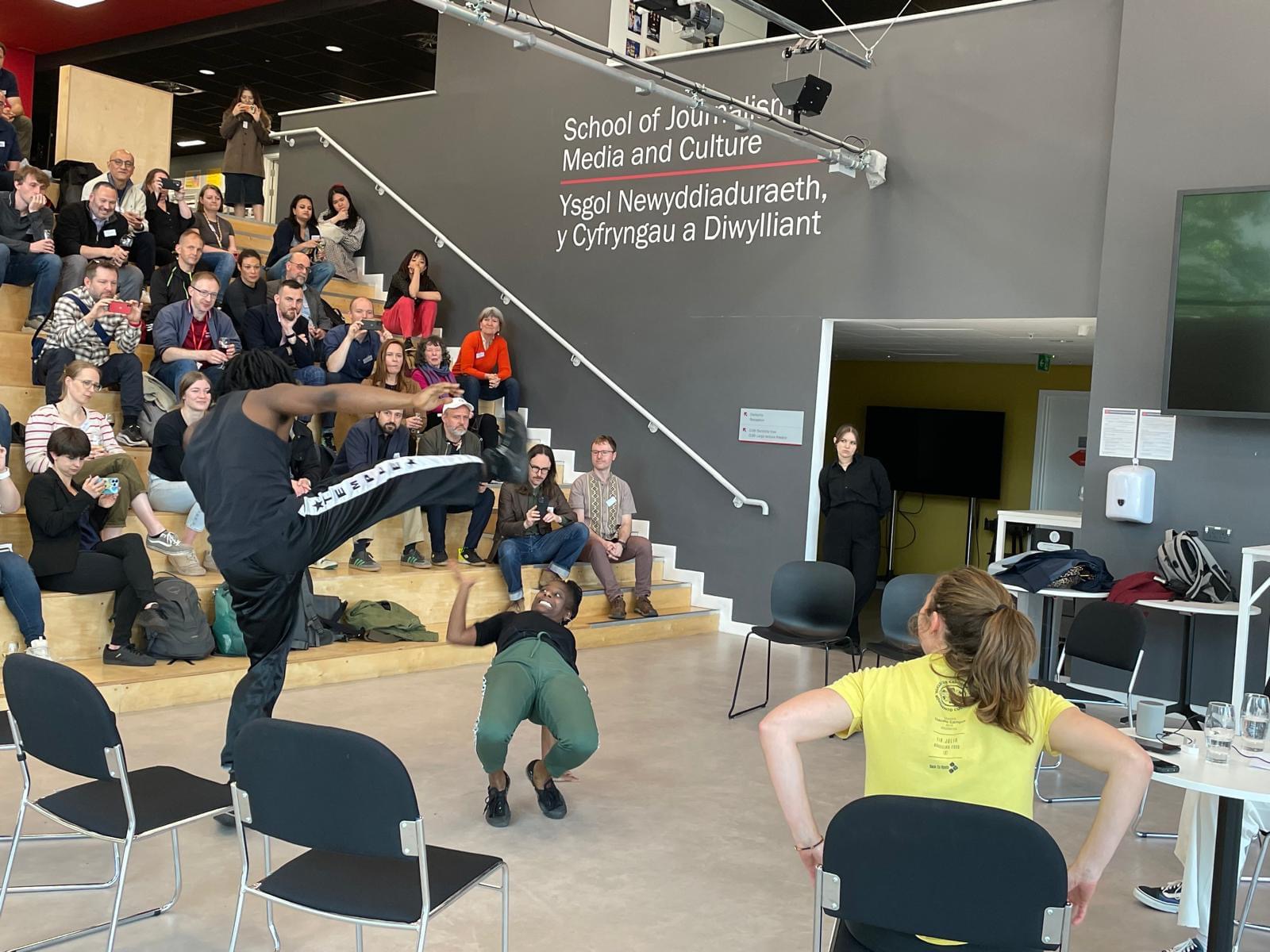
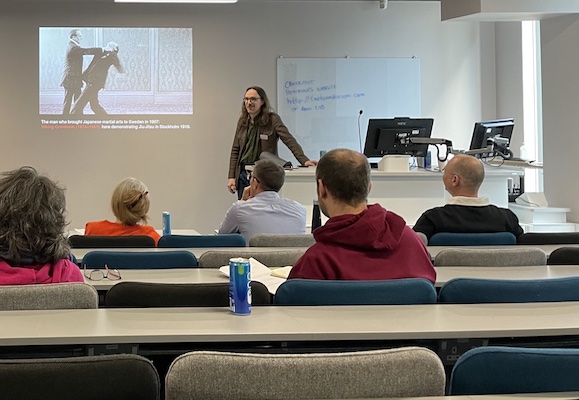
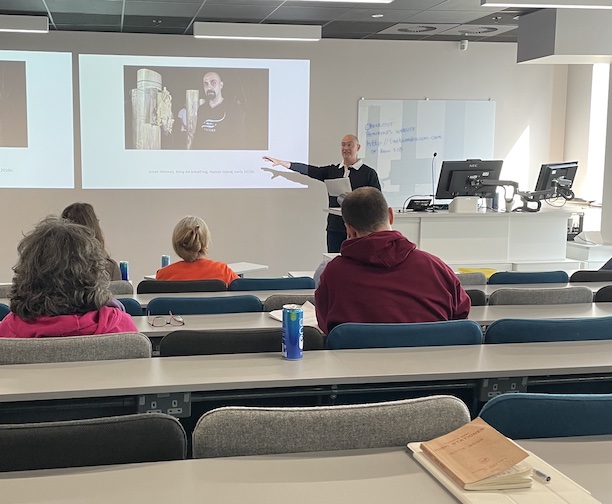
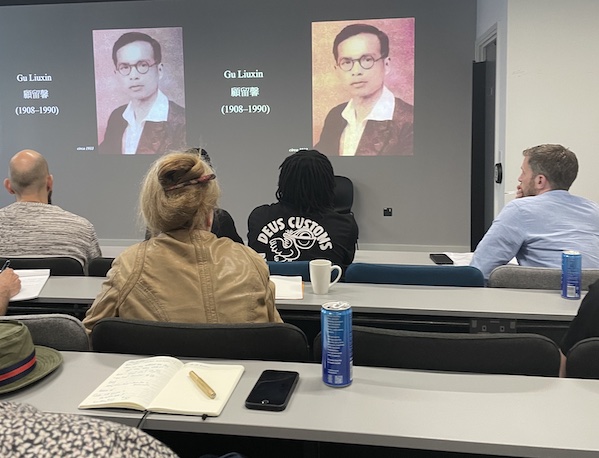
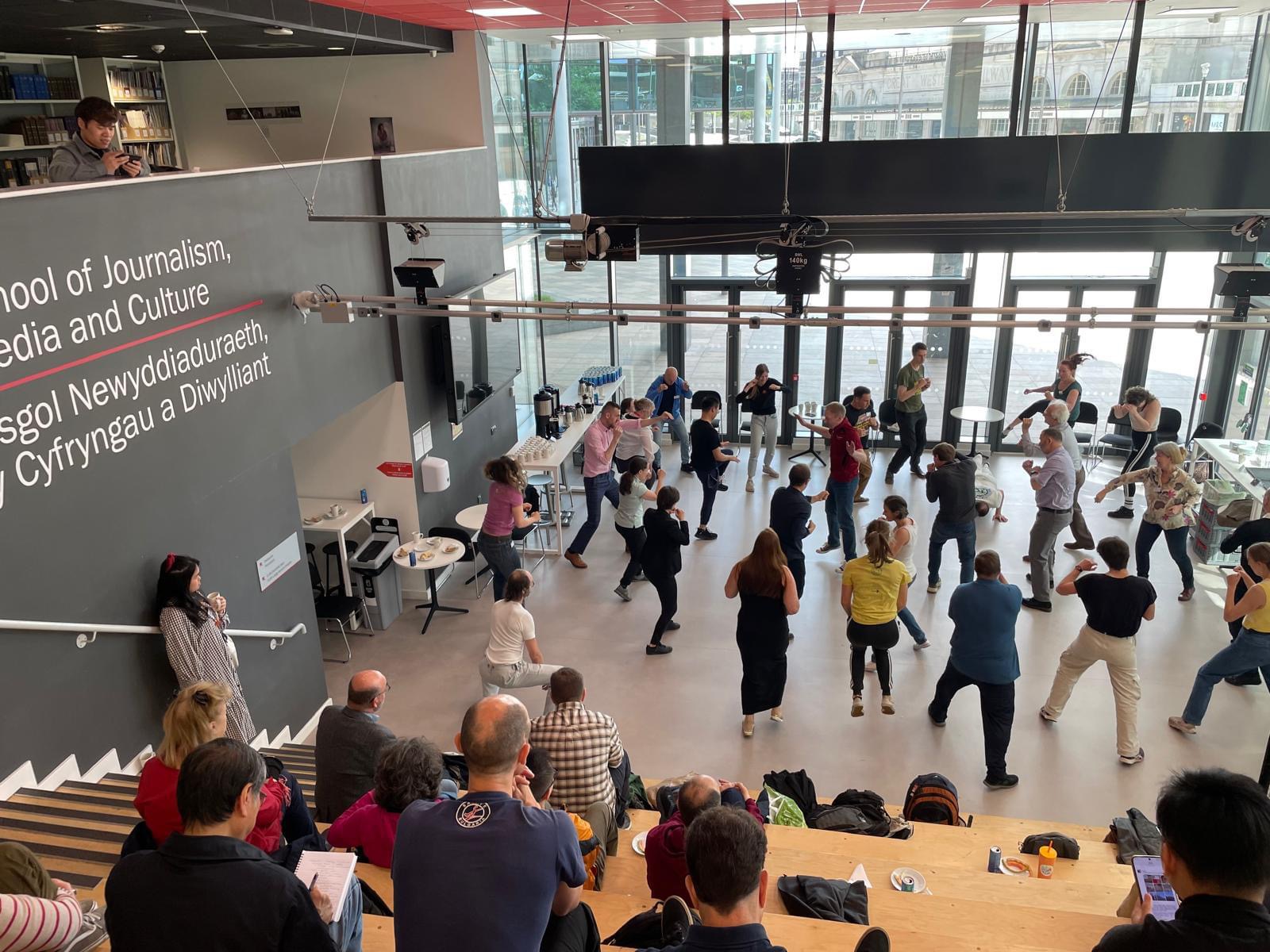
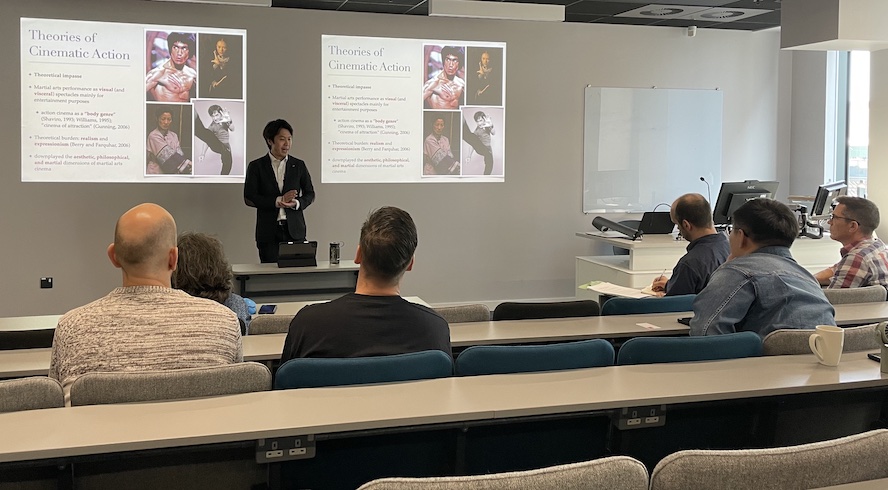
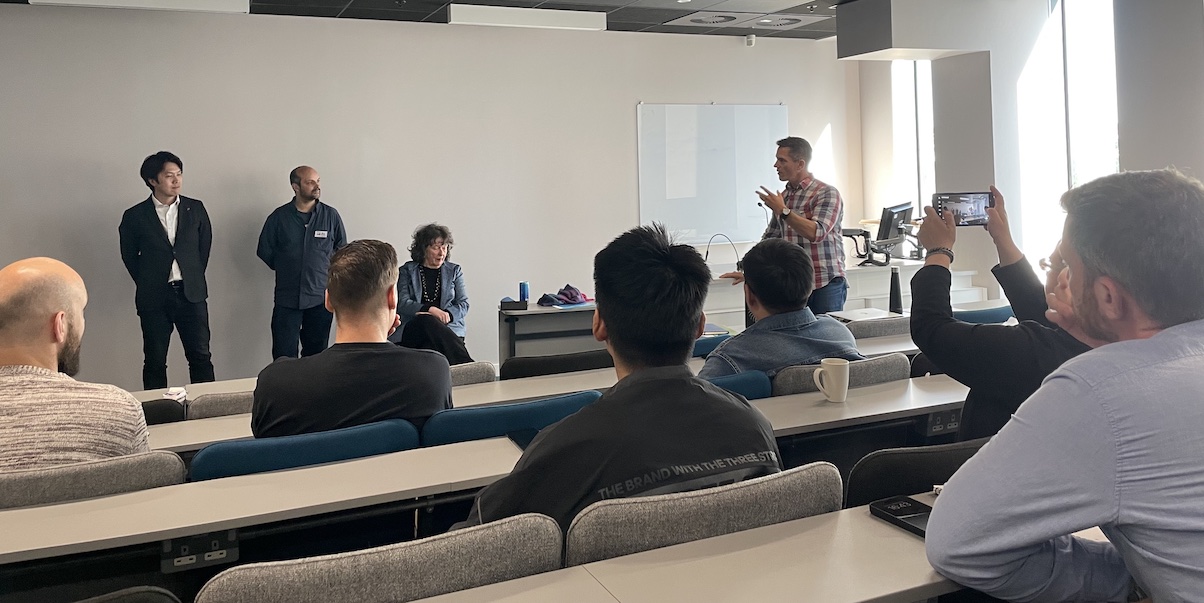
It’s really hard to do the 2024 Martial Arts Studies Conference justice in a write up. It’s an intense 3 days of thought-provoking lectures on all aspects of martial arts research that can open up huge vistas of unexplored subjects, ripe with possibilities for further study, or make you reevaluate what you think you already know about subjects you maybe thought were common knowledge. It’s attended by academics and researchers from all over the world and a few ‘civilians’, like myself, who are more populist writers or practitioners.
Maybe I could just recap a few of the things I learned after three days in Cardiff of having my preconceptions about martial subject gently poked, enlightened and challenged.
Firstly, I’m now much more informed on the subject of trauma-informed martial arts practice thanks to the excellent work of Georgia Verry who runs the Conscious Combat Club project and podcast who, as well as delivering a paper, ran a workshop on trauma-informed kickboxing. There’s also Dr Alex Channon and his work with the Love Fighting Hate Violence project on the same subject. I now have a new appreciation of the brilliance of 80s martial arts hero Cynthia Rothrock thanks to a paper delivered by Prof Meaghan Morris of the University of Sydney, and I have new ways to think about questions that used to fox me, like “why do you still do martial arts?”, thanks to a thought-provoking paper delivered by Wayne Wong. Daniel Mroz delivered new perspectives on martial arts history and Adam Frank gave me new ideas on how to think about qi. Scott MacMillan gave me some ideas about why Brazilian Jiujitsu answers life’s existential questions. And Tran Khải Hoài gave me insights into how Communist revolutionary Ho Chi Min may have influenced Taijiquan practice in ways we haven’t thought about. Yes, really!
But that’s just scratching the surface. The full schedule is here. I didn’t get to listen to all the talks as they were usually happening in parallel, so you had to choose which one to go to. However, I’m hoping they were all recorded and all appear on the martial arts studies YouTube channel soon so I can pick up the ones I missed.
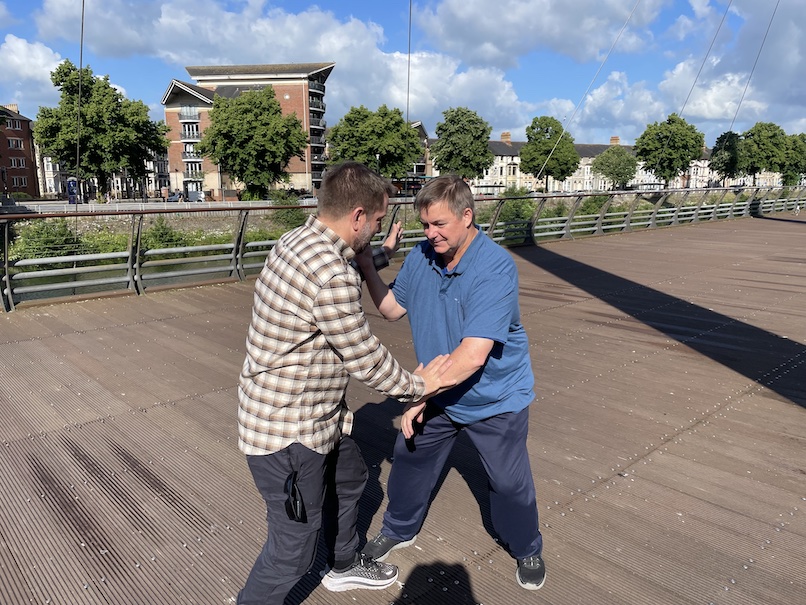
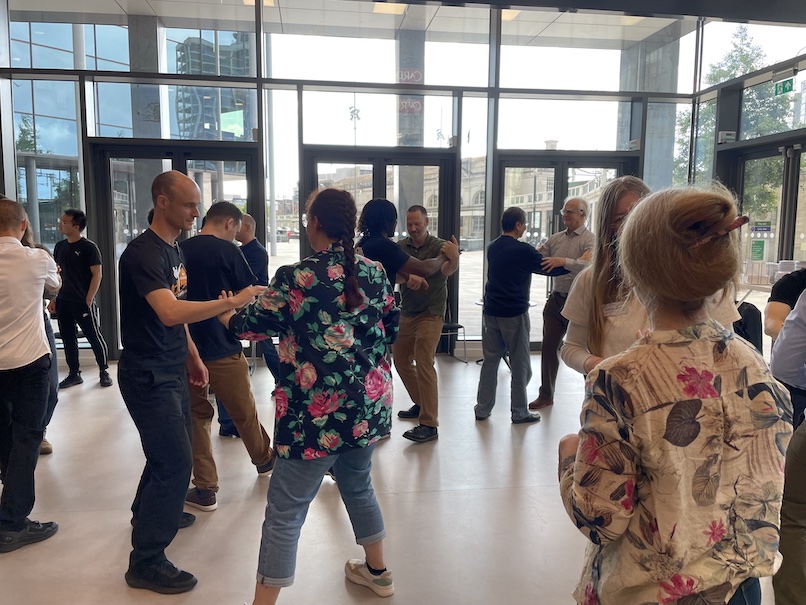
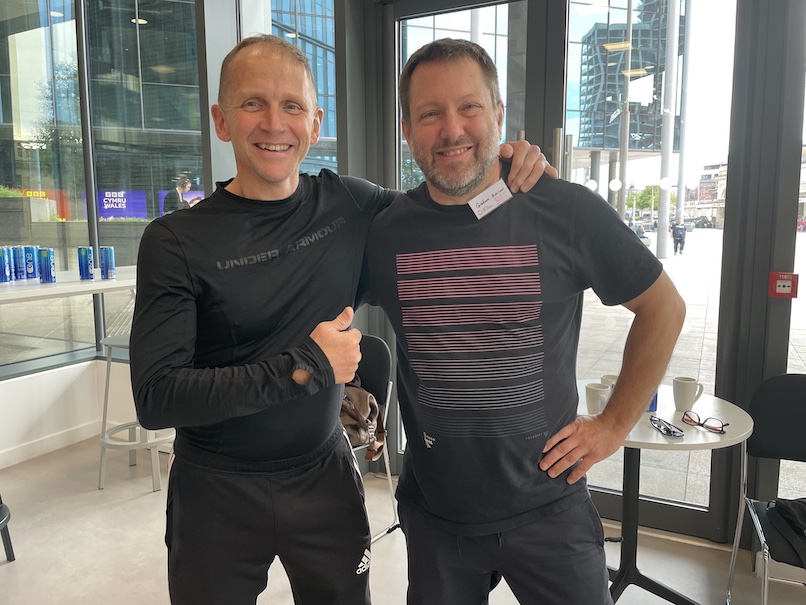
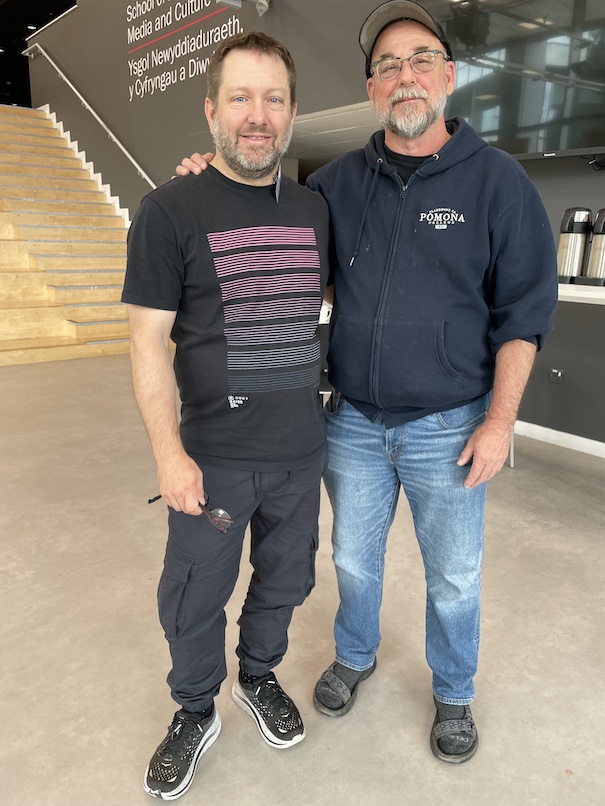
But really it’s the meeting of such a great bunch of people and the social elements that really make the event special. From an impromptu push hands session opposite the Millennium Stadium with Ian Sinclair from Canada to little demonstrations of martial technique here and there in pubs and restaurants in the evening (thanks Randy Brown!), it’s an invaluable opportunity to meet with really experienced practitioners of martial arts from all over the world. I got to talk at length with practitioners about Okinawan Karate, French Boxing Savate, Vietnamese martial arts, Capoeira, Mantis Boxing, Taijiquan, Ninjitsu, Aikido, Brazilian Jiujitsu, MMA and probably many more that I’ve forgotten, and regardless of the martial art, the positive conference vibe remained strong.
And let’s not forget the brilliant Capoeira demonstration that sought to teach us the difference between the Regional and Angola styles.
I didn’t want the conference to end, it was great to meet old friends and make new ones, and as one participant said “end of the MAS Conference Blues are a real thing”.
I’ve made lots of contacts so hopefully there will be more new faces appearing on my podcast in the weeks and months to come. Thanks to Paul Bowman for doing a great job organising it. Here’s to the next one.
June 29 – July 2, 2022, Lausanne University, Switzerland
Martial Arts, Tradition and Globalisation
This conference was originally planned for summer 2021, but was postponed until 2022 because of the Covid-19 pandemic.
This landmark international conference will be hosted and co-organised by the University of Lausanne, and will see for the first time the joining together of the annual conferences of the Martial Arts Studies Research Network and the martial arts and combat sports commission of the German Society of Sport Science (DVS-Kommission ‘Kampfkunst & Kampfsport’).
There seems to be a sudden influx of good things to listen to, so, rather than do individual posts on all of them, I’ve decided to round them up in a collection of Things You Should Be Listening To Right Now
1. Peter Lorge on Inventing Traditional Martial Arts
This was very entertaining. It’s a great lecture on the difference between traditional and modern in martial arts, and how ‘traditional’ is in fact usually created by the ‘modern’.
2. Lavell Marshall & Hohoo – Spirit of the Grassland
I loved this so much. It’s a look into Mongol wrestling culture. It’s from Byron Jacobs who filmed it on a recent trip to the grasslands of Inner Mongolia for a wrestling competition and features Lavell Marshal, who left his life in the west to move to the grasslands and practice Bökh.
“Bökh (Mongolian Wrestling) has been practiced by nomadic and steppe cultures for thousands of years. It epitomizes the culture of the Mongolian people and the spirit of the grassland.
Lavell Marshal (Hangai), left his life in the west to move to the grasslands of Inner-Mongolia to study the art under Ho Bagsh (Coach Hohoo), a well-known wrestler and former national Shuai Jiao champion.”
3. Why Conspiracy Theories Are So Damn Hard to Disprove, with Dr Hanan Bushkin
This podcast isn’t necessarily martial arts related, but a lot of martial artists seem to be the sort of people that fall prey to conspiracy theories. I know, because I talk to them. This podcast sheds some light on why that is.
“Dr Hanan Buskin is a clinical psychologist specializing in Cognitive Behavioral Therapy. In this episode we go deep into the benefits conspiracy theorist get from believing and sharing their crazy ideas and the long, difficult process required to gently wean them off conspiratorial thinking. “
4. Belts, Ranking, Titles & Hierarchy In Jiu-Jitsu With Priit Mihkelson
I had Priit as my guest in episode 5 of my podcast. In his most recent appearance, on the Sonny Brown Breakdown, he lays into the traditional structure of belts and titles in marital arts. He’s always worth listening to and I always find he delivers a fresh and interesting perspective on things.
“I talk to Priit Mihkelson, A Jiu-Jitsu Black Belt From Estonia and founder of Defensive BJJ. Priit always has a lot of interesting takes on the teaching, training & traditions of Jiu-Jitsu and after recently relocating his school I took the chance to ask him about his thoughts on belt rankings. We have a great conversation about how he has applied them to his Defensive BJJ system and set up his new school. We then move on to the use of hierarchy & titles like Professor and Master and their place in Jiu-Jitsu”.
5. Ken Gullette on internal body mechanics.
Finally, here’s another plug for my own podcast, The Tai Chi Notebook Podcast. I had Ken Gullette on recently who practices and teaches all the main internal arts but specialises in Chen style. Here’s the link to the podcast.
I really enjoyed this chat and although it becomes something of, “two old men talking about all their injuries”, at one point I think there’s a lot of value here. It also introduced me to a marital artist called Nabil Ranné from Germany.
Here he is teaching “Lazily Tying Coat” from Chen style.
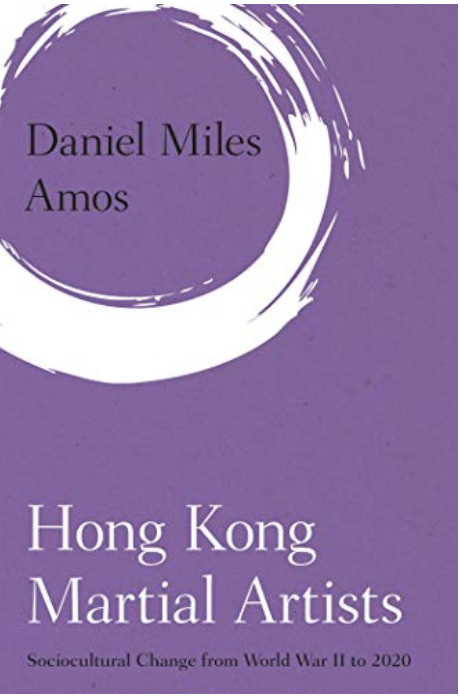
There’s a great book review by Ben Judkins over on Kung Fu Tea of Daniel Miles Amos’ 2021 book Hong Kong Martial Artists: Sociocultural Change from World War II to 2020.
The book sounds excellent and offers first hand experience of the changes in the Hong Kong martial arts scene has gone through over an extended period of years, and as such really pins down the economic and social challenges that traditional Chinese martial arts face in the modern world.
I really liked the opening of the review, because it somehow sums up the message of the whole book in one easy to follow exchange:
“Some years ago, one of my younger brothers married into a Hakka family after moving to Hong Kong to teach. My sister-in-law finds my interest in the Chinese martial arts fascinating and even admirable. And she insists that her children should have an opportunity to practice martial arts as well. Yet she did not enroll them in a local Wing Chun class, despite the media buzz around the art. Nor did she seek out one of the traditional Hakka styles from her family’s home village. Like so many other parents, she placed them in one of the city’s many thriving Tae Kwon Do schools.
I asked her about this once while we were discussing martial arts films and her answer was both blunt and revealing. “Why would I turn my kids over to some sketchy alcoholic! Besides, after ten years in Tae Kwon Do you get a black belt and something to put on your resume when applying for University. What did they give you after 10 years of Wing Chun?”
One of the frequent criticisms I hear of the idea that there is a connection between Chinese martial arts and Chinese theatre and religion is that no respectable Chinese martial arts teacher has ever implied their work comes from dance or spiritual ritual, so the idea is laughable. I have experienced a pretty negative reaction from some of my Chinese martial arts friends to these ideas. The thought that the rough and tough martial art they genuinely suffered to learn and dedicated their lives to had religious or (worse) theatrical origins is anathema to their world view, akin to an insult.
But the question really is, how can they not be theatrical? Just look at Chinese martial arts – of course they’re theatrical!
Here are some questions to ask yourself: Why do we do long complex, showy forms at all? Why is Chinese martial arts still so strongly associated with Lion Dance? Why do its modern day performers so often put on demonstrations for the local community, on stages? Why do performances sometimes have chaotic drumming soundtracks?
I’m sure any competent Chinese martial arts practitioner can produce answers to all these questions based entirely in the physical realm of pugilism – it’s all physical training at the end of the day – but when you put all these questions together an obvious picture begins to form.
Nobody looks at Capoeira and says, “this has nothing to do with dance”. So, why do most Chinese martial arts practitioners look at their long theatrical forms and say, “this has nothing to do with theatre or religious practice”?
There’s an inherent mystery to Tao Lu, or “forms” found in Chinese martial arts. This great video by The Scholar-General hopes to provide some answers:
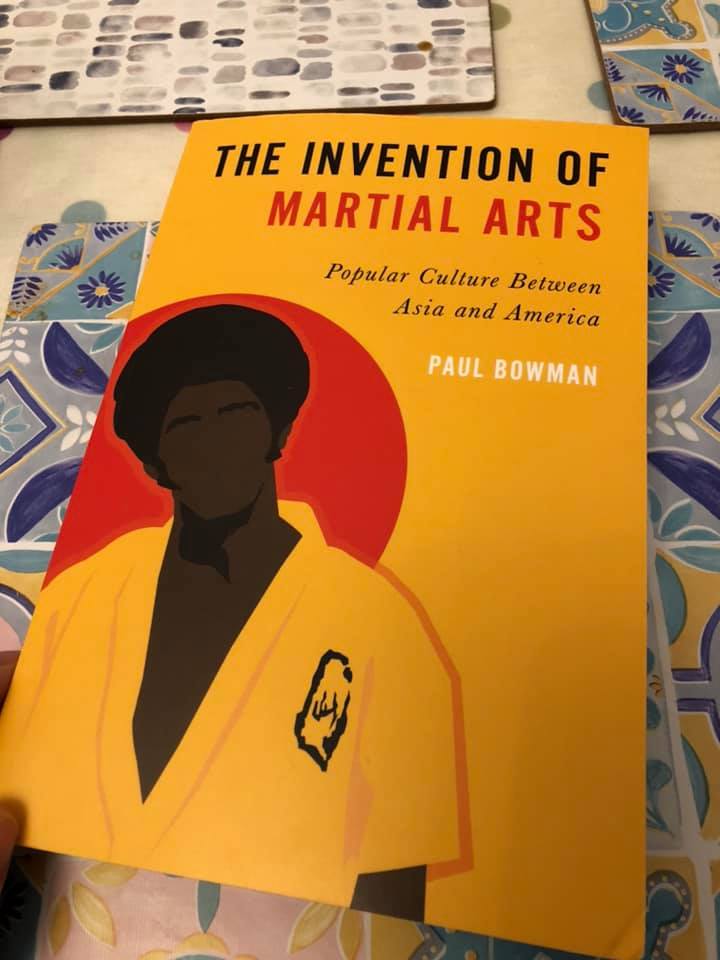
I’ve just got a copy of The Invention of Martial Arts, Popular Culture Between Asia and America, by Paul Bowman. (Amazon link.Non-Amazon link). Firstly, yes, that excellent cover illustration is a picture of Jim Kelly playing the iconic character Williams in Enter the Dragon, a character who speaks volumes about the international and multi-ethnic appeal of East Asian martial arts in the early 1970s. It was created by the incredible Jon Daniel, who passed away in 2017.
Some of Bowman’s work is very academic, but this one is for “normal people”, like me. I’m still on the Introduction, but feel compelled to write something about it because this book is dripping with ideas to do with the conversations we all have around martial arts.
That to me is what much of Martial Arts Studies is – it’s not about the martial arts themselves, it’s about “what we talk about, when we talk about martial arts”, which would otherwise be left unexamined.
Take his writing on theory in the introduction:
“At first glance martial arts may seem simple. But any discussion of them will involve an implicit or explicit theory about them.”
So true. If you’ve ever been involved in any sort of online discussion about martial arts you’ll find the participant are talking past each other because of an assumption of (often contradictory) theory that underlines everything they say to each other about any subject to do with marital arts. One person thinks the martial art is really all about this, and the other person thinks the martial art is really all about that, and they go on busily talking about different things.
He raises the brilliant point that no theory of martial arts (or culture) can contain all the answers and that “different theories offer variations and varieties of perspective. Looking at things from the perspective of one paradigm, or orientation, followed by another, and then another is stimulating and illuminating in many ways. The shifts in perspective caused by this can produce more well-rounded or enriched understandings of phenomena, and can also instil a prudent awareness of the limits of our own understanding. However, by the same token, such shifts can also produce contradictory, conflicting incompatible pictures of ‘the same thing’.”
It should come as no surprise that the title of the book can then be viewed in multiple ways. He’s not talking about the literal invention of the term “martial arts”, or the actual martial arts themselves, but the invention of the ideas about martial arts, ways of thinking about them, depicting them and valuing them.
I could go on, but really, I’d recommend grabbing a copy yourself.
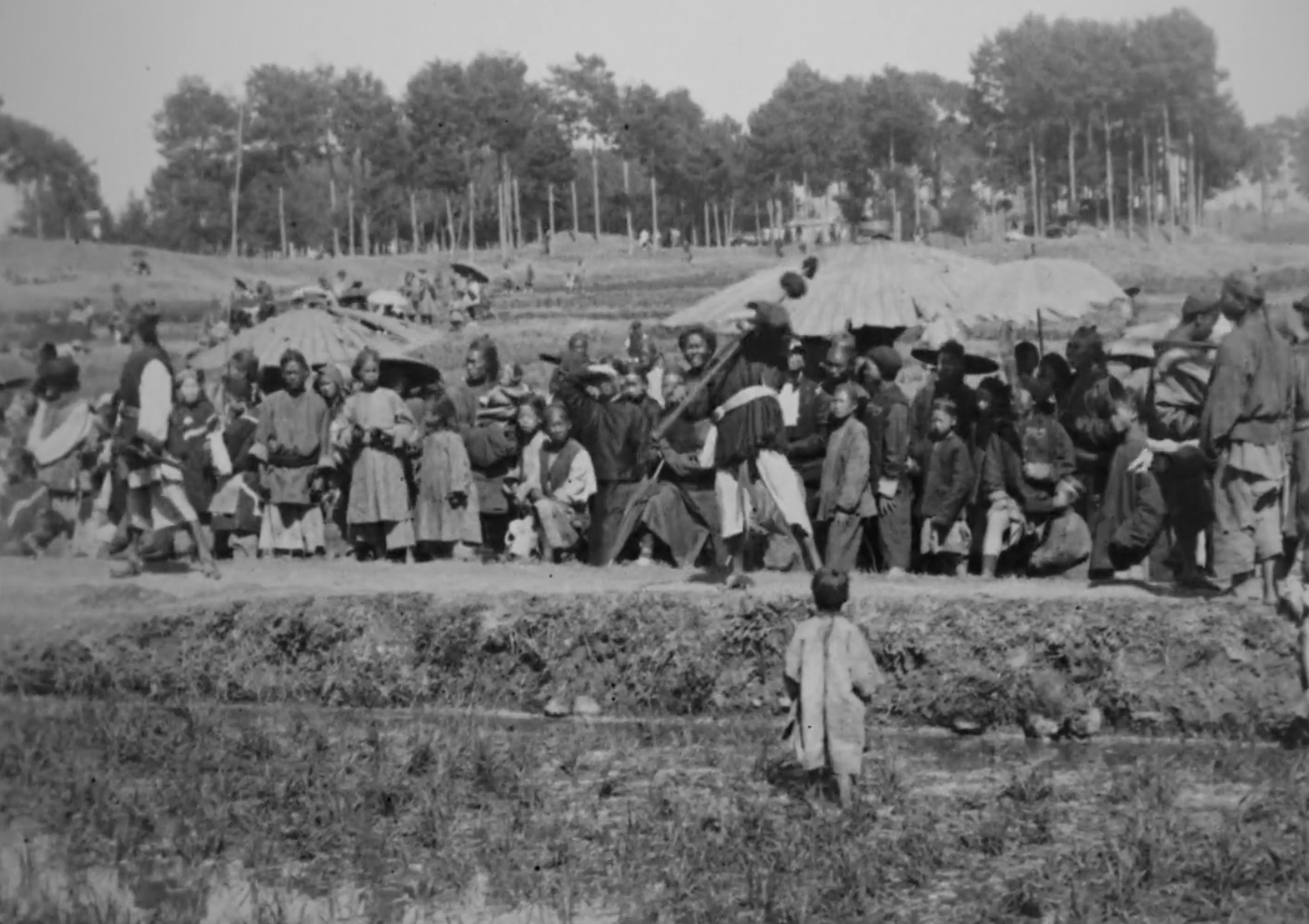
Qing Dynasty martial artists performing in a procession (between 1901-1904)
I’m still fascinated by that film I posted a little while ago of China from 1901-1904. It’s as close as we’ll get to seeing the people who were around at the time that the popular martial arts of Northern China – Taijiquan, Baguazhang and Xingyiquan were being formalised into the structures and routines we still know and recognise today.
It gives a small insight into what the martial arts of the time were like, we have an idea of what they practiced, but we don’t always know where they practiced them, and to some extent really why they practiced them. There’s a particular sequence starting at 17.10 in the film where we see a procession of sorts going along a riverbank and then entering a village or town. There are martial arts performers doing twirls and spins of their weapons as they go. The setting is informal, music is being played (we see the musicians) and it has something of an air of the Saint’s Day religious processions you still see going on between villages in rural European nations, or the May Day “Hobby Hoss” procession that can still found in Cornwall in the United Kingdom.
But back to China. The martial artists involved seem embedded into the culture of the place and time as much as the musicians or flag holders.
“There was a well established pattern of village festival culture in Northern China. The ritual was called a sai and it was based on a three-part structure: inviting, welcoming and seeing off the gods. Ritual could last anywhere from three days to a month. Wherever you happened to be, these rituals were happening nearby every two weeks. A smaller sai might have only 50 people officiating and a thousand participants, while a large one might involve hundreds of ritual experts and 100,000 participants. A large ritual could invoke as many as 500 gods, their statues escorted out of temples in massive processions with armed escorts of martial performers that snaked between villages for miles.”
“According to David Johnson, ritual festivals were so common and so old and so large that they were overwhelmingly the most important influence shaping the symbolic universe of the common people. Regionally they happen about every two weeks and could involve over a hundred villages, with processions that strung out for miles attracting thousands of spectators. “It is quite impossible to understand what villagers… in North China thought and felt about the world of politics, about Chinese history and traditions, about the world of gods and demons, or about any of the grand matters of life and death, without a close familiarity with sai [and similar rituals]. Ref: David Johnson 1997, “Temple Festivals in Southeastern Shanxi”, Overmyer 2009,8.”
From Tai Chi, Baguazhang and the Golden Elixir: Internal martial arts before the Boxer Rebellion by Scott Phillips, p173.
Qing Dynasty martial artists performing in a procession (between 1901-1904)
I don’t think we can assume, from one film. that all Chinese martial art of the period was like this, but it’s fascinating to see a glimpse of how well it was integrated with everything else.
Everywhere in China the martial arts either present themselves in the guise of simple exercises or are shrouded in arcane religious mysteries. Western enthusiasts often feel impelled to strip away these religious trappings and construct a version of the martial arts that is neither simple gymnastics nor religion, but emphasizes true hand-to-hand combat skills. The question remains, is this an authentic understanding of the martial arts?
Charles Holcombe, Theater of combat: A critical look at the Chinese martial arts
It’s easy to laugh at the QAnon followers who stormed the capitol in the belief that Donald Trump would pardon them of their crimes and there was a secret revolution about to happen, but there are plenty of equally delusional beliefs in martial arts.
I found an article on the Martial History Team blog recently that quotes from a longer article by Paul Bowman about why martial arts history seems to matter so much to some people.
There are plenty of gems here, but I like this quote:
“Unsurprisingly, in much scholarship on Asian martial arts, the matter of history remains freighted and weighted down by the same popular myths; so much so that even much that passes for scholarship seems to refuse to face up to the evidence that suggests that, quite frequently, martial arts that present themselves as ancient are hardly even old.[11]
So many massive social mutations occurred through the nineteenth and twentieth centuries that most ‘traditional’ martial arts effectively have at best little more than a century of continuous history to them, rather than the vast eons of allochronic time that so many seem to want them to have spanned.[12]
I emphasize the word ‘want’, here. This is because wanting appears to be a key issue to consider when approaching questions of martial arts history and culture. For instance, it seems that the perpetuation of fantasy histories and the fetishistic fabrication of lineages in ‘traditional’ martial arts evidently have everything to do with wanting.
Practitioners want taiji to be ancient. Many want there to have been a Southern Shaolin Temple which was burned down, scattering the few surviving kung fu monks to the different corners of China.[13] We want Okinawan farmers to have fought samurai with rice flails. We want Yim Wing Chun to have been a real proto-feminist warrior.[14] We want the skill that wielded the weapon that killed Magellan to remain alive today.[15] And we want ancient warrior armies to have flown at each other through the air, kicking each other off horses with flying sidekicks and jumping spinning back kicks.
Just because you want something, it doesn’t make it true.








 The Tai Chi Notebook