Making up your own forms – it’s not as easy as you think

I had an interesting comment on my last post that made me think about the whole idea of making up your own forms (or Tao Lu) – in Tai Chi, Xing Yi, or whatever.

I’ve tried to do this over the course of several years and I’ve come to a few conclusions about it, which I’ll elaborate on here. Firstly, it’s hard. Making up new forms is not as easy as you think. But secondly, it depends what martial art you are making up a form in.
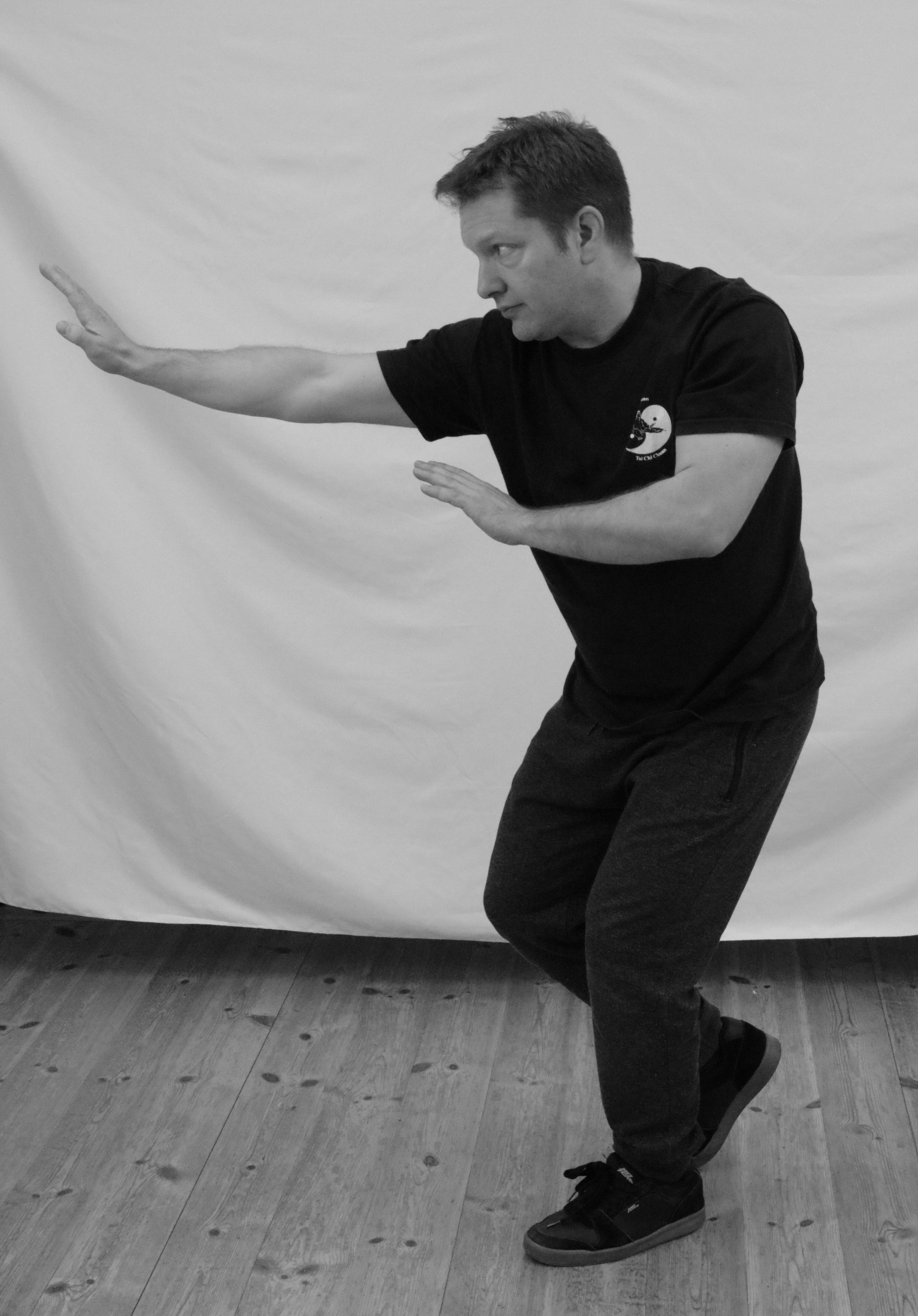
Author, performing Xini Yi Chicken (Ji) posture

If your martial art has forms that are constructed like lego bricks that can be slotted together in any order and still seem to work then it’s pretty simple to concoct a new form. Xing Yi is a good example of a martial art that has this quality. I was always told never to call Xing Yi tao lu by the English name “forms” because the correct term was lian huan which means “linking sequence” for this very reason.

The idea, (in our Xing Yi at any rate), is that all the links you learn are just examples, and you need to be constantly moving towards being able to spontaneously vary them as required, and then ultimately spontaneously create them. This idea has become heretical in the modern Xing Yi world to a large extent because modern Xing Yi has lost a lot of this spontaneous feel it used to (I admit that’s a subjective point) have, and things have become set in stone – forms that were once supposed to be fluid and flexible have become fixed and rigid. Forms of famous masters from the past now tend to be fixed forever. When words like “orthodox” start appearing to describe something you know it’s already dead, or on the way to dying.

But of course, anybody can make up a form, but is it any good? That’s a different matter. And it usually depends on the person doing it, not the moves themselves. With Xing Yi animals you can also ask the question – can I see the character of the animal being used coming out through the moves?

With Tai Chi I find it a lot harder to make up a form. Tai Chi’s approach to a form is quite different to Xing Yi, or other Kung Fu styles. The Tai Chi form tends to be a highly crafted piece of work that has been honed to perfection over many years. It is fixed because you need to be able to forget about the moves and concentrate more on what’s inside. It helps to do that if you don’t have to worry about what’s coming next because you’ve done it so many times that you can let go of that part of your brain and let it be aware of other things.

Tai Chi forms tend to start and finish in the same place for this reason. Usually, anyway. While long forms don’t tend to be balanced on left and right, a lot of the more modern, shorter forms make more of an effort to balance left and right movements.

If you understand Tai Chi and how to ‘pull’ or direct the limbs from the dantien movement then, sure you can make up your own Tai Chi forms, however, there is almost zero history of doing this in Tai Chi circles and it’s not really encouraged. I think this is because Tai Chi has push hands, which can be used as a kind of free-form expression of Tai Chi, completely away from the form and in contact with a partner to give you something to respond to, which is the whole strategy of Tai Chi Chuan, at least according to the Tai Chi Classics it is. To ‘give up yourself and follow the other’ you have to be spontaneous. There’s no other choice!

So, to conclude. I think that’s it’s in its application where the spirit of improvisation and spontaneity can be found in Tai Chi, not in the forms. I don’t think Tai Chi is particularly concerned with creating endless variations of forms and patterns like Xing Yi is, at all. Xing Yi, having a weapons starting point, doesn’t use this hands-on feeling and sensitivity to get started with spontaneity. Instead, it likes to create patterns, then vary them endlessly. Of course, you work with a partner when required, but it’s a different approach. Which is all quite natural, as these are two different martial arts, created by entirely different groups of people in a different locations and time periods.

You might like our Heretics history of Tai Chi and Xing Yi for more on that.
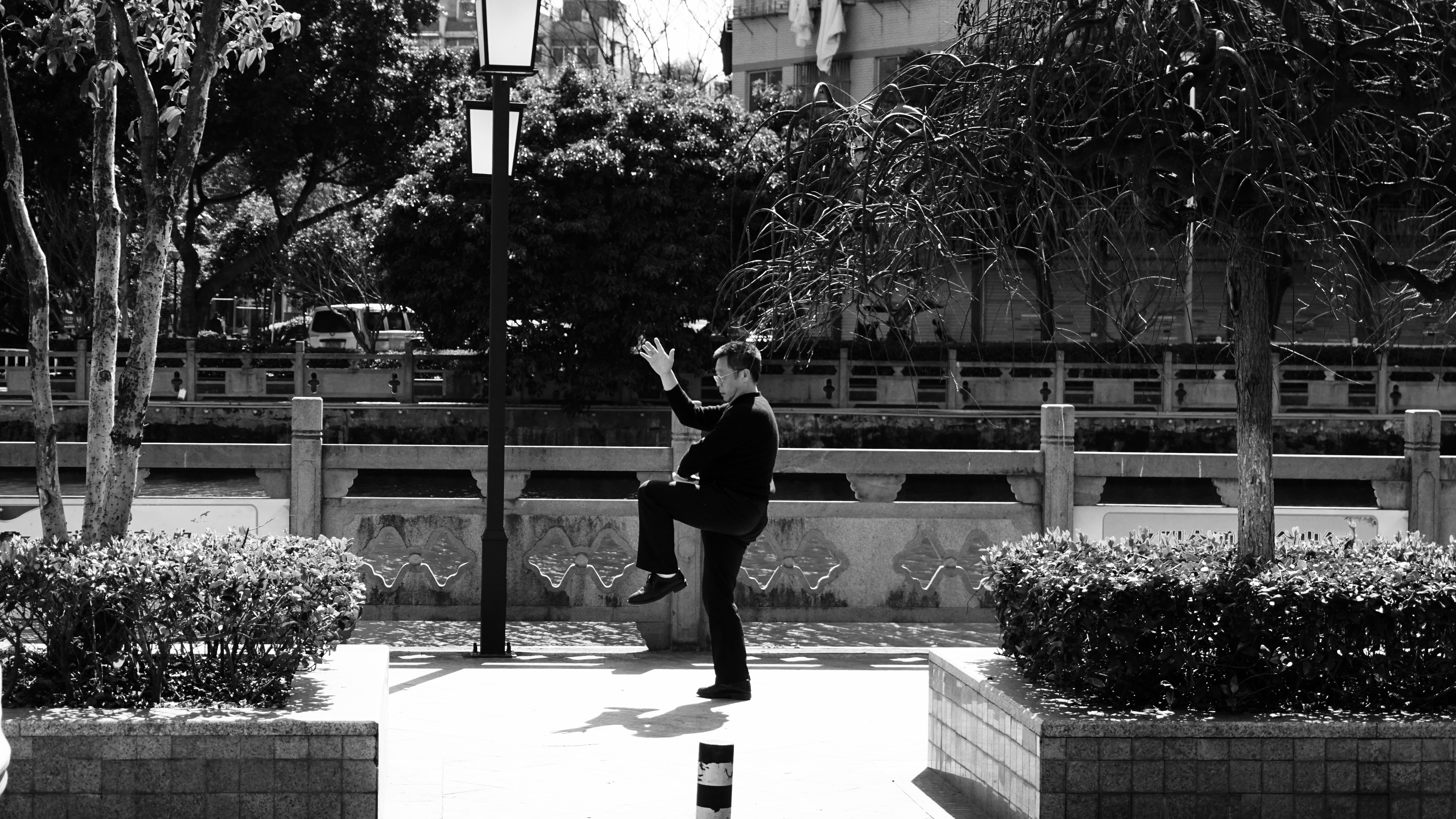

The Balance Tai Chi Brings To Your Weight

Have you ever been in a situation where you suddenly felt a subtle change in your body? Maybe your body is feeling a bit weaker, sluggish, or even a tad stiffer than usual? Maybe you’ve put on a bit of weight, and your body decided to send you a little message. It is interesting how you always have the sense that you need to move, as if your body is trying to tell you something.

Your mind is a powerful instrument. It knows exactly when you need a push and how much push you should be giving your body. One great way to harness your mind’s capability is to channel it through Tai Chi. Tai Chi requires a type of resilience that no other exercise can provide – it requires you to develop the resilience to work slowly and methodically even when your mind is telling you that it would rather do something much more intense. During high-intensity workouts, you can easily tune out and smash your way through them as you blast out tunes to keep you going. Tai Chi requires that you stop and reconnect with your breath before you go through your routine. You are then expected to keep your mind present and engaged throughout. The mental fortitude you develop while doing Tai Chi – which even the British Heart Foundation points out is required for a healthy lifestyle – will better serve you as you face more daunting tasks, like losing weight.

Here are a few beginner-friendly routines to get you started in Tai Chi, if you haven’t started already:

Exercise #1: Tai Chi Walking

As you go through this routine, concentrate on shifting your weight smoothly and without wobbling. Pay particular attention whilst you’re shifting forward onto the turned-out foot as you are twisting your torso. Complete beginners will often find this challenging, so don’t feel frustrated if you have a hard time. Your body will get used to this movement the more often you practice. To make sure you are getting the most out of the workout, try to keep your centre of gravity levelled. Be aware of how much you bend your legs and keep your body from moving up and down as you shift weight.

Exercise #2: Wild Horse Parting Mane

The key to this Tai Chi exercise is to try to combine the weight transfer, torso twisting, and arm separation and perform them in a flowing motion. Be mindful that your legs should be driving the pelvis forward. Feel your spine being in charge of rotating your shoulders as your shoulders propel your arms.

Exercise #3: Cloud Hands

As much as you are able to, draw circles with your arms in a smooth, continuous motion and keep your speed uniform all throughout the routine. With constant practice, you will begin to notice the overhand arm pulling while the underhand arm pushes/stabs. This movement activates the posterior chain on one side of the body while simultaneously engaging the anterior chain on the other.

Committing to a regular exercise routine, like Tai Chi, helps bring you closer to your ideal weight. Moreso, small lifestyle changes like being aware of what you put in your body will also help you tremendously. WeightWatchers notes that the best weight loss programmes work optimally when their main goal is to help you find movement you enjoy. This way, your decision to move becomes a healthy habit that sticks.

If you are still not convinced of the weight loss potential you can get from Tai Chi, you might be surprised to find out that the calm, rhythmic flow of Tai Chi works equally as well as cardiovascular exercise and strength training. The results from Tai Chi are comparable to the mentioned exercises in terms of reducing waist size and cholesterol improvement. A trial published by the Annals of Internal Medicine showed that three 1-hour weekly sessions of this low-impact practice helped the participants lower their level of triglyceride (a type of fat found in the blood). This eventually led to greater drops in body weight.

When it all boils down to it, the best way for you to lose weight is to find an activity that you enjoy, and that makes you feel good. If you are looking for a workout that would help you strengthen your mind as you strengthen your body (and lose weight in the process), give Tai Chi a try.

Trust me, I’m a Doctor

Screen Shot 2018-10-16 at 12.52.31 PM.png

The most recent episode of Trust Me, I’m a Doctor featured Tai Chi!

“Michael Mosley finds out whether t’ai chi can offer the same health benefits as vigorous exercise – without all the huffing and puffing. ”

They compare the same time spent doing Tai Chi to the time spent doing Zumba, which is far more vigorous. Is he really “doing Tai Chi”? Well, that’s up for debate, but the results are surprising.

If you get iPlayer then you can watch it at the link below:

https://www.bbc.co.uk/iplayer/episode/b0bnbjlc/trust-me-im-a-doctor-series-8-episode-6