How to use the mind in Tai Chi

art beautiful bloom blooming

Photo by Magda Ehlers on Pexels.com

All movements are motivated by Yi, not external form”,

I’ve talked a lot on this blog about things to do with the body in Tai Chi, but I’ve not really said much about the mind before. That’s because it’s a lot harder to talk about, since, as you’ll discover, the requirement for correct use of the mind in Tai Chi has nothing to do with “thinking”, which makes it especially hard to talk about because as soon as you verbalize or write down your thoughts you are, in effect, thinking about it. See the problem?

The classics use three words to describe the mind in Tai Chi:  Shen, Xin and Yi.

We’ll leave Shen and Xin off the table for now, but the important point is that different words are being used to describe different aspects of the mind.

Let’s look at the big one: Yi.  The Tai Chi classics are pretty unequivocal about the importance of Yi to Tai Chi:

All movements are motivated by Yi,

not external form.”

But what is meant by Yi? The English translation given is usually “intention”. However, I think this is cause of more confusion about Tai Chi than anything else. People take it literally and think it’s the intention you have when performing the movements of Tai Chi – like the intention to grab and arm, or the intention to fight, or the intention to break a wrist, etc..

When people try to demonstrate this correct intention they simply pull a mean face and try to look a bit stern and aggressive while punching or doing something dramatic. That’s not it.

The word “intention” is definitely related to what Yi really is, but it’s not what is meant by Yi, not by a long way.

If you look at the face of somebody good performing Tai Chi they never look like they’re straining, aggressive or mean. Instead, they look like they are full of awareness, absorbed in what they’re doing, but open to their environment at the same time.

Yi has nothing to do with thinking, in the conventional sense at all. If you look at somebody doing Tai Chi who is thinking at the same time their movements look a bit empty, their eyes fidget all over the place, they are absorbed in themselves but not really ‘in’ their bodies. The mind and body have become separated.

In Tai Chi you want to achieve a unity of mind and body, so that there’s effectively no difference. You are just one unit doing the work, or rather, letting the work be done through you. You are present, but simultaneously aware.

I like to call Yi “directed mind”. It’s all about directions. When I’m performing the opening movement of Tai Chi for example, I am performing an opening of the body as the hands raise and a closing of the body as the hands fall. My mind is performing the directions up, in, down and forward in that order.  I am directing where the body is going with my mind and eyes. Your eyes have to be working in harmony with the whole process, not distracted, or looking in the wrong direction for the movement you’re doing. Don’t look at your hands, look through them. When you do press for example you are pressing towards the horizon, not just at your imagined opponent.

All of this direction thinking – the quality of using the mind this way – is impossible if you are thinking thoughts. As soon as you notice you are thinking thoughts you’ve lost it.

When attempting this type of training my Tai Chi teacher would advise me to stop the form altogether if I noticed my mind had wandered off and go back to the start. After repeatedly doing this, your mind kind of gets the message that you’re not kidding. You really want it to stay with the body and what you’re doing for the next 5 minutes, and it quietens down and takes a back seat, allowing your awareness to come to the fore.

“Focussed awareness” is another good phrase to use to describe Yi.

Hopefully this post has helped you understand what is meant by the phrase, All movements are motivated by Yi, not external form”, a little better. As you can see, it’s tricky to talk about. The only way to ‘get it’ is by practice. What I’m describing is a quality that isn’t a physical object or movement, so it’s hard to grasp, but with repeated practice over time it will become as real as the very device you’re reading this on.
Kung Fu Tea on Sun Lu Tang

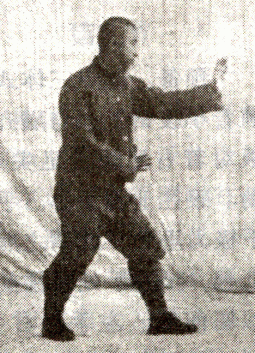
sun_lutang-self-portrait-for-publication

There’s a great article over on Kung Fu Tea about the life of one of the most influential Chinese martial artists of all time, Sun Lu Tang.

One of the persistent problems that I see in amateur discussions of “Chinese martial studies” is a lack of understanding of how broad the traditional martial arts really were, and the variety of life experiences that they encompassed.  In fact, rather than discussing China’s martial culture in the singular, it would probably be better to think about these cultures in the plural.  The martial arts never were just one thing, and our experience with the modern “traditional” arts tends to seriously skew our perceptions of the past.

It’s a good read, so sit down with a cup of tea and put your feet up with your laptop.

Link.

Xing Yi Zuan Quan

My friend Byron Jacobs has added another video to his excellent Xing Yi Ten Minute Primer series. This time it’s on the water element, Zuan Quan, known as Drilling Fist.


The other parts are linked below:


XingYi Part 9

Four_Generals_of_Song

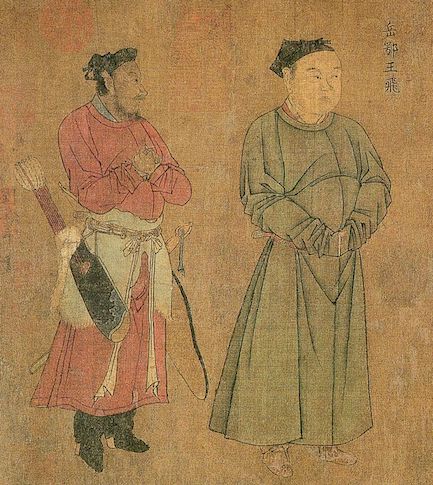
Yue Fei (right) from The “Four Generals of Zhongxing” painted by Liu Songnian during the Southern Song dynasty.

In this episode we discuss the role of General Zhang Jun in the survival of Yue Fei’s tradition, as well as in the survival of members of Yue Fei’s extended family. We also discuss how Zhang Jun managed to protect himself from the purges carried out by Qin Hui.

Previous episodes:

XingYi Part 8

This episode is about Song Dynasty arms and armour. This is a slightly shortened version of the episode from which a few of the more controversial topics have been omitted. The full uncensored version can be found inside Patreon.

XingYi Part 7

As a background to our upcoming discussion of late Song Dynasty armour and weapons, in this episode we give a brief overview of a few animal strategies applied on the battlefield at strategic and tactical levels, as well as in individual combat.

XingYi Part 6

We examine the life of Yue Fei’s best friend, General Han Shizhong, and the circumstances immediately following the death of Yue Fei. We also take a look at the the life of Han’s heroic wife, Liang Hongyu, and internal politics of the Jin Empire at that time.

XingYi Part 5

In this episode we examine the work of the Confucian Scholar Zhu Xi, who lived during the time period we have reached in the narrative (during the Song Dynasty). His philosophy did not impact Xing Yi until centuries later, but when it did, the effect was a large one, so this episode sets the scene for other episodes to come.

XingYi Part 4

We come at last to the great general Yue Fei’s greatest victories, and ultimate betrayal and death – at the hands of corrupt officials on his own side.

XingYi Part 3

In part 3 of our series on Xing Yi, we look at how the Li movement influenced Yue Fei and other Song generals in formulating effective strategies for use against the Jin, and how they managed to challenge the previously unbeatable dominance of the Jin cavalry. We also discuss the rise to power of chancellor Chin Hui in the regime of Emperor Gaozong.

XingYi Part 2

In this episode the look at the early life of Yue Fei, some of the factors that link him to the Li Movement, the meaning of some of the symbolism surrounding him, and the reasons for the transition between the Northern Song and Southern Song Dynasties.

XingYi Part 1

In this episode we discuss significant events that occur between the end of the Han Dynasty and the beginning of the Song Dynasty, in particular highlighting issues that form the background to the life of the famous Song Dynasty general, Yue Fei, who has traditionally been attributed as a progenitor of Xing Yi and other martial arts.

RIP Brian Kennedy

51ohpgzfmol._sx331_bo1204203200_

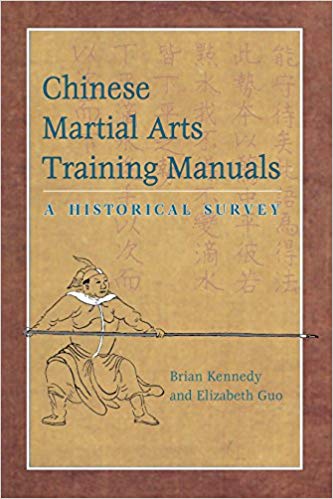
It’s sad to report that respected Chinese martial arts practitioner and author Brian Kennedy has died. He’s best remembered for his two works on Chinese martial arts history – Chinese Martial Arts Training Manuals and Jingwu: The School that Transformed Kung Fu.

I conversed with Brian a few times and always found him to be an interesting and respectful person. Here’s an article he wrote on the Da Dao “Big Knife”, for those not familiar with his work.

“I first grew interested in martial arts history back in the ‘Bruce Lee-Kwai Chang Caine days’.  My parents got me a copy of Robert Smith’s Asian Martial Arts and one of my high school history teachers let me do a semester of independent study on Chinese martial arts history. That independent study project, back in 1975, got me started on a lifelong interest in Chinese martial arts history.  The field of Chinese martial arts history has progressed so much in those 40 years—but, many of the same challenges remain. “

Brain was 61 and had just got his brown belt in Briazilian Jiujitsu in January of this year and his first stripe in May. What an inspiration.

A full write up of his contributions to the field of Martial Arts studies is available on Kung Fu Tea.

Rest in peace, Brian and condolences to your family.

The Drunken Boxing podcast. Episode 1 Marin Spivak.

Screen Shot 2019-07-15 at 9.41.12 AM.png

Byron Jacobs, who produced the excellent XingYi San Ti Shi primer I posted recently, has launched a new podcast that’s well worth checking out.

In the first episode, Byron talks to Marin Spivak, Chen Tai Chi disciple of Chen Yu, about what it’s like going to live and train gung fu in Beijing as a Westerner back in the 1990s and 2000s. Both Byron and Marvin made the jump to live and train in Beijing, so they have a good insight into Chinese culture, and particular gong fu culture.

I really liked the discussion of the tangled network of gong fu culture a prospective student has to find their way through in China, and which the average western student has no idea exists at all.

Enjoy. Link.


History of Xing Yi parts 7 and 8 – Armour, weapons, and their influence on Xing Yi

Screen Shot 2019-06-19 at 4.07.23 PM.png

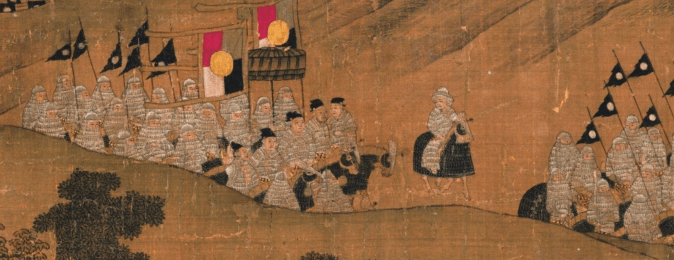
Jurchen Jin Cavalry. Illustrations of Auspicious Omens [Public domain]

After looking at the rise of the Mongol Empire for a few episodes my Heretics podcast has come back around to looking at Xing Yi and in particular the use of weapons, military strategy and armour in the Song Dynasty armies.

Part 7 starts with a rebuke to the criticism “You haven’t even got to talking about Xing Yi yet!” then looks at some animal-based military strategy. These are the same strategies that are used in the Xing Yi animals today.

In particular, we look at Ma Xing – Horse strategy – but also look at Snake (She Xing) and Eagle (Ying Xing).

Listen to “#29 Xing Yi (part 7)” on Spreaker.


animal animals backlit beach

Photo by Pixabay on Pexels.com

Part 8 looks at Chinese armour in more detail, but also talks about Xing Yi fighting tactics in relation to armour and how the armour influences the way the art works – stepping, continuous movement, minimal movement, twisting the fist in Tzuann, etc…

There are two versions of part 8, the first is for public consumption, available here:

https://www.spreaker.com/user/9404101/30-xing-yi-part-8-short-version

and we got into some controversial topics at the end of the episode, so the full version is reserved for our Heretics/Woven Energy Patrons ($5 and up):

https://www.patreon.com/wovenenergy/posts

Here’s some nice Song Dynasty style armour a google search turned up

19060162_299812483804082b2

Image Credit: Dragons Armory.

From:

http://dragonsarmory.blogspot.com/2017/07/heavy-song-dynasty-armor.html

Like Damon says, you could show that to a ‘normal’ person and tell them it’s Samurai armour and they would probably believe you 🙂

Also, here’s an interesting clip showing how effective Lamellar designed armour was. This design is taken from the much earlier Tang Dynasty armour:


The birth of Kuo Shu (Guo Shu Guan)

If you practice Chinese martial arts then you need to know your history, and especially what happened in the early 20th century with the Kuo Shu (Guo Shu) movement.

This was before the Wu Shu movement, which came later.

This excellent video by Will from Monkey Steals Peach explains what happened and why, and why Sun Lu Tang became such an important figure in Tai Chi history.


Tai Chi, Baguazhang and The Golden Elixir: Internal Martial Arts Before the Boxer Uprising

415b5-r9u2l

Scott Park Philip’s new Bagua book is out!

As somebody said: “From the sample pages it looks as bonkers and brilliant and polarising as the last one. Better than being boring!

Screen Shot 2019-05-07 at 5.10.25 PM

I’m really looking forward to seeing how he supports his theory (from the back cover) that Baguazhang was created after the failings of the Boxer Rebellion (1900) when the founder of the art, Dong Hai Chuan, died in 1882. I’ve been assured he tackles this point in the book…

If you click the Amazon link above you can click “Look Inside” to read a bit.