Yi Quan people (usually) don’t understand Xing Yi

Edit: I wrote a second post that added a clarification about the difference between what I meant by “weight” and “weighted leg”, because I realise that this post isn’t very clear on the subject. I’ve left the rest of this post unedited.

Here’s the good news: our recent podcast about Yi Quan seems to have upset far fewer people than our one about Baguazhang. In general, reaction to the Yi Quan podcast has been positive. It’s a good point to remind people that our Heretics podcast isn’t a history podcast, it’s a podcast about the miasma – cultural assumptions and how they have played a role in the development of various arts, religions and institutions throughout history. The episode was as much about Xing Yi as it was about Yi Quan, and also the kind of tradition of criticism that the founder, Wang Xiangzhai, baked into it.

As we discussed in the podcast, Wang Xiangzhai’s criticism can be viewed as “the spirit of the times” speaking through him. At the time it was required to talk down to “rotten old traditions”, of which Xing Yi was an example (China has never really had a free press). You can read some of Wang’s criticisms in his article “Essence of Boxing Science”, which is an interview he did, turned into an essay.

He says about Xing Yi: “ It must be noted that Xing Yi Quan in its orthodox form had no such thing as the Twelve Forms (Twelve Animals), though their should be twelve forms of the body. Nor did it have the theory of mutual promotion and restraint of the five elements.”

Actually I’d agree with him – that is the way Xing Yi should be practiced. The animals are not “forms”. That was the general theme of the podcast – there’s very little difference between Yi Quan and Xing Yi done right.

However, Yi Quan people still like to criticise 🙂

I read a post recently by a (good) practitioner of Yi Quan criticising Xing Yi’s punching method – using Beng Quan as an example.

“It still baffles me when I see xingyiquan people Beng Chuan without turning the waist and shoulders, even worse almost hopping on the rear leg as all the weight is held back.”

I’d agree with him – you need movement in your body using your spine as an axis – it’s no use being like an inflexible lump of wood. And, yes, “hopping” is another mistake. Don’t hop.

But we do hold the weight on the back leg in a lot of movements. This is the hardest thing (I think) for people new to Xing Yi to understand. How can you generate force without putting your weight into the front leg?

That’s a good question to ask a Xing Yi practitioner, because they should be able to punch you and show you 🙂

“Every punch must have 2 important components:
Shift of weight. [to front leg]
Transference of kinetic chain from lower to upper extremity.”

Well, yes, but with caveats. That’s certainly how you generally punch in boxing, or in other martial arts. However, let’s remember that people in these arts can still generate power while retreating – enough to knock somebody out. Anderson Silva famously knocked out Forrest Griffin, while stepping backwards to avoid his rushing attack. So the situation is clearly not as cut and dried as some would like.

I’m not really into hitting things much these days – I prefer the joys of pyjama wrestling on soft mats (with minimal brain injury), but I thought I’d make a short video to show you can generate force without putting your weight into the front leg, as Xing Yi teaches us, and that maybe we should all keep an open mind on the matter.

If you look at my front leg in the video you’ll see I never put my weight onto it. It steps out in front of the body, then the back leg catches up. Obviously, it holds some weight, but the weight is ‘held’ mainly on the back leg. This is how you’re supposed to do it in my line of Xing Yi. You can, of course, also do it with a weighted front leg, but the principle of “Chicken Leg” is that one leg holds the weight – it doesn’t matter which one – and we don’t need to transfer the weight between legs to generate force, instead, the force comes from correct stepping and body movement (Dragon body).

Yes, I know need to get a bag to hit, but instead I’ve got a tennis ball on a string to play with (we go with what we’ve got available, right?) I’ll get a bag at some point and do another video.

Why do it like this? Good question.

i) You arrive quicker to where it is you’re getting to – it’s much more “all at once” than having to transfer weight between the legs. It’s sharper and better if you’re looking to intercept the opponent (Jeet) which matters most in weapons fighting, where timing is much finer than with fists (Xing Yi comes from weapons, spear being the main one).

ii) You keep your body “back”, which is better for defence. Leaning too much into things is a great way to get knocked out, as we all know. Or with weapons, you want to keep the vital organs as far back as you can. If you look at the Xing Yi Classics it says things like “do not wither and do not be greedy” – you need to keep a reserved attitude to fighting, especially with weapons.

In other news – the blossom is coming out on the cherry tree – you might be able to see it in the video. Spring is here!

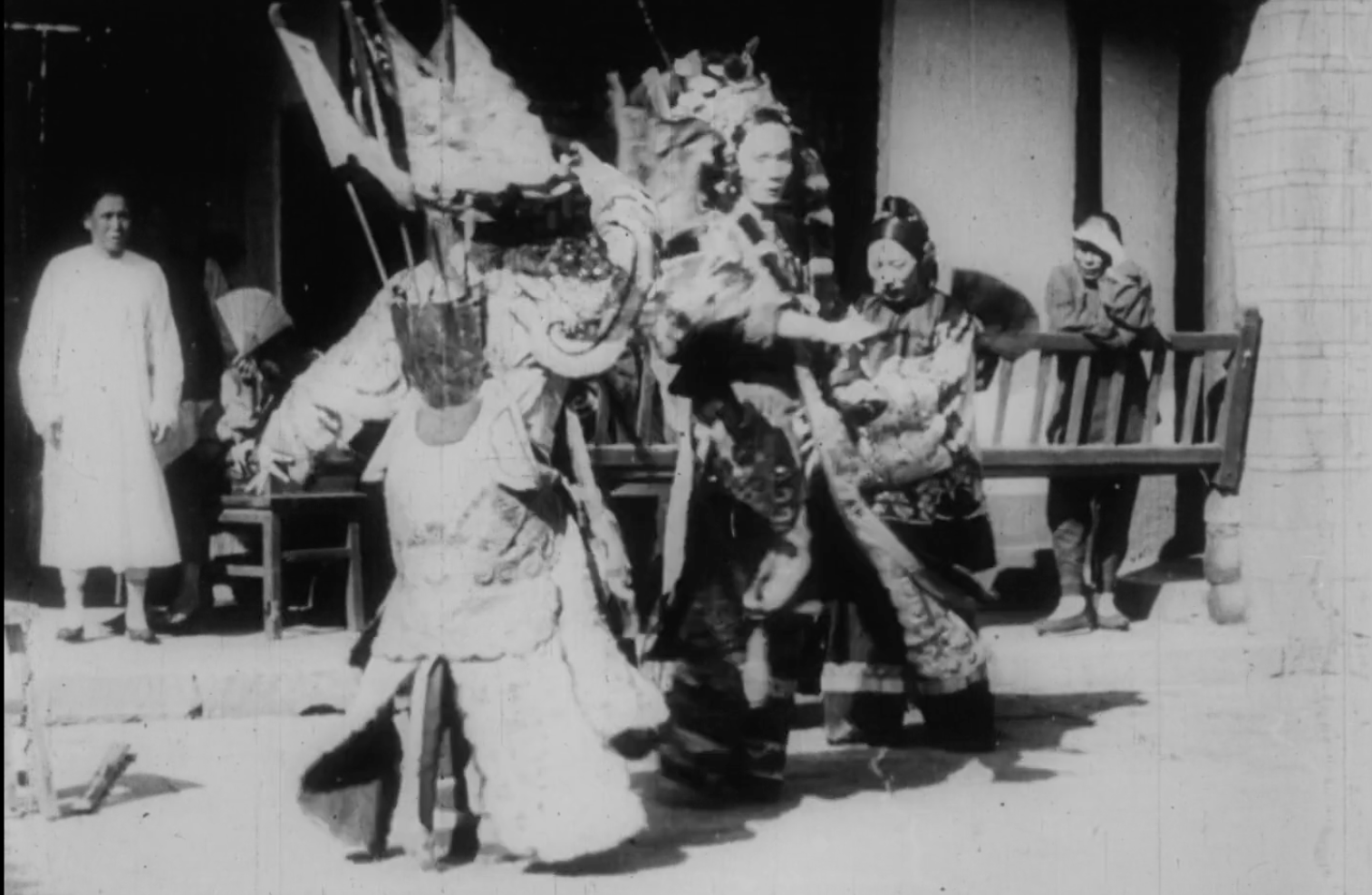
Dragon dance and street theatre – rare video of old China 1901-1904

Thanks to Jarek Szymanski for posting about this clip.

“Unique documentary footage taken between 1901 and 1904 in Yunnan in southwestern China by Auguste François (1857-1935) french consul stationed there. Street performers, barbers, funerals, official visits, leopard catching a pigeon and monkey wearing opera outfit doing somersaults, opium smoker, it’s all there – and more. Absolutely stunning over fifty minutes of footage from China that none of us has ever seen. Somewhere there were probably also martial artists, hiding in plain sight;)”

https://www.cinematheque.fr/henri/film/129752-images-de-chine-auguste-francois-1901-1904/

Of particular note for martial arts fans are the Dragon Dance scene at 32 minutes and the street theatre dancing at 46m which looks an aweful lot like Baguazhang….

What it was like learning traditional Chinese martial art in secret during the Cultural Revolution

This is a very informative interview with Ma Yue who is a Mashi Tongbei master. He talks about (amongst other things) what it was like growing up in a traditional martial arts family when the Cultural Revolution happened in China, and he had to be taught in secret. He also talks about the making of the first Shaolin Temple film, which is father was involved in, and what he sees as the many problems with Wu Shu today.

Part 1

Part 2

The new American Boxer Rebellion of 2021

Jack Slack was the first person to draw my attention to the parallel between rioters storming government buildings that happened in China’s Boxer Rebellion around 1900, and the storming of the Capitol Building by Trump Supporters in 2021. Both involve a kind of “spirit possession”.

Of course, America, along with many European nations, was involved in the Boxer Rebellion:

“In 1898 the Yellow River burst its banks and destroyed the harvest in much of Northern China, but this misfortune was followed by an agonizing drought which dried out the land and hardened the dirt. As young men went hungry and without work, some Chinese noted the connection between the anger of nature and the construction of train tracks, telegraph lines and churches since the arrival of foreigners in the Qing Empire. Anti-foreign sentiment brought together groups of peasants practicing martial artists and calling themselves the Righteous Society of the Harmonious Fists—though the West came to know them as “The Boxers”. The Boxers attacked and murdered missionaries across the Empire and in the summer of 1900, Tianjin and Beijing were plunged into chaos as the Boxers received the blessing of Empress Dowager Cixi and the Imperial army. 400 foreigners and 3000 Chinese Christians endured a two month siege in Beijing’s legation quarter—a stone’s throw from the Imperial Palace but completely helpless. The Boxer Rebellion is a story about agriculture and diplomacy, magic and court intrigue, and it stands as both the last great event of the Victorian Era and the beginning of the end for the Qing Dynasty. ” – Jack Slack

Of course, I’d contest that the events that lead to the end of the Qing Dynasty had started much earlier, back in 1860s. It was these conflicts with foreign powers and internal rebellions which lead directly to the creation of Tai Chi Chuan, as we discussed on our History of Tai Chi podcast series. Yes, I’m sorry, the myth of a Taoist inventing Taijiquan after a dream about a snake and a crane, is just a fairytale. The real reason is much more pragmatic.

Jack has done an excellent podcast episode on the Boxer Rebellion, which he’s just released to the public, instead of being behind his Patreon paywall. If you want to find out more, have a listen:

How to hit in Xing Yi and Tai Chi

“When the opponent expands, I contract. When he contracts, I expand. And, when there is an opportunity, I do not hit – it hits all by itself.”
Bruce Lee

Practicing both Xing Yi and Tai Chi together helps you gain insights into both arts. Here’s what occured to me this morning: If you were to strip down Tai Chi and Xing Yi forms to their essentials then Tai Chi is a series of deflecting moves interspersed with occasional punches or kicks, and Xing Yi is a series of punches or kicks interspersed with occasional deflecting moves.

That’s a gross simplification, but I think it’s true to some extent. It’s what makes the two arts good companions for each other.

I’ve written before about not putting power in the form, but in a related note I think the idea of not using your arm to punch is another way of looking at it from a more Xing Yi perspective. It’s the same nut, just another way to crack it.

The famous Tai Chi practitioner, Cheng Man Ching, is said to have had a dream in which he had no arms, and it was only after that that he grasped the secret of pushing hands. The secret was that pushing hands had nothing to do with hands at all, and he credited this dream with in his ability to push people.

But I find it a lot easier to understand the ‘not using your hands’ thing when you are constantly pushing and deflecting. It’s a lot harder to do it when you are striking.

Xing Yi is obsessed with striking. Most of the forms are a series of strikes linked together (called “links” – Lian Huan). I’ve come to appreciate however that the key to it is to not use your arm to strike. I mean, yes, your arm is doing the striking, of course, but it’s like it’s not involved in the process. I’m thinking about what Bruce Lee said when he said “it hits all by itself”. But while I believe Lee was talking about a more spiritual process (the top line of the hexagram), I’m thinking about a more mid-line process that’s rooted in the body. The hand moves into the position you want, but what moves it there has nothing to do with the arm at all, it’s all from the body. I find that when Xing Yi becomes “too much in the arm” it ceases to be the art it’s supposed to be. 

Paradoxically by trying to hit hard, you ruin it. You’ve got to ease back a little bit – take your foot slightly off he gas and let the body do the work, almost as if you are a craftsman using a tool skillfully (your body) rather than making a great effort to get things done and just making a mess in the process.

I do not hit, it hits all by itself.

Another one bites the dust (the latest Xu Xiaodong vs Tai Chi master)

The Tai Chi ‘master’ lasted 10 seconds this time.

In the video above amateur Chinese MMA fighter Xu Xiaodong is fighting Chen Yong, the self-proclaimed sixth-generation Tai Chi Master of the Wu lineage. It’s the latest in a long line of fights between Xu and people who claim to be martial arts ‘masters’.

If we analyse the 10 seconds of action we can see Chen takes a forward weighted stance with his hands up in a high guard. It leaves him completely imobile and open for a kick. Xu kicks him low, Chen drops his guard and that was all she wrote.

Presumably Chen thought that whatever he had been doing for the past few decades was good enough training to actually fight with. But whatever Chen has been practicing… it wasn’t fighting.

Some of my Chinese Martial Arts colleagues get really upset with these fights. They think the whole thing is set up to make Chinese marital arts look bad and promote the UFC, and I’m somehow complicit in a plot designed to bring the whole Chinese martial arts down. Or that Xu won’t fight anybody young and fit and only challenges old men. It’s classic conspiracy theory nonsense.

I find this attitude odd because, frankly the UFC doesn’t give a crap about any of this. And nobody is making these delusional ‘masters’ fight anybody – they’re doing it of their own free will and more often than not, they are the challengers in the fights, and put up all the money required to make them happen. They clearly think they are going to win with their martial skill despite a huge age gap or a gap in fighting experience.

There is a strong tradition of Chinese Kung Fu masters appearing in faked fights on Chinese TV and seeming to be all-powerful. It’s that delusion that Xu fighting against. Watch this:

serpentza and Byron Jacob explain what’s happening in China.

A common thing I’ve hear is that nobody has heard of these ‘masters’ before. Again, that’s true, but there are a lot of delusional people in martial arts, so I don’t think that’s surprising. China is a big place. Perhaps it’s the use of the term “master” that gets bandied about so freely? In light of all these fights there has been a government move in China to ban the use of the word. Xu Xiaodong has been heavily persecuted – being forced to hide his face in clown makeup and have an insulting nickname in one fight. It didn’t stop him beating these ‘masters’.

But it’s not just Xu doing it. Here’s another video from a couple of years ago. In white pyjamas we have “The 47-year-old expert Zhu Chunping, who has been practising tai chi for decades” vs Yao Hantian “The 22-year-old Yao has been training kick-boxing for just six months”. Read the report in the South China Morning Post. From the 5 seconds of action in the video we can see Zhu takes up what looks like a version of the San Ti Shi stance from Xing Yi while Yao immediately starts moving, establishing range and holding his hands in a modern guard position. One right hand from Yao, which goes right down the middle of Zhu’s guard and he doesn’t react at all to, and it’s all over.

As for the attitude of trying to pretend these fights aren’t happening… I believe it’s some misguided implementation of Wu De – martial virtue. Why shouldn’t people watch these fights? If you engage in a bout with a ring, a judge, and cameras involved, that’s designed to be streamed or televised then clearly you are now in the entertainment industry. That’s what prize fighting is. If this was some sort of battle for honour or revenge it would all be played out in a dark alley somewhere and nobody would ever know about it.

I think the lessons these videos teach is so valuable that they’re worth posting. You need to keep it real (to some extent at least) if you want to teach “martial arts”. Even if that “real” is realising your limitations, and that you shouldn’t be fighting a 22 year old in a ring when you’re 47 and don’t have any fight experience.

Chinese martial arts are full of fantastic skills and valuable content, but if you spend all your time doing your “body method” training and no time doing fighting training, then don’t expect to be able to fight with it.

And let’s not keep hiding this stuff away – you don’t fix your problems by pretending they don’t exist.

“Here is where you’ll be falling down”.

Learn Xing Yi and Bagua online

Friend of the Notebook, Byron Jacobs, has finally launched his online Xing Yi and Bagua learning platform.

Byron is an English-speaking Beijing native who has been integrated into the martial culture of the city for about 2 decades. He speaks Chinese and has a deep understanding of these martial arts and the culture from which they emerged. I’d recommend him if you’re looking for instruction on Xing Yi and Bagua online.

Find out more about him and his teachers here:

Just say “no!” to self cultivation

Before the Internet, back in the early 90s, there were only a few books on the subject of Tai Chi in the West, so the authors of these books achieved a kind of fame and notoriety that wasn’t really proportional to their actual importance, or impact on the Tai Chi world. Or maybe their fame became proportional because of the books themselves, in a kind of self fulfilling prophecy. It’s hard to say.

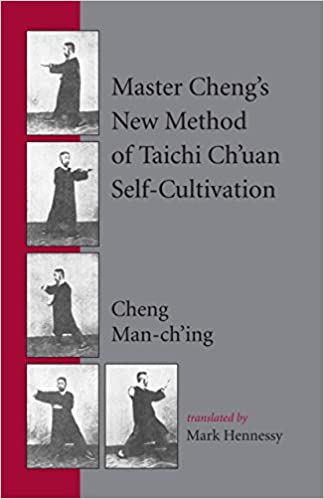
Either way, one book title that always stuck in my mind was “Master Cheng’s New Method of Taichi Ch’uan Self-cultivation”.

This idea of “self cultivation” is kind of the main reason that people practice Tai Chi in the modern world. It’s kind of like exercise, but a little deeper, involving something a little more like meditation. This idea of using eastern spirituality to go on a personal odyssey, or journey into your self is sold to us all the time in the world of Tai Chi, Yoga and health or spiritual practices.

The fact is, it’s nonsense. I hate to break to to you, but individually, we are really not that deep. Scratch our surface and there’s really not that much to us. The idea of cultivating yourself is really a huge waste of time. Our depth lies in our relationships to other people, places and non-human animals. And to find our connection to the world, to the land, the first thing you need to do is get rid of this little self that you’ve been busy cultivating with your various yoga, tai chi and martial arts practices.

Just look at what the Zen or Tao masters of old wrote. They were telling us this constantly in their writings.

When you do something, you should burn yourself up completely, like a good bonfire, leaving no trace of yourself.

– Shunryu Suzuki

One must be deeply aware of the impermanence of the world.

– Dogen

The practice of Zen is forgetting the self in the act of uniting with something.

– Koun Yamada

Those were literally the first three quite in an article I just searched up called “25 Zen Quotes“.

I feel like I could quote any chapter of the Tao Te Ching too, but let’s go with chapter 3:

The Master leads
by emptying people’s minds
and filling their cores,
by weakening their ambition
and toughening their resolve.
He helps people lose everything
they know, everything they desire,
and creates confusion
in those who think that they know.

Practice not-doing,
and everything will fall into place.

Why are Bear and Eagle always together?

A nice email from Paula asks: 

“I am curious to find why Bear and Eagle are always together. Have you come across or know of any reasoning behind this?

Thank you in advance for your time!”

This is a good question – if you practice Xing Yi you’ll notice that all the animal forms are practiced as individual animals, yet Bear (Xiong) and Eagle (Ying) are often mixed together as something called a “harmonious fist” (He Quan). (Although you also find them as separate links too). There are a few reasons why this is so.  

Photo by Rasmus Svinding on Pexels.com

Firstly, although Xing Yi has no particular connection to Taoism, it does make use of the concept of Yin and Yang. All the animals have Yin aspects and Yang aspects – this can be most clearly seen in something like snake, where the yin aspects are represented by the pythons – crushing, choking and coiling, and the yang aspects are represented by the vipers – quick, darting and venomous.

In Bear and Eagle, each animal represents an extreme of the postures found in Xing Yi – Bear should be the most extreme Yin (softer, heavier, shorter posture) and Eagle the most extreme Yang (hard, powerful and big). Bear is only ever Yin and Eagle is only ever Yang. So, to have a balance of Yin and Yang, both are practiced together to produce the optimum fighting strategy.

Bear is used at close range, rolling on and around attacks through your structure and position the attacker should naturally lands on the end of your blows. Think of slipping a jab in boxing and landing an uppercut. In contrast, the Eagle actively goes out to strike the opponent using long piercing strikes at a longer range. So, as a strategy they work well together. 

That’s the most basic reason.

Secondly, 英雄(hero) and 鷹(eagle)熊(bear) have the same pronunciation in Mandarin and Cantonese. This may just be a coincidence.

Now we can slip into the more esoteric reasons. This is something I’ve only ever heard from my teacher, but it makes no difference to the first theory, so let me present it.

There is an animal native to China and Japan called the Bear Eagle (Xiong Ying). In the west we call it the Mountain hawk eagle. (Spizaetus nipalensis in Latin.)

From Wikiepdia: “ it is usually perceptibly bulkier and more massive than most other members of its genus. It is seemingly the largest member of the 10 currently recognized species in the genus Nisaetus, notwithstanding the recently recognized Flores hawk-eagle (Nisaetus floris) (which was separated from the changeable hawk-eagle).”

You can see its powerful legs in this picture. I always like the little tuft it has on its head.

The bear eagle gets it’s name from the way it will grapple with prey on the ground – a bit like a bear. So this single animal represents both qualities. If you believe that the Xing Yi animals were derived directly from observing nature (which was the thrust of the Li movement in the Song Dynasty) then it’s possible that the hunting and fighting tactics of the Mountain Hawk eagle were studied to produce what we have handed down to us in Xing Yi. It’s an unprovable theory, but there you have it.

Ultimately, it doesn’t matter to me if you think of the Xing Yi animal as representing a separate bear and an eagle, or a mountain hawk eagle. It’s all the same thing, and you can gain a lot of insight into the Xing Yi link by observing all 3 animals. Sadly, YouTube is probably your best bet for that these days.