How we made Brazilian Jiu-Jitsu: The Ultimate Illustrated Guidebook


I wanted to share the process and journey of how Seymour Yang and I made our new Brazilian Jiu-Jitsu book.

First of all it’s worth noting we are both black belt instructors with many years of teaching experience. The book is aimed at beginners to developing white and blue belts and covers everything we felt was useful and relevant in today’s Jiu-jitsu club environment.

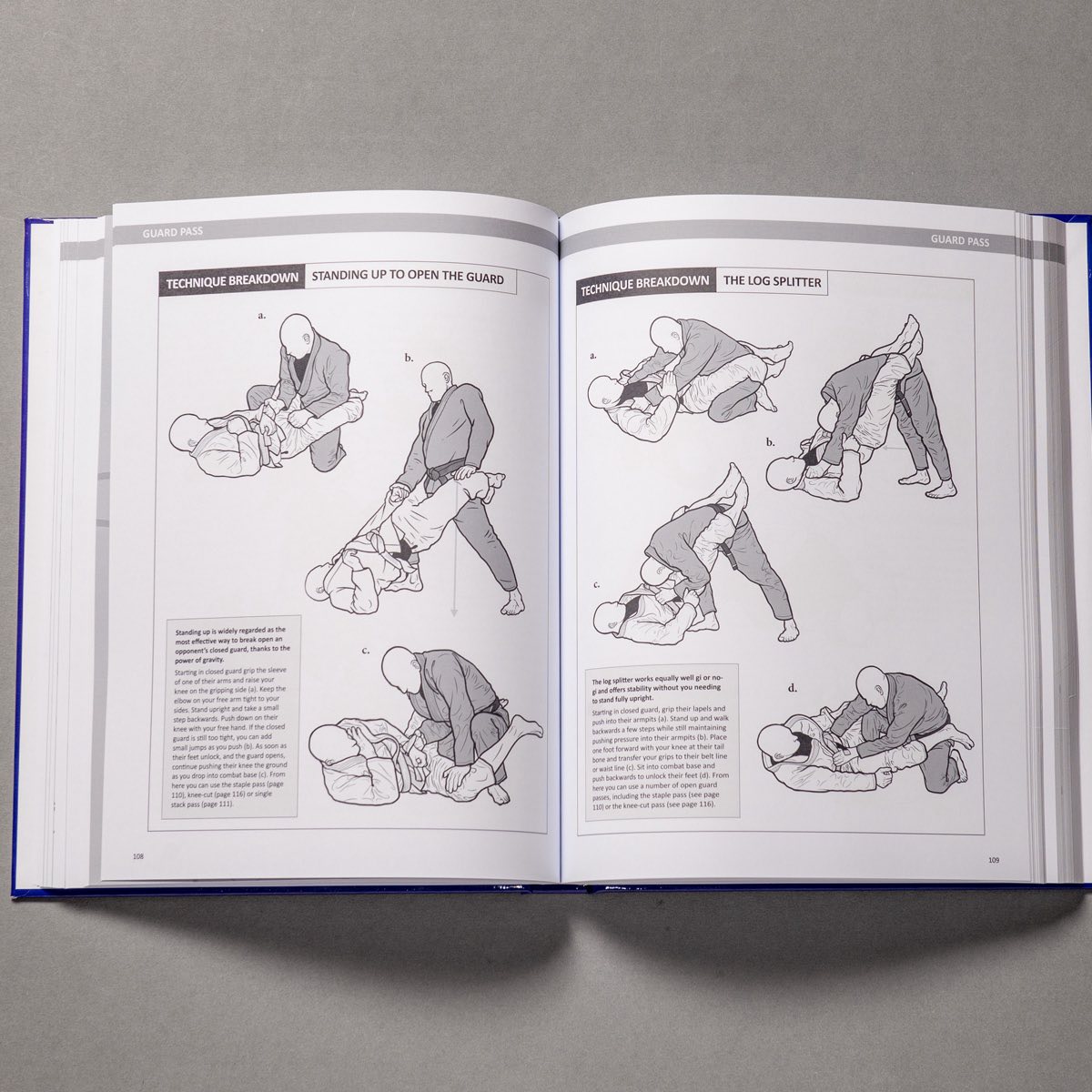
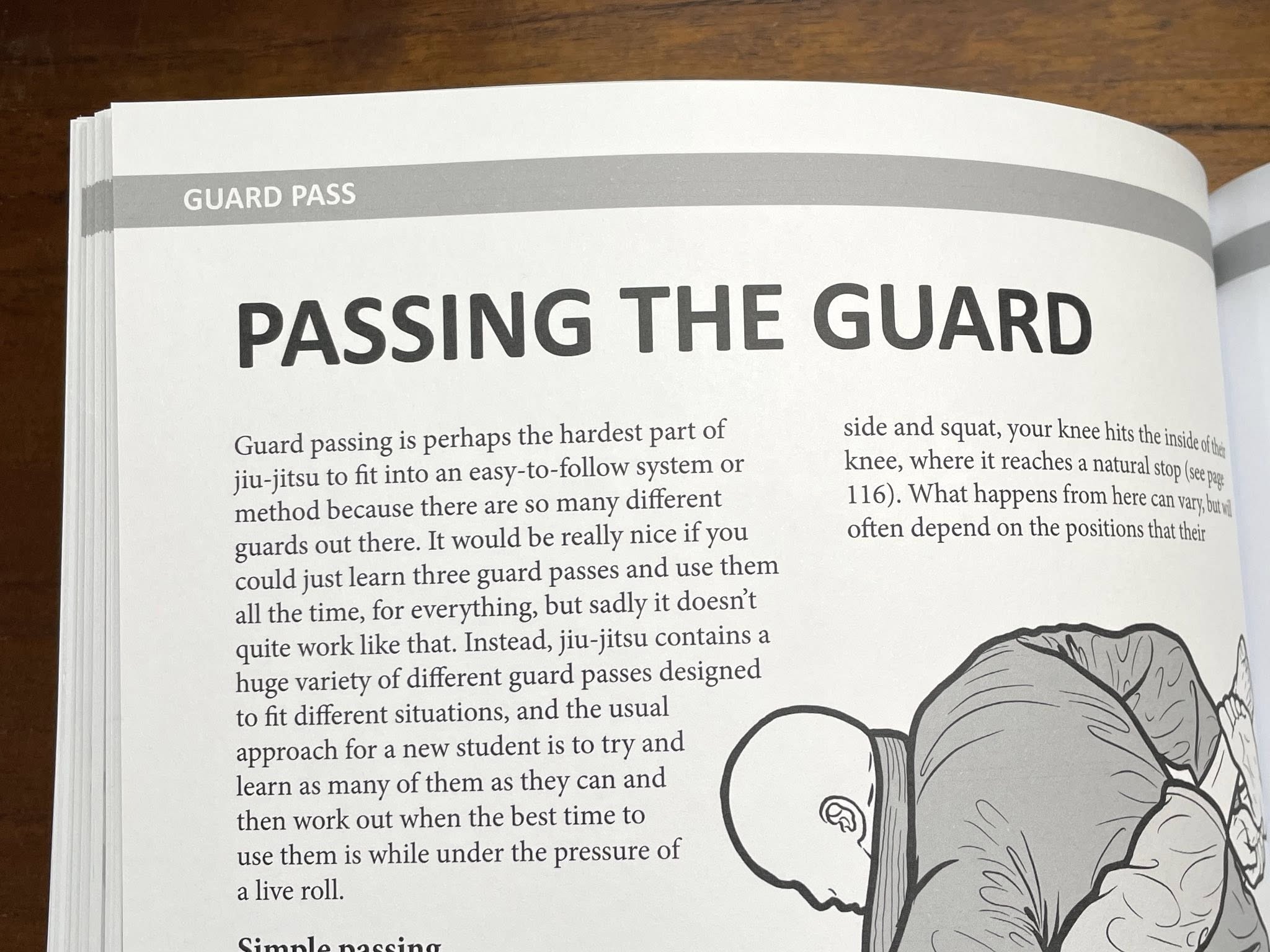
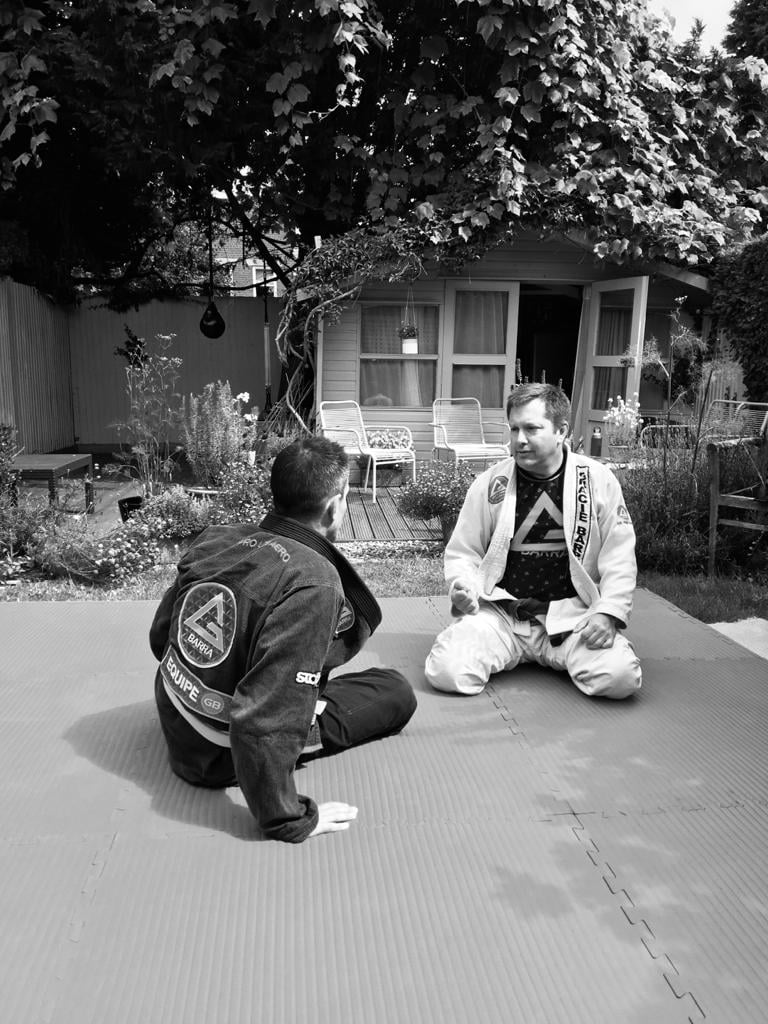
After much time planning and researching we then set about creating the contents. Every illustration is based on a photograph or video still that we took of our students or training partners. These stills Seymour used as references to hand draw the line art images. I then wrote the text.


That was just the beginning. The hardest stage was making sure the book was as accurate and tight as possible as a work of reference. For this we spent a long time proofing, editing and redesigning it. We then tested sample after sample from independent book printing companies to find the best one (we did not want to go the Amazon print on demand route)

I’m proud to say the book is finally available for our followers to buy (as a pre-order) and so far it’s proving very popular.

We decided to make it a pre-order as we just didn’t know quite how many to print in advance. A two week window was decided and after the pre-order window closes (June 11) we can then tell the print house how many to make.

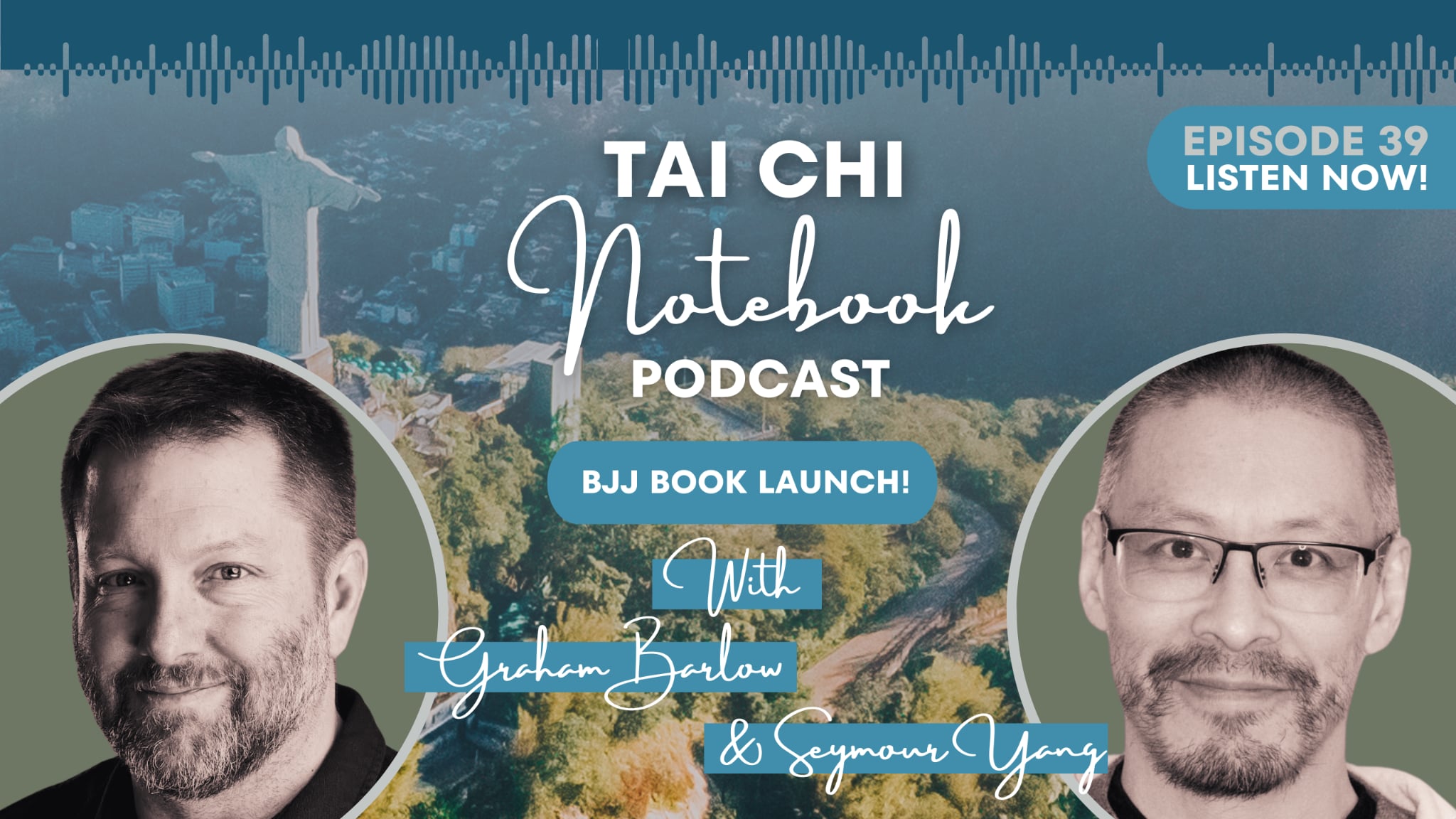
If you want to know even more about how we made it then check out this informal 2 hour (2 hour!) video where we chat about making the book (it will be released in a more thoroughly edited audio-only version as an episode of my Tai Chi Notebook podcast shortly):

All your questions about my new book answered

My co-author, Seymour Yang, and I have written a brand new BJJ book: Brazilian Jiu-Jitsu, The Ultimate Illustrated Guidebook, which will go on sale very soon.

If you want to see a free preview chapter, sign up to the Meerkatsu newsletter by visiting the website (Meerkatsu.com) and filling in the details in the pop up box.

The next newsletter will be released tomorrow (Wednesday 21st May).

Q: When will the pre-order go live?

A: Next week, exact date tbc very soon

Q: Where can I buy the pre-order?

A: Through the website, Meerkatsu.com

Q: How much will it cost?

A: Not confirmed yet but we will try to make it as affordable as possible for a premium independently published hardback book.

Q: How long will the pre-order last?

A: The pre-order window will last two weeks, then we send to printers to make the book (about two weeks), then we ship it out to you.

Q: What if I miss the pre-order?

A: We will print a few more books as spares and have them in stock but once they sell out, that’s it, they’re gone.

Q: Do you ship international?

A: Yes we do, see the drop-down list of destination countries in checkout.

Q: Shipping is gonna kill me, right?

A: See the shipping fee at checkout, it should cost no more than when ordering a kimono (it is calculated by weight).

Q: Will the book be available on Amazon?

A: Not in hardback form. This format will be exclusive to my store and when it sells out it sells out. But we may launch a softback version at some point later on. And this may or may not go on Amazon. We will see.

Q: Will you do an e-book version?

A: Maybe, we’ve not decided yet. We want this to be a tangible physical beautiful object you hold in your hands and cherish for years.

Tai Chi Applications: Needle at Sea Bottom, Fan through back, White Snake Spits out Tongue + Torso-Flung punch

My friend Sifu Donald Kerr of Spinning Dragon Tao has been producing some great videos recently featuring my teacher, Sifu Rand, demonstrating Tai Chi applications from our version of the Yang form. If you’re interested, I’ve written an article about the full lineage of that form before, but a quick summary is that it’s the Yang form from before Yang Cheng-Fu’s modifications, but with some input from Sun Lu Tang, so it’s a bit of a hybrid.

Needle at Bottom of the Sea, Shoulder through the arm and White Snake Spits Out Tongue.

I thought I’d do some posts as new videos become available comparing the videos to the historical books on the style that contain photographs.

There are a couple of historical books available that catalogue the long form in quite some detail. The first is the 1938 book by Gu Ru Zhang, then there’s the 1952 book by his student Long Zi Xiang, both of which have been kindly translated by Paul Brennan.

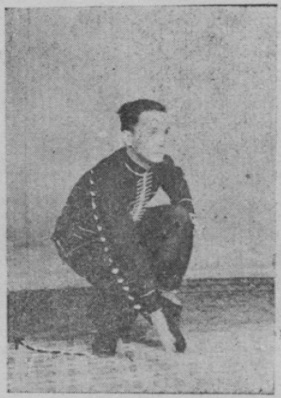
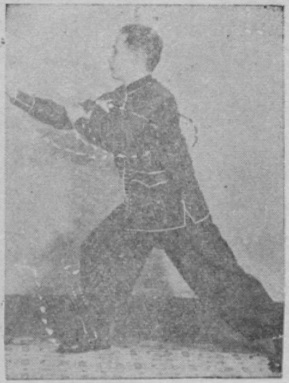
I’m using the 1952 book by Long Zi Xiang here, as the photos are of a higher quality. The English versions of the move names will always be slightly different, depending on the translator. Brennan translates these moves I’m looking at today, in order, as Needle under the sea (海底針), Shoulder through the arm (肩通臂) and White Snake shoots out its tongue (白蛇吐信).

In our school we use the names Needle at Sea Bottom, Fan through back and we don’t have a name for what Long is calling White Snake… it’s just part of Fan through back.

The application Long describes for Needle at Sea Bottom is, “If the opponent punches to my chest, I grab his wrist and press down, making his power drop downward.” It’s a pretty short explanation, but it does seem to match the modern day demonstration quite well:

For Shoulder through the arm, Long says, “If an opponent strikes from in front of me, I use my right hand to prop up his fist so that he cannot lower it, at the same time using my left hand to obstruct his waist and send him outward, causing him to topple over.”

Again, that’s a pretty good explanation of what happens in that video.

Long has one more application for the part of the form we don’t name - White Snake… – which is a simple block and strike to a different opponent, “If an opponent punches to my waist, I then press down with my right hand while my body moves back so that his punch lands on nothing, and then I use my right [left] fist to strike to his face.

We seem more interested in the next move, which is “Torso-Flung Punch” (撇身捶) according to Brennan’s translation. We call this move “Chop opponent with fist“, and it’s the natural conclusion to the previous moves, so I’ll add it on here:

The explanation for the application is: “If an opponent attacks me with a [left] punch and [right] kick at the same time, I then withdraw my right leg, causing his kick to land on nothing, my right hand pressing down his fist. Then my left palm pushes down on his arm, and my right hand turns over from inside with a strike to his face.” Which ties in very well with the video showing the application by Sifu Rand:

Happy New Year (of the Dragon)

It’s 2024, if you’ve ever commented, read or shared a post of mine, then a big thank you for contributing to the story of The Tai Chi Notebook. I feel privileged that I get such good comments here, and quite often they inspire new blog posts, so we all play a part. Let’s see where it goes in 2024.

I’ve already done one post of a training idea for the New Year, however, for New Year’s resolutions I thought I might introduce you to the more professional side of my writing – here’s an article I’ve written for the iMore website on iPhone apps that will help you stick to your New Year’s resolutions. Since most of us have smart phones these days I think it’s widely applicable to my readers here (I’m sure Android versions of most of the apps also exist). I hope you enjoy it! I’m certainly going to be using some of those apps this year.

Photo by Eva Bronzini on Pexels.com

2024 will be the Year of the Wood Dragon, (which starts on 10th February). Japan Times says “In a dragon year, people are said to be able to harness the creature’s intelligence, leadership and abilities to pursue their dreams with creativity, passion, courage and confidence.”

So, here’s a bit of Xing Yi Dragon I recorded in 5 spare minutes I had between opening presents and eating another round of Christmas dinner/left overs/chocolates – it’s out of focus, but not out of mind 🙂

In a way Dragon is the most Xing Yi animal of them all. I’ve done lots of posts about Dragons before, so check some of them out here:

  • The Azure Dragon and Shuai Jiao
  • Dragon Dance and street theatre
  • The importance of Dragon to Xing Yi

Paul Bowman on Bruce Lee, martial arts studies and martial arts comedy

A new episode of the Tai Chi Notebook podcast is out, featuring Paul Bowman.

Click the link above, or you’ll find it on iTunes, Spotify, or wherever you get your podcasts. Search for The Tai Chi Notebook.

Paul Bowman is a professor of cultural studies at Cardiff University. He’s the author of multiple books on martial arts, including several about Bruce Lee, and most recently, “The invention of martial arts: popular culture between Asia and America”, which was published by Oxford University press in 2020.

Paul also helped establish the academic journal Marital Arts Studies, and organised conferences for the Martial Arts Studies Research Network.

In this chat we reminisce about our times training together, talk about paul’s recent discovery of Brazilian jiujutsu and discuss the emergent field of martial arts studies.

Show notes:

10.15: The Bruce Lee period
Theorizing Bruce Lee: Film-Fantasy-Fighting-Philosophy
https://www.amazon.co.uk/Theorizing-Bruce-Lee-Film-Fantasy-Fighting-Philosophy-Contemporary/dp/9042027770/ref=sr_1_1

Beyond Bruce Lee: Chasing the Dragon Through Film, Philosophy, and Popular Culture 1 Mar. 2013
https://www.amazon.co.uk/Beyond-Bruce-Lee-Chasing-Philosophy/dp/0231165293/ref=sr_1_1

16.00: I am Bruce Lee, the movie
https://vimeo.com/96517261

17.30: Marital Arts Studies
https://mas.cardiffuniversitypress.org/

22.40: Understanding Identity Through Martial Arts, with Prof Adam Frank
https://www.youtube.com/watch?v=3BZb3WjosTs

23.53: On How to Talk about Taekwondo, with Professor Paul Bowman
https://www.youtube.com/watch?v=cALt0O3Y5_s

31.05: The invention of martial arts
On The Invention of Martial Arts with Prof Paul Bowman
https://www.youtube.com/watch?v=IOyAllbfYsM
The Invention of Martial Arts: Popular Culture Between Asia and America 24 Feb. 2021
https://www.amazon.co.uk/Invention-Martial-Arts-Popular-Culture/dp/0197540341/ref=sr_1_1

44.50: David Carradine – No Limitations Be Anything
https://www.youtube.com/watch?v=3q85cV3GOMw

55.00: Comedy and honour around martial arts styles
Are Filipino Martial Arts Realistic? | Master Ken
https://www.youtube.com/watch?v=wiuTGP-jnT8

Sensei Seth: If Every Martial Arts Style Taught Each Other
https://www.youtube.com/watch?v=SGo2_f50GLo

My first video interview! Scott P. Phillips and the God of War and Accounting

I’ve been thinking of doing a new series of video interviews with various people from the Tai Chi and martial arts scene, so when the opportunity to interview Scott Phillips, author of Possible Origins: A Cultural History of Chinese Martial Arts, Theatre and Religion came along I jumped at the chance.

I thought the interview went pretty well, so here it is in full. Please share it!

We jumped all over the place from Chinese history, the Boxer Rebellion, martial arts as theatre, Shaolin, Wudang, the origins of Xingyiquan, dealing with real violence, Rory Miller, Mexican drug cartels, child kidnapping in ancient China and more, including the superbly named Guan Gong, who was the “God of War and Accounting”!

I’ve uploaded it to both YouTube and Vimeo. I cut things short at the 1-hour mark but had the feeling we could have kept going for another 2 hours at least, so maybe we’ll do it again, perhaps with a little more focus on a particular subject.

Hope you enjoy.

YouTube:


Vimeo: