Here’s the best thing to do after you’ve applied Tai Chi’s rollback.
One of the things that comes up a lot in Tai Chi push hands training that’s geared towards the martial side of Tai Chi is what to do with the opponent after you’ve done Rollback. Rollback uses Lu energy to lead the opponent in and control them, with their arm kind of locked, but not to the point where they’d tap. In the Yang form there’s no ‘finish’ from this position – after controlling them you strike with Press (Ji). This is ok, but to me it seems like you’re giving up the advantage you have over them because of the control that rollback affords in exchange for a quick strike. It looks like this:
There are several alternative things you can do – turn it into a push away (into a wall?), turn it into a takedown where you keep the pressure on the arm and shoulder, forcing them into the ground, or you can go for my preferred answer, which is to turn it into a standing arm bar as shown in this video:
Key things to note:
1. He puts his elbow over the top of their arm and makes sure the locked arm is snug in his armpit.
2. On the locked arm the little finger edge is pointing to the sky.
3. In the finish position he rotates his wrists around the opponent’s wrist so that both his thumbs point upwards – this gives you maximum leverage on the arm.
4. Once the opponent is controlled you can look around and watch out for further danger from somebody else.
I like this solution because it’s a really powerful arm lock and you can move into it from the end of the Tai Chi rollback posture fairly easily. You can feel it would be easy to break the arm from here, and the opponent is pretty much helpless. Obviously, in a self defence situation the level of force you exert needs to match the severity of the threat you feel you are under, so don’t go breaking the arm of people who have innocently patted you on the back, and also take care of your training partners. Don’t break your toys!
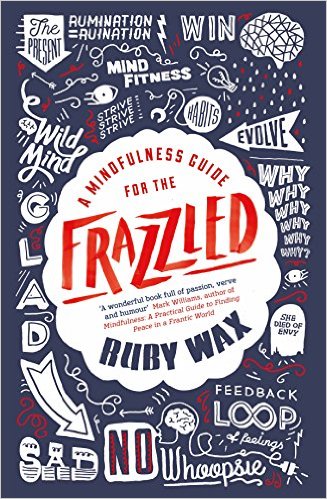
After her previous life as a TV personality ended up with her crashing and burning into a breakdown and rehab, Ruby looked to science to provide the answers to depression and found them in mindfulness, which seemed to be one of the few alternative therapies that showed real scientific results of success. She got a masters degree in Mindfulness Based Cognitive Therapy from Oxford University and went on to write Sane New World about her experiences, and got an OBE for her efforts to remove the stigma that surrounds mental illness, and have it accepted as an illness, just like any other. I have not (so far) suffered from a mental illness, so I did feel like a bit of a fraud sitting amongst the audience, but I have meditated and felt the benefits of doing so, so I was interested in seeing her show. Tai Chi, after all, is a mindfulness-based practice, but more of that later.
Firstly, the show was at the Playhouse in Weston-super-mare, which is a seaside town, so you’re probably conjuring up images of sunny Brighton in your head. Stop. It’s not like that. When he heard I was going to Weston at the weekend one of my friends said – “I really like Weston because it can’t get any worse. It’s kind of at the bottom, and doesn’t pretend to be anything its not.” That’s about it, really. The beach is very long and sandy, and there are lots of shops that sell seaside tat, like candy floss, sticks of rock and buckets and spades. There’s also a lot of drinking. By 5.00pm in the evening on a sunny but cold April day several packs of bald, intimidating, tattooed men and shouty, even more intimidating, drunken women were trawling up and down the strip looking for the next table to land on to keep the party going. Occasionally two packs would meet, and the outcome would be pretty horrendous.
In the midst of all these people blatantly doing their best to drink themselves into oblivion and escape from reality, we were going on a talk on mindfulness, which is blatantly an attempt to return to it.
The show itself took the form of a question and answer first half, where Ruby was ‘interviewed’ by her friend (whose name I can’t remember, but she used to be in Grange Hill when she was 14) who asks her a series of clearly prepared questions about mindfulness that she answers in an entertaining way while trying to make it not look like these are rehearsed answers. We all play along, because that’s what you do. There was a little bit of audience participation where she’d get us to discover our senses by clapping our hands, or sniffing the scented flier she’d thoughtfully left on each seat.
In the interval she signed books then returned to the stage for a second half where the audience got the chance to ask her questions. Interestingly, most of the questions revealed that the audience hadn’t really been paying attention to the first half, as everybody seemed to have a view on mindfulness which wasn’t exactly the same one that Ruby had. “That’s not really what I said…”, was a common refrain.
I think that’s often the problem with ‘mindfulness’ – it gets treated like any other ‘thing’ on offer to distract us from doing the hard work of coming back to face our lives as they actually are, which is what it’s really about. Instead we want another book to read, another movie to watch, or another phone to check. Everybody already has an idea of what mindfulness means to them, and it’s going to take a lot of mindfulness to change it.
Anyway, Ruby disappeared off into the Weston night, and so did we, which was utterly terrifying as by the time we left the theatre the walking dead were out in full force, tottering from pavement to road and back again, and then into a bush to be sick. There wasn’t a police man in sight. They’d either given up on Weston and abandoned it to the shadows, or they were all too scared to come out of the police station. We scampered back to our hotel and hid in our hotel room until the shouting and screaming stopped, then we could sleep.
I did enjoy Ruby’s show. It wasn’t anything amazing. Nothing extraordinary happened but, as she repeatedly said, a life without highs and lows, where you just maintain an active presence is really our best hope of being sane and healthy. The mindfulness practice she introduced, where you focus on your senses, and just keep coming back to them instead of letting your thoughts steal ‘you’ away and keep you captive, reminded me a lot of Tai Chi. This is what Tai Chi practice is – if you let yourself float away in your thoughts while doing the form then you lose half the benefit of practicing Tai Chi. You need to be in your body, feeling its movements, aware of its fluctuations and shifts. When you get caught up in your thoughts about Tai Chi you stop doing Tai Chi, so you need to keep coming back to the body.
It says in chapter 3 of the Tao Te Ching (an ancient book of Chinese wisdom, which has influenced Tai Chi)
“Therefore the sage, in the exercise of his government, empties
their minds, fills their bellies, weakens their wills, and strengthens
their bones.”
Again, it’s the idea of getting out of your head, and into your body, if you want to successfully govern yourself.
I imagine a lot of Buddhists and Taoists have their nose put out of joint by the popularity of mindfulness, which has essentially taken the core bit of their practice and stripped out the religious elements into a kind of Buddhism-Light. But so what? If it works, do it.
Anyway, I bought her book. I’m sure it will distract me for long enough until there’s another one on mindfulness for me to buy. Or I might even sit down, shut up and practice it. Let’s see what happens.
It might be time to rethink what we know about ancient swords.
I was having a discussion recently with a friend of mine who does Iaido. He’s working towards his first dan grade, which will take him about 18 months. The first kata, kneeling, has two cuts in total but there are (apparently) 140 mistakes you can make from start to finish. Seriously, what’s up with that? Personally, I would struggle to get excited about spending 18 months learning to use a sword that precisely. I mean, you could get a blue belt in Brazilian JiuJitsu in that time!
It doesn’t seem to really be about fighting with the sword, either, leaving that to Kendo to worry about. Of course, they do some two person ritualised combat stuff, but mainly they just spend their time trying to look Japanese, mysterious and spiritual, while cutting the air. People criticise kung fu for its “too deadly for the ring” mentality, yet Iaido, with its ritual drawing and cutting into the air, takes this further into “too deadly even for the training hall!” territory.
OK, I’m being facetious – doing the cuts in that video requires a lot of skill, but personally I’d rather be learning practical skills like how to really fight with a sword, not cut up tatami omote. Other people seem to love these things and that’s ok, one man’s meat is another man’s poison, as they say.
Inevitably talk of Iaido leads to discussion of the katana. The popular narrative, that the Katana is the king of all swords – the ultimate weapon – runs deep. From films like Kill Bill (A Hanzo sword!) to the Katana-wielding Michonne in The Walking Dead, we all know that if you want the ultimate sword, you need to go to Japan to get it. However, I’ve found that the more you look into Asian martial arts, the more the solid ground becomes quicksand, and the more the real becomes the unreal. The idea we have of the katana being the ultimate sword lies with the modern recreation of the samurai, the most fearsome warriors ever to walk the face of the earth, and bushido, the strict martial code they lived by.
These concepts and images permeate so many aspects of our culture, however, the truth is that much of Japanese history surrounding the samurai was re-written in the late 1800’s (by government decree) in order to bolster Japan’s own importance.
“Rather than a continuation of ancient traditions, however, bushidō developed from a search for identity during Japan’s modernization in the late nineteenth century. The former samurai class were widely viewed as a relic of a bygone age in the 1880s, and the first significant discussions of bushidō at the end of the decade were strongly influenced by contemporary European ideals of gentlemen and chivalry.”
The book is expensive, but the dissertation on which it was based can be read for free online.
But it wasn’t just the Japanese who were romanticising and recreating their past – Europeans had a hand in it too. There has long been a western fascination with all things oriental, but this really took hold after the Russo-Japanese War (1904-1905).
“According to accounts of the time, the Japanese were using their swords during that conflict with surprising effectiveness. It was for a simple reason: every other nations were letting go of the sword as a weapon of war (and rightly so), but the Japanese were still training their men in fencing with a lot more energy. So of course when the Russians and Japanese met on the battlefield for duels (and some of them were recorded) the Japanese often won. It left an enduring image in the public’s consciousness as these stories got reprinted all over the Western world.” – Maxime Chouinard, posting in Martial Arts Studies group
We’re used to seeing documentaries that extoll the virtues of the Katana, like this one from NOVA:
In the description it says: “English archers had their longbows, Old West sheriffs had their six-guns, but samurai warriors had the most fearsome weapon of all: the razor-sharp, unsurpassed technology of the katana, or samurai sword.”
(Incidentally, I often wonder how much this idea of “unsurpassed technology” is again a modern construct, based on Japan’s status in the 1990s as the world leader in technology. It seemed like every cool piece of technology in that era came out of Japan, from cars and video games to Walkmans. This is just speculation on my part, but I think this is a reputation that Japan has never truly shaken off, and is often used to backfill history.)
But was the katana really that much more technologically advanced than European blades of the time? Not everybody thinks so.
From the Dimicator website: “Medieval European swords … were hi-tech weapons of their time, masterly crafted and mechanically superior even to the famed samurai swords… European blades flex back to straightness when bent.”
It would appear that, as with all tools, swords were primarily designed for the particular problems the users had to overcome. Medieval European blades tended to be designed for, and used, on the battlefield. The katana, in contrast, was introduced at a time of relative peace, and was used mainly for ritualised duelling. It was criticised for being ineffective on the battlefield, and the two person sequences were referred to as “flower swordsmanship”.
The katana is defined by having a curved blade. Indeed, curved blades are inherently stronger and easier to cut with than straight ones, but clearly the ideal design for a thrusting blade is straight, as most European blades were, indicating that the katana was more for slashing and cutting with than thrusting. This has often lead people to believe that the Kata was developed for fighting from horseback, however this idea has been refuted. There is also an academic paper by Michael Wert, “The Military Mirror of Kai: Swordsmanship and a Medieval Text in Early Modern Japan“, which observes that the Samurai’s main weapons were the lance and bow.
In terms of metallurgy, the European blades were every bit as sophisticated – they were just different types of swords, designed for a different purpose – often on the battlefield. Roland Warzecha from the Dimicator school comments:
“Katanas cannot flex because only the edge is hardened and the back is not. So when they are distorted to a particular degree, they either snap or remain bent. The distribution of high carbon steel and low carbon iron in a blade in order to make a sword both hard enough to keep an edge and cut but at the same time not too brittle to prevent breakage, is one of the true challenges with sword making, and their have been various solutions.
I think katanas are superb for the context they were made for. I am convinced that Japanese swordsmiths would have developed flexible swords if combat requirements had called for it. My theory is that it was the absence of shields in sword-fighting that is the reason, plus, because raw material was extremely limited, the sword remained an elite weapon, not available to most – unlike in post-1300 Europe.”
In terms of metallurgy, European blades were just as sophisticated, as this post on the Dimicator Facebook page reveals.
It’s looking like we may need to rethink our idea of the katana as the ultimate sword. The narrative that European blades were inferior to Japanese ones is slowly being rewritten.
Any sword is a series of compromises, and ultimately just a tool. Every tool has a purpose. Perhaps the real answer is that it’s not the sword that matters – it’s the person wielding it, and whether or not they have the skill to do so.
A quick shout out to my friend Rob Poyton of Cutting Edge Systema, who has started a new blog, which hopefully he’ll update regularly.
Starting with a background in various martial arts Rob moved into Tai Chi, then later discovered Systema, the Russian system, and quickly converted. I’ve always been impressed with the practical and down to earth way he approaches training. He’s also very generous with his information and produces lots of videos showing the sort of work he gets up to. Whatever they do, it always looks like they’re having fun, which is a lot more important that you’d imagine in martial arts!
Anyway, his most recent post is about reality in training and contains this great quote:
“Ultimately though, if you want your training to be “real” I suggest you work on a behavioural level. Rather than learning some techniques, or even working on the principles behind the techniques, you train in such a way to make your work something you are rather than something you do. Under any kind of stress, your breathing works as it needs to – rather than you going into a breathing pattern. Your body responds to hostile contact as it would a hot object. No thought required. No plan or technique, just appropriate action. Freedom of thought and freedom of movement go hand in hand. Not clouded by assumptions, fear or agression, just doing what needs to be done. Training in this (Systema) way develops faith in the body, leaving your mind free for other things. Not blind faith, but faith developed over a wide and deep range of training which challenges us on all levels.
It’s difficult to overstate the benefits this has on our overall life. Whether applied tactically, combatively, sporting, or just everyday living, your training becomes reality and reality becomes your training. The world is your gym. No constructs, no wishful thinking, no fooling ourselves, but a powerful way of dealing with life as it unfolds before us.”
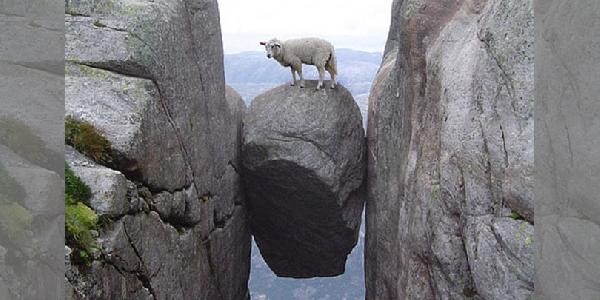
Forget the snake and the crane, Tai Chi is stuck between a rock and a hard place in the modern martial arts world, and it’s hard to see how it’s going to get out
Tai Chi, it is said, was created by the immortal Taoist Chang Sanfeng after watching a fight between a snake and a crane. Seeing the way the snake coiled and retreated to avoid the strikes of the bird’s beak he invented a martial art that relied on the ancient Taoist idea of softness overcoming hardness, and thus Tai Chi Chuan (‘Supreme Ultimate Boxing’) was born. Or so the story goes…
Obviously, you need to take all these origin stories with a hefty pinch of salt. I’ve talked about Chang Sanfeng before, and I’d like to do again at some point, because I think there’s more to say on the subject, but for now let me just point you to a couple of ideas that show the Yin and the Yang extremes of people’s views about him.
On the one hand there the pragmatic, logical, view, that Chang Sanfeng was a sort of Robin Hood-style character and his whole mythology was just a nice little story that people made up as a “made-to-order counterpoint to Bodhidharma” as the founder of Chinese martial arts, and later to hide and ostracise the true creators of Tai Chi, the Chen family of Chenjiagou village. This view is best expressed by Stanley Henning in his classic essay Ignorance, Legend and Taijiquan.
In these more enlightened times, the people who actually believe in the whole Chang Sangfeng story seem to be few and far between, but on the flip side of the coin you’ve got this intriguing point of view from Scott Park Phillips, expressed in his blog post on, Channelling Zhang Sanfeng. Phillips offers a fresh (or should that be old?) perspective on what the Chang Sang Feng connection with Tai Chi was really all about:
“Zhang Sanfeng was a ubiquitous figure in the late 1800s, not just because he was a popular trickster of the theater but because he was the subject of widespread spirit writing cults. Groups of literati would gather together and do a kind of ritual séance, in which they would write in the voice of Zhang Sanfeng.”
Sanfeng therefore becomes a part of the richer cultural world view you need to adopt to understand Tai Chi’s place in history.
Whatever the motives for bringing Chang Sanfeng’s name into the story of Tai Chi Chuan – whether to hide its humble origins amongst simple peasant folk, or as an esoteric way of connecting to a spirit cult, it’s pretty clear that he didn’t exist as a real person, all of which doesn’t bode well for selling Tai Chi as a serious marital art. To make matters worse, the Tai Chi world is full of lunatics and fakes. I’ve written about Tai Chi fakery before, and on the cult of the Tai Chi Magician who can fling his followers around with magic Qi blasts. Sadly, this is all par for the course for the Tai Chi world, and sadly for martial arts in general. It seems that the environment of the martial arts class is the perfect breeding ground for cult masters to recruit their willing followers. They’re everywhere in marital arts, and frequently exposed on YouTube.
I’m not going to talk about these sort of fringe behaviours this time. Instead I’m addressing the meat and potatoes of the Tai Chi world – those teachers who do their best to present an old martial tradition as a living, breathing martial art, and the problems that inevitably throws up in a world where MMA is starting to supplant boxing as the most exciting contact sport in the mainstream’s consciousness.
Where martial Tai Chi now stands
The dominant format for expressing martial arts in modern times, MMA, is generally composed of striking, grappling (with throws and takedowns) and ground work. If you want to look at where Karate fits into this then it’s easy – it occupies the striking segment of the venn diagram of MMA. Similarly, JiuJitsu can be found in both the grappling and ground work section. Tai Chi? It’s not so easy. It doesn’t fit neatly into the formulae. Tai Chi is a mix of standing grappling, locking, throwing and striking. The techniques flow interchangeably between the different stand-up mediums, but never in a way that makes sense to MMA.
As a training device Tai Chi uses Push Hands – a kind of limited rules stand-up grappling that is either done fixed step, or free step within an area. The rules for competition push hands are very, very restrictive. For fixed step, if you move your foot you’re ‘out’, and in free step, you just need to push your opponent out of the area. No strikes or locks are allowed, and there are various other rules restricting grabbing.
This is a typical example of a push hands competition. I’ve got to be honest, if an outsider saw that they’d wonder what on earth it was all about. To somebody with experienced of typical grappling competitions it also looks bizarre. The phrase “Well if you’re going to that then why not just learn proper BJJ/Judo/Wresting (delete as appropriate) instead?” springs to mind…
The problem is that compared to a grappling tournament under Judo, BJJ or Shuai Jiao (Chinese Wrestling) rules the whole thing is slightly on the ludicrous side, but the real problem is that this competition push hands doesn’t really have anything to do with what real Tai Chi push hands, and Tai Chi itself, is supposed to be about.
It’s contentious to say what is ‘real’ and what is not when it comes to Tai Chi, so I’m just going to go with my gut. There are basically two types of training in Tai Chi – training for self defence and training for developing the sorts of skills you need for Tai Chi. Let’s call these “Jin skills”. It turns out that ‘real’ push hands is supposed to be an exercise in learning Jin skills and not a sort of contest to find out who is the best at pushing somebody over (which is on the self defence side). Jin skills involve learning how to deal with an opponent’s incoming force using your Qi and Jin (I’ve blogged about what these terms means in martial arts before). To do this in a Tai Chi way requires you to repattern your body’s habitual way of moving, and not fall back on the way you usually move. The problem is that once you try to push somebody over and they resist, or you add a bit of competitiveness into the mix, that’s invariably what’s going to happen.
One notable teacher of internal arts once remarked to me in conversation that “So far I have never seen a video in which the westerner had even a remote clue how to do push-hands”… which brings me onto this video of Chen Ziqiang, which I think exemplifies the problem that Tai Chi is going to have if it’s going to make any impact on the modern martial arts scene.
Chen Ziqiang is the oldest son of Chen style master Chen Xiaoxing, and he is the nephew of Grandmaster Chen Xiaowang – therefore I think it’s safe to say that he knows what he’s doing. I’m not sure if the video is meant to be push hands, wrestling, or just freestyle playing around, but either way, he’s at a considerable size and weight disadvantage to his opponent, and suffers for it. So, does this mean that Tai Chi doesn’t work? Hardly.
The Chen-style of Tai Chi is famous for its ability to do damage by releasing power suddenly and for its joint-locks … but in a ‘push hands’ format where he can’t use either of his main weapons, Chen is going to be at a big disadvantage. I’m sort of surprised that he keeps allowing people to video his “push hands” matches, which always turns out to be some westerner trying his grappling skills against him. And I’m not sure how this format is going to persuade others that there is some martial skill that is worth perusing Tai Chi for? Why not just do western wrestling?
In short, I’m glad that Chen Ziquang isn’t adopting the usual unassailable mantle of a Tai Chi master who won’t actually get hands-on with students, but the downside of that is he’s going to be made to look very human against bigger people who have wrestling skills. If it is to convince people of the value of its Jin skills,and their use in martial arts, then I don’t know what the answer is, but this isn’t it. Tai Chi remains stuck between a rock and a hard place.
This guy has been killing it for so long as a martial arts writer, that if you don’t know about him, then you need to know about him…
This is John Clark, not Jack Slack, but that’s besides the point
One of my favourite martial arts writers. Ok, my favourite martial arts writer, at the moment is the one who goes by the nom de plume of “Jack Slack” and he writes for Fightland. His name is a tribute to bare knuckle boxers of yore, but his analysis of modern fights is bang up to date. Jack’s speciality is breaking down the games of modern MMA fighters with one eye on the past, so he can pick up where techniques have originated, where slips and feints first came to prominence and who were the known Southpaws of their day in boxing, wrestling, judo, jiujitsu, karate, you-name-it-he’s-probably-watched-it tournaments since the year dot.
While most MMA articles consist of nothing but vacuous gossip about which fighter might have failed a drugs test, or who said what to who, Jack gets down to the meat and bones of fighting. Reading his stuff makes you smarter – you’ll learn something every time. He’ll show you how Conor McGregor makes his opponents look stationary, how Anderson Silva can move in bullet time and why Ronda Rousey lost so badly to Holly Holm. In short, he’s a ring craft specialist.
Jack grabbed my attention again recently with a left of field article on animals fighting – in particular how the Mongoose is nature’s greatest outfighter, and, typically for a Jack Slack article, it contains a great quote:
“There is a famous line in the Bubishi, the ancient Chinese text that shaped the way karate developed on the island of Okinawa, relating to the generation of power through the use of weight. It remarks that the tiger does not bring down its prey with its claws, they are just the instrument through which it applies its weight.”
You see? I told you you’d learn something interesting. Just think about that quote in relation to Tai Chi… In fact the whole article is about watching the ways that animals hunt and fight, and what we can learn from them, which is something most traditional martial arts are based on, particularly XingYi.
If you’re not familiar with Jack’s work then here are some of my favourites from his most recent articles for you to get acquainted with (the old ones are good too, but a lot of the image gif links are now broken):
Rebuilding the Web: Anderson Silva’s Shot at Redemption
Anderson Silva is coming back to England for the first time since his Cage Rage tenure and it’s a huge deal. And you know what is even more interesting? Michael Bisping might just beat him.
Stephen Thompson and the Wonderful Art of Head Kicking
Four years after he lost his second fight in the UFC and was written off as just another striking savant who couldn’t grapple, Stephen Thompson had worked his way up to the welterweight top ten. We take a look at the techniques and tricks of the Wonderboy.
Wushu Watch: Lessons to Learn from Aikido
Aikido is the punchline of every joke in MMA but maybe there’s something more to it. We examine the flaws and principles of the Japanese martial art.
The Path of Conor McGregor: Rising Through the Ranks
After winning two belts in Cage Warriors, Conor McGregor was signed to the UFC. His first UFC fights did more to make people talk than anyone in UFC history as he climbed from the preliminary card to the main event in just three bouts.
He’s also started a videoblog called Ringcraft. Check it out:
Despite being young, Leandro Lo is already a legend in the sport of BJJ, and he’s only just getting started. Training out of the same gym as the Myao brothers in Brazil, Lo has been winning major comps for a few years now, moving up in weight while doing so. He won this year’s Pan Ams against Romulo at medium heavy. His matches are always exciting to watch, as his style is characterised by frenetic guard passing and what appear to be plenty of mad scrambles.
Read the rest of this post at my new blog… BJJ Notebook
Tai Chi contains advancing and retreating movements, combined with circling left and circling right. Of course, in Tai Chi all movements need to be powered by the dantien. That’s easy to say, but on a practical level, how does this work?
One way I like to think about this is that as you retreat you can think about the arm movements being pulled by the dantien and as you advance they are pushed by the dantien. You can think of ‘rollback’ and ‘press’ from the Yang Tai Chi form as being a good example of this. As you shift the weight backwards in rollback you can imagine ropes attached from your dantien to your hands that are gently pulling them as the dantien moves. Rollback is usually performed with a turn of the waist to the side as you do it, so rather than being pulled completely in towards you, the pulling makes the hands go past you and ready to circle into the next movement… which is ‘press’. At this point you can imagine the ropes snap hard and become ‘rods’, which push the hands away, so the ‘press’ is powered by a pushing from the dantien into the hands. It looks like this:
In all of this your shoulder joint is moving, and power is going through it, but the key thing is that it is not the source of the power. The power source is the triangle formed by the two feet, legs, kua and dantien. The power goes through the shoulder to get to the hands, and if you tense the shoulders then you stop the flow.
Of course, these ropes and rods I’m talking about don’t actually exist, but they do give you the idea of a kind of pressure that is either pulling or pushing your arms and hands, which I think is useful. Once you use reverse breathing to pressurise your body you can start to feel this push and pull in the arms and hands. This isn’t imaginary, it’s a genuine feeling.
If you stand in a relaxed stance you can feel the pressurisation that reverse breathing gives you. Pick the classic ‘hold the ball’ Zhuan Zhang position, then stand for a few minutes while doing reverse breathing*.
You need to feel a connection all the way to the fingers and toes that’s connected to the breathing. It should feel like a slight pressure. Then try to get the feeling of pulling that connection in towards the dantien on an in breath and pushing out towards the fingers on an out breath.
The usual disclaimers apply to any type of work with pressure in the body – don’t do anything crazy with the pressure – you don’t want to tear anything in the body, and don’t direct it into your head. That way lies madness, or at least a pretty decent headache 🙂
(* All breathing in Tai Chi is done lower in the body than normal, so that the diaphragm extends downwards when you breath in, as opposed to the chest expanding. In ‘normal’ Tai Chi breathing the abdomen expands as you breathe in, in reverse breathing you change this around so that you contract your abdomen as you breathe in – this creates a kind of pressure in the body, that you can then use to power movement.)
Once you have a handle on the feeling of being pushed and pulled you might like to experiment with a basic arm wave silk reeling exercise – as the arm moves away from you it’s the ‘push’ from the dantien, and as the arm circles back towards you, you are looking for a basic ‘pull’ from the dantien. You need to maintain the pressurised connection at all times.
Here’s Chen Xiao Wang showing some silk reeling exercises – he starts with the basic single arm wave. Unlike me, he’s an actual expert, so pay close attention.
Of course, there’s more going on than this in Tai Chi, but as a basic fundamental it’s a good place to get started. Going back to the example of rollback and press – it’s a good section of the form to work with as both hands move in the same direction. Other Tai Chi movements, like Repulse Monkey for example, are more complex, with one hand going towards you, – a ‘pull’ – and the other going away from you – a ‘push’. Of course, it’s easy to mimic the movement on a surface level, but you need to be doing it from the inside. For now I’ll leave it up to you to think about how Repulse Monkey might work when it’s powered from the dantien.
This could change the way you do martial arts forever
Now, this is interesting. Esther Gokhale has created a method of sitting and walking that she claims will restore your “primal posture”. As you’d expect there’s a book, a DVD, a six-lesson course you can go on, and associated paraphernalia (like cushions) that you can spend more money on, etc, but you can actually get the core of the information for free by watching talks she’s given, like this one at TEDx. If you watch the following video you’ll get the background to what she’s talking about, plus she shows you how to sit in a chair using the method.
I’ve tried it, and I have to say, it makes sitting in a chair way more comfortable than usual for me. I find I can also stay there. Using her ‘sitstretch’ method I lose the urge to fidget around that I normally get when correcting my posture. The slight stretch on your lower back that the method gives you is actually kind of like having a hot bath – very relaxing and restorative.
There are lots of other videos on YouTube for different aspects of the method – like lying and walking. The method is based on observation of tribal people and how they don’t tend to have back pain, and move with a natural grace that we lose as soon as we become ‘civilised’ and live in larger groups in cities.
One idea is the ‘J spine’ – that the spine should be relatively straight, without a large lumbar curve that was associate with an ‘S’ shape.
The J spine in ancient Greek statue.
One tip she gives for keeping this spinal alignement throughout activities is to imagine you have a tail behind you, and you want to keep it behind you and pointing ‘up’. From an evolutionary point of view, this makes sense. Human foetuses actually have a tail, until at some point in our development in the womb it shrinks back into the body.
It’s interesting to apply this idea to Tai Chi, which has long been associated with ‘tucking the tailbone’. I’ve always thought of it as ‘centre’ the tailbone myself, which means that you basically relax the lower back. In fact, the Internet is full of people who have suffered health problems due to excess tucking of the tailbone in Tai Chi practice. There are a lot of people who seem to think that ideally you should form some sort of ‘c’ shape with your spine when doing Tai Chi. I’m of the opinion this is a misunderstanding.
From the classics:
When the tailbone is centered and straight,
the shen [spirit of vitality] goes through to the headtop.
The spine on the right is from an older medical textbook, before the idea of the ‘S’ shape.
Static stretching vs dynamic stretching – which is best?
I’ll be the first to admit that stretching isn’t the most exciting topic for most people, but it’s kind of important, so I should cover it. Plus, I’ve recently found a video by Ryan Hall that gives some extra insights into common stretches we do before BJJ:
Ryan gives some really valuable little tips on how to do each stretch correctly. Since you generally learn these stretches by just following along in class, with little to no additional information, it’s all too easy to miss the little details. For example, the first stretches he shows are the shoulder stretches you do by pulling the arm across the body (see 9.08 in the video). These are really common stretches used in all sorts of sports, yet the little detail he gives that you should be taking the shoulder down and back while pushing the chest out as you do them makes all the difference. Now you’re actually working the shoulder joint, which is the point of the stretch. Just yanking the arm across the body on its own won’t do squat.
Look at the ‘sprinters stretch’ at 24.26 – everybody I know will reach for that foot (including myself) but as Ryan points out, the point of the stretch is to get really comfortable getting your head to your leg – that’s where the focus needs to be.
What’s also nice about the video, is that Ryan puts each stretch in context – so you can see where it fits into BJJ as a whole. So, he’ll show you why it’s useful to be flexible.
And yet, he’s doing it all wrong. We all are. Or are we? You need to decide this for yourself after reading the latest research into dynamic vs static stretching, which I’ll point you towards here.
Ryan is showing what are called ‘static’ stretches, where you move into position then hold for 10 seconds. The current thinking is that ‘dynamic stretches’ are a better way to warm up. Dynamic stretches don’t involve holding the position at all, you simply take the joint through a range of motion, without holding the position at any point.
The reason of why dynamic stretching is better for you as a warm-up (than static stretching) seems to come down to two things. Firstly, the purpose of a warm-up is to warm the muscles and tendons, ready for the work that’s about to be done. In martial arts the work that is about to be done doesn’t usually involve holding stretched positions in extended periods (although if you’re getting stacked in your guard in BJJ, then it might!) Generally though, we’re about to use our muscles in an explosive way while putting our joints through their full range of motion. This is very different to the experience of a static stretch.
The second part is to do with the Golgi tendon receptor. This is a nerve which is found inside every tendon, and tells the muscle to relax and switch off to avoid it getting injured. So, if your bicep is under load and at full contraction for more than 5 seconds, the Golgi tendon receptor will make it relax, so you don’t tear anything. It’s this nerve which gets activated in a static stretch lasting more than, say, 5 seconds, essentially tricking it into relaxed the muscle further than normal, which means you can stretch further, but it also means the muscle can lack up to 20% of the power it had before it did the extra stretch (because you need tension to create power).
There have also been various studies performed which show that static stretching as a warm-up does nothing to help athletic performance, and in some cases actually diminishes it.
I think it all comes down to how you view the warm-up. If it’s simply to prepare your body for the work to be done, then dynamic stretching makes sense. However, you’re not going to dramatically increase your flexibility with dynamic stretching. So, in an ideal world you’d have both – the dynamic stretch before the activity, as a warm-up, then the static stretch as a cool-down afterwards.
A good source of information on stretching for athletic performance is sports coach Brian Mac, who has a website packed full of articles, like these ones, which contain the following quotes:
“Contained in the tendon of each muscle is the Golgi tendon receptor. This receptor is sensitive to the build up of tension when a muscle is either stretched or contracted. The receptor has a tension threshold that causes the tension to be released when it gets to high. As the Biceps contracts and the threshold is exceeded then a signal is sent to the Biceps causing it to relax. This mechanism prevents damage being done to the Biceps should the weight be to heavy or the movement is to fast.”
Conditioning: How does static stretching affect an athletes performance?
“In conclusion, in most cases static stretching before exercise reduces an athlete’s power and strength. If the athlete participates in power or strength exercises acute stretching may not be recommended. “
“This suggests that dynamic stretches, slow controlled movements through the full range of motion are the most appropriate exercises for warming up. By contrast, static stretches are more appropriate at the end of a workout to help relax the muscles and facilitate an improvement in maximum range of motion.”




 The Tai Chi Notebook