Mongolian Wrestling

A new Heretics podcast episode is up that covers martial arts – specifically Mongolian Wrestling – which I thought you might like.

We cover Mongolian wrestling, culture, writing, language, rivalry with the Chinese, wrestling techniques, Sumo, the three ‘manly’ arts (which are also practiced by women) and female wrestlers.

“Mongolian Wrestling is one of the three warrior arts of the Naadam that originated from Genghis Khan and the Mongol Empire. In this episode we explore the history, techniques and links with Shamanism of this surprisingly extensive and complex art which has produced both Sumo grand champions and Judo gold medalists.”

https://www.spreaker.com/user/9404101/11-mongolian-wrestling

Here are some videos that go with the episode:

Mongolian Wrestling highlights:

Asashoryu, the famous Mongolian Sumo wrestler we mention:


Mongolia’s first gold medal in Judo at the Olympics from Naidangiin Tüvshinbayar, Beijing 2008:


D. Sumiya has won a gold medal in the 2017 World Judo Championships in Budapest, Hungary, becoming the first Mongolian female gold medalist at world judo championships:

Let’s explore the Mongolian national wrestling with Stephen Pera:


Know your history: The formation of China

Terracotta.Army.original.850.jpg

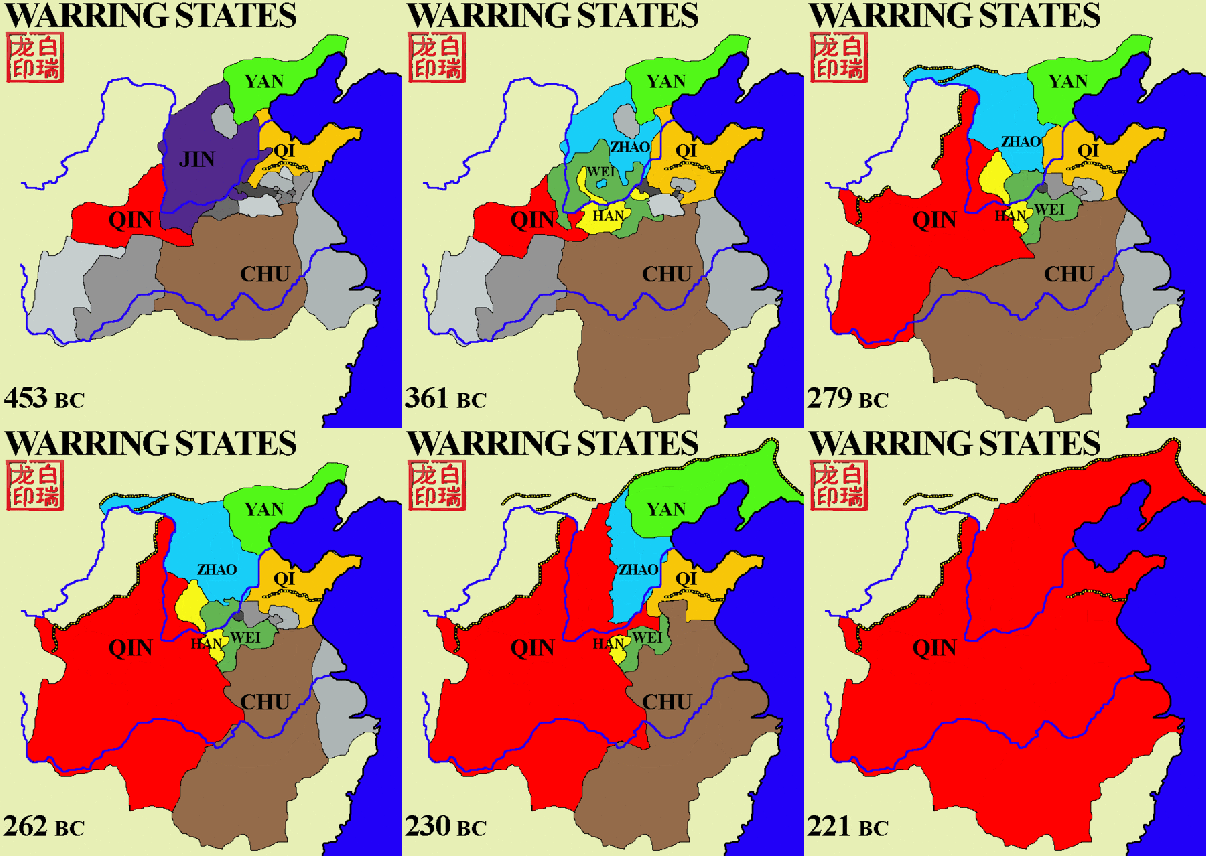
My Heretics podcast has done 3 episodes now on the history of ancient China. We’ve started with the Zhou, then into the warring states period that leads up to the formation of the Qin Dynasty. This is where you start to see a physical map of a Dynasty that actually looks like modern China.

Animated map of the warring states period from Wikipedia:

600px-De_stridande_staterna_animering

Despite ambitions to reign for a thousand years, the Qin Dynasty ended up being very short, but dramatic and introduced the key rulership idea of Chinese Legalism. The Qin Emperor, Qin Shi Huangdi, was buried in a huge tomb which contained the now-famous Terracotta Warrior pictured above.

Here’s the episode:

The man who invented China

While Qin Shi Huangdi created China, he wasn’t liked by the people.  The hardline approach of Legalism didn’t have what it took to hold a geographic area of that size together and his dynasty ended pretty quickly after his death. The next dynasty, the Han Dynasty lead China into its golden age, introducing modern economics in the process. One of the reasons for the success of the Han that it changed government style, introducing something called the Han Synthesis, which enabled people to practice different religious or philosophical traditions at the same time.

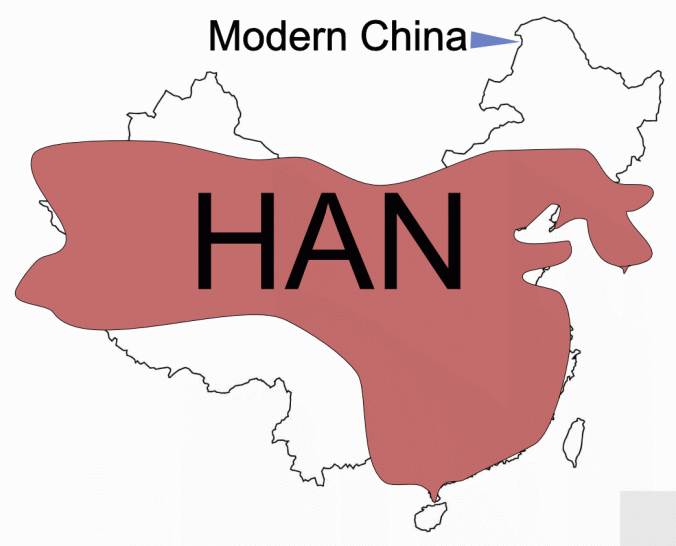
The Han Dynasty saw several conflicts with the invading Xiongnu from the North, in the area we call Mongolia now.

hanmap

Here are the episodes:

The Han dynasty (part 1)

The Han dynasty (part 2)


Xu Xiaodong is back in high thrills Bird Box challenge

xu

I’ve blogged about Xu Xiaodong before – he’s the infamous MMA coach from China who rose to fame by taking on self-styled ‘masters’ of the traditional martial arts and challenging them to actually fight in a ring. The results are as expected – he wipes the floor with all of them.

Chinese martial arts contains many practitioners who have legitimate fighting skills, but the number of imposters is, sadly, huge, so generally, I’m quite in favour of what he’s doing. It’s surprisingly easy to set yourself up as a master of the traditional arts and start teaching people any old thing without ever having tested your moves in a fighting situation. These people need to be called out and I’m glad he’s doing it, but he gets a lot of criticism for only taking on people who are clearly deluded about their own martial ability, and also because these guys are not really ‘masters’ of anything. The government got involved and at one point and I feared we might never see Xu again, but as the most recent video from China shows, it seems like he’s still going, this time up against a man whose only redeeming feature as a fighter is his ability to take a beating.

It’s not clear what style the man is supposed to be represented, but his actions are clearly being hampered by the bandage they apply to his face in the first round, which results in him pretty much fighting blind for the rest of it. Talk about a Bird Box challenge!

l8X3ry2

Xu spends most of the match looking board and letting the other guy hit him without it having any effect at all while destroying his opponent’s left leg with low kicks (the guy has some very nasty bruises on his leg visible at the end). Once Xu has had enough of destroying the leg he ends the whole thing with one well-placed knee strike, and that was all she wrote.

And before Xu gets accused of beating up on an older guy, I believe this challenge was instigated by the traditional martial artist. Xu is also not a young guy.


Japanese martial arts: from the battlefield to MMA

img_2999.png

I’ve written a guest blog post about my Heretics podcast and our history of Japanese martial arts series for Holistic Budo, a blog run by my friend Robert Van Valkenburgh.

Here’s a quote:

After the Tokugawa-era ended with the bloody Boshin war followed by the Meiji Restoration (1868), Japan slowly opened up to the outside world. In fact, it was forced open by the British and Americans using violent gunboat diplomacy, but eventually the new era was embraced by the new rulers and also reflected in a new spirit of openness within the martial arts. Aliveness was back in fashion and innovators like Jigoro Kano breathed new life into the martial arts they inherited using the practice of randori (free sparring). His approach was so effective that Kano went from never having trained martial arts at all, to founding his own style in less than 6 years. Ultimately Kano’s Judo would outshine all the other styles of Jiujitsu and change the course of martial arts in Japan entirely, not to mention the rest of the world.

Check out the whole post here.

One stroke of the brush

niketh-vellanki-202943-unsplash.jpg

Photo by Niketh Vellanki on Unsplash

It says in the Tai Chi classics that the movements of Tai Chi should be continuous, like a rolling river:

Chang Ch’uan [Long Boxing] is like a great river rolling on unceasingly.”

There are a few interesting things to unpack about this quote, taken from the Tai Chi Classic attributed to Chang San Feng. Firstly, it doesn’t call the martial art “Tai Chi Chuan”, instead it calls it “Long Boxing”, which is yet another indicator that what is known as the “Tai Chi Classics” are in fact, just a collection of common sayings about martial arts of the time that have been bundled together.¹ I tend to regard what we know as “Tai Chi Chuan” today, in all its various forms, as the modern expression and amalgamation of older Chinese martial arts; it is an evolution of ideas and techniques, rather than a ‘new’ martial art which was invented in a moment of divine inspiration by somebody having a dream about a Crane fighting a Snake, which is one of its apocryphal origins myths.

Secondly, the image of water harks back to ideas of Taoism, which uses water imagery frequently in its depictions of worldly affairs. The imagery of a river is a good one. And the implication is clear: no stopping. Continual movement.

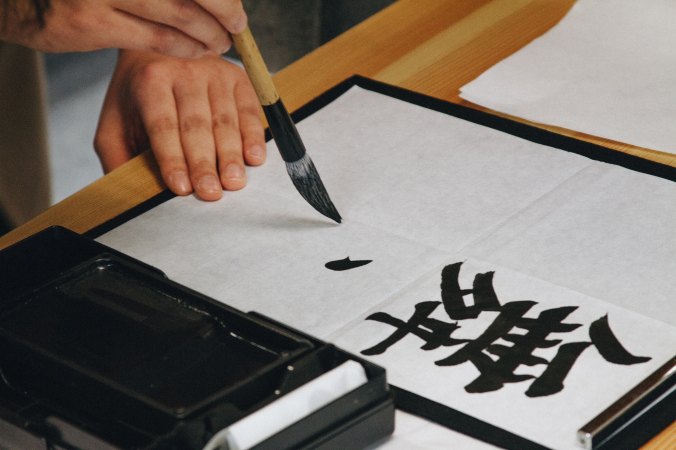
Quite often people who think they are doing a Tai Chi form continuously are not. They’re putting in little stops at the end of movements. My teacher called this “posturing”. A good performance of a Tai Chi form will smooth out all these end points so that the form becomes like a single stroke of a calligrapher’s brush on a canvas.

When approached this way, the Tai Chi form stops being composed of numbered moves which are separate elements. As human beings we’re so ingrained in this type of thinking that we even classify Tai Chi forms with numbers on the end. E.g. the “The Tai Chi 24-step form, the Chen style 48 form, the Yang style 108-posture form, etc..” with the number indicating how many different postures there are in the form. When you do the form as ‘one stroke of the brush’ then the whole form becomes one move from beginning to end. Sure, you move from close to open to close to open, and so on, continuously within the movement, but there is still only one movement.

But why? Well, in terms of aesthetic value, it’s definitely more pleasing to the eye to see somebody who moves like this, but that’s not the only reason. In terms of martial technique, the ability to flow smoothly between techniques is key to being able to respond adaptively to whatever the opponent is doing. If you’ve never put the time into practicing movements smoothly you can’t expect to just pull that skill out of the bag when required.

Another reason is that it’s much easier to learn to coordinate your arms and legs if you can move at a constant rate. It gives you the mental space you need to slow down (which is a whole principle in itself) and become more aware of the movements you’re doing, rather than rushing through them, which creates mental blank spots you may miss.

You need to approach continuity as a task that is going to take you a while to complete. As you do the form become aware of where you’re losing awareness and continuity. Has a hand stopped moving here? An arm become immobile there? Did you pause for a fraction after completing Brush Knee Twist Step? (Here’s a hint, you probably did).

If you make continuity the focus of a complete run through of the form then over weeks and months you can get to the stage where your movement becomes very smooth and even. Now you’re ready to look for a deeper meaning. Consider the aforementioned river – it moves continuously, in that it never stops, but different parts of it move at different rates. Where the river narrows rapids form, where it flattens out the pace is more genteel. The form is like this too. There are faster bits and slower bits – quite obviously in Chen style, but also in the even-paced Yang styles. Let the movements guide you – they’ll tell you where you should naturally ‘go with the flow’. Now your techniques will start to become more realistic and you’ll be able to appreciate the type of movement required to make them work.

As Bruce Lee said. “Be like water, my friend”.

¹. See Douglass Wile’s Lost Tai Chi Classics from the late Ching Dynasty


Q&A with Michael Babin

michael

I’ve known Michael Babin (online) for a number of years, and always enjoyed his insights into online discussion forum arguments and martial arts in general. Michael lives in Canada and may, or may not, be a retired Tai Chi teacher. Do we ever retire? Now David Roth-Lindberg, another online friend, has done a Q&A with him and published it on his blog, Thoughts on Tai Chi.

It’s worth a read as Michael has quite a few insights into the world of being a Tai Chi teacher and his dry sense of humour always amuses me.

Q&A with Michael Babin

Michael’s blog

Thoughts on Tai Chi

Happy New Year! Here are my most popular Tai Chi Notebook posts from 2018

As we enter 2019, the year of the earth pig, let’s look back on the last year with the most popular posts on this blog each month.

Note: These are based purely on the audience figures, not on being the ‘best’ stories of the year. As such it gives you an interesting picture of what people are searching for, or find most interesting on Tai Chi Notebook.

January:

Old Wu Style Tai Chi video

“A video surfaced recently of an old performance of Wu style Tai Chi from a gentleman called Cheng Wing-Kwong (1903-1967), who was a disciple of the Wu Jian-Quan, the founder of Wu style Tai Chi.”

13h_e

February:

How meridians relate to Tai Chi

“I think that somebody doing some background research into “Tai Chi” inevitably ends up looking at a picture of the “acupuncture meridians” and starts to wonder how they relate to Tai Chi Chuan.”
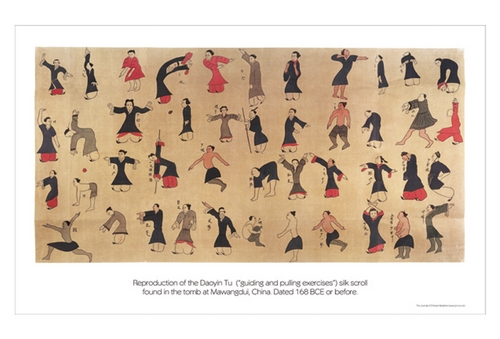
mawdaoyinpos

March:

Wing Chun (Ding Hao) vs MMA (Xu Xiao Dong), in China

“After his fight with the “Tai Chi master” Wei Lei, which rocked the contemporary martial arts scene in China, Xu Xiao Dong, the MMA fighter on a mission to expose “fake masters” is back on the scene this time showing his skills against a Wing Chun fighter.”


April:

The post Wave hands like clouds was actually written un 2016, but it has consistently been one of my most popular posts, and this month it rose to the top again.

“A look at the Cloud Hands movement of Tai Chi, and what it’s really all about”

11_cloudhands

May:

The post Tai Chi vs BJJ in China was actually the most popular by just 4 views, but the video has since been removed, so just 4 views behind we have:

Forrest Chang’s “Stupid Jin Tricks” video

“This is a great video from Forrest Chang showing what Jin is in Chinese Martial Arts and how it can be used.”


June:

Thoughts on an interview with Wang Yan, head coach of the Chenjiagou Taijiquan School

“Born in 1990, Wang Yan became head coach of Cheng village training centre in 2013 and is as a Taiji fighter as well as a coach, not to mention an expert in forms. He was one of the “nine tigers” – the best nine students of Chen ZiQiang. There’s an interview with him in English on Chen Taijiquan blog, with some great pictures from his private collection. The interview is pretty long, but there are lots of really interesting insights into his daily training, San Da competitions training and how exhausting it all was!”
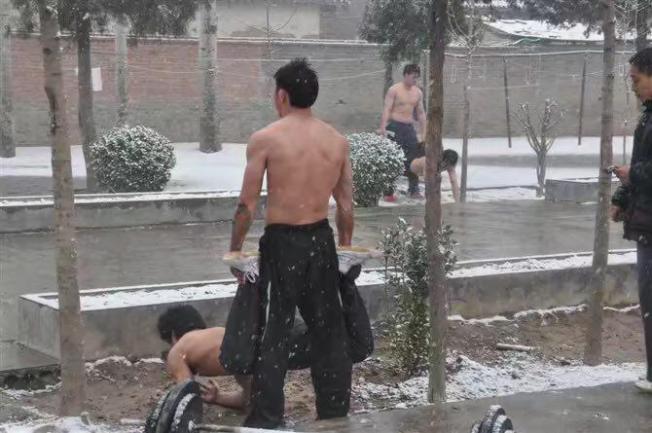
wang-yan-6

July:

Does Cormier’s dirty boxing point the way for CMA in MMA?

“I’m always looking for ways that the sticky hands-like training found in Chinese martial arts like Tai Chi Chuan, Wing Chun, Praying Mantis, White Crane and Hung Gar, where contact between the forearms or hands is maintained and the practitioner is encouraged to ‘listen’ to the movements of the opponent through this contact, can be used in MMA.”

MMA: UFC 226-Miocic vs Cormier

August:

Book review: Internal Body Mechanics for Tai Chi, Bagua and Xingyi, by Ken Gullette

“Anybody who has attempted to learn Tai Chi in any depth instantly realises that the choreography of a form is just that – choreography – and that the devil is in the details. Internal Body Mechanics is all about the details: How you move, what you move and where you move it to.”
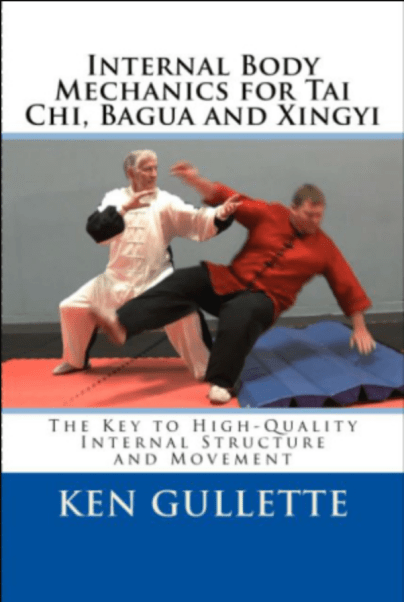
Screen Shot 2018-08-08 at 12.02.27 PM


September:

This month the review of Ken Gullette’s book was again the most popular post. The next most popular post was this one:

The whole Chen Tai Chi curriculum, in video form

“Well, this page is interesting. It’s from Chen Bing, a Chen family member who is based in Los Angeles, USA, and from the looks of things, and it looks like a video reference for the whole Chen style Taijiquan curriculum!

October:

What makes Xingyi’s Bengquan different to a normal straight punch?

I got into a discussion about Bengquan, one of the 5 fists of Xingyiquan, a Chinese martial art I’ve written about before, recently, which prompted me to consider what really made a Bengquan different to a regular straight punch that you’d find in any number of other martial arts. I thought I’d just jot down a few of my ideas about it, because that forces me to organise my thoughts, but it has turned into quite a long post. So, apologies for that, but I’m going to post it anyway 😉

human fist

Photo by Pixabay on Pexels.com


November:

Once again, the post Wave hands like clouds rose to the top again this month, but the next biggest post was part 2 of the article above, What makes Xingyi’s Bengquan different to a normal straight punch? Part 2: The bow draw.

Following on from my previous post about Bengquan, one of the 5 Element fists of Xingyiquan, I want to take a closer look at some of the internal characteristics of the strike.
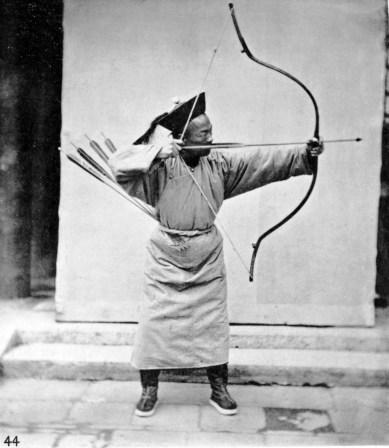
manchu_soldiers_2

December:

Aikido Heresies. The dark side of Aikido.

“Just remembered I didn’t post about the last Heretics podcast we did. This one was about the history of Aikido. I thought it would be quite a light-hearted one, but as Damon explains, it turns out the history of Aikido, and its parent art Daito Ryo, is largely unknown to the average martial artists (i.e. me) and also pretty dark and nasty. Very nasty.”

1282637968030010200


Qin Shi Huangdi, the man who created China.

In the last episode of the Heretics podcast for 2019 from Damon and I, we look at the deeds of Qin Shi Huangdi, the man who created China.

150px-Qin_shihuangdi_c01s06i06

“Qin Shi Huangdi’s name, Qin (Chin), is the origin of the word China, and with good reason – he was the man who unified the states that collectively formed China. A vicious madman, his dynasty lasted for only about 15 years, but set the tone and structure of China’s civilisation for more than two thousand years.”

Topics covered also include Taoism, Confucianism, Chinese Legalism and military tactics.