The best martial arts instructionals you’ve never seen

Photo by Nafis Abman on Pexels.com

Regardless of what style of martial art you do, there are some things that are common to “the fight” that anybody who is doing martial arts should learn. Most people in the internal martial arts (Tai Chi people, I’m mainly looking at you) are obsessed with body dynamics, mechanics and movement, and never take things further than a bit of compliant push hands type interaction with. a partner. The thing is, there’s a whole other world out there. A world of strategy, timing, play, feel, interaction with another person. Unfortunately, it’s also a world of pain. In my martial arts training I’ve been knocked unconscious, broken my own bones and broken other people bones, all in the kind of unplanned accidents that inevitably happen if you engage in those sorts of activities. These days I try to keep injuries to an absolute minimum. Fighting is a young man’s game, but there are ways to keep some of the ‘aliveness’ of sparring into your old(er) age without losing touch with reality completely, because that’s what happens if you give up the rough stuff – your training inevitably tends towards the delusional.

I don’t want to start a sport vs street debate, but it’s plainly obvious to me (or I would add, anybody with a brain) that sport fighting offers insights into what “the fight” looks like that you can never get from doing “self defense” type drills on pads or dummys or people dressed up in so much protective gear that they look like a cross between a walking pad and a dummy that can just about shuffle around like a zombie.

Thanks to video one thing you can do is learn from other people who do sport fighting at the highest levels, so you can try and garner their insights without having to pay the price yourself. To me that seems like the clever thing to do. I just wanted to give a shout out to Jack Slack’s “Filthy casual’s” guides in this matter, because I think they are some of the best martial arts instructionals that most people have never seen. Jack analyses MMA and boxing matches and comes up with some great insights into what makes one person more successful than another at the fight game. The name “filthy casual’s” is an indication that they’re aimed at the casual MMA fan, not the experienced pro, so they’re always accessible. Jack has handily put all his guides together into a playlist, so if you’ve never watched one, then sit back and enjoy because you’re in for a treat!

Of course, watching video is no substitute for doing it yourself, but in these times of social distance and lockdown, we’ve got no other choice.

The heretical history of Tai Chi Chuan (Taijiquan)

The 98th Regiment of Foot at the attack on Chin-Kiang-Foo (Zhenjiang), 21 July 1842, effecting the defeat of the Manchu government. Watercolour by military illustrator Richard Simkin (1840–1926).

The history of Tai Chi Chuan (Taijiquan), rather than its actual practice, is one of the most controversial subjects to do with the art. Various different groups have tried to claim Tai Chi as their own, and considering the amount of money involved in the art it’s very hard to know who to trust in this matter.

In this podcast we’ve tried to look objectively at the facts, and the result is that it doesn’t look good for anybody, especially the British 🙂

The history of Tai Chi Chuan is a subject I’ve wanted to tackle on our podcast for a while, but now (thanks to one of our patreons, Gabriel) it’s finally a reality.

In this episode we begin a new series of episodes on this subject by setting the scene and historical background to the mythmaking around the origins of Tai Chi that occurred starting from the middle of the Nineteenth Century in response to social turmoil and unrest exemplified by the Taiping Rebellion and Opium Wars.

The Taiji principle didn’t work well. 4 oz could not defeat 1000 lb.

Here’s an interesting post, complete with pictures, by David Ross of NY Sanda about the Lei Tai tournaments in China in the 1920s. These were supposedly the first organised national martial arts championships. They would have been part of the GuoShu movement of the Republic as they set about using martial arts to strengthen the nation.

The following are some quotes said about the tournament, from his post. I’m just providing them here without commentary. I leave it up to the reader to draw their own conclusions.

Some quotes said about the tournament:

– 这次比赛没有看到高深的内功,没有发人于丈外的场面
You don’t see high level internal power, and Faijin that send people flying 10 feet away in this tournament.

– 太极打法毫无建树,四量难拨千斤
The Taiji principle didn’t work well. 4 oz could not defeat 1000 lb.

– 也就是说号称以巧取胜的中国功夫 实际上也是在跟人拚勇力比高大
The taller, heavier, stronger guys won in that tournament.

– 要学打擂台的拳术
After this tournament, people wanted to learn the style that can be used on the Leitai.

Authenticity and competence in Chinese martial arts

Photo by ArtHouse Studio on Pexels.com Does his performance look competent to you? What about authentic?

As noted at about 6.58 in this lecture on Tao Lu (forms) by Daniel Mroz, which I find myself coming back to frequently, martial artists, when evaluating others, are primarily concerned with two things: 1. authenticity and 2. competence.

Firstly, to be “good” a video clip showing a form performance, or sparring sequence must be authentic, by which I mean it must be clearly demonstrating the martial art style it claims to be. Evidence for this can be found amongst the many howls of “that’s not even Tai Chi!” That lie in the comments section beneath any video clips pertaining to be Tai Chi shown in some sort of real, full or semi-contact application.

Even competence, without the necessary authenticity to back it up, is thrown out.  Imagine the horror of a kick boxing clip accidentally labelled “full contact Wing Chun” leaking onto the Internet for example. People would get very upset. And it would inevitably lead to accusations that “You are destroying the very art itself!”, regardless of whether the techniques shown were competent.

Authenticity, then, is the most important thing. But who is to judge the authenticity of a performer? Quite often it cannot be seen in their performance, but is inferred by their lineage.  One of the many reasons that lineage is such a big deal in Chinese martial arts, and not such a big deal in other martial arts that have a more sporting focus, is that it confers legitimacy. Any authenticity gathered by being able to overpower somebody in a confrontation (whether cooperative, staged or real) is instantly rendered null and void if it turns out that your teacher’s teacher was a DVD player. In contrast, martial arts that have a sporting side can derive their credibility from competition results instead, so lineage is not such a big deal.

Sometimes the aesthetics of the situation can speak to authenticity. Chinese martial artists often wear silk pyjamas and sippers, despite their complete lack of suitability for opening a can of whoop ass in, but they do confer the image of authenticity. Then there’s the ethnicity. Being Chinese clearly gives you an advantage in the authenticity stakes. These are, after all, Chinese martial arts.

But once authenticity is established, what next? We then look to competence. Does what they are doing look competent? i.e. would it work. And often this is where most martial artists, who exist in a modern Wu Shu culture that has no concept of a punch to the face being a regular and valid occurrence, seem to have the most trouble. 

Chinese television regularly ran TV shows where state-approved martial arts masters presented themselves doing completely ridiculous things, like single-handedly beating a bunch of rugby players at rugby, or stopping a bird taking off from the palm of their hand because of their advanced sensitivity. Beating strong men in strength contests. Even beating a Judo player at Judo. This was not done with a sense of comic irony, as it would be in the West. The viewer was expected to take these things at face value, and it seems that a lot of people actually did. Including many Western martial artists who posted these tragicomedies as proof of the untapped potential of the internal arts. (See my recent post for more of this phenomena).

Competence then, like beauty, is also, it seems, in the eye of the beholder. 

What is to be done about this situation? Probably nothing. It always was thus, and probably always will be.

However, you can start to notice when you fall into the same trap. You can bet that 90% of the arguments you find on martial arts discussion forums are not about the thing itself being discussed, but about what the thing is called. Take away the name of the video clip, martial art or subject and you remove the majority of issues of authenticity, and you are often left with only competence to discuss, but as we’ve seen, even that is subjective. Still, I would argue it makes for a better discussion.

Authentic and competent? You decide. Photo by ArtHouse Studio on Pexels.com

Can traditional martial arts survive COVID-19?

Photo by Tim Mossholder on Pexels.com

There’s a great article over on Kung Fu Tea (Chinese Martial Studies) that talks about the long term impacts of the COVID-19 pandemic on martial arts training, but as usual takes in a lot of other stuff.

I really like this quote:

“Setting questions of charlatans, deluded masters and outdated training methods aside, I am going to hypothesize that even in the best-case scenario, there is a pretty simple reason why professional boxer/mma fighters will always beat the traditional martial arts master in those YouTube videos.  It comes down to specialization, or simply putting in the hours.  All else being, equal the individual who trains all day for one task will be beat the individual who trains for four and then runs an afterschool program to pay the bills.  It is a mathematical fact, and the reason why ever-increasing degrees of specialization have become the dominant paradigm for social development in the current era.”

Invest in Loss: Hope for Traditional Martial Arts

Of course, the question of “deluded masters” is quite a large one. Or maybe it only appears that way because of the media exposure these events create.

But his point is that traditional martial arts have to be all things to all people. MMA, boxing or San Da classes are designed to develop a very specific set of skills, and are full of people who all want to do the same thing. Traditional arts tend to have all sorts of different customers, and provide varied social functions, including kids classes. This obviously has disadvantages for the traditional arts when it comes to competing against practitioners of highly specialist fighting arts

“All else being, equal the individual who trains all day for one task will be beat the individual who trains for four and then runs an afterschool program to pay the bills.”

Invest in Loss: Hope for Traditional Martial Arts

However, Ben’s argument is that it gives the traditional arts more flexibility, both economic and organisationally, when it comes with dealing with the challenges thrown up by the global pandemic.

Narrow specializations presupposes economies of scale that may be achievable in some-times and places, but not others.  In periods of prolonged economic contraction a neighborhood martial arts schools which can do a little bit of everything might have a better chance of surviving than the large BJJ academy focused only on competition, the reality fighting school focused only on paramilitary knife/gun defense ,and the Wushu program with an emphasis on gymnastics.

Invest in Loss: Hope for Traditional Martial Arts

The invention of the Samurai

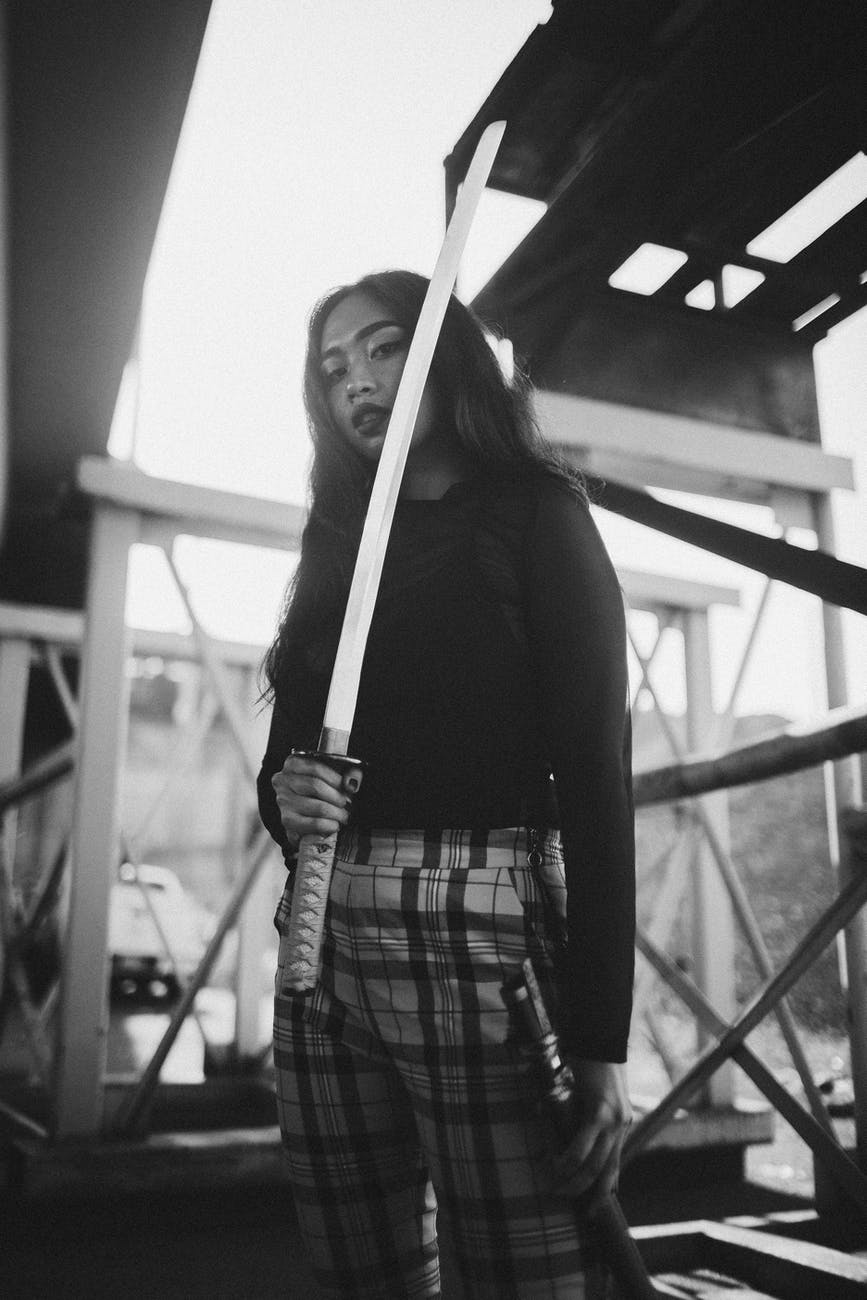
grayscale photo of woman holding katana

Photo by Jermaine Ulinwa on Pexels.com

I wrote a short post for Cook Ding’s Kitchen blog the other day about our Heretics series on the history of Kempo and Jiujitsu.

If you’re interested in the history of Japanese martial arts then I would also recommend this talk by Dr Oleg Benesch on the Martial Studies podcast, which talks about a lot of the same stuff, particularly the interplay of Western and Eastern ideas after 1852, the invention of the ideal of the honorable Samurai warrior and, most importantly, castles!

Finding the blind spots in your Tai Chi

high angle photo of mountain cover with clouds

Photo by Heorhii Heorhiichuk on Pexels.com

We all have blind spots. If you went outside and did your Tai Chi form right now I can guarantee you there’s a bit of it that you’ve never really paid attention to. I don’t mean something big, like a whole movement, but there will be lots of little spots which you’re glossing over your form without full awareness.

Try this as an exercise: Go through your Tai Chi form right now, but as you do each posture pay attention only to the way the joints of the body open and close. But here’s the thing – I’m not saying, make them open and close.

This is a crucial difference. If you try and make them open and close you just end up ruining your form, or being “too physical” as my teacher likes to say. Just use your awareness to be the silent observer of yourself as you do the form. And try and focus that awareness on the way your joints are opening and closing. Pick the easy ones to start with – the shoulder/hip, elbow/knee and ankle/wrist relationships. Try and see if you can maintain awareness of all 3 pairs and how they open and close as you move through the postures. The postures, done correctly, are designed to allow them to open and close – there’s nothing extra you need to add. If that’s too much too mentally juggle at once then just pick one pair to be aware of for the entire length of the form. Shoulders and hips is a good one. There are many more ‘joints’ to be aware of, of course, but that will do for now.

I don’t want to spoil the experience for you, so if you’d like to discover what this training method can do for yourself, then stop reading here and come back when you’ve done it.

view of elephant in water

Remember that joke – ‘Don’t think of an elephant’? This picture reminds me of that. 🙂               Photo by Pixabay on Pexels.com


Still with me? Ok, let’s go on…

What I find when I do this is that the simple act of being aware of something changes it, without me having to do anything. For me, this exercise highlights the areas of the form that I’ve been glossing over, and from that awareness, a new form begins, one that is more complete and better.

As the great Taoist sage Lao Tse wrote:

10

Can you coax your mind from its wandering

and keep to the original oneness?

Can you let your body become

supple as a newborn child’s?

Can you cleanse your inner vision

until you see nothing but the light?

Can you love people and lead them

without imposing your will?

Can you deal with the most vital matters

by letting events take their course?

Can you step back from you own mind

and thus understand all things? Giving birth and nourishing,

having without possessing,

acting with no expectations,

leading and not trying to control:

this is the supreme virtue.

In fact, that’s just one example, the whole Tao Te Ching is full of the benefits of this sort of  Wu-Wei “non-action”.

These blind spots in your Tai Chi are usually found in the transitions between what we think of as “postures”. The in-between bits. The space between the notes, as the great French composer Claude Debussy famously said, was where the music is found.

This discovery poses an interesting question not only for your Tai Chi, but for your life too. Where are your blind spots? What are you not really paying attention to? I think you know what to do now.

Mark Chen on Chen Taijiquan’s history

Screen Shot 2020-05-30 at 10.01.45

This podcast interview of Mark Chen by Ken Gullette is a real gem. If you haven’t listened to it before I’d really recommend it. It starts with a basic run-through of who taught who and in what order, and who all these people are, but then gets really interesting about halfway through when it talks of some of the more heretical things, like what happened during the utter insanity and madness of the Cultural Revolution in the 1960s. A period which is ignored by almost all Chinese martial artists. It’s just something that is not talked about these days – almost a non-subject, and those non-subjects always fascinate me.

There is also a section on the famous “Peng Lu Ji An” list used to describe the “powers” of Taijiquan, and the characters used. There are also some good thoughts about Taijiquan training and what Taijiquan is really all about. Overall this is an excellent podcast and shouldn’t be missed by anybody.

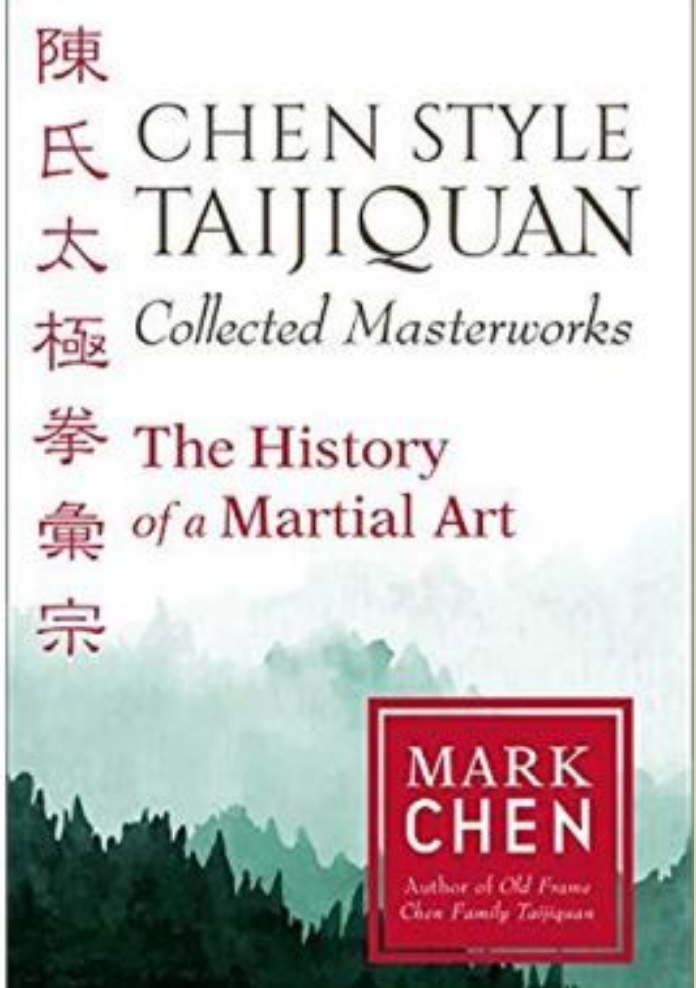
Mark’s book is a translation of most of the book by Chen Zhaopi’s book, published in 1935 and is available on Amazon in print and digital formats.