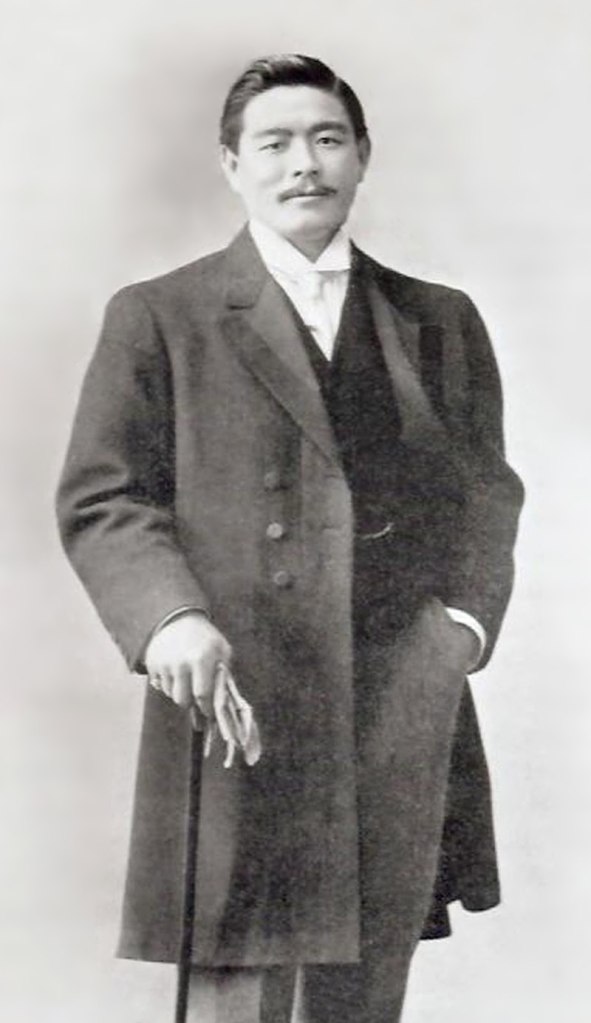
It’s Carlos Gracie’s birthday today, or it would be if he was still alive. Carlos Gracie is the man who is perhaps solely responsible for BJJ existing in the modern world, as a separate entity to Judo, which is something we should all be grateful for. He would have been 118 today. Because of this my Facebook feed is currently flooded with inspirational quotes from Carlos Gracie – particularly “Be so strong that nobody can disturb your peace of mind”.
Carlos Gracie
Unfortunately, like a lot of the stories that have built up around him, and his brother Helio Gracie, the true story is different to the myth. In fact, he stole that quote (and all his other philosophical ramblings) from a short poem called the Optimist Creed written by Christian Larson, an American New Thought leader in 1912. *
The story we are told by the Gracie family is that Carlos learned from the famous Mitsuyo Maeda – the “Count of Combat” – a famous student of the founder of Judo, Jigoro Kano, who was in Brazil teaching Jiujitsu and engaging in prize fights for money.
Mitsuyo Maeda
In a parallel to the Yang LuChan story, we are also asked to believe that Carlos’ younger brother, Helio, who was too weak and sickly to learn Jiujitsu in classes, managed to learn the whole art by simply watching Carlos train.
In reality, Maeda had come to Brazil to retire, and there’s very little evidence he actually met Carlos at all. Helio Gracie was not weak or sickly – he was an athlete, a champion swimmer. True history is never simple, it’s always complicated and the history of BJJ is no exception. Without Carlos Gracie though, and his resistance to folding his Brazilian branch of Judo into the Japanese version, there would be no BJJ today, but it might be time for a more honest look at his legacy.
You can find out more about the true history of Carlos Gracie in the Sonny Brown Breakdown podcast where BJJ legend Robert Drysdale discusses his new upcoming film Closed Guard, about the history of Brazilian Jiujitsu.
The website for Closed Guard by Robert Drysdale.
The full text of the Optimist Creed is as follows:
The Optimist Creed
Promise Yourself
To be so strong that nothing can disturb your peace of mind.
To talk health, happiness and prosperity to every person you meet.
To make all your friends feel that there is something in them.
To look at the sunny side of everything and make your optimism come true.
To think only of the best, to work only for the best, and to expect only the best.
To be just as enthusiastic about the success of others as you are about your own.
To forget the mistakes of the past and press on to the greater achievements of the future.
To wear a cheerful countenance at all times and give every living creature you meet a smile.
To give so much time to the improvement of yourself that you have no time to criticize others.
To be too large for worry, too noble for anger, too strong for fear, and too happy to permit the presence of trouble.
We couldn’t resist doing a podcast episode about Cobra Kai, the modern TV series version of the classic 80’s martial arts film Karate Kid, so here it is.
I think I keep getting the names of the two protagonists mixed up, but who in their right minds makes a TV series with two lead characters who have such similar names as Danny and Johnny? Oh well, that is the beauty of the Netflix TV series that is Cobra Kai!
Here’s a good interview with Prof. Paul Bowman, which I think acts as a useful introduction to te field of martial arts studies for the beginner, and how it interacts with some current thoughts and trends in society like Black Lives Matter, UFC, Bruce Lee and Conor McGregor.
Topics include:
* Is cultural studies trivial? * Why have you done so much research on Bruce Lee? * The response in the field of cultural studies to martial arts studies. * Accessibility in academia. * How academic publishing differs from vanity publishing. * How podcasting is pushing the conversation forward in martial arts studies. * The impact of the popularity of the UFC on martial arts studies.
I recently reviewed Mark Chen’s book “Chen SyleTaijiquan Collected Masterworks” which is a really good translation of Chen Zhaopi’s 1935 book on Taijiquan with additional translation notes from the author and appendices on Tai Chi matters. It’s a good book and he did a great job. That should be the end of it, but I’ve somehow got dragged into a side issue.
As part of my review I did notice that some included documents, called “Chen Chanxing’s Discussion of Taijiquan’s 10 main points”, that Chen Zhaopi attributes to his ancestor Chen Chanxing, were in fact the 10 Thesis of Yue Fei, but with the name “Taijiquan” unscrupulously inserted into them and Chen Chanxing attributed as author.
These documents are widely known as the “Xing Yi Classics” or “The 10 Thesis of Yue Fei” – and while nobody really thinks, or can prove, that Yue himself wrote them, they’ve always been associated with the martial art of Xing Yi/Xin Yi – there is simply no debate about this. I raised this issue in my review.
Mark has posted a response to this issue in my comments section, which I’ll address in full here:
“Thanks to Taichi Notebook for the review and thanks to Mike for his thoughtful comments. As a point of clarification, please note that I do not make the assertion that the “Ten Main Points” was written by Chen Changxing (though the version in the book was obviously written or adapted by a taijiquan partisan). My introductory remarks for chapter 3 say that it “may” have been written by Changxing, and in the preface I indicate that this attribution is used throughout the book for convenience. I further allege that the document “plausibly dates to Changxing’s lifetime,” and the argument for this is given in appendix C.
OK, he’s factually correct about this, (except for calling Mr Sigman’s comments “thoughtful” 😉 ) but he’s taken a position worthy of a modern politician, I feel. He’s simultaneously leaving enough room to wiggle out of saying Chen Chanxing wrote the 10 Main Points (dropping just one single “may” in the book, before making the assertion several times) while at the same time doubling down on the inference that it is true because the time period fits.
Mark continues:
“Regarding Li Jianqiu’s claim (in his 1919 book) that it was written by Yue Fei: while it is certainly possible that the document was written by someone other than Changxing, it was written by Yue Fei only in the same sense that the “taiji classics” were written by Zhang Sanfeng; that is, it was not written by Yue Fei. First, its idiom clearly belongs to the nineteenth century (a fact that is easily discernible in the original Chinese). Second, it quotes from Ming dynasty sources. For example, the passage beginning, “can go, can accomplish, . . .” on page 31 of my book is lifted directly from Zhuge Liang’s delightful letter to Cao Zhen in chapter 100 of _Romance of the Three Kingdoms_ (as far as I know, the only instance of epistolary homicide in recorded history). Other similar references are noted in the book, and while they could theoretically have been taken from pre-Song historical texts (specifically, the _San Guo zhi_), this is not likely the case. General readers were unaware of the cited events until the publication of _Romance_ during the Ming dynasty, so the references would have been meaningless before that time. As another example, the expression _shen fa_ (“body technique”) is a term of art originating in Qi Jiguang’s “Quan jing”–again from the Ming dynasty and further evidence of a taijiquan connection.
First let’s deal with Mark’s strawman argument of Yue’s authorship. Nobody sensible these days is claiming that this is true, so let’s not get distracted. The way Mark draws a parallel between Chang San Feng and Yue Fei is interesting though.
I’ve heard this comparison between Chang San Feng and Yue Fei before. For sure, Yue Fei didn’t write the Xing Yi classics, but they certainly do embody his philosophy – which we know in detail because he was real. The Tai Chi classics have got nothing to do with Chang San Feng’s philosophy, especially because he never existed, whereas there is incontrovertible evidence that Yue Fei was a real, flesh and blood person.
The point about citations from Ming Dynasty works being supportive of a Tai Chi origin of the Xing Yi classics is very strange – maybe I read it wrong, but the postures mentioned in General Qi’s Ming Dynasty manual are in virtually everything – there are more variations on single whip in Baji than there are in Tai Chi, for example.
Richard Dawkins made the criticism that comparisons between imaginary details of imaginary things seem to be more important in religion than is the actual existence or otherwise of those things. It’s a really good observation, and I think 100% true when people start to defend the religion of Taijiquan.
But the real elephant in the room is the content of the 10 Main Points/10 Thesis. Theses are replete with Xing Yi terminology, but there is very little Tai Chi terminology. Mark himself notices this and remarks upon it in his book! I would offer a simpler explanation: Perhaps the reason why these writings are so untypical of Taijiquan is that… they’re not about Taijiquan?
And then there’s the long history of these writings being associated with Xing Yi both in a literary and oral tradition, which Mark completely ignores.
Here are just 3 examples of quotes from the 10 Thesis from the literary tradition on Xing Yi to establish my case:
“While once at Bai Xiyuan’s home in Beijing, I got to see one of the Yue Fei manuals, not an original copy of course, but a handwritten copy made by someone in a later generation. “
While we don’t see his copy of the manual in his book, it establishes the tradition of this hand copied manual attributed to Yue Fei coming down the generations.
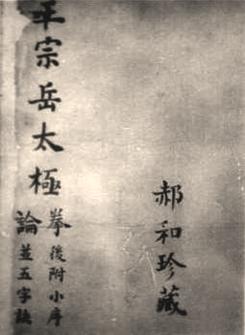
2. Li Jianqiu’s “Xing Yi Manual” (1919)
As mentioned before, this 1919 Xing Yi manual contains all 10 chapters of the 10 Thesis in its entirety. They are at the end of the book:
And inside, in a preference written by Zheng Lianpu it states:
“In the summer of 1915, I returned south, and as I passed my hometown, people praised me as a prominent expert for making a study of the contents of Yue Fei’s boxing manual. Within it are nine chapters of essential principles and one chapter on fighting. Although the content of the writing is not without its flaws, the style of the writing is marvelous, powerful, and smooth, and as suits the work of Yue Fei, the theory is refined and thorough. It is certainly not the case that Yue Fei was unable to communicate. I say that equipped with this old Xingyi manual, you too will obtain such a level of clarity.”
3. Liu Dianchen’s Selected subtleties of Xingyi Boxing Art (1920)
This book from 1920 quotes freely from “The manual”, which is, of course, Yue Fei’s 10 Thesis.
E.g. “The Manual says: “The hand lifts like an arrow and drops like the wind, chasing the wind and pursuing the moon without letting up.” It also says this on the quickness of the hand techniques: “Attack where he is unprepared and appear where he does not expect. Do not fear his vigor and fierceness, for with but a move he is defeated.” “
This is from Thesis 9, the Thesis of Stepping.
Mark continues:
“In view of these and related observations, it is nearly certain that “Ten Main Points” was written in the nineteenth century. If it did not originate in Chen Village, then the arguments in my book’s appendix C indicate that it was adopted there around or before the middle of that century. So we can further assert that if any borrowing occurred, it happened roughly during Changxing’s lifetime.
Finally, it’s worth noting that Mike’s comments are generally correct. As I explain at length in appendix B, many martial-arts things (particularly from the Central Plain) lack a tidy provenance, and “Ten Main Points” may well be an example of a document that was exchanged and adapted by many hands over time.”
Yes, I think that’s exactly what it is!
A version of it has possibly ended up in the Chen village at some point and been adapted. However, I think I’ve shown that the oral and literary provenance unequivocally connects it to the martial art of Xing Yi/Xin Yi explicitly, not Taijiquan. Mike’s argument (as I understand it) is that the 3 internal arts are all the same “stuff”, so what applies to one applies equally to all 3. I’d disagree. I’ve already posted about how this mashing together of history is just intellectually lazy. In reality, most Tai Chi people know very little about Xing Yi but they feel like they are authorities on it because they know the “main thing” in the internal arts, (according to them).
Like I said, Mark’s book is great – you should get it. He’s said his piece about my review, which is fair enough, but personally, I disagree. C’est la vie. I’ve little enthusiasm for getting into a long protracted debate over it with either Mark or Mr Sigman because I don’t know what else there is to say, so hopefully they’ll just let it be.
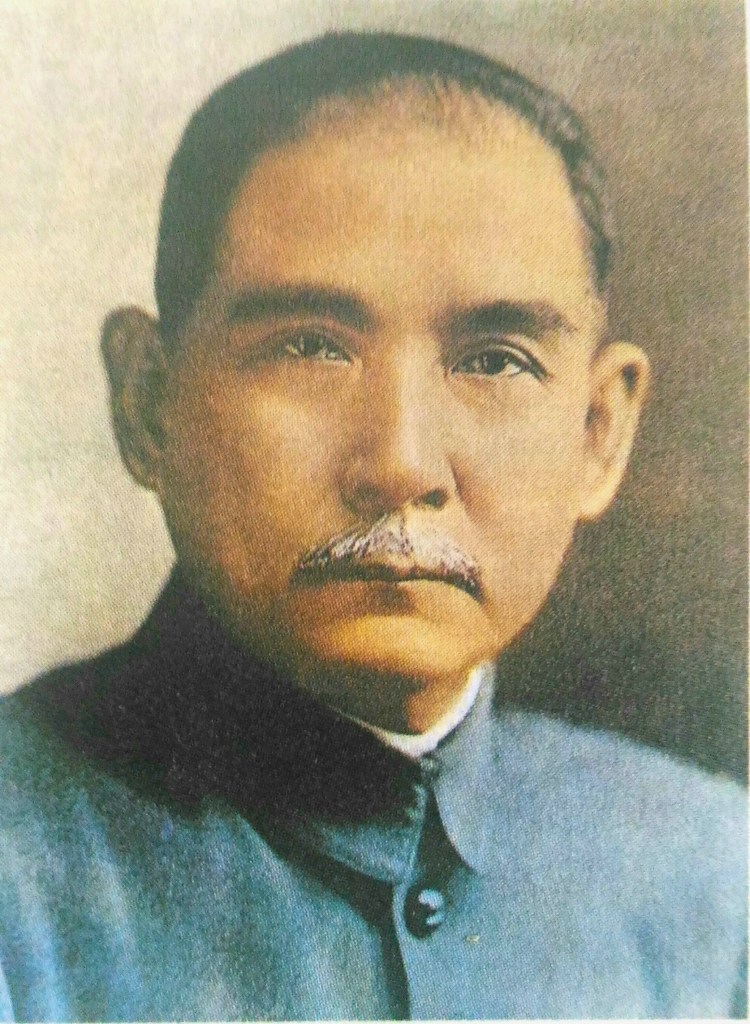
Sun YatSen, the provisional first president of the Republic of China and the first leader of the Kuomintang the Nationalist Party of China.
In our last look at Tai Chi for a while, we examine the context of the times in which Chen Zhaopei and Chen Fake became prominent for their martial arts in Beijing, and then at a national level, joining the wave of commerciality that had been originally instigated by the legacy of Yang Luchan and the Wu brothers. In addition we explain why the forms are similar in general order between the Yang/Wu and Chen lineages.
Here’s some Chen Canon Fist (mentioned in the podcast episode, posted here as a visual reference) – – under the Heretical Hypothesis this would be representative of the “original stuff” of the Chen village. Everybody is free to make their own mind up 🙂
Interesting comment from Mike Sigman on my blog. No, that’s not him in the picture, I just though it was a funny picture 🙂
….The real problem with a lot of these theories that basically denigrate the Chen-style Taijiquan as being “only an offshoot of something else” or “it’s really a Shaolin art” is that none of the westerners engaged in those musings have any minor skills in how to move the body in the way that the Chen-style Taijiquan does. It really doesn’t matter that “Chen-style has umpteen of the same techniques/moves shown in the XYZ style of martial-art” … the essence of the Chen-style Taijiquan is in how the body moves, using jin, qi, dantian, and silk-reeling.
So, if you listen to our Heretical Hypothesis, I think you’ll find that although we’re challenging the usual narrative of the origins of Taijiquan, we’re not really denigrating Chen martial arts, calling it an offshoot of something else, or “Shaolin” (as if that’s so bad). In contrast I think it’s actually quite positive about what it really is. It’s the brand name “Taijiquan” that is looking less authentic, not Chen village martial arts.
Chen village has a long history of marital prowess. If we’re talking around the time period we’ve got up to in the podcasts (- around 1900) – then at this point I’d say Chen village style is a genuine badass martial art – it’s practitioners are bodyguards, militia fighters and people with the name Chen are tracking down and fighting “bandits” (Or “freedom fighters” – as usual, it often depends which side of history you are looking at them from) for the Ching as ‘guns for hire’. In contrast, the “Taijiquan” passed down from Yang in Beijing is a kind of court-sanctioned entertainment. Sure, Yang had genuine skills but it’s much of a domesticated experience compared to the “in the wild and doing it” Chens.
From my point of view that’s not denigrating it at all, it’s lifting it up. Around 1900 you’ve got people like Chen Yanxi being employed full time as a martial arts teacher in Shandong by General Yuan Shikai because of his reputation as a badass fighter.
On the second point – I agree – the Chen style moves differently, especially the silk reeling, and it that very well might be because Yang LuChan never even went to Chen village. That explains so much.
Here’s an interesting criticism of the Heretics Hypothesis from blog reader Tom:
“I’ve enjoyed Damon’s monologues in this series on taiji. I think people understand the history given is just Damon’s interpretation, unsourced. The unfortunate part of the narrative is that some key assertions are made that are not true. Wu Yuxiang met Yang Luchan in Yongnian County before Yang went to Beijing. We actually don’t know whether WYX ever went to Beijing. WYX’s older brother did have a position of some importance in the Qing imperial administration, but it was at the county level as a magistrate. There is no extant written record, in a bureaucracy of exhaustive written records, of any of the Wu brothers in Beijing during this time. By contrast, we do have references for YLC appearing in Beijing and being called in to demonstrate at a banquet being held at the mansion of the wealthy Zhang family, purveyors of pickles to the Imperial court (and connected to the Wu brothers …. Damon should look at the sources available for this connection, because it helps support his thesis more clearly than what he’s established only by inference so far).”
There’s a lot to unpack there. So let’s start at the top:
“Wu Yuxiang met Yang Luchan in Yongnian County before Yang went to Beijing.”
This could very well be true. It’s a reasonable point – Wu Yuxiang and Yang could have met in Yongnian, and the Heretical Hypothesis plan (of using Tai Chi to bind together the fractured Imperial Court over something essentially ancient, Chinese and unifying in the face of the world-shaking contact with foreign aggression, which the Ching seem utterly unprepared for) could have been hatched earlier, with Wu Yuxiang and his brothers, who then, using the Ching patronage system, fund the introduction of Yang LuChan to Beijing elites.
Wu’s brothers both wrote texts on Tai Chi Chuan that only surfaced in the 1930s – see Lost Classics from the Late Ching Dynasty’s by Douglas Wile – so they are both implicated in the invention of Tai Chi Chuan myth, as well as their more famous brother Wu Yuxiang.
It’s ironic that Wu YuXiang is the famous brother by today’s standards, but at the time it was Wu ChengChing who was the famous one, having passed the very highest Civil Examinations. This is why there is no official record of Wu Yuxiang anywhere (as Wile notes on page 16) – he was simply not important enough. And if even he is not important enough, then there is zero chance of Yang LuChan – a low-class person ever being mentioned in an official record. Which brings us to Tom’s line:
“There is no extant written record, in a bureaucracy of exhaustive written records, of any of the Wu brothers in Beijing during this time.”
So, that’s not surprising for Wu YuXiang, since there are no written records of him anywhere – “to official historians he does not exist” – as Wile says.
However, that doesn’t mean he wasn’t in Beijing at some points. Here’s something to consider. A lot of people attribute the “small frame” of Wu (Hao) style Tai Chi to the limited movement available in Court Dress.
A quote from that article: “The Yang Small Frame which comes down to us from Wu Chien Quan has little resemblance to Wu Yu Xiang’s small frame and the primary reason for the origin of that form was the Imperial Court Dress which hampered movement.”
Royal Court Dress, Ching Dynasty.
If Wu Yu Xiang wasn’t in Beijing he wouldn’t have been wearing Court Dress.
Regarding his brothers we can be more sure:
The Jinshi (highest Confucian) exam that Wu Chengching passed could only be taken in Beijing if you were from Hebei Province – it wasn’t held in any other location, and final preparation for it wasn’t done in any other location. Wu Chengching records in his chronological autobiography that he passed that exam in 1852, after Yang LuChan moved to Beijing. He was then assigned to be a district magistrate. (Wile, Tai Chi Touchstones, page 180).
Wu Chengching wasn’t just any old magistrate – he was one of a small handful of elite magistrates ruling the counties of China’s heartland, and based in an area of huge strategic importance militarily speaking. I can’t see any way he would get into that position without strong/long-standing links to the Imperial Court in Beijing.
I think we can say that the Wu brothers had strong connections in Beijing, and Wu Chengqing couldn’t have got into his elevated position anywhere other than Beijing. When he moved to Wuyang in 1854 (four years after YLC settled in Beijing), there was no one local who outranked him – his immediate superiors were based in Beijing all the time, and he would have been expected to report to them frequently. To pass Jinshi he would have needed the support of his extended family, including Wu Yuxiang – it was a decision you had to make – to become a magistrate you had to go “itinerant” – you go wherever the government sends you.
But even so, I don’t think the physical location of Wu Yuxiang, or his brothers affects the overall Heretics Hypothesis very much – the Confucian officials were moved around a lot.
Key to the argument is the idea that “anything at all like Tai Chi” could not have existed in that region until after 1850 – and it doesn’t matter who was/wasn’t involved, because the kind of thing that Tai Chi is, is a modern idea that arose through China’s contact with the West.
Nothing comes from nothing, so for the Yangs and Wu brothers to have concocted Taijiquan (according to the Heretics Hypothesis) it must still have been made from Yang LuChan’s genuine martial skill. The postures of Yang style share a lot in common with various Northern Chinese martial arts. Changquan (long boxing) is often quoted as something Yang LuChan practiced in childhood, but again, this seems to be purely anecdotal. That doesn’t mean it’s not true of course.
A martial art popular in the region Yang came from was Hong Quan. A video surfaced recently that showed some traditional Hong Quan. It’s interesting to watch because I think it’s a good example of the type of martial art that would have been around at the time of Yang LuChan.
The description offered with the video says: “Here is the Xiao Hong Quan of Mogou Village. Mogou is to the east of Dengfeng and has practiced Hong Quan for hundreds of years.”
Hong Quan was very popular during the reign of Emperor Daoguang, which would be the Emperor immediately before Xiangfeng, who was emperor when YLC went to Beijing in the 1850s.
Out of interest, at a cursory glance I can see at least four Tai Chi Chuan techniques I recognise in that Hong Quan form presented – wave hands like clouds, snake creeps down (low single whip), bend bow to shoot tiger, and lotus kick. It’s hard to spot because it’s quite fast. But I’d hazard a guess that you’d probably find those same general techniques in lots of northern martial arts, like Chang Quan, as well.
I think I’m going to start referring to the theme of our recent Heretics podcasts (that Taijiquan was started by the Wu’s and Yang LuChan in 1851, then continued to evolve over the following decades, getting more commercial as it went, and was finally ‘completed’ as a coherent philosophy, martial art and national art in the 20th century), the Heretical Hypothesis.
It stands in contrast to the conventional lineages for the art. Which were first:
i) Zhang SanFeng was the originator. Then it goes into Chen village via Wang ZongYue, and then to Yang LuChan.
Then when this fell out of favour you get either:
i) Various ancient lineages of Taijiquan from Wudang some of which end up in Chen village, others continue to the present day and miss out Yang LuChan.
ii) Obviously Zhang is a fiction, so we start in Chen village (via Wang ZongYue) to Chen Wanting (16th century) and onwards to Yang LuChan.
What’s in a name?
There is an absolute dearth of writing about Taijiquan until after the Ching Dynasty ends. Why there are no published works during this period is an interesting question, but we’ll leave that for another time. All we have in that period is really the group of writings know as the Tai Chi classics, also called the Salt Shop Classics, that Wu YuXiang alleges he found in a Salt Shop, but most people think he actually authored.
In the Salt Shop Classics we see two names pop up – Zhan SanFeng and Wong ZongYue representing a historical lineage. Zhan SanFeng’s name is dropped in the Li copy of the original by 1881, but that’s a good 20 years after Tai Chi entered its commercial period (1861), so a lot has happened and the fortunes of the Ching Dynasty has changed.
Douglas Wile (‘Lost Classics…’ page 111) expresses that view that Zhang SanFeng was already associated with pro-Chinese and anti-foreigner sentiment, and that was the reason for his inclusion in the original version of the Salt Shop Classics. And by the time the manuals were copied by Li (1880s) it is removed because politically it looks more likely the Ching dynasty is going to survive at that point.
It’s an interesting idea, that makes sense. But what of the name Wang ZongYue? There’s no historical evidence that Wang ZongYue existed. Again, Wile points out that using the name “Wang ZhongYue” could have a more political than factual origin. Wang ZhongYue is a euphemism for Marshal Yue Fei of the Song Dynasty, who again stood for anti-foreign sentiments and pro-Chinese nationalism.
Wang = King, Zhong = Revering. Yue = Yue Fei, either himself or his lineages (his army).
That would make sense if (following the Heretics Hypothesis) the original purpose of the Wu’s was to create an essentially Chinese martial art practice to bind the Confucian Elite together against all the threats they were facing – Taiping rebellion, Nian rebellion, Foreign powers, etc.
I often come across a particular attitude to Chinese martial arts history amongst martial artists. They treat it as if it happens all together and all at the same time.
One common refrain you’ll hear is something like “the principles are all the same between Tai Chi, Bagua and Xing Yi.” True, viewed from a certain perspective the “internal” arts are all based on the same principles, but I find this idea is often really being used to shut down debate and ignore historical facts.
It’s a lazy cop-out for doing actual research into the history of these martial arts. It’s a kind of “get out of jail free” card that squashes together events that happen decades, or even hundreds of years, and sometimes thousands of miles apart. It’s easy to forget just what a vast country China is, and how long its history is.
In a way, the last people you want doing your history research are martial artists. (My preference is for history scholars who are also martial arts hobbyists.)
I believe it was Sun Lu Tang who first grouped together Tai Chi, Bagua and Xing Yi as “internal” arts in his 1915 publication, A Study of Xing Yi Boxing. Sure there had been talk of Neijia before this, but this was the point where the idea of grouping those three arts really took off.
Sun Lu Tang, 1930
He writes:
“I myself have barely scratched the surface of the Xingyi Boxing art. It contains the states of nonpolarity and grand polarity, the five elements and eight trigrams, a starting posture and various techniques. When we examine for its origin, it can be said to be of the same source as the two arts of Taiji and Bagua, as well as the two schools of external and internal, but was then gradually turned into its own system by later generations and has evolved into various styles, as is the normal way of things.”
Sun Lu Tang – A Study of Xing Yi Boxing
The idea stuck, and later, when the Guoshu Research Academy was set up in 1928 to promote national unity initially the organisation was split into two sections – one dedicated to teaching “Shaolin” arts and the other to “Wudang” arts. (This proved disastrous because the two sections immediately started fighting with each other, in one case with bamboo spears!)
But the grouping of the Big Three, survived, probably with a little help from the Guoshu and then Wushu movements, and is still used today.
China was going through periods of tremendous change during the 19th and 20th century – 10 years here or there can make a huge difference to the political, social, cultural climate in which these arts operated and have profound implications on them.
Martial arts blew in the same breeze – swinging one year from being bastions of a return to traditional Confucian values, often with bloody outcomes, see the Boxer Rebellion, to being radical trailblazers in new scientific Western thought – see the Guoshu movement.
And the influence of Western powers on China during this time was all pervasive. As were opium and guns! It’s often forgotten that guns were in common usage during the time period that all of today’s household names in Chinese martial arts were being developed – Tai Chi, Wing Chun, Choy Li Fut, White Eyebrow, etc,
My point really is simple: If you’re going to comment on Chinese martial arts then you need to take the wider Chinese historical perspective into account.