Lineage Queens

If I had a pound for every time I’ve heard a Chinese martial artist start to explain the history of their style in a way that means, by sheer coincidence, that their particular lineage is the most special and authentic example of all the different branches of their style, then I’d be as rich as a relative of a Conservative MP in 2020 with no previous experience of procuring PPE equipment.

So, what’s going on here? Obviously not every single Chinese martial artist you talk to can have the ultimate lineage of a style, so one of two things is happening here. Either, you’ve just happened to bump into that one guy on the planet who has the best version of this style known to mankind… Or, like most human beings, the person talking lacks the self awareness to see that they are parroting a line they’ve been sold, and that they’re now selling to you. Everybody likes to think that they are doing the real thing, and that means, that all the other people who do their martial art a bit differently to them therefore can’t also be doing the real thing. As a side note, I think the elaborate and fanciful origin stories of most Chinese martial arts serve a similar purpose – to make the students confident that their style is somehow better than the others.

The most recent example of this phenomina I’ve listened to was in an episode of a podcast featuring a Chen style lineage holder talking about why his style is the best. The whole episode is essentially about who has the real Chen style lineage – the Beijing Chen group or the Village Chen group. I don’t do Chen style myself, and don’t really have any desire to either, so I don’t have a dog in the fight, but listening to the long, convoluted reasoning he used to explain exactly why his lineage is better than the others, I do wonder if he’s ever stopped to listen to himself?

Martial arts styles are essentially brands, and everybody involved is selling you their particular brand in one way or another, whether they realise it or not. This is a cynical view to take on martial arts, I agree, but I think it’s also historically accurate. Martial arts styles only appeared in China the age of commercialism when people realised that it was possible to make money teaching them. Before that different styles didn’t necessarily have different names, or names at all. Once you could make money teaching it was necessary to differentiate your particular style from others, otherwise, how would you attract students?

I don’t mean to single out the Chen style guy – he’s not alone by a long stretch – but it seems to me that all Chinese martial artists have some version of the same story they tell themselves about why their lineage is the most special, unique or authentic. Heck, I used to be one of those guys myself!

This is usually the point where my very wise Polish BJJ friend taps me on the shoulder and reminds me with his usual Spartan brevity that the only reason lineage becomes important is because the art has died and nobody is using it to fight with any more.

Again, that sounds a bit harsh, but he could well be right. BJJ is a brand like any other martial arts, and very marketing heavy, but in BJJ circles people don’t tend to care about lineage in the way they do in Chinese martial arts because the art has a healthy competiton culture. Nobody would say things like, “This is not the real Rio De Janeiro style of jiujitsu”. They’d just get laughed out of town for saying that. In BJJ, if you can make a technique work in training, or even better, in competition, then it’s valid. There is no need for any other type of validation. If it works, it works. You are expected to add to it and innovate. I really like that. Sure, there are a few branches of the BJJ tree that venerate the original self-defence orientated teachings of Helio Gracie as if they were written in stone, and refuse to modernise for fear of losing their street effectiveness, but they’re not that big a deal in the great scheme of things. The rest of the BJJ world carefully steps around them so they can carry on living in the 1930s without affecting anybody else. It’s not a big problem.

Lineage is real. It exists. But surely, what matters more is what we can actually do with the art?

My question is always, “does it work?” If it does, I’m interested.

Review: Introduction to Baguazhang by Kent Howard

$18.95, North Atlantic Books. Get it here.

Introduction to Baguazhang by Kent Howard


Baguazhang has always been the most curious of the three big internal arts, but while its origins are shrouded in mystery, it’s applications non-trivial and its purpose often obscure, it’s actual practice has always been something that is accessible to anybody who can put one foot in front of the other and walk in a circle.

And getting you to put one foot in front of the other is exactly how Kent Howard’s Introduction to Baguazhang starts off. Without being too specific of any particular style, Howard’s book lays out the basic content found in most lineages of Baguazhang, like the first two palm changes, teacups exercise, circle walking techniques and mother palms, and mixes in some advice on fluid movement, combat applications, standing practice and how to generate power from the root.

In terms of practical advice, Howard covers how to step in a basic circle, and the different ways to changing direction – L steps, T steps and V steps – in a lot of detail. But when it comes to the more complicated things like palm changes you are given pictures to follow rather than detailed step-by-step instruction.

In that respect, the book is exactly what it says it is – an introduction. The “Advanced practices” promised on the cover are certainly included, but not in a “how to do them” sort of way.

Regardless, it’s nice to see such a professional quality book produced on Baguazhang. The production quality is really high – with nice printing and a nice, readable font. The pictures are only black and white, but big and clear enough to see what’s intended, and time has been spent making sure it’s all been properly edited and proofed.

At various points Howard hands over to other authors – Wang Shu Jin’s “The Eight Character Secrets of Baguazhang” from his Bagua Swimming Body Palms book is here, for example, and some commentary from Darius Elder from the same book is reprinted, too.

I found it a bit of a shame he hands over the reins, as the book starts to feel like a collection of other people’s stuff towards the end, and Howard’s own voice, so much in force at the start, is witty, off beat and funny. I’d have liked it more if he’d continued in the same vein throughout.

Minor gripes aside, Howard’s Introduction to Baguazhang is a valuable addition to the literature available on this spinning, circular art that captivates so many people. If you’re looking to take your first steps into Baguazhang then it’s an excellent guide. You’ll certainly be able to learn how to walk a circle, perform the tea cups exercise and have a go at the palm changes. There’s also plenty of advice here that will guide you in the years ahead when you’re much further advanced in your practice.

Reiki and the Suicide Monks

I made a special guest star appearence on the Woven Energy podcast last week to join Damon Smith for a chat about Reiki and suicide monks.

Continuing our examination of the spiritual traditions that gave rise to modern Reiki, this episode looks at the Buddhist tradition of Mount Kurama. The tradition of Mount Kurama is one with strong shamanic undertones, and is one of the two primary lines of Buddhism that influenced Usui. We also talk about the related suicide cult of Kiyomizu-dera in Kyoto.

Woven Energy

A bit of an odd subject, and not something I know a lot about, but I the episode was really about how organised religions can convince people to do some very wacky stuff, which is more my bag.

Tai Chi is still too deadly for the cage

I’m going to have a bit of a rant today, so bear with me.

I read this quote today:

“Why should everything always be measured by competition MMA standards? Rules and protections so people won’t get hurt, judges, mats, doctors standing beside the ring, and months for the people to prepare before a fight… So those are the standards of “high level fighting”?

That quote sums up what’s wrong with the attitude of a lot of people in the Tai Chi world. Now, don’t get me wrong. I tend to agree with his idea that not everything should be judged by MMA standards. There are lots of reasons to do a martial art, and it doesn’t all have to be about competing in a ring, but then he immediately loses the plot by claiming that MMA is safe, tame or sanitised, compared to the real martial art that he practices. This idea that his art is too deadly for the ring is as old as the hills. People have been using it as an excuse ever since the UFC was created. And we particulary hear it from internal martial artists – usually Tai Chi people. And despite it being obvious nonsense, it never seems to go away.

People who talk like this simply don’t know what they’re talking about, so I really should just ignore him and go and do something more interesting instead, but just for my own sanity, let me flesh out why he’s wrong.

MMA at all levels, but particularly the professional level, is ridiculously dangerous. People die, and they’re doing it for your entertainment and crappy wages. I like to watch MMA as a form of entertainment as much as anybody else who practices martial arts as a hobby, especially if I know who the fighters are and have been following them for a while. There are moments of brilliance that get pulled off in the cage, and they’re astonishing to see. To see one person successfully implement a fighting strategy against another and for it to work is as much a triumph of brain as it is of brawn. As with all sports, there are rare moments of pure drama that happen in the cage that cannot be replicated even in the highest levels of theatre.

If you’re a jiujitsu fan then there’s the added bonus of seeing your favourite grapplers transition to MMA to see if they can work their wizardry in the cage with the threat of punches added. Ryan “The wizard” Hall is one of my favourite fighters for this very reason:

But there’s also a lot about the sport I don’t like – I hate the way fighters keep hitting their opponent’s head after they have gone unconscious. I hate how much punishment the referees sometimes let the fighters take before waving the bout off. The weight cutting is ridiculous and dangerous. I don’t like watching violence for the sake of violence. But most of all I don’t like the fact that these people are putting their health and, let’s be honest, their lives, on the line for not a lot of money when compared to other sports that have similar viewing numbers, but don’t have anywhere near the same risk. No professional MMA fighter is getting out of the game unscathed. The effects of repeated blows to the head in competition or training often only reveal themselves as life-changing brain damage years after the fighter has hung up his or her gloves.

And that’s not to mention all the potentially life-changing injuries you can suffer inside the cage in the few short minutes of a fight. Chris Wideman suffered an horrendous injury to his shin just a couple of weeks ago:

Jack Slack gave a glorious rant (from 38.22 minutes in his episode 28 podcast) about the crazy situation of being an MMA fan and knowing the fighters are doing themselves serious damage for your entertainment. I agree with everything he said.

But it is what it is and we are where we are.

It’s not like a lot of other combat sports are much safer. Just a week ago a Sumo wrestler slipped and fell face down. He never got up again. There were no doctors present at the match and nobody checked on him for about 5 minutes as he lay there. You can watch it on Youtube if you’re feeling brave. His medical care, or lack of it, was an absolute disgrace and clearly the safety procedures (which seem hamstrung by tradition in this case) need urgently reviewing. Again, Sumo wrestlers are generally compensated appallingly for the amount they give to the sport, and then discarded after their career is over.

While football stars, golf pros, runners and basketball players can command huge salaries, professional fighters (with the exception of boxers) are just not getting the recognition they deserve.

So the last thing I want to read about is some Tai Chi expert telling me he thinks that MMA is too soft and safe compared to the “deadly” art he practices. If he’s even raised a sweat in training in the last 10 years, I’d be surprised.

As I’ve heard many people say over the years, MMA is the closest you can get to a no rules fight while still having some rules, so as a testing ground it’s immensely valuable for research. Let’s not pretend it’s not, or that practising a martial art without any resistance fighting will somehow make you a better fighter.

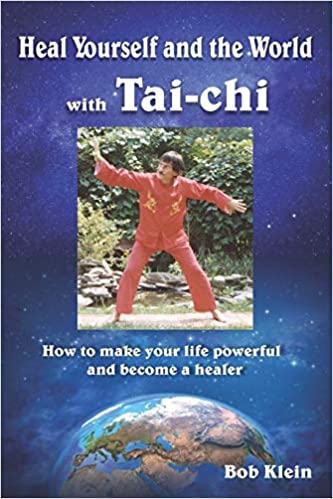
Review: Heal Yourself and the World with Tai-Chi by Bob Klein

Heal Yourself and the World with Tai-Chi

Bob Klein

Bob Klein first studied Tai Chi Chuan fifty years ago with Grandmaster William C. C. Chen, and also owned an animal importing business, which gave him a ready supply of exotic animals to test his martial skills against. In a method that sounds similar to the legendary founding tales of many Chinese martial arts, Bob observed the wild animals, and learned their fighting ticks. Bob describes the process as learning the “pattern of attention” of each species, which he then tried to adopt in himself in sparring and Chi Kung, creating his own system, Zookinesis, along the way.

“The imported animals were often not in a good mood as they emerged from their shipping containers and I was attacked frequently.”, explains Bob.  “Many of the animals were stronger and faster than I so I had to use my skill in controlling their attention. There were many close calls and I had many scars”, he observes.

Klein also traveled to the jungles of Central America several times to study animals in the wild. “I would buy a dugout canoe and spend a few months paddling along rivers, meeting the wildlife and people.”

The result of this study is the system of chi kung he calls “Zookinesis” (“animal exercises”) and the fighting system called “Phantom Kung-fu”, which is the result of his Tai Chi Chuan influenced by Zookinesis. Zookinesis seems to evolve into the wider world of healing and being in harmony with nature.

The book, Heal yourself and the world with Tai Chi is as much about Zookinesis as it is about Tai Chi. It’s not a “teach yourself Tai Chi” type of guide, or a deep dive into history. Instead, I’d describe it as a kind of stream of consciousness on the subject of animism, Tai Chi, energy flow and spirituality. There are headings and there are chapters, but I don’t really feel like they matter much. You could dip in at any point and just start reading. Stop, flick on 20 pages and read a bit more. Go back 40 pages. And so on. That’s not to say it’s not a well written book, but a reader looking for a more organised, practical or logical system to unpick will be disappointed.

Here are some examples of paragraph I’ve picked at random to give you an example of the sort of text it contains:

“Small children in our society usually draw people as big heads with tiny arms and legs sticking out of the heads. I wonder if they are just seeing the distribution of attention in a person, and drawing their pictures accurately from that perspective.”

In fact, Klein’s work makes a nice contrast to the often fractious world of online Tai Chi discussion. His musings are marvelously inofensive and do a good job of framing his points of reference. He has no interest in denigrating other styles of Tai Chi or teachers, exposing fake histories or arguing with anybody else about what ‘real’ Tai Chi is. 

No egos were harmed in the making of this book. If you’re looking for a philosophical meander through many of spirituality’s greatest hits then you’ve come to the right place. Step inside, pour yourself a cup of green tea and let the zookinesis flow.

Heal yourself and the world with Tai Chi is available through Amazon, and Bob’s website: https://www.movementsofmagic.com/

Never let your knees go over your toes… or should you?

I remember when I started Tai Chi in the 90s, one of the things that was talked about a lot was that you should never let your knees go beyond the line of your toes in a forward stance.

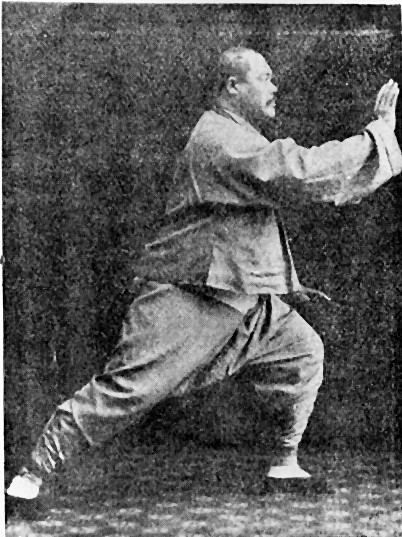
YCF: Knees not extending past the line of the toes.

Letting this happen was always seen as unequivocally bad. Not only was knees beyond toes seen as structurally unsound (your weight is too far forward making you easy to pull off balance), but this was seen as the primary cause of the epidemic of so many Tai Chi people having bad knees.

The Snake Creeps Down posture in particular was quite often used as an example of a badly done posture by Western dilettantes.

But it always struck me as a bit odd that it was seen as being such a dangerous thing to do. If you were training the martial side of Tai Chi then you were being punched, thrown and armlocked on the regular. Worrying about your knees going over the line of your toes seemed a minor danger in comparrison.

Fast forward to 2021 and today I found out that a lot of BJJ people (an art that specialises in slowly destroying your body over time) were raving about the benefits of the method espoused by the Knees Over Toes Guy on YouTube, who had achieved great results reparing people’s knees using a traning methods that empahsises, yes, you guessed it, putting your knees beyond the line of your toes as much as possible.

Interesting. Here’s what he says:

A year went by with no results. In fact, I was certain I needed another surgery when a spark of truth finally presented itself…

“The athlete whose knees can go farthest and strongest over his or her toes is the most protected.”

Everything I had been taught up to this point by dozens of trainers and physical therapists was very clear: NO KNEES OVER TOES — but when I read this statement, I immediately knew it was true.

Knees Over Toes Guy

The write up of his method is here. And here’s a video of his basic method is here:

The logic seems sound to me, so if you’ve got knee trouble, you might want to give it a try.

It makes me think – is the epidemic of Tai Chi people with bad knees (if it really exists) caused by the knees going over the toes? Or is it more likely because that group self-selects for other unhealthy behviours?

The future of push hands

I think push hands is completely flawed as a competitive sport, which is why it ends up as a shoving match, but somebody (Jet Li?) is trying to change the rules to make it work better as an Olympic sport…. So here it is! It’s essentially more like wrestling, which is probably a good thing as it means you can move your foot.

And it’s got takedowns, but I think the question is then always … why not just compete at Shuai Jiao?

Martial arts, Bruce Lee and philosophy

“I’m not aware of too many things,
I know what I know if you know what I mean.”

Edie Brickell

I was listening to the Drunken Boxing podcast recently in which Byron Jacobs and Phil Morrell were talking about Phil’s training history in Fan style Baguazhang. At one point he mentioned two of his teachers and how different their approaches were. One, the daughter of the old master, would deal with tricky questions by showing the answer with a physical demonstration, but if you asked for an explanation of the technical details she would sometimes struggle. She could however, just do it. The other he mentioned had been a professional martial arts teacher all his life, and as such had a more varied teaching method. He could answer questions at a variety of levels, from physical demonstration to a discussion of theory.

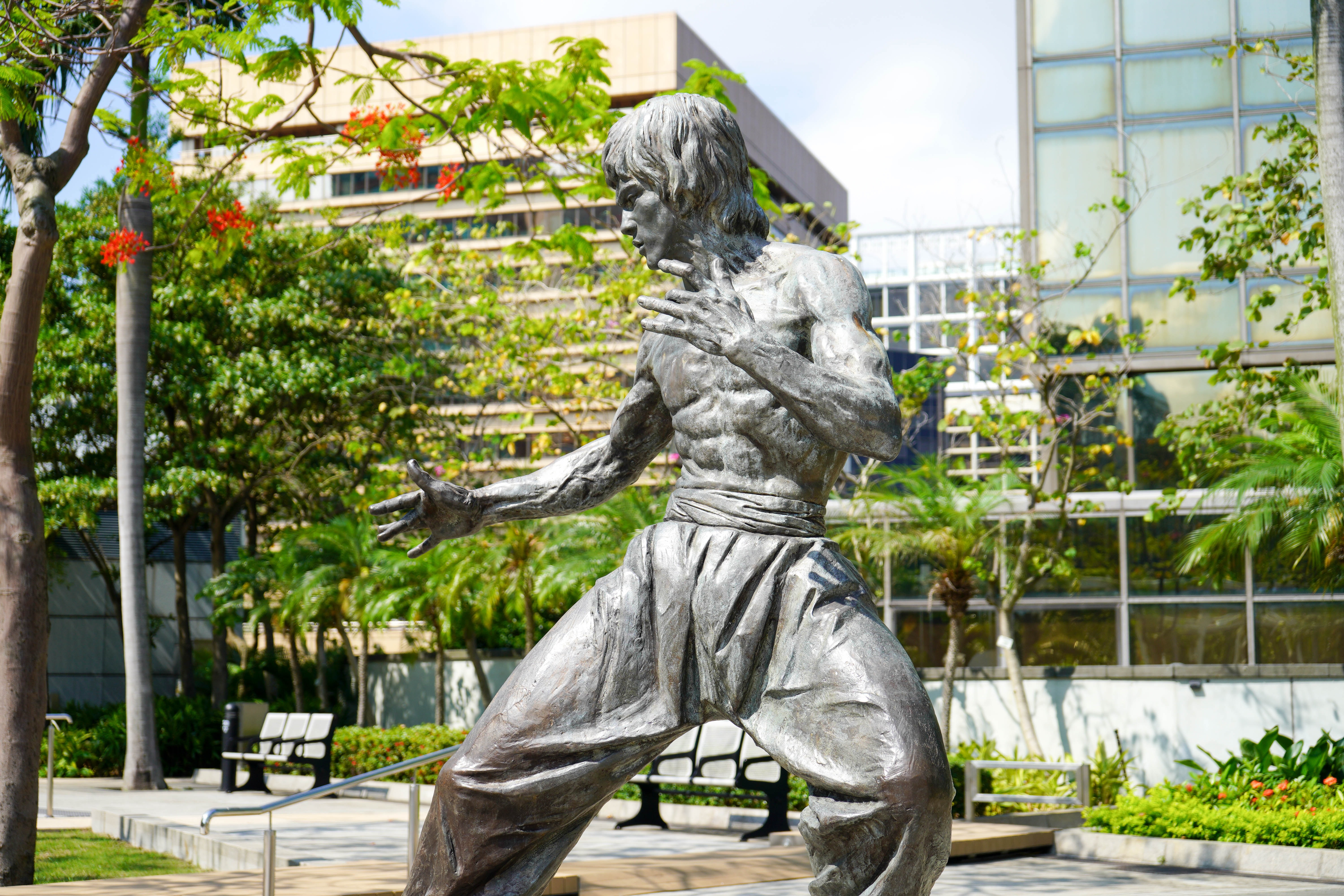
Most people’s first introduction to Kung Fu was through the work of Bruce Lee – either his films, or the TV series Kung Fu, which he didn’t write, but was based on his idea. The TV series was full of flashbacks to Master Po teaching his Shaolin philosophy, and Enter the Dragon has the classic master and student discussion at the start, which anchors the whole film in a kind of generic Taoist philosophy. So, from the very beginning in the West, Kung Fu and philosophy arrived hand in hand.

Photo by Man Chung on Unsplash

Theory is one of those things that martial arts is chock full of, whether it’s yin yang symbolism or lofty philosophical ideas of the merits of the soft defeating the hard or the theory of the meridians and Chinese medicine. It’s impossible to deny that Kung Fu is built on theory.

But there’s an opposite view that theory has a limited place in the grand scheme of things and it’s inherently prone to misinterpretation.  It’s an aid to understanding at a certain point, but quite a limited one. 

Theory is an undisputed source of dispute in martial arts, especially online. The typical online argument about martial arts (as we discussed in our most recent Heretics podcast on martial arts and shamanism) is usually about the definition of terms. Different styles and different teachers tend to say the same things in slightly different ways, which are correct from their own perspective – provided the teacher understands it of course – but appear opposite when written down.

I think we can all agree that it’s perfectly possible to learn the practical application of kung fu without ever hearing the theory, but could most people could learn the theory and deduce the practical application?

The repurposing of Kung Fu postures

I really liked this video by The Wandering Warrior on Instagram:

True or not, he makes a good case for the move not being the backfist or punch it is usually shown as, and being a throw instead. In a way, there’s no right answer – the move is whatever you use it for.

But it made me think a lot about how Kung Fu postures are repurposed and reused through the years.

If we go back to one of the earliest written descriptions of Kung Fu by General Qi Jinguang in his “Boxing Classic” of 1560 we can see that all he’s showing are a series of still postures with written verse about the move in question.

You can see that the first posture shown, “Lazily pulling back the robe” shares some similarties with the posture discussed above.

Lazily pulling back the robe, Qi Jinguang, 1560

A Confucian cuture of respect for tradition and elders would naturally lead to respect for older kung fu postures, and you can see how they would get reused and repurposed to fit new needs over the generations.

I bet the current Yang style Single Whip posture is not chosen because it’s the optimal way of pushing forward with a single palm. Instead, it’s more likely a posture that has been passed down from older generations. Maybe it’s original meaning (if it had one) has been lost, over the years. Maybe it was once a Suai Jiao throw? Maybe it was once a posture from Chinese theatre or religious ritual? Who knows.

The important thing is, as always, what can you do with it now?

Kung Fu 2021

The classic TV series is back! This time the lead is female and the cast is almost all Asian. I’m looking forward to seeing what they’ve done with it. I thought the trailer was pretty good. Not sure how I watch this in the UK though…?