Fixing Aikido

The world is full, or so it seems, of marital artists trying to fix Aikido by making it more practical/better/not as weird. I’m proud to say that my Xing Yi teacher, Damon Smith, (who studied Aikido himself for years) is joining the fray with a new podcast called (wait for it) Fixing Aikido! It’s a podcast where Damon gets together with another friend of ours, Tammo Trantow who is a highly ranked Aikidoka from Austria, and they set about the enormous task of, well, fixing Aikido and creating an Aikido 2.0.

Will it work? Is it a fruitless task? Even if you don’t practice Aikido, or you don’t think it needs “fixing”, it’s quite an entertaining podcast so give it a listen!

Oh, and while you’re here, you can also listen to the now infamous and highly controversial episode of our Heretics podcast that possibly inspired the whole venture. Aikido Heresies

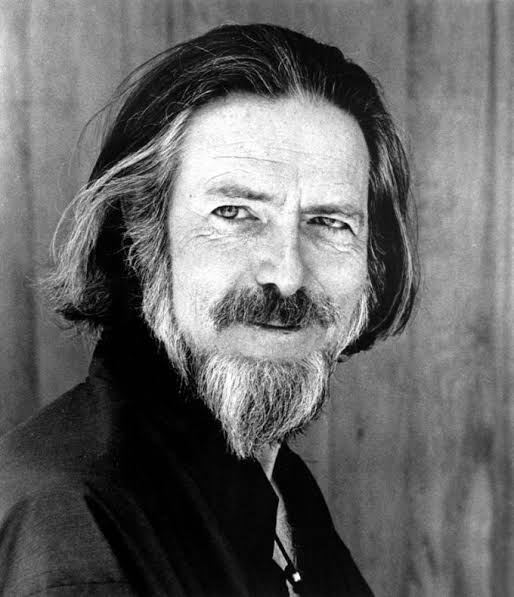
Alan Watts – The Principle of Not Forcing

Alan Watts – what a guy! As the public philosopher entertainer de jour he spearheaded the Eastern spirituality movement of the 60s that took America by storm and forever gave Tai Ch its hippy associations. The lectures on Eastern religions, particularly Zen, he did for a local radio station in California have provided endless motivational video fodder for advertising-packed YouTube videos, and they’re all very good. For example:

He had such a good speaking voice, and could articulate mystical ideas, particularly the idea that existence was simply consciousness playing an eternal game of hide and seek with itself, in ways that Westerners could understand. Of course, the downside of that after you die your words get used to advertise all sorts of things you may or may not have been in favour of. For example, he’s currently doing a voice over for a company selling cruises on UK TV at the moment. I’m not sure what the old guy would have thought of that, but there you go. That’s life! It’s never what you expect it to be.

I’ve heard people say that Alan Watts was a good communicator, but a poor example of the Taoist ideas he espoused. This is mainly because he was an alcoholic who died at the relatively young age of 58 due to related health complications. However, if I look at the 60’s popular philosopher entertainers like Alan Watts and Joseph Campbell, they’re so much more interesting and interested in their ideas than today’s sorry crop of pitiful, grifting, sophists like Joe Rogan, Scott Adams and Jordan Peterson. All of them are usually trying to convince you of some terrible conspiracy theory with one hand while selling you something with the other. At least Alan Watts had enough self respect to be dead before he started trying to sell me cruises!

I saw one of Alan Watts’ videos on YouTube recently, that sparked a few ideas in me. It was to do with the Taoist idea of Wu Wei. It’s called “Alan Watts – The Principle of Not Forcing”

“Not forcing” is Alan’s translation of the Taoist idea of Wu Wei, which is usually translated as “not doing”, or “doing nothing”, however Alan’s translation is much better for martial application. In martial arts, like Tai Chi, it is forcing things that is bad. Alan even mentions Judo in his explanation above. 

In English, the idea of doing nothing sounds too passive. Tai Chi isn’t passive. You can’t do a marital art by doing nothing, so I much prefer the translation of “not forcing”. It’s what we aspire to in Jiujitsu as well as Tai Chi. If you feel like you have to force techniques to work in Jiujitsu then it’s not the right way. It might be required in a time-limited competition, but the Gracie family were always famous for not wanting time limits on their matches, mainly because, with their hyper-efficient style of Jiujitsu, they knew they could survive longer than their opponent, exhausting them in the process. When you are forcing things to work you are burning energy, and wearing yourself out.

I think different styles of Tai Chi might look at this situation differently though. Yang style, and its derivatives tend to effortlessly breeze through the form. The emphasis is on efficient, continuous movement and relaxation. And while it may look effortless, you feel it in the legs, even if you are not visibly out of breath. Chen style seems to want to work a little harder. The stances are lower, there are occasional expressions of speed, power and jumping kicks. But there is still that emphasis on being like a swan moving through the water – graceful up top, but the legs doing all the hard work below the surface.

But regardless of style, all Tai Chi forms follow the same principle: Wu Wei.

Feet-together postures in Taiji (Tai Chi) and Xing Yi

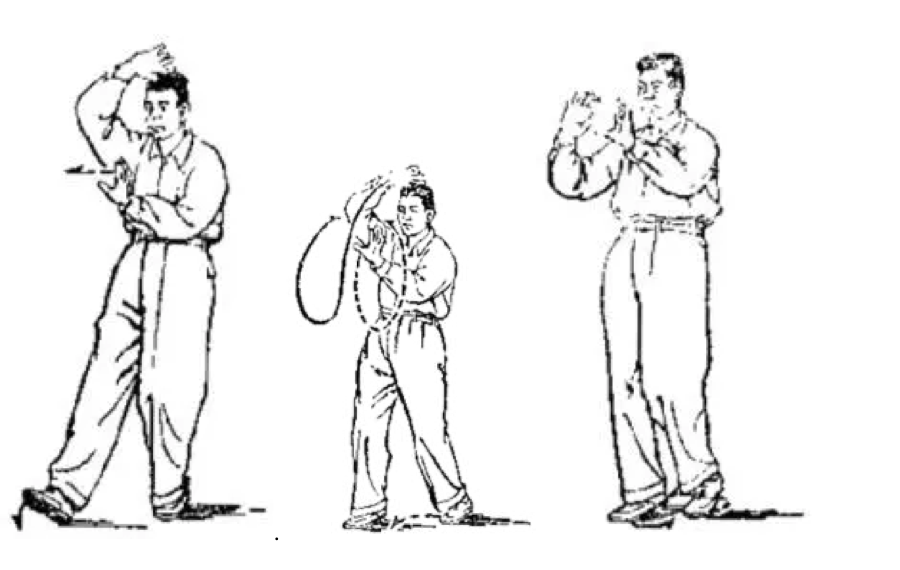
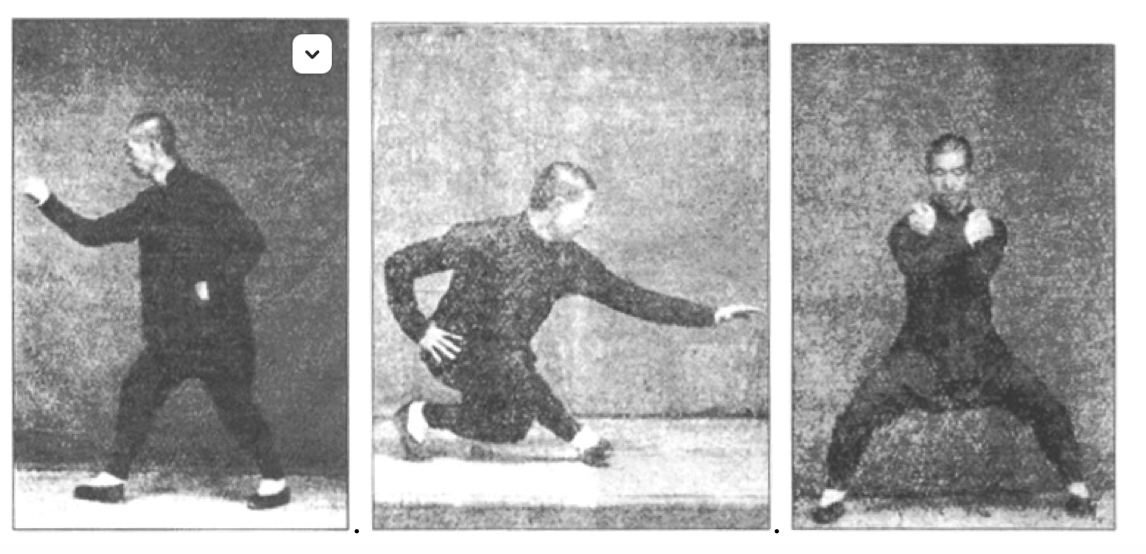
I’ve always been curious about the postures in martial arts forms where both feet are together, because these postures don’t look very martial at all. In fact, it’s hard to imagine why you would want to use a stance like that in a fight, and yet we find them in a lot of Tai Chi forms:

From: Sun Lu Tang, A Study of Taiji boxing, 1921

From: Long ZiXiang, A study of Taiji boxing 1952

Here’s an example of the posture in application in Taiji performed by my teacher Sifu Raymond Rand:

Sifu Rang, Brush Knee, Twist Step.

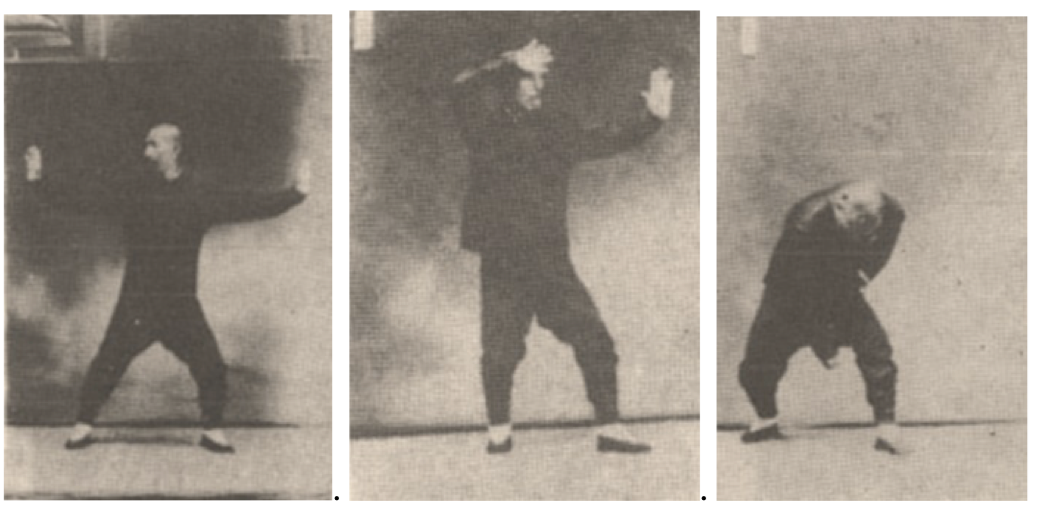
It seems to be mainly Taiji lineages that have some influence from Sun Lu Tang that do this the most. A lot of people attribute the distinctive ‘feet together’ postures he used to his prior training in Xing Yi, and there could be some truth to this. Xing Yi does have ‘feet together’ postures quite a lot.

Sun Lu Tang showing a selection of postures from , A Study of Xing Yi Boxing, 1915

Of course, the root of Xing Yi is spear fighting, but the modern interpretation of the art is heavily biased towards bare hand training, and this creates a misleading impression. Think about it – if you were at at least one spear length away from your opponent the risk of being tackled to the ground because your feet are together would be greatly reduced. You’re now free to use the power generation advantages that can be gained by letting both feet come together, which is handy when you are holding a heavy object, like a spear.

If you watch this excellent video of Xing Yi spear technique by Byron Jacobs you’ll see that he doesn’t hang out with his feet together all the time, but occasionally he uses the feet together moments for power generation (and of course, also standing on one leg for range advantage and manoeuvrability in a way that makes sense with weapons).

Video:

Example feet together transitional posture:

Byron Jacobs of Mushin Martial Culture

In Xing Yi the most famous example of the ‘feet together’ posture is the Half-Step Beng Quan. Here the back foot stepping up to meet the front foot in place creates a powerful closing action of the body, kind of like a door slamming.

From: Selected subtleties of the Xing Yi Boxing art, by Liu Dianchen [1921]

So, is this the origin of ‘feet together’ postures in Taiji forms? Quite possibly. However, there is one more thing to consider. After first learning Xing Yi, Sun Lu Tang learned his Taiji from Hao Weizhen 1849–1920, who learned from Li Yiyu 1832–1892, who learned from one of the Wu brothers, Wu Yuxiang 1812–1880 who had learned directly from Yang Luchan 1799–1872 and also sought out Chen Qingping 1795–1868 who he learned from in Zhaoboa village.

It’s often thought that the distinctive stepping seen in Sun style Taiji, where the back foot is often lifted and brought up close to the front foot, is a consequence of Sun’s prior Xing Yi training. This makes sense as part of the narrative created as part of the Sun Style Taiji brand, which is that he incorporated his earlier Xing Yi and Bagua training into his Taiji style. However, if you look at the Wu (Hou) style he learned, it already had this distinctive stepping in it.

For example:

From: Wu Yuxiang style Taiji Boxing by Hao Shaoru

While the feet don’t go completely together as much, if at all, in Wu(Hao) style, they are very close together for a lot of the time. Watch this video for an example of the form in action:

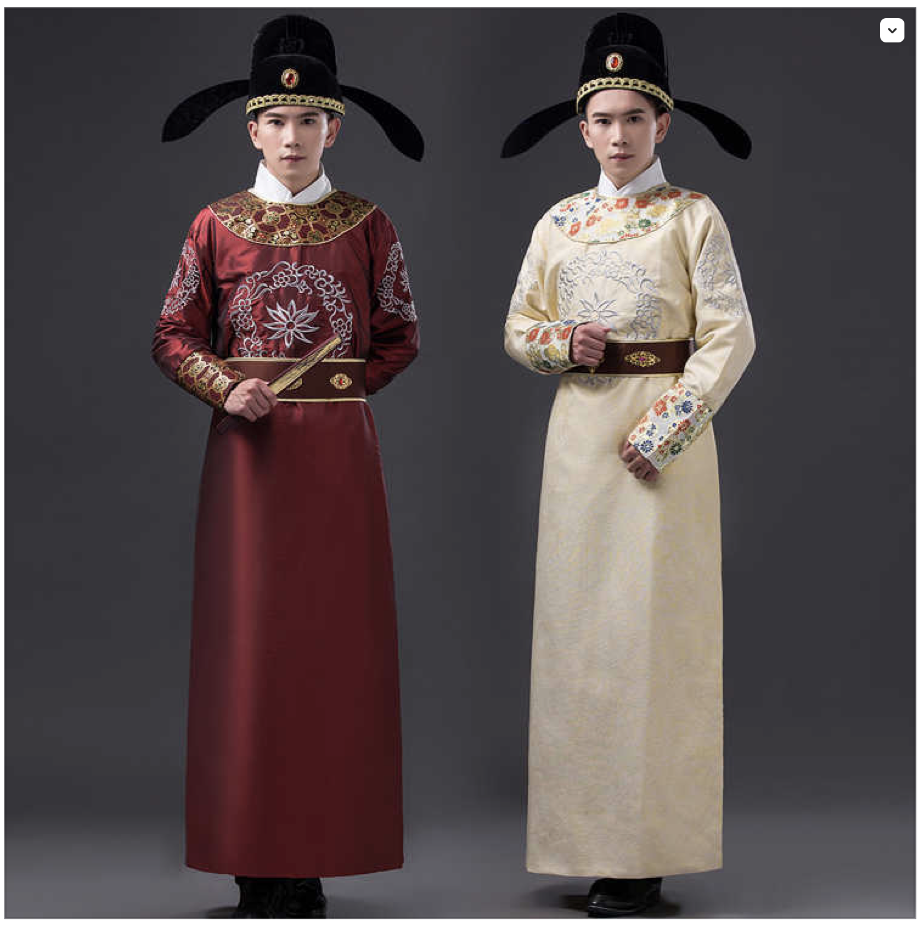
One theory about why this is is that Wu Yuxiang was a member of the Imperial Court at the end of the Ching Dynasty, and was therefore expected to wear traditional court dress, which restricted the stepping.

I think you can see that influence extending into Sun Lu Tang’s Taiji, which makes sense since he learned from this lineage.

Finally, I should note that thought this post I don’t want to create the impression that all the steps in either Xing Yi or Taiji performed by Sun Lu Tang are small or restricted. He also had plenty of wider postures in his arts too, for example.

Xing Yi:

Taiji:

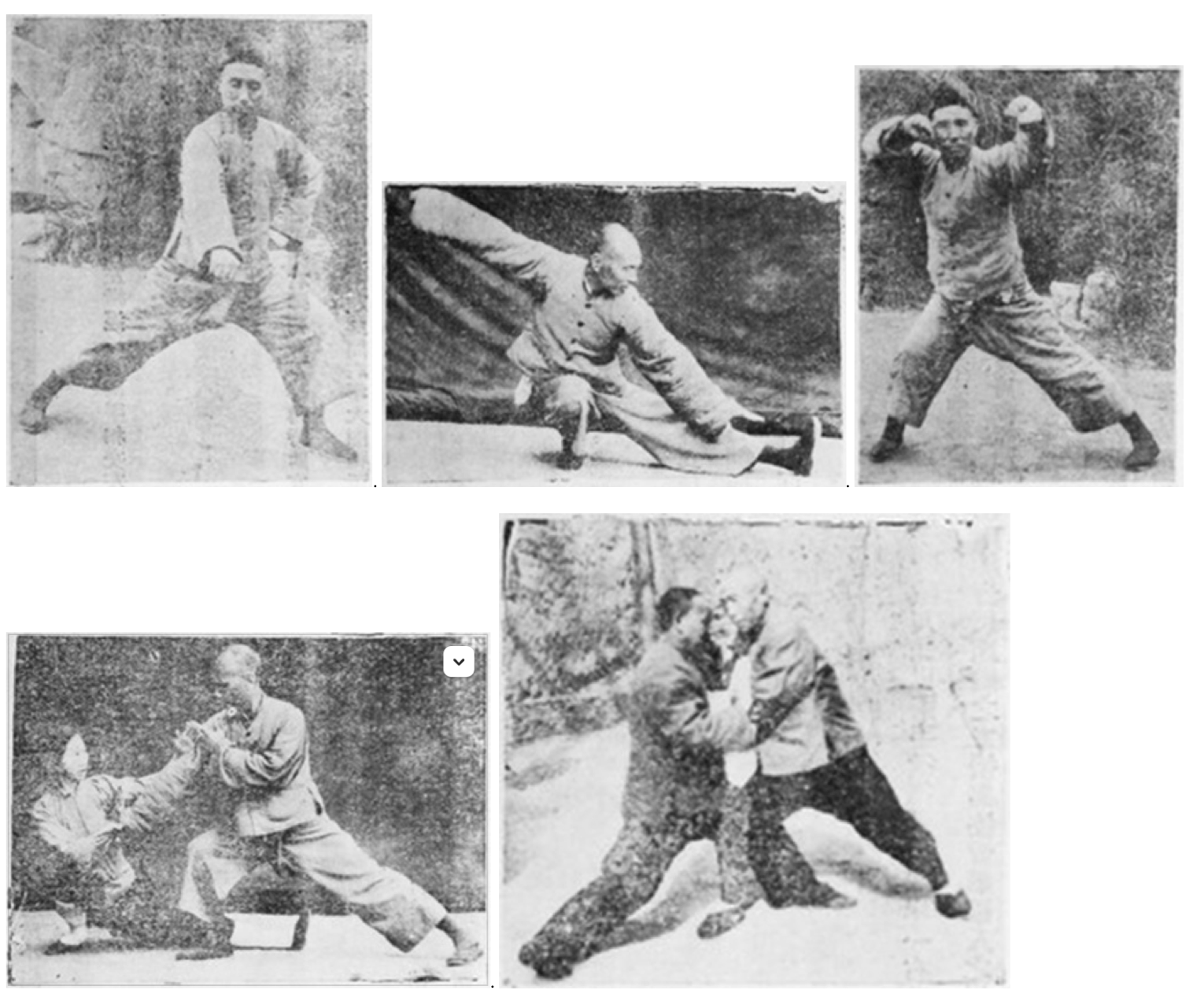
However, compare it to postures found in other styles of Taiji whose practitioners didn’t have to wear court dress:

Chen Ziming for example:

From: The inherited Chen family boxing art, Chen Ziming

Martial Arts Management Software: Signs You Should Use It

(Sponsored content)

Have you ever wished that running your martial arts academy was more accessible and more efficient? If so, it may be time to look into the latest Martial Arts Management Software. 

Managing a Martial Arts School can be overwhelming, but with the right tools, it doesn’t have to be! 

Martial Arts Management Software is designed to help make sense of the administrative chaos that comes with running a successful business. Whether you need to keep track of student records, manage bills and invoices, or monitor your academy’s finances, there is sure to be a software system out there that can help.

If you’re wondering whether your school needs this software, here are some signs indicating you should consider using it!

Billing and Collection Issues

One of the most prominent challenges schools face is billing and collecting money from their students. Martial Arts Management Software makes it easy to manage your student accounts, allowing you to keep track of payments, overdue balances, and more.

This can help you stay on top of any collection issues, ensuring that you are getting paid for your services promptly.

Class Scheduling Problems

Managing a martial arts academy can be a complex and time-consuming task, especially when it comes to scheduling classes. However, with the help of advanced software systems, scheduling classes have become much more manageable.

With this software, you can easily create, maintain, and update your class schedule, ensuring that all of your classes are offered on the days and times you need them. This can help ensure that your students always have access to the classes they need so they can go anywhere for their training.

Members Tracking Has Become a Problem

Another common issue facing martial arts academies is keeping track of their members. With so many students coming and going, it can be difficult to keep track of all the different people training at your academy.

  • Missed Expiring Memberships

One of the biggest challenges when it comes to member tracking is ensuring that you are never missing expiring memberships. Martial arts management software can help to make this process easier, as the software can send automatic reminders to your members about renewing their memberships in a timely manner.

Additionally, with this software, you can set up automatic renewal reminders, which can further help ensure that all of your members are up-to-date on their memberships.

  • Untracked Achievements, Belts, and Grading

Another issue that can arise when it comes to member tracking is failing to track important milestones, such as belt and grading achievements. Martial arts management software can help with this by providing a convenient platform for recording these milestones.

With the push of a button, you can record your members’ latest achievements, helping you stay on top of their progress. And by automating this process, you can ensure that all of your members’ milestones are tracked and recorded promptly.

Spending Hours On Admin Tasks

If managing financial reports and cash flow takes much more time than teaching Martial Arts, Martial Arts Management Software can help you save time and money. By automating processes such as billing and collecting data and information, you can spend more time on the things that matter most to your business. 

Additionally, using martial arts management software often comes along with other benefits, such as improved cash flow and reduced costs. If you want to streamline your academy and make it more efficient, it’s worth considering investing in this type of software.

Messy, Disorganized Paper Filing Systems

The more your martial arts studio grows, the harder it is to keep up with all the paperwork for student registrations, attendance compiled, payment due and instructor qualifications-not to mention classes and business operations that can become confused without proper record keeping. 

With Martial Arts Management Software, all of your data and information are stored digitally, making it easy to access and update at any time. This not only helps you to stay organized, but it also helps to keep your data secure, as paper files are often lost or damaged.

Lack Of Financial Reporting Tools

Every martial arts school needs to have efficient financial reporting tools in place, but all too often these can be lacking. This is where martial arts management software can help fill the gap.  

A management software system often comes with a wide range of financial reporting tools, helping you stay on top of your business finances and quickly identify any areas that need to be improved.

Inexperienced or Overwhelmed Staff Members

If your academy is experiencing issues with member tracking, financial reporting, or any other aspect of running your academy, it can be difficult to know where to turn. 

By using martial arts management software, you can streamline your academy and ensure that all of your members are well taken care of.

Managing School Has Never Been This Easy

If any of these issues sound familiar, then it’s time to consider using Martial Arts Management Software! With the right system in place, you can take control of your business and focus on running a successful academy. 
My Drunken Boxing interview with Byron Jacobs

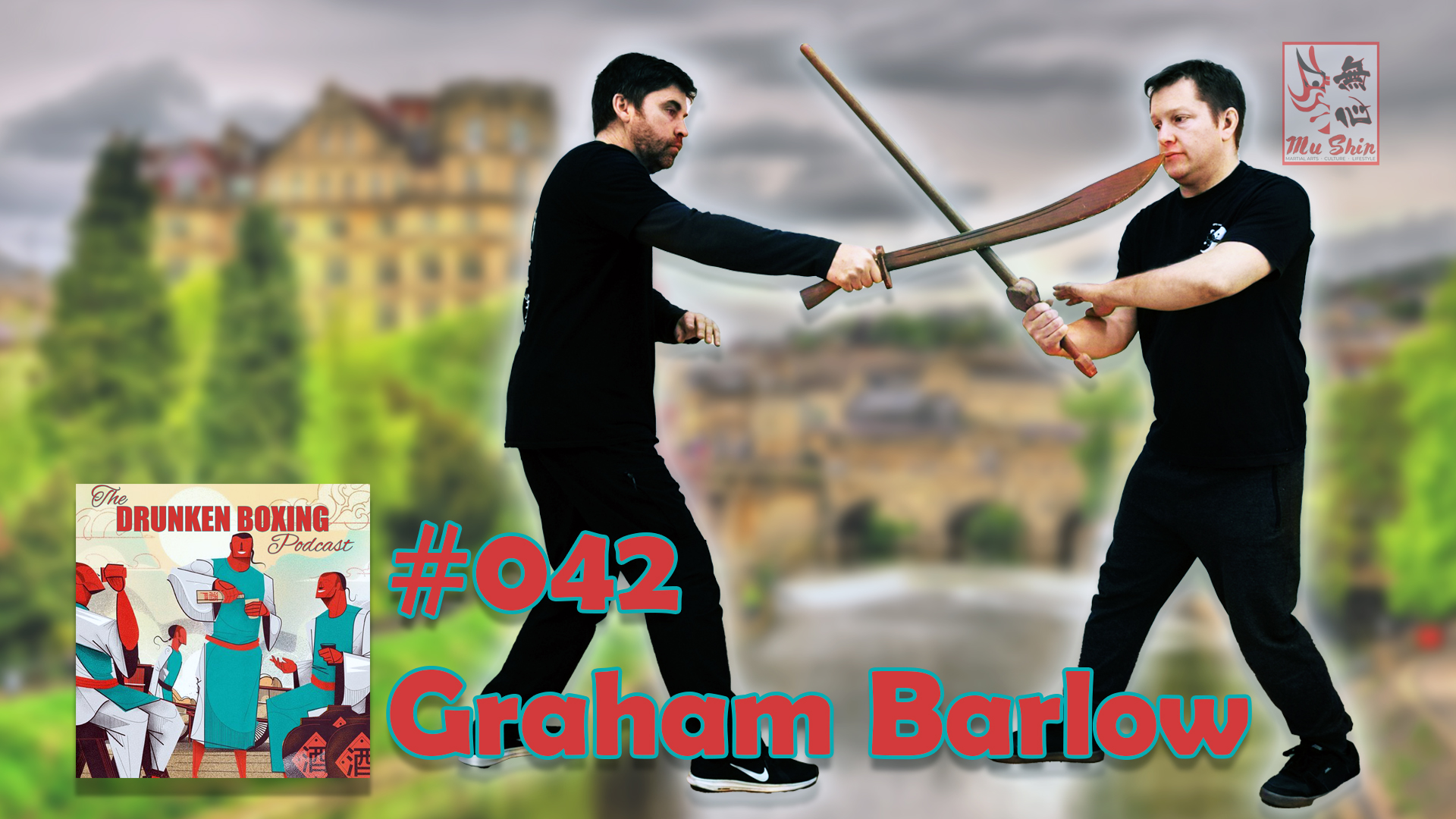
I appeared on the Drunken Boxing podcast run by my friend Byron Jacobs yesterday where we dived into the story behind all the martial arts I practice, who my teachers are and how I discovered them.

I’m usually the one interviewing other people on my podcast (I interviewed Byron back in episode 2) so this was a bit different. To be honest it feels a bit cringe listening to yourself talk about yourself, but hopefully there’s some interesting stories here to entertain people.

Drunken Boxing #042 Graham Barlow

Here’s a few links to some of the many and varied things I talk about:

Master Lam and Sifu Raymond Rand on the cover of Fighters magazine 1983:

Sifu Raymond Rand, Tai Chi Chuan applications 2022:

Stand Still Be Fit, Day 1: Master Lam Kam Chuen’s original Channel 4 TV series.

Graham in a BJJ sub-only competition 2013, blue belt

Woven Energy podcast episode 1

Graham Tiger Shape Xing Yi

Anan – Okinawan Karate kata

Karate is something I’ve never done before, so it was a surprise to find myself doing some in the form of learning the Anan kata at a recent Foxfist event. The Anan kata is a nice little Karate form. In fact, there’s enough in there for it to be the only form you ever needed to learn for a small, self-contained, but effective, martial system. There are deflections, strikes, stand-up grappling and kicks.

The similarities between Okinawan systems and Southern Chinese martial arts systems are quite obvious in this kata, I think. But see what you think. Here is Anan being performed by somebody who, unlike me, knows what they’re doing with it.

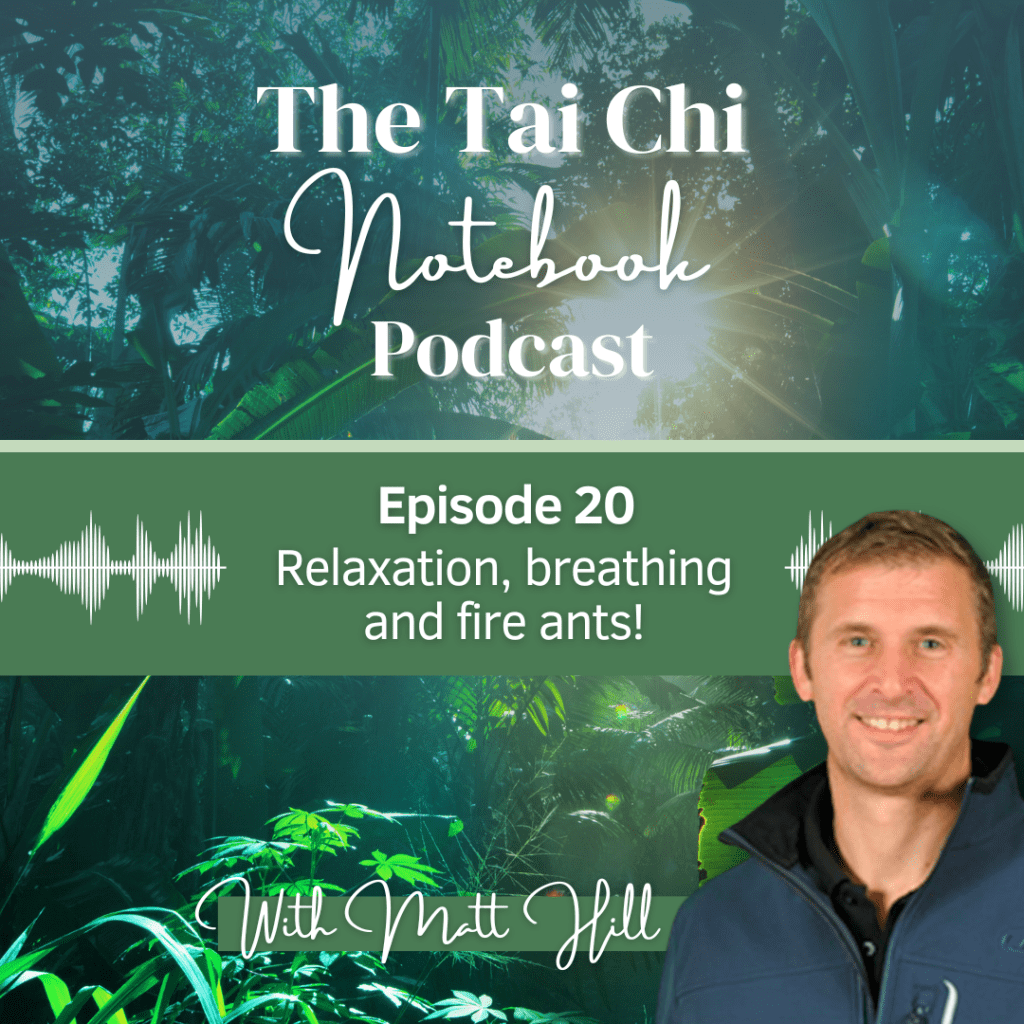
Ep 20: Matt Hill on relaxation, breathing and fire ants!

Matt Hill is the owner of the Systema Academy in Wiltshire, England. Matt has a long history in martial arts, starting with Aikido, training under Morihiro Saito Sensei in Japan in the early 90s. From there he joined the Parachute Regiment leaving as a Captain in 2003. After this he started training in Systema under Vladimir Vasiliev and now teaches Systema, Bushcraft and leads groups trekking through jungles all around the world.

Matt was kind enough to give me a 1-1 in Systema before we recorded this podcast at his academy, where he focused on the four pillars of Systema – breathing, relaxation, posture and movement. We discuss all these things in the podcast as well as the next destination for Matt’s jungle trek.

Links:

Systema Academy:

Podcast:

Listen here.

What is the point of Tai Chi applications?

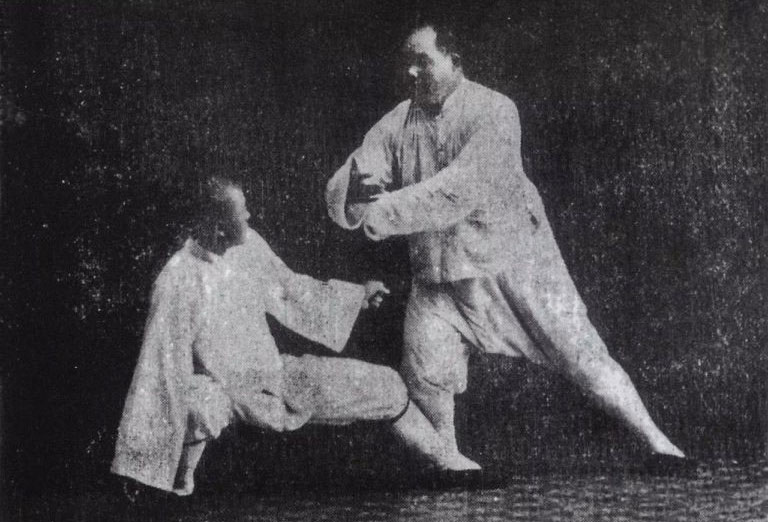
Yang Cheng-Fu showing Tai Chi applications from his book.

In the comments section Richard asked a good question in response to my last post. I wrote a brief reply in the comments, but I thought I’d flesh it out a bit as a blog post, because it’s an interesting topic.

The question is, ‘what’s the point of Tai Chi applications?’ Actually, to be fair, he was talking specifically about the one application video in my last post, not about Tai Chi in general. But personally I think you can extrapolate the question to include the wider Tai Chi universe, and that would be where I’d look for my answer.

There are plenty of videos of respected masters of various styles of Tai Chi running though the applications of their form movements and producing a series of very questionable applications that would require a perfect storm of events to happen for them to work. I don’t want to post them here because I think it would distract from the point I’m making, but look up ‘Name of famous master’ and ‘applications’ on YouTube and you’ll find them.

I really like the phrase “a perfect storm” to describe Tai Chi applications because as far as I can see, most (if not all) Tai Chi applications one would require a ‘perfect storm’ of attacker, positioning and timing for the application work. Therefore the one application video I posted previously is not particularly different to any other Tai Chi application video, at least to me.

That might not be a popular opinion, but I think it’s true.

Contrast this with a martial art like Choy Li Fut. I’ll choose CLF because it’s a kind of a typical Chinese Kung Fu style. It’s has some key techniques like Sao Choy – sweeping fist and Charp Choy – leopard fist and Pao Choy, a kind of big uppercut, Gwa Choy, a backlist, for example.

Here’s 10 of the ‘basic’ techniques that you find in CLF:

I wonder – does the man in the mirror ever punch him back?

If you watch a Choy Li Fut form then you’ll see these 10 techniques crop up again and again, but each form enables you to practice them in different combinations:

A great title for a video “Killer Choy Li Fut form!” It’s actually a great performance, especially with the drumming in the background.

Or check out the famous first form of Wing Chun – Siu Lim Tao, it’s a series of techniques performed very, very accurately so you can refine and practice them:

Now when you do those techniques in a form, you are performing a technique that would work exactly as shown. The only thing you need for success is to actually contact with an opponent and do the move correctly at the right time. 

Tai Chi as a marital art just doesn’t work in the same way. We don’t have a toolbag of techniques designed to be pull out and used ‘as is’. Ward off is not a fundamental technique of Tai Chi – instead Peng, the ‘energy’ you use in performing ward-off, is the important thing. And I think this leads to a lot of confusion about what Tai Chi forms are.

So, if we don’t have techniques that exist in the same way as other marital arts, how are you supposed to fight with Tai Chi?

Tai Chi is a set of principles and a strategy that together make it a martial art. In a nutshell the strategy part can be summed up with the 5 keywords of push hands – listen, stick, yield, neutralise and attack. The principles cover how the body is used, resulting natural power derived from relaxation, ground force and a series of openings and closings expressed in the 8 energies. When the principles of Tai Chi are properly internalised you become something like a sphere, which can redirect force applied to you with ease and respond as appropriate. All these things are elucidated in the Tai Chi Classics.

Now that short description probably leaves a lot out, of what Tai Chi is, but at least it’s a starting point.

If that’s your goal, then putting emphasis on individual techniques doesn’t make much sense. Everything you do now exists in relation to an opponent, rather than existing on its own terms. The Tai Chi form then becomes a series of examples of how you might respond to specific attacks. In essence, it is a series of perfect storms, one after the other, put in a sequence that is long enough that you start to internalise the principles of movement and energy use. And obviously the strategy part requires a partner, hence why push hands exists.

I think that’s also the reason why Tai Chi forms are so long and slow, btw, so you internalise things.

As a final note, I’d say the jury is still out as to whether the Tai Chi way is the best approach to teaching people to fight. It’s interesting to note that a lot of martial arts innovators tend towards this same nebulous ‘technique-free’ style of training the further they get into their research into martial arts. Bruce Lee for example, was moving towards freedom and the technique of no technique in his later years – see his 1971 manifesto ‘Liberate yourself from Classical Karate’ for example. Then there’s Wang Xiang Zhai who created Yi Quan by removing fixed forms and routines from Xing Yi Quan and mixing it with whatever else he had studied. See his criticisms of other Kung Fu styles in his 1940 interview, for example.

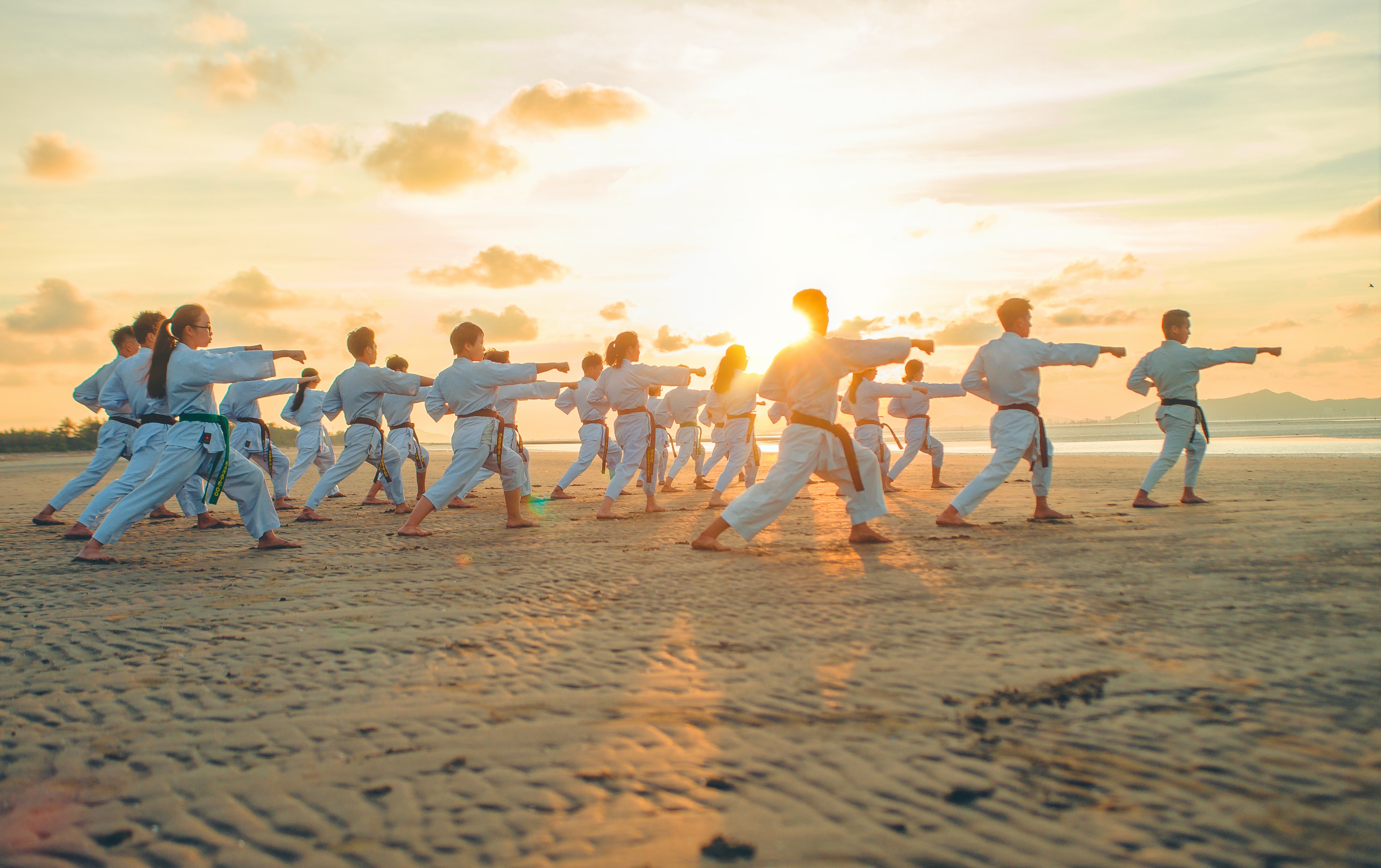
Photo by Thao LEE on Unsplash

In contrast a lot of the martial arts that have actually proven effective in modern combat events have turned out to be very, very technique based. Brazilian Jiujitsu, for example, is taught through very specific techniques. So is MMA. Karate, for all of Bruce Lee’s criticisms often does very well in competition against other more esoteric styles because it contains some no nonsense techniques.

Another factor to think of is that while Tai Chi may have those lofty goals of producing a formless fighter in its classical writing, it often isn’t taught like that in reality. One of the martial arts that Wang Xiang Zhai is criticising as having lost its way and become a parody of itself in that 1940 essay linked to above, is, in fact, Tai Chi Chuan!

So, as ever with marital arts, I think the answer is: it’s complicated.

The hidden takedown in Ward Off

Tai Chi Ward Off

Most people who do Tai Chi are familiar with the idea of Ward Off as being a block/deflection of an incoming strike, but there’s also a takedown application inherent in the movement.

As luck would have it there is a new series of videos being posted online of my Tai Chi teacher, Sifu Rand, showing various Tai Chi applications. Here’s a video of him demonstrating the takedown contained in Ward Off.

Check out the YouTube channel Spinning Dragon Tao as it looks like there will be more applications posted there soon.

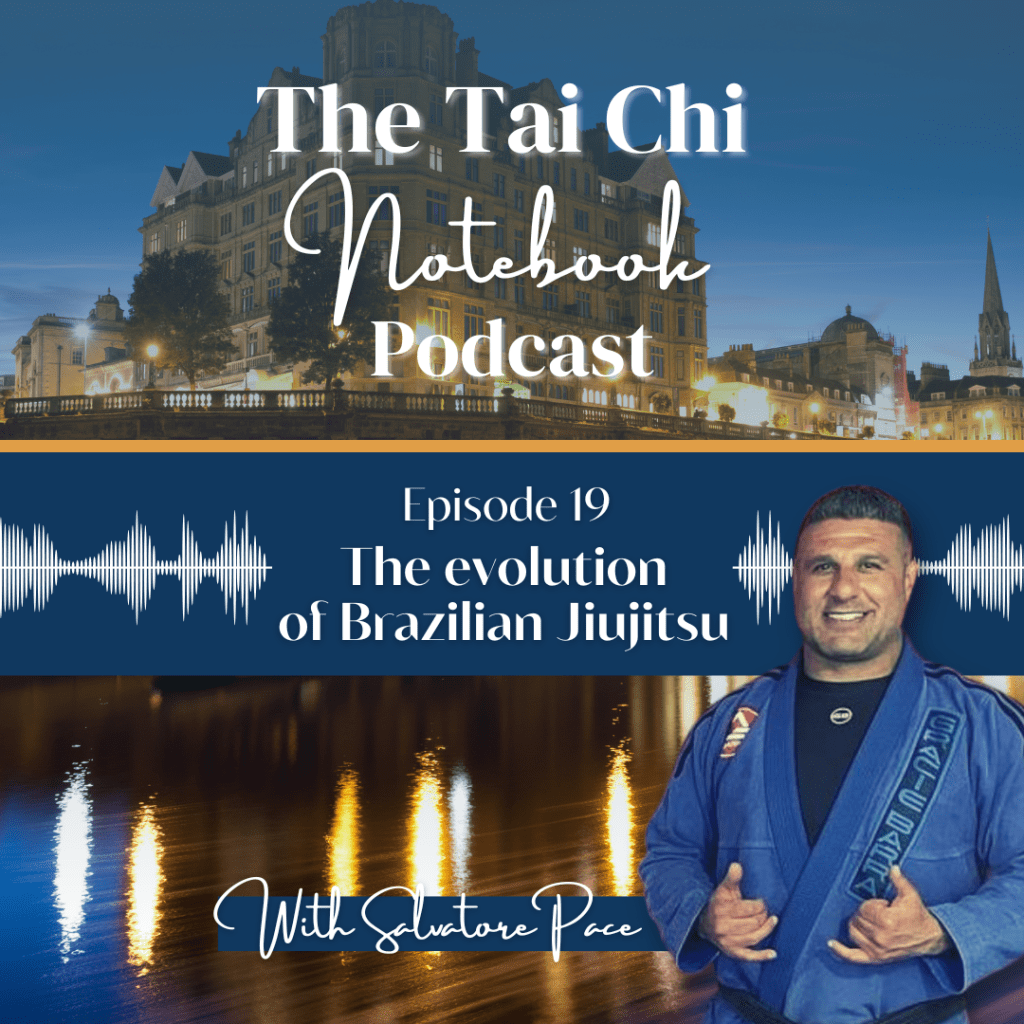
Episode 19: Salvatore Pace on the evolution of Brazilian Jiujitsu

Salvatore Pace, or Salvo for short is a 3rd degree black belt in Brazilian Jiujitsu and owner of Gracie Barra Bath, the Head Quarters of Gracie Barra in the South West of the UK, Gracie Barra West Wilts and co-owner of Gracie Barra Gillingham. He is a two time NAGA European Champion and Grappler’s Quest champion. Salvo grew up in Sicily and had a passion for martial arts as a young boy, practicing everything he could get his hands on, from boxing and Kung Fu to wrestling, and then MMA in the emerging combat sports scene in the UK, but it was his first encounter with Brazilian Jiujitsu and his main teacher Professor Carlos Lemos Jnr, that changed his life forever and put him on a plane to Brazil and then the USA, where he trained with some of the biggest names in the sport.

Returning to the UK Salvo had a dream of teaching jiujitsu for a living and set up Gracie Barra Bath in 2007, back when most people hadn’t even heard of Brazilian jiujitsu. And that’s where our paths crossed,  I first met Salvo way back in 2011 and I’ve been with him ever since, getting all my belts from white to black from his hands and it’s been a pleasure to watch his students and academy grow and develop and expand to new locations around the South West.

Jiujitsu has certainly evolved a lot since those early days, but we can let Salvo tell that story, so here he is.

Links:

Gracie Barra Bath (South West HQ)

Gracie Barra West Wilts

Gracie Barra Gillingham