I remember reading in a Zen book that I enjoyed that you should not practice for yourself, but just practice for the sake of practice. I like that. There’s a kind of grim realism to it but it raises the issue of how exactly are you supposed to approach these sort of goaless activities, like Tai Chi and Zen? The sort of activities where even having a goal can become a problem because it interferes with the activity itself, because it needs to be about being open and aware in the moment, not thinking about things far off in the future. By definition, if you have a goal you cannot be ‘living in the moment’.
Watching that Bagua Boy documentary that I linked to in my last post I was struck by how much Mr Rogers had practiced over his lifetime. He said he spent a lot of years practicing for hours a day. It’s impressive, but it also sounds very lonely, and even if most people had the free time to do that, they wouldn’t. You need to have some sort of drive deep within you to practice anything that much.
Lots of people in the Tai Chi world practice for hours a day. Some people meditate for an hour a day. Some people stand in Zhan Zhuan for an hour.
Today I read an article by Sam Pyrah in The Guardian that asks the question, at what point does a fitness activity become a ball and chain around your neck? At some point she realised that her life long addiction to running had left her very healthy, but with a very narrow life, and at the end of the day, what was the point?
People start Tai Chi for all sorts of reasons and the reasons for doing it change over a lifetime. Since I discovered Tai Chi I’ve always practiced, but I tend to do my personal practice in little pockets of time scattered throughout the day, not in big chunks of hours at a time. Maybe when I’m too old to work I’ll do a lot more Tai Chi than I ever did before? Everything has a cost, and I wonder if the people who practice for hours a day sometimes sit down and smell the flowers and wonder if it was all worth it… Like the Bear of Little Brain, I’ve always valued doing nothing as a worthwhile activity.
Practicing a bit is good, practicing a lot is better, but sometimes you can practice too much.
If you’ve been doing Tai Chi, meditation or yoga for any length of time you’ll have heard the old adage to ‘put your tongue behind the two front teeth‘. The explanation given for this is usually that it “connects the two meridians that go up the back and down the front of the body called the Ren and Du meridians, creating the micro-cosmic orbit”.
Micro cosmic orbit connected… man. Photo by Elina Fairytale on Pexels.com
Personally, I have my doubts about the whole idea of ‘energy’ or Qi ‘flowing’ around the body. I often think it’s really an ancient aberration of the simple idea of forces moving inside the body. In Chinese martial arts there’s a phrase you often hear – rise, drill, overturn, fall, which matches this circuit in the body with a martial technique. The best example of which is Pi Quan from Xing Yi, during which forces in the body (jin) rise up and then come crashing down into a strike.
Strength and balance
However, it’s not just Chinese medicine that recommends this tongue position. I’ve recently discovered that there are a lot of Western sources advocating the same tongue position. For example, Colgate toothpaste has an article about correct tongue position on its website that recommends the exact same thing – the tongue resting on the upper palette behind the two front teeth. The article links to a study in Radiology and Oncology called “Three-dimensional Ultrasound Evaluation of Tongue Posture and Its Impact on Articulation Disorders in Preschool Children with Anterior Open Bite“, which notes that “children with poor tongue posture were reported to have a higher incidence of anterior open bite, a type of malocclusion where the front teeth don’t touch when the mouth is shut. This may be because the tongue puts pressure on the teeth which can shift their position over time.” (Colgate).
In this article from Healthline, Dr. Ron Baise, dentist of 92 Dental in London explains “Your tongue should be touching the roof of your mouth when resting… It should not be touching the bottom of your mouth. The front tip of your tongue should be about half an inch higher than your front teeth.“
While dentists may be aware of the benefits of good tongue position for your teeth and preventing problems with your speech, or mouth breathing from occurring, some exercise enthusiasts are going further and claiming that proper tongue position actually increases your strength and balance, something that is undoubtedly important for martial arts, like Xing Yi.
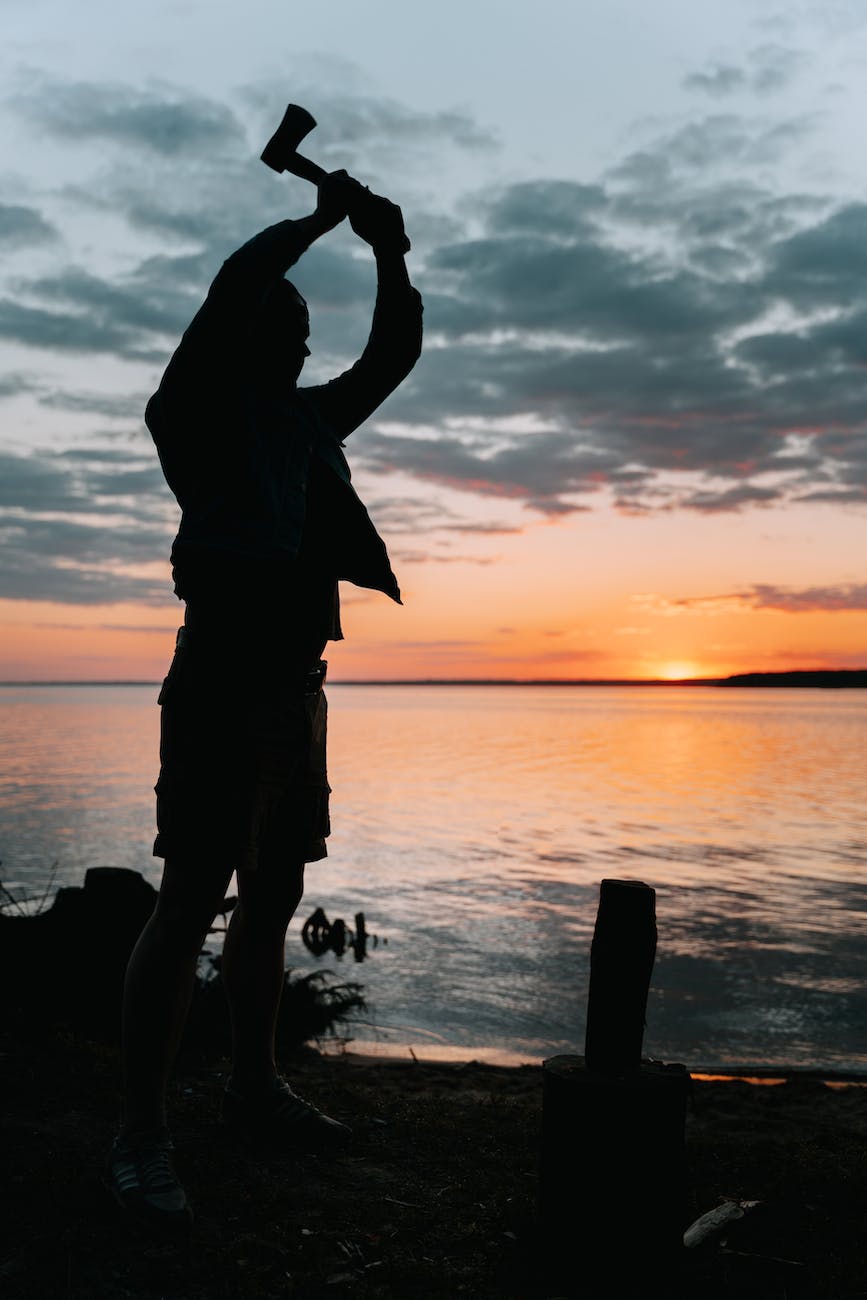
Pi Quan is said to be like the swinging of an axe. (Photo by Ivan Samkov on Pexels.com)
Now, I’m as aware as the next Tai Chi blogger that cherry picking studies that confirm your beliefs (and presumably ignoring everything that doesn’t) is a bit of a red flag. However, the idea that your tongue position effects strength and balance makes more sense to me than imaginary energy channels (Du/Ren) that may, or may not, exist in real life.
Apparently, good tongue placement can give you superpowers!
I remain slightly skeptical about the whole issue, however, my tongue does naturally rest behind my two front teeth on the upper pallet of my mouth… I can feel it there now as I write this. Was it always there? Or have I turned this into my natural position thanks to starting Tai Chi in my 20s?… I don’t know. All I can say is that it feels comfortable, and if my Ren and Du channels are connecting because of it, and my strength and vision is better because of it then…. so much the better.
There’s an interesting article on the BBC website about how a six week mediation programme (that you can access free online) can produce measurable changes in the human brain. It’s interesting, but does end with the disclaimer that “A final note of caution – it is important to acknowledge that any brain changes we had seen could also be random“.
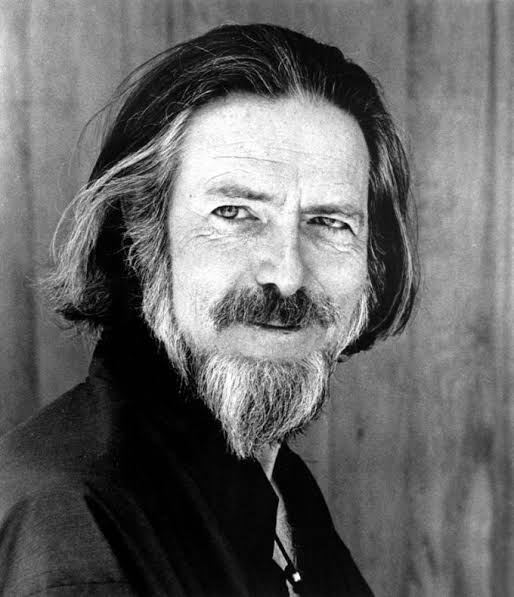
Alan Watts – what a guy! As the public philosopher entertainer de jour he spearheaded the Eastern spirituality movement of the 60s that took America by storm and forever gave Tai Ch its hippy associations. The lectures on Eastern religions, particularly Zen, he did for a local radio station in California have provided endless motivational video fodder for advertising-packed YouTube videos, and they’re all very good. For example:
He had such a good speaking voice, and could articulate mystical ideas, particularly the idea that existence was simply consciousness playing an eternal game of hide and seek with itself, in ways that Westerners could understand. Of course, the downside of that after you die your words get used to advertise all sorts of things you may or may not have been in favour of. For example, he’s currently doing a voice over for a company selling cruises on UK TV at the moment. I’m not sure what the old guy would have thought of that, but there you go. That’s life! It’s never what you expect it to be.
I’ve heard people say that Alan Watts was a good communicator, but a poor example of the Taoist ideas he espoused. This is mainly because he was an alcoholic who died at the relatively young age of 58 due to related health complications. However, if I look at the 60’s popular philosopher entertainers like Alan Watts and Joseph Campbell, they’re so much more interesting and interested in their ideas than today’s sorry crop of pitiful, grifting, sophists like Joe Rogan, Scott Adams and Jordan Peterson. All of them are usually trying to convince you of some terrible conspiracy theory with one hand while selling you something with the other. At least Alan Watts had enough self respect to be dead before he started trying to sell me cruises!
I saw one of Alan Watts’ videos on YouTube recently, that sparked a few ideas in me. It was to do with the Taoist idea of Wu Wei. It’s called “Alan Watts – The Principle of Not Forcing”
“Not forcing” is Alan’s translation of the Taoist idea of Wu Wei, which is usually translated as “not doing”, or “doing nothing”, however Alan’s translation is much better for martial application. In martial arts, like Tai Chi, it is forcing things that is bad. Alan even mentions Judo in his explanation above.
In English, the idea of doing nothing sounds too passive. Tai Chi isn’t passive. You can’t do a marital art by doing nothing, so I much prefer the translation of “not forcing”. It’s what we aspire to in Jiujitsu as well as Tai Chi. If you feel like you have to force techniques to work in Jiujitsu then it’s not the right way. It might be required in a time-limited competition, but the Gracie family were always famous for not wanting time limits on their matches, mainly because, with their hyper-efficient style of Jiujitsu, they knew they could survive longer than their opponent, exhausting them in the process. When you are forcing things to work you are burning energy, and wearing yourself out.
I think different styles of Tai Chi might look at this situation differently though. Yang style, and its derivatives tend to effortlessly breeze through the form. The emphasis is on efficient, continuous movement and relaxation. And while it may look effortless, you feel it in the legs, even if you are not visibly out of breath. Chen style seems to want to work a little harder. The stances are lower, there are occasional expressions of speed, power and jumping kicks. But there is still that emphasis on being like a swan moving through the water – graceful up top, but the legs doing all the hard work below the surface.
But regardless of style, all Tai Chi forms follow the same principle: Wu Wei.
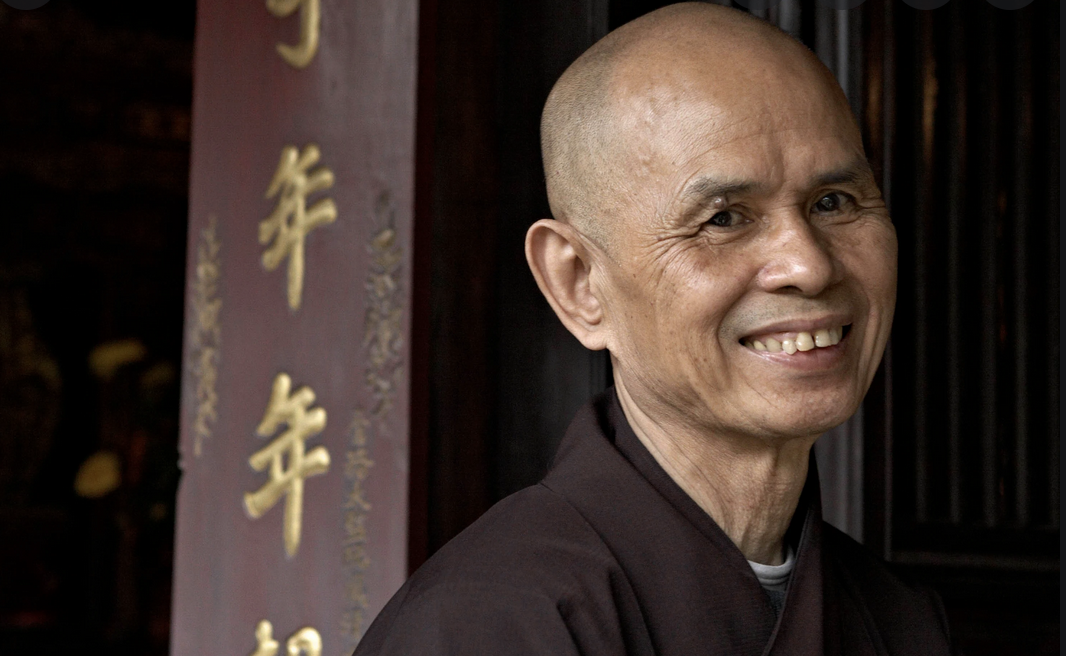
Thich Nhat Hanh, probably the second most well known person in Buddhism in the West, has died at the age of 95. His importance, life and teaching are well summarised in this Washington Post article. May he rest in peace.
“Hanh’s greatest contribution to Western thinking was to inject the idea of mindfulness: to be fully conscious in the current moment.” – Washington Post.
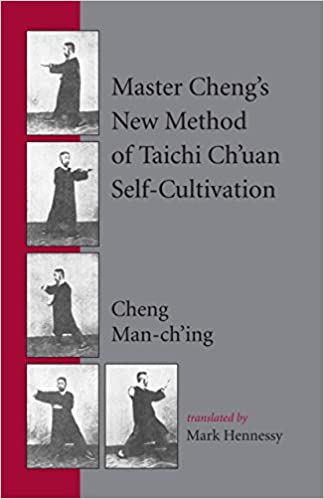
Before the Internet, back in the early 90s, there were only a few books on the subject of Tai Chi in the West, so the authors of these books achieved a kind of fame and notoriety that wasn’t really proportional to their actual importance, or impact on the Tai Chi world. Or maybe their fame became proportional because of the books themselves, in a kind of self fulfilling prophecy. It’s hard to say.
Either way, one book title that always stuck in my mind was “Master Cheng’s New Method of Taichi Ch’uan Self-cultivation”.
This idea of “self cultivation” is kind of the main reason that people practice Tai Chi in the modern world. It’s kind of like exercise, but a little deeper, involving something a little more like meditation. This idea of using eastern spirituality to go on a personal odyssey, or journey into your self is sold to us all the time in the world of Tai Chi, Yoga and health or spiritual practices.
The fact is, it’s nonsense. I hate to break to to you, but individually, we are really not that deep. Scratch our surface and there’s really not that much to us. The idea of cultivating yourself is really a huge waste of time. Our depth lies in our relationships to other people, places and non-human animals. And to find our connection to the world, to the land, the first thing you need to do is get rid of this little self that you’ve been busy cultivating with your various yoga, tai chi and martial arts practices.
Just look at what the Zen or Tao masters of old wrote. They were telling us this constantly in their writings.
When you do something, you should burn yourself up completely, like a good bonfire, leaving no trace of yourself.
– Shunryu Suzuki
One must be deeply aware of the impermanence of the world.
– Dogen
The practice of Zen is forgetting the self in the act of uniting with something.
– Koun Yamada
Those were literally the first three quite in an article I just searched up called “25 Zen Quotes“.
I feel like I could quote any chapter of the Tao Te Ching too, but let’s go with chapter 3:
The Master leads by emptying people’s minds and filling their cores, by weakening their ambition and toughening their resolve. He helps people lose everything they know, everything they desire, and creates confusion in those who think that they know.
Practice not-doing, and everything will fall into place.
If you’re interested in the history of Japanese martial arts then I would also recommend this talk by Dr Oleg Benesch on the Martial Studies podcast, which talks about a lot of the same stuff, particularly the interplay of Western and Eastern ideas after 1852, the invention of the ideal of the honorable Samurai warrior and, most importantly, castles!
I grew up watching Monkey on TV. This Japanese TV series based on the ancient novel Journey to the West was dubbed into English and run by the BBC from 1979 onwards. It was hugely influential in introducing Kung Fu and Taoist/Buddhist ideas to the West via a children’s story.
It’s quite fitting that I watched it as a child, because it is a story for children, but if you look closer, you’ll find that it deals with a lot of deeper issues.
Journey to the West follows the story of a Buddhist monk and three immortal animal spirits (four if you count the horse) who follow ‘him’ (this was always confusing to me, as the actor in the TV series was clearly a woman) on a journey to ‘the west’, which was India, in search of the Buddha. Along the way, they have to endure various trials and tribulations.
Journey to the West is a classic work of Chinese literature, and can be read as an allegory for all sorts of things – is it about the taming of the ‘monkey mind’? Is it a criticism of Buddhism by Taoists? Or Taoist by the Buddhists? Or is it a religious text that acts as a guide to spiritual enlightenment?
As you’ll discover from this fascinating discussion between Chinese language and literature professors Katherine Alexander and friend of the Tai Chi Notebook, Scott Philips, all things are possible!
Katherine Alexander is a professor of Chinese Language and Literature at the University of Colorado at Boulder, and has a PhD from the University of Chicago. Her PhD dissertation, “Virtues of the Vernacular: Moral Reconstruction in late Qing Jiangnan and the Revitalization of Baojuan” addresses popular religious literature and culture in Jiangnan during and after the Taiping War. https://www.colorado.edu/alc/katherin…
Is there a secret to Tai Chi? To martial arts? To life? If there is I think it might be encapsulated in the two words, “Don’t try”.
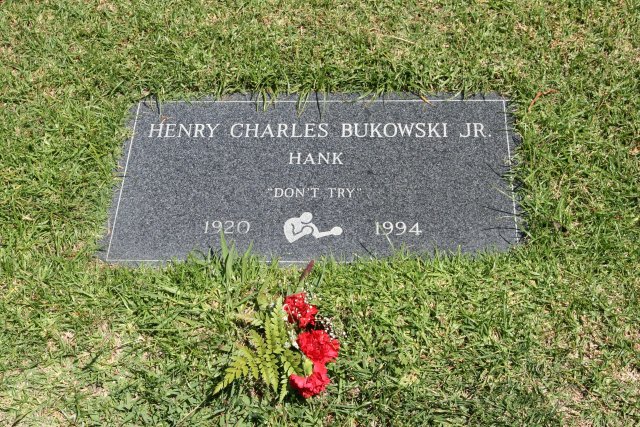
Famously offensive American poet and author Charles Bukowski had “Don’t try” written on his gravestone:
It makes you wonder what he meant. Did he mean just give up? I don’t think so. Underneath “don’t try” is a picture of a boxer, indicating a struggle.
Mike Watt in the San Pedro zine The Rise and the Fall of the Harbor Areainterviewed his wife Linda about, “Don’t try”:
Watt: What’s the story: “Don’t Try”? Is it from that piece he wrote?
Linda: See those big volumes of books? [Points to bookshelf] They’re called Who’s Who In America. It’s everybody, artists, scientists, whatever. So he was in there and they asked him to do a little thing about the books he’s written and duh, duh, duh. At the very end they say, ‘Is there anything you want to say?’, you know, ‘What is your philosophy of life?’, and some people would write a huge long thing. A dissertation, and some people would just go on and on. And Hank just put, “Don’t Try.”
As for what it means, it’s probably best to let Bukowski tell us:
“Somebody asked me: “What do you do? How do you write, create?” You don’t, I told them. You don’t try. That’s very important: not to try, either for Cadillacs, creation or immortality. You wait, and if nothing happens, you wait some more. It’s like a bug high on the wall. You wait for it to come to you. When it gets close enough you reach out, slap out and kill it. Or if you like its looks, you make a pet out of it.”
– Charles Bukowski
Now that’s starting to sound like Tai Chi to me…
I was working on an application of diagonal flying yesterday. The one where you get underneath their shoulder, arm across their body and lift them up and away. There’s a sweet spot as your shoulder goes under their armpit where you have leverage. Where they move easily. You go an inch or so in the wrong direction and you lose it. The technique doesn’t work.
Compared to wrestling and judo I think there are different factors to consider in making a Tai Chi throw work.
You have to think more about your posture. Say, your chest position (is it sheltered? Are the shoulders rounded?) and if you are sunk and in contact with the ground correctly. Is your butt sticking out? Are your legs bent enough?
All these factors matter more in Tai Chi than in Judo and wrestling because Tai Chi is a less physical art. (Whether that’s a good thing or bad thing is debatable, but it either way, it just is.)
With a less-physical art it’s much easier to notice when you’re having to “try” more to make a throw work. Having to “try” too much is a sign you’re muscling it, not letting posture, correct position, leverage and Jin (power from the ground) do the work. Judo and wrestling incorporate these elements too, but Tai Chi relies on them. And without them it just falls apart.
In BJJ I also really like the philosophy of “don’t try”.
For example, if I’ve got the knee on belly position on my opponent I love to go for the baseball bat choke:
The problem is that once you set your grips up on the classic baseball bat your opponent doesn’t just lie there – he defends. He grabs your arms, shifts his hips and generally does everything he can to prevent you from getting the finish.
Now the video shows you three ways to do this – they’re clever little counters to his counters. (I really like the last one actually – I’m going to try that).
But I tend to prefer a slightly different approach. Rather than think of each technique in isolation I like to think of them as being paired. Quite often when I go for a baseball bat choke I set up my grips and immediately my partner has cast iron grips on both my hands. Now sure, I could fight through this – ie. “try” to make the choke work – or I could just go, “you know what? The way he’s defending this means he’s lifting his far elbow – I’ll use that instead”. I give up the baseball choke entirely, but before you know it I’ve spun around and I’ve got a successful kimura grip. He defends the kimura and guess what? It leaves his neck open, and I go back to the baseball choke, so on.
I’m not trying to make anything work, I’m just going with what he gives me. And eventually all the pieces fit together like a jigsaw and it’s done.
I don’t always get it right. More often than not I get it wrong, but that’s what I’m aiming for. If you’re going to adopt this attitude you have to have a really flexible mind. You can’t get fixated on one thing. In fact, you can’t think too much. Just go with what you feel is available.
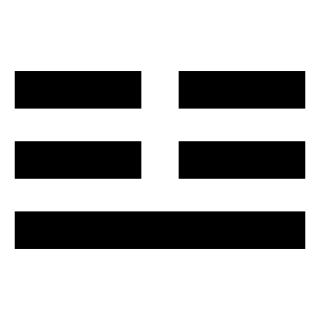
What I’m talking about is getting off the baseline and onto the middle and top lines. For a full explanation of what this means you’d need to listen to the Woven Energy podcast, but in a nutshell, it means you stop using the thinking, rational part of your brain and just use direct feedback from nature (your partner in this case, who is as much a part of nature as you are) and that gives you access to the midline (body) and topline (spirit).
In Chinese culture the topline, midline and baseline form a trigram, which can have broken or unbroken lines, as so:
And since we’ve returned to China we should note that the Taoists were all about this “Don’t try” philosophy. They called it Wu Wei – to do by not doing.
From the Tao Te Ching chapter 2:
Therefore the Master
acts without doing anything
and teaches without saying anything.
Things arise and she lets them come;
things disappear and she lets them go.
She has but doesn’t possess,
acts but doesn’t expect.
When her work is done, she forgets it.
That is why it lasts forever.
Or as Yoda put it, “Do or do not, there is no try”.
And to return to the topic of Tai Chi, it is also exemplified in the short but concise classic on push hands:
Song of Push Hands (by unknown)
Be conscientious in Peng, Lu, Chi, and An.
Upper and lower coordinate,
and the opponent finds it difficult to penetrate.
Let the opponent attack with great force;
use four ounces to deflect a thousand pounds.
Attract to emptiness and discharge; Zhan, Lian, Nian, Sui,
no resisting no letting go.
And to finally return to Bukowski, he might be a strange role model, but I kind of like the old guy. His poems aren’t beautiful, but at least they are honest. He was always, exactly himself. He didn’t need to try.
I really enjoyed listening to this podcast interview with Bill Porter, who goes under the author name of Red Pine. (There’s a transcription as well so you can read it too).
Bill has had an interesting life, as you’ll discover from the podcast, most notably going to China to interview hermits living in near isolation on mountains in search of The Way. His most famous book is about this: Road to Heaven: Encounters with Chinese Hermits.
I particularly enjoyed his description of translation work as being like trying to dance with a skilled dancer when you can’t hear the music.
In his translation work he’s perhaps most famous for his work translating the Buddhist poet Cold Mountain.
I found a collection of Cold Mountain translations here. They’re not by Bill, but by A. S. Kline. I like them all the same:




 The Tai Chi Notebook
