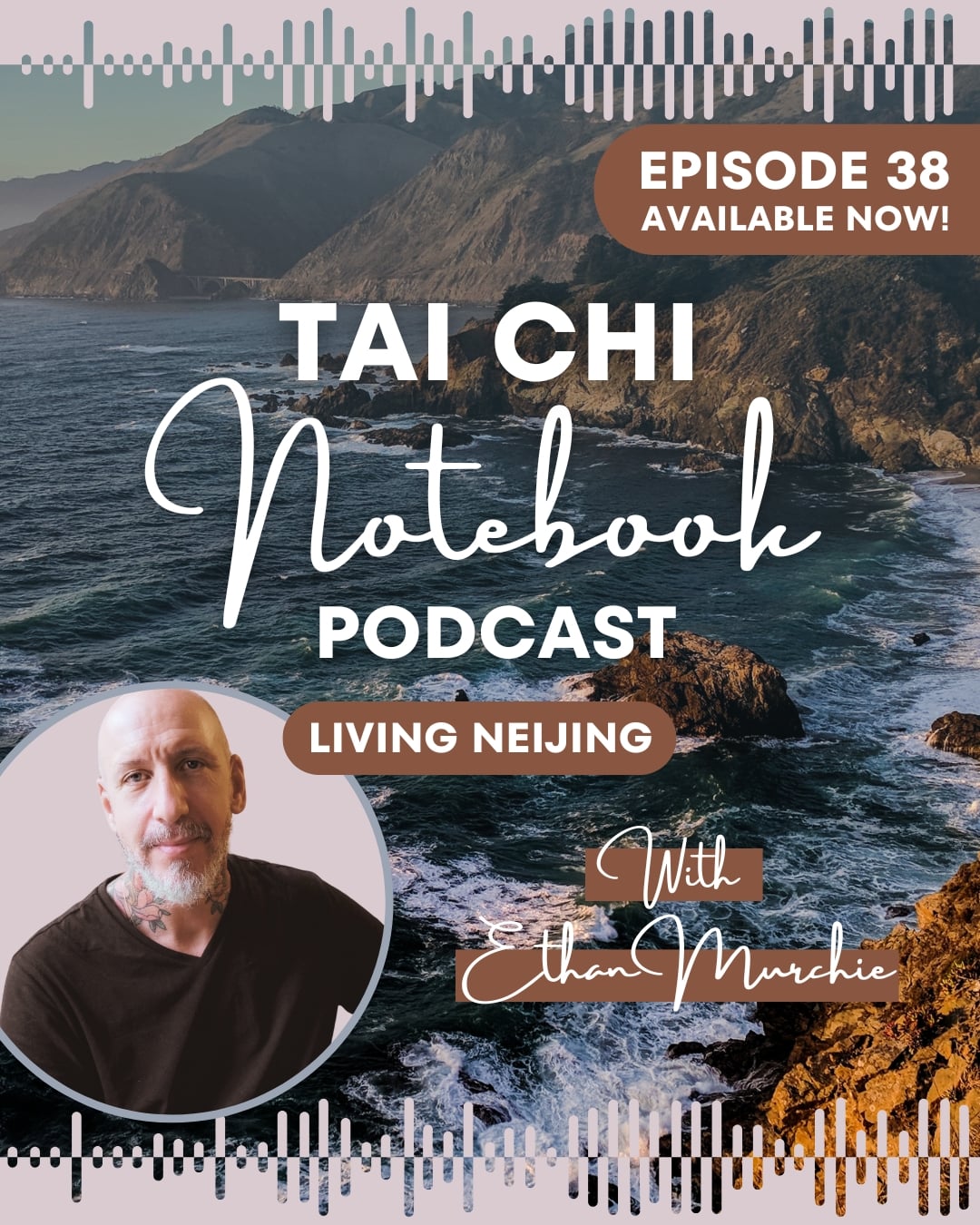
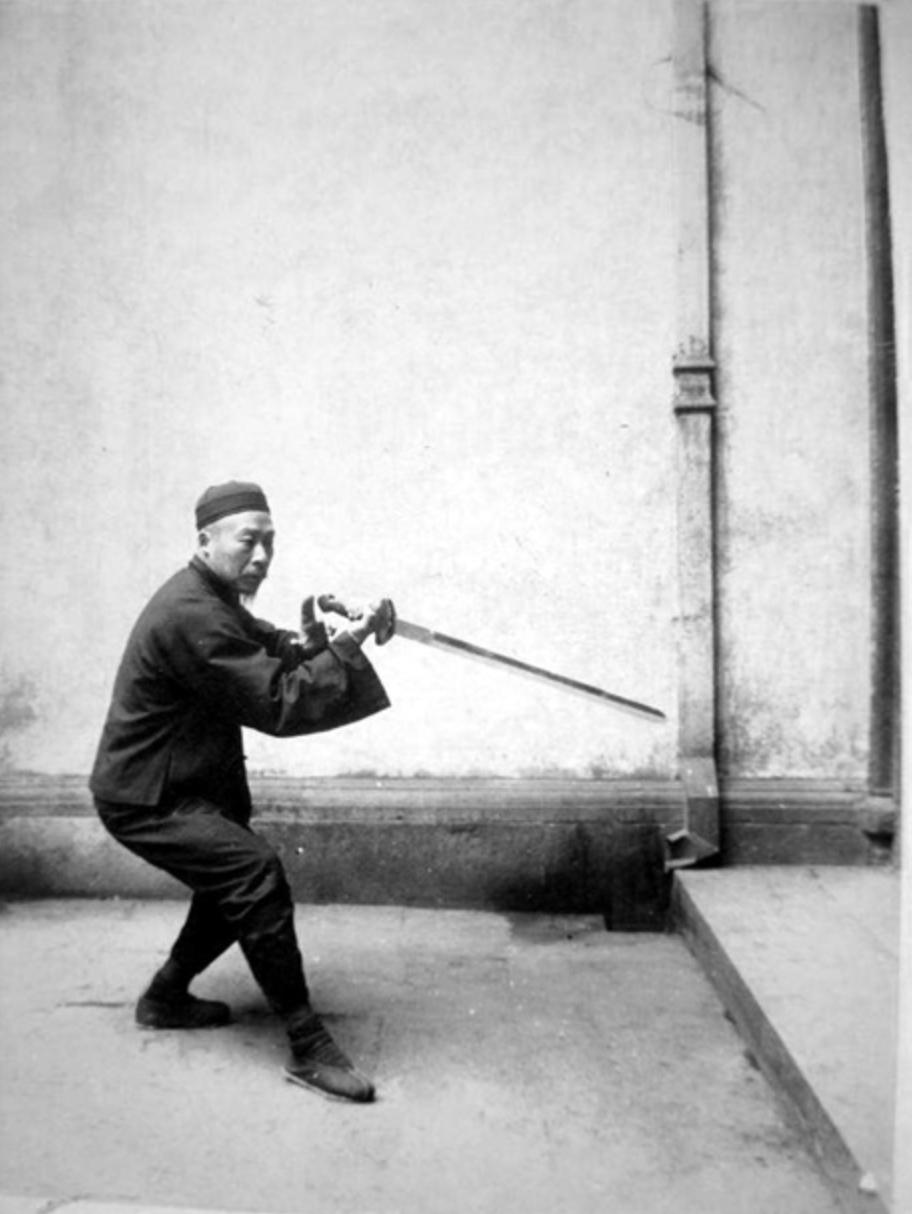
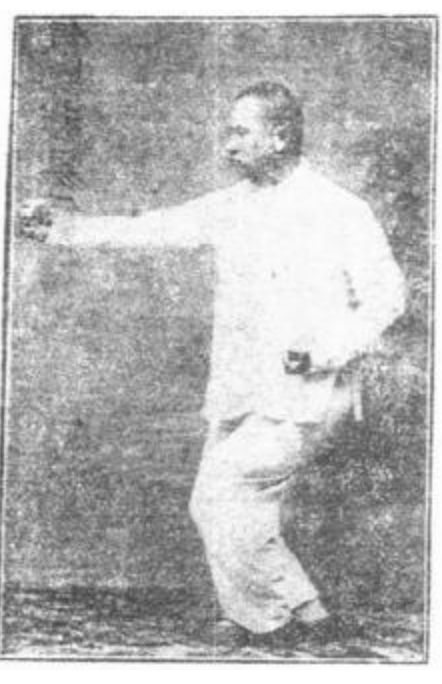
In this podcast I talk to internal martial artist Ethan Murchie about this teacher Vince Black from whom he learned xing yi mixed with elements of Sufism and Shamanism, as well as the North American Tang Shou Tao Association which Vince set up and which is still running today.
We also discuss how traditional arts can survive alongside MMA, the Yellow Emperor’s Classic of Internal medicine (the Huangdi Neijing) which Ethan teaches through his Living Neijing website, the meaning of Chinese terms like qi, peng, lu, ji and an, as well as his tai chi teacher Liang Dehua and the Yang Shouhou lineage of Yang family tai chi.
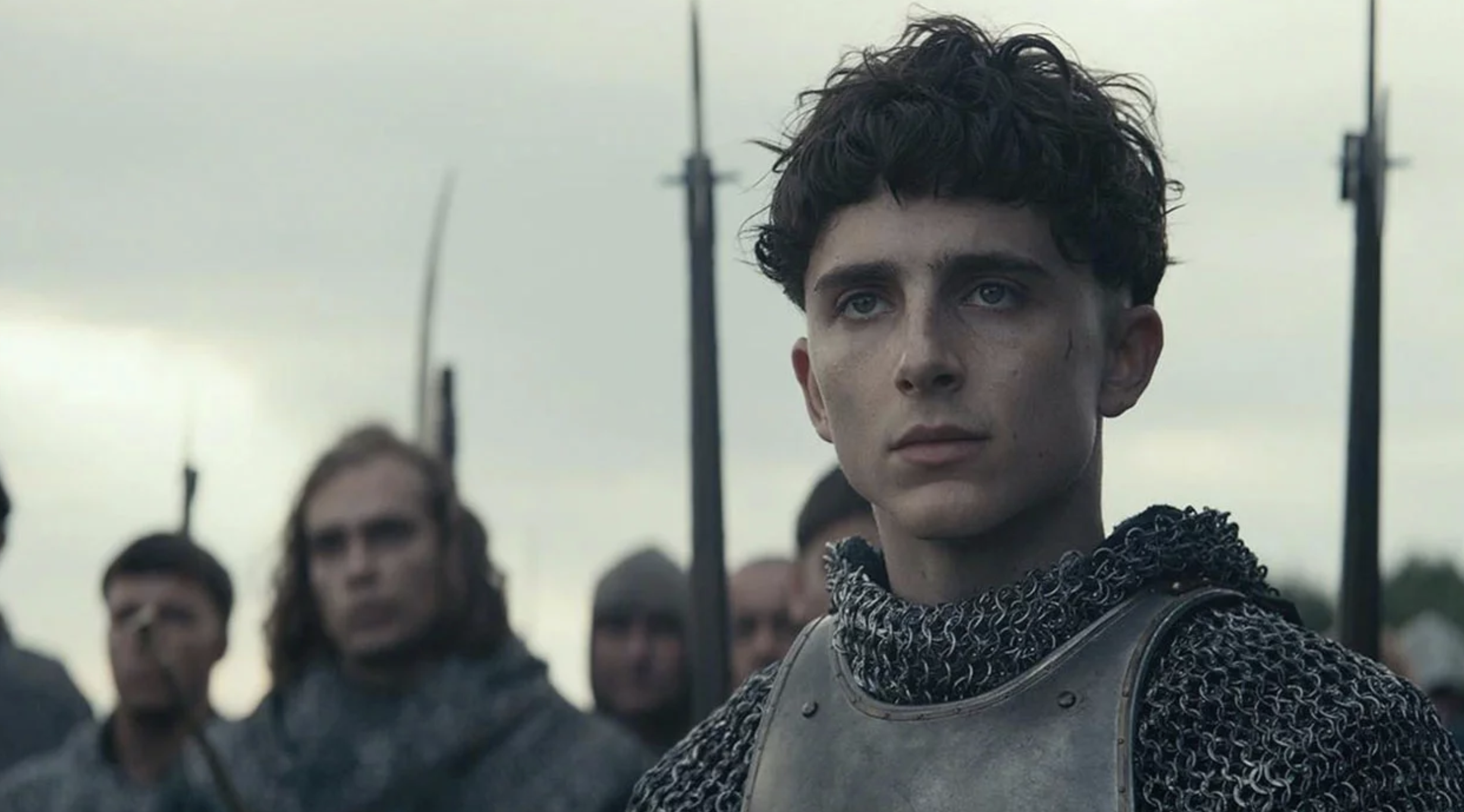
Happy Father’s Day, UK! There are three Euros matches on today, including England, so you’re probably not looking for a film to watch tonight, but if you do then I’d recommend The King (2019) on Netfix.
The King trailer.
I loved this film, which I reviewed when it came out. It’s the story of Henry the fifth, not the historically accurate story, the Shakespeare version, but presented as if it was the historical version, which is a bit confusing, but that didn’t bother me. The acting is great (it stars the unfairly good-looking Timothée Chalamet), the story is top notch (er, thanks, Shakespeare) and the battle scenes are really well done.
But it was the solo duels in particular caught my attention for having a realistic quality, which is why I greeted this video breaking down the first longsword duel in the film between Harry ‘Hotspur’ and Hal with interest.
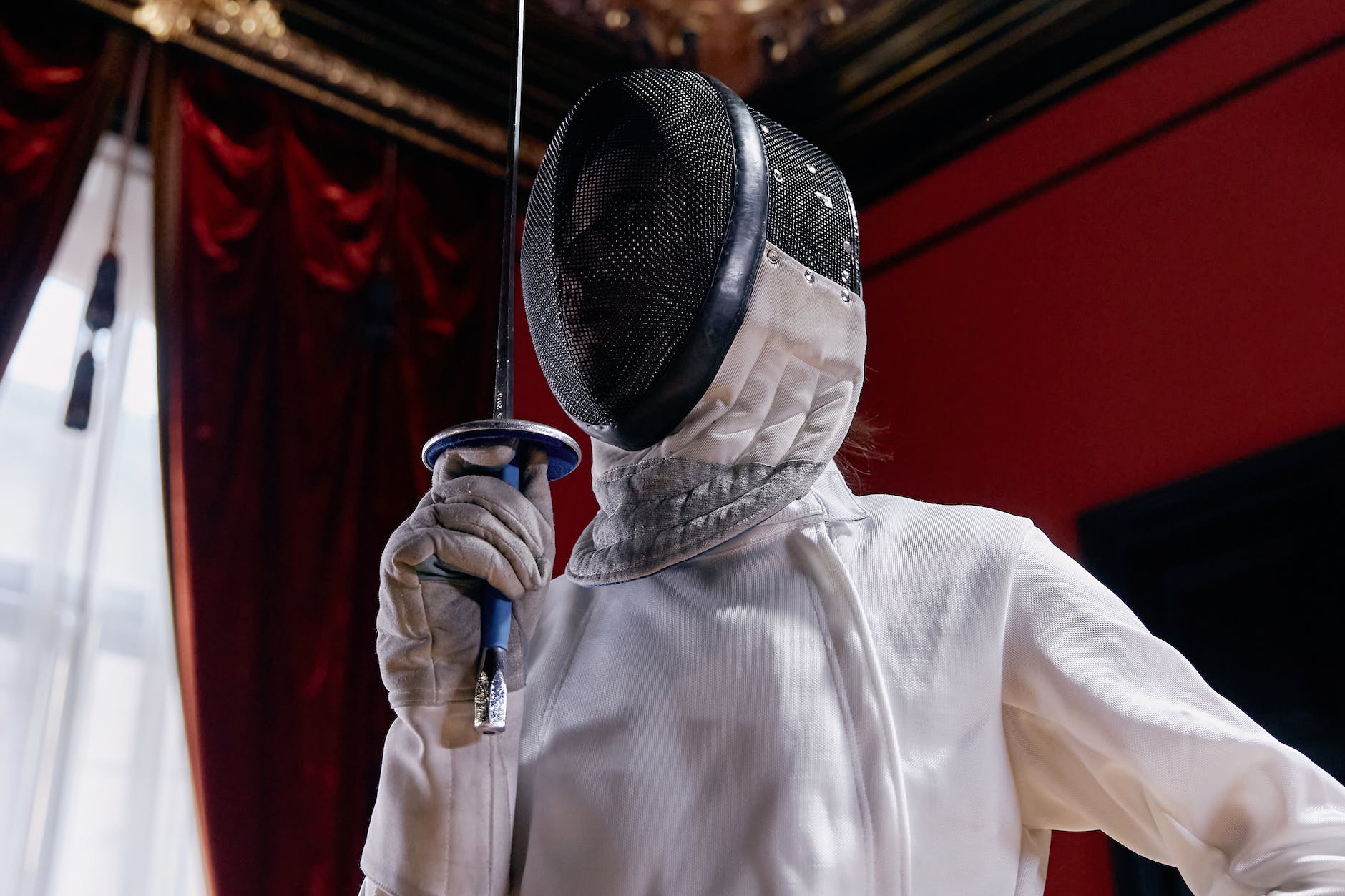
When you’ve been doing Asian martial arts for a while you have to remind yourself that the term “martial arts” also applies to European martial arts too, the sort of thing that HEMA is busy reviving, and Longsword is one of the things they practice. I really like the discussion of longsword technique in the analysis of the video, and the reference to historical fencing manuals (fight books), and how it gives you more insight into what’s going on in the fight.
My one criticism of the breakdown is that it completely ignores the excellent little ankle trip takedown right at the end that gives Hal the win. That deserves more credit! Anyway, here’s the video:
“The best swordsman does not fear the second best. He fears the worst since there’s no telling what that idiot is going to do.”
Many attribute the quote to Mark Twain, but it was actually a summation of something Twain wrote in “A Connecticut Yankee in King Arthur’s Court”, 1889, which was:
“But don’t you know, there are some things that can beat smartness and foresight? Awkwardness and stupidity can. The best swordsman in the world doesn’t need to fear the second best swordsman in the world; no, the person for him to be afraid of is some ignorant antagonist who has never had a sword in his hand before; he doesn’t do the thing he ought to do, and so the expert isn’t prepared for him; he does the thing he ought not to do: and often it catches the expert out and ends him on the spot.”
I think about that quote a lot, mainly because I spend a lot of my time sparring with people in jiujitsu who range vastly in skill level. And the reason I think about that quote a lot is because it’s true.
When I’m rolling with a higher belt in jiujitsu, my best jiujitsu comes out – I can pull off things – clever, complicated things – I can’t do with beginners because the more experienced person is reacting correctly for a jiujitsu person. However, when you roll with a beginner even they have no idea what they are going to do next, so you are constantly stuck in this awkward stop/start phrasing of movement where you have to be constantly on guard for the unexpected because the risk of injury is real. But rolling with beginners also reaffirms another maxim for me – often you don’t need complicated jiujitsu, you just need to do the simple thing well.
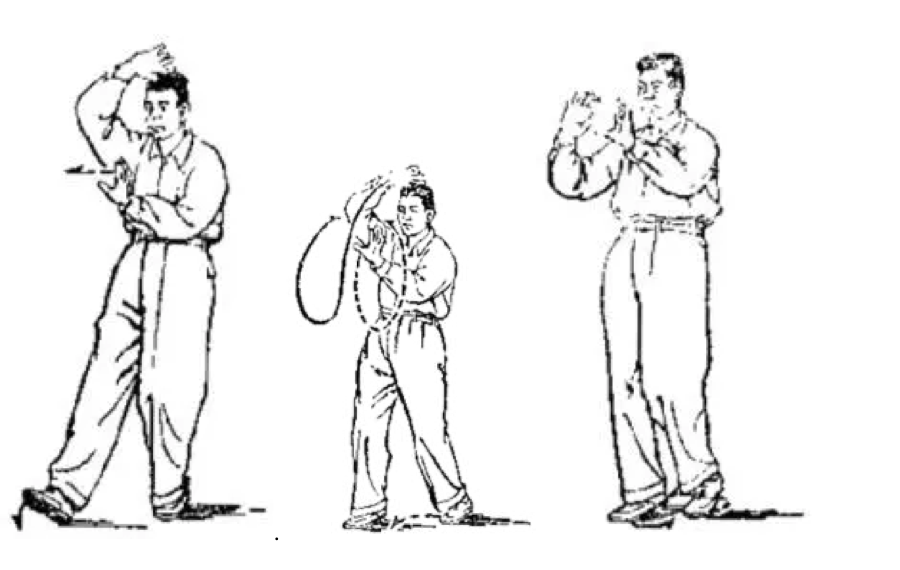
I’ve always been curious about the postures in martial arts forms where both feet are together, because these postures don’t look very martial at all. In fact, it’s hard to imagine why you would want to use a stance like that in a fight, and yet we find them in a lot of Tai Chi forms:
Here’s an example of the posture in application in Taiji performed by my teacher Sifu Raymond Rand:
Sifu Rang, Brush Knee, Twist Step.
It seems to be mainly Taiji lineages that have some influence from Sun Lu Tang that do this the most. A lot of people attribute the distinctive ‘feet together’ postures he used to his prior training in Xing Yi, and there could be some truth to this. Xing Yi does have ‘feet together’ postures quite a lot.
Of course, the root of Xing Yi is spear fighting, but the modern interpretation of the art is heavily biased towards bare hand training, and this creates a misleading impression. Think about it – if you were at at least one spear length away from your opponent the risk of being tackled to the ground because your feet are together would be greatly reduced. You’re now free to use the power generation advantages that can be gained by letting both feet come together, which is handy when you are holding a heavy object, like a spear.
If you watch this excellent video of Xing Yi spear technique by Byron Jacobs you’ll see that he doesn’t hang out with his feet together all the time, but occasionally he uses the feet together moments for power generation (and of course, also standing on one leg for range advantage and manoeuvrability in a way that makes sense with weapons).
In Xing Yi the most famous example of the ‘feet together’ posture is the Half-Step Beng Quan. Here the back foot stepping up to meet the front foot in place creates a powerful closing action of the body, kind of like a door slamming.
So, is this the origin of ‘feet together’ postures in Taiji forms? Quite possibly. However, there is one more thing to consider. After first learning Xing Yi, Sun Lu Tang learned his Taiji from Hao Weizhen 1849–1920, who learned from Li Yiyu 1832–1892, who learned from one of the Wu brothers, Wu Yuxiang 1812–1880 who had learned directly from Yang Luchan 1799–1872 and also sought out Chen Qingping 1795–1868 who he learned from in Zhaoboa village.
It’s often thought that the distinctive stepping seen in Sun style Taiji, where the back foot is often lifted and brought up close to the front foot, is a consequence of Sun’s prior Xing Yi training. This makes sense as part of the narrative created as part of the Sun Style Taiji brand, which is that he incorporated his earlier Xing Yi and Bagua training into his Taiji style. However, if you look at the Wu (Hou) style he learned, it already had this distinctive stepping in it.
While the feet don’t go completely together as much, if at all, in Wu(Hao) style, they are very close together for a lot of the time. Watch this video for an example of the form in action:
I think you can see that influence extending into Sun Lu Tang’s Taiji, which makes sense since he learned from this lineage.
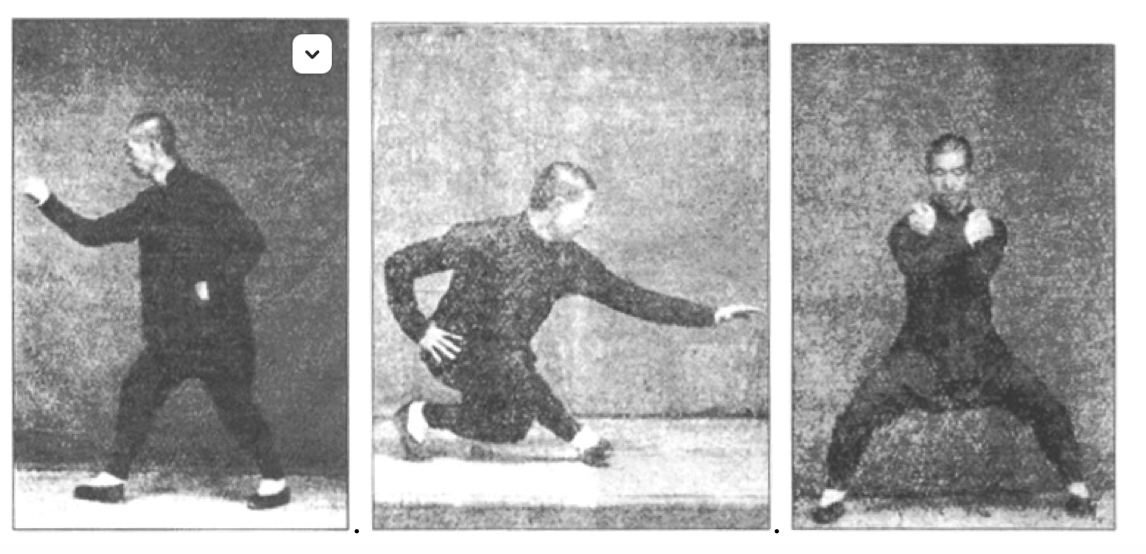
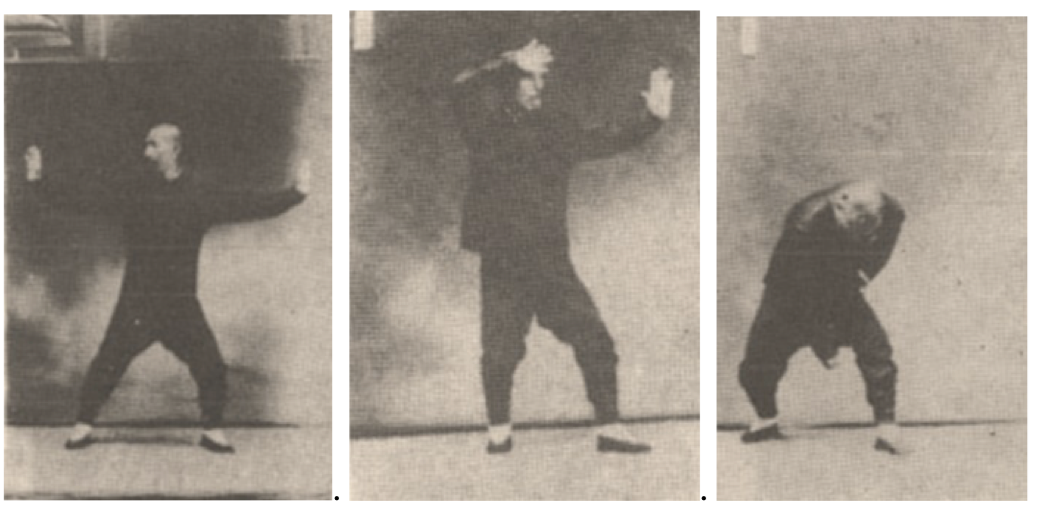
Finally, I should note that thought this post I don’t want to create the impression that all the steps in either Xing Yi or Taiji performed by Sun Lu Tang are small or restricted. He also had plenty of wider postures in his arts too, for example.
Xing Yi:
Taiji:
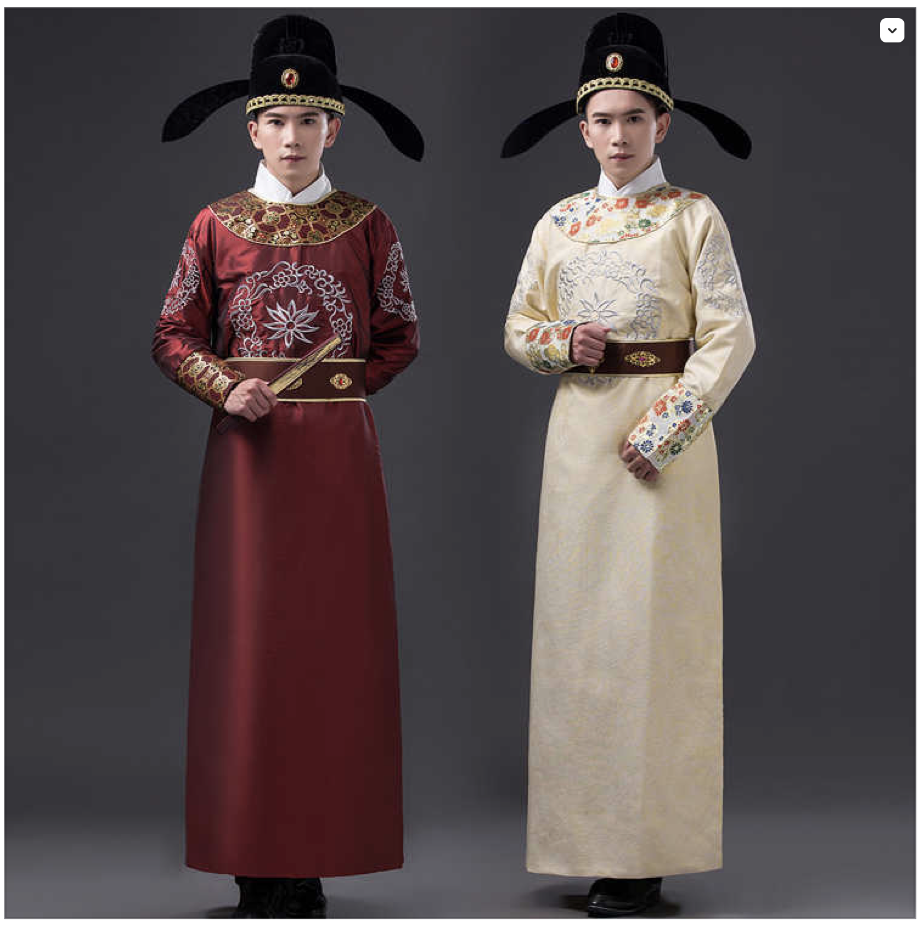
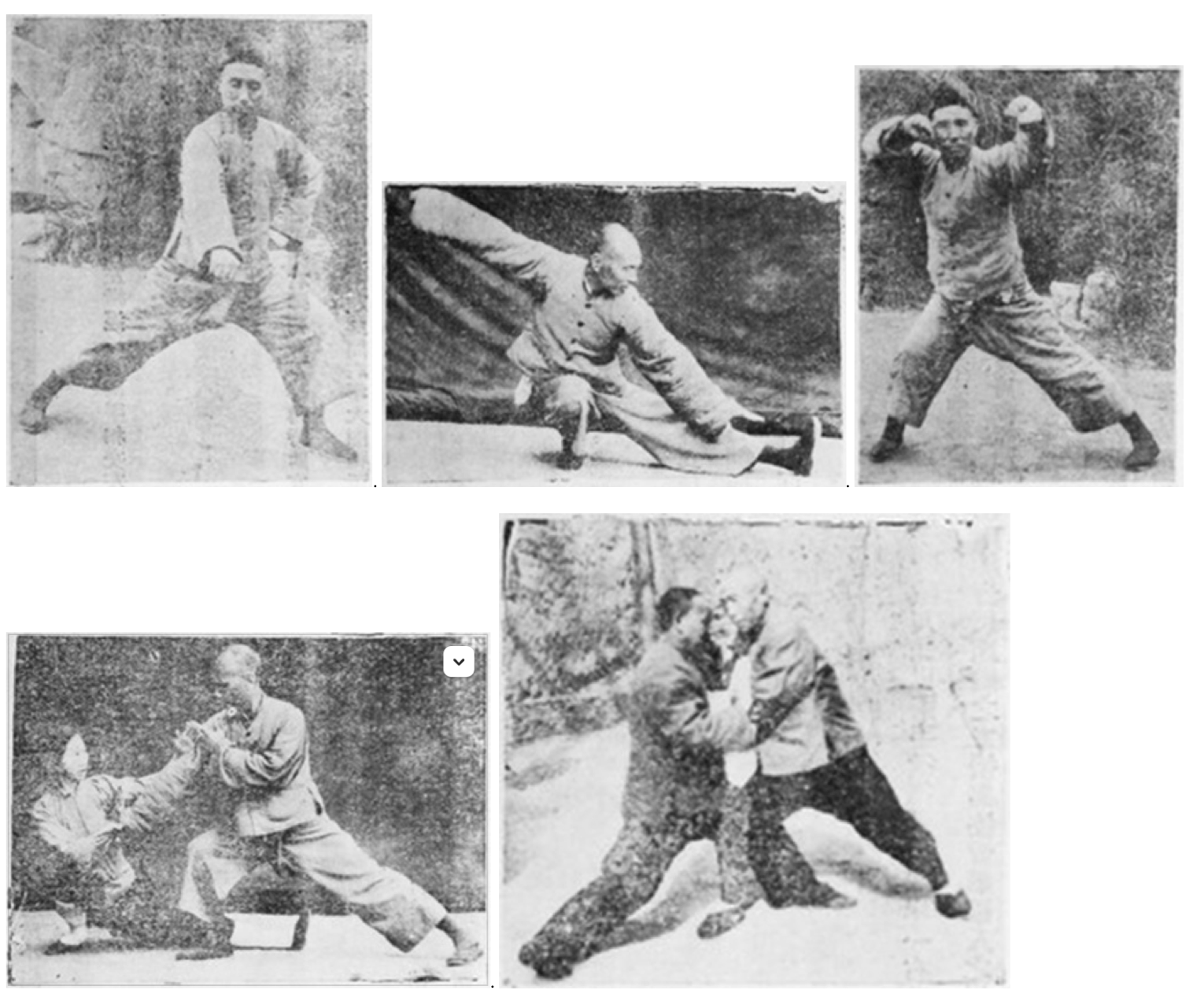
However, compare it to postures found in other styles of Taiji whose practitioners didn’t have to wear court dress:
I listened to a rather interesting comment in a podcast recently from a Tai Chi practitioner who preferred to do weapons forms rather than hand forms because “Tai Chi is really a battlefield art” and the postures in the hand form are clearly derived from holding weapons, and it was therefore more authentic to practice the weapons forms. The implication is also that the hand forms were retrofitted onto the art, while the weapons forms are the true origin.
There’s some truth in this idea depending on which art you art talking about, of course. Xing Yi for example – there’s no doubt that the weapons forms came first. Doing a Beng Chuan (a straight punch to the belly or chest area) barehand, as presented in the classical 5 Elements form, leaves a lot of questions unanswered – why is your head not protected as you punch forward, for example? Why is your other hand pulled back at your hip where it’s not doing much of anything? What stops them punching you in the face?
(Liu Dianchen, Beng Chuan,1921)
As a barehand method, it’s clearly sub-optimal. Put a spear in your hand, and even better, wear armour, and it starts to make a lot more sense though. The hand withdrawing to your hip is pulling the spear back after a thrust, for example.
But if we’re talking about the long, elaborate weapons forms found in Tai Chi, done usually in silk pyjamas, then you’ve got to ask yourself – what good is all that dancing about if your goal is martial effectiveness on the battlefield? Do you think Chinese soldiers, village militia or bodyguards with spears or Guan Dao did this kind of practice? I don’t think they did. Or maybe they did for demonstrations at the many and frequent festivals in old imperial China in the Qing Dynasty, but what use is all that on a battlefield?
While using a spear, for example, might be connecting your art back to an earlier time and usage, I’m not sure that your 180-move spear form, with jumps, twirls and spins is any more “authentic” than a modern day hand form.
It’s very easy to fool yourself in Chinese martial arts. Stay sharp!
Highland survivalist Tom Langhorne shows you how to make your own martial arts staff, from selecting and harvesting the wood sustainably to crafting and refining it. If you need a little project to work on in lockdown, then this could be it!
He’s also got a great video that shows a comparrison of different staff fighting styles, which incluides: Jogo dau pau, Scottish Quarterstaff, German Quarter Staff and Japanese Bo,
And a video on the staff in general and its Scottish history:
The King (Netflix 2019) is (Shakespeare’s version) of the story of the rise of King Henry V and the battle of Agincourt against the French (1415).
Prince Henry is portrayed as a wayward teenager, who dislikes authority and has no desire for the throne or the complications of court politics and international diplomacy. Suddenly this emo teenager has the full weight of the English crown thrust on his shoulders, and pretty soon, against his will, he is at war with France and the famous field in Agincourt is calling.
There are virtually no women in this film. It’s as study of men. How men rule, how men lead and how men fight. And ultimately, how they lie.
The fight scenes are not bloody. They’re muddy. Smack, bang, wallop in the mud. But they feel realistic. I think the makers of The King have spent a lot of time talking to medieval armor experts and thinking about how fights in armor, between armored knights, would actually have played out.
While Agincourt is remembered for the English archers securing victory with their longbows, their effect in the battle, while important, is not portrayed as the decisive factor by a long way. It’s the use of the terrain, strategy and hand to hand combat that secures victory.
And the grappling. There is so much grappling. Specifically, grappling with weapons and armour. Forcing the opponent to the ground and working a blade in or bashing their head with a hammer.
The key factors seem to be, wrestling, impact from momentum (blunt or sharp edged weapons), and finally the environment – the mud.
Xing Yi, a Chinese martial art which I talk about a lot on this blog, has battlefield origins and seems equally obsessed with weapons, armour and the environment. The strikes in Xing Yi’s 12 animals all target weak points in armor. The bits where the joints in the human body are and the armor is, by necessity, weak to allow the limbs to move – up under the armpit, the inner thigh and the neck are obvious examples.
Another thing that Xing Yi emphasis is the stepping. So much emphasis is placed on making sure you don’t slip or trip in Xing Yi training. My XingYi teacher would insist on us stepping with the whole foot landing flat, never the normal heel toe action of walking.
Back when I was learning from him regularly we used to train outside (whatever the weather), so often this was on wet grass. Trust me – you don’t appreciate that heel toe stepping is vulnerable to slipping until you try it at speed on wet grass.
Over time we seem to forget these little things in our training, because in our modern life they are rather unimportant. People don’t wear armor these days and we usually train martial arts on flat wooden floored gymnasiums or village halls, in the dry. Watching The King was a good reminder of their importance. It’s the simple things like this that make the difference between living and dying on a battlefield.
When it comes to grappling in armor, The King suggests that tripping or simply unbalancing the opponent is the decisive factor. Forget the big hip and shoulder throws of judo, and think more about the little leg hooks and sweeps you find in folk style wrestling. It makes me think of those jacketed styles of folk wrestling which have survived today in isolated corners of the world, or the descriptions you read of Irish collar and elbow wrestling (sadly now lost), which start from a position of already being in a clinch with the upper body and the leg tricks where the art is found. Suddenly the reasons for training wrestling like that makes much more sense.
I enjoyed The King for all these reasons. Perhaps the closest we’ll ever get to a battlefield type situation in modern civilian life is a game of rugby. Either being in one or watching one.
In short, The King is great, war is a muddy business, and I need to start thinking about my stepping again.