Does BJJ work on the street?

Chris Haueter’s new speech at BJJ Globetrotters addresses the seemingly eternal question people have about Brazilian Jiujitsu.

Chris Hauter is one of the original 12 American black belts in the art of Brazilian Jiujitsu. In this new 1.5 hour (yes, 1.5 hour!) speech he addresses a question which continually dogs BJJ:”Does BJJ work in the street?” He tackles the subjects of sport Jiujitsu compared to self defence Jiujitsu. It’s interesting because he might not say what you expect him to say…

Have a watch:

Brexit blues

dscf0087-8462206_std

I’ll be honest, I’m so depressed about what just happened to my country (voting to leave the EU) and the inevitable break up of the United Kingdom that will follow that I don’t feel like contributing to the world in a positive way right now, so I’m going to shutter my blog until I feel differently.

Britain, I am disappoint. You used to be better than this.


The power of concentration

xavier-professor-x-x-men-first-class-22804470-2560-1707

A great little story that’s worth sharing.

“Once during His visit to Chicago, USA, Swami Vivekananda was taking a  stroll on the banks of a river. There he saw some young boys with an air  gun trying to shoot at eggshells floating in the river. As the shells  rolled up and down on the choppy water, the boys could not hit them.  None of the boys hit an eggshell, despite trying many times.

Swami Vivekananda was watching their game with keen interest. Seeing  this, the boys called out to Him, “Sir, you have been watching us all  this time. Would you like to give it a try?” Swami Vivekananda smiled  and said that He would like to try. Taking the air gun in His hand, He  aimed at the eggshells and concentrated on the target for some time.  Then He fired the gun twelve times and hit an eggshell each time!

The boys were awestruck on seeing Swamiji’s skill and asked, “Well,  Sir, how could you do this? Have you had a lot of shooting practice?”  Swamiji laughed and said, “No, I have never practiced shooting.” The  boys were confused, “Then how is it that you shot so well?” Swami  Vivekananda replied, “Well, let me tell you a secret. Whatever you do,  concentrate all your attention on it. Think of nothing else. If you are  shooting, keep your mind only on the target. Your aim will not fail.  Concentration can work wonders. Even when you are studying, think only  of the lesson at hand. Then you will easily remember what you study.”

(Found on Quora.com)

The visual language of Tai Chi

91796153_tai-chi_377x171

How do the images of Tai Chi we are presented with colour our thinking about it?

My previous post about Stoicism started a few things turning over in my brain about the ‘visual language’ of subjects and how that can influences our thoughts about them. For example, the visual language of Stoicism is really populated with old paintings and ancient stone statues of dead old men. It all feels very cold, remote and ‘serious’. When, in fact, the day to day reality of being a member of the Stoic school of philosophy could have been very different. Had we the ability to travel back in time to the original Stoa in Athens circa 3rd century BC, we may have found that the Stoics were lively, warm friendly debaters. Or maybe they weren’t? But either way their daily reality would have been made up of different visual images then the statues of old men we are left with today.

zeno_citium

Zeno of Citium, founder of Stoicism

It also made me wonder about the visual language of Tai Chi, and how that influences the way we think about it. A good way to see what the ‘visual language’ of a subject is, is to put its name into Google and do an image search.

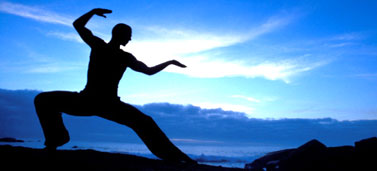
If we put “Tai Chi” into Google Images we get a proliferation of black silhouettes of people doing Tai Chi postures in front of dramatic sunsets. It all looks very new agey and spiritual. To me this suggests the world sees Tai Chi as some sort of mental/spiritual wellbeing system, a bit like Yoga.

And well, maybe it is. But it’s also a lot of other things too.

Stoic Mindfulness and Resilience Training 2016

a272120416e13205c0b5336e5950839a

Your chance to become more resilient to the ups and downs of life

One of the reasons that so many people look East to find ancient warrior traditions is that in the West they largely died out. Thankfully, writings and manuals of Western martial arts remain, and good work is being done to recreate them, but there is rarely an unbroken teacher/student link to the past. On the philosophical side of the arts, Stoicism is one of the ancient traditions of European culture that also died out, but has seen a huge resurgence in popularity recently.

I’ve always been interested in the philosophical side of Tai Chi – particularly Taoism and the writings of Lao Tzu. In fact, that was where my initial interest in the art began. I was looking for something that would help me become more resilient to the ups and downs of life, rather than a self-defence course. More recently I discovered Stoicism, and noticed how many parallels there are with “Tai Chi philosophy”. Stoicism is fundamentally different however, and perhaps more suited to a Western mind. It is especially useful for dealing with worry and anxiety, and puts a lot of emphasis on living a better, more meaningful life.

SMRT 2016 will be starting on Sunday 19th June and continues for four weeks. If you want to find out more about Stoicism then it’s a great opportunity to do so in a practical (and free!) way, since the course contains exercises to do on a daily basis. Click here to find out how to sign up.

As an example of Stoic philosophy, the Roman emperor Marcus Aurelius, the famous Stoic, once wrote:

“Begin each day by telling yourself: Today I shall be meeting with interference, ingratitude, insolence, disloyalty, ill-will, and selfishness – all of them due to the offenders’ ignorance of what is good or evil. But for my part I have long perceived the nature of good and its nobility, the nature of evil and its meanness, and also the nature of the culprit himself, who is my brother (not in the physical sense, but as a fellow creature similarly endowed with reason and a share of the divine); therefore none of those things can injure me, for nobody can implicate me in what is degrading. Neither can I be angry with my brother or fall foul of him; for he and I were born to work together, like a man’s two hands, feet or eyelids, or the upper and lower rows of his teeth. To obstruct each other is against Nature’s law – and what is irritation or aversion but a form of obstruction.”

Qialance’s Top 15 Tai Chi blogs

9dcc4d5fe2ee89cfbb0d5688153467f3ecea50e7fd9c1dffe35c3f6e90c7143c

A while ago my blog got mentioned in the ‘Top 15 Tai Chi blogs‘ by Qialance. Well, the lovely Angelika from Qialance did a little interview with me the other day, which should go live on 15th June. I’ll update this post with the live link once it has.

In the meantime, check out her blog for some interesting thoughts on Tai Chi, like this post about why you should practice every day.

Edit: here’s the link to the interview


Studying the monkey in Chinese martial arts

A visit to Monkey World gives me new insight into the name of one of the most famous Tai Chi sequences – Repulse Monkey.

e3c687472813e4f4cc876a55c71968ee

Yesterday we had a family trip to a local ape rescue centre called Monkey World. All the larger apes were suitably majestic, and the little ones suitable cheeky. The ones that stole the show though, were the white cheeked Gibbons. In terms of dancing through the trees these guys have got it made – they look so totally effortless with their arm hanging and swinging. They have no tails, so they swing in the classic way that humans attempt when using the monkey bars, but it looks so utterly effortless for them, because their arms are extrodinarily long when compared to the length of their body and their shoulder and wrist joints are different to ours. They swing one hand at a time, like this:

5-1

Gibbon, swinging


That’s when it occurred to me that this must be where the famous Repulse Monkey sequence in Tai Chi forms gets its name.

irp0nt

Me, doing Repulse Monkey

The “repulse” bit I’ve always thought was kind of obvious, because you’re pushing (or striking) something away, but I could never understand what was monkey-ish about this sequence, since you are used large extended postures, rather than what I’d come to associate with monkey styles of kung fu, which are usually full of small crouching postures and darting and rolling about. However, if you look at Gibbons swinging from branch to branch, it makes sense.

Of course, Gibbons are native to south China and were even kept as pets:

“Interactions between humans and gibbons have a long history in China, as reflected in the Chinese literature and art. Especially in early China, gibbons made the objects of many literary and artistic compositions.

The popularity of captive gibbons being kept as pets appears to go as far back as written history, although a proverb by the philosopher Huai-nan-tzû (died 122 B.C.) stated: “If you put a gibbon inside a cage, you might as well keep a pig. It is not because the gibbon is then not clever or swift anymore, but because he has no opportunity for displaying his abilities” (van Gulik, 1967, p. 40).”

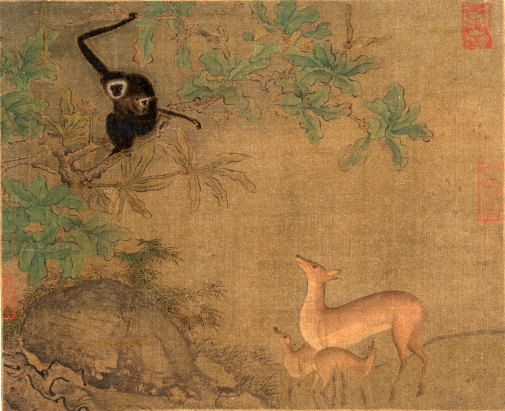
An example of Gibbons in historical Chinese painting:

gibbons_and_deer

Unknown artist from Southern Song Dynasty.


Moving away from Gibbons, one unique character I observed in all the apes was a kind of nonchalance. One Gibbon came to the edge of their enclosure, on the farthest out branch and hung there for a few minutes by one arm looking at the strange humans who had come to see her. They are really unhurried and unbothered by anything. The Chimpanzees on patrol walk the edge of their territory unconcerned with all the people watching. Apes don’t ever appear stressed or worried by thoughts – they just do. Perhaps they’re the ultimate masters of mindfulness.

XingYi, the great internal martial art from China, has Monkey (Hu) as one of its 12 animals. I often find myself doing this sequence in a hurried way, since the movements are inherantly quick and fast, but now I think I’m going to try and slow down a bit and add an element of nonchalance to the moves as well. I think to really get that monkey character right you need to appear unconcerned about the attacker – after all, a monkey can often retreat to the safety of the higher branches after engaging, a luxury other animals don’t have when hunting or defending themselves. I think this nonchalant feel is be a key element to being able to master the XingYi animal in the correct way.


The professor

I can’t let the new documentary on Professor Cheng Man Ching, one of the early pioneers of Tai Chi in the West, slip out without giving it a mention on this blog.

chengmanching_sword

Much has already been said about it, so there’s not too much more to add, except that I haven’t seen it yet, and I might blog again after watching it, because it will probably stimulate some thoughts.

Cheng Man Ching is one of those contentious figures who splits opinion. By being one of the very few people in the US publicly teaching Tai Chi in the 1960s, and thanks to the gushing endorsement in books by his student Robert Smith, and his ability to push big, heavy Westoners around with comparative ease, Cheng very quickly achieved a big reputation.


Cheng modified the Yang Tai Chi form he learned from Yang Cheng-Fu, creating one of the first short forms of Tai Chi. His Tai Chi also had a distinctive look compared to his teachers – in (I believe) an effort to stick as closely as possible to the writings of the Tai Chi classics, he changed some of the postures slightly, adopting a more upright body, and a softer hand and arm position. Some would say his Tai Chi was too soft, and his influence is responsible for the typical ‘soft like a noodle’ style of doing Tai Chi often found in the West. But if you watch  him do his form, you can see that he looks solid as hell. He exudes the ‘peng’ quality of energy rising upwards and outwards, and being rooted in the legs.

Undoubtedly he was an example of what happens when a small fish in a big pond suddenly becomes the only fish in a very small pond, but he was also a skilled practitioner of Tai Chi. Of that there can be no doubt. Was he also a world class martial artists? No, probably not. Did his students put him on an unrealistic pedestal? Yes, undoubtedly they did. But that’s what happens with human beings. We’re like that with people we admire.

You can watch the trailer here:

Wave hands like clouds

A look at the Cloud Hands movement of Tai Chi, and what it’s really all about

11_cloudhands

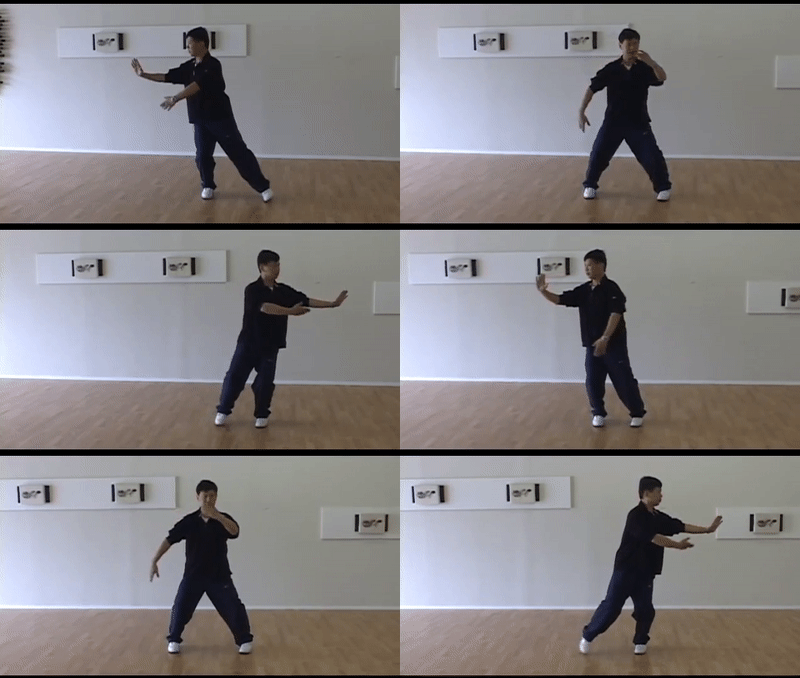
Cloud hands, or ‘wave hands like clouds’ as it’s also known, is one of those classic Tai Chi movements that characterise the art. It’s done in slightly different ways in different Tai Chi styles. Take a look at the variations:

Master Yang Jun, (Yang Cheng Fu, Yang style):
rohras


Master Chen Zhen Lei, (Chen style):

i-wa5

Master Sun Ping, (Sun style):

fwxvnx

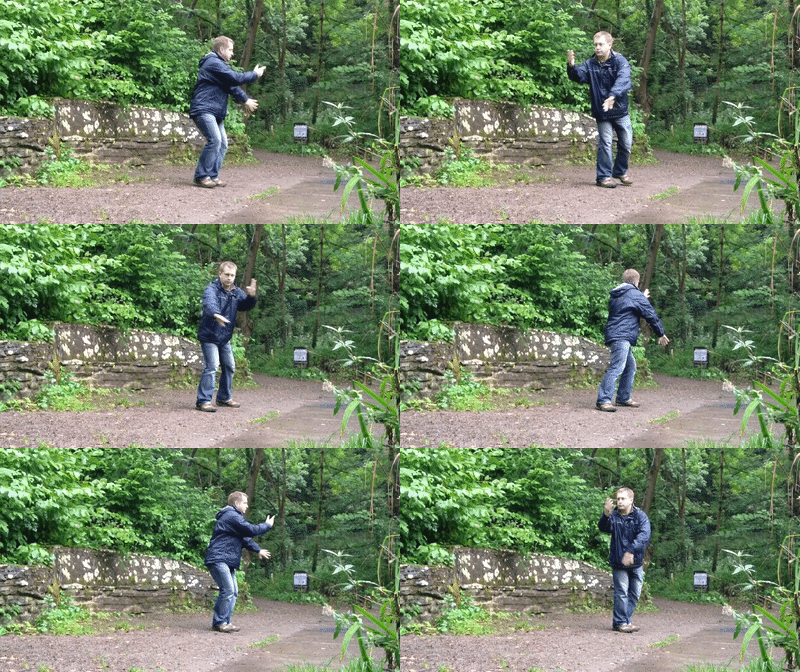
I’m not comparing myself to the masters above, but here’s a GIF of me doing it, since I have that on video I might was well add it to this post:

Me: (Old yang, also called Gu style)
cj6ysk

As you can see, the Yang style is more of a vertical arm block, the Chen style is more of a horizontal elbow strike while the Sun style has the palms facing outwards. It’s a case of different horses for different courses, but  while there are subtle differences between them, they all involve the common theme of stepping to the side while rotating the arms in circular motions (presumably like clouds on a windy day).

Martially speaking, I think of this movement as intercepting an opponent’s strike and throwing the attacker out, or applying a lock to their arm through the action of turning your waist. To the attacker it should feel like they’re putting their hand into a blender – it gets caught up and crushed and it shouldn’t feel easy to retract your arm once it’s trapped.

It’s easy for beginners to make the arms ‘flat’ in this posture – instead they need to be continually projecting outwards. I think of them as being like the antlers of a stag, or the branches of a tree – they grow outwards, and are slightly curved. If you’re going to intercept your opponents strike with this technique, then it’s going to help ‘catch’ their attack if the intent in your arms (your antlers) is to project outwards.

The real lesson of Cloud hands though is to turn the waist. It’s a common mistake to not turn the waist enough in Tai Chi, and I find that, for the beginning student, a breakthrough in this area often only comes about through a study of Cloud Hands as an isolated technique, repeated over and over. Notice that if you removed the stepping from Cloud Hands then it wouldn’t be a million miles away from the stationary silk-reeling exercises that go along with Tai Chi, with one hand performing a clockwise circle and the other an anticlockwise circle. Indeed, performing Cloud Hands repeatedly can serve a similar function to basic Silk Reeling exercises.

As it says in the Tai Chi classics, the body should be directed by the waist at all times, so as you turn from side to side in Cloud Hands (let’s not worry about the stepping for now) your arms should only be moving because your waist is moving. If your waist stops, then your arms should stop too. This especially applies at the crossover points, when you’ve turned all the way to the side and the arms swap position, so that the lower one becomes the upper one, and vice versa. This is the point that beginners usually drop the principle and use some isolated arm movement, instead of keeping it all coming from the waist. It’s usually a revelation to the student here that you need to turn the waist a little more than you think you do to keep it as the commander of the movement – you should feel this using muscles in your lower back you normally don’t reach.

Remember, in Tai Chi you’re looking to continually maintain a connection (a slight pull) from the toes to the fingers, with movement directed by the dantien like the spider at the centre of a web. If you keep this connection (or slight tension) and the waist control at these crucial crossover points in Cloud Hands then you’ll be well on your way to keeping it throughout your whole form performance.
Ironborn: Grayson Perry Hard Man

Men of martial arts! If you’ve ever stopped to wonder why you spend your free time getting punched in the face for fun, you might want to watch this.

1639

There are lots of articles written about women and martial arts, but relatively fewer about why men do it, since, you know, they dominate the martial arts, so why bother writing about them? I therefore like it when I read an article that looks at what it is that drives men specifically to do martial arts for purely selfish reasons, since I often wonder why I’ve had this lifelong attraction to martial arts myself. I know there’s The Professor in the Cage, but I’ve not read it because I’ve heard it takes a reductionist argument that everything comes down to evolution. I think it’s more complex and nuanced than that.

Then last night Grayson Perry came out (ha!) with a TV programme that addressed this very issue. Playing up to stereotypes, he went to the North East to find the toughest of men the UK had to offer, the Ironborn, to see what makes them tick. But ignoring the obvious problems of playing up to caricature, the programme is excellent. I was going to blog about it, but my friend Paul Boman (who comes from the North East) beat me to it, so you might as well read what he wrote instead here. To be honest, he wrote it up better than I could anyway.

If you’re in the UK (or know how to browse with Tor) you can watch the whole program on demand here.