New Year thoughts: Empty and solid, the Tai Chi classics and UFC207

Happy New Year!

browsing_internet_cat_by_lowdope-d3bzspz

Just browsing through the Internet on a lazy New Year day’s morning I noticed once again how my feeds tend to bring together the old and the new in one continuous stream of “Internet”, showing me videos and writing that are almost 100 years apart, yet seem to be talking the same language.

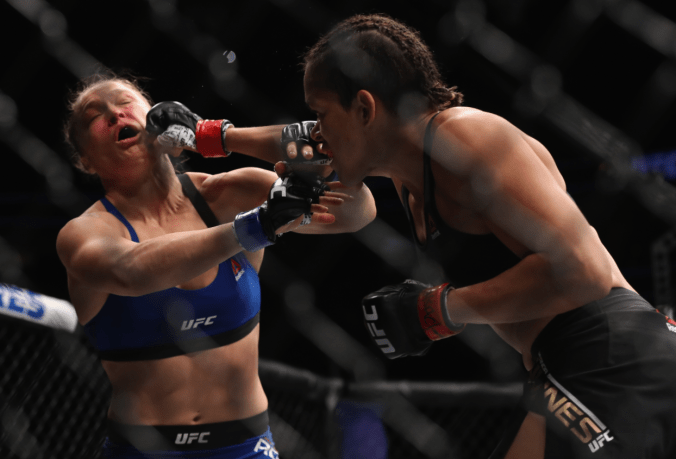
For example, we’ve just had UFC 207 in which (warning, SPOILERS) Ronda Rousey made her come back for a not-so-glorious 48 seconds, and was hit with 27 punches from Amanda Nunes (that connected) without landing a single blow back and was saved by the referee from further damage. She looked totally outclassed in the striking department. This was further highlighted by the previous championship bout between Cody Garbrant and Dominic Cruz, which was like an exhibition match, showing incredible timing, footwork and striking ability over 5 truly glorious rounds. The belt went to Cody via decision in the end, but Cruz fought like a warrior and his footwork was as outstanding as ever even if it occasionally left him open.

The two matches couldn’t have been more different; one a display of how bad footwork and poor defence meeting strong striking results in total domination, the other a display of perfect timing and offence mixed with defensive footwork on both sides resulting in a game of inches.

I don’t know how long these links will last but here are the full fights:
Screen Shot 2017-01-01 at 10.45.23.png

Ronda vs Nunes

Youtube

MMA: UFC 207-Garbrandt vs Cruz

Cody vs Dominic

Youtube

And here’s the ‘old’ I talked about at the start: this morning I received a notification that there’s a new Brennan translation out. Here it is:

FURTHER TAIJI DISCUSSION FROM WU ZHIQING

Brennan translations are free translations of old Tai Chi manuals. This is one from a Yang Cheng-Fu student published in the 1940s. I’ve skim read a few parts now of this new one, and I really like it, and the translation is done in a way that you can read it without being perplexed at obscure phrases.

For example, here’s a good quote:

“Every movement in Taiji Boxing is always half empty and half full, and is like a round sphere. This is not only the case for large movements, but also for the smallest movement of any part of the body. From beginning to end, movement is continuous, like the ceaseless movement of the universe through the sky. Taiji Boxing uses the abdomen as the axis of the whole body, so that whatever way your are moving – forward and back, side to side, up and down, or reversing direction – the limbs and trunk are all being moved from the abdomen, going along with its movement like the stars following the setting sun. Therefore Taiji Boxing is an exercise that conforms very much to naturalness.”

Ok, stars don’t strictly “follow” the setting sun, but I think it gives a nice poetic metaphor.

In particular, I like chapter 7, in the manual “SEVEN: METHODS OF PRACTICING EMPTINESS & FULLNESS” Personally, I think getting an understanding of empty and full, as a strategy, is key to applying all martial arts in a live situation.

In chapter 7, it says:

“Empty to defend, then fill to attack. This is the key to the art.
If you spot the moment to become full and yet do not issue, the art will be difficult to master.
There is emptiness and fullness within emptiness and fullness.
When your “fullness” is really full and your “emptiness” is really empty, you will attack without missing.”

And right away I’m reminded of the fights this weekend at UFC 207. Dominic Cruz is a master of this principle. He creates a fullness, enticing the opponent to strike him, then as the strikes come, takes that fullness away and gives them only emptiness to hit – usually thin air, but at the same time (and this is the key to making it really successful) hitting them with a ‘full’ strike from somewhere else. To be fair, Cody Garbrant displayed some equally good demonstrations of this concept, but he did it more by bobbing and weaving on the spot, while Cruz displayed his rare talent for doing it while moving in and out, which makes it even more exciting to watch.

In contrast, Ronda had none of this. Her footwork was plodding, her body movement stiff and she continually met the fullness of Amanda Nunes’ punches with the fullness of her own face, with predictable results.

As Wu’s book goes on to say:

“Practitioners of martial arts have to study the principle of emptiness and fullness. It is not only a feature of Taiji Boxing, all other martial arts have it too.”

Indeed – it’s not really a Tai Chi-specific concept I’m talking about there, but it is part of Tai Chi Chun as a martial art. Indeed, the concept of emptiness and fullness forms the title and theme of chapter 6 in the classic military text, Art of War, by Sun Tzu.

Wu goes on to explain the two key phrases:

“Empty to defend, then fill to attack. This is the key to the art.
If you spot the moment to become full and yet do not issue, the art will be difficult to master.”

As:

“These two phrases form the theory of how to apply emptiness and fullness. When it is time for emptiness, defend, and when it is time for fullness, attack. “Empty to defend. Fill to attack.” This is an unchanging rule of attack and defense in martial arts, the highest skill. If the opponent attacks with fierce power (i.e. fullness), I do not resist him directly, instead I avoid his main force to let it dissipate. Once he has missed and switches his fullness to emptiness, I immediately enter while he is empty. To “spot the moment to become full” means that when he empties, I fill. But if I do not attack at that moment, the result will be that I have let opportunity pass me by. To “not issue” in such a moment indicates that you are unable to determine emptiness and fullness, and the techniques will naturally be difficult for you to master.”

It seems to me that a lot of what has been preserved in the Tai Chi classics is a distillation of many popular martial arts sayings, and not phrases created specifically for Tai Chi Chuan. In this case they come from Sun Tzu in the 5th century BC. And, as the fights from UFC207 at the end of 2016 prove, they’re as relevant today as they were thousands of years ago.

Merry Christmas


2016 has been a good year for the Tai Chi Notebook and it looks like 2017 will be even better. In December my blog got noticed by a major martial arts website which will launch in January, and I was commissioned for four articles, which should be appearing there once it has launched.

I don’t want to let the cat out of the bag just yet, but I will tell you the name once the site is live.

So, thanks to everybody who has helped me this year by sending me books to review, commenting and sharing blog posts or just reading my blog. And especially thank you to my Tai Chi students for keeping me in the game and working hard to find ways to pass these arts on.

I hope you have a very merry Christmas and a happy New Year!

(And don’t forget to find some time to practice the Tai Chi form over Christmas!)

New book arrives! Possible Origins

I was pleased to get an early Christmas present yesterday – my review copy of Scott P Phillip’s Possible Origins has arrived!

I’m currently simultaneously listening to the Art of Learning by Josh Waitzkin and reading Happy by Derren Brown, so I can’t wait to add a third book to my list of ‘books I haven’t finished yet’. But seriously, I need to get myself together, because Possible Origins looks like a great for anybody involved in Chinese martial arts. It’s not academically written – it’s highly  readable, controversial and mind expanding.

It’s hard to pin down exactly what the book is about, but my quick summation of the point of Scott’s research is that over the years, and thanks to several different political movements, Chinese martial arts (including Taijiquan) have been stripped of their cultural associations so much that a lot of things we do today don’t make sense anymore. Only by researching the previous connections to Chinese folk religion, ritual, theatre and opera can we make sense of the arts that have been handed down to us today.

My explanation above probably doesn’t get exactly to the heart of the matter, or present the argument in exactly the right way, but it’s a good start. I look forward to reading the book and finding out more. One thing I’ve noticed by skimming through already though is that he answers all the obvious questions you might have about this theory, or at least does his best to tackle them, right away.

Full review to follow!


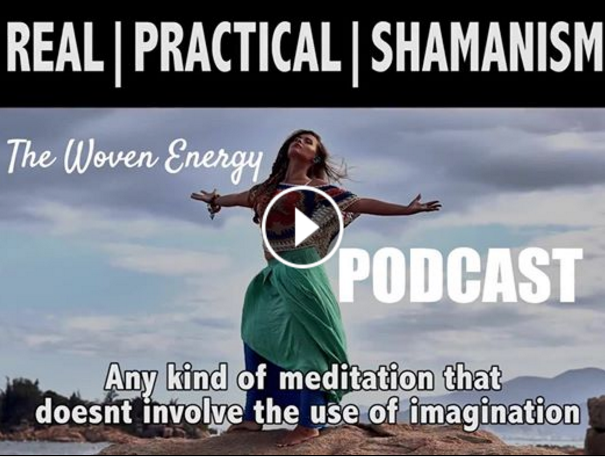
Woven Energy, the Shamanism podcast has launched – 4 episodes available.

woven-energy-04-1080x600

So, it looks like Joe over at Wovenenergy.com has launched his practical Shamanism podcast. The first 4 episodes are available now at https://wovenenergy.com/podcast/

Episode 1 covers ‘What is Shamanism’, episode 2 looks at the three realms, episode 3 covers the pitfalls of learning Shamanism (and how to avoid them) and finally episode 4 asks the question, ‘are we obsessed with thinking?’.

I’ll leave you to discover them on your own. I’m tempted to dive in at no.4, but maybe I’m overthinking it…

(That’s a Shamanism joke, btw.)


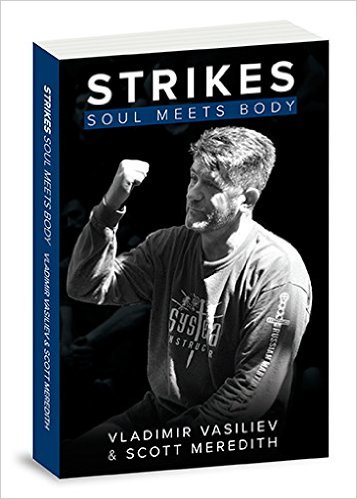
Strikes – Soul Meets Body by Vladimir Vasiliev and Scott Meredith, a review.

strikes

First of all I feel the need to address the elephant in the room. This book (curiously?) doesn’t have the word “Systema” in its title or anywhere on the cover, except on the jumper Vladimir is wearing, but make no mistake,  it is a book about the Russian martial art called systema. Systema often gets a bum rap from other martial artists, not by the practitioners, or the people who have tried a class, it should be noted, but more often by people who see the numerous videos of the art being trained on YouTube and cry foul. The videos often contain people moving in slow motion while falling head over heels backwards at the merest hint of a punch from a seemingly out of shape martial arts instructor. The BJJ community in particular is scathing of the systema groundwork videos out there.

To be fair, it’s not unreasonable to question a lot of these systema videos, but I feel the criticism is often born out of ignorance about what is actually happening. There are certainly some videos that seem like nonsense to me, but that’s often because systema uses unusual drills as a chief training method, often without explaining what the rules of the drill are before posting a video of it. Add to that the fact that there is an awful lot of nonsense in martial arts in general, from ‘no touch’ chi masters from China and Japan, to overweight, out of shape Western guys who think they’re ninjas, and you can see why it’s hard for systema to catch a break. But if you think about it, any martial art has parts that make zero sense to people outside of the art. For example, just look at a video of two high level black belts in BJJ scooting about on their butts and leg scissoring each other for 10 minutes in a competition to become ‘world champion’ and tell me that’s not as ridiculous as the wackiest of systema videos.

Contrast this reaction to the people who have actually trained with the key figures in systema, like Vladimir Vasiliev and Mikhail Rybko, and you’ll find they talk of a master level of skill and lessons that are more like a finishing school for experienced martial artists, rather than the sort of thing you’ll find at the local YMCA karate class.

But this is not just a book about Systema, it’s a book about strikes.

If you’ve ever watched Vladimir Vasiliev punching people you’ll probably have some questions (see video below). For a start, it doesn’t look like what you expect a martial art to look like. There are no immediately recognisable stances, gestures or techniques. There is no jab, cross or hook, or even a reverse punch or superman punch that you can put a label on. At best you could say there are a lot of ‘overhands’, but that’s about it. Instead it looks like somebody just moving and hitting in a relaxed, almost sloppy way. The movement he uses to evade his attackers is often the movement he uses to strike with, so there is no clear distinction between strike, block, advance, retreat, evasion or kick. It’s all just movement.

And so it is with this book – it’s called Strikes and yet in systema terms it’s impossible to separate the strikes away from the rest of the art, so this is really a book about the whole of systema, seen through the lens of striking. And so, it begins where everything else in systema seems to start, with breathing.

If you’re wondering why, let Vladimir explain himself:

VV: Breathing is important for talking about strikes because in a fight you’re going to be hit. Sooner or later, it’s inevitable. The punch you don’t see coming can be the worst. When you’re in that terrible condition, all you have to hang on to for restoring yourself is your breath. In a fight, proper breathing can keep you focussed on the next threat, instead of collapsing into yourself.

Strikes recaps the breathing information found in the previous book Let Every Breath… and gives you the basics of systema breathing, but you should seek out the earlier book for a full investigation of the subject. The book then goes on to talk about the things that make systema strikes effective – these are things like non-interference, freedom, continuity, spontaneity, clarity, acceptance. These concepts might sound a bit woolly, but systema strikes address the whole person, rather than just the mechanics of how to punch as an isolated event. Of course, the mechanics are covered too, in great detail. As are striking drills – the book is chock full of these. In fact, the reason it took me so long to review Strikes is that I got a bit bogged down in this section of the book, which incorporates the Rabota (work sets) of systema. For systema practitioners, or somebody with a partner to practice with, these will be useful, but they don’t lend themselves well to free reading.

Some of the information from Vladimir regarding the effects of strikes borders on the magical, so if you’re the sort of person who gets upset with the notion that your negative energy can be transferred with a strike, you’re better off avoiding this book. If you can take these things with a pinch of salt and look for the deeper meaning then you’ll be fine.

The book is a combination of writing from Vladimir and Scott Meredith, an early student of systema. Scott and Vladimir have worked together before on Vladimir’s previous book, Let Every Breath… but while that one was Scott giving voice to Vladimir’s ideas, this one separates out the two people as distinct entities. So now you get to hear what Vladimir has to say directly.

The majority of the text is in the form of long quotes from Vladimir interspersed with further explanations or extrapolations from Scott. Vladimir does the touchy feely stuff, giving the book its heart and soul, while Scott does the more rational, technical analysis, and explanatory text, giving the book its structure. As a double act, it works perfectly.

I think every martial artists who has an open mind would find something of value here.

At the very least, Strikes will give you something new to think about when you next train martial arts. In fact, a lot of the information in this book would be equally at home in a self help publication, as it crosses many boundaries.

It does make you question what it is to be a martial artist, and what it is to know yourself through martial arts. As such, it bears repeated reading well. I can imagine coming back to the book in a few months and learning something new, which I missed the first time.

Finally, I’d like to draw the reader’s attention to the high production values on offer here. In the post-truth Internet age where anybody can write a book and self publish it on Amazon, often with dreadful results, it’s important to point out when a book has been properly written, sub-edited and professionally laid out and printed using good quality paper.  It also has a nicely chosen font and nice photographs that complement the text. There’s even a strange little graphic novel about Vladimir’s life at the back, which seems slightly out of place, but shows the attention to detail. This book has clearly been a labour of love and the extra effort reflects in your overall enjoyment of the finished product.
Get this book on Amazon.

—-

Common Questions:

Q) Is this book of interest to anybody who doesn’t do systema?

A) I’d have to say, an emphatic, ‘yes’. If you are a systema practitioner then it’s a given that you’ll find much of value here.

Q) Is this like Scott’s Tai Chi books?

A) The author, Scott Meredith, has written plenty of Tai Chi books (See JUICE: Radical Taiji Energetics), and has a particular writing style which is often based on creating his own terms, then turning them into acronyms and almost creating his own language out of them. It definitely adds a bit of modernity, informality and spice to an old martial art that is often weighed down by obscure Chinese terms that have no equivalent in English, and have limited practical use. But the endless acronym approach can grate on some readers. Many may be worried that he uses the same methods here, but fear not. He does slip into acronyms occasionally – for example SET, which stands for Strike Experience Team, gets used a little unnecessarily, but here the acronyms tend to be the exception, not the rule. What’s more important is that his natural wit, flow and rhythm as a writer shines through and keeps you interested and entertained throughout.

Q) What do systema strikes look like?

A) Here’s a video of Vladimir doing some movement and strikes:

Q) What do systema striking drills look like?
A) Take a look at this recent drill from the UK’s Rob Poynton of Cutting Edge Systema, as an example of the type of drills (not an exact drill from the book, but close enough) contained in the book:

Live hard, train soft

Notable voices in the fitness industry are pointing out the gap that Tai Chi can fill, we just need to make them notice it

istock_000001759791medium1-200x300

Joel Snape of the always excellent Live Hard blog has written a rather nice piece for The Telegraph about a new exercise class called Flatline, and the problem with health trends like this that promote the idea that you have to almost kill yourself to exercise.

He surmises the problem simply and elegantly as:

“every time you post a ‘Go hard or go home’ meme on your Twitter feed, someone chooses ‘home’. There are biscuits there.”

The problem is making exercise seem difficult just puts people off. And that’s dangerous since most of us could use a bit more exercise for the sake of our health, and as a society the amount we have to spend on corrective measures in hospital once it’s already too late is slowly strangling our NHS.

As Joel says:

“…if all you want to do is trim down, reduce your risk of Parkinson’s or be able to play five-a-side with your kids without wheezing, please believe me when I tell you that it doesn’t need to be hard at all.

Move around a bit more, eat a bit better, drink more water and sleep a lot. …”

And, I would add, try Tai Chi.

You see, Tai Chi is “moving around a bit more”, it isn’t difficult and almost anybody can do it. It isn’t just for old people, or Chinese people, or hippies.  And you don’t need any equipment or gym membership to do it. Just need a bit of time with no distractions and some space. Essentially, it’s the missing piece of the puzzle for the fitness industry.

In my utopian vision of the future, everyone will be doing 10 minutes of Tai Chi in the morning, so we all leave the house refreshed and feeling in perfect harmon, ready to spread peace and love with everybody we meet… Ok, this possibly sounds like a dystopian nightmare, but at least think the gap in the fitness industry has been identified – it just needs Tai Chi to have an image makeover so it can fill it.

Maybe I’ll call it Flatline Tai Chi….


Bernardo Faria’s over/under guard pass

I’ve been playing about with this guard pass for the last couple of weeks, and it has changed my jiujitsu – it could change yours too.

bernardo_faria_222

One of the things I like about Brazilian Jiujitsu is the individuality of it – you’re encouraged to find your own signature moves and perfect them. What works for one person, won’t necessarily work for another. Marcelo Garcia has his X Guard system, the Miyao brothers have the Berimbolo and Bernardo Faria has his over/under guard pass. And I’ve just discovered it…

Read the rest of this post at my new blog… BJJ Notebook


Your entry point to practical Shamanism

My old XingYi teacher has finally made a podcast, and it’s all about Shamanism. 

My old XingYi teacher, Damon Smith, is notoriously reclusive, doesn’t use the public parts of the Internet much and seems to live in hiding, in fact, I still feel weird seeing his name written down on a web page, knowing how much he’d hate it! I’m also pretty sure there was a time when mentioning his name online booked you in for a swift Beng Chuan to the guts in the next class! But it looks like somebody has done the impossible and dragged him out of his cave to talk about his favourite subject – Shamanism.

Back when I was training with him on a weekly basis we used to get into these sorts of discussions all the time, and he used Shamanism constantly in his teaching in reference to XingYi. In fact, I don’t think the two could be separated in the way he taught it.

There was much about it that I could understand and find immediately useful, but much that I couldn’t and seemed beyond my ken. Well, it looks like I may get a second chance thanks to  another of his students, Josef Sykora, who has somehow cajoled Damon into spilling the beans on a new Podcast series called Woven Energy.

screen-shot-2016-10-11-at-10-49-04-am

Joe describes Damon and his teaching as follows:

So who is Damon? Well, he has studied shamanism academically as well as practicing it for over 30 years.

He has an extremely pragmatic view of shamanism and animism so if you’re looking for your normal “simply bang a drum… dance around a bit… have a chat with an animal… imagine going down a hole and now i’m happy” kind of stuff that means nothing, then turn around now… this podcast ain’t for you.

If you accept shamanism as a discipline. A lifelong journey full of ups and downs and a tremendous amount of confusion and hard work, then great… because once pandora’s box is opened, there is no shutting it. You are now at the mercy of the divine.

You can find out a lot more about Damon by simply listening to the podcast. He has some fantastic stories and knowledge to share.

Here’s a few things you can look forward to in future episodes

A deep and thorough look at Shamanism from the inside out
A clear starting point for beginning Shamanic technique
The tools, mindset and knowledge you need to apply Shamanism to all areas of your life

To get episode 1 you need to jump through a couple of sign-up hoops (well, nobody ever said Shamanism was easy, did they), but after providing your email address you will be given access to episode 1 here.

Now it’s time to see how deep the rabbit hole goes…

morpheus-page-1038x576