Just watched a great clip of 1980s Wushu in China – featuring Sun Jianyun, Sun Lu Tang’s daughter performing Bagua. But there’s also some clips of Tai Chi and some kids doing Northern Shaolin (at least I think it’s Northern Shaolin). Well worth a watch. The martial arts are on their way to being the heavily performance-based WuShu we have today, but are not quite there yet, with martial technique still a priority.
Shaolin
The 1974 White House Rose Garden WuShu demo, with President Nixon, Dr. Kissinger
Update – December 2025: I received a message from the person who posted the 1974 Whitehouse video linked below, who has written a Wikipedia article with more info: “I just published an article on Wikipedia regarding this chapter of wushu history: https://en.wikipedia.org/wiki/1974_China_national_wushu_team“
I’ve actually only just noticed a comment on my Contacts page from January by Robert Lepper:
“I suggest you do an article about the 1974 historic visit to the United States by the elite Chinese National Wushu Team. There was a famous visit to the White House Rose Garden with President Nixon, Dr. Kissinger and other dignitaries. In October 2024 the team celebrated their 50th year celebration of the U.S. performances in Beijing and Qingdao City. After the U.S. demonstrations in 1974 they demonstrated in Great Britain (1975) and many other countries. These martial artists were the best of the best. It was the opening of China and Chinese martial arts to the world. Jet Li at age 11 was on this famous team.
There are many pictures available and a news video (poor quality) of the demonstration in the White House Rose Garden.”
Well, this actually seems like a good idea, especially since it was Jet Li who was demonstrating. I had a quick look online, and yes, there is a video of the event, showing a young Jet Li demonstrating a 2-man wushu form in front of President Nixon:
From what I can see, this looks like a version of the ‘Shaolin 2-man form’ that I learned years ago. Certainly some of the still postures – like the one in the video thumbnail cover – are postures I recognise.
Here’s a longer video of the event:
Nixon first visited Beijing in 1972, in an effort to start establishing relations with the People’s Republic of China, after years of diplomacy that favoured the Republic of China, based in Taiwan. The visit was a huge symbolic gesture. This 1974 visit looks like a return visit, with the PRC trying to push the image of Chinese Wushu to the West.
It’s interesting to think of how Wushu is being used here as a demonstration of China’s soft power, and there’s no sign of any Taijiquan. This was not long after release of Enter the Dragon, when Bruce Lee had introduced kung fu to the international stage for the first time. Li would later become famous as a kung fu movie star in his own right, starring in films such as Shaolin Temple, the single most influential feature film in Shaolin history, and the film that many people suspected to have caused the re-population of the Shaolin temple with monks and the creation of a major tourist centre in China. I’d recommend Matthew Polly’s book American Shaolin.
It’s such an interesting historical footnote to see both a young Jet Li and President Nixon interacting together, back in 1974.
Happy Year of the Snake
What to do when your Snake Creeps Down
Hello! Happy Year of the Snake, dear reader. On an occasion such as this is would normally be customary for a tai chi blog like mine to do a little post about the influence of the snake on tai chi, kung fu and Chinese culture in general.
Snake is, after all, one of the five main Shaolin kung fu animals, one of the 12 main xing yi animals and frequently appears as a menu item in Chinese restaurants, er no, sorry, I mean, appeared in Kung Fu Panda!
But, no! I’m not going to do that; partly because it’s such an obvious thing to do that I’ve done it before, and I hate being predictable, or at least repeating being predictable, but also because I’ve just recorded an excellent conversation for my next podcast with Australian national treasure and sometimes-Chinese-martial-arts-practitioner, Simon Thakur of Ancestral movement about finding your inner, ancestral animal, including, of course, the snake, and I just need to find the time to get on with editing it so I can get it out to you lovely people.
I think that what Simon says about our human connection to snake-style movement is probably more valuable than whatever I’ve got to say on the subject of our slithering cousin. So, I’ll leave the snake talk until the podcast comes out!
In the meantime, while you wait for that podcast to properly percolate (all the best things take time) I’ll leave you with a thought. “Tai Chi is more than the techniques, it’s the jins that make it interesting”.
If you listened to my last podcast with the esteemed Alan Wycherley of ‘In Defence of the Traditional Arts’, you might be forgiven for thinking that I’m all about training tai chi techniques. Now, while I’ve no objection to practicing a Repulse Monkey or a Part Wild Horse’s Mane (or two), or even a Snake Creeps Down, I definitely agree with the statement that tai chi is more than the moves. In fact, I think we can probably agree that tai chi applications aren’t that great as martial techniques. There are (shock!) other martial arts that have more effective techniques. Hello, Brazilian Jiu-Jitsu, I’m looking at you. Hello, Choy Li Fut. Hello, Western Boxing. Hello, Muay Thai, stop hiding at the back! Yes, all these martial arts have techniques that I would probably put ahead of anything found in a tai chi form, regardless of style. They’re practical and effective. And yet, I practice tai chi. So, why is that?
What tai chi has, and emphasises over techniques, are the eight energies – the jins: Peng, lu, ji, an, etc.. What you are doing when you practice a tai chi form is emphasising energy changes using these eight over technique. Flowing from one to the other a bit like a river flowing along smoothly. Sometimes there are fast bits, sometimes there are slow bits, sometime the river turns one way or another, but its energy flow keeps going.
When I practice other martial arts, my emphasis is more on technique. When I practice tai chi I can relax and get more inside the movement and concentrate on the energy flow.
And of course, in tai chi push hands you get to interact your energy flow with the energy flow of another person in a live situation, and that’s extremely valuable for developing martial ability. Techniques are another thing.
Now, if the analogy of a river doesn’t work for you then think of something else… perhaps, a snake? Snakes can flow along smoothly, they can change direction sharply and they can be incredibly powerful or incredibly quick, as well as slow and suffocating. They’re a great example of energy changes.
Homework
In preparation for my next podcast allow me to recommend a documentary by professional paleontologist and evolutionary biologist Neil Shubin called Your Inner Fish. (He’s written a book of the same name, if you prefer to read about him). Snakes come out to play in episode two. Here you go:
The origin of internal arts, with Peter Lorge
“The origin of internal arts” is probably what I’d have called this really interesting podcast with Peter Lorge about the history of internal martial arts, however Kung Fu Genius decided to name it “Chinese Martial Arts History is Mostly FAKE” because, well, it probably generates more clicks, or something. Anyway, Lorge turns over a few sacred cows here, and I also liked what he had to say about BJJ.
Have a listen:
I think Peter makes a great point about all these different ‘internal’ things throughout Chinese history all definitely existing, but all being completely separate and unconnected until the 1920s Guoshu Institute needed to create the category of “internal” to exist in opposition to shaolin and external, so it brought them all together. (The gentleman whose name he forgets when talking about this is obviously Sun Lu Tang.)
I do wonder if instead of looking back for mentions of “internal” throughout Chinese history a look back for the phrase Liu He “six harmonies” would make a better connection between the dots of Chinese martial arts history. While the term “Neijia” may not appear very often pre-1920s, Liu He definitely did. If we’re looking at how we got where we are today, then that’s probably a better bet.
REVIEW: American Shaolin: Flying Kicks, Buddhist Monks, and the Legend of Iron Crotch: An Odyssey in the New China

I’ve been meaning to read the story of Matthew Polly’s time spent training at the famous Shaolin monastery for years, but I finally got around to it recently thanks to my Audible.co.uk subscription*. And what a great read it is! I’m sure we can all identify with the teenage Polly, unsure of himself and his place in the world, who falls under the spell of Kung Fu and decides to dedicate his life to the pursuit of it as some kind of escapism from the pressures and fakeness of the modern world. To Polly, Kung Fu represented something sublime, pure and otherworldly that actually meant something. But unlike most of us, he did more than just dream about it, he actually went to Shaolin and lived there for almost a year, at a time when there was no Internet, no easy way to get there and China had only recently opened up to foreigners, so most Chinese people had never even seen a Laowai in the flesh before.
Polly’s story could best be summed up as a sequence of misadventures punctuated by moments of sublime martial arts inspiration. He manages to get into all sorts of scrapes involving accidentally offending senior party officials, being entered into a tournament against a San Da champion and hilarious misadventures with the opposite sex. Part Bill Bryson-style travelogue, and part kung fu geek-out, this is a rewarding, even emotional, look into what the Shaolin monks were really like in the 1990s, just as their international fame as stage performers was starting to spread and take over from the mystical image everybody had of them from the Kung Fu TV show. (Interestingly, at one point Polly watches the Kung Fu TV show with the monks who laughed their heads off at the idea of burning a dragon and tiger into your arms by lifting a hot anvil and dropping it into the snow – “why would you do that???”)
What you really get from this book is a sense of what the Shaolin monks are really like back then, and how much more human, relatable and down to earth they are compared to the lofty ideas we all have of them. It answers all the big questions like, how good are they at actually fighting, how seriously they take the “monk” side of their lives and how they train iron first, arm, head and even iron crotch.
The little snatches of Chinese you pick up by reading the book are also a hidden bonus and bring the characters to life marvellously. By the end of the book you feel like they are your friends and you know them just as well as Polly did. Anybody who likes this blog would love this book. Recommended.
N.B. The cover with a monk holding a Burger King bag is representative of the idea of American values seeping into China, but a little misleading as there were no Burger Kings in China then, and certainly nothing like that in the rural backwater of the Shaolin village.
*Like a number of other books, American Shaolin is included in the cost of an Audible subscription, so if you are a subscriber you get it free.
What started the Kung Fu Boom in the 1970s?
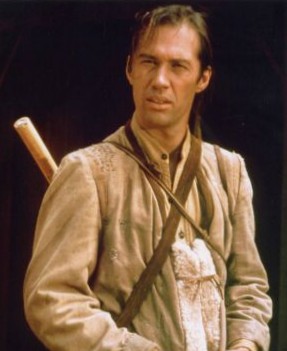
People often claim that it was Bruce Lee who was the father of the Kung Fu boom of the 1970s, but was he really? Sure, Bruce brought a sense of realism to the genre, but it was Kwai Chang Caine who set the ball rolling. The other popular TV series Monkey and The Water Margin were also influential, but felt like they were aimed at a younger audience. And for kids like me it wasn’t possible to watch a Bruce Lee movie – they all tended to be rated 18.
I’d go as far as to say that Lee wouldn’t have had the movie success he had, particularly in the west, if it weren’t for the Kung Fu series.
Here’s a good documentary on the making of Kung Fu – I still remember some of these action sequences, particularly the one where he kicks the knife out of the guy’s hand and it sticks in the roof, which is shown in this video. That moment was the start of my lifelong interest in Chinese martial arts.
Some nice Shaolin Da Hong Quan from Monkey Steals Peach
Just a short post today, but I really liked this video of Shaolin Da Hong Quan (“Big Hong Fist”) from Will at Monkey Steals Peach. He shows some applications at the end too, so keep watching. The applications look like some I learned in Tai Chi, and I can see some of the punches have a lot of similarity with Xingyiquan. More evidence that Chinese martial arts are all one big family.
Kung Fu work out with David Rogers
Michael Rook posted about an online course in Hap Gar that’s starting in January, so I thought I’d check it out and had a go with one of the free videos as my morning workout. The teacher is David Rogers of Rising Crane, and the workout is a nice, not too heavy, way to start your day while learning some Kung Fu. Plus it’s free, so give it a go! I really enjoyed it. After a warm up you’ll work on the first 5 basic punches of Hop Gar and some stances.
Richard is a teacher of Tai Chi and Hap Gar Kung Fu through the Rising Crane. David only takes one or two student groups a year for online learning, and it’s a very interactive, personalised training session so a whole group can move through it together, getting feedback as they go.
Registration is open for the next 7 days at Rising Crane Kung Fu Virtual Academy. He also has a Rising Crane Tai Chi Virtual Academy course starting this year as well.
I haven’t done Hap Gar before, but I’ve done a lot of Choy Lee Fut, and to my eyes there appears to be very little difference between the two. Hap Gar looks like a version of Choy Lee Fut to me, even the same names are used for the moves, so it was great to experience a Kung Fu style I was already familiar with, but from a slightly different perspective. I also liked his thoughts on fighting strategy for these long range styles that he gives at the end, around the 35 minute mark, plus I liked his thoughts on MMA.
BBC Shaolin Temple video reaction
Get the inside view on the recent BBC Shaolin Temple documentary from a YouTuber who lived there for 3 years training Shaolin Kung Fu. What is real and what is fake? Find out here:
 The Tai Chi Notebook