I had a chat with Alan Wycherley from the In Defence of the Traditional Martial Arts YouTube channel for my podcast and the episode is now live. We talk about how Tai Chi can be used as a realistic self-defence system and Alan’s encounters with traditional martial artists from different kung fu systems.
When Josh Robenblatt got to the age of 32 and realised he wanted to fight in an MMA match, he had to confront a lot of physical problems as well as inner demons before he set foot inside the cage. While the physicality of fighting is explored, this book is mostly about Josh’s internal struggles as a lifelong pacifist coming to terms with the casual approach to violence that MMA engenders. For many people Josh’s exact internal struggles wouldn’t exist (especially his frequent reference to his Jewish ancestry), but in a general sense they do exist in some form in all of us, and that’s what makes this book fascinating for anybody who trains in a martial art. It’s also a rare insight into the realities of training for an MMA fight – how much training is actually required, dealing with injuries, how it affects your relationships with friends and family and what the brutal realities of weight cutting are all about.
Josh writes well, particularly when it comes to articulating his inner thoughts on the subject of dealing with actual violence, either as a participant or an observer, and the transformative, almost transcendent, power that coming to terms with it often provides. I found he had managed to put into words something I’d felt before in my own life, but never stopped long enough to really think about and verbalise. As such ‘Why We Fight’ kept my attention constantly until the end, and you do become drawn into his underdog story and intrigued to find out what happens when he finally gets into that MMA match. I won’t spoil it here.
So, it turns out that they’re remaking the classic 1989 film Road House because, well, I guess some Hollywood executive has decided that it will make money. I can’t think of another reason why you’d want to remake one of the best-loved and enduring “fighty” films from the ’80s. The new version starts Jake Gyllenhaal as Dalton, and MMA superstar Conor McGregor as his nemesis, Knox. It’s combining more modern things like MMA into the mix, but it looks like it’s essentially the same plot. Trailer:
The original Road House is probably not classified as a martial arts film, because it mixed so many different film styles together, and didn’t really feature any famous “martial artists” in the cast, but Road House always felt like a classic martial arts film to me, just with more Western style fighting in the fight scenes.
It started Patrick Swayze as the bouncer of the aforementioned Road House, who has to deal with an onslaught of progressively worse ‘bad guys’ who are trying to bust up his bar, until he faces the final bad guy in a fight that remains forever legendary for its brutal throat ripping out scene, at least it’s legendary in my mind. It also had some great Blues music played ‘live‘ in the Road House, by the Jeff Healey Band.
Swayze was most famous for his role as a sexy dancing Butlins-entertainer in another classic ’80s film, Dirty Dancing. Casting him as a tough guy who could convincingly take out bad guys armed with knives and the like with his bare hands was a risky casting move, but he pulls it off with style and grace, perhaps proving once again that dancing is the best base for martial artists to emerge from (Bruce Lee was a Cha Cha dancer).
But what I liked most about Road House was the Tai Chi. When Dalton wanted to kick back and get away from the pressures of life he rocked up to the local lake shore and did some Tai Chi, (without his shirt on, obviously*.)
Ok, it wasn’t great, but at least it looked like Tai Chi. The implication was that Dalton was so good at fighting, and secretly enjoyed it so much, that he had to work hard to keep calming himself down otherwise his killing power would bubble up and overwhelm him, taking his humanity with it – kind of like the Hulk. He talks all the way through the film about not liking fighting, and how he does everything to avoid it. Eventually the bad guys push him too far and he unleashes the beast, resulting in the classic throat ripping scene.
I’ve always wondered why Tai Chi never had its Patrick Swayze moment. Wing Chun has been riding on the coat tails of Bruce Lee for half a century now, yet nobody really associates Tai Chi with Patrick Swayze, or this film. Perhaps if he’d gone on to make more Tai Chi or martial arts related films then things would have been different. Instead we got Ghost with Demi Moore and sexy pottery because his most associated activity!
Perhaps I’m being too hasty – when I started a Tai Chi class recently 4 women turned up asking if what they were going to learn was “like Patrick Swayze in Road House”? To be honest, I got the impression that they were more into shirtless Patrick than Tai Chi 🙂
Just remember: “I want you to be a nice…until it’s time to not be nice.”
“*” there was clearly a homoerotic subtext to the original Road House. While Swayze pratices shirtless Tai Chi he is gazed at by multiple men. Check out this exhaustive breakdown of Road House for more on that. Perhaps that’s another reason why Road House didn’t end up being a Tai Chi-promoting juggernaut?
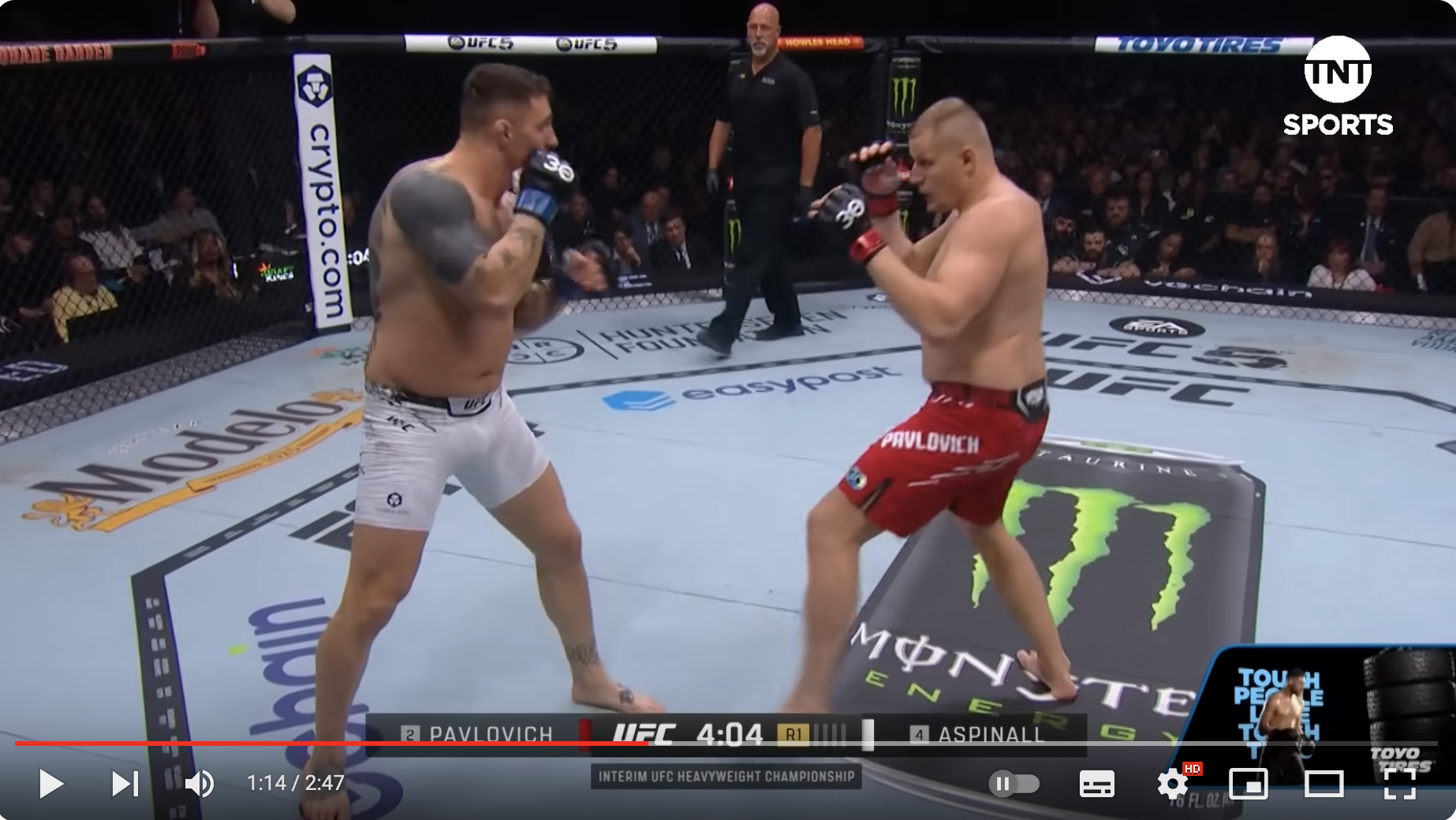
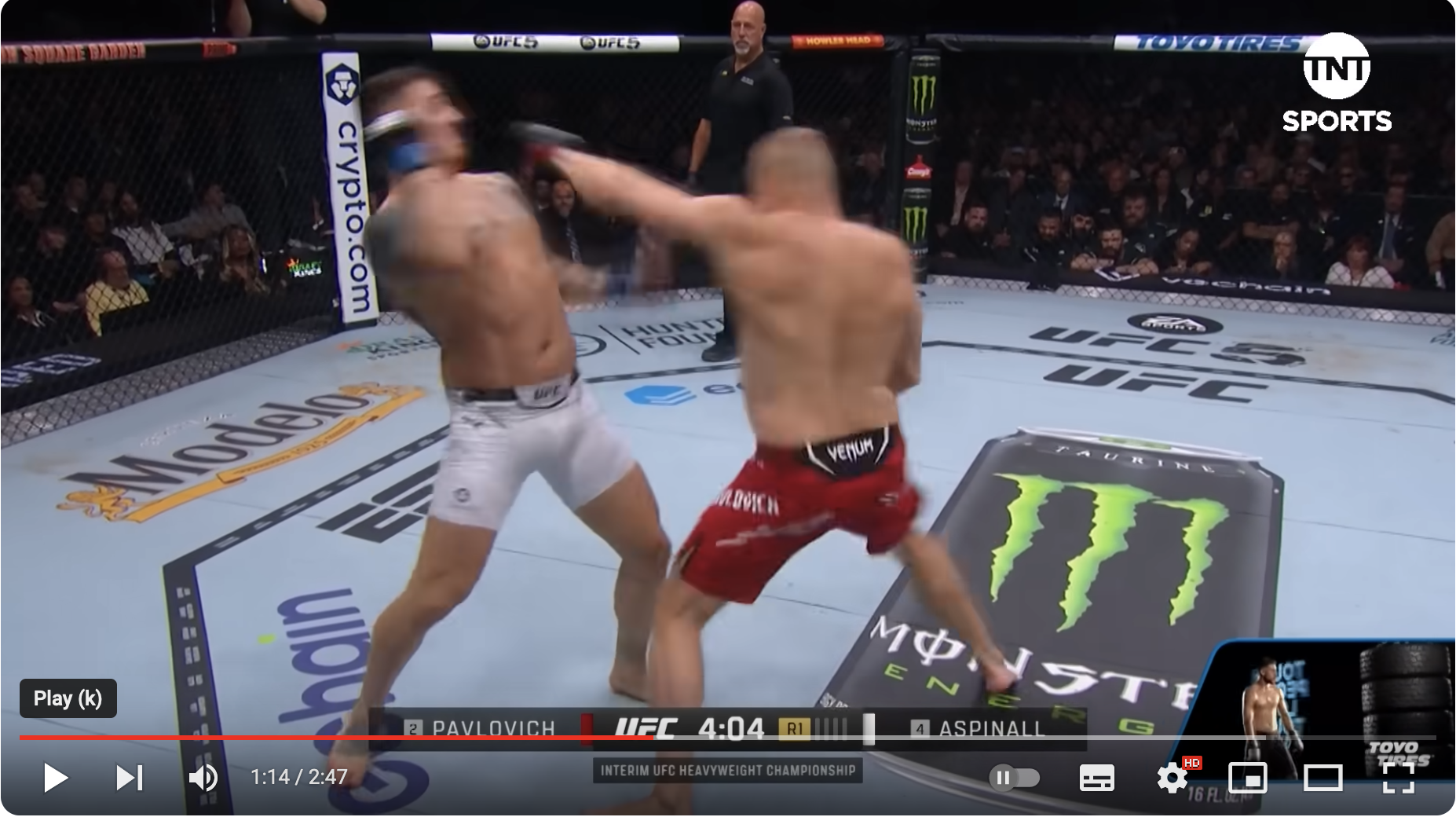
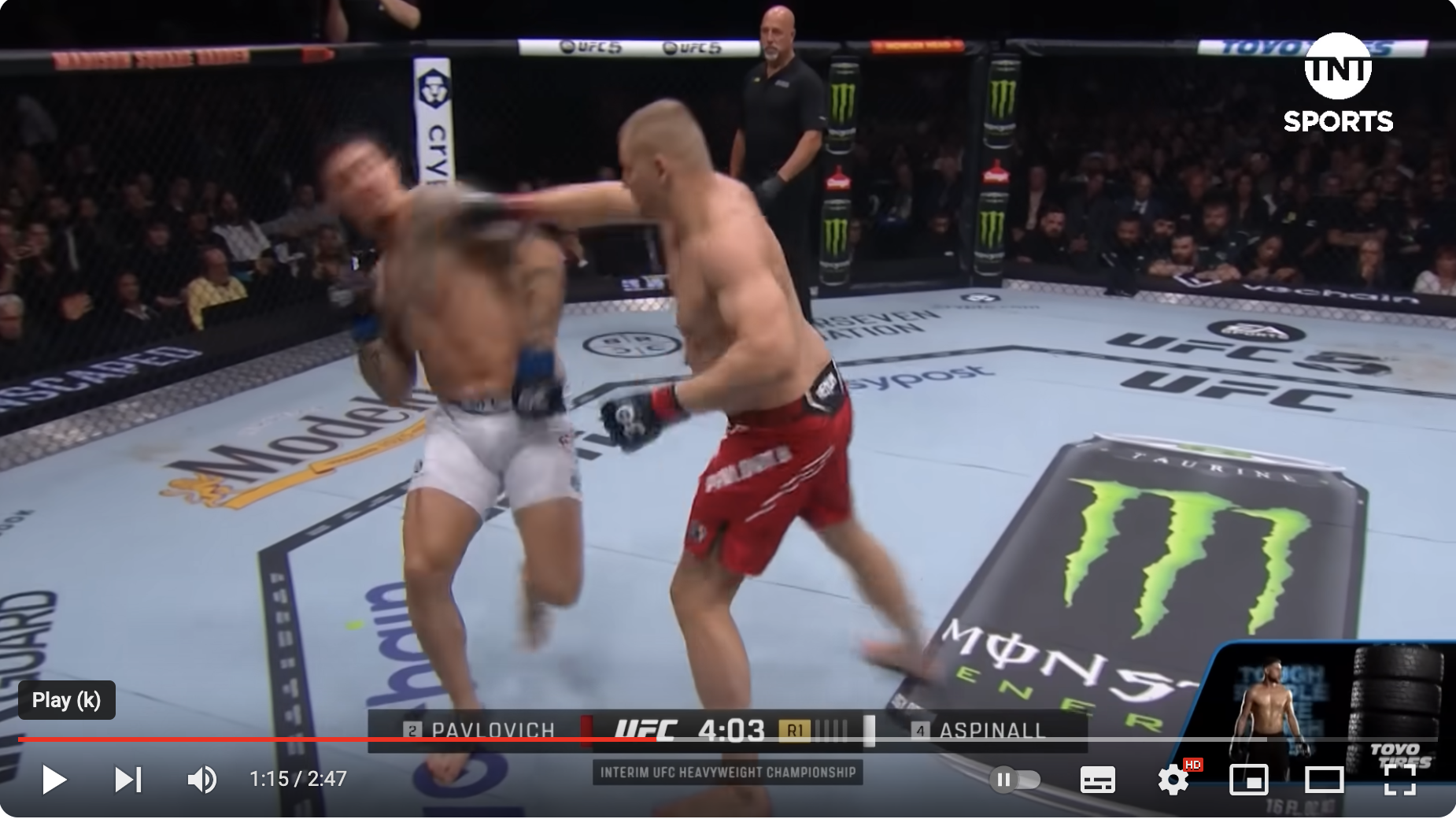
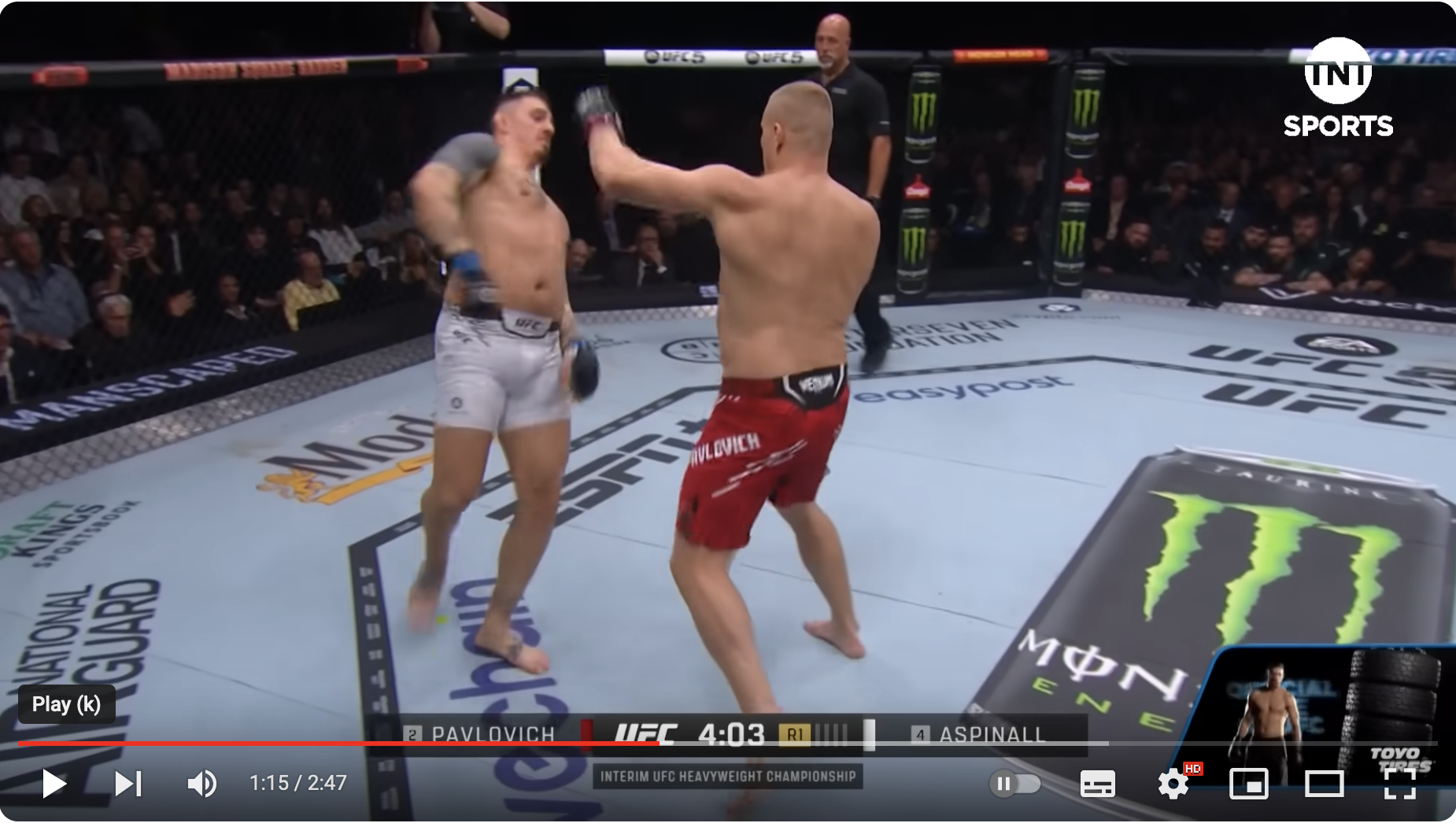
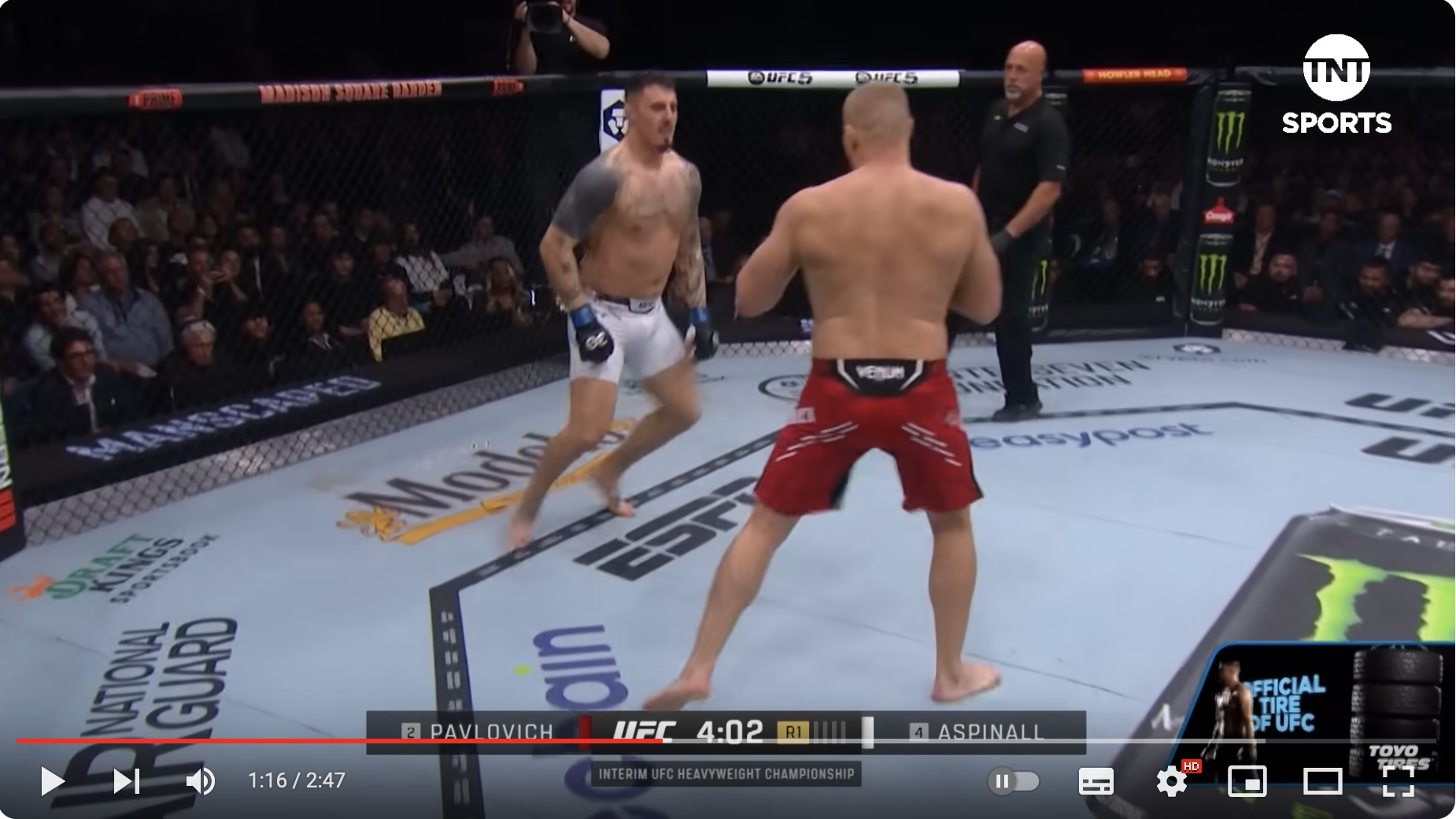
I left the reader with a question at the end… I asked them to take a look at another fight on the same UFC 295 card where British heavyweight Tom Aspinall took the interim heavyweight belt by defeating Sergei Pavlovich. The question was what animal style could we say that Tom Aspinall was a good example of. Take a look at the fight before reading further if, you haven’t already.
So, nobody decided to answer in my comments section but I got a few replies in private groups on Facebook, etc. One person got it half right, but they mixed two animals together in their answer, and only one was right. Interestingly most people seemed to opt for Tom being a rather large Monkey (Hu Xing). I get why, Tom is clearly bouncing in and out on his toes, despite being a massive human, but really that’s where the similarity with monkey ends. Monkey would try to attack from further out than Tom is standing, or from further in – it’s a very ‘in your face’ animal, but also a joker and a trickster. Taking pot shots, then running away. Remember the classic Monkey vs Tiger fight video? That’s Monkey. I can think of at least one modern MMA fighter who is a classic monkey – I’ll post about him in the future.
This charming man
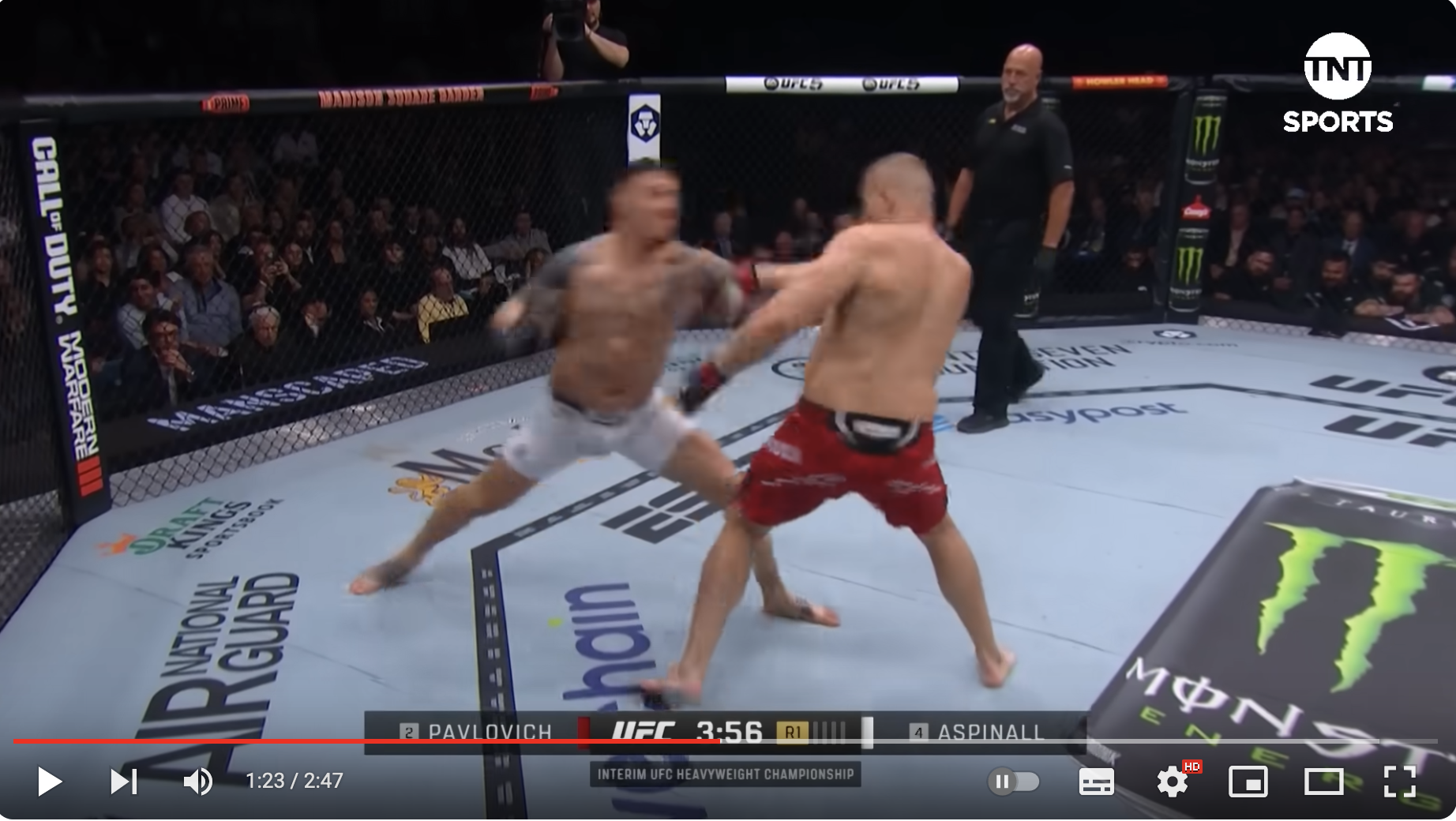
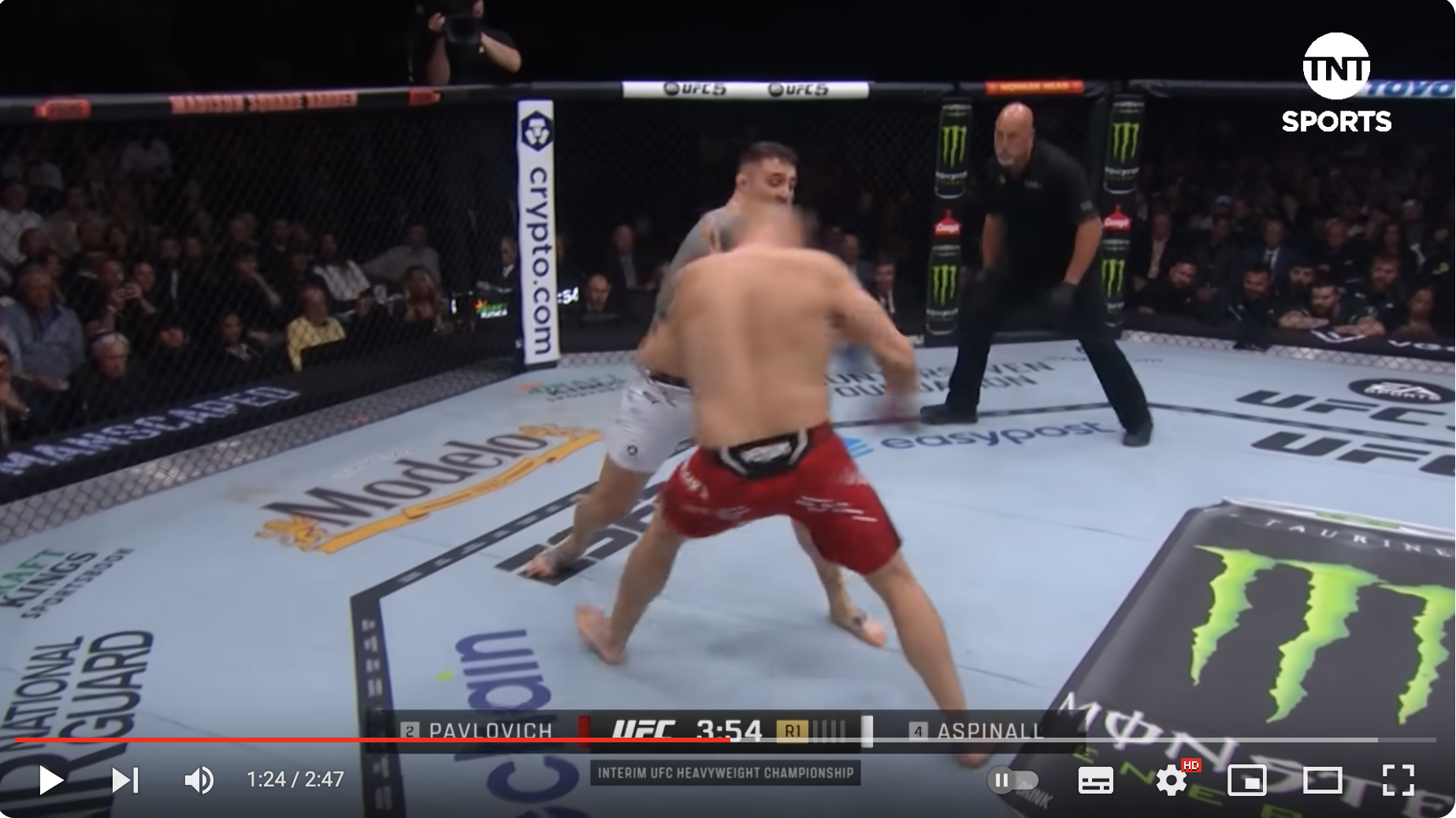
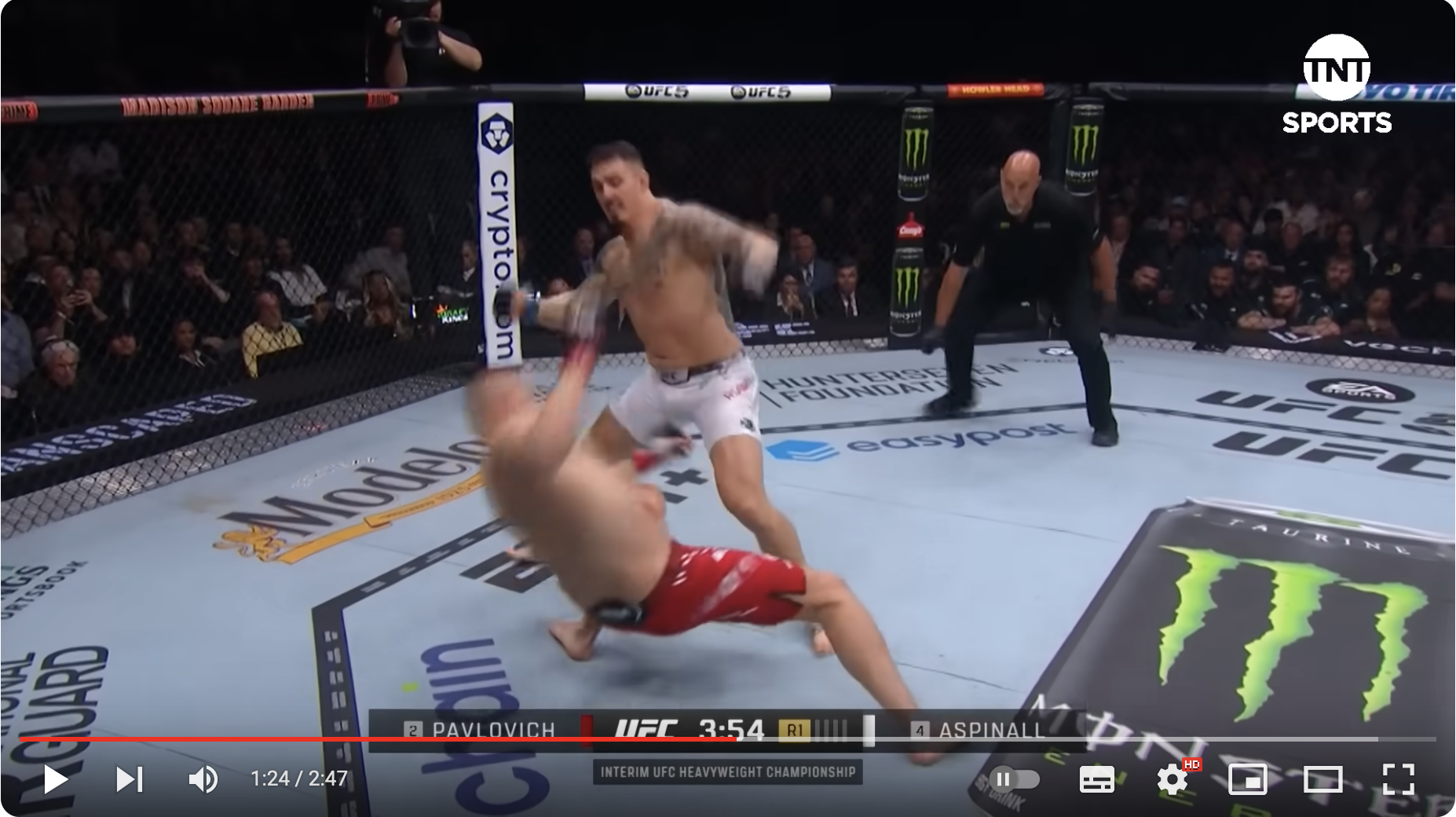
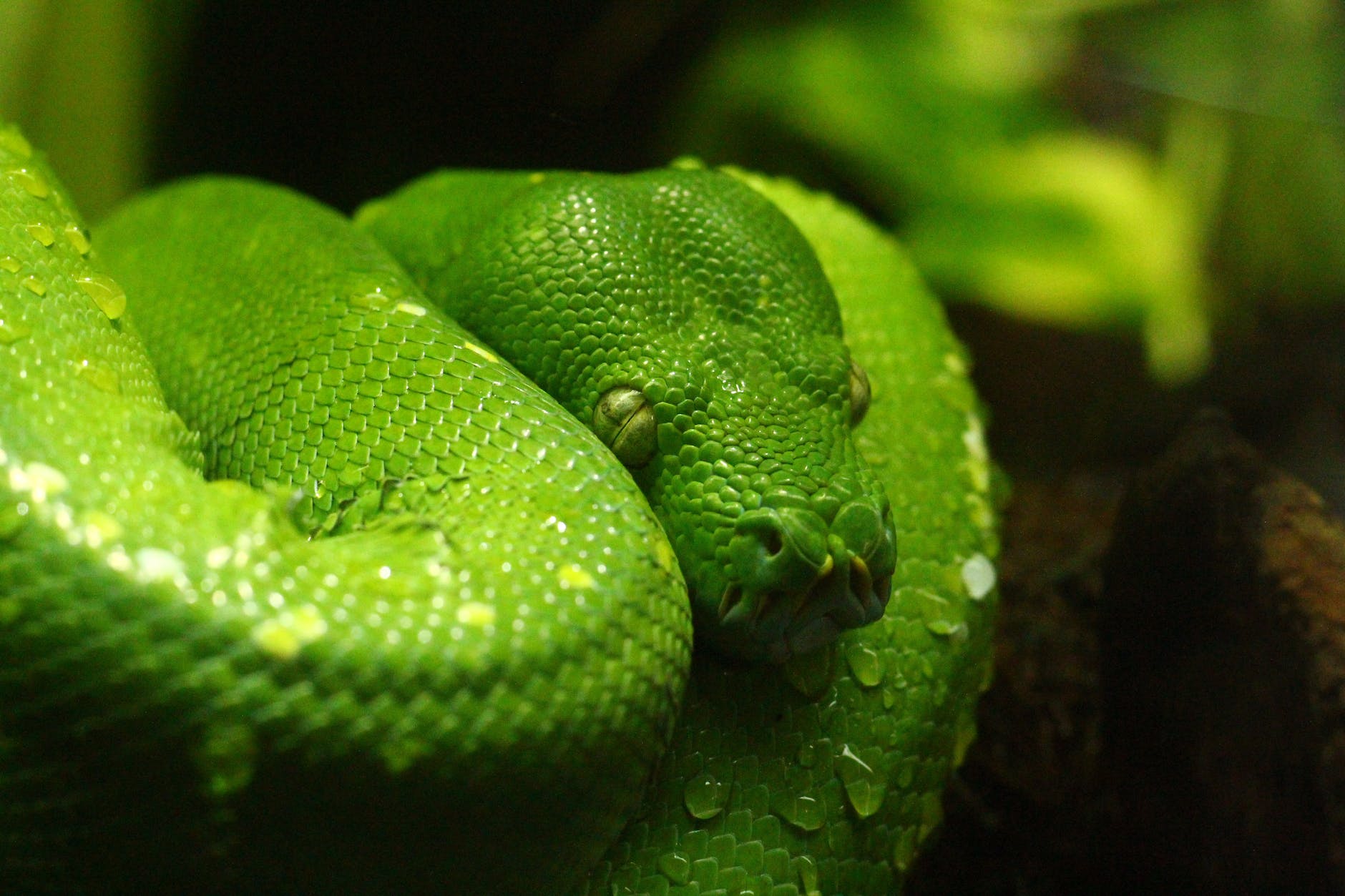
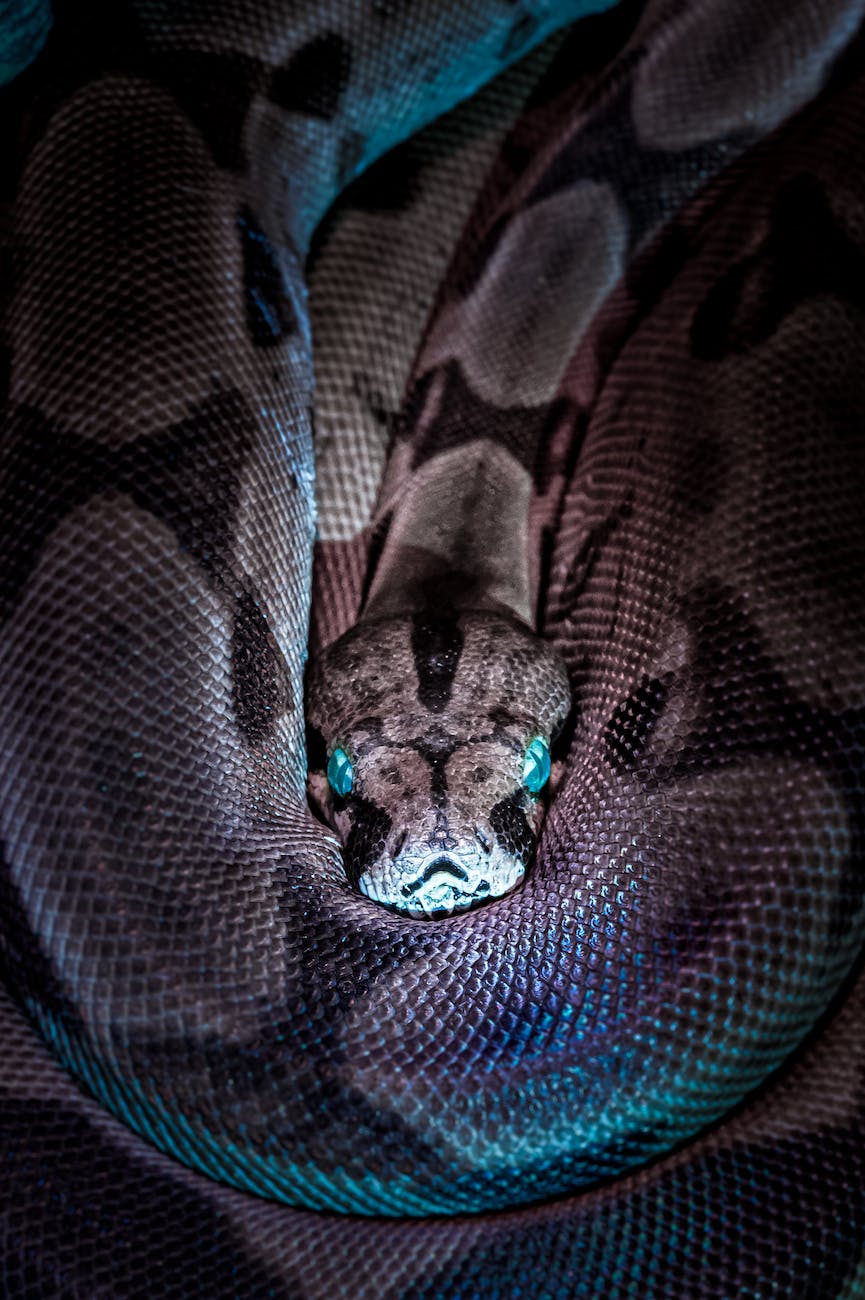
So, let’s look at what Tom actually is. He’s 100% Snake because Snake has Yin and Yang aspects. The key feature of snake is a coiling body, which can be used for either very quick strikes (Yang snake) or wrapping and coiling actions (Yin snake) for defence and grappling/locking. You can see this defensive coil aspect (Yin snake) particularly well when Tom is defending. There’s a little section in the round where he slips punches from Sergei while he coils and winds his body as he circles off – this is classic snake behaviour – just imagine if you were stupid enough to try to grab an angry snake by the neck – it would bend and coil around your hand, particularly if it was a python.
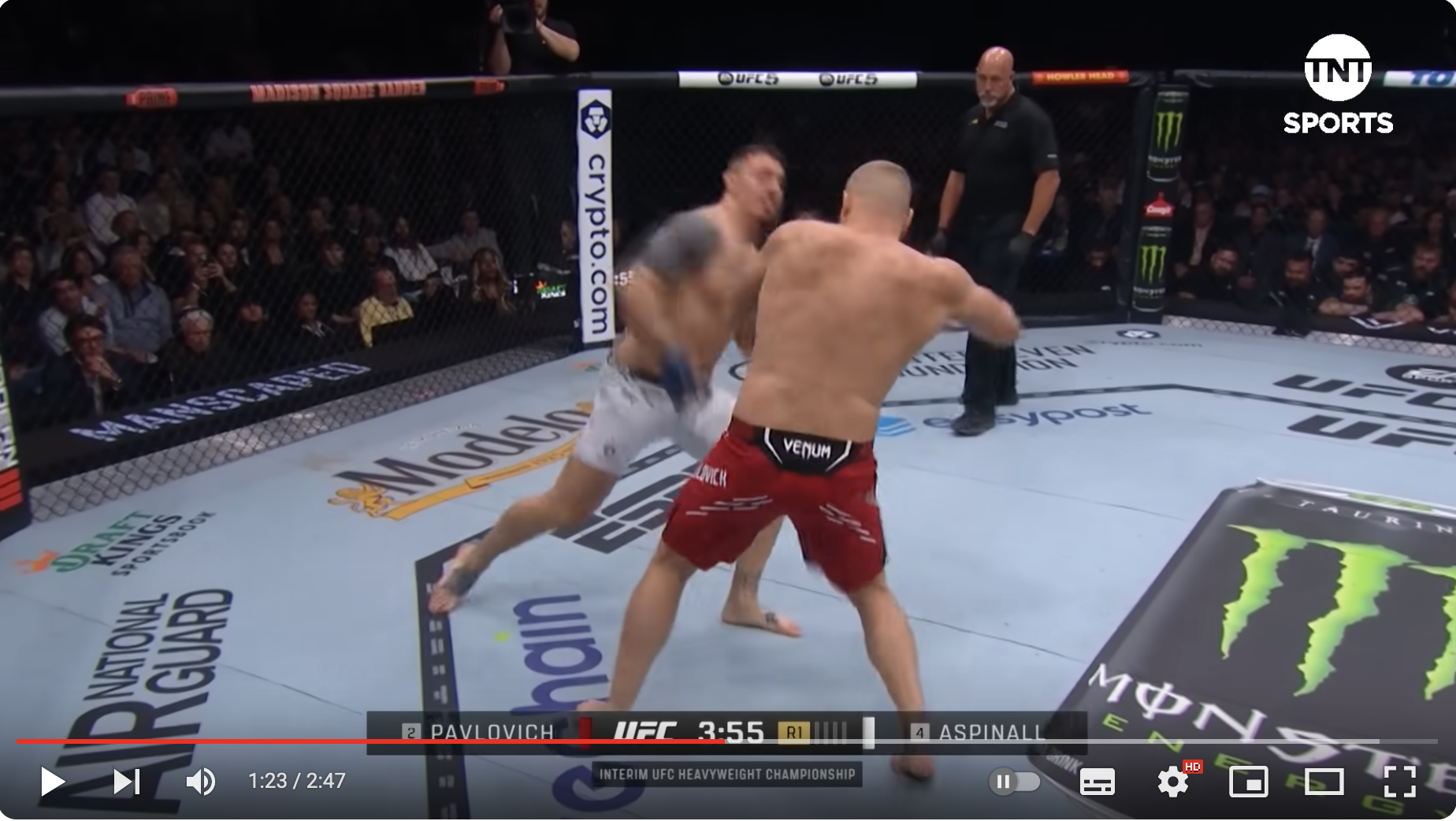
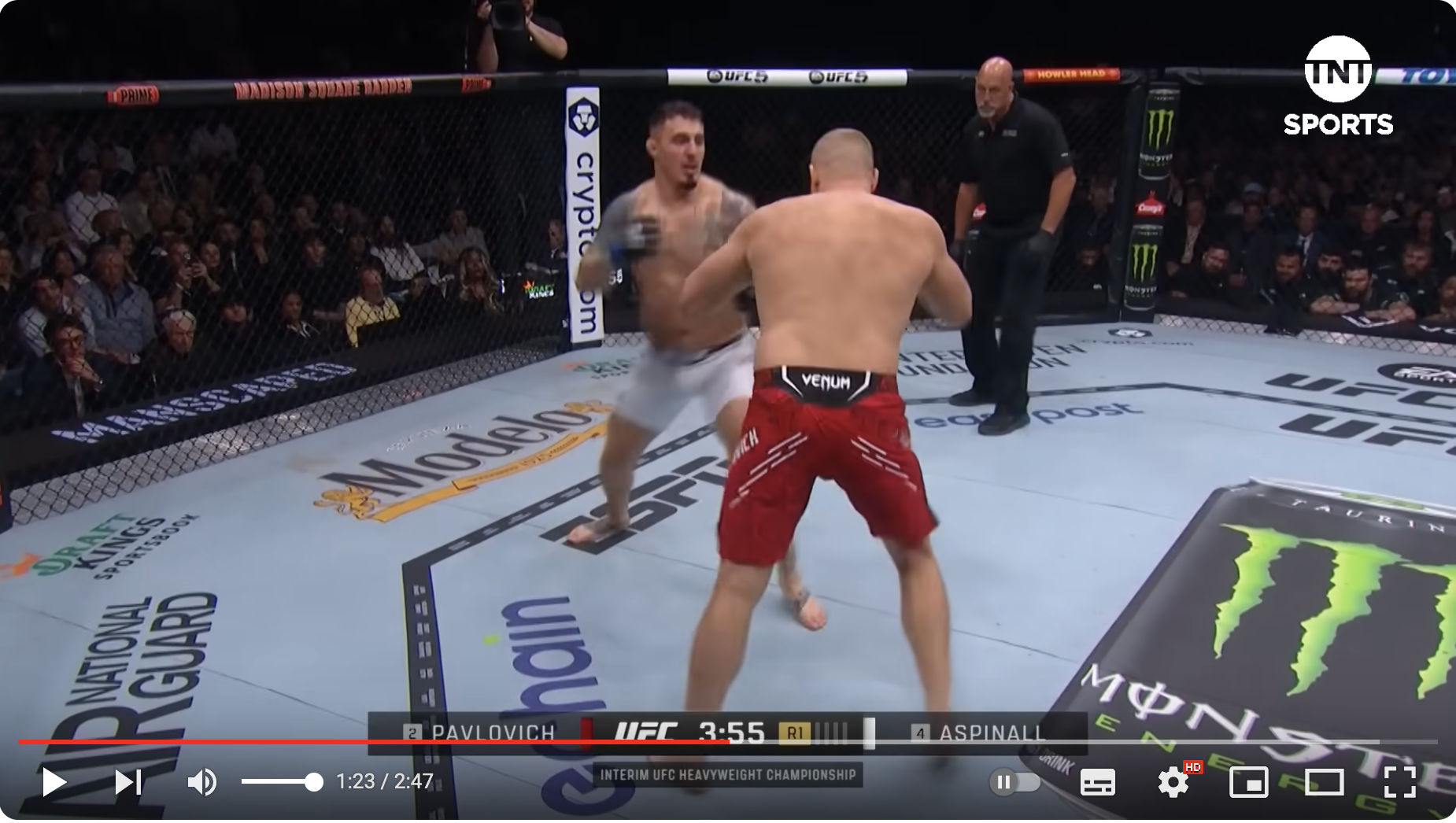
Snake’s are very aggressive, successful predators dating back to the time of the dinosaurs, and they’re always sensing forward, flicking out their tongue, and of course, they have the famous (and sometimes) venomous bite. When a snake bites the action is incredibly fast – you’ll notice that when Tom flicks out his jab the speed catches Sergei completely by surprise. For a big man he punches very quickly. The finish is so fast it’s hard to see, but Tom punches Sergei twice before Sergei can even react, steps back, looks at him, then punches him again sending him to the canvas:
Throughout the fight, Tom is flicking out single jabs and single low kicks too, very quickly.
Snake in Xing Yi is also associated with locking and grappling actions – we didn’t see any from Tom in this fight, but that doesn’t change the character that Tom is showing. (He’s actually a very accomplished grappler as well).
But what about Sergei? Well, we didn’t see much from Sergei in this fight, but from what we saw I’d vote Bear for him. His stepping is short as are his rounded punches. He’s incredibly powerful, and he landed the first strike of the match on Tom, which was so powerful he almost finished it there and then. Luckily for Tom he managed to absorb it. In our style we always include Bear and Eagle together, so I think Sergei’s got the potential for some Eagle strikes too, but the fight simply didn’t last long enough for him to show them.
* I suppose this post needs to end with some sort of “this is just my opinion” type of disclaimer. But I find people tend to get offended about everything they possibly can regarding Xing Yi these days, so I’m not going to loose too much sleep over it. And obviously Tom has probably never heard of Xing Yi – I’m just using it as a tool to analyse his fighting style. And if you want to enter an MMA match then MMA training is obviously the best way to train for it, not Xing Yi.
There are different lineages of Xing Yi, it’s been transplanted to different countries, and it’s very old, so it’s quite possible that none of my understanding of Xing Yi snake resonates with your particular lineage. It’s a sad fact that most Xing Yi animals have become just a set of techniques or moves, that have long since lost any connection to actual biological animals – successive waves of crushing political ideology, (both nationalism and communism) imposed on a marital art at the barrel of a gun will kind of do that. I will say however, that my understanding of Xing Yi snake is not really based on a particular style of Xing Yi, or a way of doing the move, but on tying to get back to what real snakes do. And I won’t say I wrote the book on Xing Yi Snake, but I did write one chapter of it.
One of the things I like to do when watching UFC fights is to try and analyse what the fighters are doing in terms of Xing Yi’s 12 animals. Now, I’ve got at least one friend who hates when I do this because he believes it makes people think that by practicing a few Xing Yi moves twice a week in your back yard you can somehow be on the level of professional MMA fighters. Yeah, I get that. Comparing martial arts can easily lead to delusion… however, my No. 1 one rule for The Tai Chi Notebook is this: this is my blog and I can write what I want! So, I’m going to do it anyway. But also, I genuinely think that if you’re a Xing Yi practitioner yourself, then trying to analyse MMA fighters in terms of the 12 animals is a really valuable hobby to get into. It will increase your understanding of not only the animals, but also of fighting itself.
Viewed through the modern Xing Yi lens (by modern, I mean, post Boxer Rebellion, from the early 20th century onward) it’s popular to understand the 12 Animals of Xing Yi as merely variations on the 5 Elements. This approach is indicative of the reductive, simplistic, winds of change that blew through Chinese martial arts over that century. It’s not a wrong view technically (the 5 elements are the basics, so of course they are inside the 12 animals), but it’s also a huge misunderstanding. The 12 Animals are more than just variations of the 5 Element fists, they are older and contain the essence of the art. They’re a continuation of a tradition that started back in the Song Dynasty. If you really want to understand that point of view then I’d point you towards the History of Xing Yi series we’ve been doing on the Heretics Podcast for a few years now – and is currently up to part 15, about to start the Ming Dynasty section.
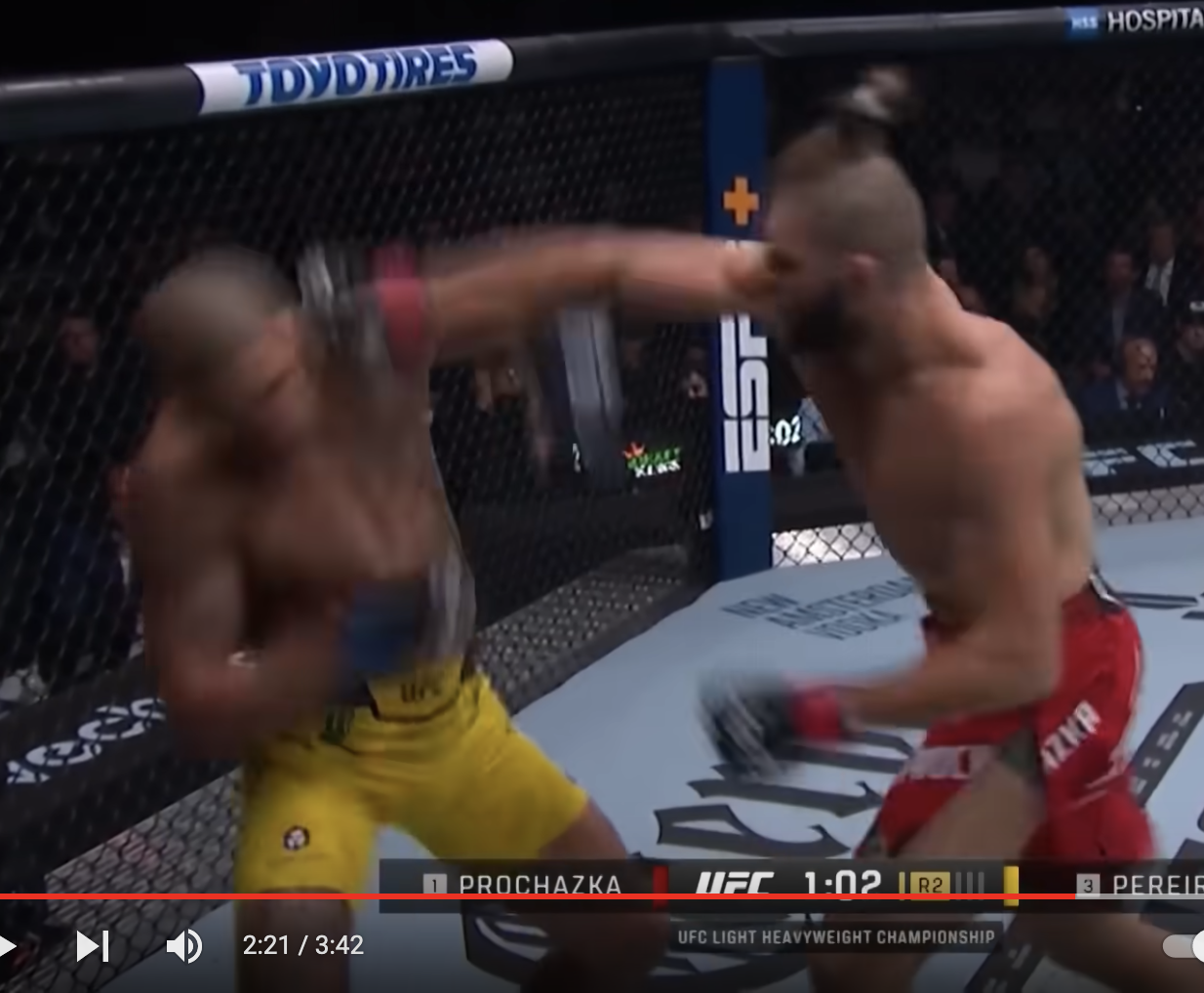
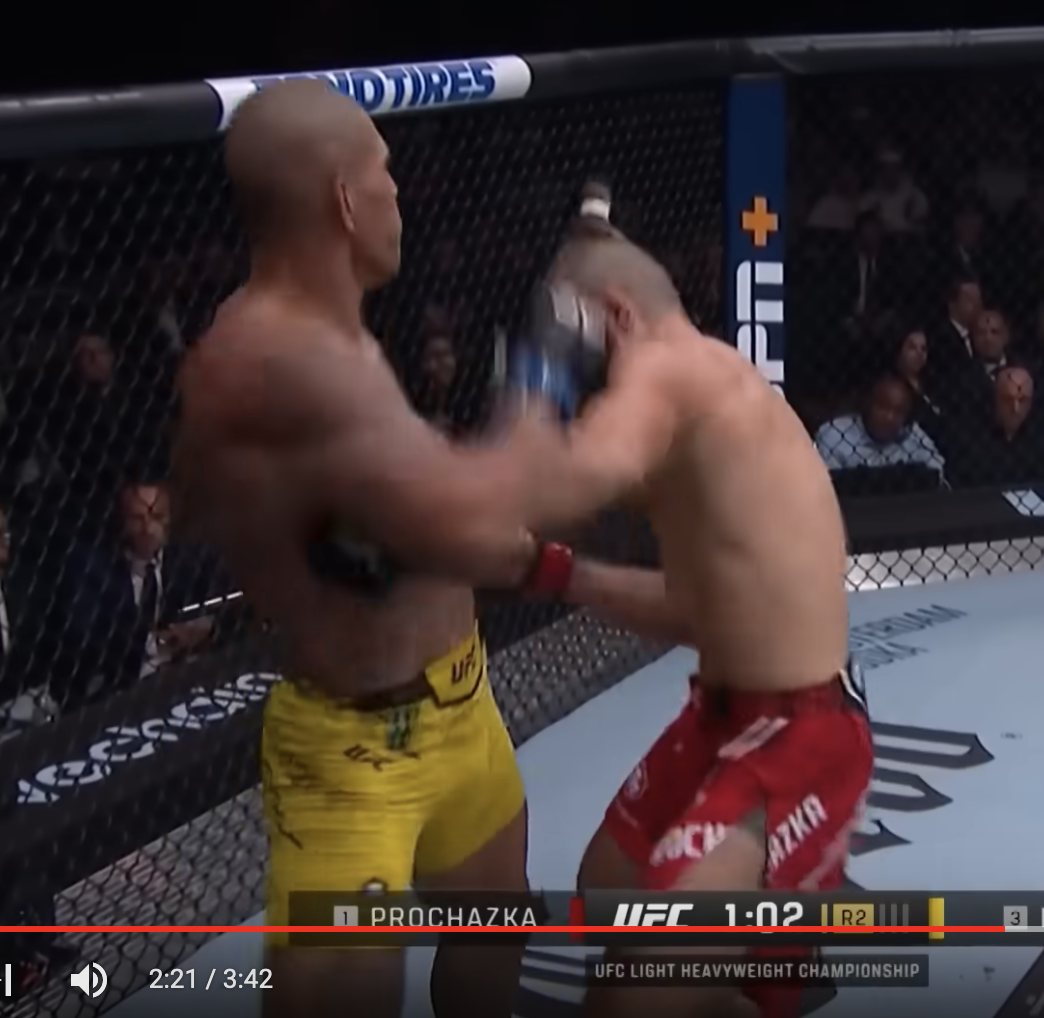
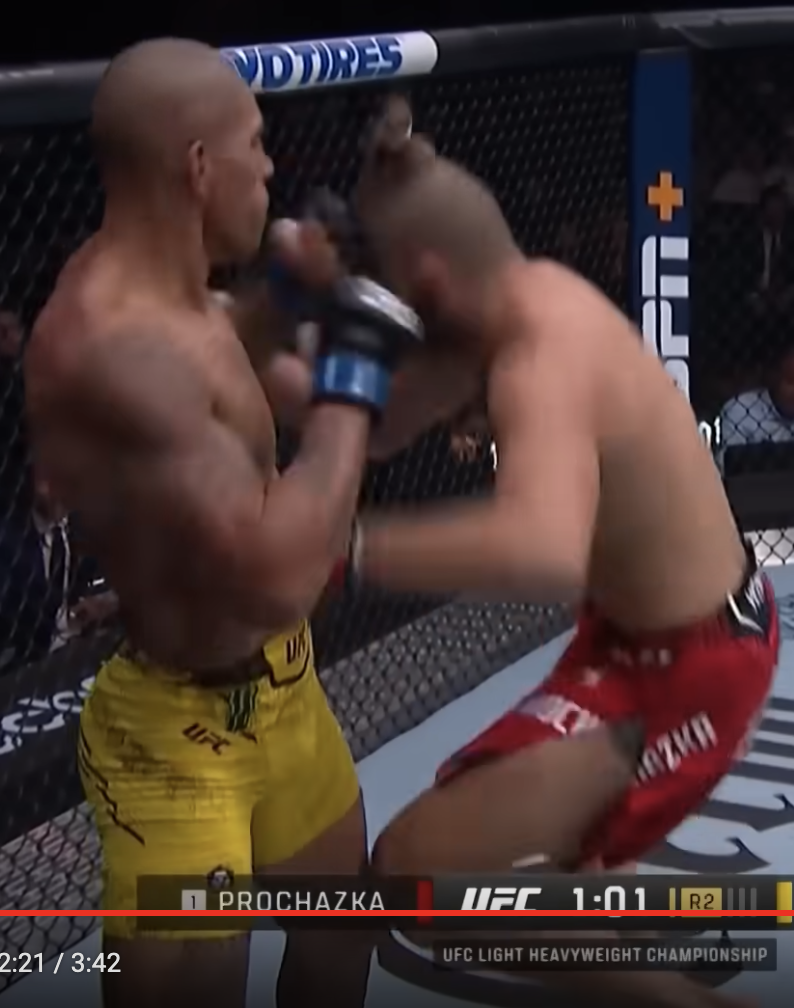
But coming back to the present day, last week saw Alex Pereira vs Jiri Prochazka for the UFC Light Heavyweight belt at UFC 295. It was a great fight resulting in a knockout for Pereira, but honestly it could have gone either way. There was some debate about the finish being an early call from the ref, but Jiri himself said he was out cold, so it was fair. Highlights here:
Looking through my Xing Yi lens at what the fighters were doing, UFC 295 was a good one because it was very clear what animal strategy each of them was using. (Obviously, neither gentleman has probably ever heard of Xing Yi, however, like I said earlier, I’m simply using the 12 animals to analyse fighting styles.)
Swallow (yan xing)
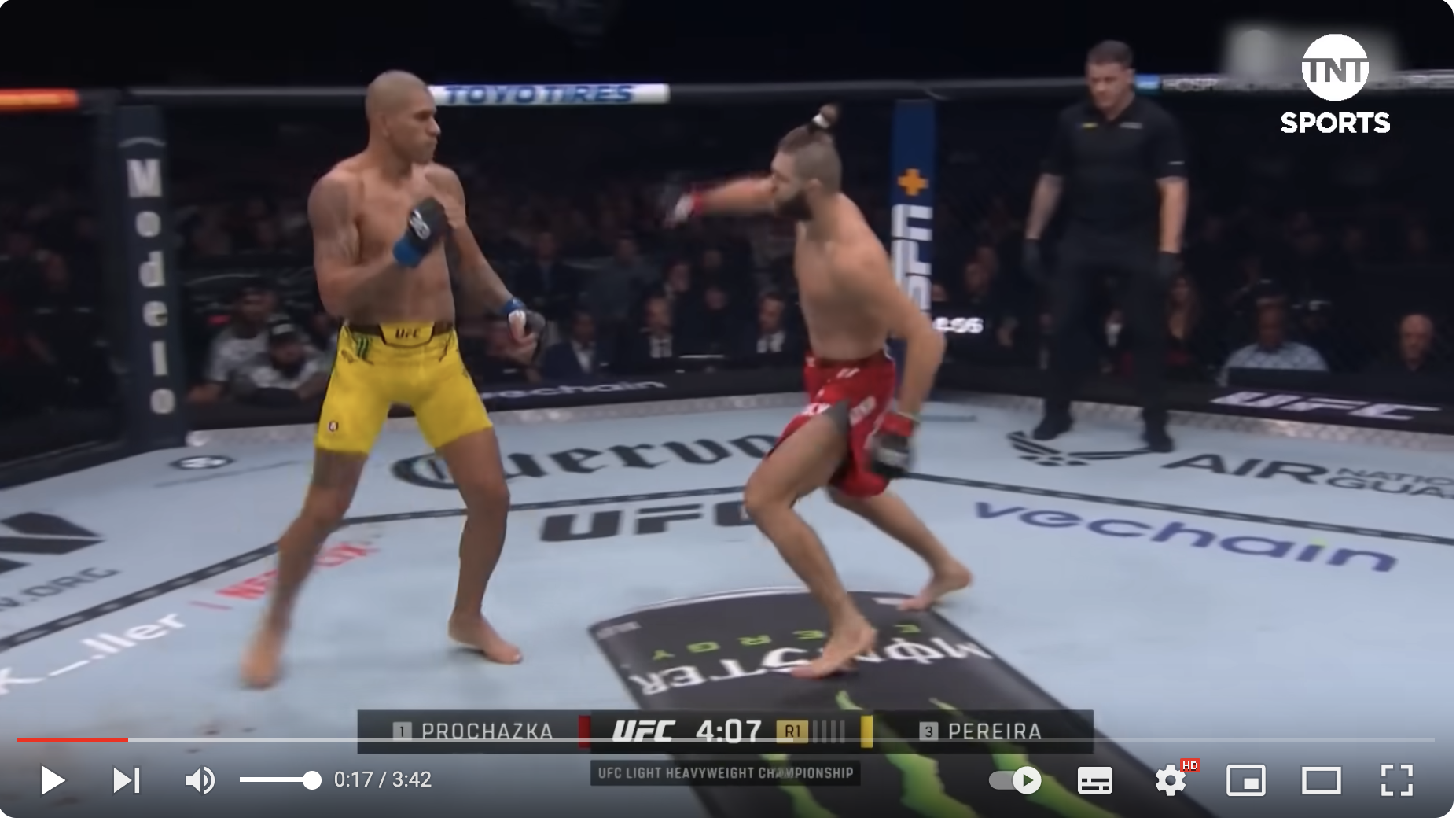
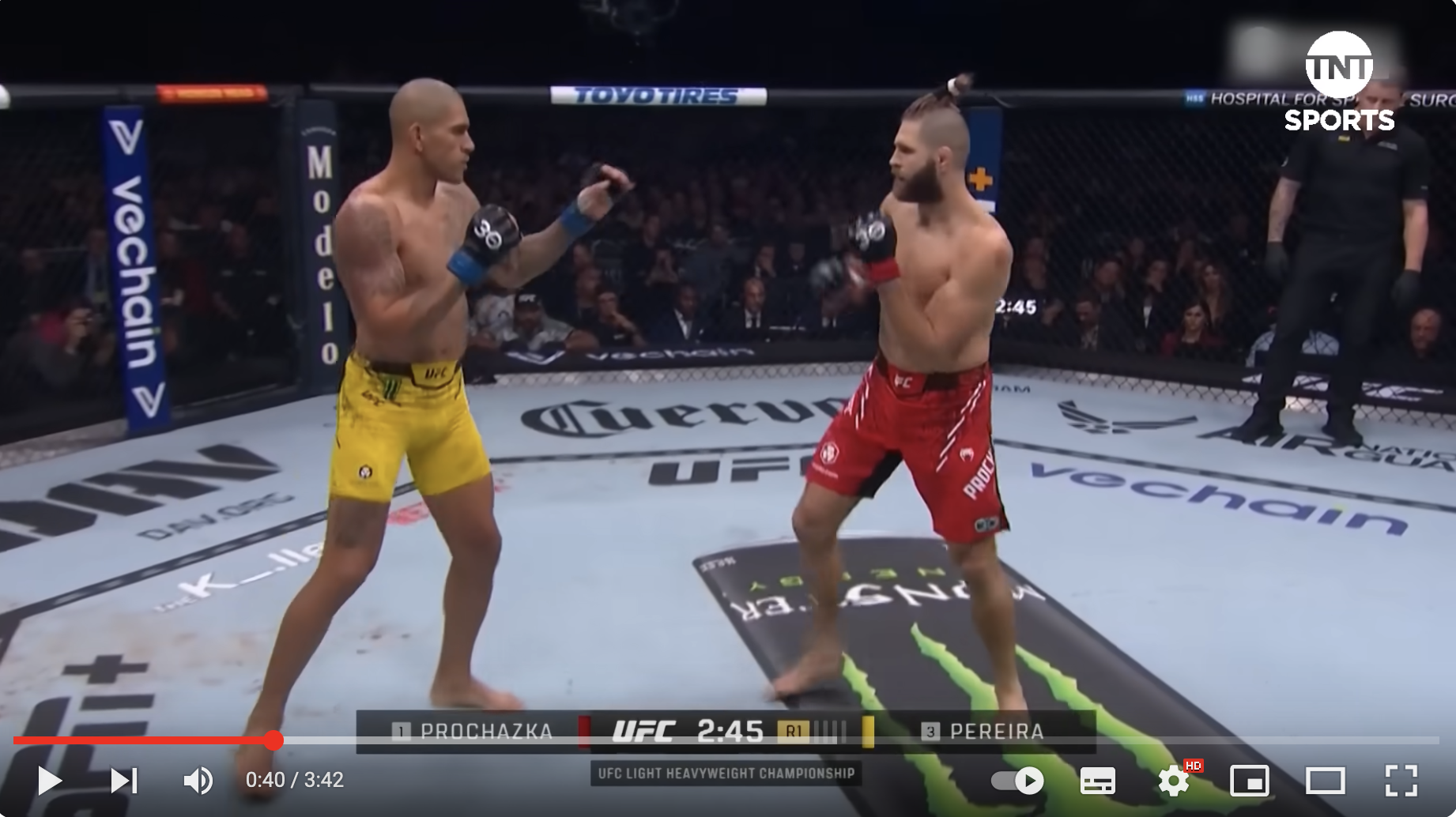
So, on one hand we have Jiri Prochazka (red shorts) whose attacks frequently go from high to low:
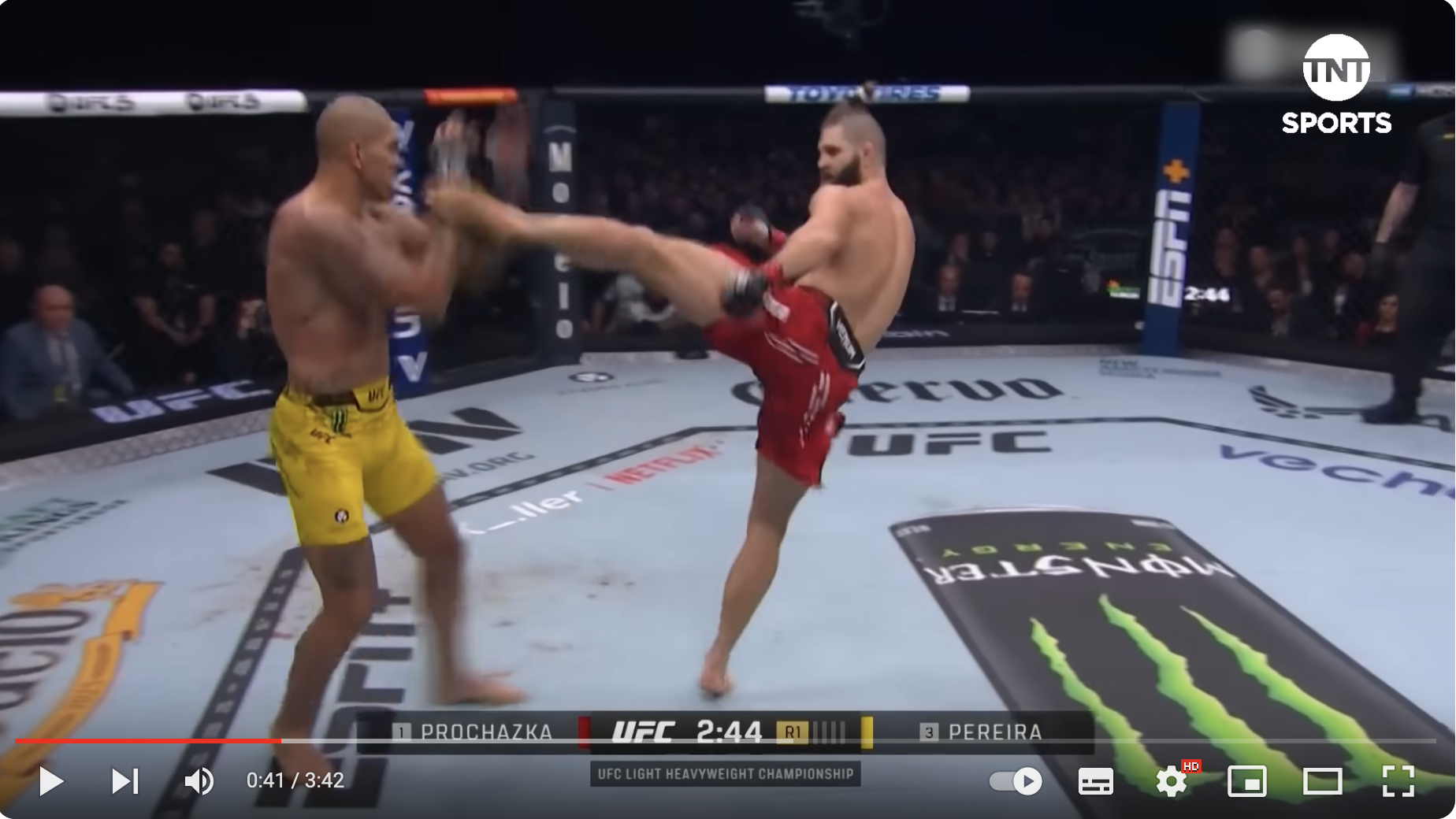
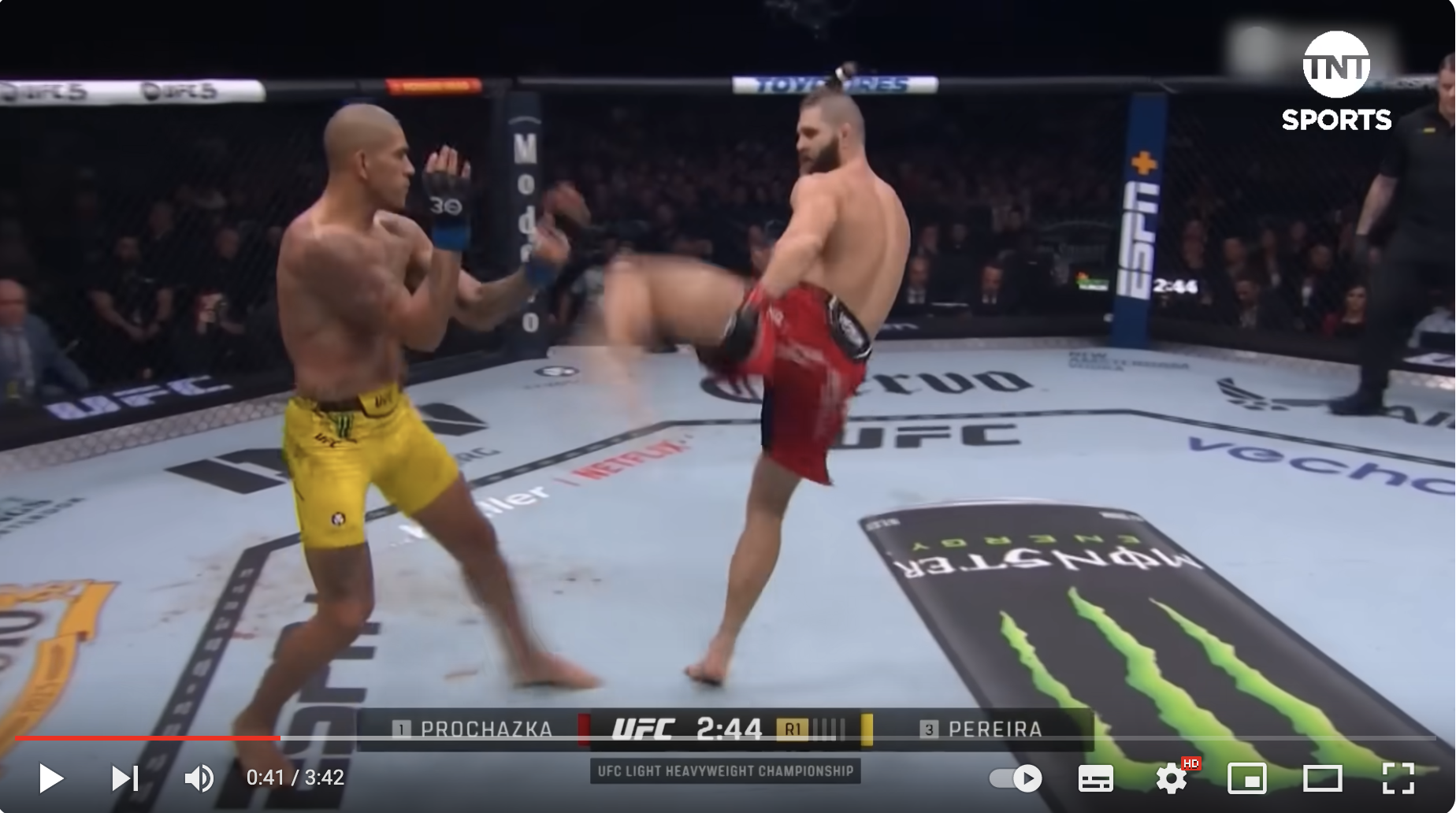
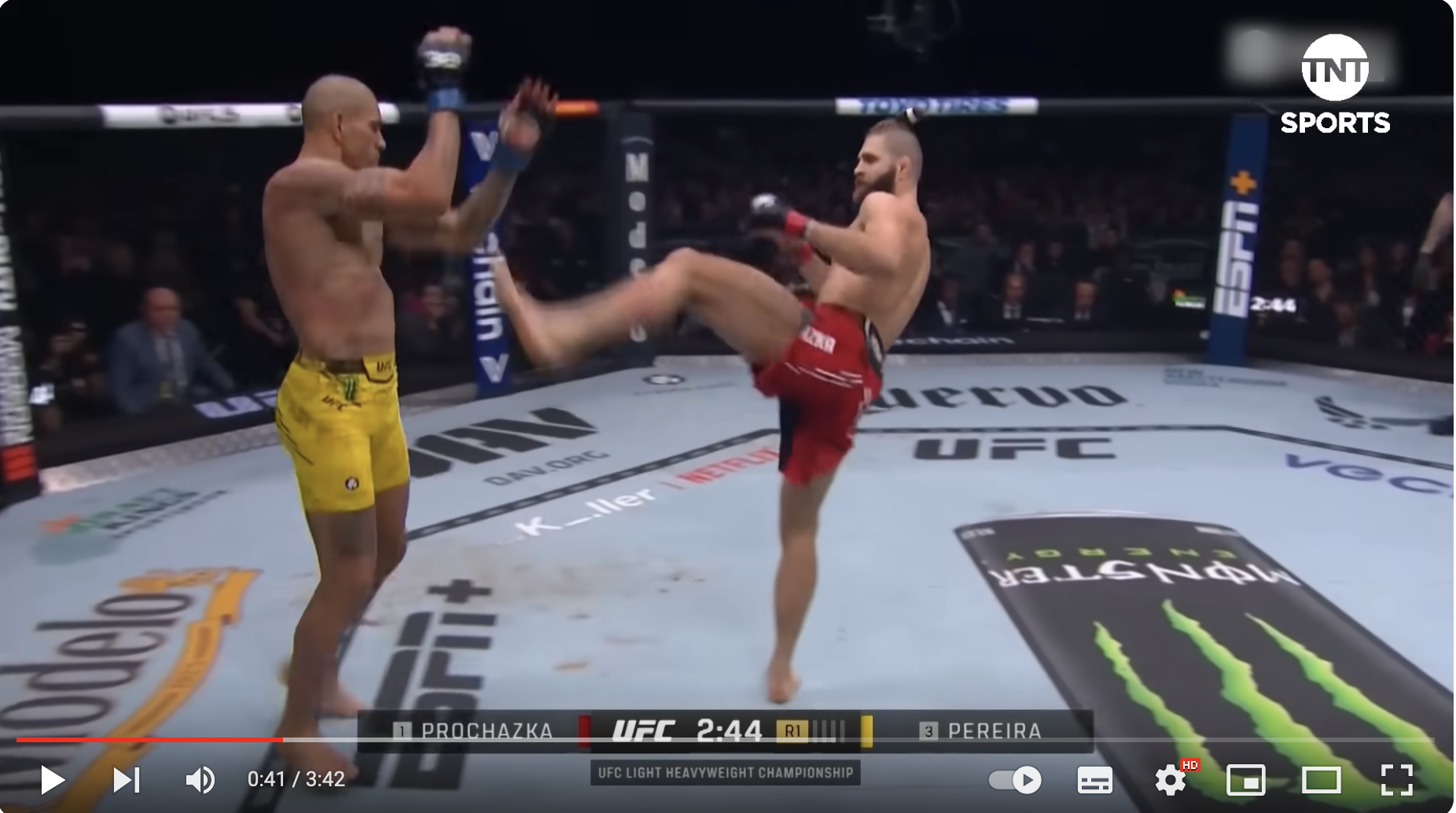
He kicks high to the head, then kicks low to the ankle:
(Obviously a lot, but not all, MMA fighters kick to both heights, but it’s the alternating way he does it, as a strategy, that I’m interested in. It’s not the techniques that make something an animal style, it’s the intent and strategy behind them, but also certain styles lend themselves naturally to certain techniques – which is a subtle point)
He dummys a wrestling shot low but then comes up with an upper cut.
His preferred range is long, and when he punches he throws arcing punches that start low, go high and finish low:
To me this is clearly a Swallow strategy. Swallow is a bird you wouldn’t normally associate with fighting, but it aggressively hunts insects on the wing, and defends its nesting location by dive bombing potential intruders, including humans! Its characteristics are swooping low then going high, particularly over water and “swallow skims the water” is a name often given to a popular swallow movement in forms in Xing Yi, Bagua and Qigong. But the swallow is also famous for its absolutely beautiful aerialacrobatics that are always elegant and graceful.
A swallow defending its nest – I like this clip because you can see the speed that the swallow attacks with, and how unafraid it is of something as big as a human.
The classic “swallow skims water” in action, by the true masters of the art – the swallows themselves.
A typical “swallow skims water” movement found in Chinese martial arts. This one from Cheng style Bagua.
Chicken (ji xing)
But let’s get back to UFC 295. In contrast his opponent, Alex Pereira is famous for his minimal movement and crushing low calf kicks. There’s a great clip of him playing about with UFC commentator Daniel Cormier taking his low kick:
A native of Brazil, Pereira is also famous for his indigenous face paint he wears to the weigh in events:
(For people that like to argue that Shamanistic things have no part in MMA, I always like to point them to double UFC champion, Alex Pereira!)
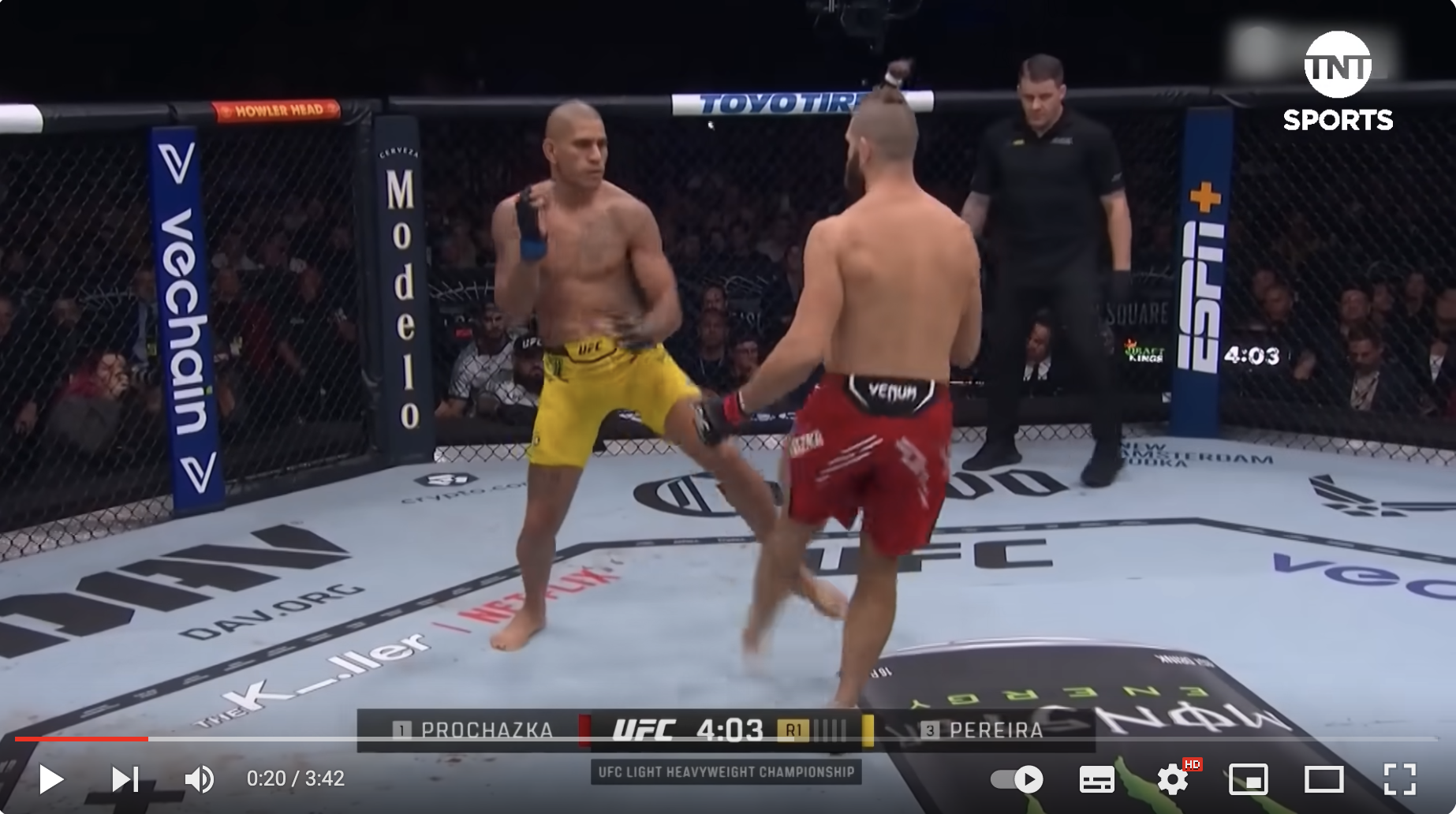
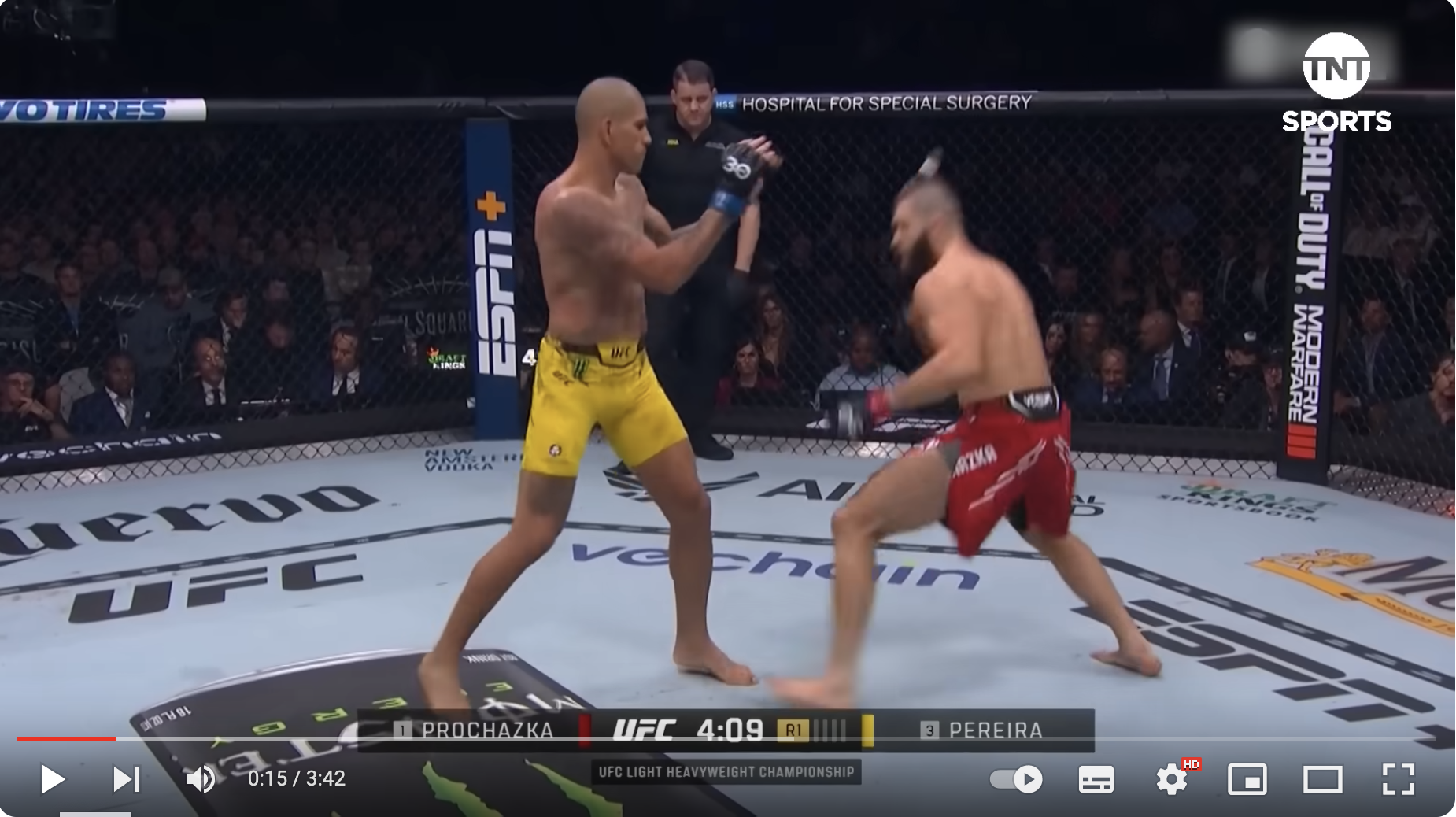
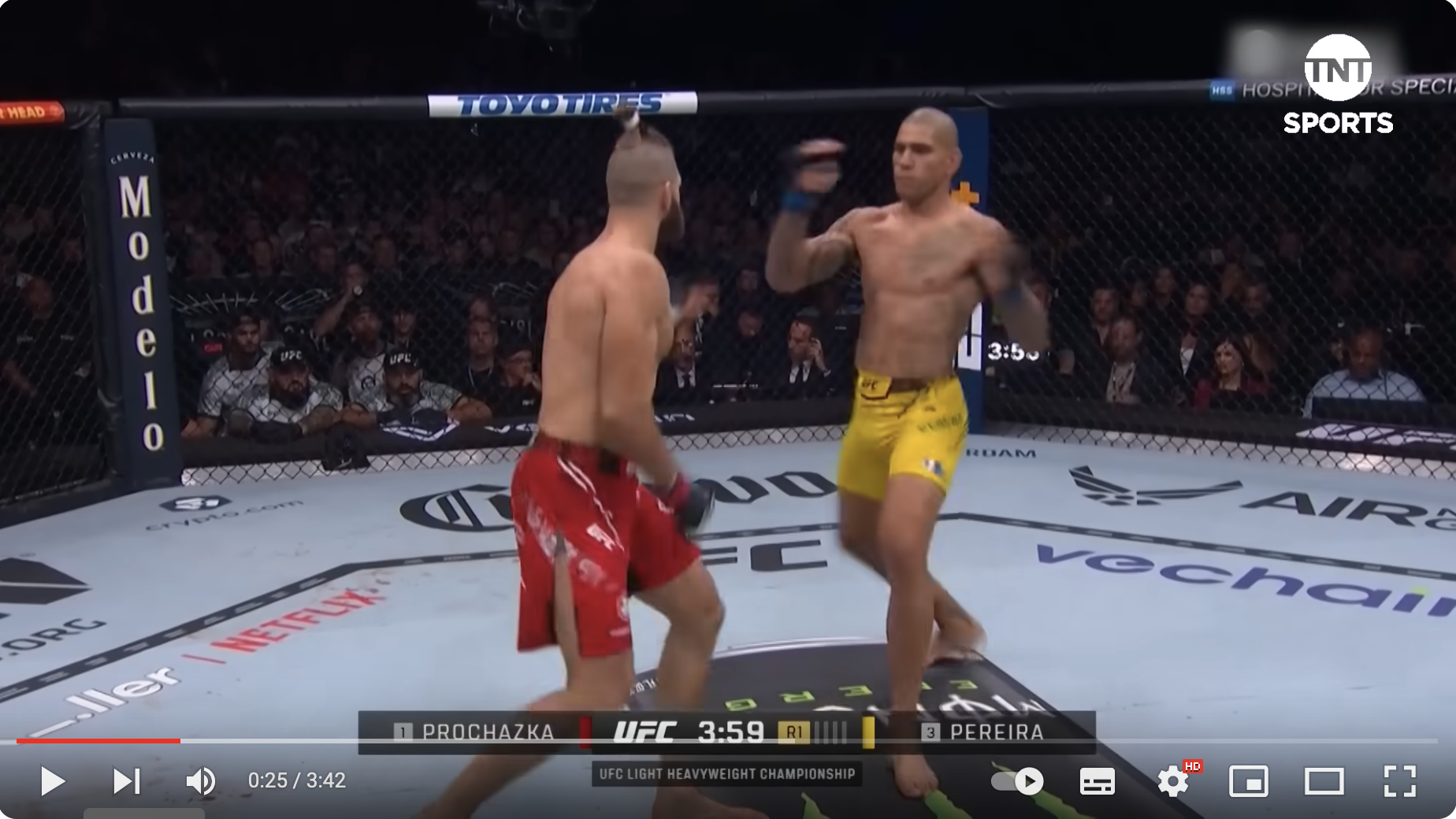
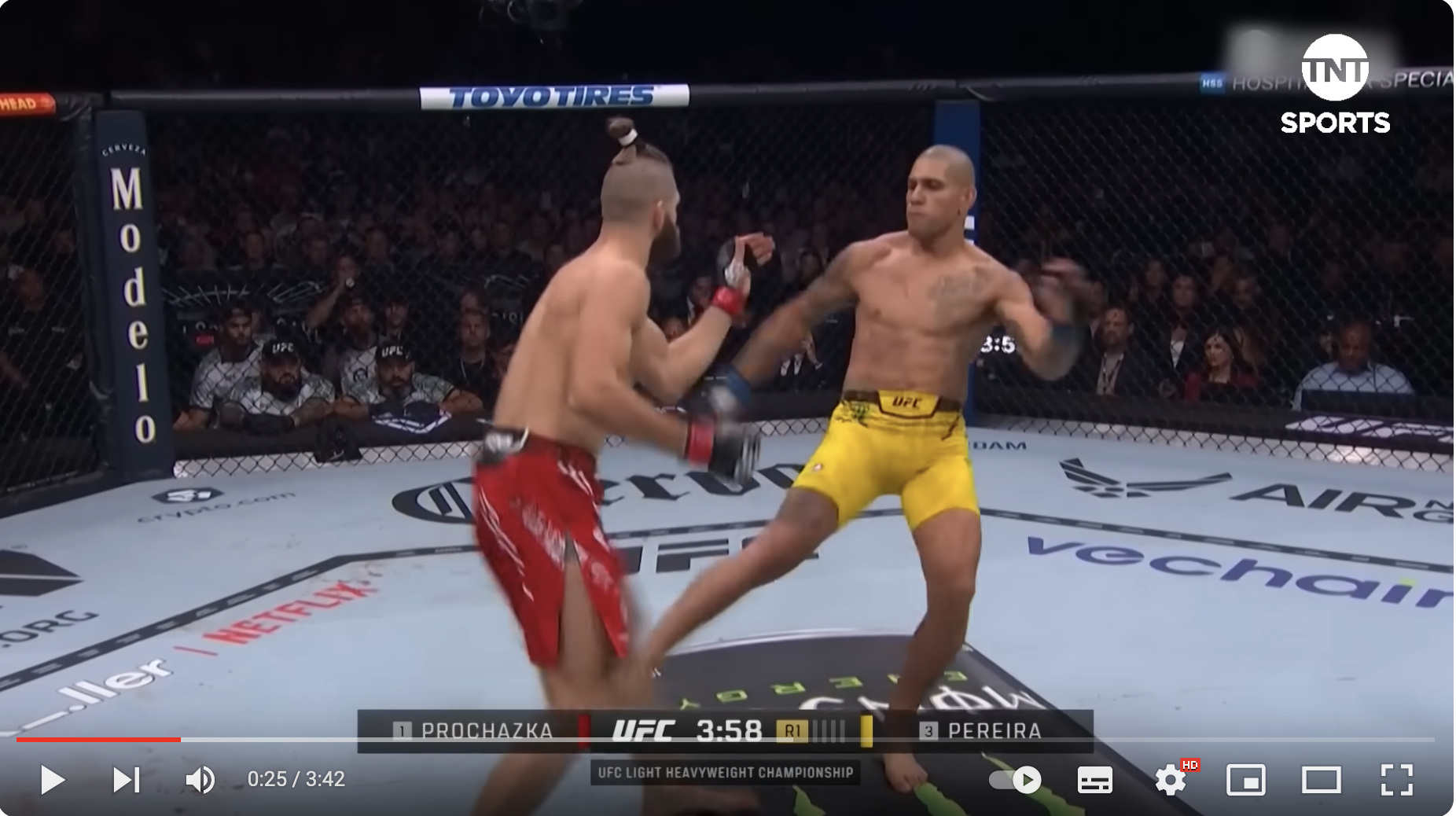
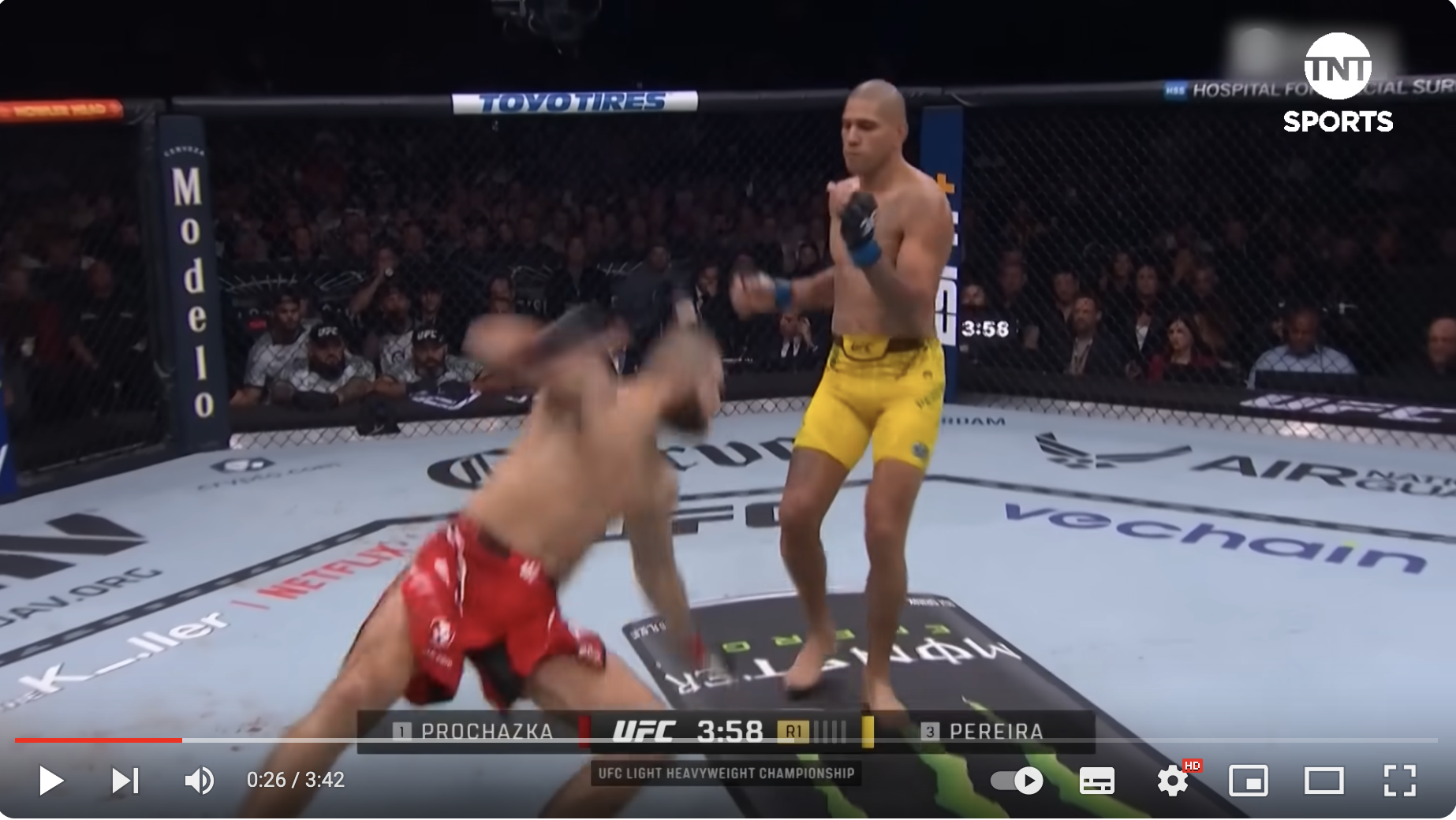
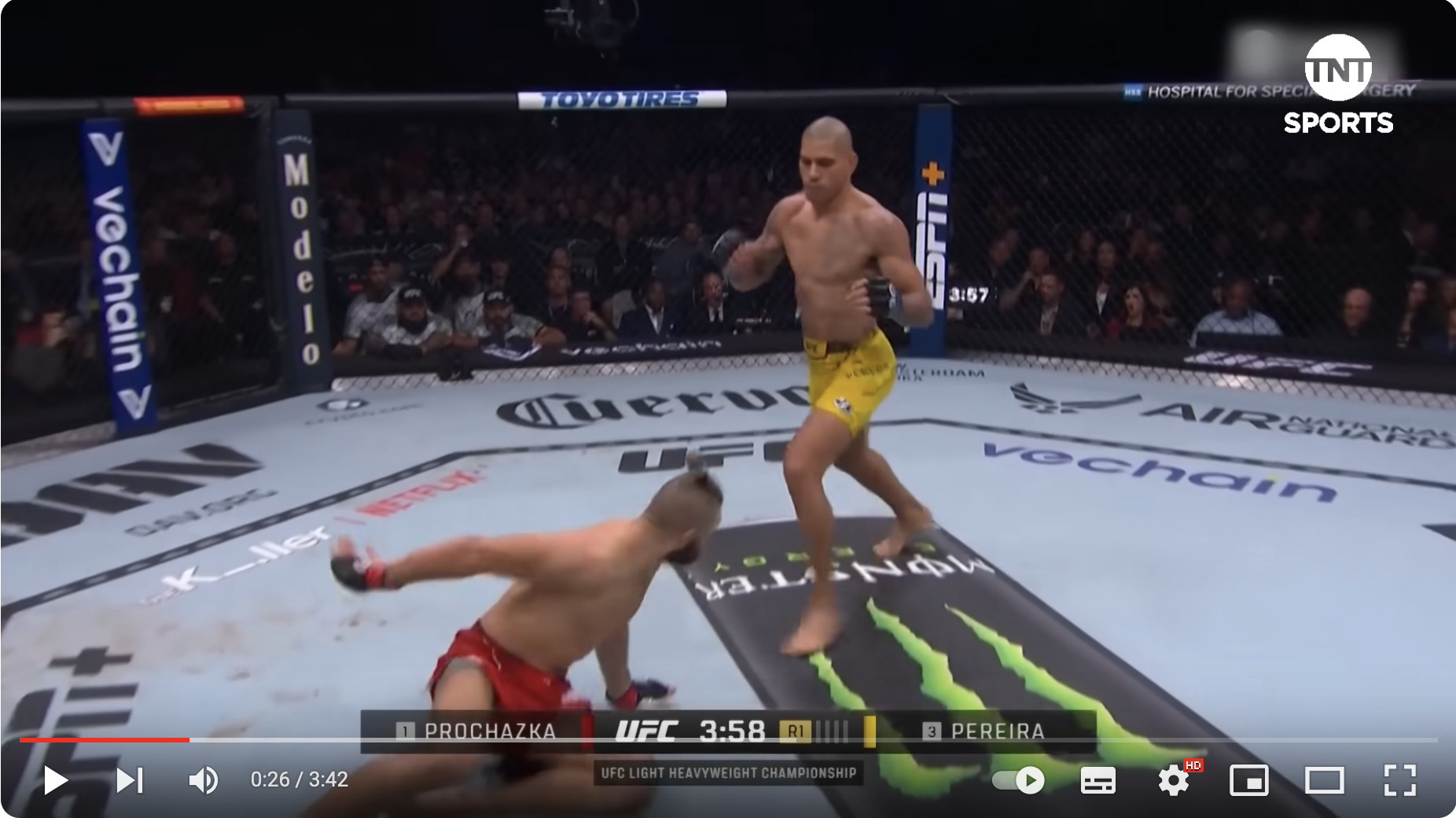
You can see his famous calf kick in action in UFC 295, completely taking Jiri off his feet:
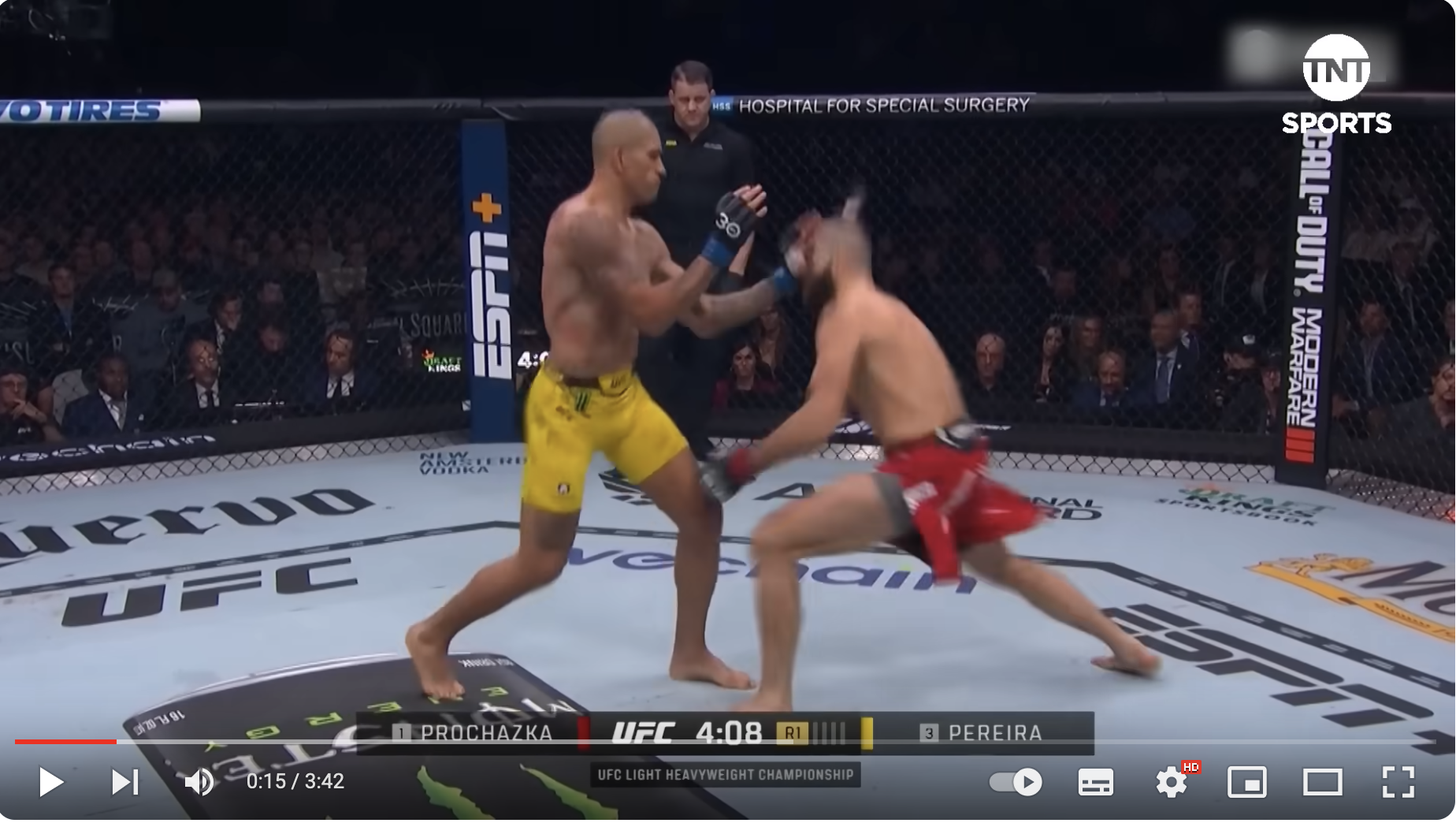
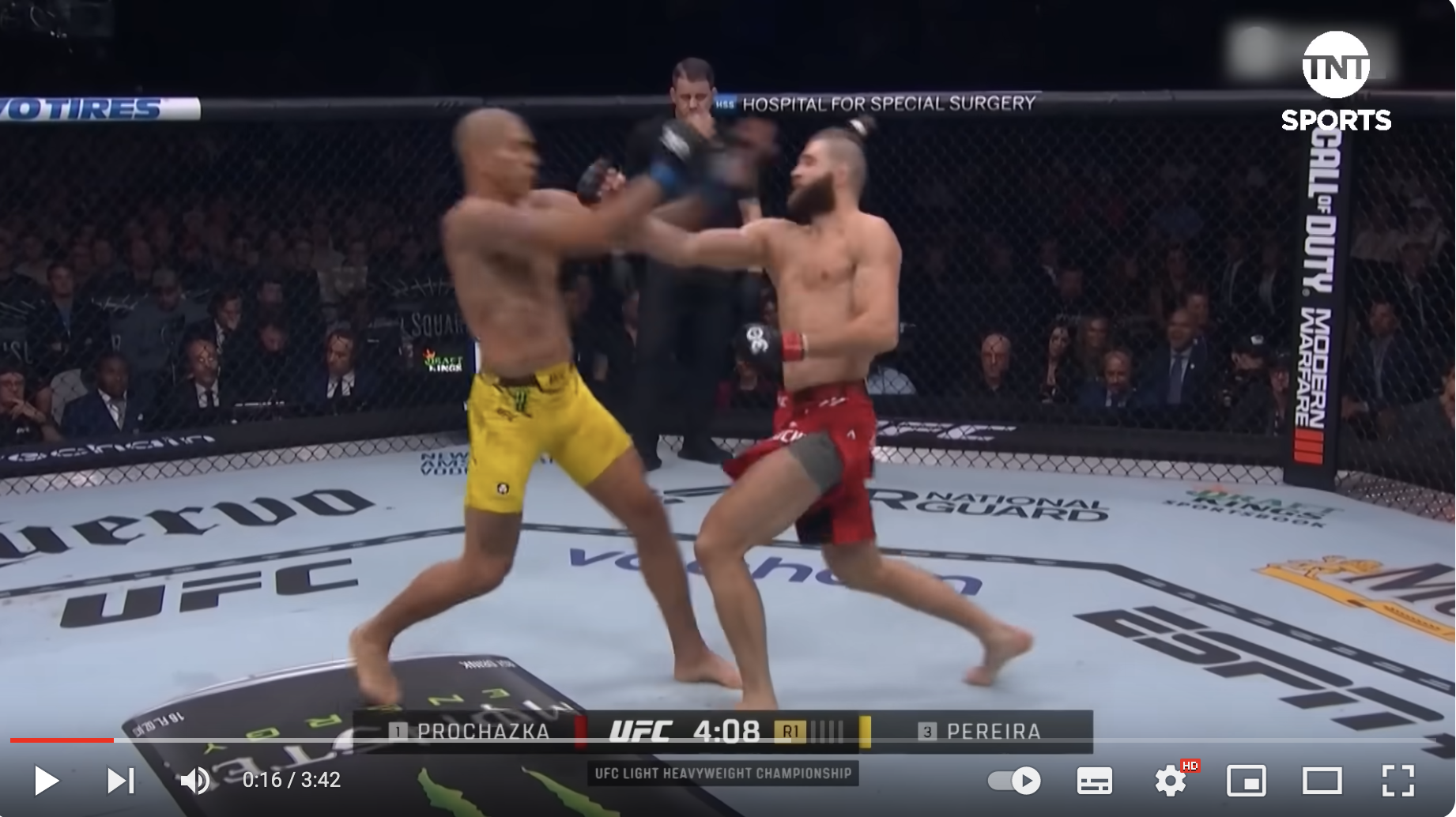
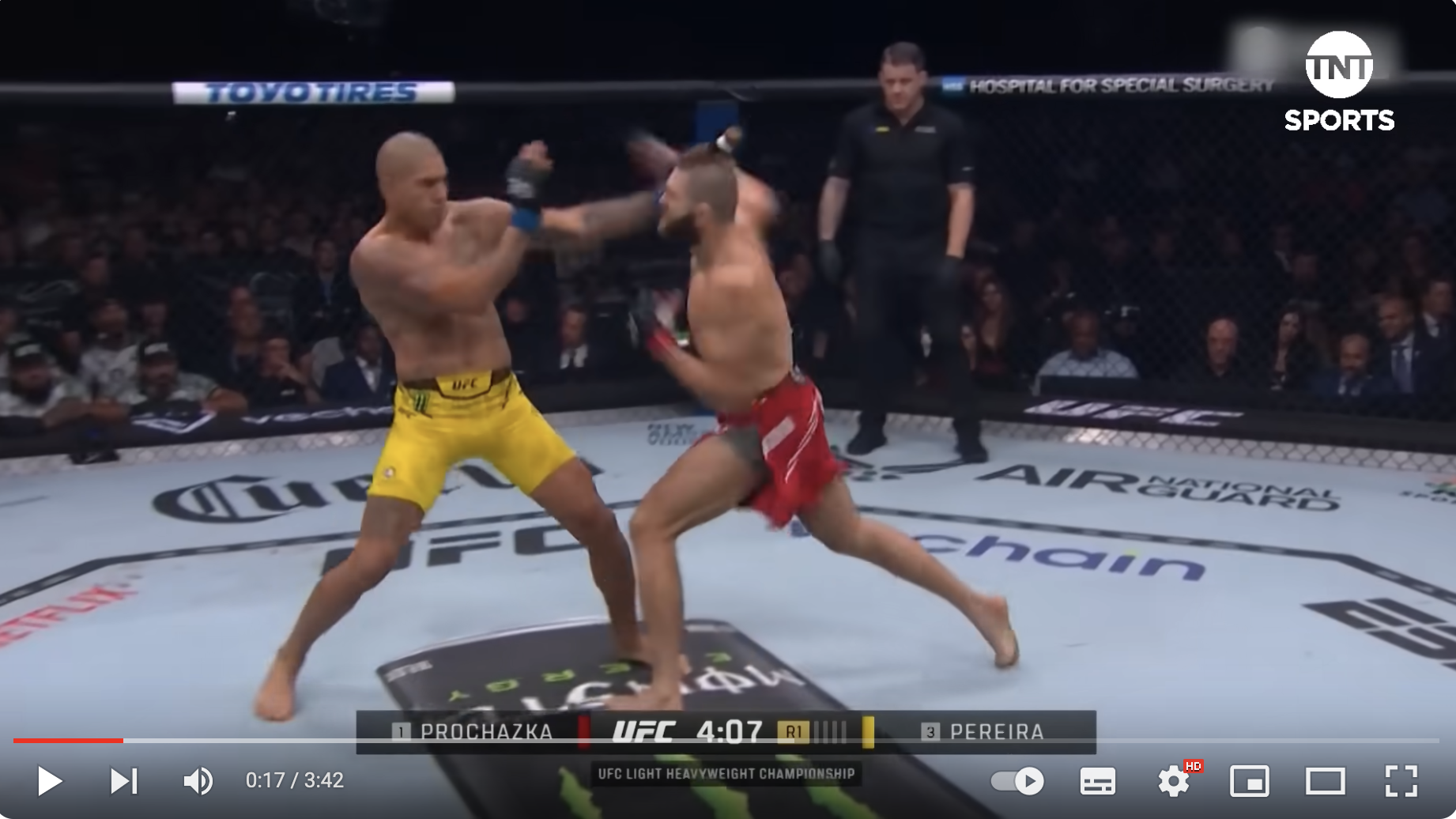
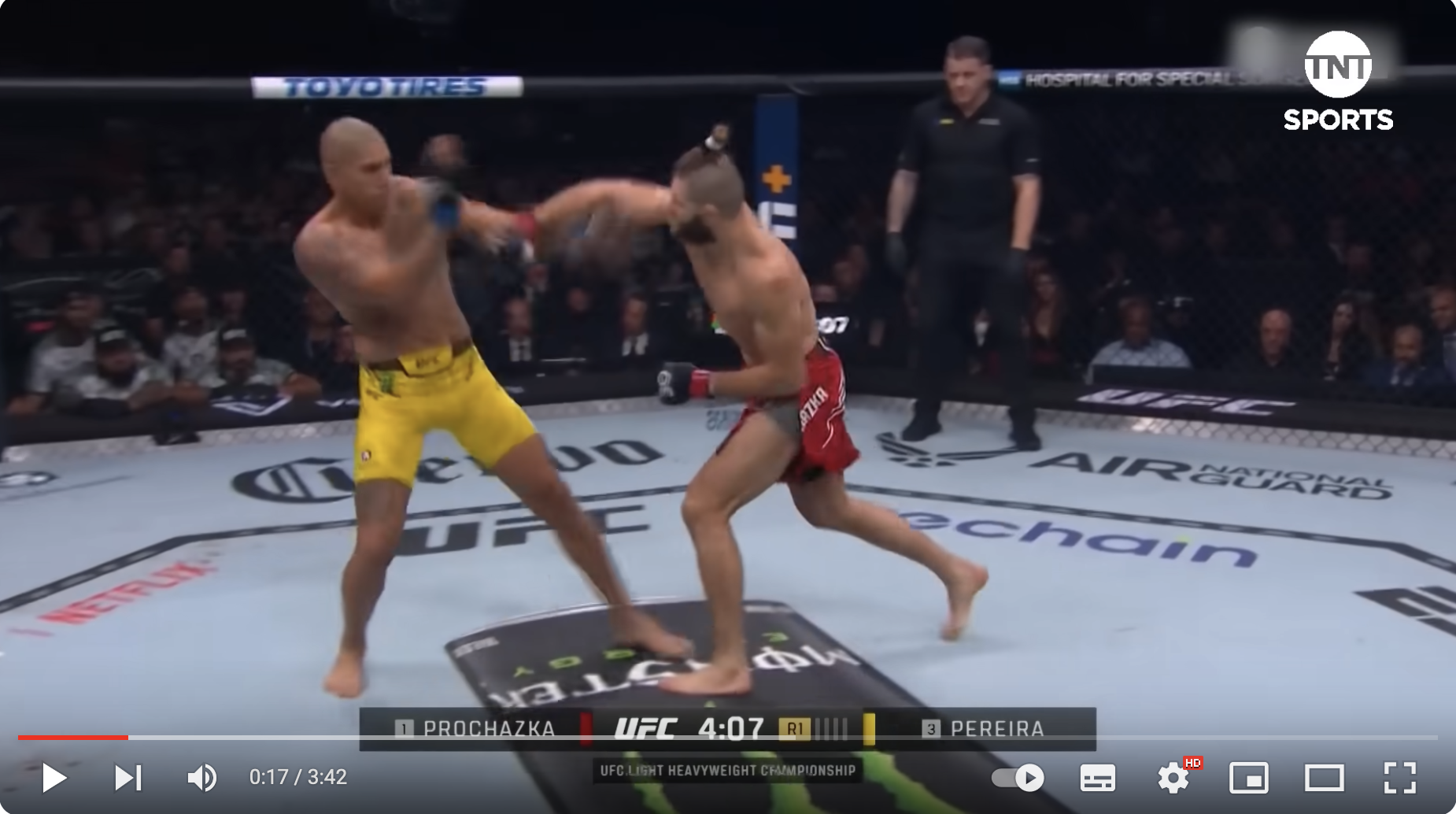
What’s remarkable about the Pereira calf kick is how little wind-up there is, which makes it hard to see coming – he just snaps it out. He does three identical kicks in a row in that part of the fight – the pictures above show the first – but all three hit home. His punches are delivered in the same way – the hand just snaps out with almost no telegraphing movement at all. You can see in the screen captures above of the kick that his body stays facing the opponent at all times. They don’t look like powerful shots, but you can see the deadly effect they have on his opponents. That very tight coil in his body around the spine that he’s using to pop his kicks and punches out is absolutely indicative of Chicken xing. “Chicken shakes its feathers” is a characteristic move of the animal found in Xing Yi links (forms) and somewhat resembles the Fa Jing expression that you see demonstrated in Tai Chi styles:
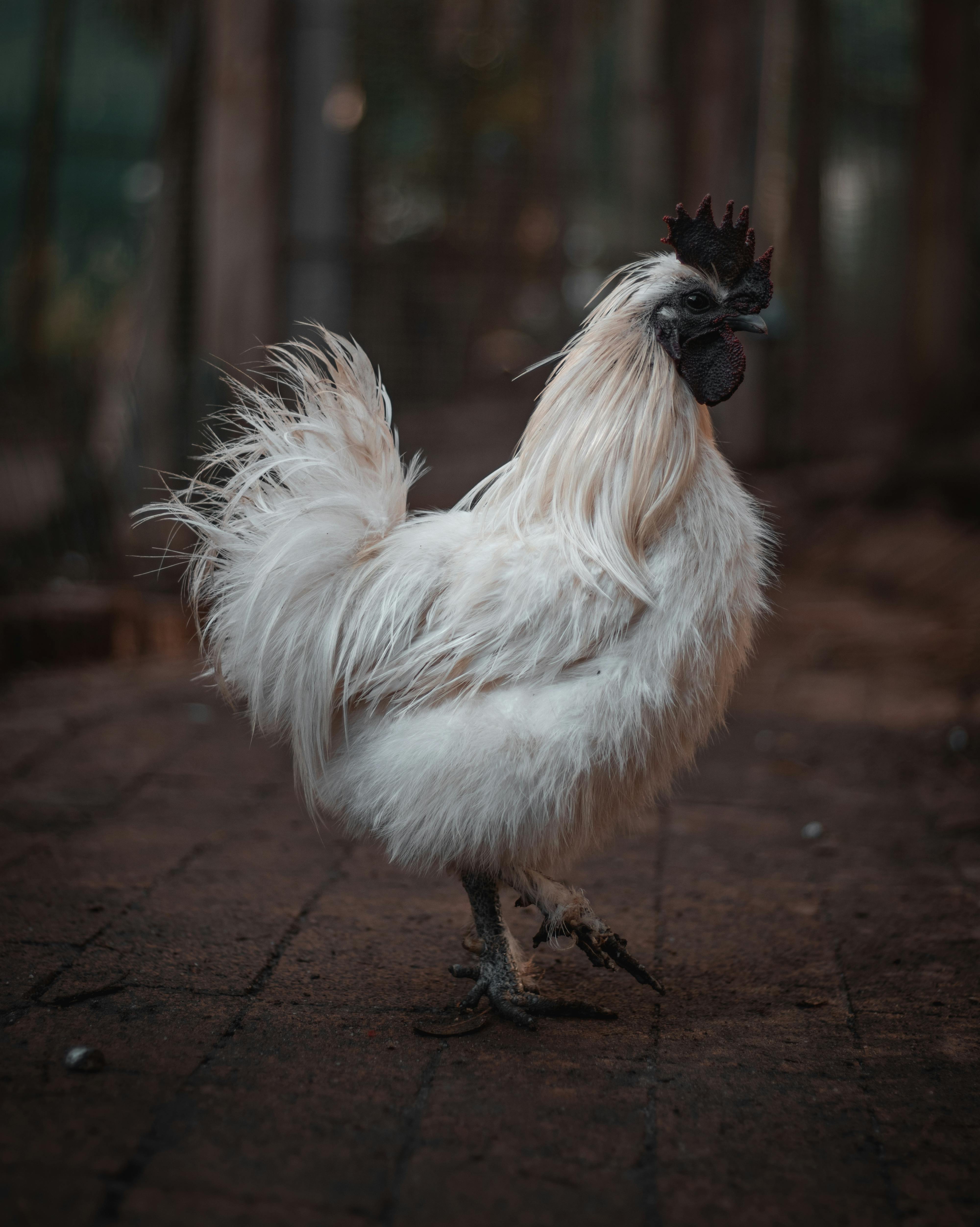
A chicken shaking its feathers.
Chicken step
When Pereira defends he is using footwork to evade rather than ducking his body – in fact, he stays very upright and his hands are kept high and defensive, just like they are in Xing Yi Chicken, which relies on footwork for evasion.
The blows which set up the finish from Pereira were so fast and minimal they were hard to see in real time, but it was a counter 1-2, again delivered with that very upright body with the hips underneath the shoulders that is so characteristic of Chicken:
The very tight techniques of Chicken in Xing Yi are very metal in nature – sharp and cutting.
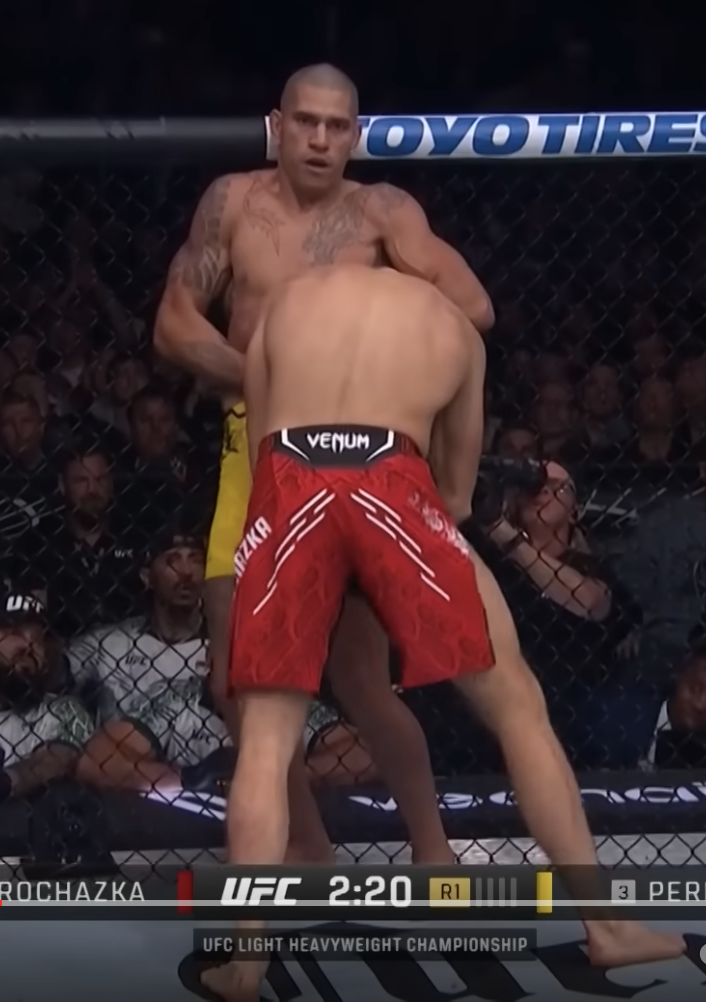
A perfect example of this Chicken style applied to MMA is the standing guillotine. When somebody shoots in for a takedown, wrapping the neck and using your hips to stand tall, with a narrow base is a very chicken-like technique. In fact, Pereira almost finishes the match with Jiri earlier with one:
Standing guillotine attempt from Pereira.
Here’s a video of me doing some Xing Yi Chicken:
As I mention in the video, Chicken is an important animal in Xing Yi because it provides one of the requirements of the San Ti Shi structure – chicken leg.
Another thing Chicken (done by humans) is famous for are the knee strikes, which in real chickens are enhanced by the spurs it has on the back of its legs, and elbow strikes. You see this with fighting chickens especially. My teacher always said that the martial art that most resembles Xing Yi Chicken is Muay Thai, which is famous for knees and elbows.
The finish in UFC 295 was delivered by downward elbows from Alex Pereira and he has finished UFC fights with his famous flying knee before, delivered here in a way that looks very similar to the knee strikes in the Xing Yi link I do above:
Hopefully I’ve made my case.
To repeat: I’m not saying something simplistic like, “UFC fighters are doing Xing Yi”, but that as a tool for analysing fighting styles, I find Xing Yi really useful and the 12 Animals remain really fascinating.
A bit of homework for you…
Finally, I want to leave you with a bit of homework – also on that card that night at UFC 295 was British heavyweight Tom Aspinall. He managed to secure the interim heavy weight championship belt that evening. To me he’s a clear example of another one of Xing Yi’s 12 animals. The question is which one? You have 10 to choose from! Post your answers, compete with your reasoning, in the comments section below and I’ll give a prize for the correct answer (correct according to me, anyway, and I am the final word in this 😉 ).
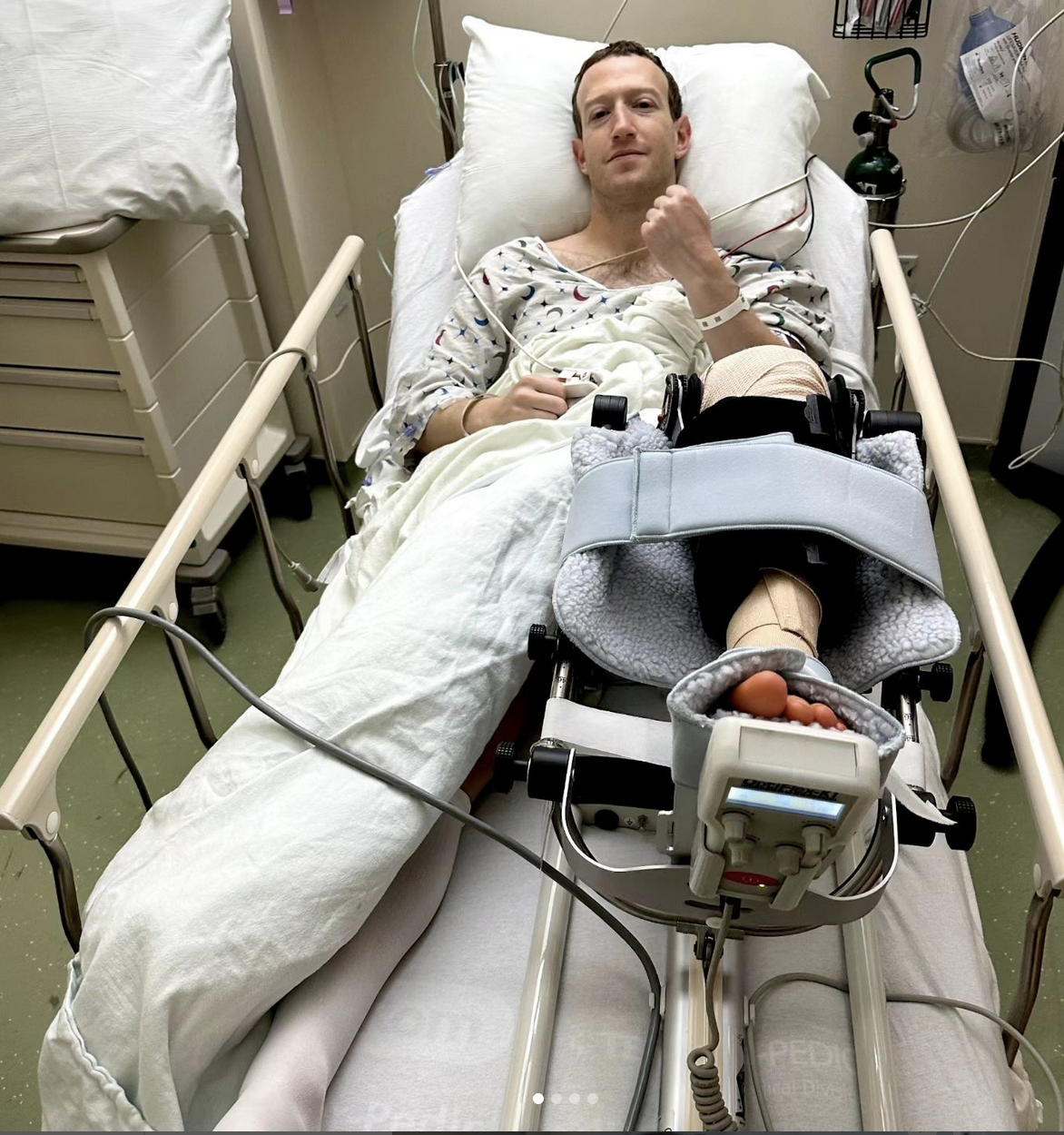
Get well soon, Zuck! (Image credit: Mark Zuckerberg).
Meta (nee Facebook) founder Mark Zuckerberg has undergone ACL surgery thanks to an injury sustained during his preparation for his first MMA fight.
“Tore my ACL sparring and just got out of surgery to replace it. Grateful for the doctors and team taking care of me. I was training for a competitive MMA fight early next year, but now that’s delayed a bit. Still looking forward to doing it after I recover. Thanks to everyone for the love and support.”
He wrote that on his Facebook and Instagram account along with pictures of him punching the air from his hospital bed, and also a strange one of his wife mopping his brow and tending to him as he lays there. What is that telling us about his psyche? He’s clearly a little bit proud of his injury, since it adds to his macho credentials. Especially the shot of his woman tending to his wounds! 🙂
Like many previously unathletic or “nerdy” men who discover Brazilian jiujitsu or MMA training in their middle years, it looks like Zuckerberg has been utterly consumed by his new hobby. I understand – I got consumed by a passion for BJJ when I discovered it around the time I was due a mid-life crisis. It is the perfect salve for so many things that happen to people around that time of their life. But when you combine a billionaire’s bank account with a new found passion you get the ability to take your new obsession to stratospheric levels. Zuck has done exactly what I would have done if I was a billionaire – reorganise my entire life around my new hobby and pay for the very best people in the world to train me.
For example, there’s video of him sparring with two of the UFC’s current champions on a matted training area presumably on one of his many private yachts… That’s a ridiculous level of privilege.
However, even billionaires are human and an ACL surgery is no joke. Like most people who came to BJJ later in life, I had no idea what an ACL (anterior cruciate ligament) was before I took up BJJ. But once you do start BJJ you hear it mentioned so often you pick up knowledge of knee injuries by osmosis, or just go and google it to find out. Of the four main ligaments in the knee, it’s the one that snaps most often due to twisting injuries. That can happen in BJJ and MMA mainly due to takedowns/wresting or leg locks, some of which, (like the heel hook), are designed to specifically target ligaments in the knee. The idea is that you tap before injury occurs, but life is full of little accidents. Clearly Zuck has either had a takedown gone wrong or been on the wrong end of a leg lock and not tapped in time.
But people destroy their ACLs doing other things too – football is a classic example, and so is skiing. Pretty much any sport you decide to do has the potential to injure you, so you might as well pick something you love. In fact, I remember a few years ago when people used to talk about Tai Chi being really bad for your knees, however that craze seems to have died down recently.
Zuck will be back, but recovery from ACL surgery is a painful, slow and frustrating business. We’re talking months of physio-type movements just to get a normal range of movement back into the knee. He might be pumping his fist in pride in his photos at the moment, but this injury will change him. Hopefully it will give him a wider perspective on life.
If you’re going to train in combat sports then it is almost inevitable that at some point you will be injured. Especially if you go in with too much enthusiasm and passion. I too have been injured doing the sport I love, and sometimes there’s nothing you can do about it, but quite often it happens in moments where you’re being just a little bit reckless. The lesson for us all is that massive enthusiasm and passion for something new often needs to be tempered with a bit of restraint. Remember, look after your training partners and tap early and often.
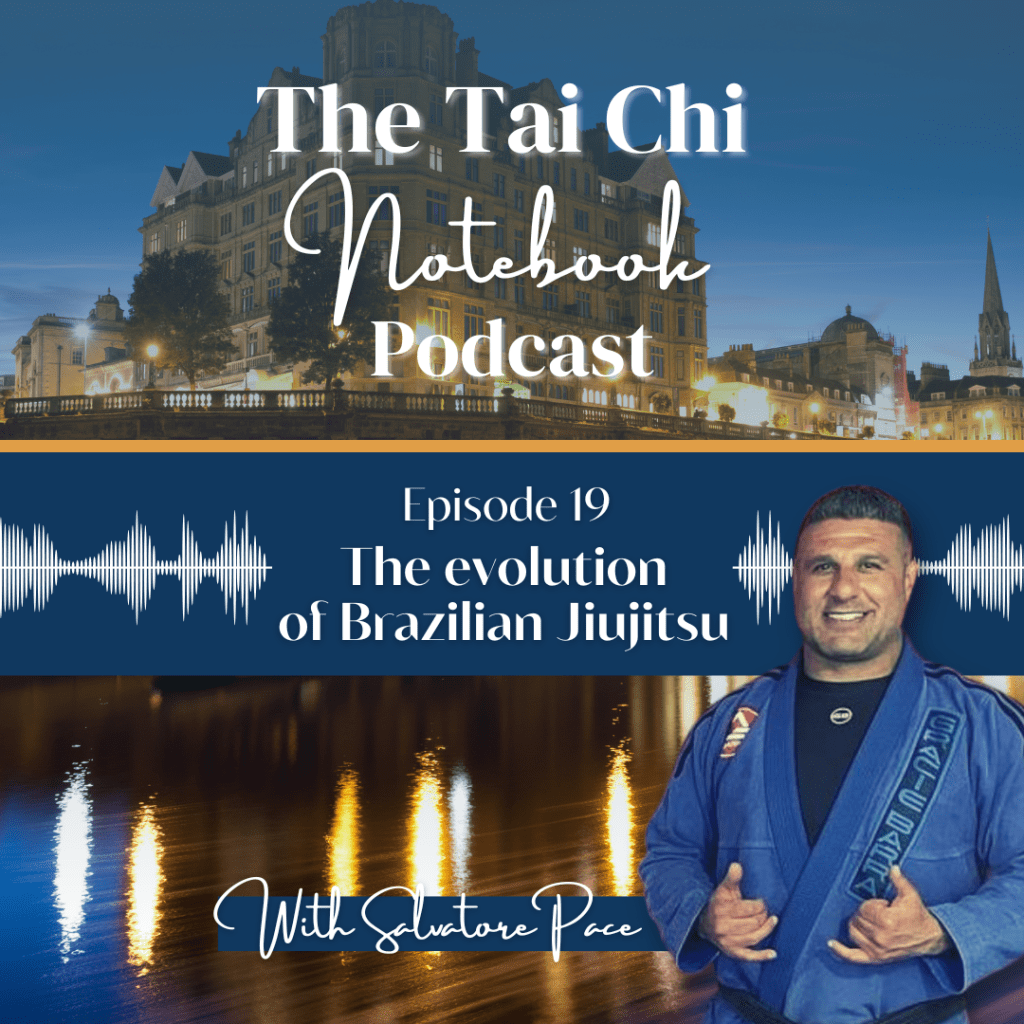
Salvatore Pace, or Salvo for short is a 3rd degree black belt in Brazilian Jiujitsu and owner of Gracie Barra Bath, the Head Quarters of Gracie Barra in the South West of the UK, Gracie Barra West Wilts and co-owner of Gracie Barra Gillingham. He is a two time NAGA European Champion and Grappler’s Quest champion. Salvo grew up in Sicily and had a passion for martial arts as a young boy, practicing everything he could get his hands on, from boxing and Kung Fu to wrestling, and then MMA in the emerging combat sports scene in the UK, but it was his first encounter with Brazilian Jiujitsu and his main teacher Professor Carlos Lemos Jnr, that changed his life forever and put him on a plane to Brazil and then the USA, where he trained with some of the biggest names in the sport.
Returning to the UK Salvo had a dream of teaching jiujitsu for a living and set up Gracie Barra Bath in 2007, back when most people hadn’t even heard of Brazilian jiujitsu. And that’s where our paths crossed, I first met Salvo way back in 2011 and I’ve been with him ever since, getting all my belts from white to black from his hands and it’s been a pleasure to watch his students and academy grow and develop and expand to new locations around the South West.
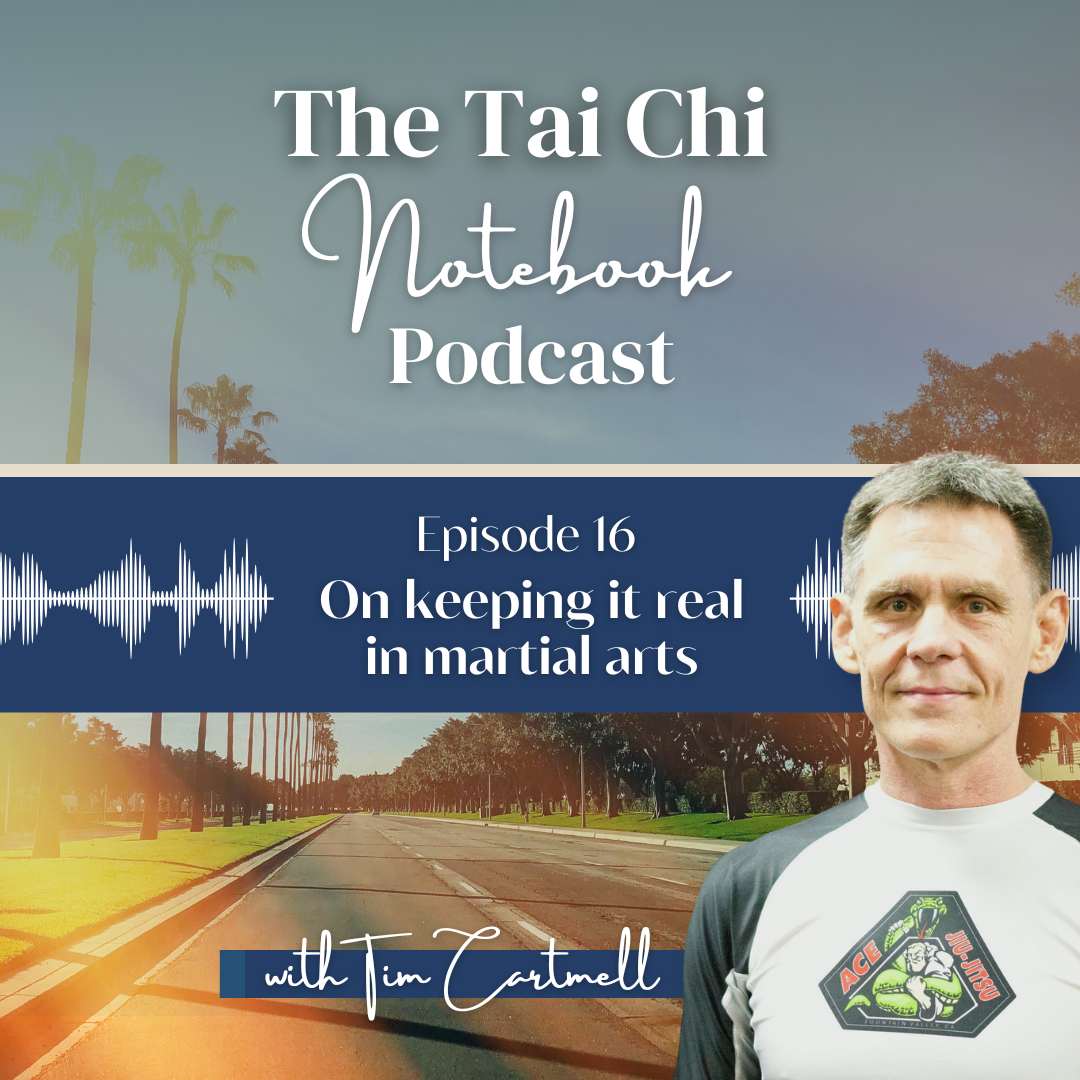
My guest in this episode will need no introduction to anybody who trains in the Chinese styles of Xing Yi and Baguazhang, especially in the United States. Tim Cartmell is a lifelong martial artist who spent many years living in Asia learning the internal arts, before heading back to the US where he took up BJJ, becoming a black belt. Tim is now the head jiujitsu coach at Ace Jiujitsu Academy in Fountain Valley, California where he teaches classes and trains professional MMA fighters. https://www.acejiujitsu.com/
In this podcast I ask Tim about his training tips, especially for older martial artists, where he thinks martial arts is going in the future and his approach to combining all the arts he knows into a single principle-based, reality-driven approach.
You can find out more about Tim at his website www.shenwu.com and don’t forget to check out the Shen Wu Martial Arts group on Facebook.
I hadn’t talked to Tim before this interview, but many of the people I’ve had as guests on my podcast have rated him highly, and now I know why – for somebody with so much experience of martial arts Tim is a very humble and genuine guy, as I hope you’ll discover over the next hour or so.
You can support The Tai Chi Notebook Podcast by becoming a patron. Head over to www.patreon.com/taichinotebook and become a patron today! You’ll get a version of the podcast you can download, exclusive video clips and articles.
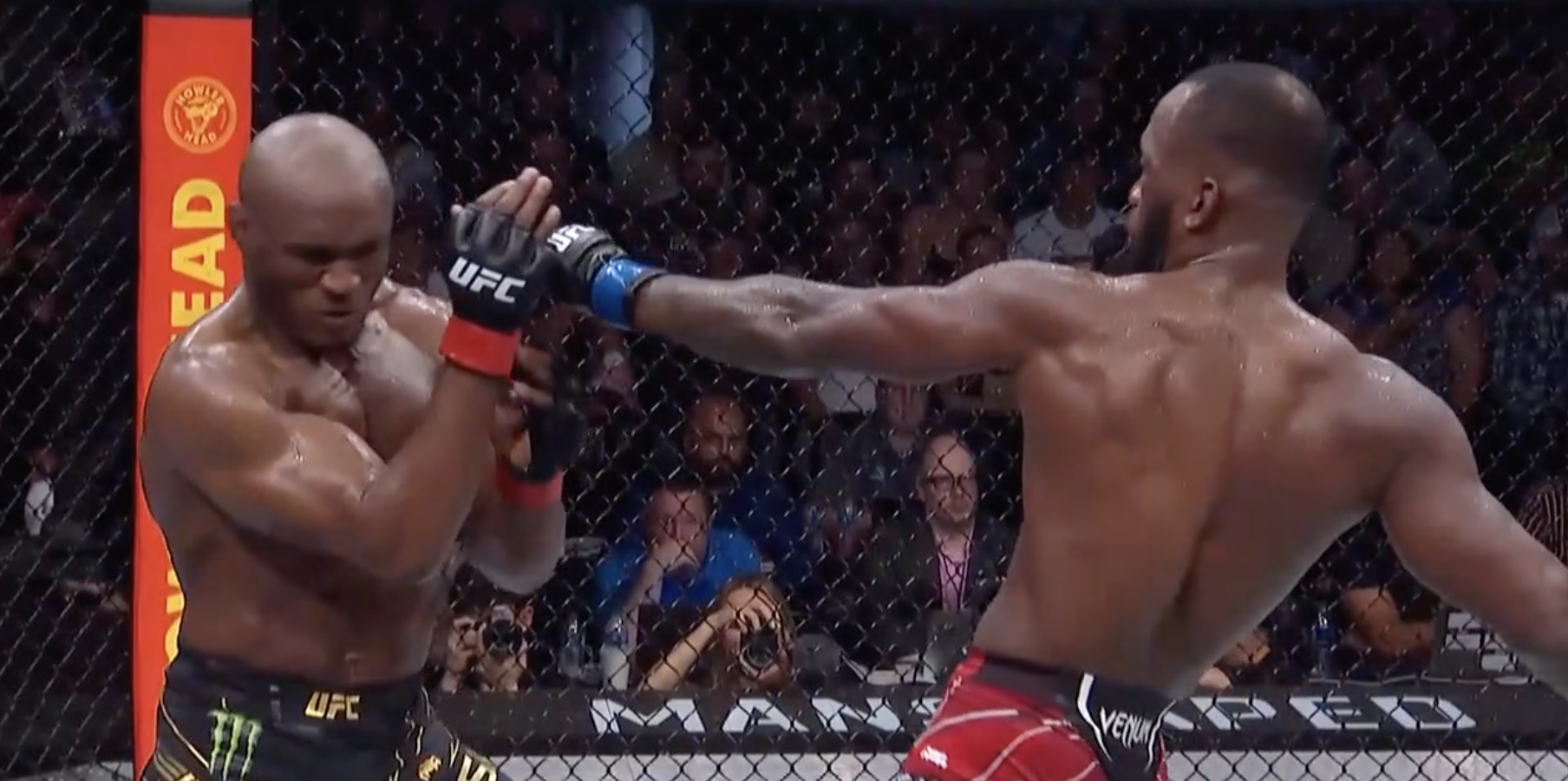
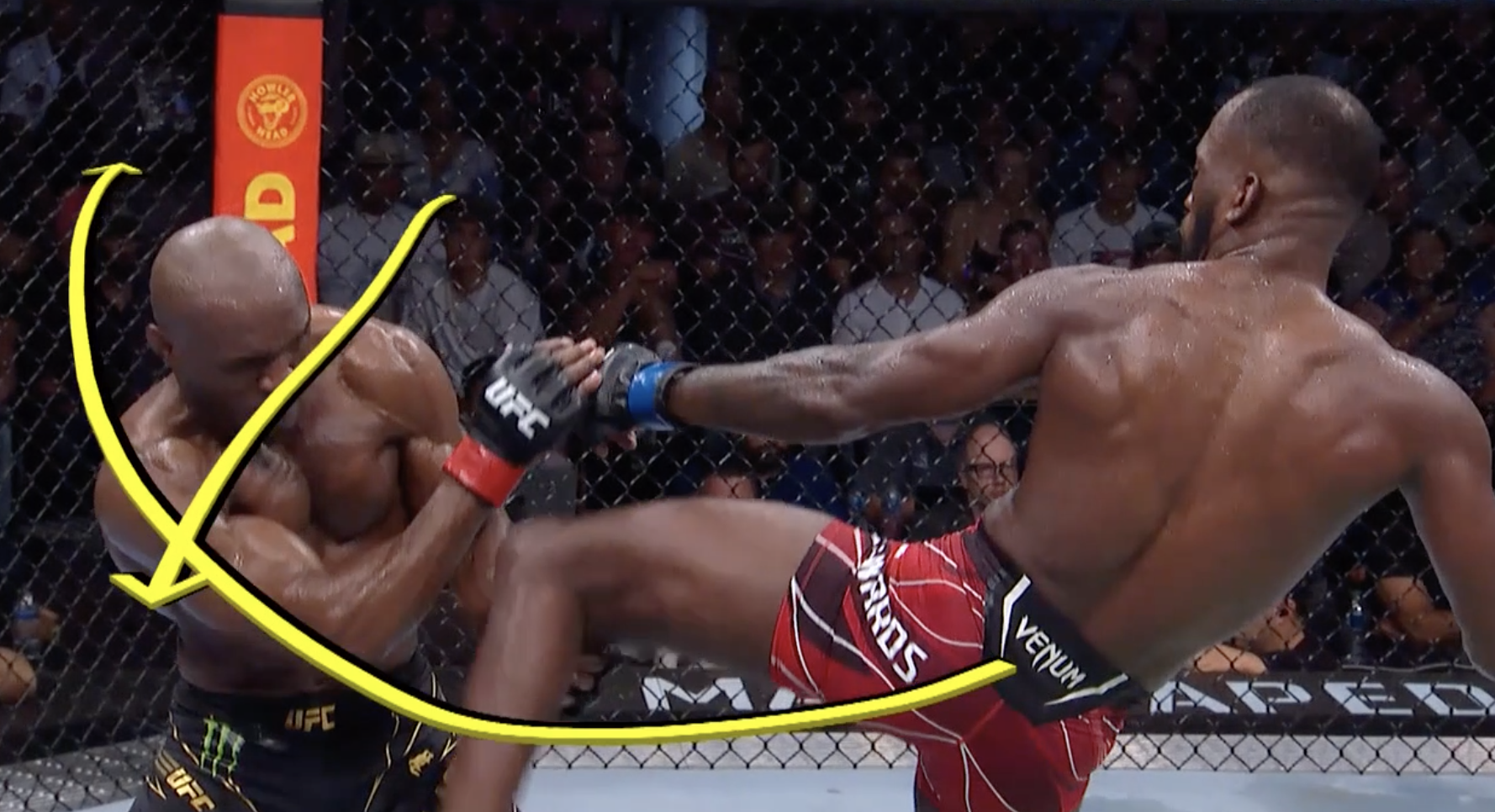
Congratulations to the UK’s Leon Edwards for becoming the new UFC Middleweight Champion of the world with his stunning head kick victory over Kamaru Usman. After a great first round Edwards was clearly losing on points having been dominated by the champion in each round since, but in the fifth and final he pulled off a near perfect head kick as you’re ever going to see, sending Usman crashing to the canvas and making him the new champion.
As the photos show, he set it up with a left that tells Usman to dip his head to the right, but that kick is already coming and it’s all over.
1. Feint the left.2. Usman dips his head.3. Kick connects!
Almost by accident I watched Onama vs Landwher from UFC: Marlon Vera vs Dominick Cruz this morning and heavens above, that was one hell of a fight! Possibly the fight of the year. I’ve no idea how you’d score it. Landwher won by decision, but it was possibly the MMA fight of the year. Wild exchanges throughout with both fighters being so tired they could hardly stand up, but somehow kept going. It looked like they both had almost beyond the levels of human endurance, going from looking so tired they could barley move to pulling off flashy 3 move combinations.
You could almost see their spirit rising within to propel them on. It reminded me of all the phrases about the internal harmonies (san nei he) that we use in the Internet arts. The Xin (heart) leads the Yi (intention/mind), the Yi leads the Qi (energy to work) and the Qi leads the Li (physical movement). Initially this seems rather simplistic, say if you want to do something like make a cup of tea then you first have a desire to do it (heart) that travels to the brain (yi) that decides and then it ends up in a physical movement (li) and you find your feet moving you towards the kettle.
But that process happens automatically in humans and all animals, so why do we need to make a big deal of it and describe all the parts that build up to making an automatic process happen?
It’s often explained as putting the intention and will (the brains and heart) behind the movement. You can do things with a sense of purpose, or you can do them absent mindedly. In the internal arts, like Xing Yi, Bagua and Tai Chi, your actions need to have a sense of purpose. Your mind needs to be on the job, not half engaged. That’s one reason, but I think there’s more to these internal harmonies than just this.
I remember in BJJ training sometimes being so exhausted it was like my mind left my body and I became somewhat detached from my surroundings. It’s at moments like that that you start to be able to feel your “spirit” or mind as an identifiable thing. Through a sheer act of will you can force your mind to not give up and get back to the job and it can give you the energy you need to carry on fighting. That’s what I saw happening in Obama vs Landwher. A sheer force of will was being used to make them continue – their internal was leading the external.
Frankly, most people training only internal arts without hard sparring pay a lot of lip service to the internal co-ordinations, but do they ever reach an intensity of training where they can actually feel these things as tangible elements?
I’m not saying that you need to get an an MMA cage to experience your internal state under extreme physical stress before you have any idea what it is, but you can experience it in a safer way through things like Jiujitsu. Maybe Systema, too. Just some food for thought, and another reason why I think all Tai Chi instructors who re physically able should try and get a blue belt in BJJ if they are teaching the art beyond the health aspects.
There’s a risk, when reading this that people might think that using your Yi, or Xin in Tai Chi technique simply means to furrow you brow, put on a mean face, stare hard at something, get really tense and act like you really mean it, man. Because that’s not it either. That’s not what using “martial intent” or Yi means in internal arts at all. If I see people practicing internal arts like that I think it’s just bad karate. Not that there’s anything wrong with karate, of course.
Your internal state can be serious, but come from a place of calm. It’s a strange contrast between being expansive, yet laser focused, like the eyes of an eagle who is high up in the sky looking for prey. He’s taking in all his surroundings, but can pinpoint down on a single point when required. That’s using the 3 internal harmonies properly.
I think this is a Kite, not an Eagle, but you get the idea. Photo by Flo Maderebner on Pexels.com
The Tai Chi classics say:
To fajin, sink, relax completely, and aim in one direction!
There it is – the (sung) relaxed body is the first requirements, once you have it you can ‘point your mind’ in the direction you want your power to go, so that the internal movement matches the external movement. When the inner and outer harmonise together, then you have internal power.








 The Tai Chi Notebook