My first podcast of 2026 is out! In this episode Richard Moon, a lifelong martial artist and performer, shares his journey from playing in a jug band and performing with bands like the Grateful Dead to becoming deeply involved in yoga and eventually Aikido, which he encountered by accident and learned as a “way of life more than a way of fighting.”
Richard Moon describes developing a “very freestyle, jazz-oriented approach” to Aikido, which eventually led to corporate coaching with Chris Thorsen and international peace building initiatives with Louise Diamond and a $30 million project in Bosnia funded by Dan Whalen. Richard Moon emphasized the importance of centering, intentional transformation, and harmonizing with the universal movement through practices like the “universal breath” and the “drop back, sink open” technique, concluding with O Sensei’s teaching that “Aikido is the realization of love.”
The latest way of selling tai chi is to say it gets you jacked
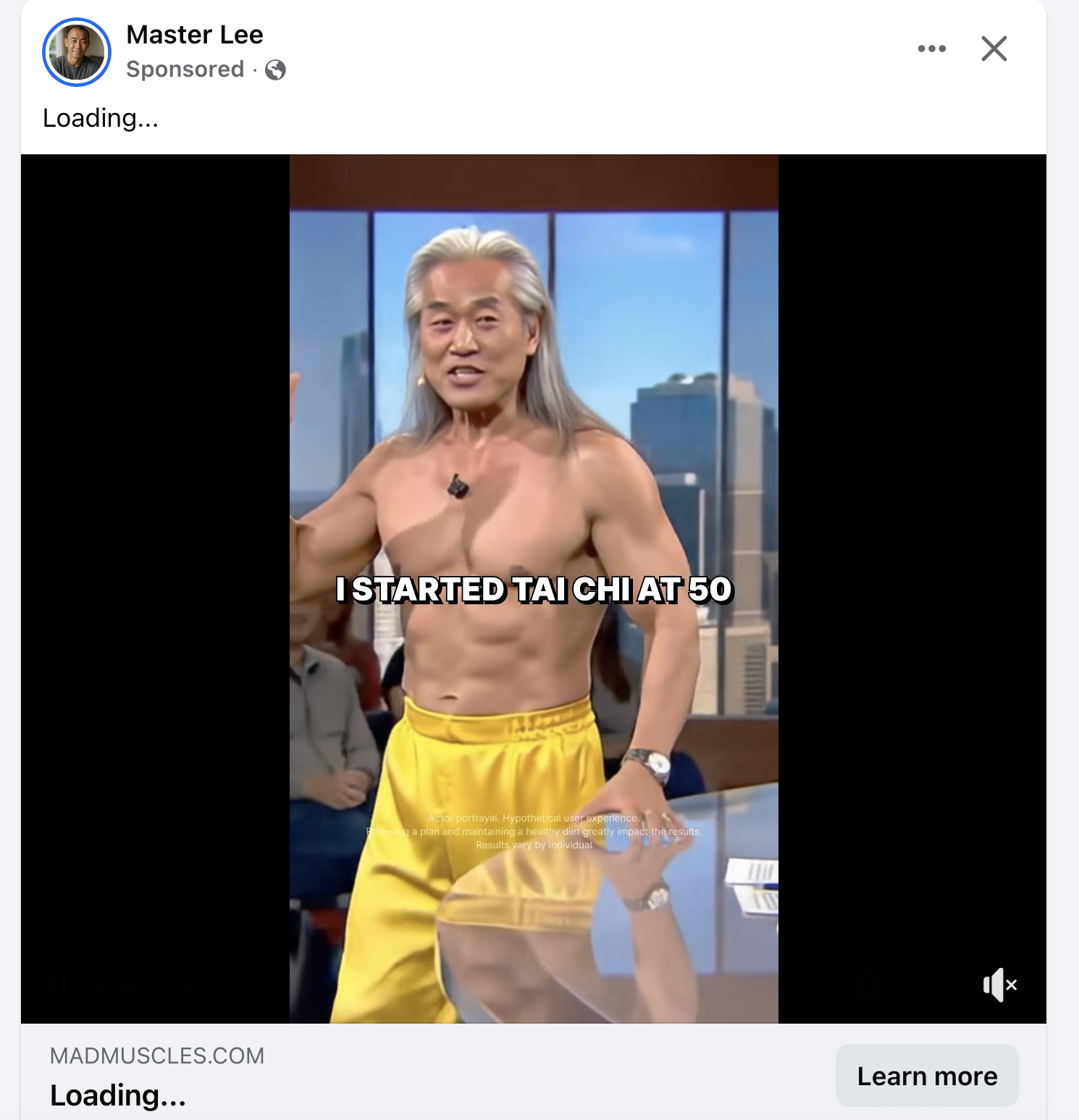
I’ve seen a lot of things come and go in the Tai Chi universe over the years, but the latest marketing trend has got me scratching my head. Almost every advert for Tai Chi courses I see on Instagram and Facebook at the moment promises ripped muscles and a hyper-masculine physique, mainly for men over 50!
Tai Chi, with its soft, slow, flowing, gentle movements, is perhaps the least masculine-looking martial art you could imagine, yet here is “Master Lee” strolling around a TV studio with his top off showing off his impressively-muscled abs, which he says he got from tai chi.
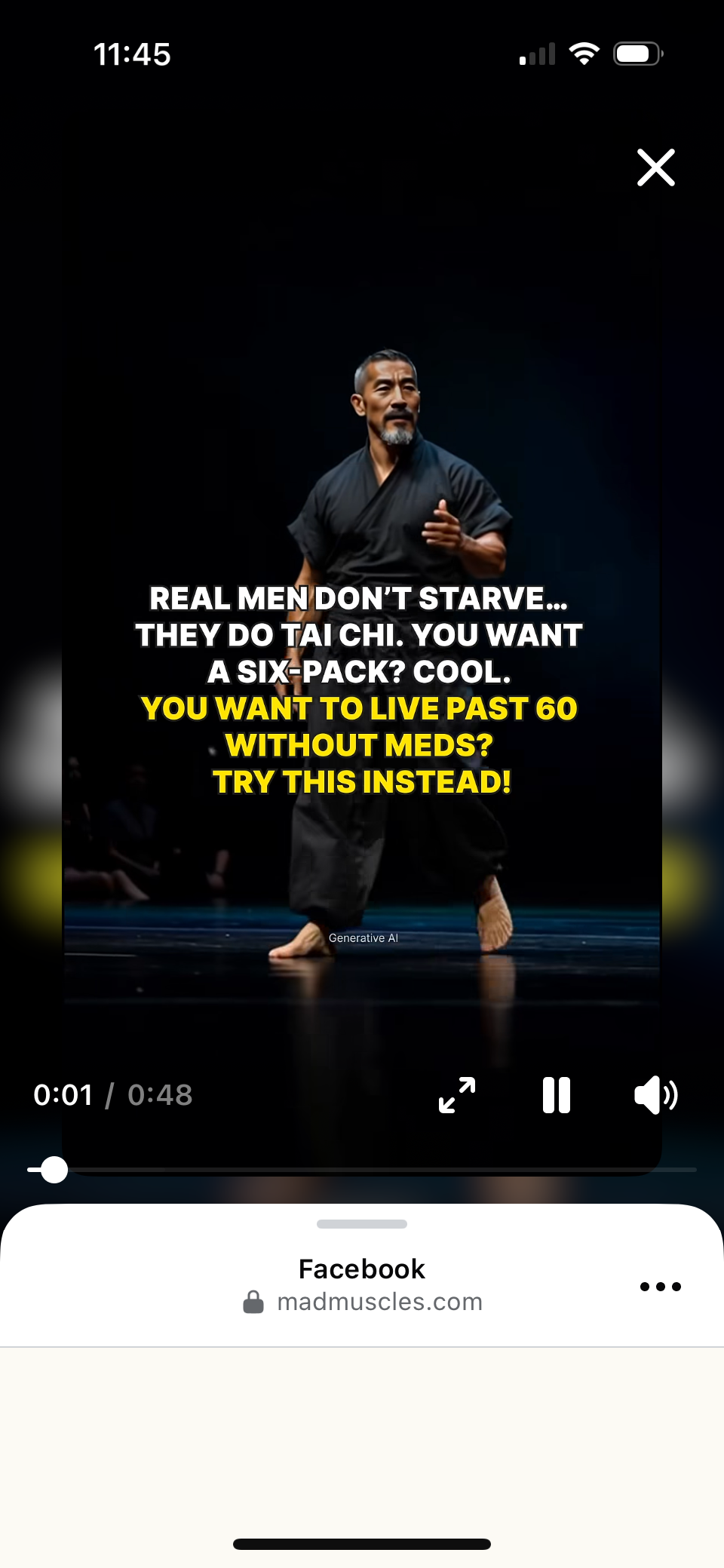
Or this guy, who claims tai chi is the path to a six pack. “Real men don’t starve… they do tai chi”, he proclaims.
So, what’s going on here?
Firstly, these confident, super-tonned Chinese gentlemen, are clearly creations of generative AI video apps. Everything about the videos looks as fake to me as the idea that tai chi on its own will get you that shredded.
Tai chi is good for many things, like learning how to use qi and jin and producing a feeling of tranquility, or as a self-defence system, but producing athletic-looking people over the age of 50 is really not one of them. *
When you look deeper into the exercises being offered here they look like simple, repetitive qigong-style movements. The idea that you’d replace weight training and body weight exercise with these and still build muscle is wrong, as far as I can see.
There’s no getting away from it, if you want to lose weight and build muscle you need a diet, cardio and weight training routine.
—-
* Now, I’m aware that there is another trend at the moment to train intensively with kettle bells and call that “tai chi” or “internal”, but really it’s no different to doing a kettle bell workout and not calling it tai chi.
I’m pleased to announce I’m partnering with XMartial for BJJ and general gym-wear clothing. I’ve gone with XMartial because they have a genuinely fun range of designs, and also their website is full of people I actually recognise from the world of BJJ, like John Danaher, Jordan Preisinger from Jordan Teaches Jiujitsu, and B-Mac. Plus, its Reddit customer reviews for quality and shipping to the UK are good and the customer service is highly rated.
Shipping in the US is free, but there is a small $9.50 for shipping to the UK. There are lots of different designs, and XMartial sell gis and hoodies too. So, if you’re looking for new, high quality, BJJ wear and you want to support The Tai Chi Notebook then head over there and have a look at what they’ve got. Thanks!
As you age your hips definitely get less flexible. If you do BJJ as well, like I do, then the wear and tear seems to add up exponentially, which is why I’m always interested in mobility routines for the lower back and hips, and I think I’ve found one I really like.
“The main goal here is to get comfortable with “uncomfortable” positions by re-searching them on a daily basis. Ideally first thing in the morning, or as a warm up to your practice. Note: A mobility sequence will not necessarily improve your mobility permanently, but is mostly useful for opening up your normal range of motion by releasing unnecessary tension. For more specific mobility issues, you need more specific and targeted practice”.
A lot of these movements remind me of Yoga for BJJ by Sebastian Brioche, which is no bad thing. I like the way the set it put together, and it makes my hips feel great afterwards. It seems to target all the right areas for me. I could see myself running through this each morning.
Have a go (N.B. consult your doctor first, you do so at your own risk, etc) and let me know how you get on!
Thank you for supporting The Tai Chi Notebook. If you are reading this on a website that isn’t thetaichinotebook.com, then it’s highly likely it’s been stolen. Please let me know so I can issue their webhost a DMCA takedown notice for copyright breach. Thanks.
Change from being ‘stuck’ in your form to smooth, effortless movements.
People often say that Tai Chi is a moving meditation. But what does that really mean?
I can think of two distinctively different ways of mediating (there are others, too). One is to focus on an object exclusively. This is a type of concentration-based meditation. Your goal is to keep that object in your mind so that other thoughts can’t intrude. The other is an awareness-based meditation. Instead of focusing on one object, you have an overview of everything going on: you, what you are doing, and the space you are in, and you try and maintain that open awareness without getting distracted. If something comes up you notice it and let it go, returning to the awareness.
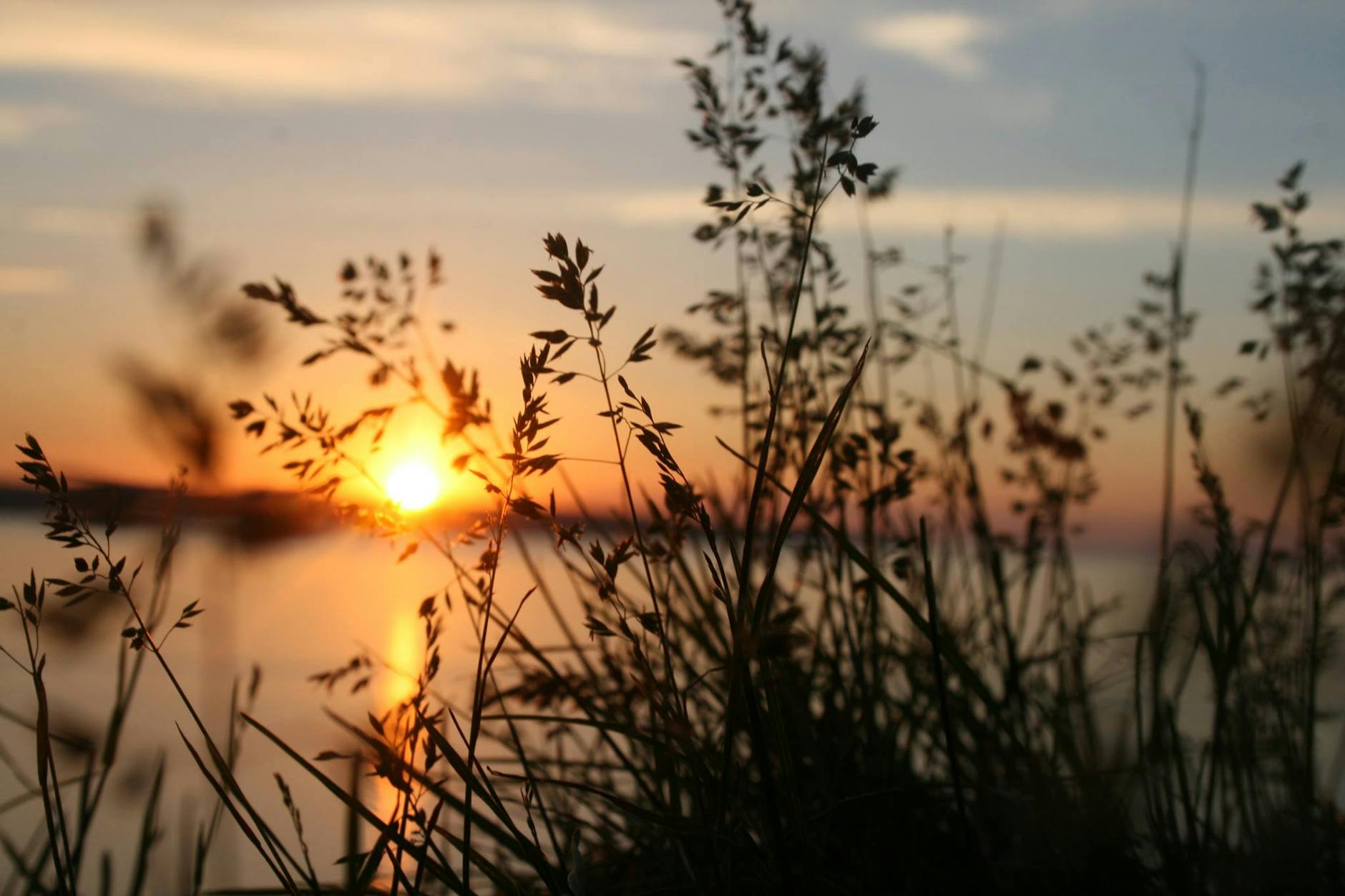
An awareness mind, reflected in nature.Photo by Noelle Otto on Pexels.com
In Tai Chi we want the second type of practice. When you’re are a beginner, learning the movements, you are akin to somebody learning to drive – it feels like there’s too much to do at once. Your mind is completely occupied by what you are doing and there’s no room for anything else. The more experienced Tai Chi player knows the choreography of the form, they know what’s coming next, and they don’t need to be in the movement so much. They can afford to step back and take a more general view of the activity.
If you’re in the more experienced camp on your Tai Chi journey, then try this the next time you do your form: imagine that ‘you’ are in your head, watching yourself do the form. You can be aware of yourself, your movements, your breathing and the space around you simultaneously, without getting ‘stuck’ in any one of those things. You’re just watching them happen.
I went to see an Alexander Technique teacher for lessons once and she told me to imagine a stage, with every element that’s happening to you and around you is on that stage. In normal every day life we have a spotlight on the one thing we are doing. In Alexander Technique, she said, we allow everything to be in the light. For me that made immediate sense. Maybe it will for you? It’s the same with Tai Chi. When doing the form, we need to expand our awareness to include everything that’s going on with us right now, and not get stuck in the one thing we are doing. It’s a bigger, more expansive feeling that leads to smoother, effortless movements.
In my training my Tai Chi teacher described something very similar to this as ‘man’ in Chinese, which translates as “slowness”, which is misleading since it wasn’t about moving slowly, it was about hanging in the moment without rushing. Rushing is often the thing that takes us out of the moment.
So, slow down, stop rushing, and when you’re doing the form allow yourself to mentally step back a little so you can be aware of everything that’s happening on your stage. For me the results of doing this are profound and immediate. It’s like a light bulb going on. It also feels like the release of a lot of mental tension you didn’t even know you were carrying. And it doesn’t need to be limited to the times you are doing the Tai Chi form. You can do it when you’re sitting down and having a cup of tea, watching TV, playing with the kids, or even ‘meditating’.
Some comments from Lao Tzu, in the Tao Te Ching come to mind:
“Do you have the patience to wait Till your mud settles and the water is clear? Can you remain unmoving Till the right action arises by itself?”
― Lao tzu
Thank you for supporting The Tai Chi Notebook. If you are reading this on a website that isn’t thetaichinotebook.com, then it’s highly likely it’s been stolen. Please let me know so I can issue their webhost a DMCA takedown notice for copyright breach. Thanks.
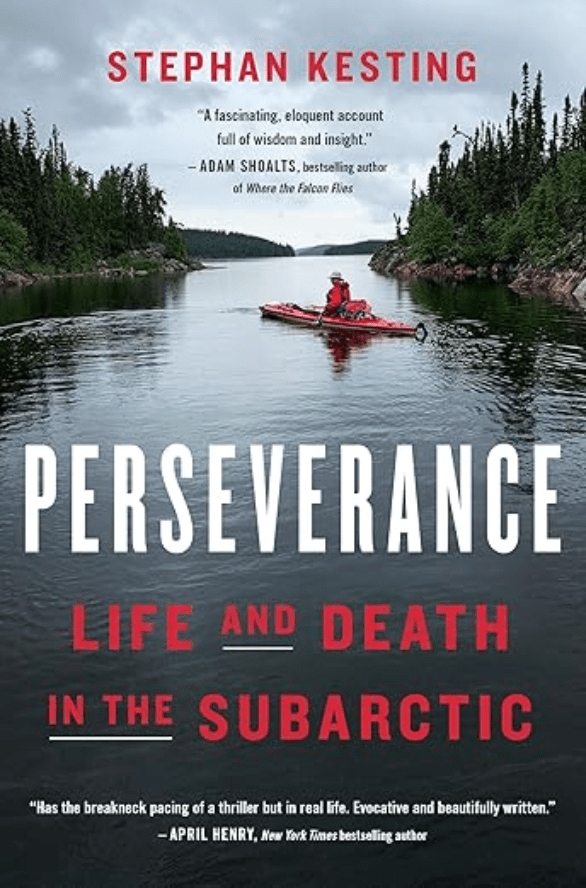
A while back, renowned BJJ instructor, Stephan Kesting, contacted me to ask if I’d like to read the draft of his new book, Perseverance, Life and Death in the Subarctic, and offer a few comments, mainly because he’d read my review of the BJJ book he co-authored with Brandon Mullins, and liked what I’d written and agreed with it. (I guess this time he wanted me inside the tent pissing out, instead of outside the tent pissing in 🙂 )
I accepted, of course. Not only because Stephan is a great guy, whose sensible comments on issues within the BJJ community have always made him a voice of reason in a community that very easily jumps on any passing conspiracy-fueled bandwagon that Joe Rogan happens to be peddling at the time, but it’s also an amazing story. Not long after a life-saving operation, Stephan single-handedly navigates various inaccessible rivers in the Canadian wilds overcoming obstacles that would defeat a mere mortal like myself on day one. We’re talking black flies, hunger, fatigue, exhaustion, map navigating, shifting rivers, fires, rationing, and not to mention encounters with dangerous wildlife – a herd of stampeding caribou and hungry bears in particular! It’s no understatement to say that Stephan had to dig deep inside himself to keep going at times and the book is packed full of the sort of wisdom you only get from facing life threatening situations and surviving.
Reading the book’s draft actually took me quite a while, a couple of months or more, since I made comments on most chapters, which Stephan said he liked. So, I’d like to think I’ve had a small part in shaping the eventual book. It’s a great story, and I think the finished book will be great. At the time the plan was for Stephan to self publish it, but since then he’s managed to get an agent for his book, which lead to a proper publishing deal, and even more edits and rewrites, and a cool new cover, and finally it’s going to be published. Now you can preorder the book on Amazon, and I’d recommend that you do, I certainly will be!
Thank you for supporting The Tai Chi Notebook. If you are reading this on a website that isn’t thetaichinotebook.com, then it’s highly likely it’s been stolen. Please let me know so I can issue their webhost a DMCA takedown notice for copyright breach. Thanks.
Tai Chi could be the secret to improving your balance and living longer.
Standing on one leg is one of those things that’s supposed to be very good for you, especially as you get older. It’s the sort of thing that you keep hearing studies about. It’s supposed to reduce falls and make you more coordinated. It’s even an indicator of when you will die. People who cannot stand on one leg for 10 seconds are found to be almost twice as likely to die within 10 years.
“When you attempt the one leg balance, your brain is performing a remarkable amount of coordination. It integrates signals coming from the fluid in your inner ears, visual cues from eyes, and even feedback from your joints and muscles. Signals from your eyes play a big role in maintaining your balance, which helps explain why standing on one leg is significantly harder when you close your eyes. If you can reach 10 seconds with your eyes closed, you’re doing well.”– Michael Mosley.
As you can see, the process of balancing is a lot more complicated than most of us realise. Of course, standing on one leg is also something that we do in Tai Chi a lot, we just don’t make a big deal about it.
Therefore, to hear that a one legged stand has all these extra health benefits is great news, since we’re doing it anyway in our Tai Chi kicks, which are often done slowly, so can take 2-3 seconds to accomplish, all of which is time spent with one leg off the ground.
(That photo, by the way, is a free image from the Unsplash website – and it’s actually very nicely done. A lot of the images on Unsplash that appear for a search on “tai chi” are so bad I can’t use them here, but that one is pretty good. Look at that nice vertical alignment from head to foot down the spine and leg. Perfect!)
I find that balancing on one leg is something that beginner students in Tai Chi really struggle with. They wobble, a lot, but I think it’s just from lack of practice, and as the article says, you can get better at it very quickly. You build new nerve connections and recalibrate your brain, simply by practicing.
As this article by fellow Bath resident and journalist, Joel Snape, explains, having good balance becomes increasingly important as you get older. He also makes the argument for Tai Chi as a great way to improve your balance, and makes the important point that the standing leg needs to be bent:
“Standing on one straight leg isn’t the same as standing on one bent leg,” says Locker, who began practising tai chi with a master who “could throw guys half his age and twice his size around the room”. “When the leg is straight, the skeleton supports the body, not the postural muscles. Older people are commonly advised to practice brushing their teeth standing on one leg to build their balance, but in order to train the postural muscles to support the lower body, you should use one bent leg.” This way, over time, you’ll build not just balance but work capacity.– Joel Snape.
So, it’s important to bend your knee (even if it’s just slightly) when standing on one leg. This is something I notice about beginners in Tai Chi. Whenever the feet come together it’s natural to want to straighten your legs, as if you were doing a Waltz. Learning to keep your feet together and your knees bent is a skill that has to be learned over time, and is much harder to do than you think. As soon as your mind wanders off, your legs will straighten. If you can get good at this, then when it comes to standing on one leg, it will be much easier to keep the standing leg slightly bent at the knee.
Thank you for supporting The Tai Chi Notebook. If you are reading this on a website that isn’t thetaichinotebook.com, then it’s highly likely it’s been stolen. Please let me know so I can issue their webhost a DMCA takedown notice for copyright breach. Thanks.
I remember reading in a Zen book that I enjoyed that you should not practice for yourself, but just practice for the sake of practice. I like that. There’s a kind of grim realism to it but it raises the issue of how exactly are you supposed to approach these sort of goaless activities, like Tai Chi and Zen? The sort of activities where even having a goal can become a problem because it interferes with the activity itself, because it needs to be about being open and aware in the moment, not thinking about things far off in the future. By definition, if you have a goal you cannot be ‘living in the moment’.
Watching that Bagua Boy documentary that I linked to in my last post I was struck by how much Mr Rogers had practiced over his lifetime. He said he spent a lot of years practicing for hours a day. It’s impressive, but it also sounds very lonely, and even if most people had the free time to do that, they wouldn’t. You need to have some sort of drive deep within you to practice anything that much.
Lots of people in the Tai Chi world practice for hours a day. Some people meditate for an hour a day. Some people stand in Zhan Zhuan for an hour.
Today I read an article by Sam Pyrah in The Guardian that asks the question, at what point does a fitness activity become a ball and chain around your neck? At some point she realised that her life long addiction to running had left her very healthy, but with a very narrow life, and at the end of the day, what was the point?
People start Tai Chi for all sorts of reasons and the reasons for doing it change over a lifetime. Since I discovered Tai Chi I’ve always practiced, but I tend to do my personal practice in little pockets of time scattered throughout the day, not in big chunks of hours at a time. Maybe when I’m too old to work I’ll do a lot more Tai Chi than I ever did before? Everything has a cost, and I wonder if the people who practice for hours a day sometimes sit down and smell the flowers and wonder if it was all worth it… Like the Bear of Little Brain, I’ve always valued doing nothing as a worthwhile activity.
Practicing a bit is good, practicing a lot is better, but sometimes you can practice too much.
If you’ve been doing Tai Chi, meditation or yoga for any length of time you’ll have heard the old adage to ‘put your tongue behind the two front teeth‘. The explanation given for this is usually that it “connects the two meridians that go up the back and down the front of the body called the Ren and Du meridians, creating the micro-cosmic orbit”.
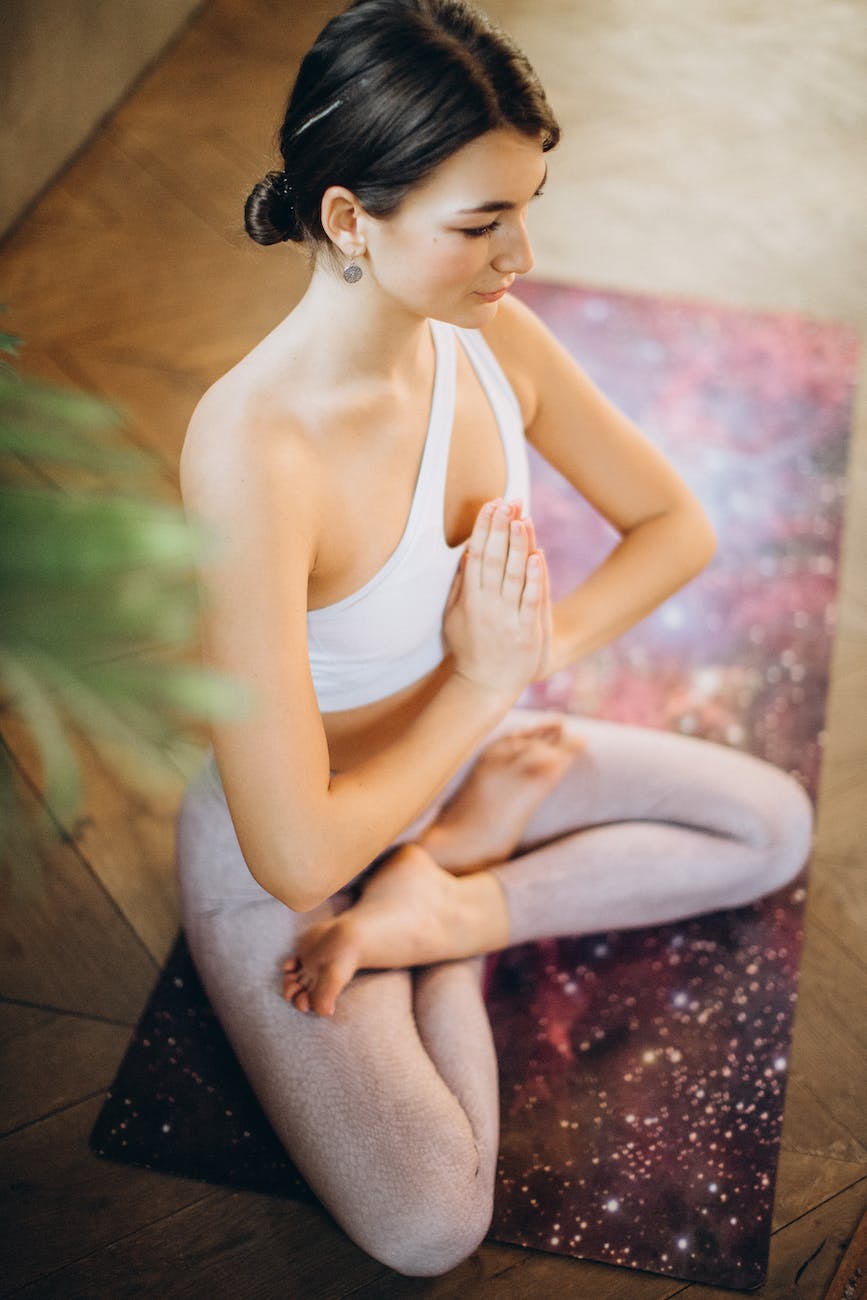
Micro cosmic orbit connected… man. Photo by Elina Fairytale on Pexels.com
Personally, I have my doubts about the whole idea of ‘energy’ or Qi ‘flowing’ around the body. I often think it’s really an ancient aberration of the simple idea of forces moving inside the body. In Chinese martial arts there’s a phrase you often hear – rise, drill, overturn, fall, which matches this circuit in the body with a martial technique. The best example of which is Pi Quan from Xing Yi, during which forces in the body (jin) rise up and then come crashing down into a strike.
Strength and balance
However, it’s not just Chinese medicine that recommends this tongue position. I’ve recently discovered that there are a lot of Western sources advocating the same tongue position. For example, Colgate toothpaste has an article about correct tongue position on its website that recommends the exact same thing – the tongue resting on the upper palette behind the two front teeth. The article links to a study in Radiology and Oncology called “Three-dimensional Ultrasound Evaluation of Tongue Posture and Its Impact on Articulation Disorders in Preschool Children with Anterior Open Bite“, which notes that “children with poor tongue posture were reported to have a higher incidence of anterior open bite, a type of malocclusion where the front teeth don’t touch when the mouth is shut. This may be because the tongue puts pressure on the teeth which can shift their position over time.” (Colgate).
In this article from Healthline, Dr. Ron Baise, dentist of 92 Dental in London explains “Your tongue should be touching the roof of your mouth when resting… It should not be touching the bottom of your mouth. The front tip of your tongue should be about half an inch higher than your front teeth.“
While dentists may be aware of the benefits of good tongue position for your teeth and preventing problems with your speech, or mouth breathing from occurring, some exercise enthusiasts are going further and claiming that proper tongue position actually increases your strength and balance, something that is undoubtedly important for martial arts, like Xing Yi.
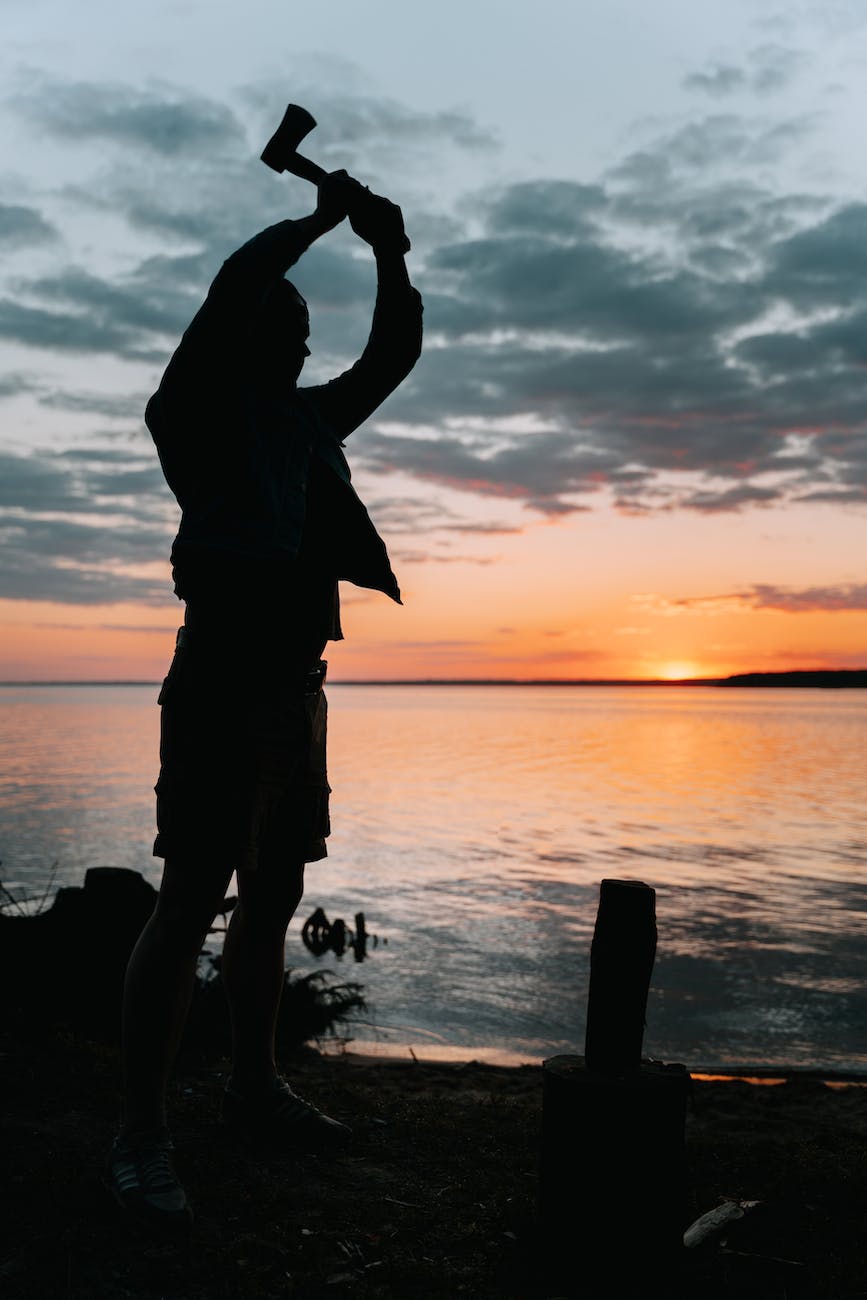
Pi Quan is said to be like the swinging of an axe. (Photo by Ivan Samkov on Pexels.com)
Now, I’m as aware as the next Tai Chi blogger that cherry picking studies that confirm your beliefs (and presumably ignoring everything that doesn’t) is a bit of a red flag. However, the idea that your tongue position effects strength and balance makes more sense to me than imaginary energy channels (Du/Ren) that may, or may not, exist in real life.
Apparently, good tongue placement can give you superpowers!
I remain slightly skeptical about the whole issue, however, my tongue does naturally rest behind my two front teeth on the upper pallet of my mouth… I can feel it there now as I write this. Was it always there? Or have I turned this into my natural position thanks to starting Tai Chi in my 20s?… I don’t know. All I can say is that it feels comfortable, and if my Ren and Du channels are connecting because of it, and my strength and vision is better because of it then…. so much the better.
I’ve just finished listening to an interesting podcast where Dr. Rangan Chatterjee talks about about how to form daily habits in a way that actually works. The takeaway is that you need to make the habit as easy as possible and also tack it onto something you already do every day if you want it to stick. Dr Chatterjee makes the good point that we don’t have to force ourselves to brush our teeth in the morning and at night – we just do it. We don’t decide, oh, I’m a bit tired tonight or I’ve got a lot of work on, so I’ll just skip it for a couple of days. No, we just do it, and it’s easy.
Doing Tai Chi could be as easy as brushing your teeth. Photo by Andrea Piacquadio on Pexels.com
Forming a regular practice Tai Chi habit however can be hard. It’s very easy to convince yourself to not practice because you’re tired or just not feeling like it.
Tai Chi, Qigong or stretching is also a bit like brushing your teeth, because you don’t get much benefit from not brushing your teeth for a week, and then doing a massive 1 hour deep clean on a Sunday. No, brushing your teeth needs to be done a little every day if it’s going to work, and so does Tai Chi, Qigong and stretching.
Which brings us to the question of how we actually develop a strong practice habit like this for Tai Chi, and that takes me back to Dr. Rangan Chatterjee. Most of us make a pot of coffee, or cup of tea in the morning. It’s a ritual we’re already doing and nobody needs to force us to start doing. (If you don’t do this, I bet there is something similar you do in the morning?) What we need to do is start hacking that existing habit with the new habit we want to instill, in this case Tai Chi, stretching, standing, meditation, or whatever it is.
It’s all about maximising those moments of dead time. Photo by Rachel Claire on Pexels.com
While your coffee is brewing, stop looking at your phone and spend those minutes doing the thing you want to do. One thing I’ve started to do is pour the water on my tea bag, then do a stretching routine while it is brewing. This way I don’t need to rely on motivation to do the routine each morning, because motivation is great when it’s high, but a rubbish thing to rely on when you are feeling tired, rushed or grumpy.
Even a few minutes of whatever it is will make a difference. I already feel like I’m more flexible in my hips because of these few minutes. And doing those few minutes might make me feel like doing more immediately afterwards. Other ideas for things to do while the coffee is brewing would be some single arm silk reeling circles, some standing Qigong, or repeat small sections of the form, like Grasp Birds Tail. The choice is yours. Try it!








 The Tai Chi Notebook