Daniel Mroz on defining Chinese martial arts – a podcast conversation

Daniel Mroz

After battling hard through various technical challenges I’ve finally managed to create a Tai Chi Notebook podcast with humans on! (Previous episodes of my podcast have been a robot voice reading my blogs). I’m pleased to have my good friend Daniel Mroz on board for my first real episode where we have a conversation about what Chinese martial arts might be.

You can find it on all the usual places you find podcasts – search for The Tai Chi Notebook on Apple podcasts, Spotify, etc.. or here’s a link:

Spotify: https://open.spotify.com/episode/6tuptU … c1bb1b468f
Apple: https://podcasts.apple.com/gb/podcast/t … 0530576920
Web: https://anchor.fm/graham47/episodes/Ep- … /a-a68h1lv

What is the relationship between Chinese martial arts and Chinese theatre, religion, mime, serious leisure activities and military tactics? How do all these factors intermingle and produce the arts we have today? In this wide ranging discussion between Graham Barlow of the Tai Chi Notebook Podcast and Daniel Mroz, Professor of Theatre at the University of Ottawa we tackle all these subjects and more. As well as being a professor of theatre, Daniel is also a Choy Li Fut and Taijiquan practitioner and has spoken at the Martial Arts Studies conference and contributes articles to various journals including the Martial Arts Studies journal.

Podcast Notes

1)
That Daniel Mroz quote in full:


“By ‘Chinese martial arts’, I refer to folkways that began to assume their present forms from the mid 19th to the early 20th centuries, at the end of the Imperial, and the beginning of the Republican periods of Chinese history. These arts train credible fighting abilities through exacting physical conditioning; through partnered, combative drills and games; and through the practice of prearranged movement patterns called tàolù  套路 (Mroz, 2017 & 2020). For millennia, up end of the Imperial period in 1912, China explicitly understood itself as a religious state (Lagerwey 2010). Communities across China not only used their martial arts to defend themselves, they performed them as theatrical acts of religious self-consecration, communal blessing, and entertainment in an annual calendar of sacred festivals (Ward, 1978; Sutton, 2003; Boretz, 2010; Amos, 2021). Modernization, and secularization at the end of the Imperial period removed the original context of these practices. The Chinese martial arts were transformed over the course of the 20th century by both their worldwide spread, and by their ideological appropriation by the Chinese Republic of 1912, and the Communist state that succeeded it in 1949 (Morris, 2004). Their religious heritage forgotten in many social, and cultural contexts within greater China, and internationally, the arts we practice today combine a legacy of pragmatic combat skill, religious enaction, participatory recreation, competitive athleticism, and performed entertainment.”

2)
THE STRENUOUS LIFE PODCAST WITH STEPHAN KESTING
334 – Ten Guru Warning Signs with Dr Dr Chris Kavanagh
https://kesting.libsyn.com/334-ten-guru … s-kavanagh

3)
Peter Johnsson
http://www.peterjohnsson.com/higher-und … reckoning/

Peter Johnsson – long video: https://www.youtube.com/watch?v=J6N3x_4 … 3gQGXHpgSG

Peter Johnsson – short video: https://www.youtube.com/watch?v=FiSoLMx3v0I
Everybody was Kung Fu Citing

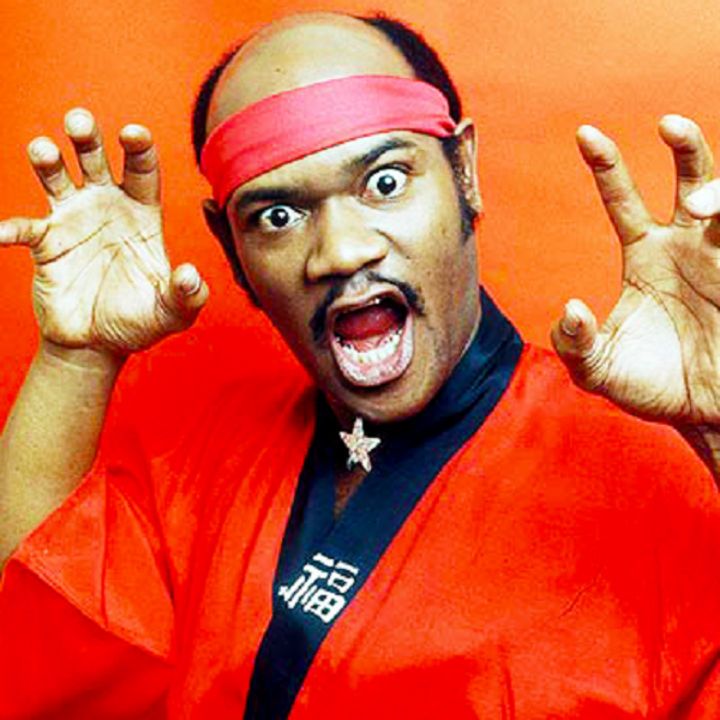
A glorious analysis of Carl Douglas’ smash no.1 hit around the world, Everybody was Kung Fu Fighting, by Prof. Paul Bowman, proving once again that things do not need to be beyond a certain level of complexity to be an important cultural document.

You can get this on audio too, but you really need to watch the video as a lot of this is relying on visual performance of the song.

Is Chinese wrestling the root of all Chinese martial arts?

An interesting video has surfaced that links the guard postures used in Shuai Jiao (Chinese Wrestling) with postures in various Chinese martial arts. The premise of the video is that Shuai Jiao is the root of all the Chinese martial styles. The text accompanying the video says:

“Guards in traditional Chinese wrestling are meant to favor certain fighting techniques and strategies. Since Shuai Jiao is very ancient and there are precise references in these guards to the styles that exist today, traditional wrestling is at the roots of Chinese styles. My Master Yuan Zumou has clearly stated this for over thirty years. In Shuai Jiao these attitudes are not aesthetic, but are used in real combat. I have put the captions of the styles I know or of those that maestro Li Baoru (Beijing, late 80s) mentions in the video.”

It’s an interesting theory, but unfortunately I can’t agree with such a blanket statement as “traditional wrestling is at the roots of Chinese styles“. Was it a strong influence on all Chinese styles? Yes, of course. But calling it the root of all styles is a bit strong for me. Some styles developed entirely from military practices, and a lot of styles have no wrestling component at all, or have their roots in weapons usage.

I can certainly see postures in the video that resemble Tai Chi – particularly the “White Stork Cools Wings” posture and another guard that looks a little like the “Wave Hands Like Clouds”. But we only have two arms and two legs – inevitably there are going to be similarities between postures found in different martial arts. That alone doesn’t confirm a genuine historial link. Influences betweewn marital arts can flow in both directions, too. So it’s quite possible that wrestling has been influenced by local village styles. And even things that are not necessarily combat arts, like xìqǔ, can have an influence on them.

I’d also have to take issue with the statement that “In Shuai Jiao these attitudes are not aesthetic, but are used in real combat.” Let’s not even get into the idea of what “real combat” is (Shuai Jiao matches have rules, after all) but it’s a simple fact that Shuai Jiao was enjoyed in the royal court in the Ching Dynasty (and probably all the dynasties before it) as a kind of entertainment for the nobles. The same thing happened in the Japanese royal court with Sumo, just as medieval kings in Europe enjoyed watching martial games like jousting and fencing. And obviously wrestling is still enjoyed as a kind of popular entertainment in America and Mexico today.

But let’s turn our attention to the contend of the video. A lot of the guards being demonstrated look quite showy to me – as if they were designed to impress an audience, particularly the Wave Hands Like Clouds style guard, where the practitioner seems to deliberately trip over his own legs.

But I don’t think that’s a bad thing. Ever since modern Wu Shu put the emphasis on gymnastic ability over practicality, people have been searching for this false dichotomy between performance and practicality in historical martial arts, too. It’s almost like a real martial art isn’t allowed to have any ‘fun’ aspects to it. In reality, and with several historical examples, a martial art can be both a serious, practical tool for combat, and something that can be performed for social, entertainment and cultural reasons all at the same time.

Choy Li Fut schools often perform lion dance, and that doesn’t mean their kung fu won’t work in a fight. Similarly, I would contend that Shuai Jiao can be used as a form of entertainment and a practical method of self defence. Just like almost all Chinese martial arts can.

Martial arts, Bruce Lee and philosophy

“I’m not aware of too many things,
I know what I know if you know what I mean.”

Edie Brickell

I was listening to the Drunken Boxing podcast recently in which Byron Jacobs and Phil Morrell were talking about Phil’s training history in Fan style Baguazhang. At one point he mentioned two of his teachers and how different their approaches were. One, the daughter of the old master, would deal with tricky questions by showing the answer with a physical demonstration, but if you asked for an explanation of the technical details she would sometimes struggle. She could however, just do it. The other he mentioned had been a professional martial arts teacher all his life, and as such had a more varied teaching method. He could answer questions at a variety of levels, from physical demonstration to a discussion of theory.

Most people’s first introduction to Kung Fu was through the work of Bruce Lee – either his films, or the TV series Kung Fu, which he didn’t write, but was based on his idea. The TV series was full of flashbacks to Master Po teaching his Shaolin philosophy, and Enter the Dragon has the classic master and student discussion at the start, which anchors the whole film in a kind of generic Taoist philosophy. So, from the very beginning in the West, Kung Fu and philosophy arrived hand in hand.

Photo by Man Chung on Unsplash

Theory is one of those things that martial arts is chock full of, whether it’s yin yang symbolism or lofty philosophical ideas of the merits of the soft defeating the hard or the theory of the meridians and Chinese medicine. It’s impossible to deny that Kung Fu is built on theory.

But there’s an opposite view that theory has a limited place in the grand scheme of things and it’s inherently prone to misinterpretation.  It’s an aid to understanding at a certain point, but quite a limited one. 

Theory is an undisputed source of dispute in martial arts, especially online. The typical online argument about martial arts (as we discussed in our most recent Heretics podcast on martial arts and shamanism) is usually about the definition of terms. Different styles and different teachers tend to say the same things in slightly different ways, which are correct from their own perspective – provided the teacher understands it of course – but appear opposite when written down.

I think we can all agree that it’s perfectly possible to learn the practical application of kung fu without ever hearing the theory, but could most people could learn the theory and deduce the practical application?

The repurposing of Kung Fu postures

I really liked this video by The Wandering Warrior on Instagram:

True or not, he makes a good case for the move not being the backfist or punch it is usually shown as, and being a throw instead. In a way, there’s no right answer – the move is whatever you use it for.

But it made me think a lot about how Kung Fu postures are repurposed and reused through the years.

If we go back to one of the earliest written descriptions of Kung Fu by General Qi Jinguang in his “Boxing Classic” of 1560 we can see that all he’s showing are a series of still postures with written verse about the move in question.

You can see that the first posture shown, “Lazily pulling back the robe” shares some similarties with the posture discussed above.

Lazily pulling back the robe, Qi Jinguang, 1560

A Confucian cuture of respect for tradition and elders would naturally lead to respect for older kung fu postures, and you can see how they would get reused and repurposed to fit new needs over the generations.

I bet the current Yang style Single Whip posture is not chosen because it’s the optimal way of pushing forward with a single palm. Instead, it’s more likely a posture that has been passed down from older generations. Maybe it’s original meaning (if it had one) has been lost, over the years. Maybe it was once a Suai Jiao throw? Maybe it was once a posture from Chinese theatre or religious ritual? Who knows.

The important thing is, as always, what can you do with it now?

Kung Fu 2021

The classic TV series is back! This time the lead is female and the cast is almost all Asian. I’m looking forward to seeing what they’ve done with it. I thought the trailer was pretty good. Not sure how I watch this in the UK though…?

Why you should train your martial art like a sport

“Sport” is kind of a trigger word for a lot of martial art practitioners, at least some of the ones I’ve met! So telling them they should train their martial art more like a sport usually goes down like a cold bucket of sick, but really I think they should listen.

“There are no rules on the street!”

“I train for the street, dude!”

“You mean a sport like netball, right?”

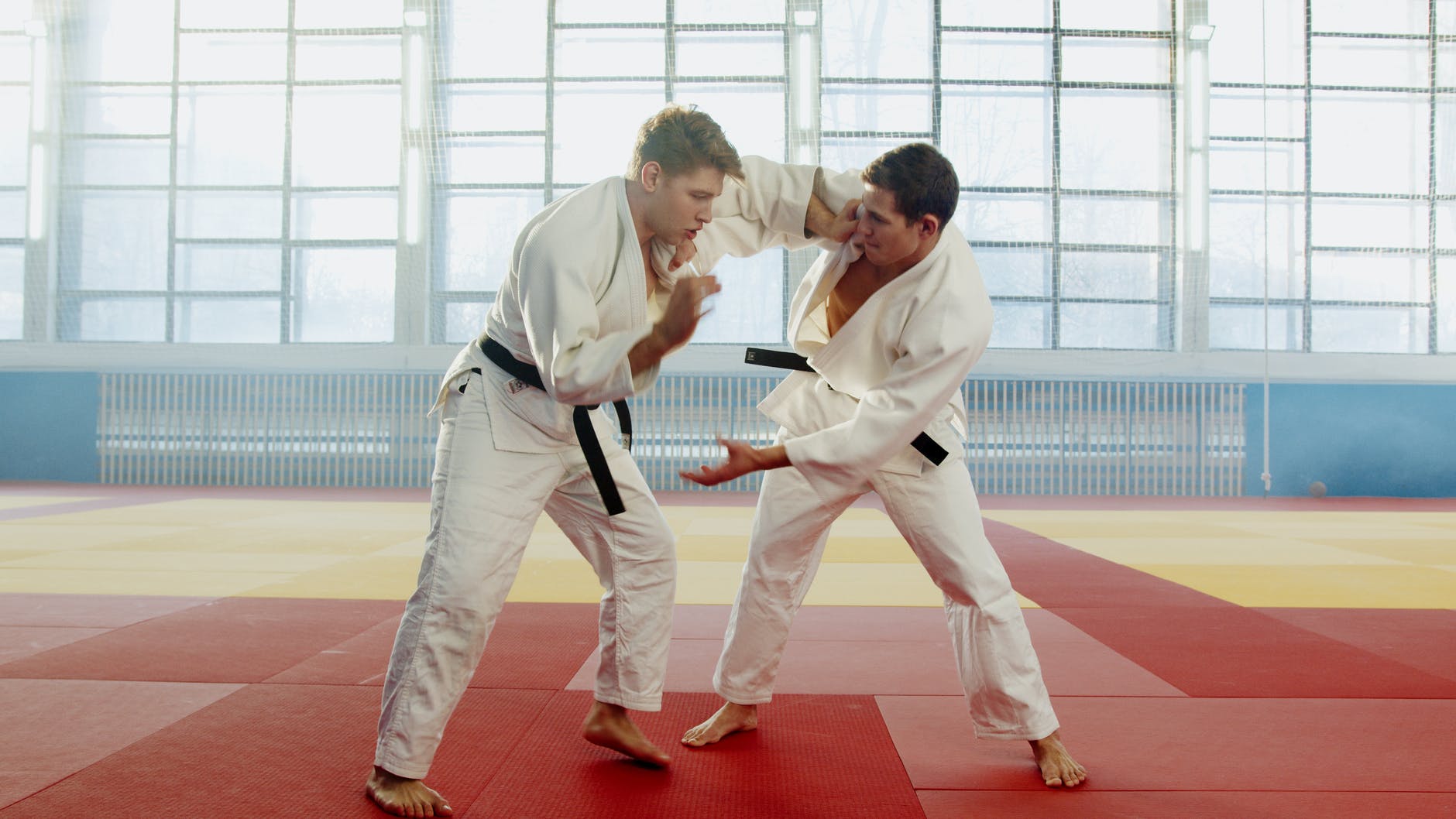
Photo by Artem Podrez on Pexels.com

When here’s the thing: Training your martial art like a ‘martial art’ is often an excuse for not working very hard and not really pressure testing anything you do.

Sport is a sweaty, dificult, thing to do that usually involves doing something pretty athletic (unless you count darts). Sport is also structured. Quite often in a martial art there is no real training methodology. People just turn up, do a few forms, practice a few safe applications against little or no resistance then go home again. The learning process can be a bit random.

I should stress, I don’t really think that there’s anything wrong with that, depending on your motivations for training, which often change as you age. Just feeling good about doing something is certainly reason enough to do it, but I think you should ask yourself, what progress are you really making? And, worse, are you becoming delusional?

Sports, in contrast, tend to be very structured. You train attributes specifically, and you engage in a focussed practice where you can drill to increase your ability in tightly defined things. Sometime those things are measured. You sit down and discuss progress with your coach. You troubleshoot and then you give it a go against somebody who is going to be uncooperative and gives you feedback. That’s real testing against nature – the sort of thing a human shaman would engage in 10,000 years ago.

Martial arts also have strange rules that sports don’t have – we have to call people odd titles like Sifu or Professor. There’s bowing and etiquette that looks strange to people outside the system. I can understand the cultural reasons for a lot of these things, but I often wonder that when these arts are put into a different culture, whether some of these things should be left behind because they’re not helpful and, in fact, can stand in the way of progress. For example, the little quirks like bowing to photos of dead guys or using a 1-2-3 clap system can gradually breed a cult-like quality of obedience that makes us stop questioning things.

I saw a brilliant video of a Muay Thai coach recently. I love the tiny details he’s giving. Muay Thai is an interesting martial art because it’s probably the most traditional martial art remaining on the planet, but it’s also a sport. It is undoubtedly effective and trained at the highest level in popular combat sports. I think there’s something to learn from that.

As I said earlier, I don’t think we need to make all martial arts into competative sports, but I think we can take elements of the sporting approach and apply it to what we’re doing, regardless of the martial art we’re doing.

Finally, the inspiration for this post is the latest brilliant episode of the BJJ Mental Models podcast to featuring Priit Mihkelson, about how to train your martial art like a sport. Give it a listen.

It’s also on YouTube:

Some nice Shaolin Da Hong Quan from Monkey Steals Peach

Just a short post today, but I really liked this video of Shaolin Da Hong Quan (“Big Hong Fist”) from Will at Monkey Steals Peach. He shows some applications at the end too, so keep watching. The applications look like some I learned in Tai Chi, and I can see some of the punches have a lot of similarity with Xingyiquan. More evidence that Chinese martial arts are all one big family.

The invention of martial arts

An excellent video by Prof. Paul Bowman to promote his new book, The Invention of Martial Arts: Popular Culture Between Asia and America.

This presentation looks at how martial arts arrived in the UK and when the concept of being a martial artist first entered into the popular consciousness. Along the way he covers Bartistu, the Avengers, James Bond, Bruce Lee, Kung Fu the TV series, Ninjas, the Wu-Tang Clan and the UFC.

Do traditional martial arts need to ‘worry’ about MMA?

With the explosion on the Internet of videos of MMA fighters knocking out traditional martial artists I think that internal martial arts are feeling (rightly) like they’ve become the undeserved butt of a joke, while at the same time the older generation of teachers is passing away without enough new students to carry on their arts to the same standards. The modern generation don’t want to practice as hard and have other things to be interested in.

Noble institutions like Xing Yi, Baguazhang and Taijiquan, which developed a reputation for being effective, fighty, martial arts during the 1920s and 1930s in China are now starting to be thought of as ‘for health’ only, or useless for fighting with, while MMA is seen as the barometer of effectiveness. Or at least that’s the narrative I see being played out. But I’m just not convinced that this narrative is actually true

Firstly, I don’t think these videos of Xu Xiaodong beating up Kung Fu masters are necessarily about saying MMA is better than internal arts – they’re more about one man’s fight against the Chinese system. One man’s “rage against the machine”, which is the government’s control over the martial arts scene in China. It’s a battle for personal freedom that Kung Fu just happens to have got caught up in. The China state Wu Shu machine is relentless in imposing the “official” version of traditional Chinese martial arts on the population, and that often it has little to do with actual fighting (which gets sidelined into Sanda – Chinese Kickboxing – , which is often divorced from traditional Wu Shu). So-called masters were encouraged to start making outrageous claims about their kung fu abilities on Chinese TV in staged demonstrations that were presented as being real. For pointing out the flaws in this heavily state-promoted view of Wu Shu with his fists, Xu Xiaodong is paying a heavy price of social restrictions and persecution. His travel is limited and his freedoms are curtailed.

Over here in the West I often hear serious Kung Fu practitioners worry that if MMA is seen as the be-all and end-all of fighting then traditional styles will eventually fade away, and the evolution of martial arts will go down a sports-based cul-de-sac, in which you “aren’t even allowed to kick somebody in the head when they’re on the ground!”

I see things differently. MMA training is really rough (or at least, it is in most places). In terms of what the vast majority of martial arts practitioners want, it’s a fringe element. Your average office worker has no interest in turning up to work on Monday with a black eye and busted nose. The vast majority of martial arts practitioners are still in traditional arts, which might be more ‘street’ orientated, but tend to be less rough in their practice. They’re filling village halls with karate and tae kwon do classes, or doing judo at university, or BJJ at their local academy and Tai Chi in the park. Or at least they used to be before COVID hit. The percentage of these people that want to push their bodies to the limit and be beaten up on a regular basis is vanishingly small.

MMA is also a form of entertainment designed for television. When the big MMA stars compete at UFC on a Saturday and the crowd goes “Whoo!”, when a spinning head kick finds its target, I bet the numbers at local Tae Kwon Do clubs go up the next week, not down. I see MMA as a great promoter of all martial arts. It’s quite possible Conor McGregor has done more to promote traditional karate than anybody else in history!

I agree there’s a real risk that if MMA is seen as the only arbiter of ‘what works’ in combat then martial arts could evolve down a sports cul-de-sac, but I’d argue that MMA is pretty damn close to ‘real’, and the gains made by seeing what works in the cage compared to what passed as ‘real’ in martial arts before the UFC is like night and day.

People are not so stupid that they can’t understand the difference between a sport with rules and a martial art for self defence. And anyway, sure it’s against the rules to kick an opponent in the head when their knee is touching the ground, but who the hell is getting kicked full power in the head when they’re on the ground in a martial arts class anyway?

What we’re actually seeing is the end of the era of the ‘death touch’ and ‘ling kong jin’ no-touch nonsense that found a fertile environment to grow in a martial arts world that had lost touch with reality. An MMA guy in China beating up fake kung fu masters could just be part of the course correction that is required in the path of martial arts needs to walk right now.