Don’t push the river, listen to it instead

394357757_640

Bruce Lee was onto something with his water analogies…

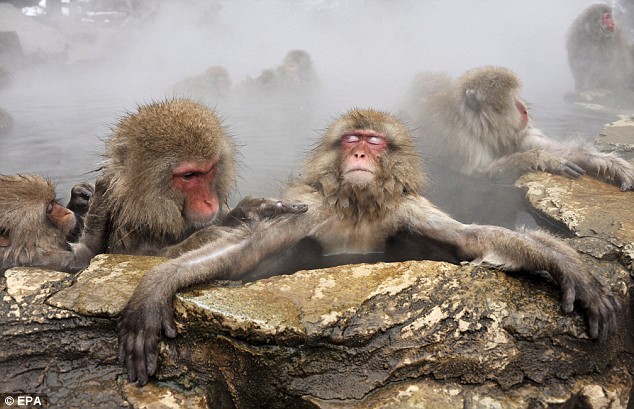
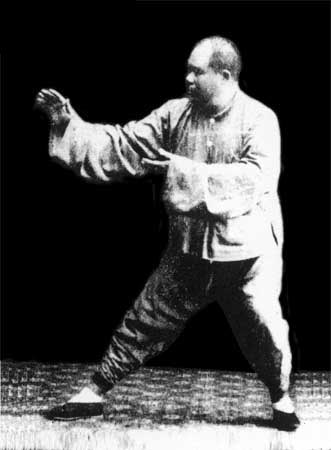
I recently read the phrase, “Don’t push the river, listen to it instead”, and it resonated deeply with me because it’s a great way of summing up my approach to jiujitsu’s rolling and tai chi’s push hands. The water analogy was famously used by Bruce Lee and also crops up a lot in the Tai Chi classics, for example “Chang Ch’uan [Long Boxing] is like a great river rolling on unceasingly.”

The flow of water is analogous to the flow of energy, or movement, when performing a Tai Chi form, or between two people engaged in a martial activity . In both jiujitsu and tai chi your ultimate goal is to ‘go with’ this flow in such a way that you come out on top. You want the opponent to be undone by their own actions.

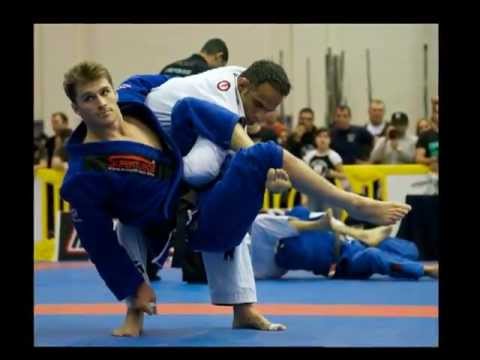
In jiujitsu that might mean not using excessive strength to press home a collar choke from mount if your partner is defending it well, and switching to an armbar instead, then switching back to the collar choke (and hopefully getting it) when they defend the armbar.

In push hands it could mean not resisting your partner’s push and using Lu to let it pass you by, then switching to an armbar to capitalise on their over extension.

Of course, this is for when you’re engaged in the ‘play’ mode of both these arts, which is the mental space you need to occupy if you want to get better at either of them. This is the relaxed practice that nourishes the soul. It kind of goes without saying that in competition or in a self defence situation you’d be better off in Smash Mode. But when winning isn’t the only thing that’s important you need to open up your game a little and keep it playful. Or ‘listen to the river’ as the phrase has it. It takes a lot of expertise to be able to be that relaxed in a real situation, but as your experience in the art increase so too should your ability to remain relaxed under increasing amounts of pressure.

Rickson Gracie said, ‘you can’t control the ocean but you can learn to surf’ and that’s the heart of what I’m talking about.

To be aware of the way the river is flowing, and not waste futile energy pushing it in a direction it doesn’t want to go you need a degree of self awareness, and the ability to be aware of the situation you are in. And to get that you need to slow down and stay calm. Or, as the ancient Taoists said:

“Do you have the patience to wait

Till your mind settles and the water is clear?

Can you remain unmoving

Till the right action arises by itself?”
Lau Tzu, Tao-te-Ching

Rollback – the unfinished technique

Here’s the best thing to do after you’ve applied Tai Chi’s rollback.

ycf_roll_back

One of the things that comes up a lot in Tai Chi push hands training that’s geared towards the martial side of Tai Chi is what to do with the opponent after you’ve done Rollback. Rollback uses Lu energy to lead the opponent in and control them, with their arm kind of locked, but not to the point where they’d tap. In the Yang form there’s no ‘finish’ from this position – after controlling them you strike with Press (Ji). This is ok, but to me it seems like you’re giving up the advantage you have over them because of the control that rollback affords in exchange for a quick strike. It looks like this:

lnbetw

There are several alternative things you can do – turn it into a push away (into a wall?), turn it into a takedown where you keep the pressure on the arm and shoulder, forcing them into the ground, or you can go for my preferred answer, which is to turn it into a standing arm bar as shown in this video:

Key things to note:

1. He puts his elbow over the top of their arm and makes sure the locked arm is snug in his armpit.

2. On the locked arm the little finger edge is pointing to the sky.

3. In the finish position he rotates his wrists around the opponent’s wrist so that both his thumbs point upwards – this gives you maximum leverage on the arm.

4. Once the opponent is controlled you can look around and watch out for further danger from somebody else.

I like this solution because it’s a really powerful arm lock and you can move into it from the end of the Tai Chi rollback posture fairly easily. You can feel it would be easy to break the arm from here, and the opponent is pretty much helpless. Obviously, in a self defence situation the level of force you exert needs to match the severity of the threat you feel you are under, so don’t go breaking the arm of people who have innocently patted you on the back, and also take care of your training partners. Don’t break your toys!


Lo and behold! Leandro Lo – the master of the BJJ guard pass


Breaking down the floating guard pass game

Despite being young, Leandro Lo is already a legend in the sport of BJJ, and he’s only just getting started. Training out of the same gym as the Myao brothers in Brazil, Lo has been winning major comps for a few years now, moving up in weight while doing so. He won this year’s Pan Ams against Romulo at medium heavy. His matches are always exciting to watch, as his style is characterised by frenetic guard passing and what appear to be plenty of mad scrambles.


Read the rest of this post at my new blog… BJJ Notebook


Stretching – you’re doing it wrong

Static stretching vs dynamic stretching – which is best?

Young woman seated hamstring stretch

I’ll be the first to admit that stretching isn’t the most exciting topic for most people, but it’s kind of important, so I should cover it. Plus, I’ve recently found a video by Ryan Hall that gives some extra insights into common stretches we do before BJJ:

Ryan gives some really valuable little tips on how to do each stretch correctly. Since you generally learn these stretches by just following along in class, with little to no additional information, it’s all too easy to miss the little details. For example, the first stretches he shows are the shoulder stretches you do by pulling the arm across the body (see 9.08 in the video). These are really common stretches used in all sorts of sports, yet the little detail he gives that you should be taking the shoulder down and back while pushing the chest out as you do them makes all the difference. Now you’re actually working the shoulder joint, which is the point of the stretch. Just yanking the arm across the body on its own won’t do squat.

Look at the ‘sprinters stretch’ at 24.26 – everybody I know will reach for that foot (including myself) but as Ryan points out, the point of the stretch is to get really comfortable getting your head to your leg – that’s where the focus needs to be.

What’s also nice about the video, is that Ryan puts each stretch in context – so you can see where it fits into BJJ as a whole. So, he’ll show you why it’s useful to be flexible.

And yet, he’s doing it all wrong. We all are. Or are we? You need to decide this for yourself after reading the latest research into dynamic vs static stretching, which I’ll point you towards here.

Ryan is showing what are called ‘static’ stretches, where you move into position then hold for 10 seconds. The current thinking is that ‘dynamic stretches’ are a better way to warm up. Dynamic stretches don’t involve holding the position at all, you simply take the joint through a range of motion, without holding the position at any point.

The reason of why dynamic stretching is better for you as a warm-up (than static stretching) seems to come down to two things. Firstly, the purpose of a warm-up is to warm the muscles and tendons, ready for the work that’s about to be done. In martial arts the work that is about to be done doesn’t usually involve holding stretched positions in extended periods (although if you’re getting stacked in your guard in BJJ, then it might!) Generally though, we’re about to use our muscles in an explosive way while putting our joints through their full range of motion. This is very different to the experience of a static stretch.

The second part is to do with the Golgi tendon receptor. This is a nerve which is found inside every tendon, and tells the muscle to relax and switch off to avoid it getting injured. So, if your bicep is under load and at full contraction for more than 5 seconds, the Golgi tendon receptor will make it relax, so you don’t tear anything. It’s this nerve which gets activated in a static stretch lasting more than, say, 5 seconds, essentially tricking it into relaxed the muscle further than normal, which means you can stretch further, but it also means the muscle can lack up to 20% of the power it had before it did the extra stretch (because you need tension to create power).

There have also been various studies performed which show that static stretching as a warm-up does nothing to help athletic performance, and in some cases actually diminishes it.

I think it all comes down to how you view the warm-up. If it’s simply to prepare your body for the work to be done, then dynamic stretching makes sense. However, you’re not going to dramatically increase your flexibility with dynamic stretching. So, in an ideal world you’d have both – the dynamic stretch before the activity, as a warm-up, then the static stretch as a cool-down afterwards.

A good source of information on stretching for athletic performance is sports coach Brian Mac, who has a website packed full of articles, like these ones, which contain the following quotes:

Muscle movement

“Contained in the tendon of each muscle is the Golgi tendon receptor. This receptor is sensitive to the build up of tension when a muscle is either stretched or contracted. The receptor has a tension threshold that causes the tension to be released when it gets to high. As the Biceps contracts and the threshold is exceeded then a signal is sent to the Biceps causing it to relax. This mechanism prevents damage being done to the Biceps should the weight be to heavy or the movement is to fast.”

Conditioning: How does static stretching affect an athletes performance?

“In conclusion, in most cases static stretching before exercise reduces an athlete’s power and strength. If the athlete participates in power or strength exercises acute stretching may not be recommended. “

Flexibility: Dynamic versus passive stretches

“This suggests that dynamic stretches, slow controlled movements through the full range of motion are the most appropriate exercises for warming up. By contrast, static stretches are more appropriate at the end of a workout to help relax the muscles and facilitate an improvement in maximum range of motion.”

Finally, here’s a few stretches to try:
Dynamic Stretching Exercises

Static Stretching Exercises


Beating the bigger man – AJ Sousa and the Lasso Guard

A different approach to overcoming strength and size in JiuJitsu

xande_saulo_ribeiro1

Last year BJJ world champions Saulo and Xande Ribeiro released 5 episodes of a YouTube-only JiuJitsu Reality TV show under the banner of their online instructional website, BJJ Library, called The BJJ Library Challenge. BJJLibrary.com is actually one of the best resources for online BJJ instruction you’ll find on the net – on the one had you’ve got lots of video lessons from Xande and Saulo, who both specialise in a “strong on the basics” approach to BJJ, and you’ve also got plenty of video instructional from the leading lights in the BJJ universe, like Leandro Lo, Clark Gracie, Eduardo Telles and JT Torres, all showing the techniques they have become famous for.

Read the rest of this post at my new blog… BJJ Notebook

Omoplata obsession

Is the shoulder lock done with the legs the most “BJJ” of all BJJ techniques?

hqdefault

Everyone who starts BJJ eventually goes through a bit of an omoplata obsession, I think it’s because it’s one of those techniques that is unique to BJJ. Triangles, armbars and cross chokes can all be found in Judo, and while it’s probably possible to dig up a Jiujitsu demo from the 1920s that features an omoplata (take that as a challenge dear reader!), the technique has really found its mark in the world of BJJ.

Read the rest of this blog post at my new blog… BJJ Notebook


The beauty of the single leg in BJJ

Here’s a simple takedown strategy for BJJ, that works

bjjeestikad-2
Takedowns are one of the things that don’t really get drilled in BJJ as much as they need to be. As Judo has taught us, you really need to drill takedowns over and over on a regular basis to actually be able to do them against resistance. Takedowns are weird like that. You need thousands of hours of repetition to make them work against pressure and resistance. Top Judokas usually have two or three throws they specialise in, like Uchi Mata or Seonage. They practice these over and over and over, every training session.


Read the rest of this post at my new blog… BJJ Notebook.

Brothers in arms – Rickson Gracie and Tai Chi

A discussion of the similarities between BJJ and Tai Chi

rickson333

So, finally, here’s my much delayed look at the similarities between BJJ and Tai Chi. This is probably an impossible topic to give justice to fully, but I’ve given it a go and hopefully my perspective will be useful to others. I’ve already attempted to define Tai Chi in a previous post, so the next logical question is, ‘what is Brazilian JiuJitsu?’ Well, explaining what the art is, how it evolved and where it came from is not a simple job but luckily a lot of people have made a lot of (very long) documentaries that explain the whole story of the Gracie family, the in-fighting, the out-fighting and everything else in-between, so you’re better off watching those than having me explain it all again here. If you don’t fancy watching them all then the (very) short version is “it’s an off-shoot of Judo that has more emphasis on ground fighting”.

Try these for size:

The Gracie Brothers and the birth of Vale Tudo in Brazil:

If you want to find out how the art evolved once it entered the United States, and how it compliments other grapplings arts, then check out Chris Haueter’s incredibly entertaining speech at BJJ Globetrotters USA camp:

And finally, don’t miss the excellent Roll documentary on the spread of BJJ in California:

Fighting fire with water

But my concern here is not really the history of the art. I’m more interested in the technical similarities between Tai Chi and BJJ. I’ve heard Brazilian JiuJitsu described as being “like Tai Chi, but on the ground”. I understand where people coming from with that sentiment, but I can’t quite go down that route myself, or rather, I’d settle for saying that it is like Tai Chi, but also explicitly not the same. The one central idea that both BJJ and Tai Chi share is that it’s smarter to not oppose force with force, and instead “yield to overcome” (from a Tai Chi perspective) or “use leverage”, from a JiuJitsu perspective.

As it says in the Tai Chi classic “Treaste on Tai Chi Chuan”:

“There are many boxing arts.

Although they use different forms,
for the most part they don’t go beyond
the strong dominating the weak,
and the slow resigning to the swift.

The strong defeating the weak
and the slow hands ceding to the swift hands
are all the results of natural abilities
and not of well-trained techniques.

From the sentence “A force of four ounces deflects a thousand pounds”
we know that the technique is not accomplished with strength.

The spectacle of an old person defeating a group of young people,
how can it be due to swiftness?”

I’d disagree with the classic on one important point though – most of the traditional martial arts in fact do go beyond the strong dominating the weak, because without that key principle there is not much of an art left in the martial art at all. And I don’t know about the idea of defeating a “group” of young people either (that would be a tall order for any martial art, or martial artists), but to me the classic is suggesting that skill and technique can supersede the natural advantages of youth, such as speed and strength. And when it comes down to it, it’s hard to find an art that can deliver on this promise as well as BJJ can.

BJJ is one of the few martial arts where an older man (or woman) can be expected to regularly beat a younger man (or woman) by having more skill and technique, in a fully resisting scenario, thanks to techniques that manage the distance (a critical self defence skill) and use leverage and technique to overcome brute strength. That’s not to say that no strength is required, but you don’t necessarily need more strength than your opponent to make it work.

Rickson Gracie

To me, the BJJ practitioner that best exemplifies a similarity between Tai Chi and JiuJitsu is the legendary Rickson Gracie. He’s generally agreed to be the best of the Gracies. Compared to the acrobatic extravagances of today’s sport JiuJitsu champions, who favour inverted guards and bermibolos, Rickson’s style of Jiujitsu seems surprisingly simple, yet effective. There are no flashy moves, just basics done at a very high level.

The Rickson documentary “Choke”, which shows his training for a Vale Tudo fight in Japan, is essential viewing if you haven’t seen it before:

In the documentary you can see a young Rickson doing Yoga on the beach. Rumour has it that he also said he studied Tai Chi in a magazine interview, although I’ve not been able to find a transcribed version online to confirm this. Either way, it’s clear that he’s not averse to stepping outside of “pure jiujitsu” to add elements to his exercise, martial and health regimen. The cost of upholding the reputation of JiuJitsu and the Gracie family has been heavy though, and he has several herniated discs in his back, but he’s still on the mats teaching his family art, cornering his son Kron in his MMA fights and giving instruction through his JiuJitsu Global Federation. He also spends a lot of time surfing these days, instead of fighting.

If you read a Rickson seminar review, like this one, you can see that he keeps returning to two common themes – “connection” and “invisible jiujitsu”. The invisible part refers to what you can’t see happening; you can’t see where he is putting his weight and making his connection to his opponent, but you can feel it when he does it. He has detailed ways of making a connection in each position in BJJ.

This sort of teaching from Rickson, to me, is where I find the crossover between Tai Chi and BJJ to be strongest. In Tai Chi Push Hands, for example, we constantly seek to make a connection to the other person, through touch, so its a very familiar concept.

Here’s me doing some push hands:


Forget about the thing I’m trying to teach in the video, just look at the Push Hands routine we’re doing. As you can see, Push Hands very concerned with ‘feeling where the other person is’ and ‘yielding to their force without opposing it’ to neautralise the opponent. From this perspecitve, Push Hands starts to sound a lot like what Rickson is talking about in his seminars, but in a different format.

But the similarities don’t end there. When employing standing techniques Rickson also utilises some of the postural work found in Tai Chi and makes makes subtle nods towards the ‘internal’ method of body movement favoured by Tai Chi. He talks about making a connection to the ground through the feet. I’m not suggesting his ‘body mechanics’ ideas fully embrace everything you’d find in Tai Chi, but I can see the foundations of it being built.

For example, in a Rolled Up episode (3/4) from last year Rickson shows Budo Jake how to use some basic body mechanics to create a better root to the floor when meeting an incoming force while standing. He’s talking about transferring the force applied to the arm down to his foot and into the ground, then back up to move the opponent backwards. This is basic Tai Chi 101.

See here, from the beginning:

At.4.26 he starts to talk about ‘invisible jiujitsu’, specifically at 5.55 about ‘putting the weight in the hands’.

I was taught a very similar drill in Tai Chi – a kind of wrestling game, where you had to stand square on to the opponent and try to unbalance them with a push as they did the same to you. The key to doing it is to ‘put your weight into your hands’, so that when you push, it’s coming from the foot, not the shoulder. And when they push you root the push into the ground, instead of letting it push you over.

Here’s a video of me doing it from a few years ago. The camera is on the ground and not straight, so it looks like I’m leaning forward, but I’m not really:


I’m not an expert at it, and use too much arm strength, but hopefully you can see the similarity between this and what Rickson is talking about in the Rolled Up video.

Of course, Tai Chi takes this idea of creating a path from the foot to the hand to further levels of detail – first the idea of ‘pulling silk’ where you create a stretch from the fingertips (and toes) to the dantien and maintain that connection while moving, so it remains unbroken. Incidentally, the silk analogy refers to the way silk weavers pulled raw silk thread from a cocoon – you had to pull with an even pressure or the thread would break.

The next stage after ‘pulling silk’ in Tai Chi is to create windings on the muscle-tendon channels in the body, controlled from the dantien – the famous ‘silk reeling’ of Tai Chi. I think you can view this as the point where BJJ and Tai Chi diverge and head off along different paths – Tai Chi becomes highly specialised in this type of movement, while BJJ becomes more interested in the practicalities of actual fighting, and taking the fight to the ground (or just dealing with the fight on the ground) where it enters a whole new arena.

Realistically, and practically, there is no need for the type of highly specialised and, frankly, difficult, method of moving the body that Tai Chi employs for actual fighting, and also it’s questionable whether you can actually do ‘silk reeling’ type movement when on the ground, since it relies on using the power of the ground to push up from via the legs. Does that mean one art is better than the other? Well, they both are what they are, and they’re good for different things. I’ll probably leave it at that.


Conclusion

Interestingly, when I started BJJ (almost 5 years ago now) I found that my all years of experience in Tai Chi meant nothing at all on the mat when rolling against an experienced practitioner – even if they were a smaller, weaker person. Fighting on the ground is a completely different animal compared to stand-up. I was submitted as regularly as the next white belt, but I did find that my previous experience in Tai Chi meant I could learn quicker than average (I got my blue belt in a year). It let me see the concepts and principles hidden within the techniques of jiujitsu. And it helped me relax under pressure, which is a huge part of getting better at BJJ. Also, doing the Tai Chi form helped me recover quicker from the physical wear and tear which is characteristic of your first 6 months of BJJ, while your soft, squidgy body is still toughening up.

Unlike Tai Chi, which has, in a sense, become set in stone in terms of its evolution, BJJ is a constantly fluid and evolving art. Thanks to the highly competitive environment of the BJJ competition circuit, new techniques are always being created and being discarded. It’s becoming highly specialised towards what works in the most common competitive rule sets. Where I see the connection to Tai Chi is in the older, ‘original’ BJJ that was more self-defence orientated, as exemplified by Rickson Gracie. Where BJJ is headed next is anybody’s guess. Quite possibly it will evolve in several directions all at once, and it will be interesting to see if the legacy started by Rickson Gracie and his ‘invisible JiuJitsu’ lives on, or even gets expanded upon.